A single paint defect that slips past booth exit and turns up at final assembly does not stay a small problem. By the time trim is installed and glass is sealed, fixing a scratch or a crater that should have been caught at the source can cost thousands of dollars in disassembly and rework labor alone. Human inspectors catch a respectable share of surface defects on a fresh morning shift, but that accuracy erodes steadily as fatigue sets in, and a line running dozens of vehicles an hour cannot afford blind spots that grow worse by the hour. AI vision inspection closes that gap by scanning every painted panel the same way at 8 a.m. and at 3 a.m., which is why more paint shops are moving detection upstream instead of waiting for a customer to find the flaw. Book a demo to see how this looks against your own paint booth footage.
AI Vision · Automotive Paint Shop · Defect Detection
Scratch, Orange Peel & Run Detection Built for Line Speed, Not Sampling
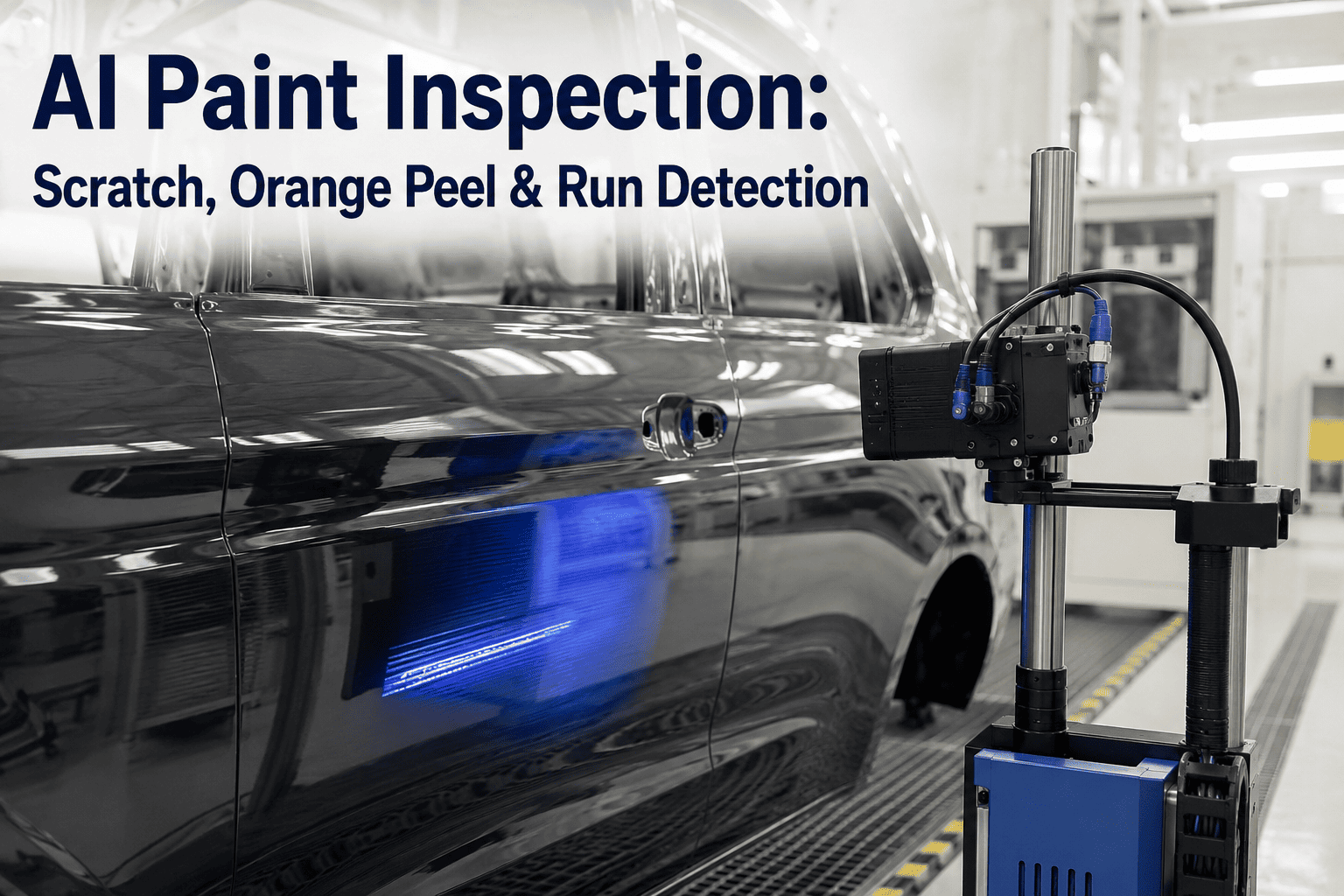
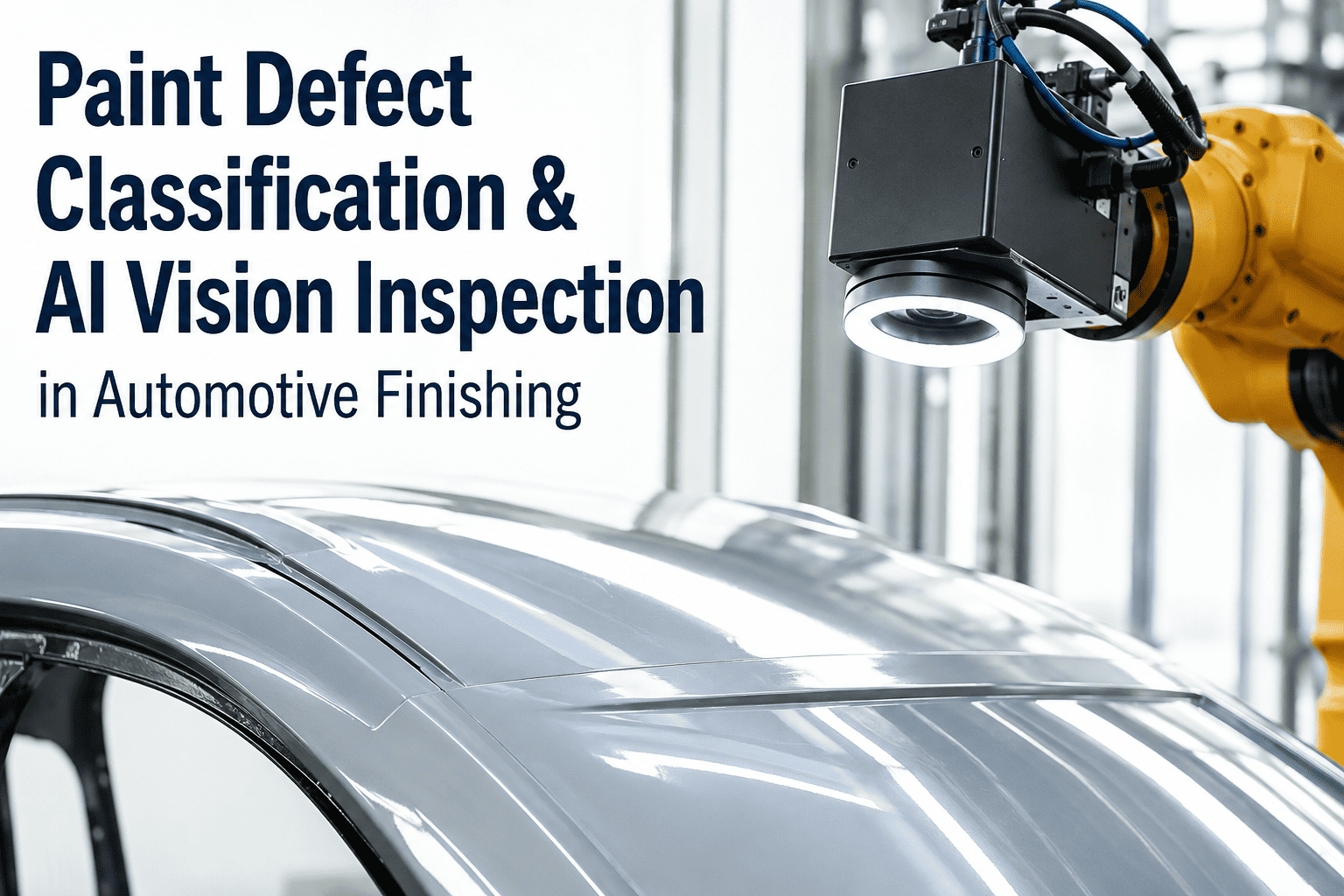
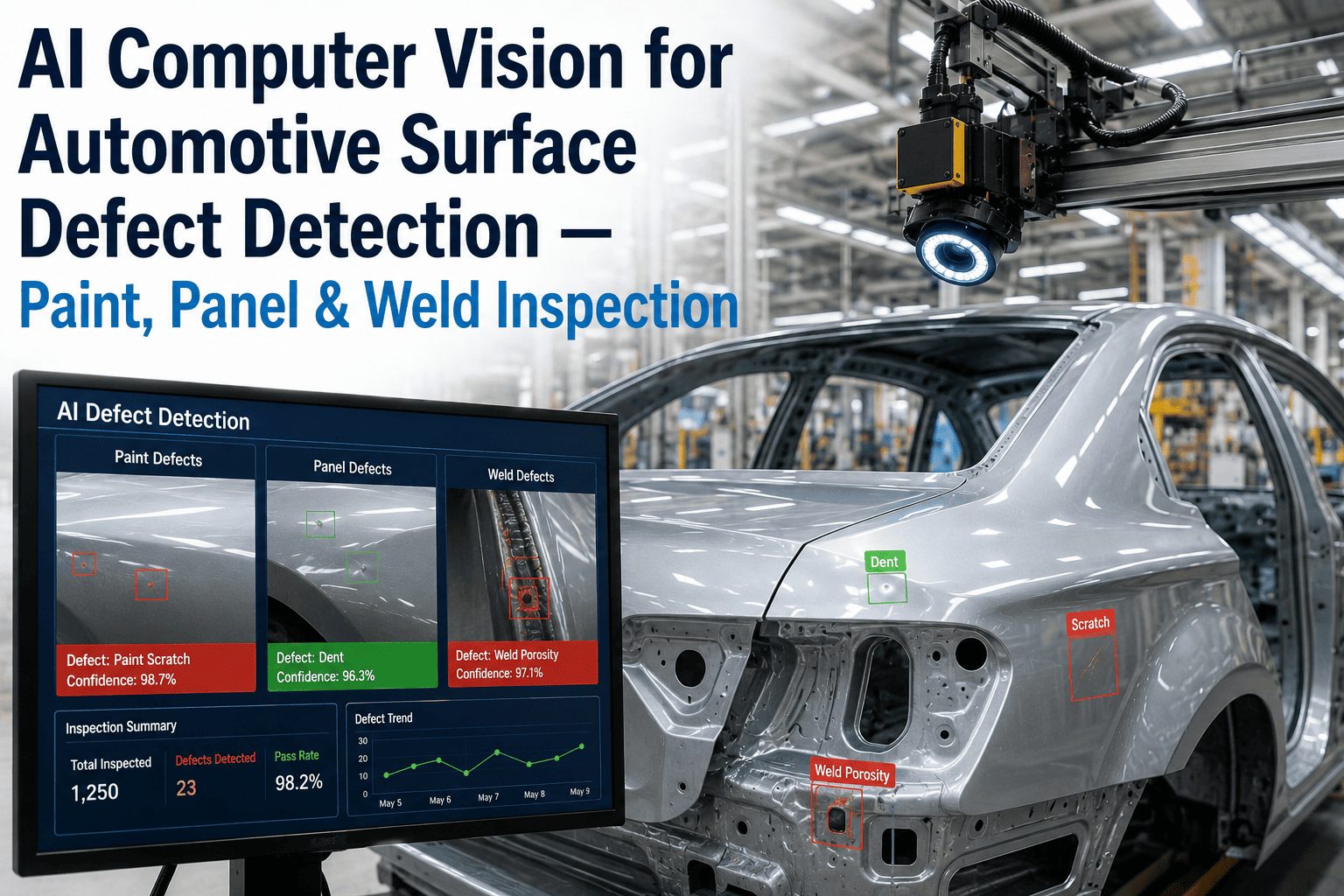
AI vision inspects every painted body exiting the booth, classifying scratches, orange peel texture, bubbles, and runs at the same speed the line already moves, without adding a station.
Why Manual Inspection Falls Behind
The Cost of Catching Paint Defects Late
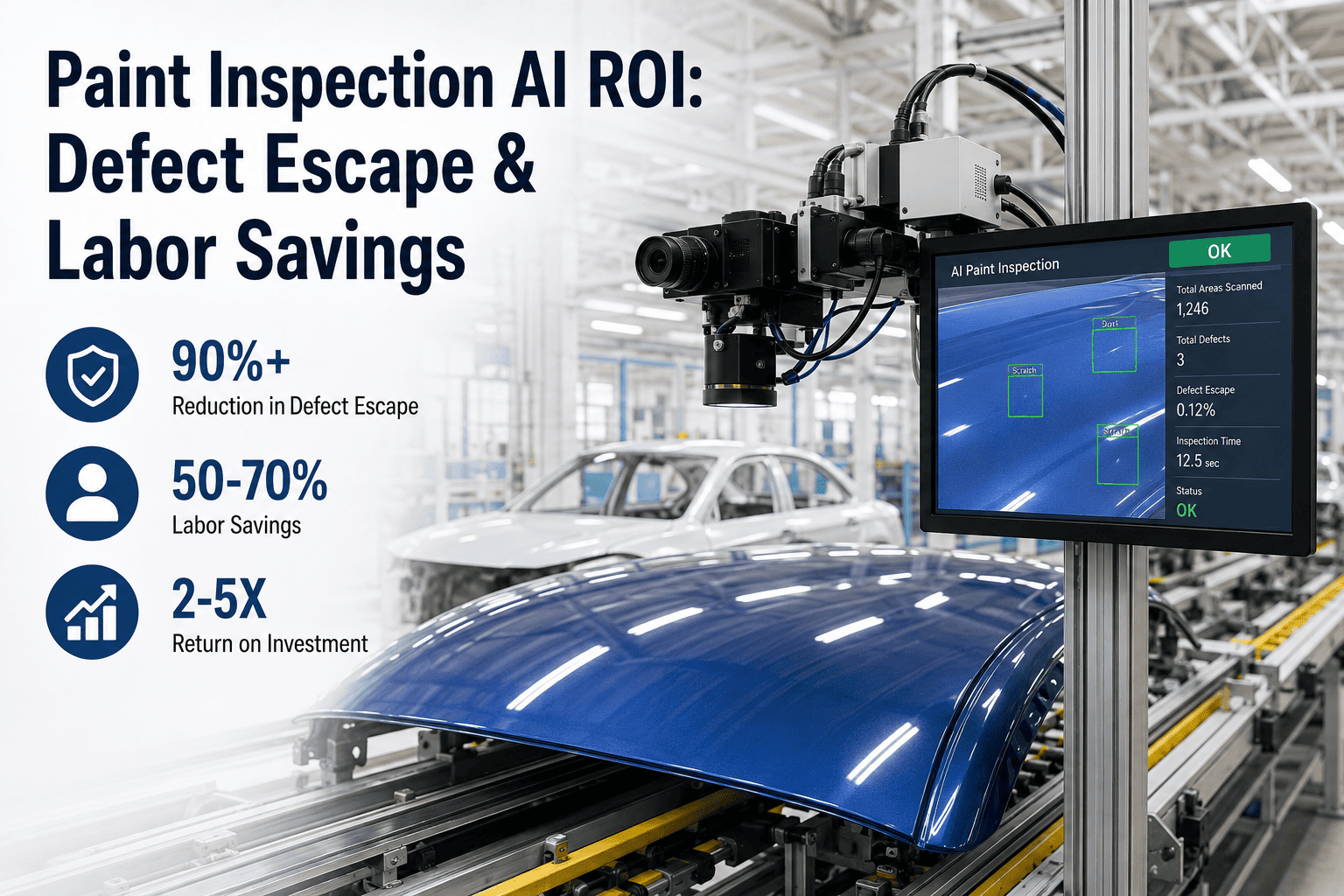
Paint quality is one of the most visible dimensions of vehicle quality, and it is also one of the easiest to lose track of across an eight-hour shift. These figures describe why plants are shifting detection upstream to the booth exit instead of relying on a final walk-around.
78–84%
Surface defects a trained inspector typically catches on a well-rested shift
$3,200
Typical rework cost when a paint defect is caught at final assembly instead of booth exit
0.5mm
Smallest scratch width AI vision models can reliably flag under controlled lighting
99%+
Detection rate achievable with multi-angle imaging across a full painted body
Defect Taxonomy
Six Defect Classes AI Vision Is Trained to Separate
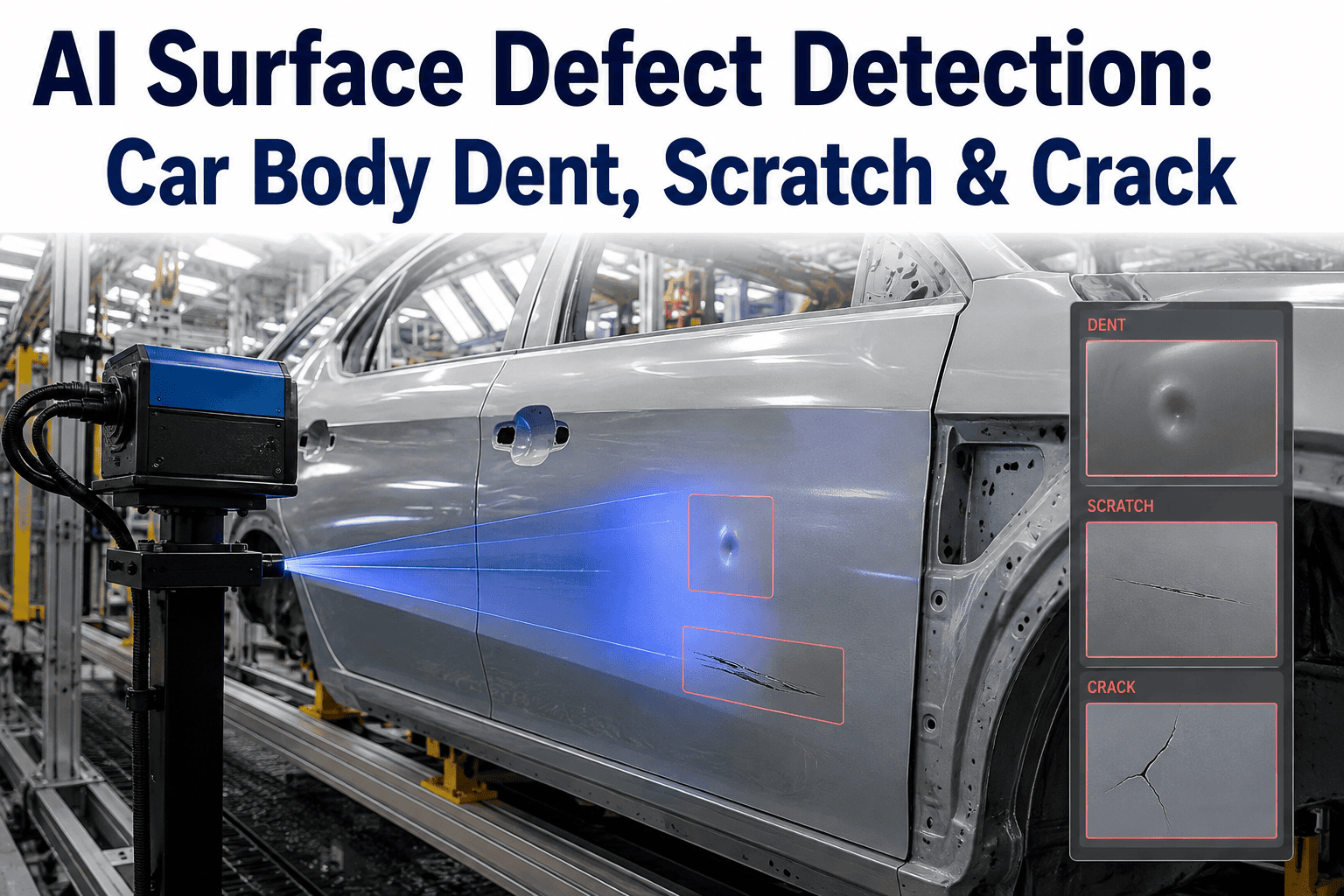
Not every visible mark on a painted panel is the same problem, and treating them the same way wastes rework hours on cosmetic variation that meets spec. AI classification models learn the visual signature of each defect class separately.
Scratches
Linear surface breaks in the clearcoat or basecoat, typically from handling or fixture contact during transport between paint zones. Depth determines whether the fix is a buff or a full respray.
Orange Peel
A dimpled texture across the surface caused by spray viscosity, booth airflow, or gun distance drifting out of spec. Subtle orange peel is one of the hardest defects for a human eye to catch under standard lighting.
Bubbles and Blisters
Trapped air or solvent pockets that rise during cure, leaving a raised dome that can rupture later in the vehicle's life if left unaddressed. Usually traced back to surface prep or oven temperature.
Runs and Sags
Paint that flows unevenly under gravity before cure, most common on vertical panels when film build is too heavy in one zone. Visible as a streak or ridge running downward from the origin point.
Dirt Inclusions and Nibs
Small particles trapped in the wet film before cure, creating a raised bump that is easy to miss visually but easy to feel by hand — and easy for a high-resolution camera to flag automatically.
Color and Gloss Drift
A body that is technically defect-free but reads as a different shade or sheen than the panel beside it, often from batch variation in the paint mix or booth temperature swings during application.
How It Works
From Camera Capture to Rework Decision
Detection is only half the system. The value comes from turning a flagged defect into a routed, traceable decision before the body moves further down the line.
01
Multi-Angle Capture
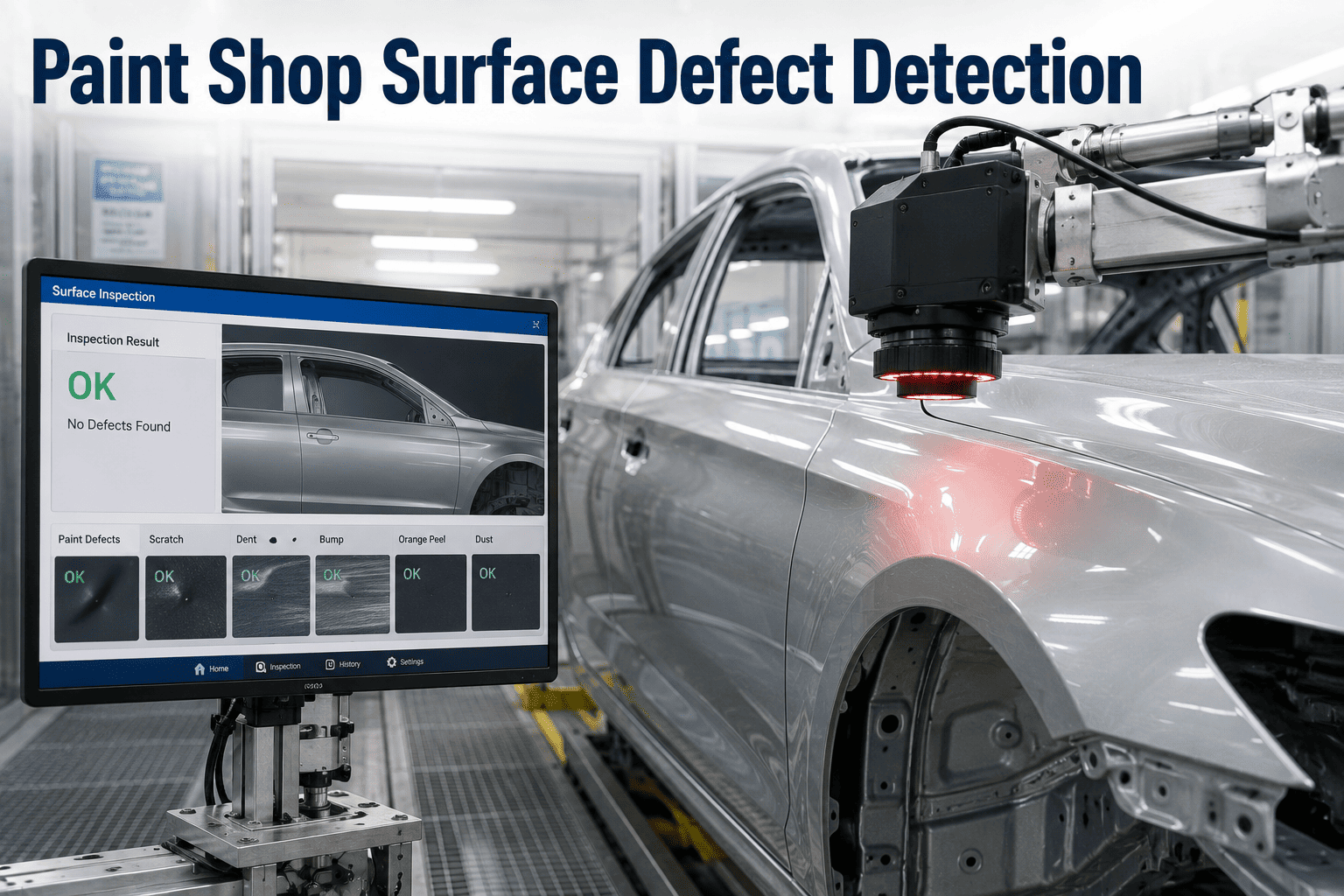
High-resolution cameras positioned around the booth exit capture every panel from several angles as the body passes, catching defects that only show up under raking light.
02
Classification
A deep learning model trained on your own defect library labels each anomaly by type — scratch, orange peel, run, bubble — rather than issuing a generic pass or fail.
03
Severity Scoring
Each defect is measured against size and location thresholds tied to visibility zones, separating a cosmetic variance from a customer-visible flaw that needs rework.
04
Routing and Logging
The body is routed to buff, respray, or pass, and the defect is logged against the VIN, panel, and paint zone for trend analysis across shifts.
See Your Own Defect History Classified in Real Time
iFactory trains detection models on your paint shop's own defect library, camera positions, and lighting setup, so classification accuracy reflects your line from day one.
Manual vs. AI Inspection
What Changes When Every Panel Gets the Same Attention
Factor
Manual Inspection
AI Vision Inspection
Coverage per body
Visual scan of accessible panels, often skipping low-light zones
Full 360-degree panel coverage on every body, every shift
Consistency across a shift
Accuracy declines measurably as inspector fatigue builds
Same detection threshold applied to the first and the last body of the shift
Defect classification
Subjective, varies between inspectors and lighting conditions
Consistent labeling by defect type and measured severity
Traceability
Rarely logged beyond a pass or fail mark on a paper sheet
Every defect tied to VIN, panel, zone, and shift for trend analysis
Small defect detection
Sub-millimeter scratches and faint orange peel frequently missed
Camera resolution catches defects as small as 0.5mm reliably
From the Line
What Changed When One Plant Moved Detection to Booth Exit
We were running 78 percent detection with three inspectors per shift at booth exit, and the missed defects always seemed to surface two stations later where they cost ten times more to fix. Once the AI system went live, we stopped arguing about whether a mark was a reject or a pass — the system measured it against the same threshold every time. Late-stage paint rejections dropped from close to 190 per shift to under 15, and our rework crew went from constantly behind to actually caught up by lunch.
— Paint Shop Quality Lead, OEM Assembly Plant
Frequently Asked Questions
Paint Defect Detection — Common Questions
Can AI vision tell the difference between a cosmetic variance and a real defect?
Yes. The model is trained on labeled examples from your own defect library, so it learns which texture variations, minor gloss shifts, and surface characteristics fall within acceptable specification and which cross into reject territory. This matters because a system that flags every minor variation as a defect creates as much wasted rework time as a system that misses real ones. Severity scoring separates the two automatically, and thresholds can be tuned per panel and per paint program as your specifications evolve.
Does this replace the paint booth exit inspectors entirely?
Most plants keep a smaller inspection team in place but shift their role from scanning every panel to reviewing flagged defects and handling edge cases the model surfaces for confirmation. This changes the job from a fatigue-driven scanning task to a judgment-driven review task, which tends to improve both job satisfaction and overall accuracy.
Contact support to discuss how staffing typically shifts during a rollout.
How long does it take to train the model on our specific defect types?
Initial deployment typically starts with a labeled sample of your last few weeks of escape data and known defect images, which gives the model a working baseline within a matter of weeks. Accuracy continues improving as more real production images are reviewed and added to the training set, particularly for less common defect classes that need more examples to classify reliably.
Can the system handle metallic and pearl finishes, not just solid colors?
Yes, though metallic and pearl finishes require models trained specifically on how flake orientation and light-angle sensitivity change the visual signature of a defect compared to a solid color. Multi-angle imaging with structured lighting is particularly important for these finishes since a scratch or orange peel pattern can look different depending on the viewing angle relative to the flake pattern.
What happens if the camera system goes offline during a shift?
On-premise deployments are built to keep running through network interruptions since inference happens locally rather than depending on a constant cloud connection. If a camera itself goes down, the affected zone falls back to manual inspection coverage while the hardware issue is resolved, and the system logs the gap so quality teams know exactly which bodies passed through without full AI coverage.
Book a demo to see the failover behavior in a live walkthrough.
Stop Finding Paint Defects After They've Already Cost You
Multi-angle AI vision classifies scratches, orange peel, bubbles, and runs on every painted body at line speed, with full defect traceability built in from booth exit onward.