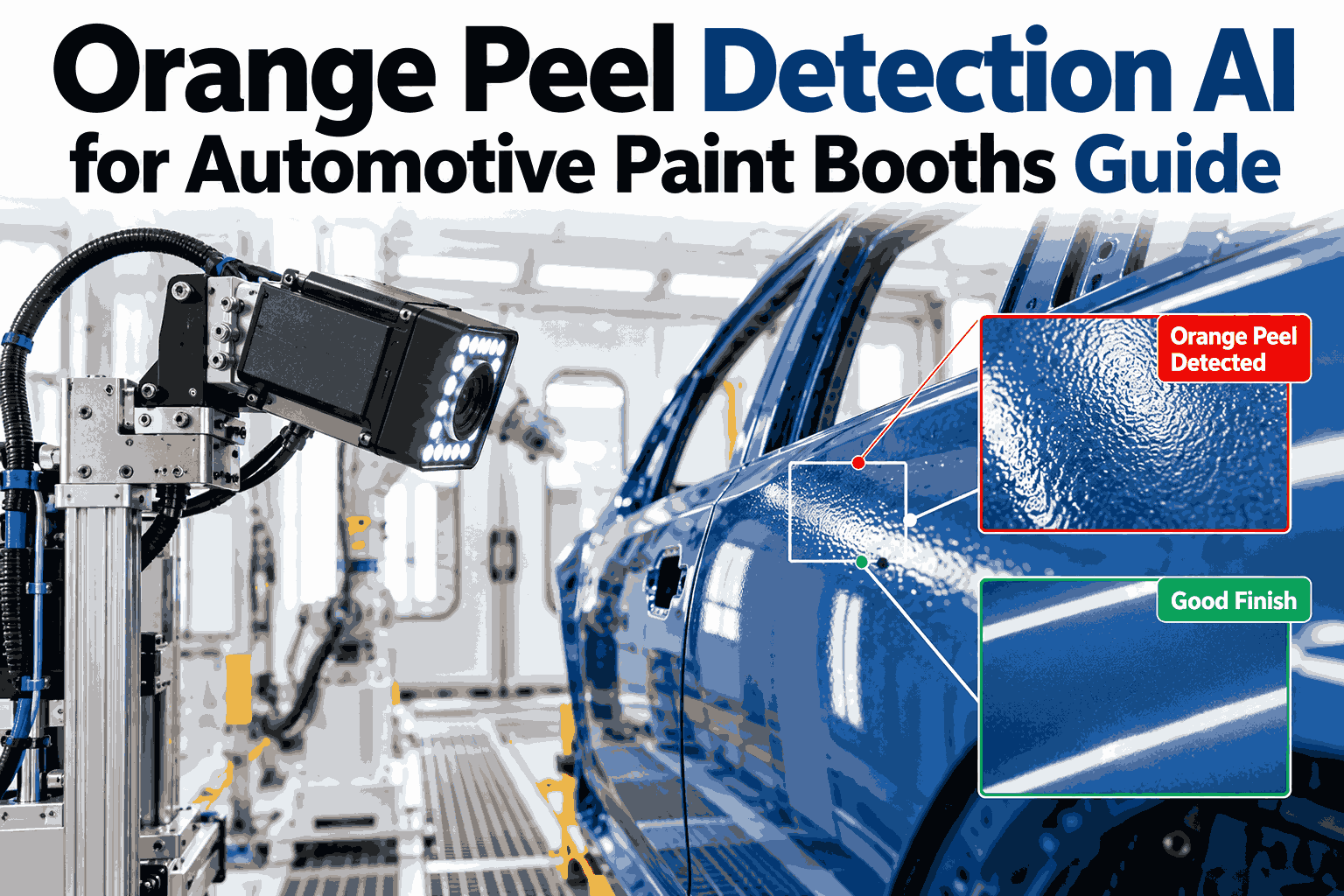
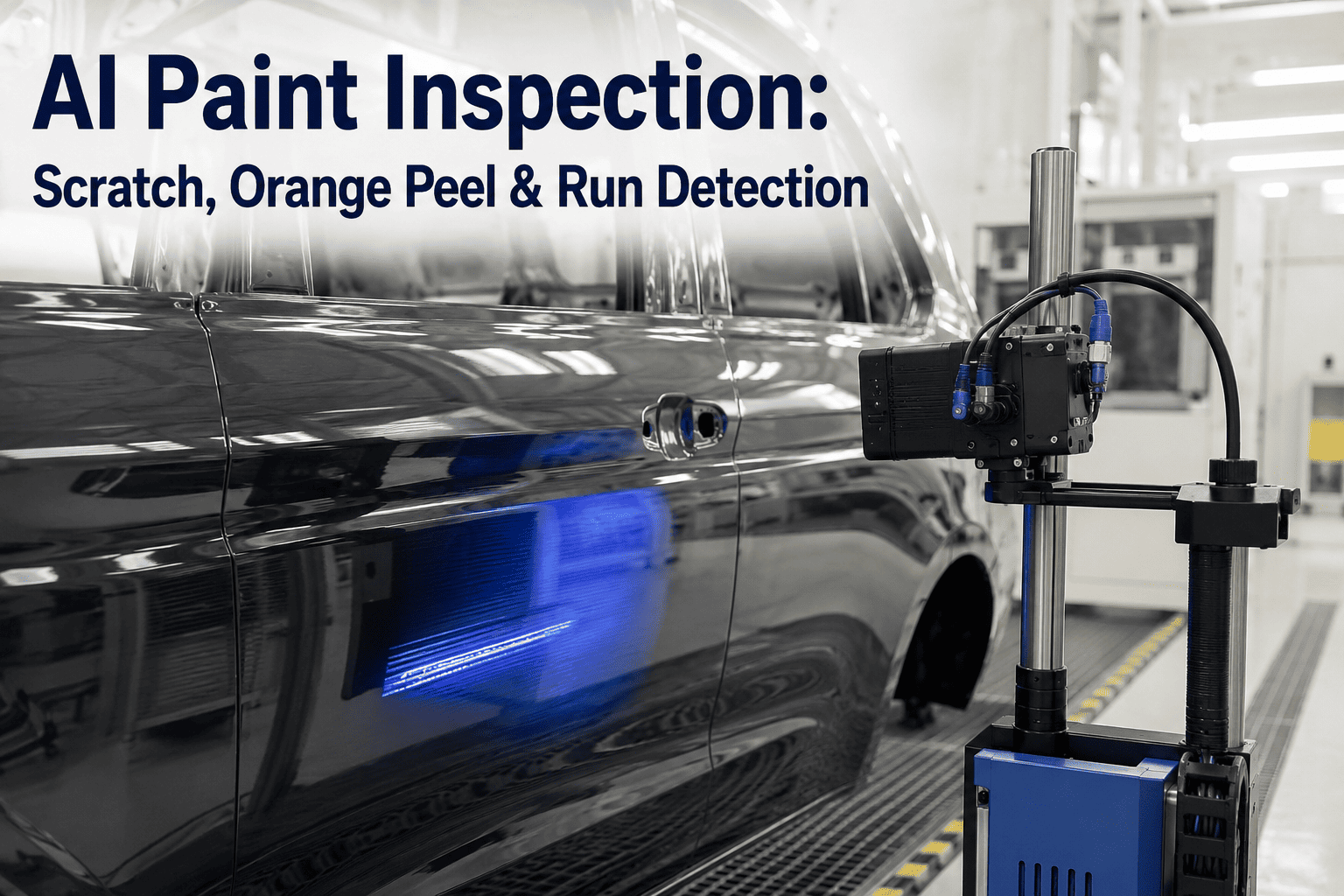
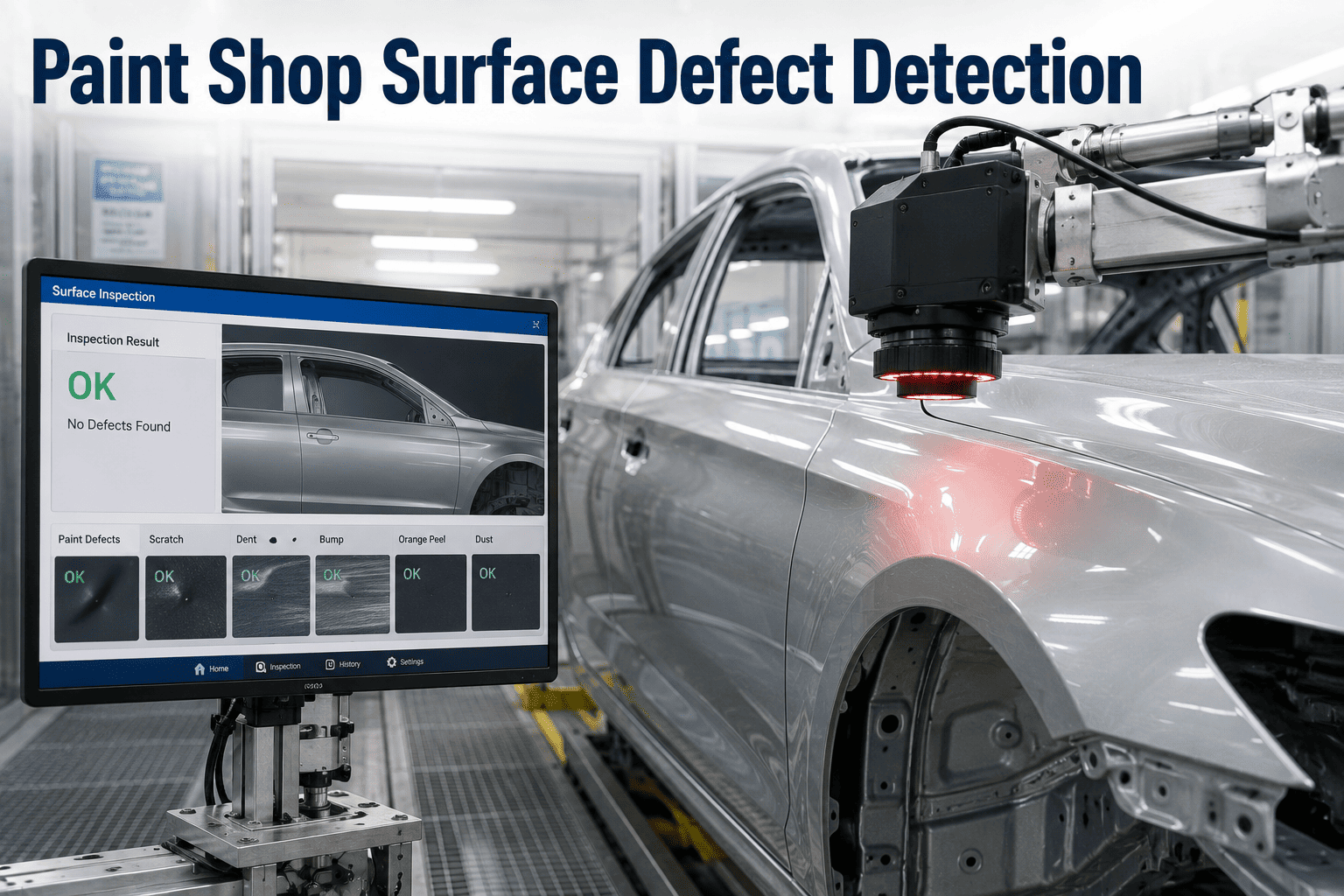
Orange peel is the paint defect that customers notice in the showroom light and inspectors sometimes miss under the tunnel lights, because it is a matter of degree rather than a clear flaw. The clearcoat dries with a faint wave instead of a mirror finish, and the reflection of a window or a lamp turns soft at the edges. Measured by eye, the same panel can pass on one shift and fail on another, which is how texture problems travel all the way to the dealer network. This guide explains how surface texture analysis and DOI scoring turn that judgment into a consistent number, and you can explore how the scoring would work on your own paint lines.
P2 AUTOMOTIVE PAINT DEFECT DETECTION
Orange Peel Detection AI for Automotive Paint Booths Guide
iFactory scores surface texture and DOI on every body, classifies orange peel inline and links the result to booth settings, so texture problems are caught before customers see them.
WHAT THE EYE SEES
Three Surfaces, Three Reflections
Orange peel is a wave in the clearcoat, and the size of the wave decides how sharp a reflection looks.
Smooth flow-out
The coat levels evenly and a reflected edge stays crisp.
Mild texture
Reflections soften slightly and the defect appears mainly in strong light.
Heavy orange peel
Reflections break up and the finish looks dimpled from a normal viewing distance.
The bars illustrate surface height variation and are not measured data.
WAVELENGTH BANDS
Why One Number Is Not Enough
Texture has different sizes, and each size affects appearance in a different way.
Short waveLong wave
Short waveFine texture, roughly a tenth of a millimetre up to about half a millimetre across. It makes the finish look hazy close up.
Long waveBroader waviness, roughly half a millimetre up to several millimetres. It makes panels look uneven from a distance.
Band limits vary by instrument and standard, so your paint specification defines which bands are scored and how.
DOI SCORING
Turning Reflection Sharpness Into a Score
Distinctness of image, or DOI, describes how clearly a panel reflects an object, and it gives texture a scale everyone can read.
RejectWatchAccept
Zone limits are illustrative and come from your OEM appearance standard
| Score zone |
Meaning |
Action |
| Accept |
Texture within target for that panel |
Release to the next process |
| Watch |
Approaching the limit or trending down |
Alert booth engineering and review settings |
| Reject |
Outside the appearance limit |
Route to repair or polish per procedure |
See how your current finish would score
iFactory can walk through texture and DOI scoring on your panel types and show where your limits would sit.
ROOT CAUSES
Six Booth Levers That Shape Texture
Orange peel rarely has one cause, but the main levers are well known and can be tracked.
Atomization
Coarse droplets from bell speed or shaping air settings level poorly.
Paint viscosity
Material that is too thick resists flowing out before it sets.
Film build
Too thin leaves little material to level, and too thick risks sagging.
Flash-off time
Solvent leaving too fast or too slowly changes how the film settles.
Booth climate
Temperature and humidity change evaporation and flow behavior.
Bake ramp
Heating too quickly can freeze the texture before the coat levels.
WHERE TO MEASURE
Choosing the Right Inspection Point
The same measurement is worth more or less depending on where in the process it happens.
A
After clearcoat bake, inline
Scores every body at line speed while repair is still simple.
B
Offline audit station
Handheld or bench wave-scan checks confirm and calibrate the inline view.
C
Final inspection
A last check before shipment, valuable but the latest point to correct.
THE ESCAPE PATH
How Cost Grows When Texture Escapes
A texture defect is cheapest to fix close to the booth and more expensive with every step it travels.
Found in paint shop
Found at final inspection
Found at the dealer
Customer complaint
The bars show relative cost and effort rather than actual figures, which differ by plant and market.
PANEL BY PANEL
Texture Is Not Even Across the Body
Position and orientation change how paint flows, so scores are tracked for each zone instead of one body average.
Roof
Hood
Door
Fender
Pillar
Trunk
The shading is illustrative of how zones differ, and the AI learns the real pattern from your own data.
FEEDBACK TO THE BOOTH
From Score to Setting Change
Detection matters most when the result reaches the people who can change the process.
What the AI sees
Long wave rising on the roof after a color change
Short wave rising late in the shift
One robot producing rougher panels than its neighbors
What engineers check
Flash-off time and material temperature for that color
Booth humidity and atomizer settings
Bell condition and calibration on that robot
FREQUENTLY ASKED QUESTIONS
What Paint and Quality Teams Ask
Does AI replace handheld wave-scan instruments?
No, handheld instruments remain the reference that keeps inline scores calibrated and trusted. The AI extends coverage to every body while handheld checks confirm accuracy.
See how the two work together in a walkthrough.
Can it handle every color, including metallics?
Color and effect pigments change how light reflects, so scoring is tuned per color family and confirmed against reference measurements. New colors go through a short learning period.
Ask our support team about your color range.
How are acceptance limits decided?
Limits come from your OEM appearance standard and your own customer feedback, and they can differ by panel and visibility. The system applies them and records each result.
Review a limit setup with our team.
Can it tell orange peel from other paint defects?
Yes, because texture has a distinct pattern compared with dirt, craters or runs, the model classifies each indication separately. This keeps repair routing accurate.
Contact support to discuss defect categories.
What changes for booth engineers day to day?
They receive trends by panel, robot and color, along with the likely lever to check, instead of a general appearance complaint. That shortens the path from finding to fixing.
Preview the engineer view in a demo.
CATCH THE TEXTURE EARLY
Find Orange Peel Before It Reaches the Dealer
iFactory scores texture and DOI on every body and connects results to booth settings, so the finish customers see matches the finish you intended.