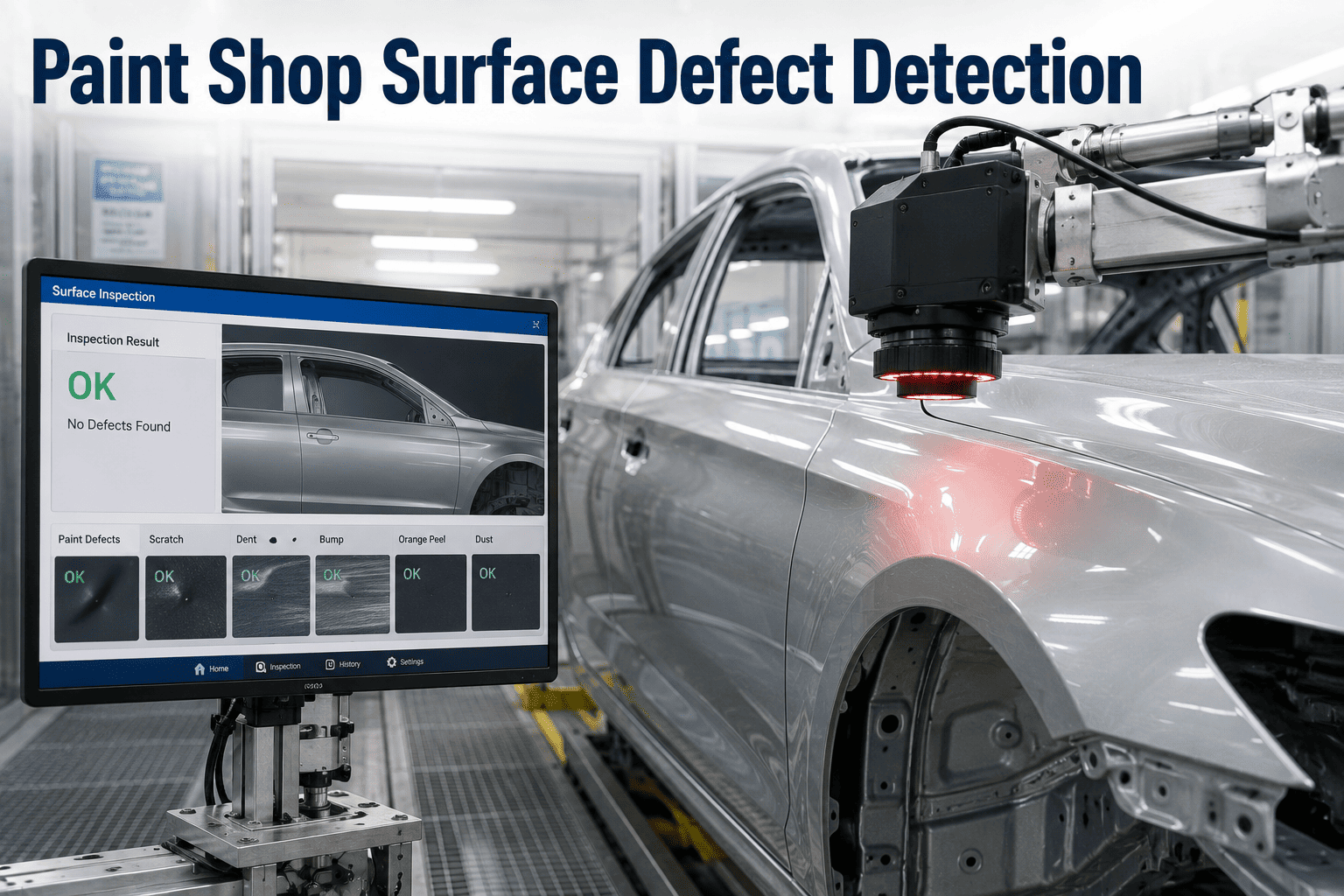
A finished car body can hold a scratch you need to tilt your head to see, an orange peel patch that only shows under showroom lights, or a pinhole the size of a pencil tip. Human inspectors under bright tunnels catch many of these, but fatigue, glare, and line speed mean some always slip through to final audit or, worse, to the customer. Paint defect detection software aims to see every panel with the same attention at the start of a shift as at the end. Quality teams building a 2026 shortlist can watch iFactory AI inspect glossy painted panels in a guided 30-minute session before comparing vendors.
See Every Scratch, Dent, and Pinhole on a Mirror-Finish Panel
iFactory AI applies deflectometry and deep learning to painted surfaces, classifying defects at line speed so nothing flawed moves on to final assembly.
Why Glossy Paint Fools Ordinary Cameras
A painted body is curved, reflective, and often dark or metallic. Those same qualities that make it beautiful make it hard for a standard camera to inspect.
Glare washes out fine scratches in one spot and creates false marks in another.
The same defect looks different on a flat door than on a rolled fender edge.
Metallic flake and dark tones need different treatment from solid light colors.
Six Defects Worth Catching Early
Each defect has its own footprint and its own upstream cause, so detection works best when the software classifies, not just flags.
Thin line damage from handling, fixtures, or contact in the booth.
A wavy texture across the surface caused by flow and cure conditions.
Tiny craters from trapped solvent or air escaping through the film.
Particles trapped under clear coat, often from booth air or surfaces.
Excess material that slumps before it cures, usually on vertical areas.
How Deflectometry Sees What Lights Miss
Instead of lighting the paint and hoping to see a flaw, deflectometry shows a known stripe pattern and studies how the glossy surface reflects it. Any change in surface shape bends the stripes.
Illustrative stripe reflections. Real systems capture and analyze the pattern across the whole body.
From Defect Shape to Upstream Cause
Finding a defect is only half the job. The table links each one to the signal that reveals it and the stage that usually causes it.
| Defect | What the System Sees | Usual Upstream Cause | Typical Response |
|---|---|---|---|
| Scratch | Sharp line break in reflection | Handling or conveyor contact | Inspect fixtures and touch points |
| Dent | Local stripe distortion | Impact before or after coating | Trace station and clearances |
| Orange peel | Fine wave across many stripes | Viscosity, flash time, cure | Tune booth and oven settings |
| Pinhole | Tiny point disruption | Trapped solvent or air | Adjust flash and bake profile |
See Your Paint Defects Classified, Not Just Flagged
Book a 30-minute demo and iFactory AI will show how deflectometry and deep learning handle your colors, panel shapes, and line speed.
Keeping Pace With the Line
Inspection only helps if it finishes before the body moves on. The bar shows where time goes in each inspection cycle.
Stripe images are captured as the body passes through the inspection tunnel.
Distortions are mapped to surface shape across the whole panel.
Deep learning names the defect type and rates its severity.
The body goes to repair, polish, or onward depending on the result.
What "Best" Means in 2026
A Composite Scenario: The Defect That Only Showed at Audit
A paint shop kept passing visual checks, yet final audit kept finding fine pinholes on one color running in the afternoon.
Illustrative example based on common paint shop patterns, not a specific customer result.
Delivered Turnkey, Live in 6 to 12 Weeks
iFactory AI arrives pre-configured on an NVIDIA server with software pre-loaded. Rack it, connect power and Ethernet, and the team handles the rest.
Frequently Asked Questions
What is deflectometry and why is it used on paint?
Deflectometry projects a known stripe pattern onto a glossy surface and studies how it reflects. Even tiny changes in shape bend the stripes, making scratches, dents, and waviness easy to see. A live look at stripe analysis on real painted panels makes the idea concrete.
Can it detect orange peel, not just damage?
Yes. Orange peel shows up as fine waviness in the reflected stripes, which the software can measure and score against your target. That lets paint teams control appearance quality instead of only catching visible damage after the fact.
Will it work on metallic and dark colors?
Reflective methods actually suit glossy metallic and dark finishes well, because they rely on the mirror-like surface rather than on color contrast. Review your full color range with the iFactory AI team in one short call.
How does it reduce false rejects?
Defects are classified by type and severity against your own acceptance limits, so cosmetic marks that fall inside tolerance do not trigger repair. That keeps unnecessary rework down and focuses technicians on defects that genuinely affect customer quality.
How long does deployment take?
Delivery is turnkey and typically takes 6 to 12 weeks. The hardware arrives pre-configured, integration covers cabling, network, and plant systems, and the last phase trains your teams. Plan a rollout around your paint line schedule in a 30-minute conversation.
Ship Flawless Finishes, Not Audit Surprises
iFactory AI inspects every painted panel with deflectometry and deep learning, classifies each defect, and ties it back to its cause. Book a walkthrough on your own paint line.