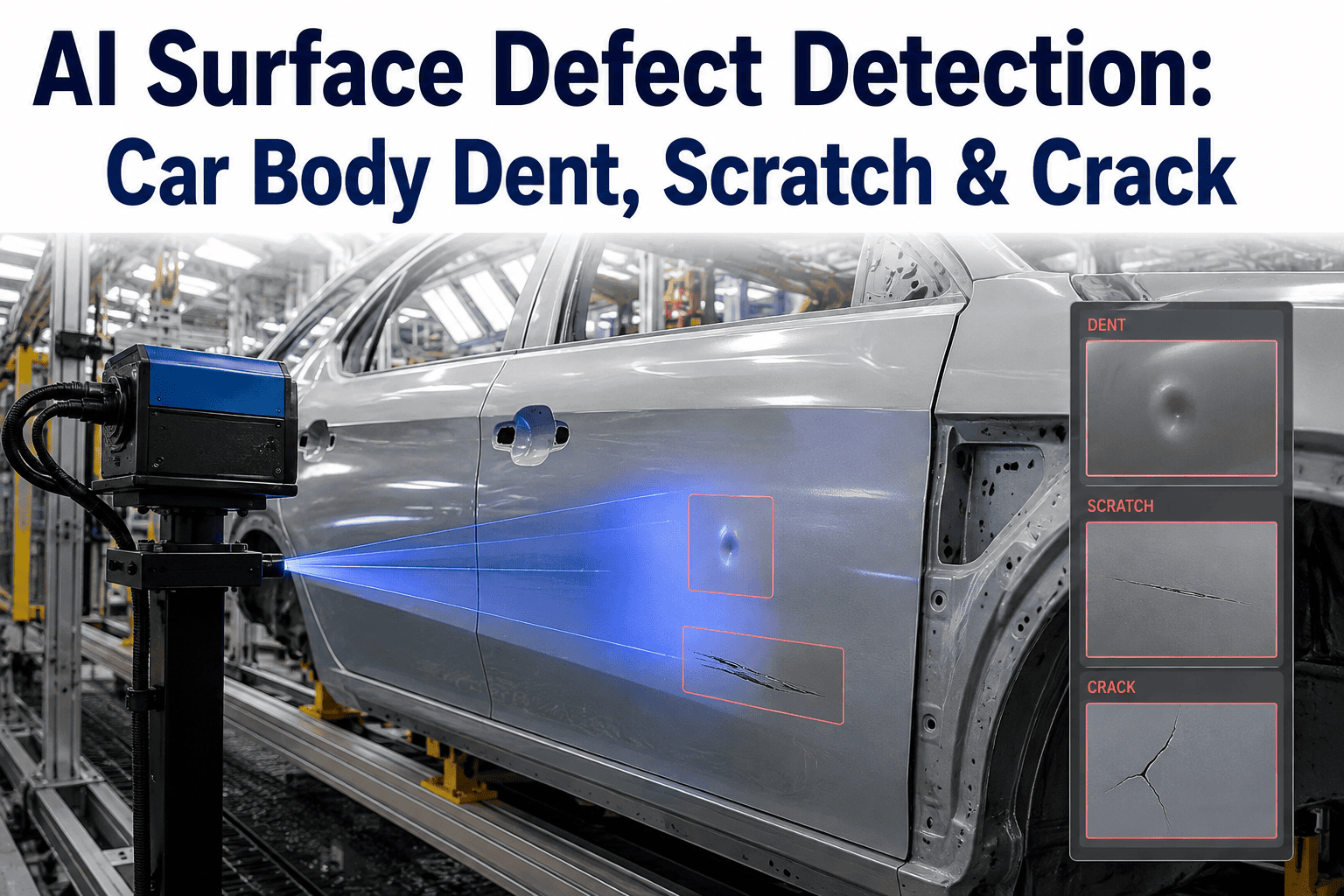
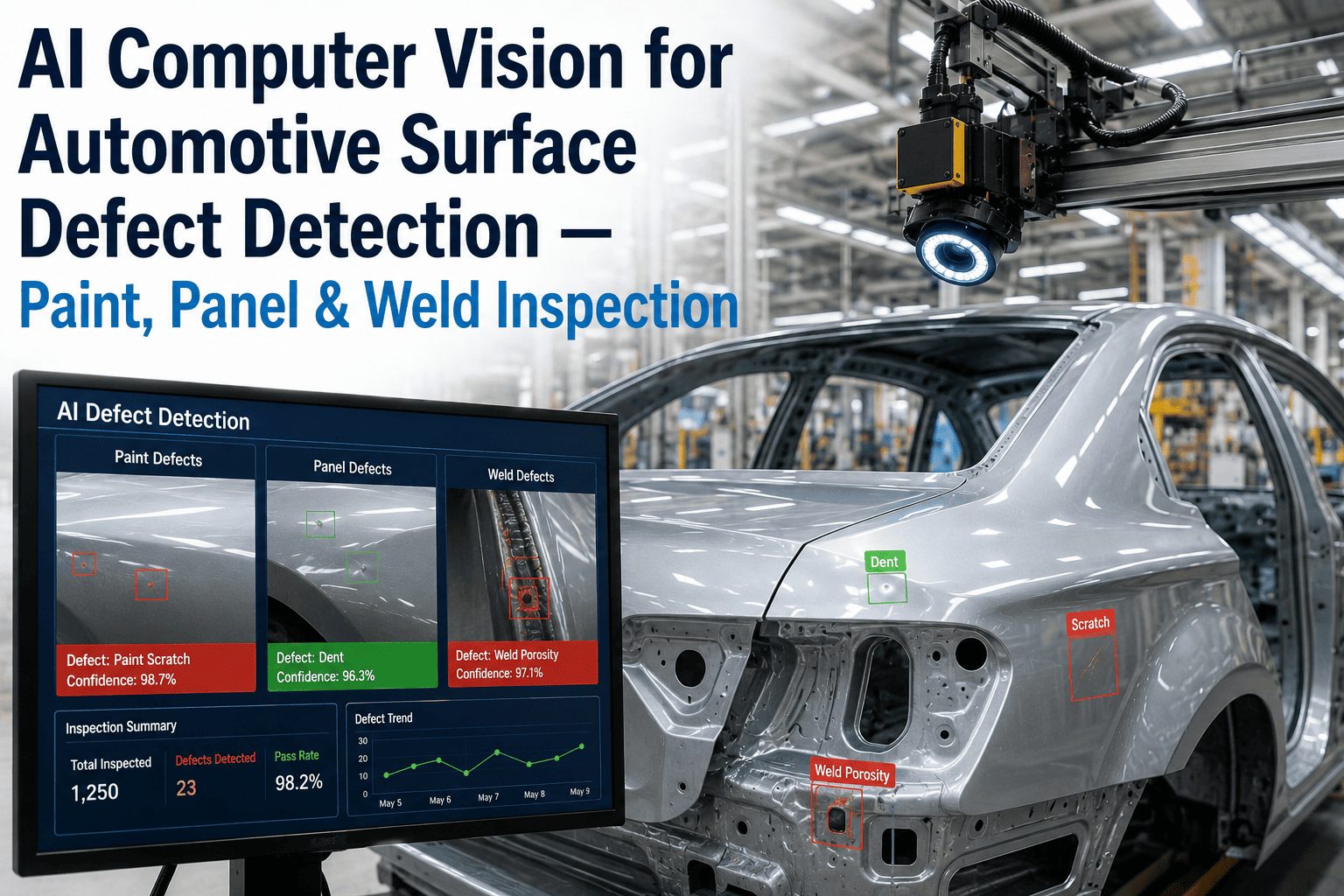
A dent the width of a fingernail, a scratch shallower than a sheet of paper, a hairline crack near a stamped edge — these are the defects that decide whether a body panel passes as showroom-ready or gets pulled for rework, and they are exactly the kind of subtle, low-contrast flaws that human visual inspection misses most often under the fluorescent lighting and time pressure of a real production line. Zero-defect body quality is the standard automotive OEMs hold themselves to publicly, but hitting it consistently at full line volume genuinely requires inspection that doesn't get tired, doesn't blink, and doesn't have an off day. AI-based surface defect detection brings that consistency to dent, scratch, and crack inspection across every panel that moves down the line. Book a session with iFactory's surface inspection team to see live detection running against your own body panels.
Automotive Body Quality · AI Surface Inspection
AI Surface Defect Detection for Dents, Scratches, and Cracks on Car Body Panels
Subtle body panel flaws slip past manual inspection more often than plants like to admit. Here is how AI vision brings consistent, zero-defect-grade coverage to every panel.
Defect Types Covered
Three Categories of Surface Defect AI Vision Catches
Body panel surface defects fall into a handful of recurring categories, each with its own visual signature and its own detection challenge, from the low-contrast subtlety of a shallow dent to the fine-line difficulty of a hairline crack near a stamped radius.
01
Dents
Subtle surface deformation is detected through reflection pattern analysis, since a dent distorts how light reflects off the panel surface even when it's too shallow to see under standard lighting.
02
Scratches
Fine linear surface disruptions are identified by texture and contrast analysis tuned to distinguish an actual scratch from a harmless reflection artifact or dust particle on the panel.
03
Cracks and Stamping Marks
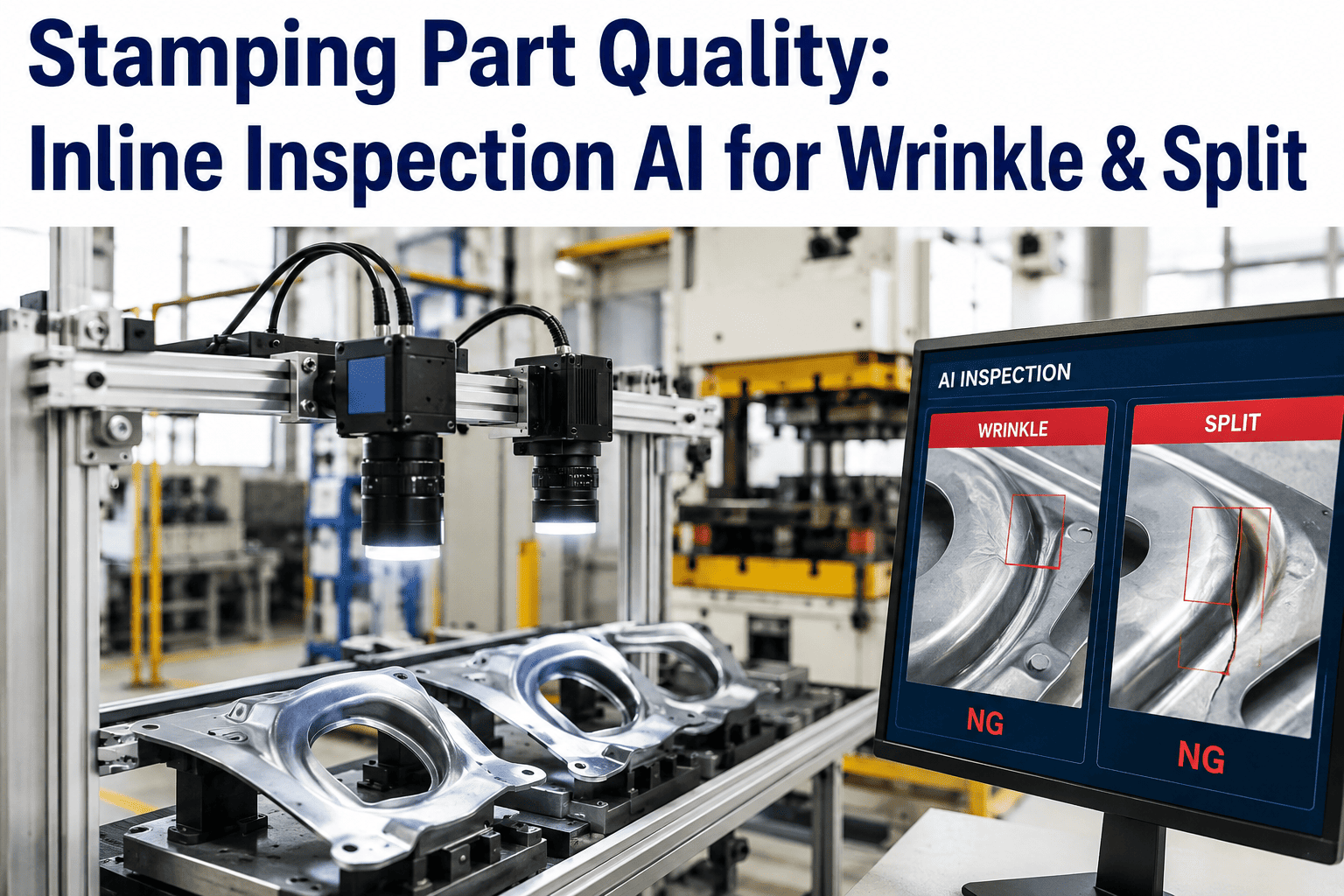
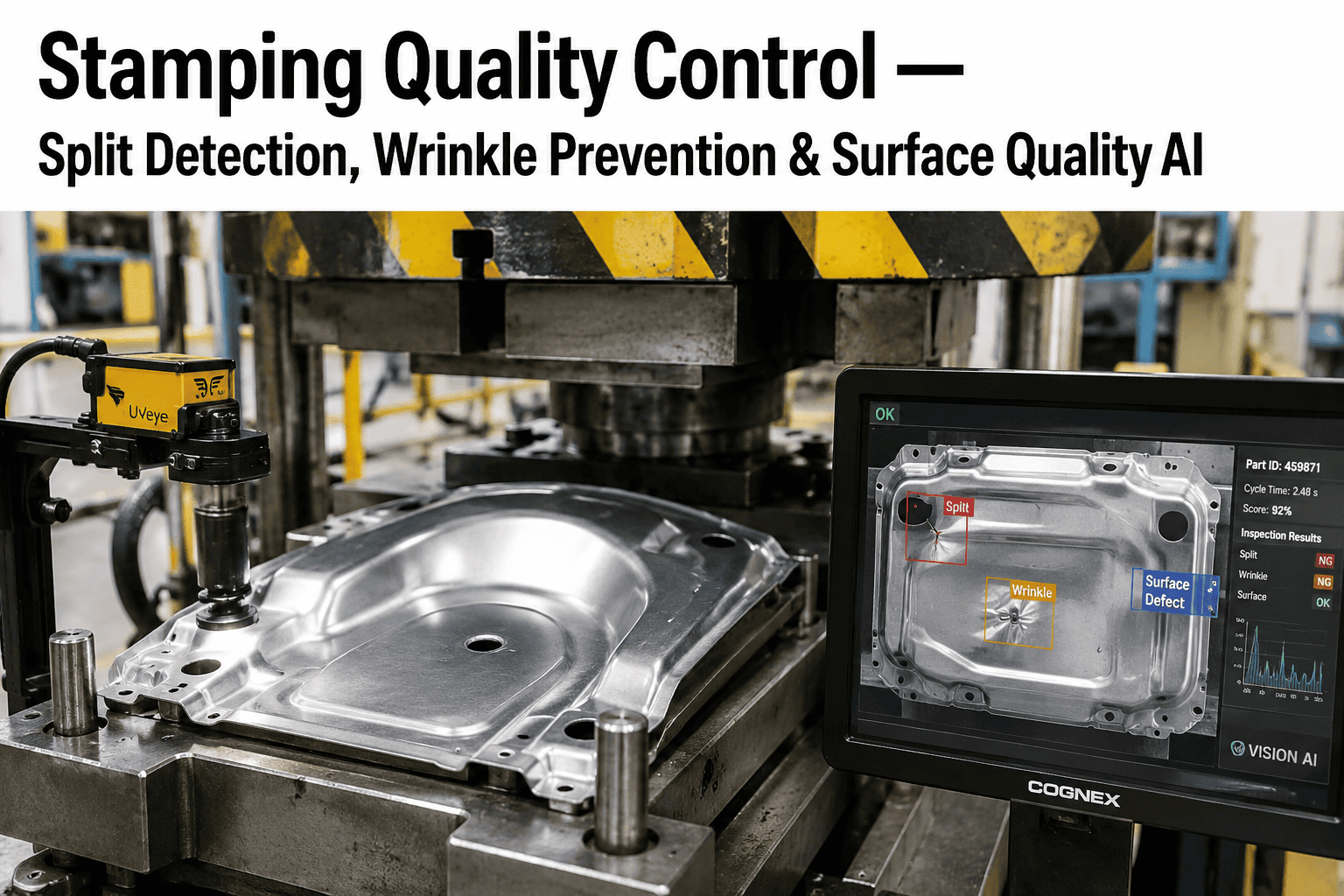
Hairline cracks and stamping process marks near formed edges and radii are flagged through pattern recognition trained specifically on the geometry where these defects most commonly appear.
Bring Your Own Panels to the Demo
See AI Surface Inspection Detect Real Defects on Real Panels
The clearest way to evaluate surface defect AI is against your own body panels and your own defect history, not a generic vendor sample set.
Why Manual Inspection Struggles
The Specific Reasons Human Eyes Miss These Defects
•Fatigue across a shift naturally reduces detection consistency for subtle, low-contrast defects late in a work period.
•Fixed lighting angles at a manual inspection station can hide a dent that would be visible from a slightly different viewing angle.
•Line speed pressure limits how long an inspector can actually spend examining each panel before the next one arrives.
•Inspector-to-inspector variation means the same defect can pass on one shift and get caught on another, purely based on individual sensitivity.
Manual vs. AI Coverage
How Detection Rates Compare Across Defect Categories
| Defect Category |
Typical Manual Detection Challenge |
AI Vision Approach |
| Shallow dents |
Low contrast makes them easy to miss under standard lighting |
Reflection pattern analysis surfaces surface distortion invisible to the eye |
| Fine scratches |
Easily confused with harmless surface artifacts |
Texture-based classification distinguishes genuine scratches from noise |
| Hairline cracks |
Extremely thin lines near complex geometry |
Geometry-aware pattern recognition tuned to formed edge locations |
| Stamping marks |
Subjective judgment on acceptability varies by inspector |
Consistent classification against defined acceptance criteria |
Field Perspective
Body panel surface defects are unusual in that the defects that matter most for customer perception are frequently the ones that are hardest to see reliably, since a deep dent or an obvious scratch rarely makes it past manual inspection in the first place. It's the shallow dent and the fine scratch that create the real inconsistency problem, because whether they get caught depends heavily on lighting angle, inspector fatigue, and individual sensitivity that varies shift to shift. AI vision's real advantage in this specific application isn't raw detection capability so much as consistency — the same panel gets the same evaluation regardless of what time of day or which inspector would have been looking at it manually.
Emeka Vasilenko-Thorne
Automotive Surface Quality Specialist · 12 years in body panel surface inspection · Former Surface Quality Engineer, automotive body shop and paint operations
Common Questions
Surface Defect Detection — Frequently Asked
Can AI surface inspection catch defects that experienced manual inspectors typically miss?
Yes, particularly for low-contrast defects like shallow dents, where AI-based reflection pattern analysis can surface distortion that is genuinely difficult to see under fixed manual inspection lighting, regardless of inspector experience level.
Book a demo to see detection performance against your own historical miss data.
What lighting setup is required for reliable dent and scratch detection?
Surface defect detection typically requires controlled, multi-angle lighting designed to reveal reflection distortion, which is more specialized than standard ambient factory lighting but is a defined, repeatable setup rather than a custom build for every station.
Book a demo to review lighting requirements for your specific panels.
How does the system distinguish an actual scratch from a harmless surface artifact like dust or a water spot?
Texture and pattern-based classification trained on both genuine defects and common false-positive artifacts allows the model to distinguish real scratches from transient surface noise with meaningfully higher consistency than a quick visual glance.
Book a demo to review false-positive handling for your surface types.
Can the same system be used across different paint colors and panel materials?
Detection models can be trained across multiple colors and materials, though highly reflective or metallic finishes may require additional lighting or model tuning to maintain consistent accuracy across the full color range.
Book a demo to review coverage across your specific color and material mix.
Where in the process does surface defect detection typically get installed — before or after paint?
Many plants deploy surface inspection at multiple points, both pre-paint to catch panel-level flaws early and post-paint to catch any paint-process defects, since each stage introduces different defect risks worth catching separately.
Book a demo to design station placement for your specific line layout.
Catch What Manual Inspection Misses
Bring Consistent AI Surface Detection to Every Body Panel
iFactory deploys AI vision tuned for dents, scratches, cracks, and stamping marks, bringing zero-defect-grade consistency to body panel inspection at full line speed.