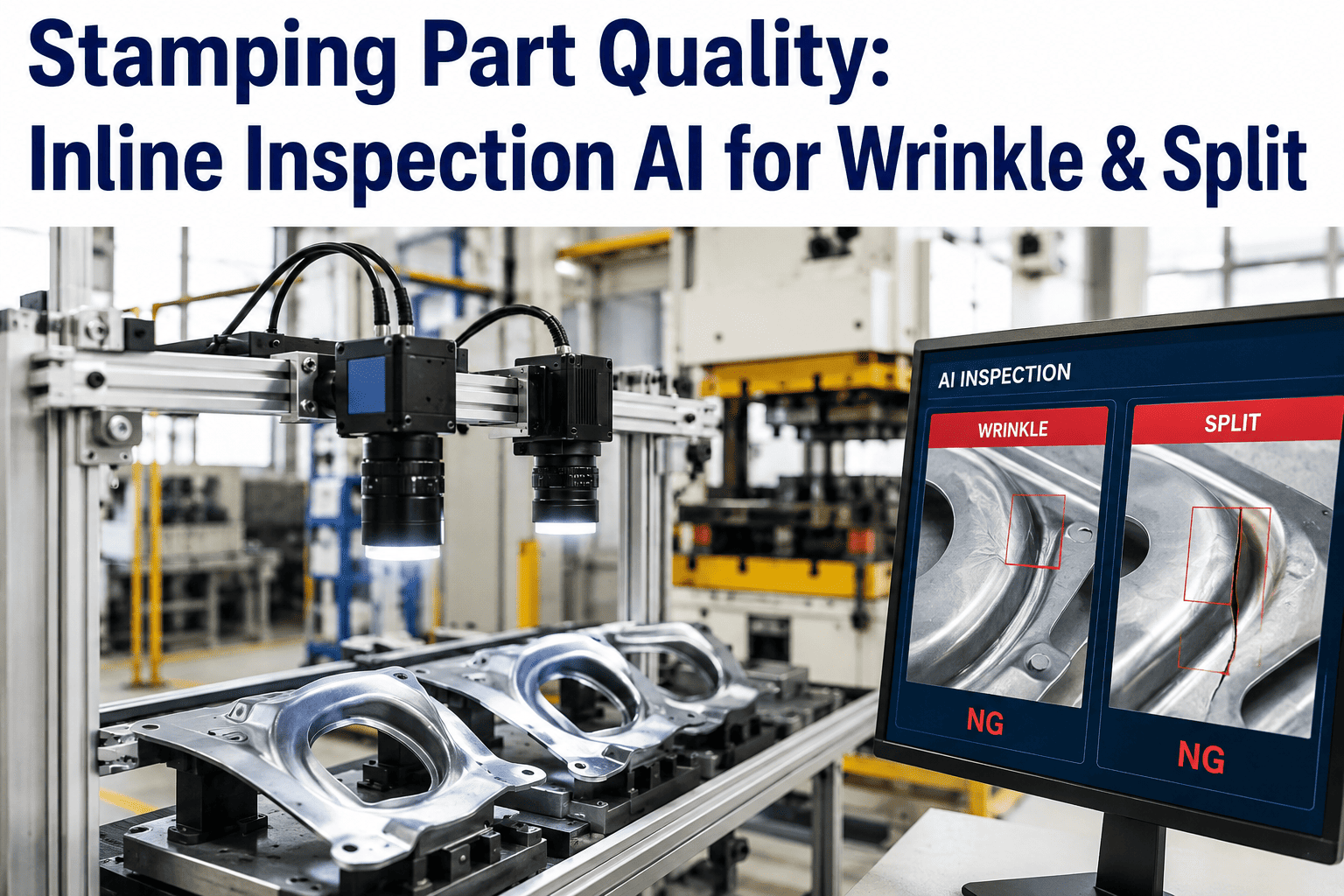
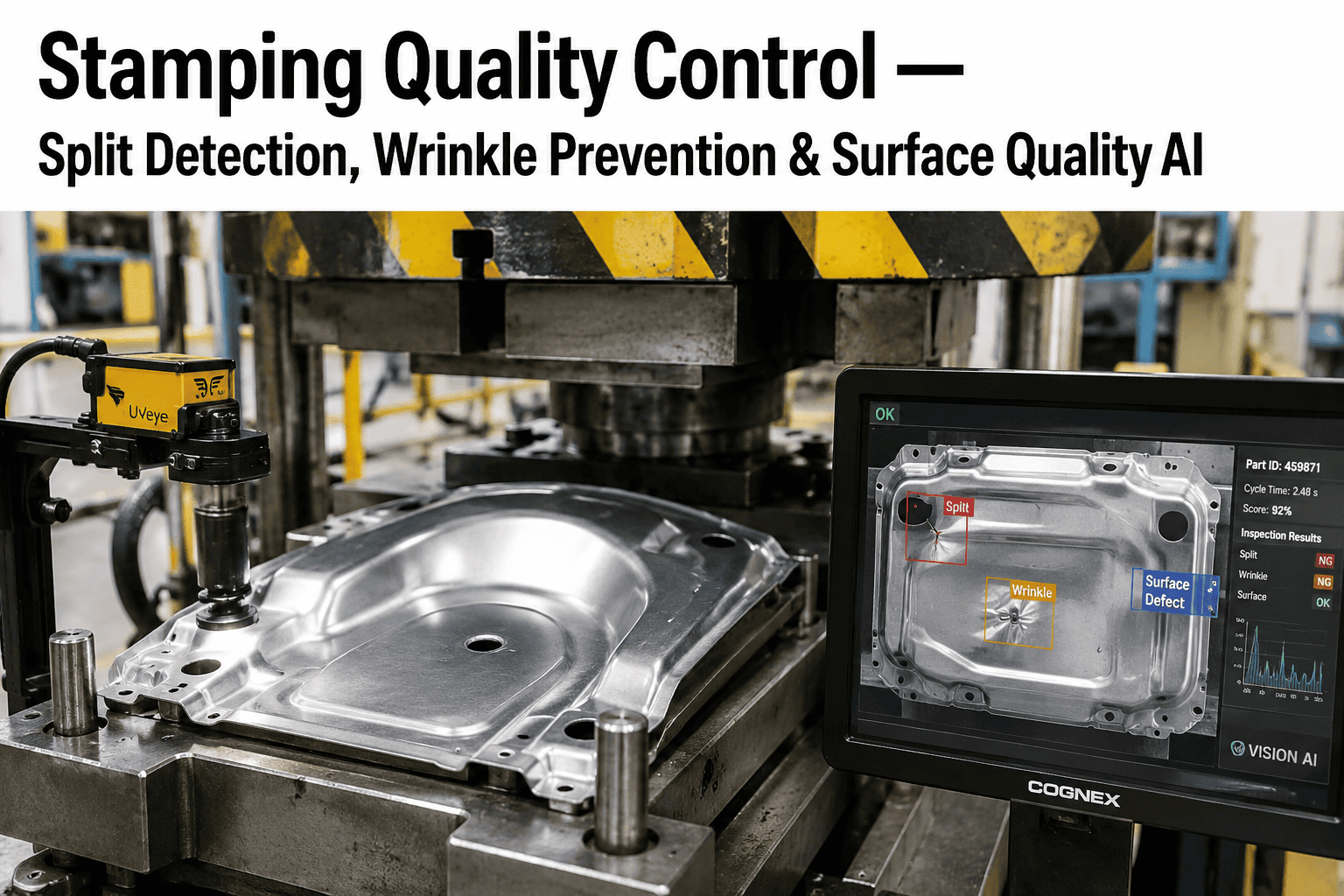
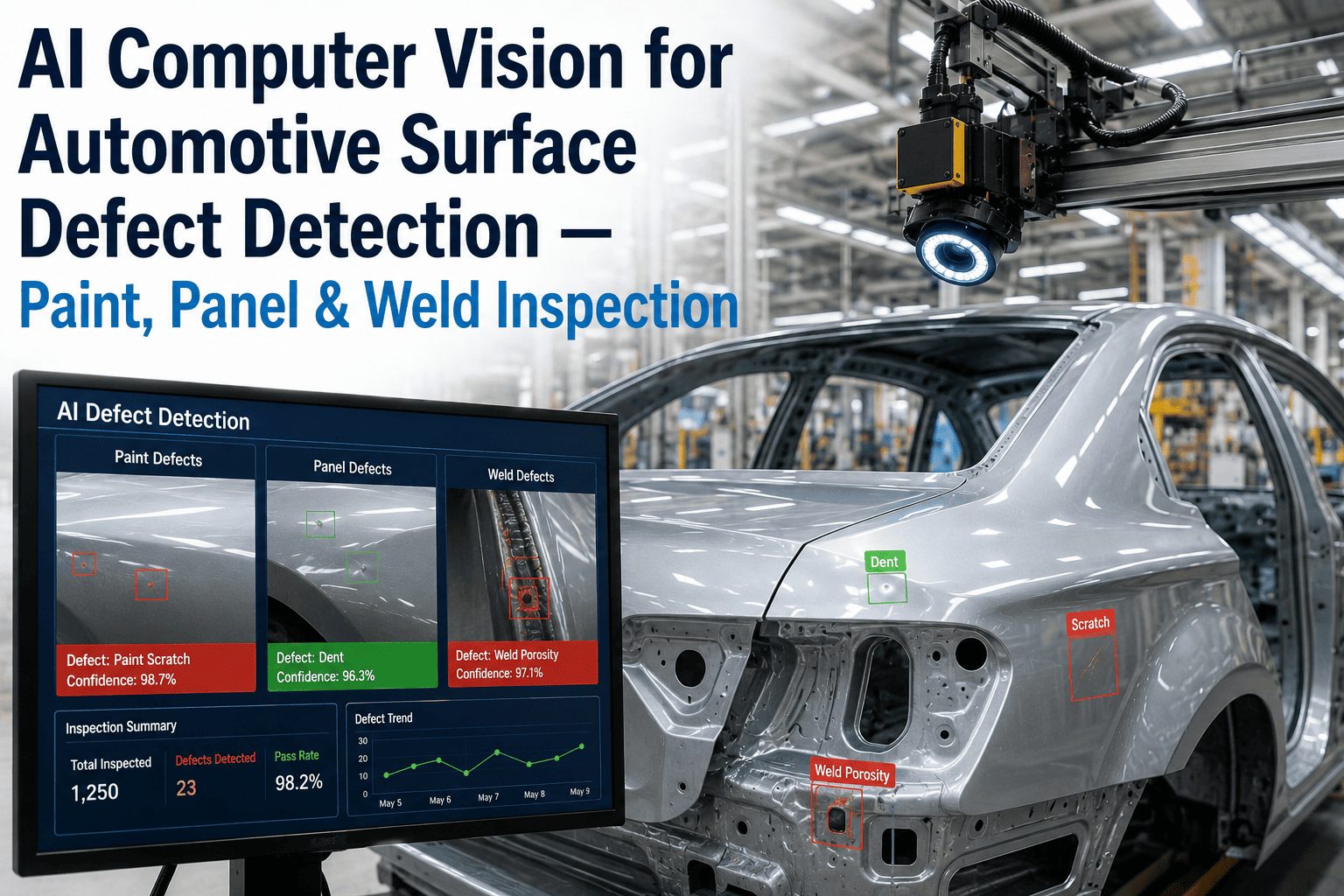
A stamped panel can look flawless from three feet away under normal shop lighting and still carry a split at a draw radius, a wrinkle hidden along a character line, or a faint draw mark that only shows up once the panel is painted and displayed under direct sunlight. Manual inline inspection depends on an operator glancing at each panel for a few seconds as it moves down the line, which works for obvious defects but consistently misses the subtle forming problems that end up as warranty claims or paint shop rejects weeks later. Splits and wrinkles form because of local material stress during the draw, and the earliest sign is often a change in surface texture that a trained eye catches only with the right lighting angle and enough time to look. iFactory's AI vision platform inspects every stamped panel at full line speed, and you can book a demo to see split, wrinkle, and draw mark detection running inline on your press.
STAMPED PANELS · VISION INSPECTION · DEFECT DETECTION · INLINE AI
Catch the Split Before It Becomes a Warranty Claim in Three Years
iFactory's AI vision platform inspects every stamped panel inline at full line speed, detecting splits, wrinkles, and draw marks that manual visual inspection misses under standard shop lighting and time pressure.
1,240
Panels Inspected This Shift
180ms
Average Inspection Time
THE MANUAL INSPECTION GAP
Why a Few Seconds Per Panel Is Not Enough to Catch Every Defect
Manual inline inspection is fundamentally limited by the time an operator has to look at each panel and the consistency of that attention across a full shift. The specific gaps below are where forming defects most often slip through to the next process step.
Seconds Per Panel, Not Minutes
At full press speed, an operator has only a few seconds to glance at each panel before it moves on, which is enough time to catch an obvious defect but not a subtle split or early-stage wrinkle.
Lighting-Dependent Visibility
Many draw marks and micro-wrinkles are only visible under a specific raking light angle, which standard overhead shop lighting rarely provides at the inspection point.
Fatigue Over a Shift
The same inspection performed sharply at the start of a shift becomes noticeably less reliable by the final hours, exactly when cumulative die wear is most likely to be producing new defects.
Defects Found Downstream
A split or wrinkle missed at the press is often caught much later at the paint shop or final assembly, by which point far more cost has already been added to the defective panel.
DEFECT TYPES
What the AI Model Is Trained to Catch on Every Panel
Each forming defect type has a distinct visual signature, and the platform is trained specifically to recognize each one rather than applying a single generic anomaly detector across every panel type.
Splits and Cracks
Local material tearing at high-stress draw radii, detected from surface discontinuity patterns invisible under standard lighting angles.
Wrinkles and Buckles
Surface waviness from insufficient blank holder pressure, identified through subtle shadow pattern changes along character lines.
Draw Marks and Galling
Surface scoring from die contact friction, flagged through reflectance pattern deviation across the panel's visible surface.
Dimensional Springback
Panel geometry deviation after die release, measured through edge profile comparison against the reference part geometry.
Stop Relying on a Few Seconds of Human Attention Per Panel
iFactory's AI vision platform inspects every stamped panel at full line speed, catching splits, wrinkles, and draw marks that a manual glance under standard lighting is likely to miss. Book a demo to see it running on your press shop line.
TRACEABILITY
Linking Every Detected Defect Back to Its Root Cause
A defect flagged at the moment it forms is far more useful than one found later, especially when it can be immediately linked to the exact die, stroke number, and coil batch that produced it. This turns individual defect detections into a pattern your team can actually act on.
Stroke 48,212
Linked to Specific Stroke Number
Die B07
Linked to Specific Die Identity
Coil Lot 5591
Linked to Material Batch Record
HEAD TO HEAD
Manual Visual Inspection vs AI Vision Panel Inspection
The comparison below covers the dimensions that determine whether a forming defect gets caught at the press or shows up much later in the process.
MEASURED OUTCOMES
Results From AI Panel Inspection Deployments
These figures reflect press shops where iFactory's platform was deployed for inline panel inspection and tracked over a minimum six-month production period.
3.8x
More Defects Caught
At the Press Instead of Downstream
54%
Reduction
In Defective Panels Reaching the Paint Shop
180ms
Inspection Time
Per Panel, Matched to Full Line Speed
$225K
Annual Savings
From Earlier Defect Capture and Reduced Rework
FREQUENTLY ASKED QUESTIONS
Questions From Stamping Quality Leads About Vision Inspection
Can the system keep up with our press running at full production speed?
Yes, iFactory's inspection processing is designed to match full press cycle speed, typically completing analysis within under 200 milliseconds per panel, which is fast enough to inspect every single panel at line rate without becoming a bottleneck. The exact throughput depends on panel size and camera resolution requirements, which are assessed during the pilot phase for your specific press and part mix.
Book a demo to see inspection speed demonstrated at your actual line rate.
How does the system handle different panel geometries across our part mix?
Each panel geometry is trained individually so the model understands the expected surface pattern and character lines specific to that part, rather than applying one generic detector across every shape. When your line changes over to a different part number, the platform switches to the corresponding trained model automatically as part of the changeover sequence.
What happens to a panel once a defect is detected — is it automatically rejected?
Most facilities configure the system to flag the specific panel and defect location to the line for operator review and sorting, rather than an automatic reject mechanism, since some flagged conditions warrant human confirmation before a panel is scrapped. For high-confidence, clearly defined defect types, automatic reject gating can be configured where the plant prefers that response.
Contact our support team to discuss the right response workflow for your line.
Can this same system detect defects on both sides of a panel, or only the visible top surface?
Standard configurations inspect the visible top surface as the panel travels down the line, since that is where most cameras can be mounted without interfering with material handling. Where underside inspection is critical, a second camera station or a panel flip point in the line can be added, which iFactory's deployment team evaluates based on your specific part types and line layout.
How does this connect with the tonnage signature and die wear data from earlier in the process?
Panel defect detections, tonnage signature data, and die wear predictions can all be correlated against the same stroke number and die identity, which lets your quality team confirm whether a detected panel defect actually matches a signature drift the tonnage monitoring already flagged.
Book a demo to see how these data sources come together for a single press line.
Every Panel Deserves More Than a Two-Second Glance
iFactory's AI vision platform inspects every stamped panel at full line speed, catching splits, wrinkles, and draw marks before they travel any further down the process. Book a demo to see it working on your press shop floor.