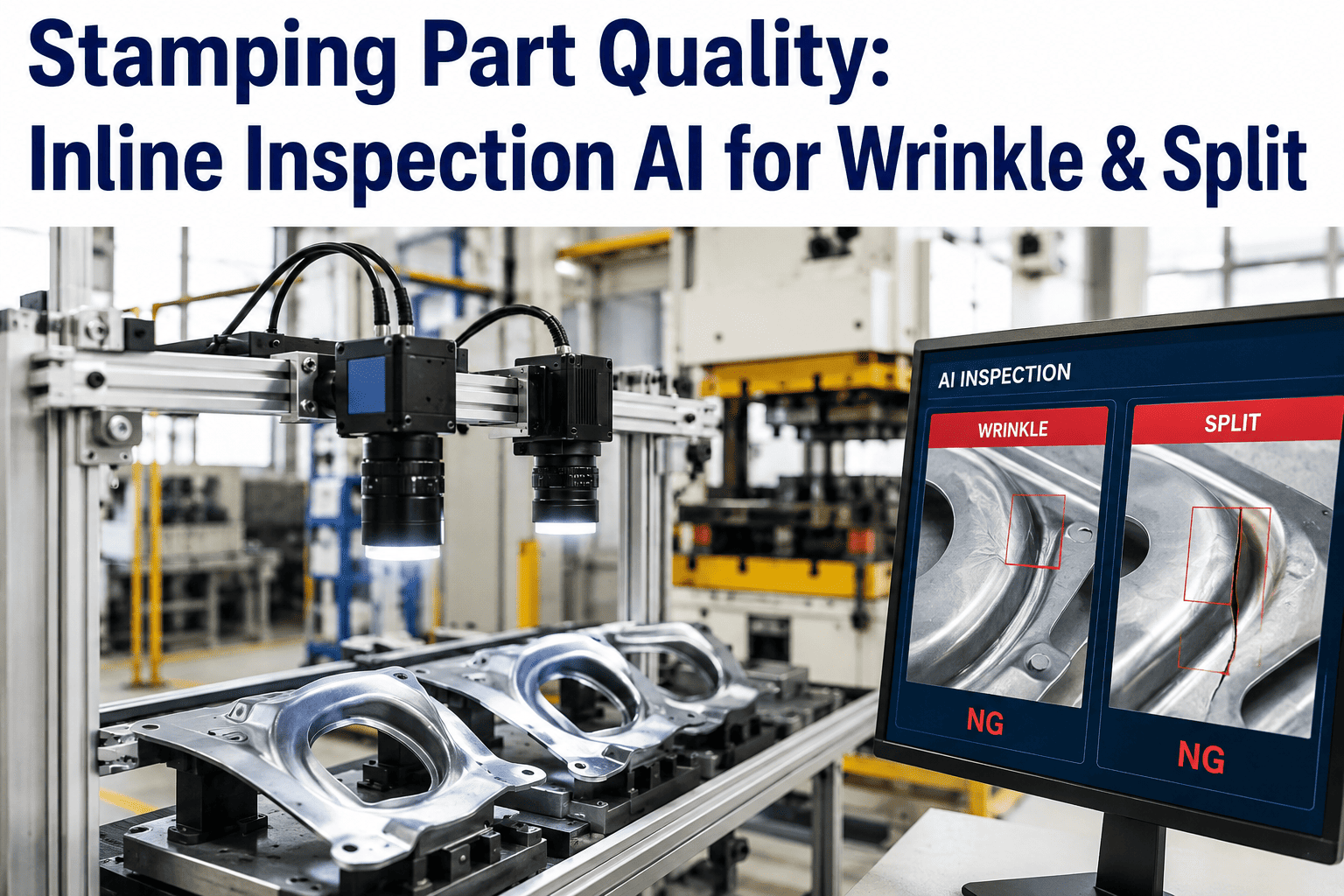
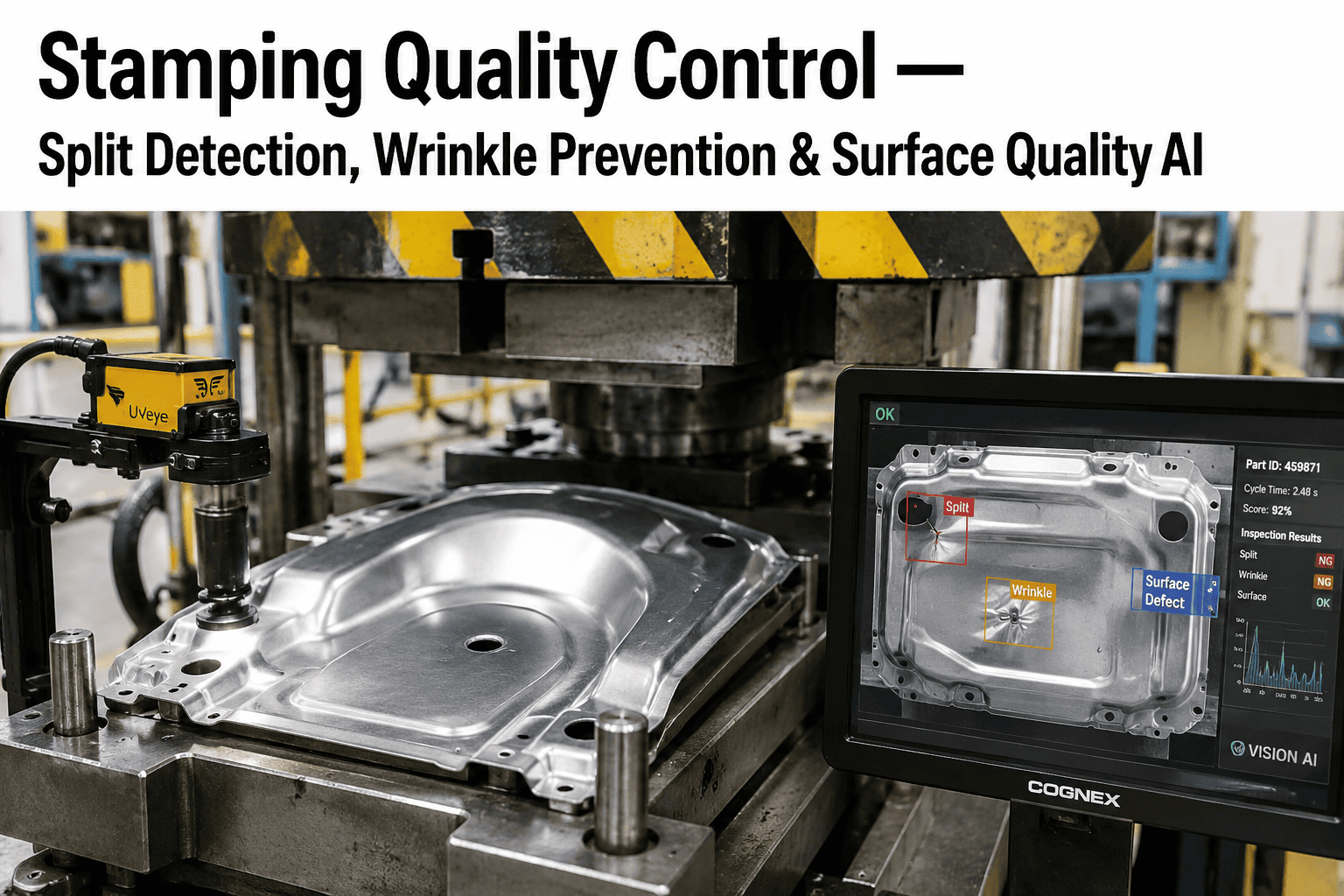
A split, tear, or wrinkle in a stamped panel happens in a fraction of a second as the material deforms under the press, and by the time a human inspector sees the finished part downstream, the die has usually already produced several more parts with the exact same defect. Press speed simply outruns manual inspection capacity, which is why stamping quality has traditionally relied on periodic sampling and downstream catch points rather than checking every part as it's formed. Inline AI inspection closes that gap by evaluating parts at press speed, catching a defect on the stroke it happens instead of an hour later in final audit. iFactory's stamping inline inspection platform is built to run at the speed the press actually operates.
Stamping Quality Inspection
Catching Wrinkles and Splits on the Stroke They Happen
Press speed outruns manual inspection. See how inline AI evaluates every part at press speed instead of relying on downstream sampling.
Four Defect Types Inline Inspection Is Built to Catch
Wrinkling
Compressive folds in the material caused by insufficient blank holder force or improper material flow control.
Splitting
Material tears through where local strain exceeds the material's formability limit, often near tight radii.
Necking
Localized thinning that precedes a split, visible as a subtle change in surface reflection before full failure.
Surface Tearing
Partial material separation at the surface, often linked to die galling or lubrication inconsistency.
Why These Defects Are Hard to Catch Downstream
Speed Mismatch
Presses cycle far faster than a human inspector can realistically evaluate every part leaving the die.
Subtle Onset
Necking and early wrinkling can be difficult to see with the naked eye before they progress into a clear defect.
Delayed Feedback Loop
By the time a defect is caught downstream, many additional parts may have already been produced the same way.
Sampling Gaps
Periodic manual checks between full inspections leave windows where a developing issue can go unnoticed.
How Inline Inspection Works at Press Speed
1
Capture
High-speed cameras image each part as it exits the die, synchronized to the press cycle
2
Analyze
AI evaluates surface pattern, geometry, and reflectivity against trained defect signatures
3
Classify
Detected issues categorized by defect type and severity in real time
4
Feed Back
Results routed to operators and process engineers for immediate die or process adjustment
Want to see how inline inspection would perform against your own defect history? Talk to our team about a stamping quality assessment.
Detection Point Comparison
| Detection Point | Typical Delay | Parts at Risk Before Catch |
|---|
| Inline at press | Milliseconds | Minimal — next stroke corrected |
| Periodic manual sampling | Minutes to hours | Potentially hundreds of parts |
| Downstream final inspection | Hours | Full shift's production possible |
| Assembly or field | Days to months | Entire affected build window |
What Inline Detection Changes
Immediate
Feedback to operators on the exact stroke a defect occurs
Fewer
Parts produced with the same defect before correction
Faster
Die and process adjustment cycles based on real-time data
Who Benefits From Inline Stamping Inspection
01
Press Operators
Get immediate feedback to make process adjustments instead of waiting for downstream feedback hours later.
02
Process Engineering
Uses real-time defect classification to correlate issues with die condition or material changes.
03
Quality Teams
Reduces reliance on downstream sampling to catch defects that should have been stopped at the source.
04
Plant Leadership
Tracks scrap reduction directly tied to faster detection and correction cycles.
Frequently Asked Questions
Can inline inspection actually keep up with high-speed press cycles?
Yes, this is specifically what the technology is designed for — high-speed camera capture synchronized to the press cycle, paired with an AI model optimized for rapid inference, rather than a system built for the slower pace of manual visual inspection. Camera and lighting requirements do need to be matched to your specific press speed.
Our team can assess what your line's speed requires.
Can this catch necking before it becomes a full split?
Often yes, since necking produces a subtle but detectable change in surface reflection and geometry that an AI model can be trained to recognize before the material fully separates, giving process teams a chance to intervene before a split defect actually occurs.
Does this replace end-of-line stamping quality checks entirely?
Not typically. Inline inspection catches defects at the source, which reduces the volume and severity of what reaches downstream checks, but a final audit layer often remains as a secondary confirmation, particularly for defect types that inline cameras aren't positioned to see.
How does the system distinguish a real defect from normal surface variation?
The model is trained on a large set of both acceptable and defective parts specific to your material, geometry, and finish, which is what allows it to distinguish genuine defects from normal, acceptable surface variation rather than flagging every minor visual difference.
Where should a plant start with inline stamping inspection?
Start with the part number and die combination generating the most scrap or downstream rejects currently, since that's where inline detection typically delivers the fastest, most measurable improvement.
Book a demo to see how that starting point typically gets identified.
Don't Wait for a Defect to Reach Final Audit.
Catch Wrinkles and Splits on the Stroke They Happen
Bring your current stamping defect and scrap data. We'll show you what inline inspection at press speed could catch before it multiplies.