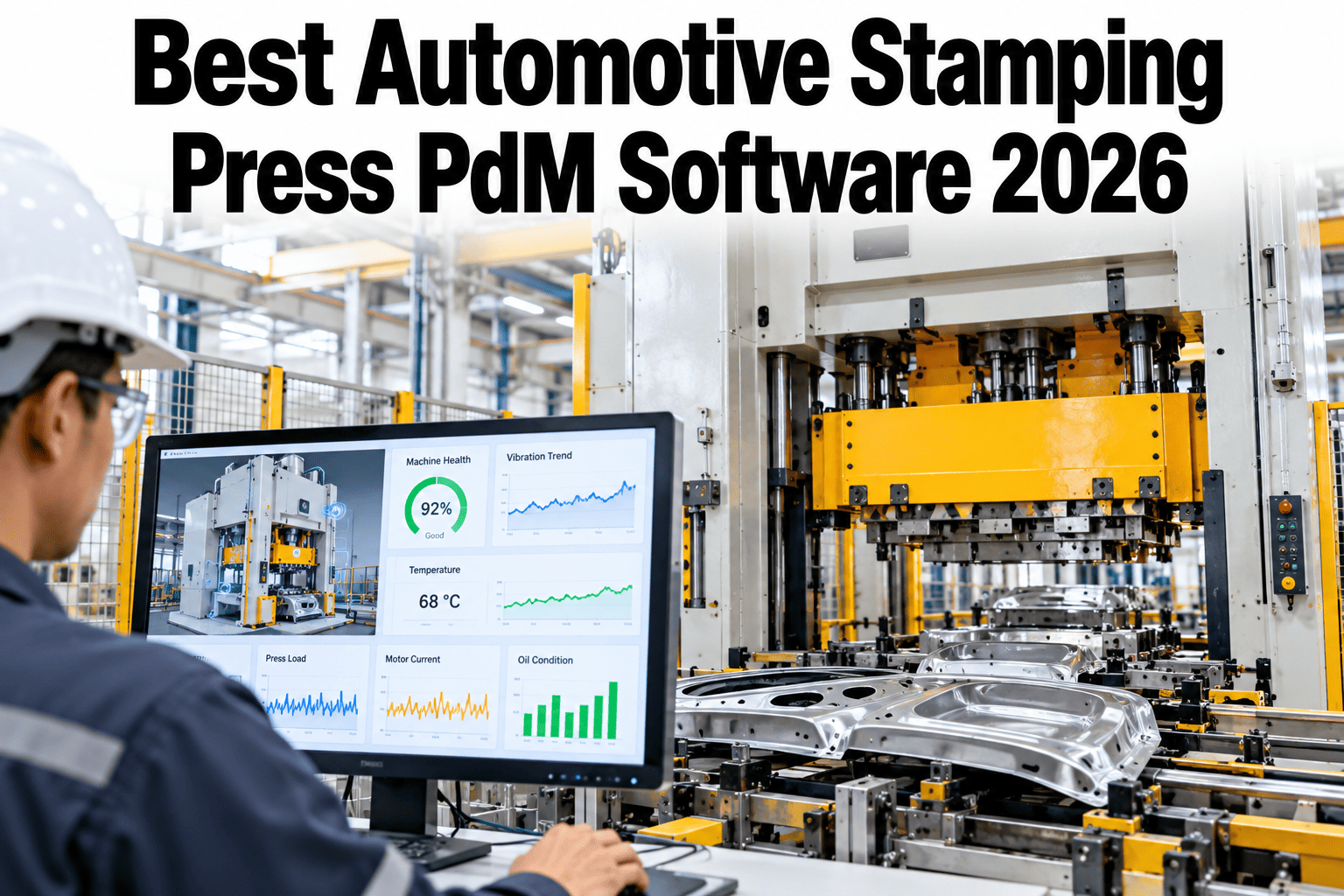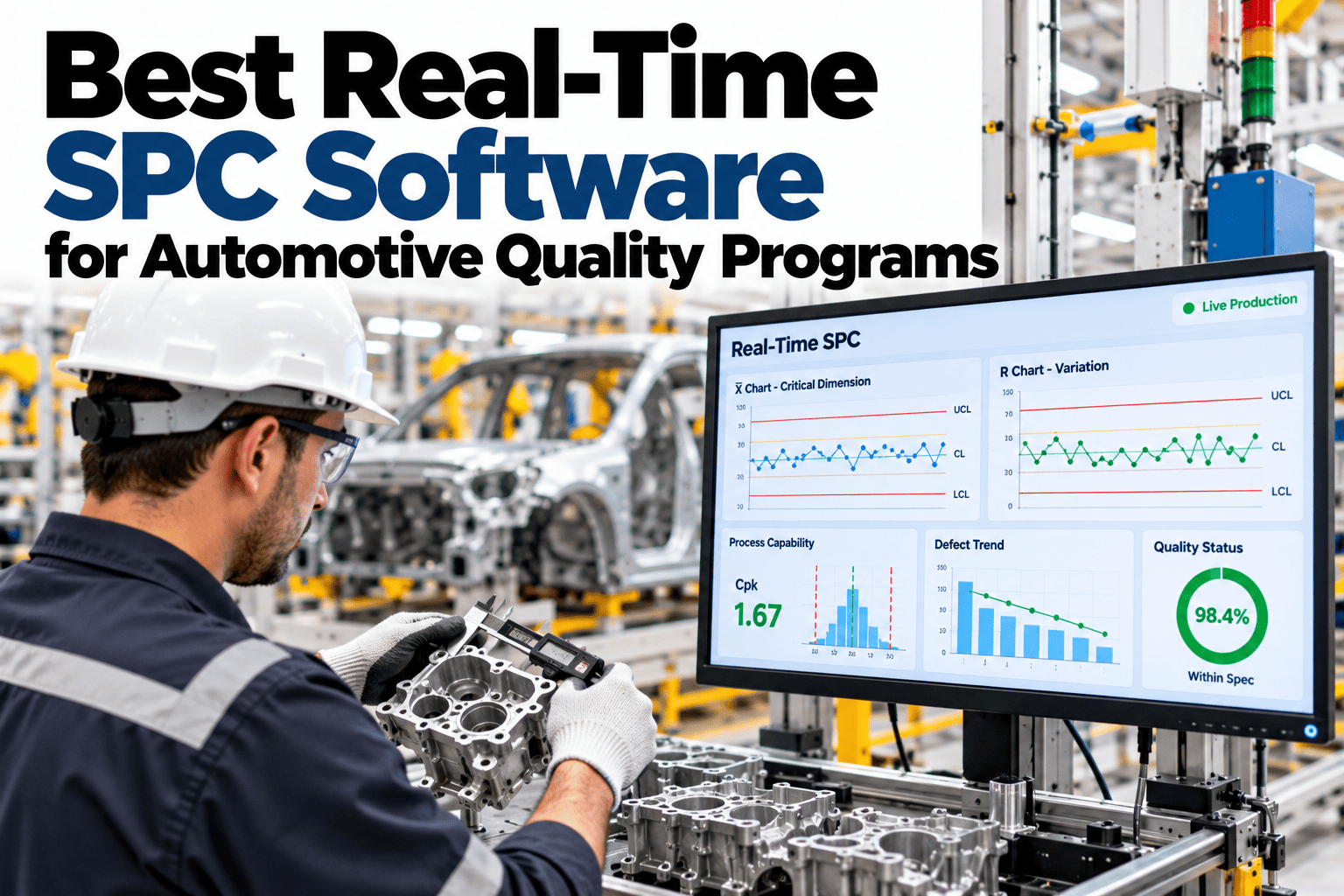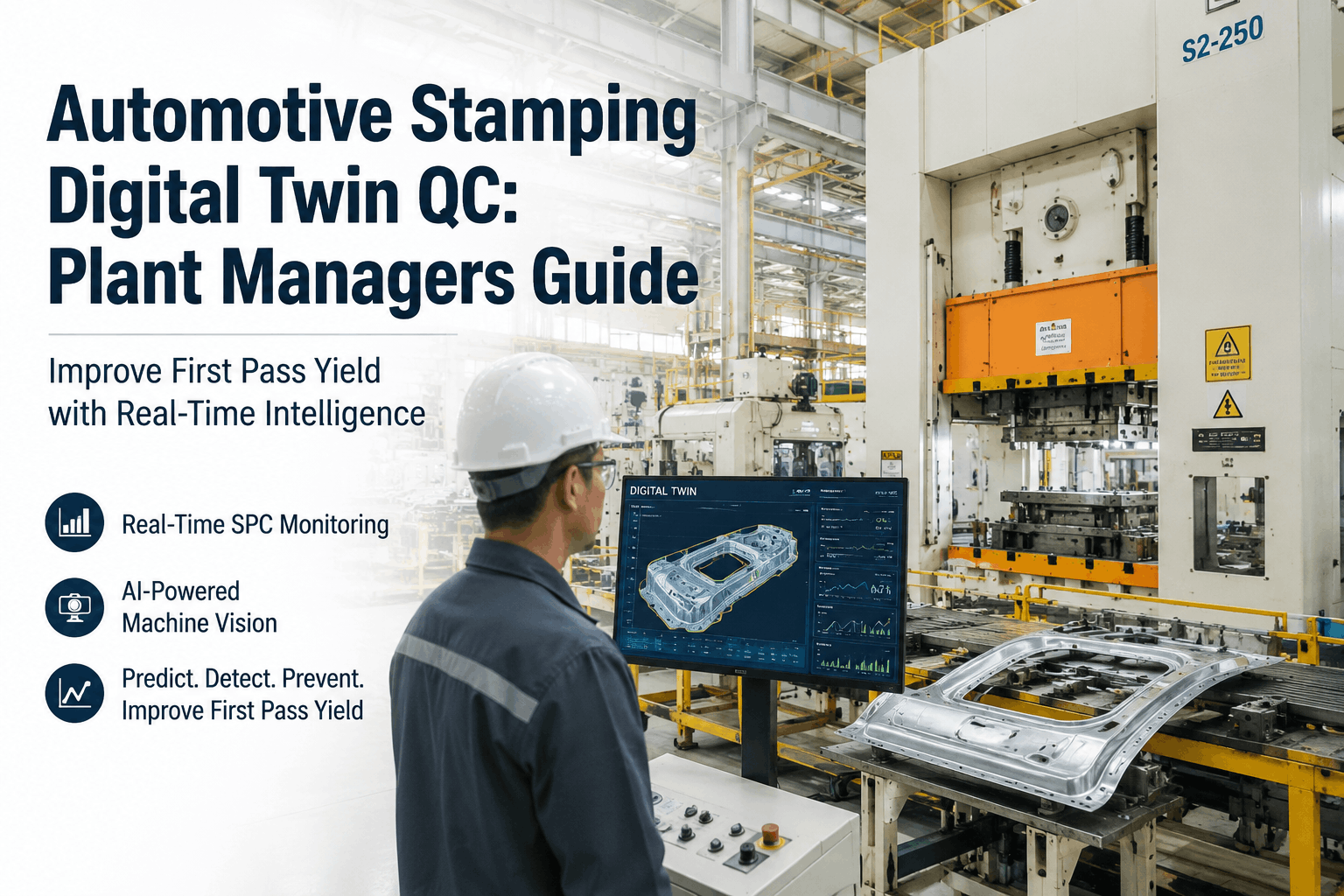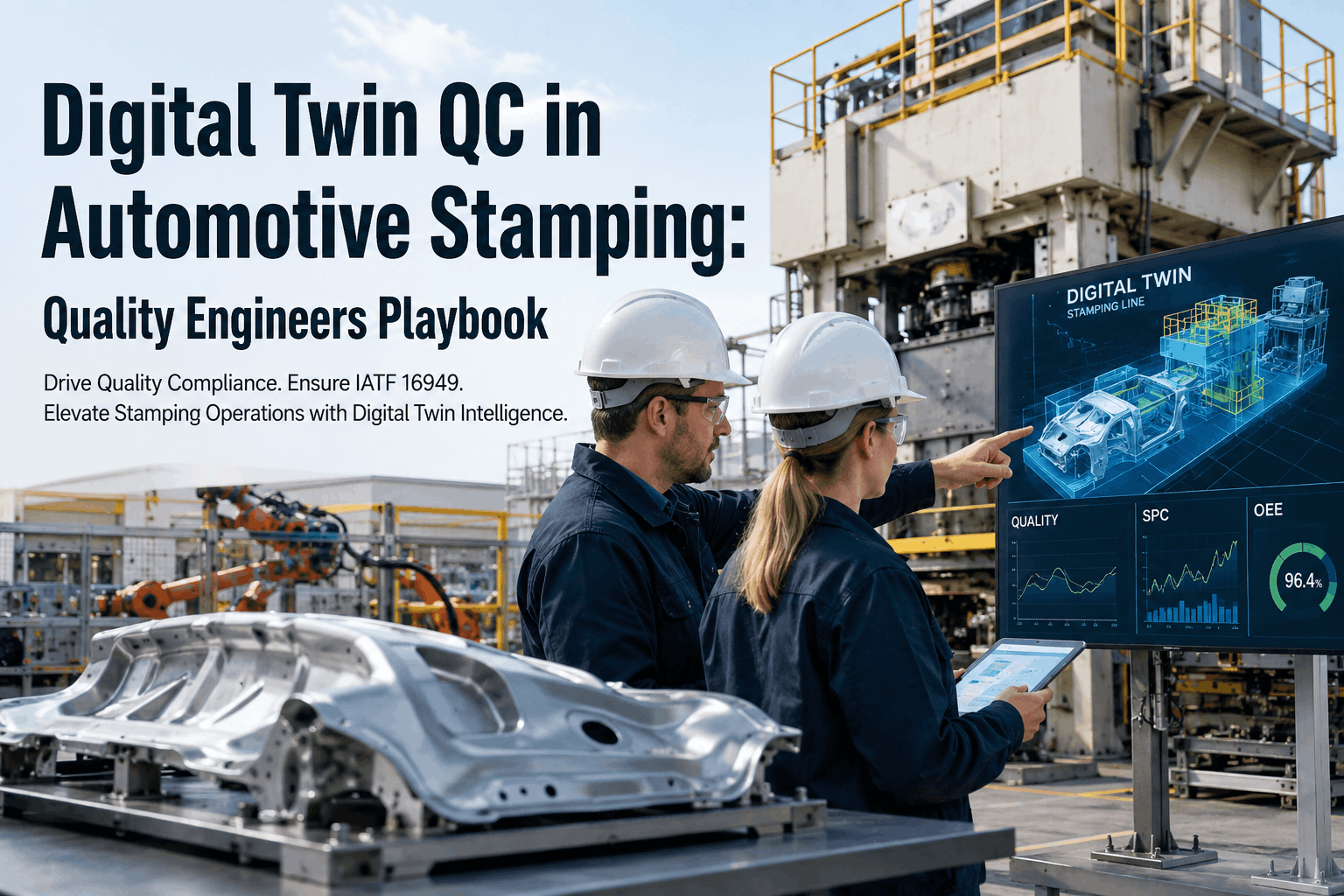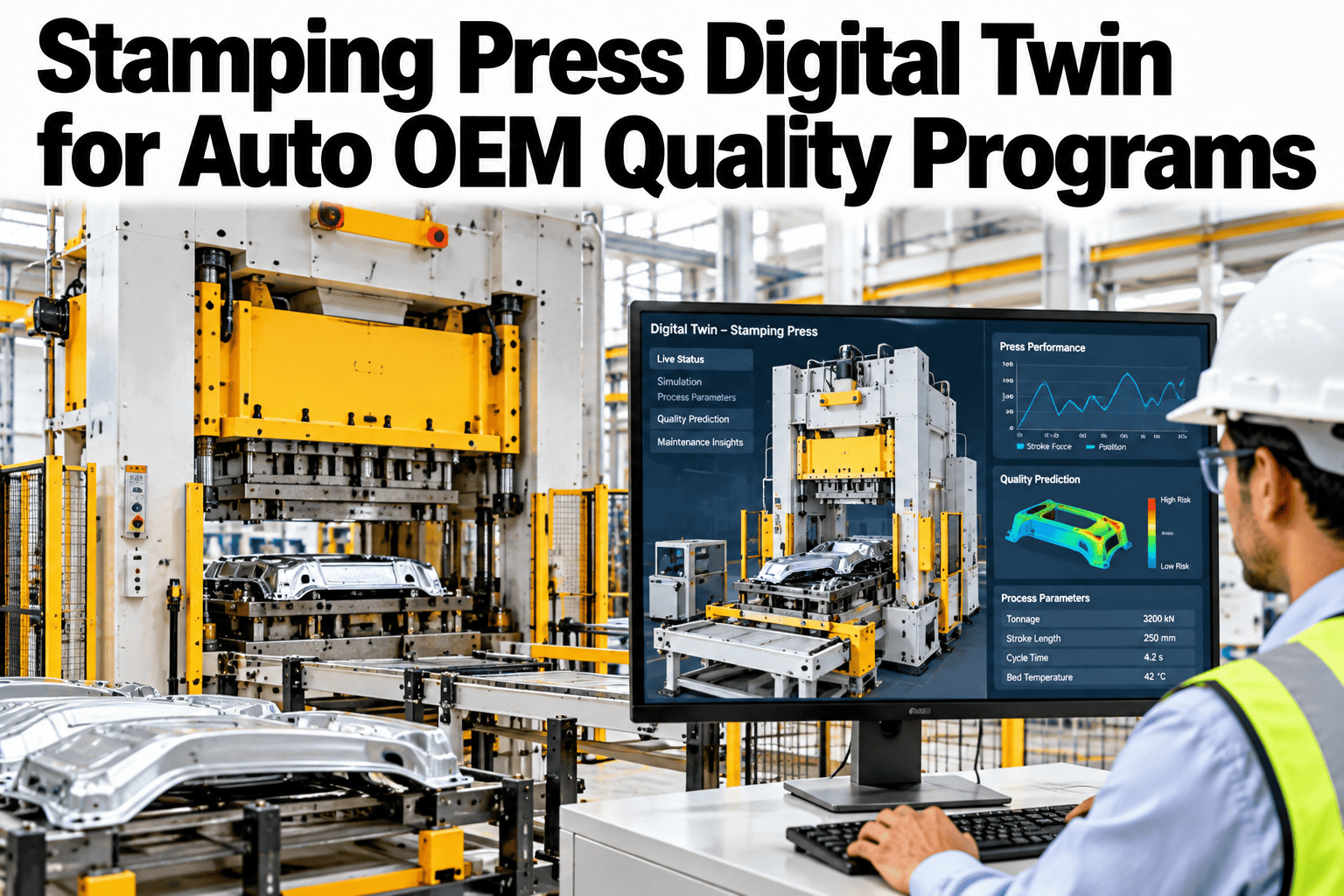
Quality teams and maintenance teams at most auto OEM plants look at the same press from two different angles that rarely meet. Quality tracks part dimensions and tolerance drift. Maintenance tracks mechanical condition and load-cell readings. A digital twin connects the two by modeling mechanical stress, die-force prediction and load-cell reconciliation in one place, so a dimensional trend on the quality floor can be traced back to an actual mechanical cause on the press instead of staying a mystery. Plants exploring what that connection looks like on their own press can see a digital twin built from their own press loading data.
One Model, Two Teams: Mechanical Stress Meets Part Quality
iFactory AI builds a press-specific digital twin from mechanical stress modeling, die-force prediction and load-cell reconciliation, giving quality and maintenance a shared view of how press loading drives part outcomes.
Why a Spreadsheet Model Stops Being Useful Quickly
Many plants start with a simple spreadsheet estimate of die force based on part geometry and material gauge, and it works fine for a new die on a clean press. The estimate drifts out of accuracy the moment real-world variables enter the picture: a slightly worn gib, a press running a few strokes per minute faster than spec, or a material lot with a gauge tolerance at the edge of range. None of those variables live in a static spreadsheet.
What a Digital Twin Actually Reconciles
A press digital twin is not a single measurement, it is three data sources checked against each other continuously. When they agree, the model's confidence is high. When they diverge, that divergence itself is the signal worth investigating.
Build a Twin From Your Own Press Loading Data
Book a 30-minute session and see how mechanical stress modeling and load-cell data combine into a working digital twin for one of your presses.
Where This Fits Alongside Vibration and Downtime Programs
A digital twin is not a standalone program, it works best alongside the vibration monitoring and downtime tracking most PdM programs already run. Vibration data flags structural drift, downtime tracking flags scheduling losses, and the twin connects both of those to part quality outcomes, giving a plant one more lens on the same underlying press health picture.
Plants that already track frame and gib vibration signatures often find those same sensors feed directly into the twin's stress model, since both rely on the same physical readings taken from different angles. The incremental setup cost of adding a twin on top of an existing vibration program is usually smaller than building either one from scratch.
From Die-Force Prediction to Die Life Impact
Die life is usually estimated from a manufacturer's rated stroke count, a number that assumes ideal loading conditions the die rarely sees in practice. A digital twin replaces that static estimate with a running prediction based on the actual force the die has experienced, which tends to diverge from the rated curve more than most plants expect.
| Loading Condition | Effect on Die Life | Twin Signal |
|---|---|---|
| Consistent force within rated range | Tracks rated life curve closely | Low divergence, model and manufacturer estimate agree |
| Intermittent force spikes | Accelerates wear beyond rated estimate | Periodic load-cell peaks above predicted range |
| Press running above rated speed | Compounds wear from increased stroke frequency | Stress model flags elevated cycle-load product |
| Material gauge at tolerance edge | Shifts actual force outside the planned envelope | Predicted force diverges from load-cell reading by lot |
The Cost of Not Reconciling the Two Views
Plants without a shared model between quality and maintenance tend to run parallel investigations whenever a dimensional issue appears, each team working from its own data and often reaching different conclusions about the cause. That duplication is not just slower, it tends to produce a less confident fix, since neither team has the full picture the other is working from.
A reconciled model does not replace either team's expertise, it gives both teams the same starting point, so the investigation converges on a single root cause instead of two competing theories that each only explain part of the pattern.
Connecting the Twin to the Quality Floor
The real value of a press digital twin shows up when quality and maintenance can look at the same event from their own side of the plant. A dimensional drift that quality catches on the gauge can be checked against the twin's loading history for that same window, instead of starting an investigation from scratch.
Building the Case Across Departments
A digital twin proposal usually needs buy-in from quality, maintenance and plant leadership together, since none of those groups alone owns the full problem the twin solves. Each asks a slightly different question before supporting the investment.
A Composite Scenario: Tracing a Dimensional Drift
An illustrative scenario shows how the twin shortens an investigation that would otherwise take days of manual cross-checking between the quality lab and the maintenance shop.
What a Pilot Program Typically Looks Like
Most plants start a digital twin program on one or two presses running a high-value or problem-prone die, rather than rolling it out fleet-wide from day one. This lets both quality and maintenance validate the model's predictions against a known press history before expanding to presses where the team has less institutional knowledge to check the model against.
Where iFactory AI Fits
Building a usable digital twin means combining mechanical modeling, live load-cell data and die history into one continuously updated record, which is not practical to maintain manually across a fleet of presses. iFactory AI automates that reconciliation and makes the model queryable by both quality and maintenance.
Mechanical Stress Modeling
Press structure and die loading are modeled continuously against part geometry, material gauge and actual stroke rate.
Die-Force Prediction
Expected force is predicted per cycle and checked against real load-cell readings to catch divergence early.
Load-Cell Reconciliation
Live sensor data is reconciled against the model continuously, flagging drift before it shows up as a quality defect.
Shared Quality and Maintenance View
Both teams query the same twin record, closing the gap between a dimensional trend and its mechanical root cause.
Why the Model Improves With Every Changeover
A digital twin is not a fixed model built once and left alone. Every changeover, every die reseat and every load-cell reading adds to the history the model draws on, so its prediction accuracy for a specific press and die combination tends to sharpen over months rather than staying static from day one.
That compounding accuracy is part of why plants that start with one or two presses tend to expand the program rather than stopping at the pilot. The first press takes longer to tune because the model has no prior history to draw on, but each additional press on the same die family benefits from patterns the model has already learned, shortening the time to a reliable prediction.
Expert Review
Quality and maintenance leaders who have worked with press digital twins tend to describe the same shift in how investigations happen: instead of two teams independently theorizing about a dimensional drift, there is one shared record both sides trust. That shared trust is what actually shortens the investigation, more than any single piece of sensor data on its own. Bring a recent dimensional drift case to a working session and see how the twin would have traced it.
Frequently Asked Questions
Does a digital twin replace load-cell sensors already on a press?
No, it reconciles existing load-cell data against a mechanical model rather than replacing the sensors, which usually means a faster setup since the physical instrumentation is often already in place. Ask support what sensors are typically already compatible.
How accurate is die-force prediction compared to a direct measurement?
Prediction accuracy improves as the model accumulates real loading history for a specific press and die combination, typically converging closely with measured values within the first few weeks of continuous data.
Can the twin be built for an older press without modern controls?
Yes, older presses can be retrofit with load-cell and signal instrumentation to feed the model, though the setup timeline is usually a bit longer than for a press with existing digital controls. Ask how retrofit timing compares for your press fleet.
Who typically owns the digital twin once it is live, quality or maintenance?
Most plants treat it as shared infrastructure rather than owned by one department, since both quality and maintenance query the same record for different purposes and neither view is complete without the other.
Does this work across a fleet of presses with different die types?
Each press and die combination builds its own model, so a fleet of presses running different part families each gets a twin tuned to its own loading history rather than a single generic model applied across all of them.
Give Quality and Maintenance the Same View
iFactory AI builds a press-specific digital twin from mechanical stress modeling and live load-cell data. Book a walkthrough on your own press.