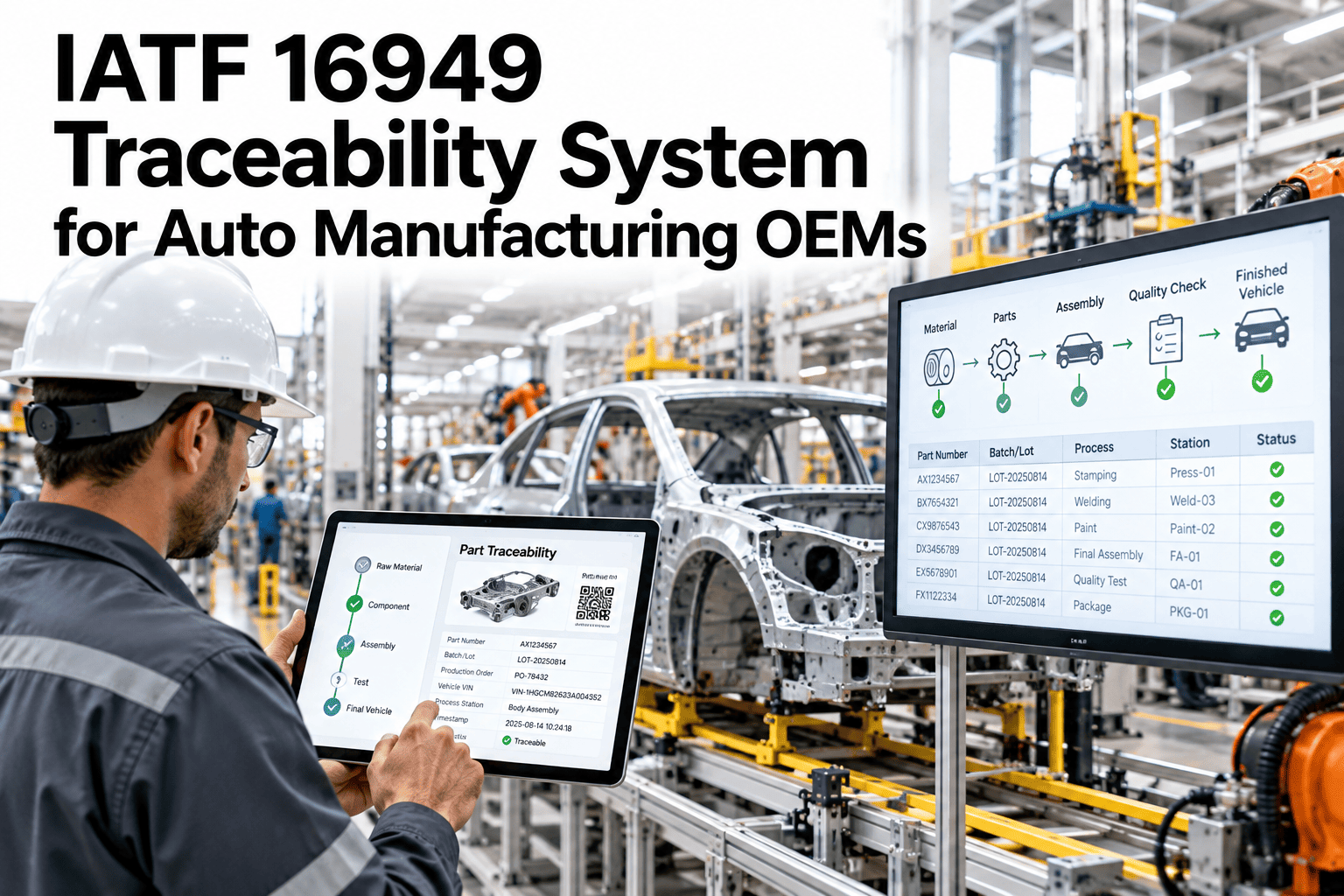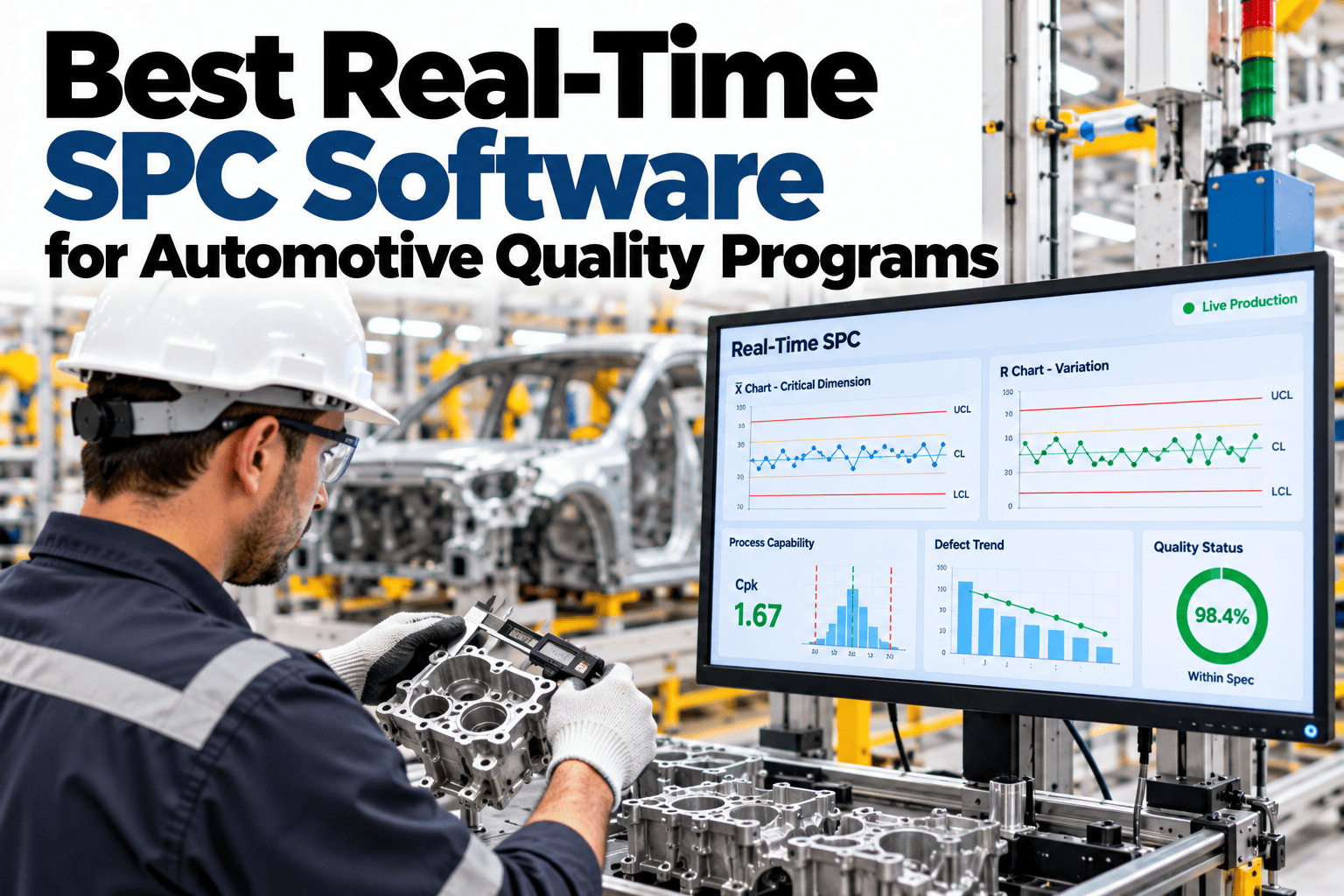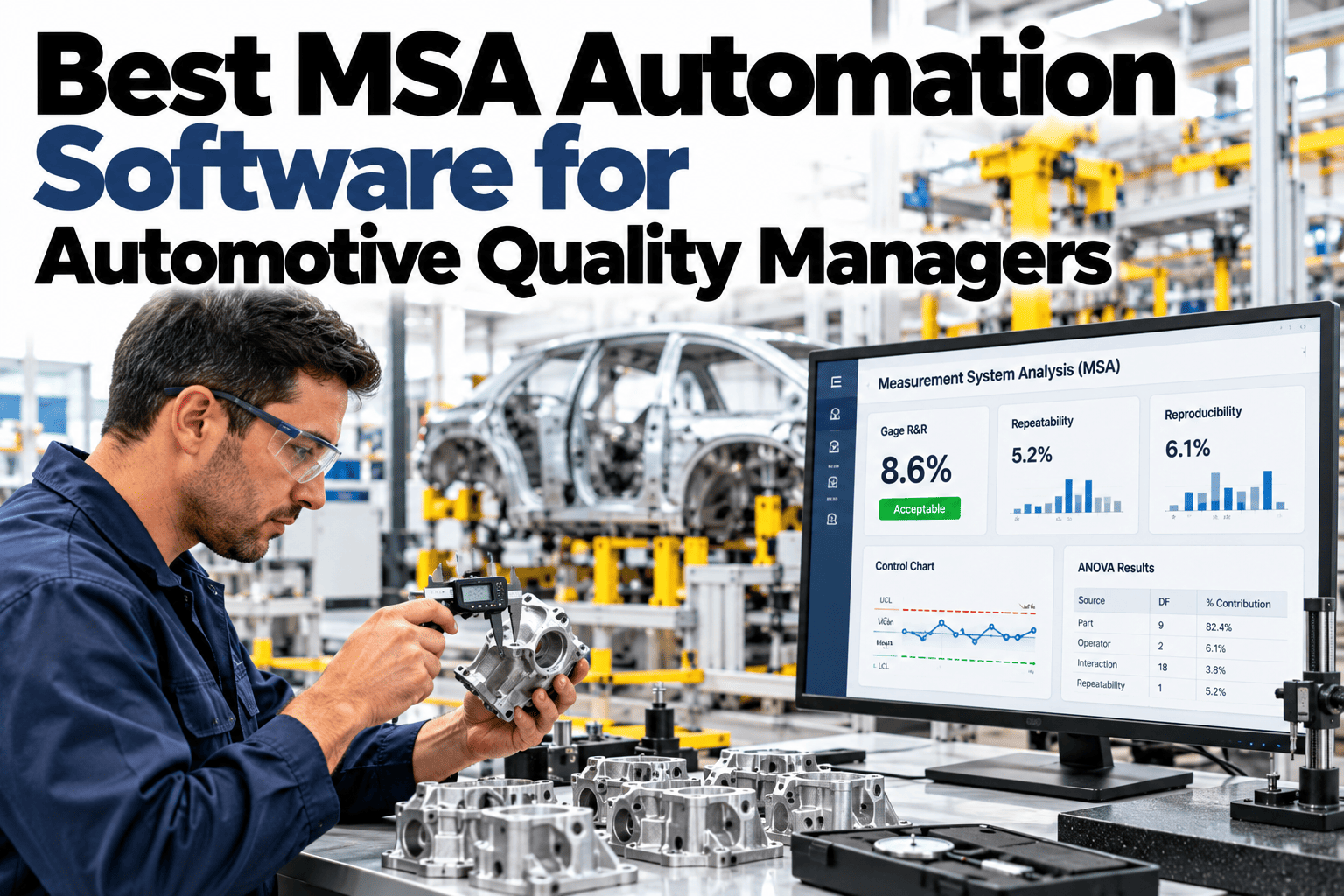
IATF 16949 compliance usually lives across a dozen disconnected tools: a document system for procedures, a spreadsheet for traceability, an email thread for corrective actions. Each piece works on its own, but an auditor asking for a connected trail from a customer complaint back to the exact process parameters that produced it exposes every gap between them. The best IATF 16949 software for auto suppliers connects audit evidence, traceability and corrective action into one system instead of three. Quality leaders can see connected IATF evidence pulled together on iFactory AI before their next surveillance audit.
Three Systems, One Audit Trail
iFactory AI connects audit evidence, AI-linked traceability and corrective action so an auditor's question gets one answer, not three.
Where the Three-System Approach Breaks Down
Holds procedures and records, but rarely links to what the line actually produced that day.
Tracks lots and serial numbers, but updates lag behind production and get out of sync.
Captures the conversation, but loses the connection to the original nonconformance evidence.
None of the three pieces is wrong on its own. The problem is the seams between them, which is exactly where an audit finding tends to land.
What a Connected System Looks Like
| Capability | Disconnected Tools | Connected System |
|---|---|---|
| Audit evidence retrieval | Manual search across folders | Pulled by product, date or process |
| Traceability | Spreadsheet updated by hand | Linked automatically to production data |
| Corrective action history | Scattered across email and documents | Tied directly to the triggering nonconformance |
| Process parameter linkage | Rarely connected to the defect record | Attached to each traceability record automatically |
Pull a Full IATF Trail Before an Auditor Asks
Bring a recent nonconformance to a 30-minute session and see the full evidence trail connect in one view.
What AI Adds to Traceability
Connects each unit to its process data without manual entry.
Surfaces a process drift before it becomes a nonconformance.
Identifies the exact affected units, not an overbroad range.
Ties the corrective action back to the data that justified it.
A Composite Scenario: The Audit Request That Used to Take a Week
Picture an external auditor asking for the full history behind a customer-reported defect, including process parameters, operator, and the corrective action taken.
Across three disconnected systems, pulling that trail used to take a team several days of searching and cross-referencing. With a connected system, the same request returns in minutes, with every link already in place.
Where iFactory AI Fits
Connects the three pillars
Audit evidence, traceability and corrective action share one data model.
Links process data automatically
Attaches process parameters to each unit without manual logging.
Narrows findings fast
Scopes affected units precisely instead of a broad, costly recall.
Keeps the full trail
Preserves the link from evidence through disposition and corrective action.
Expert Review
A quality systems consultant's perspective, reviewed for accuracy before publication: most IATF findings are not about missing data, they are about data that exists in three places and cannot be connected quickly enough during the audit window. Walking through a real nonconformance trail is the fastest way to see where your own seams sit.
Frequently Asked Questions
Does connected IATF software replace our existing document control system?
Not necessarily. Many implementations connect to an existing document control system rather than replacing it, adding the linkage between documents, traceability and corrective action that was previously missing. Whether replacement or connection makes more sense depends on your current system's capabilities. See how this would connect to your existing document system in a short session.
How does AI-linked traceability differ from standard lot traceability?
Standard lot traceability typically tracks which lot or batch a unit came from. AI-linked traceability additionally connects each unit to the specific process parameters, equipment readings and operator data present when it was made, which narrows an investigation to the exact units affected rather than an entire lot. Ask for a comparison against your current traceability granularity.
What does this mean for the time an external audit takes?
Retrieval time for specific evidence requests typically shortens significantly when the data is already connected, since the search across multiple systems is eliminated. The audit itself still covers the same scope; what changes is how quickly your team can respond to a specific document or traceability request during it. Explore what a faster evidence response would look like for your next audit.
Can this help narrow the scope of a recall?
When traceability is linked to specific process parameters rather than just lot numbers, an investigation can often identify a narrower set of truly affected units instead of defaulting to an entire lot. This depends on how precisely your process data is captured and linked, which is worth reviewing for your specific lines. Try a review of your current recall scoping process.
How long does it take to implement a connected IATF system?
Timelines depend heavily on how many existing systems need to connect, how much historical data needs to be migrated, and how many production lines are in scope. A phased rollout starting with the highest-risk product lines is a common approach rather than attempting everything at once. Join a scoping session that estimates a timeline for your supplier operation.
Answer the Next Audit Request in Minutes, Not Days
iFactory AI connects evidence, traceability and corrective action into one IATF-ready trail. Book a walkthrough with your own data.