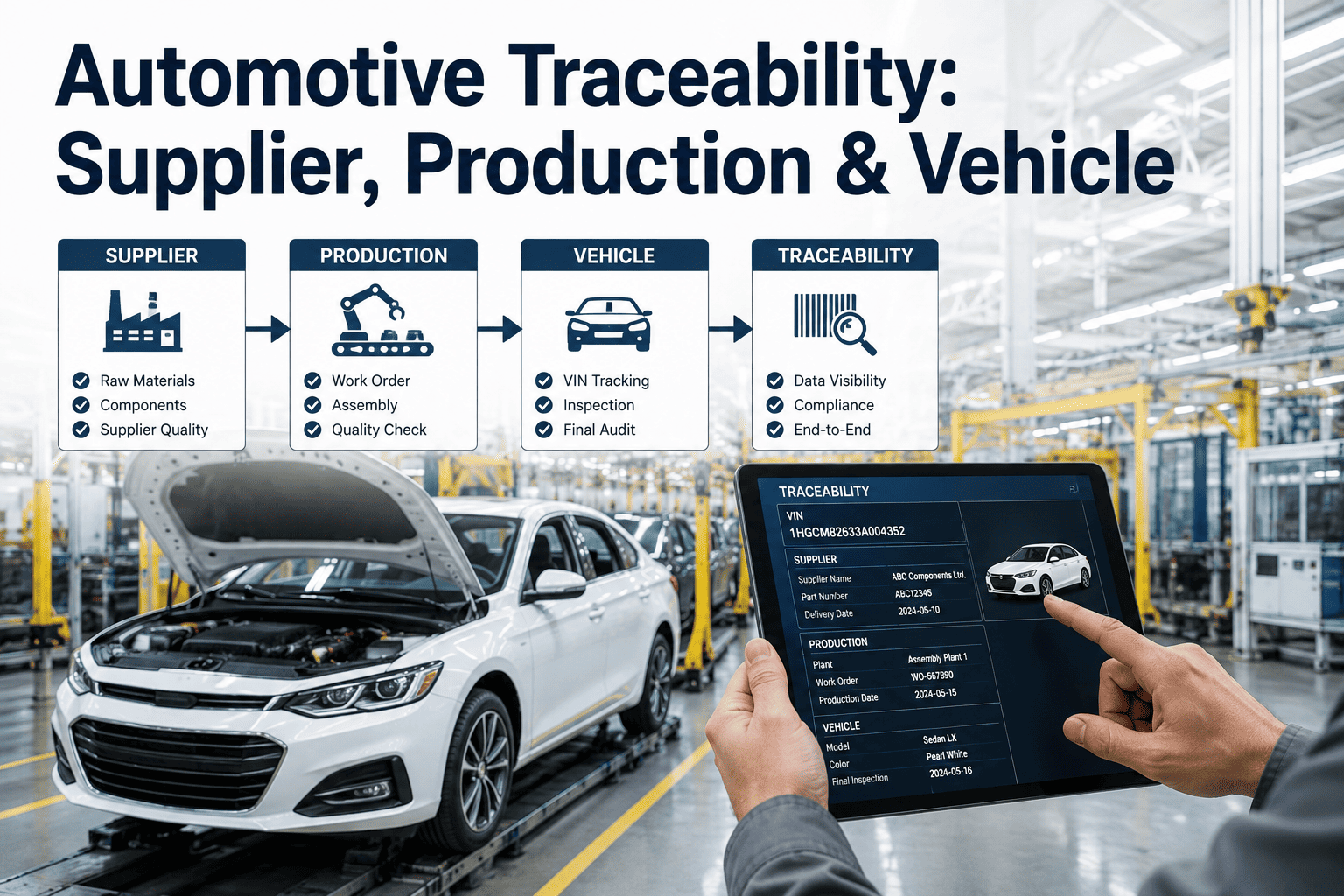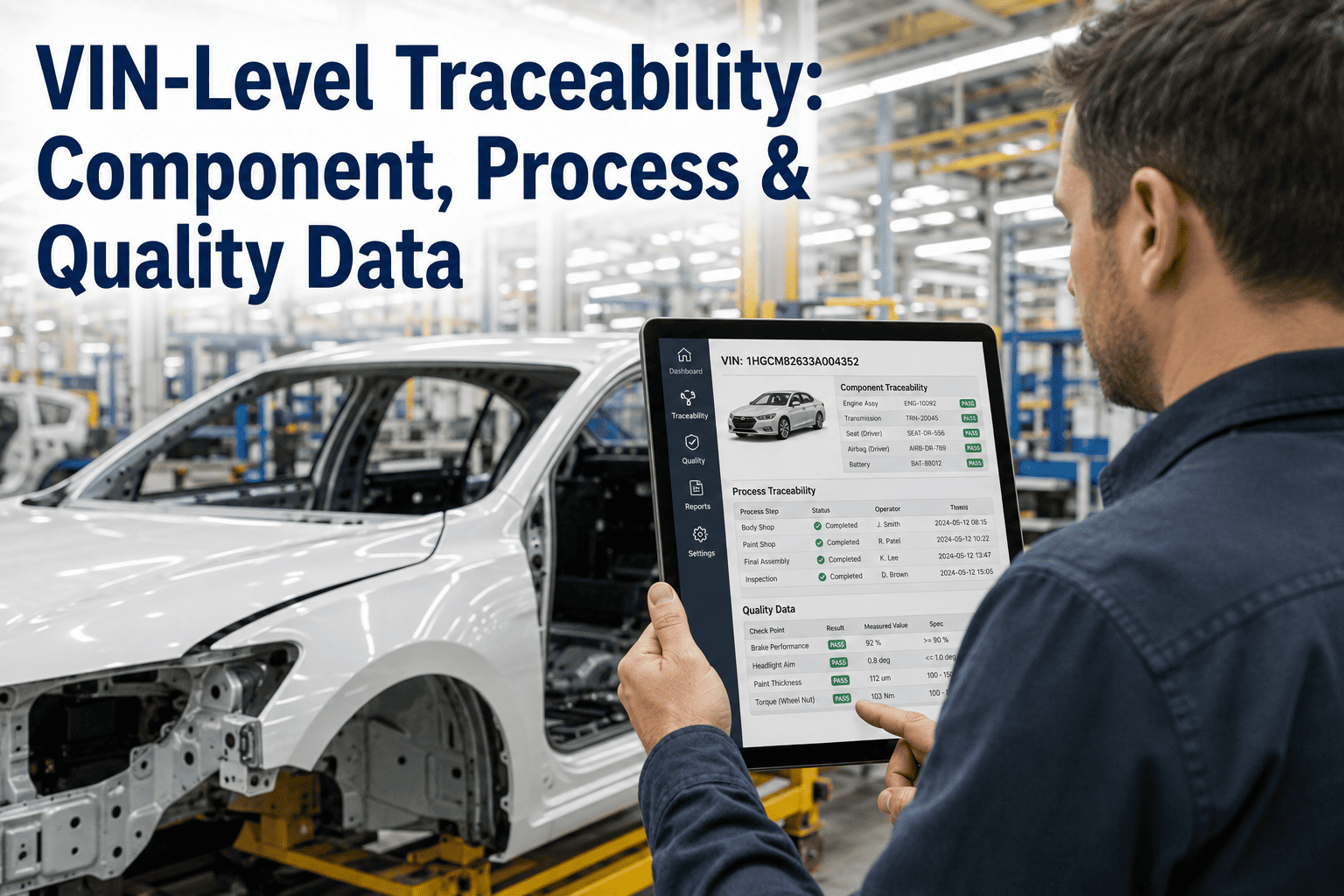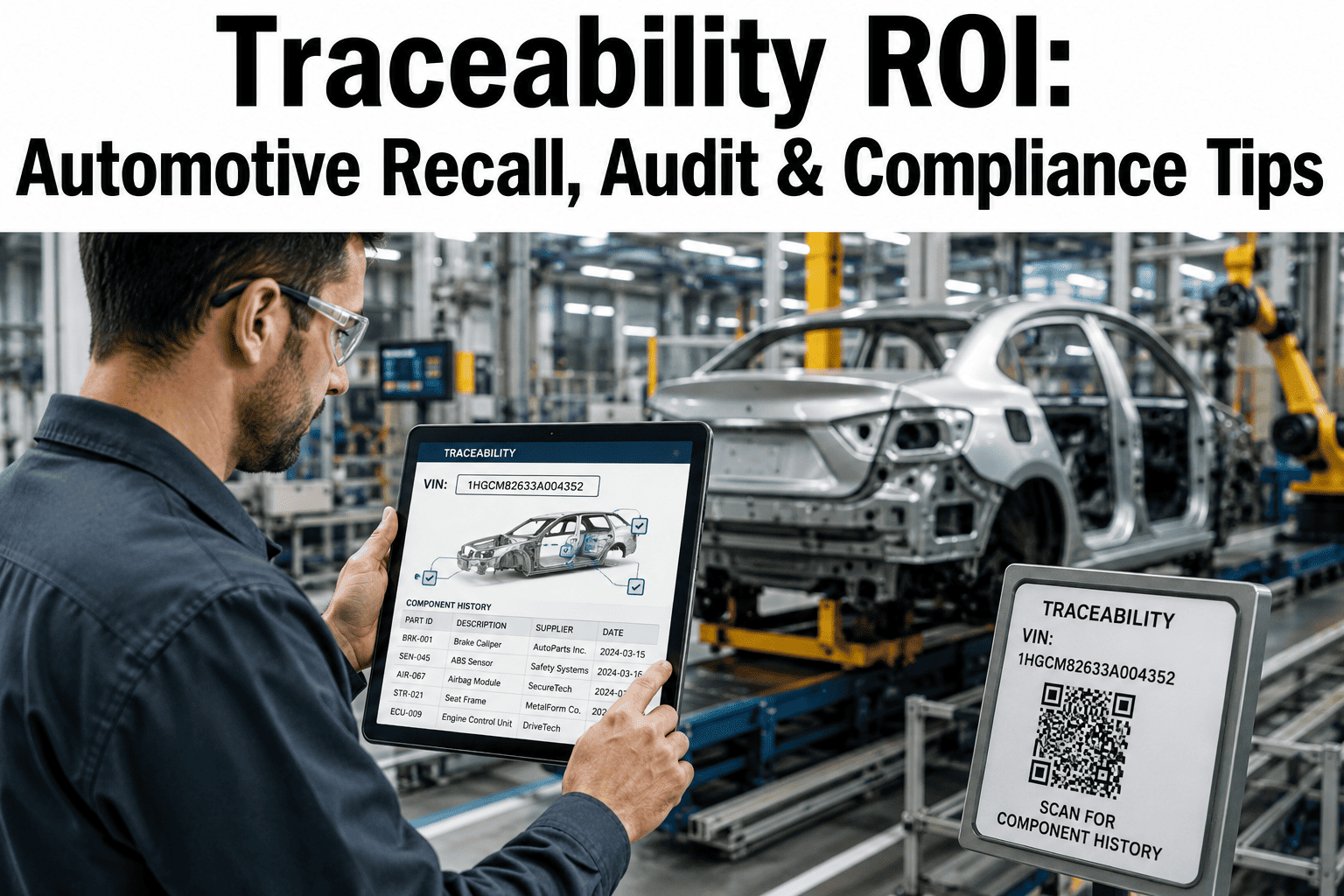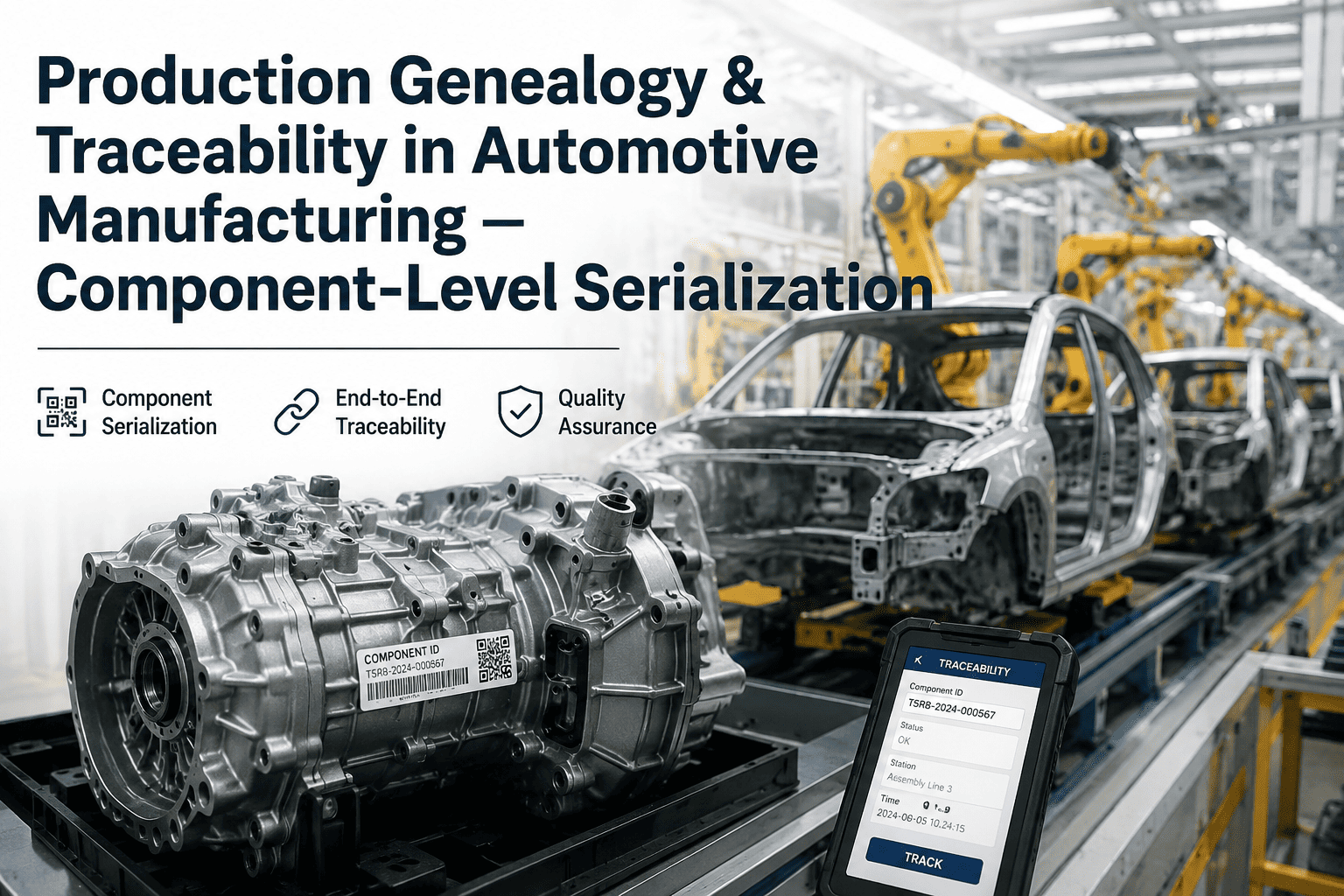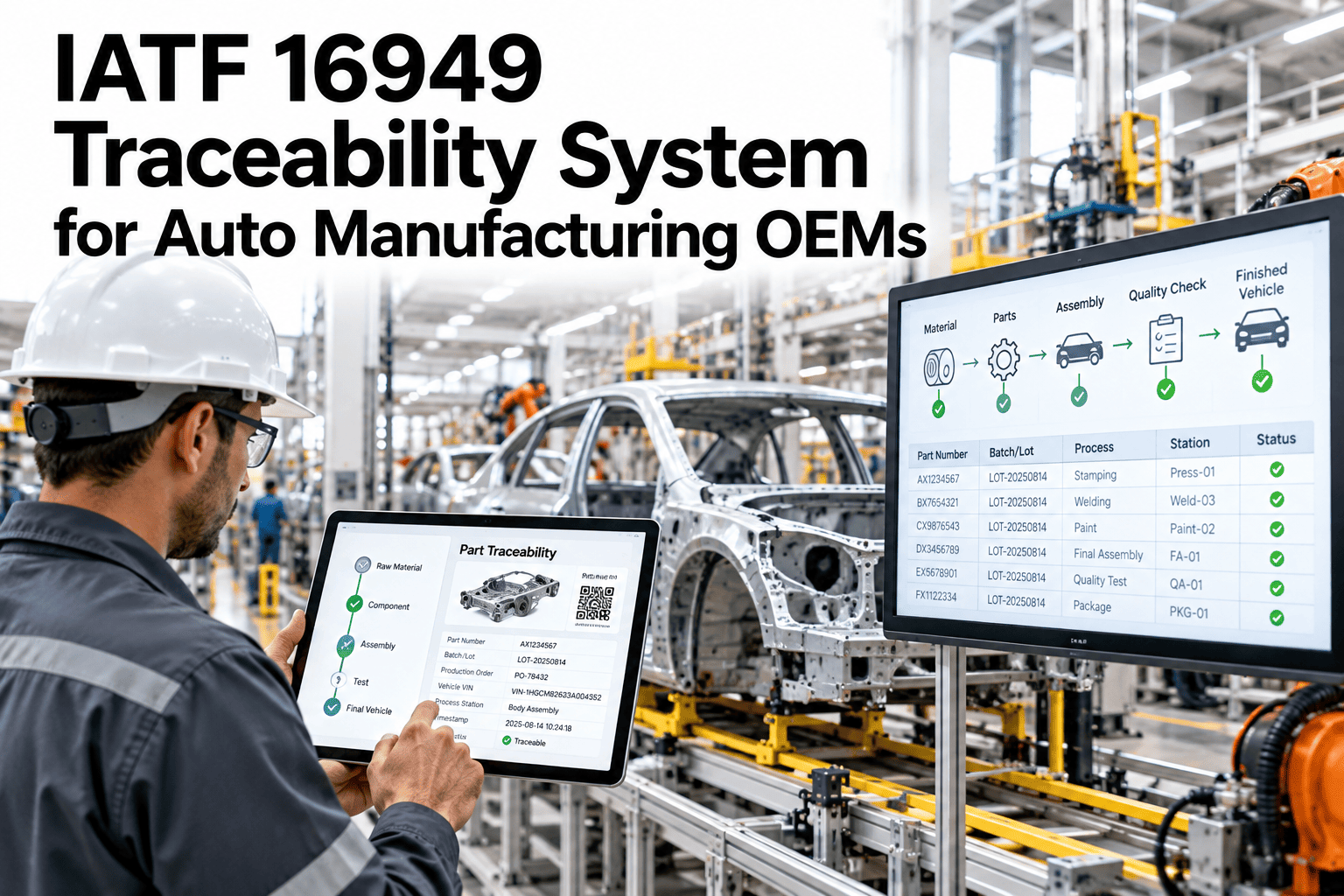
A recall is the worst possible moment to discover your traceability only works at the lot level. IATF 16949 expects a supplier to trace a problem down through the product, the process and the component that produced it, and the narrower that trace can go, the smaller and cheaper the resulting recall. Component-level, process-level and product-level traceability working together are what let an OEM answer "which exact units are affected" instead of "somewhere in this lot." Quality and traceability leads can see a three-level trace narrow a recall scope on iFactory AI before the question ever comes from a customer.
Three Levels of Trace, From the Component to the Finished Unit
iFactory AI links component, process and product traceability so a recall scope narrows to the exact units affected.
Three Levels, Three Different Questions
Which specific supplier lot of a raw material or part is in this unit?
What machine, settings and operator were active when this unit was made?
Which finished units and serial numbers does this issue actually touch?
A gap at any one level forces the investigation to fall back to the broadest safe assumption, which usually means a wider recall than necessary.
Narrow Trace vs Broad Assumption
What Each Level Needs to Work
| Level | Data Captured | Common Gap |
|---|---|---|
| Component | Supplier lot, receipt date, certificate | Linked to a batch, not an individual unit |
| Process | Machine ID, settings, operator, timestamp | Logged separately from the product record |
| Product | Serial number, assembly date, destination | Final record not tied back to component or process |
Find Where Your Own Trace Chain Breaks
Bring a recent product record to a 30-minute session and trace it back through process and component data.
Recall Response, Step by Step
A component lot, a process window or a specific defect.
Pull every unit that shares that component, process or window.
Cross-check against product-level records for the final list.
Notify, contain or recall only the confirmed units.
A Composite Scenario: The Recall That Stayed Small
Picture a supplier lot flagged for a dimensional issue by an upstream vendor. Without process-level linkage, the only safe move is to treat every unit that used any part of that lot as suspect, across weeks of production.
With component, process and product traceability connected, the same flag narrows to the specific production window and machine setup where the issue could actually have mattered, cutting the affected unit count dramatically.
Where iFactory AI Fits
Links all three levels
Connects component, process and product data to one traceable record.
Captures process data automatically
Attaches machine, settings and operator data without manual logging.
Queries across levels instantly
Finds every affected unit from any starting trigger point.
Supports a defensible scope
Documents why the recall boundary was drawn where it was.
Expert Review
A quality systems consultant's perspective, reviewed for accuracy before publication: the cost difference between a lot-level recall and a precisely scoped one is rarely small. Suppliers who have invested in process-level linkage consistently resolve traceability events faster and smaller than those relying on component lot numbers alone. Testing your own trace chain against a real product record is the fastest way to see where it would hold up.
Frequently Asked Questions
What does IATF 16949 require for traceability specifically?
IATF 16949 expects a documented traceability system appropriate to the product and process risk, generally covering the ability to trace a product back through its production history. Exact expectations vary by customer-specific requirements and product risk classification, so confirm specifics with your quality team and customer requirements. See how your current traceability compares against typical IATF expectations in a short session.
Why isn't lot-level traceability enough on its own?
Lot-level traceability tells you which batch of a component went into production during a period, but not which specific units were actually affected by a given process condition. Without process-level data tied to each unit, the safest default is to treat the entire lot's production run as suspect, which widens the recall far beyond what may actually be necessary. Ask for a look at how process linkage would narrow your own lot-based scope.
How much manual data entry does three-level traceability require?
When process and machine data are captured automatically from equipment and controllers, manual entry can be minimal, limited mainly to component receipt and certificate information that doesn't originate from a machine. The less manual entry involved, the more reliable the resulting trace tends to be. Explore how much of your process data could be captured automatically.
Can this work for lines that still use manual, paper-based processes?
Partial automation is possible, with component and product data captured digitally even where process steps remain manual, though the process-level link will be less precise without automated capture at the equipment. A phased approach, digitizing the highest-risk stations first, is a common path for mixed environments. Try a review of which of your stations would benefit most from digitizing first.
Does narrower traceability actually reduce recall cost?
In general, a recall scoped to a smaller, more precisely identified set of units costs less in parts, labor, customer disruption and reputational impact than a broader one, though the exact savings depend on the specific event and industry. The ability to show a defensible, data-backed scope also tends to support a smoother conversation with the affected customer. Join a session that estimates what narrower scoping could mean for your products.
Keep the Next Recall as Small as the Facts Allow
iFactory AI links component, process and product traceability into one queryable system. Book a walkthrough with your own production data.