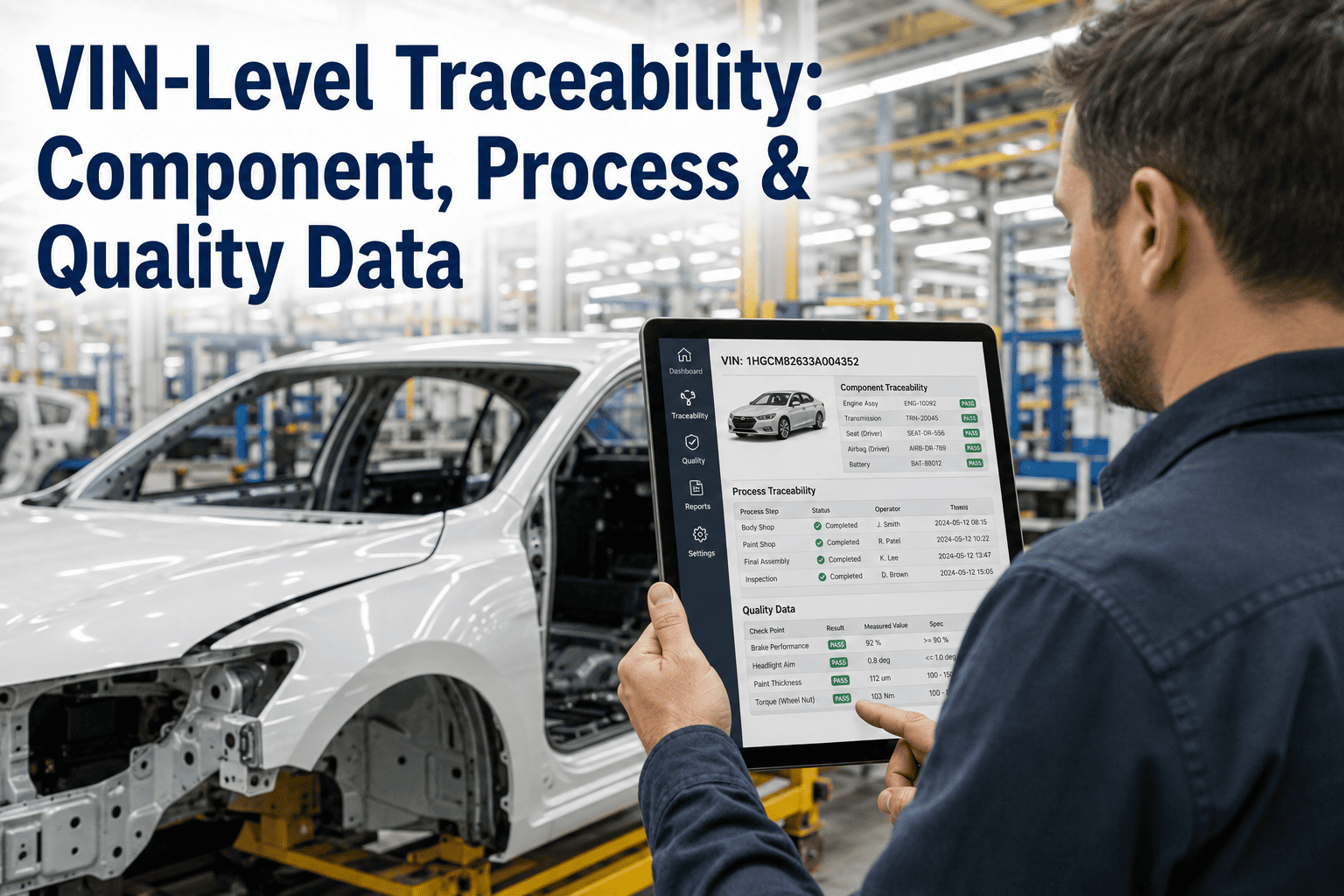
Type a VIN into a plant's traceability system, and what comes back should be the complete story of that one vehicle — every major component it received, every process parameter recorded at every station it passed through, and every inspection result logged along the way. For most plants, that query returns something far less complete, because VIN-level records were built for warranty lookups, not for the deeper investigation a recall or a quality escape actually demands. iFactory's VIN traceability layer is built to hold that entire record together from the first station to the last.
A VIN Is a Lookup Key. What It Unlocks Depends on What You Connected to It.
The 17-character VIN can anchor component genealogy, process parameters, and quality results into a single retrievable record — but only if every station along the build actually writes back to it.
What a Complete VIN Record Actually Contains
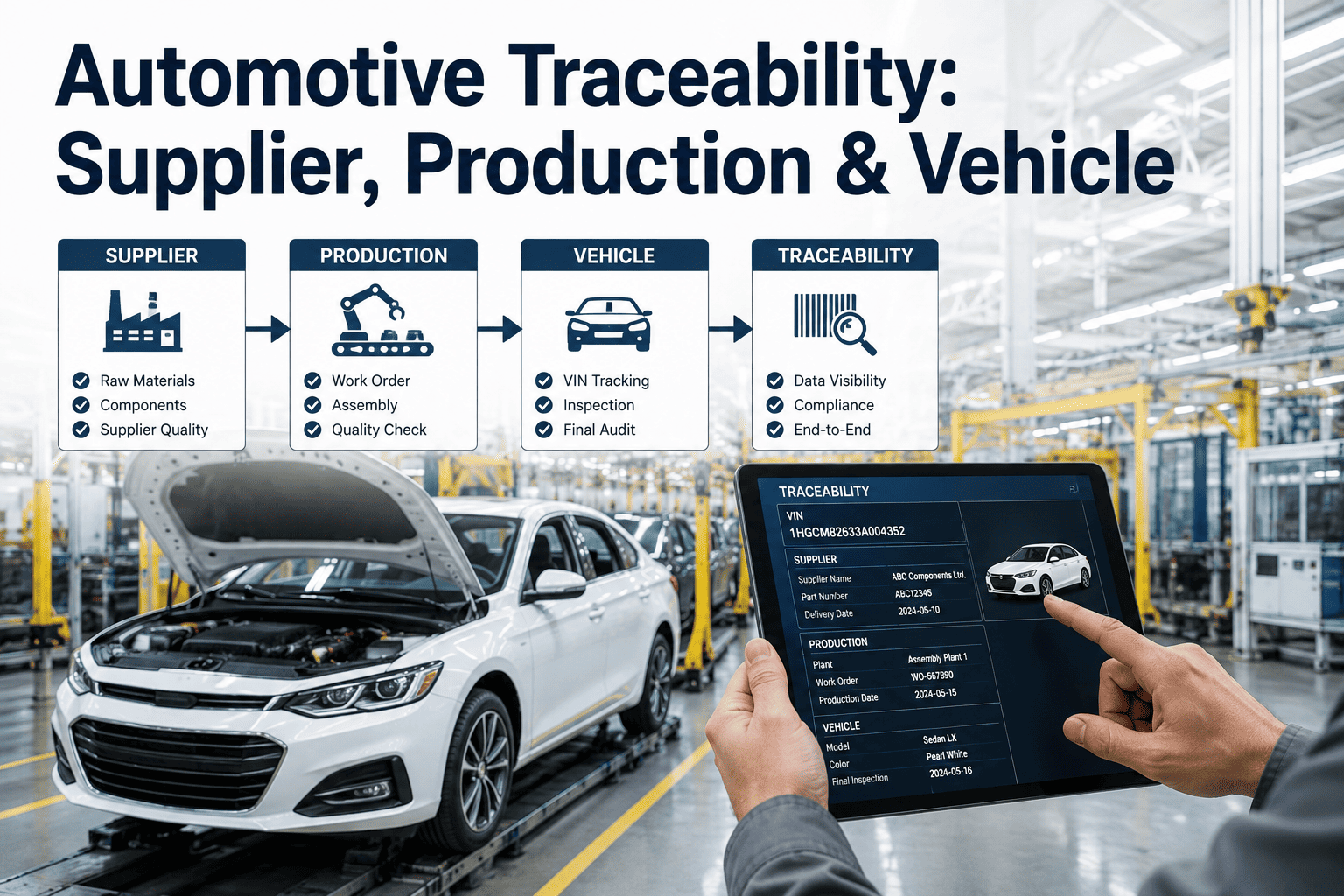
A VIN encodes basic vehicle attributes by design — manufacturer, model, plant, and a sequential production number — but that's identity, not history. Complete VIN-level traceability adds a second layer on top of the physical VIN: a living record that accumulates component, process, and quality data as the vehicle moves through the plant, so the same 17 characters that identify the vehicle can also retrieve everything that happened to build it.
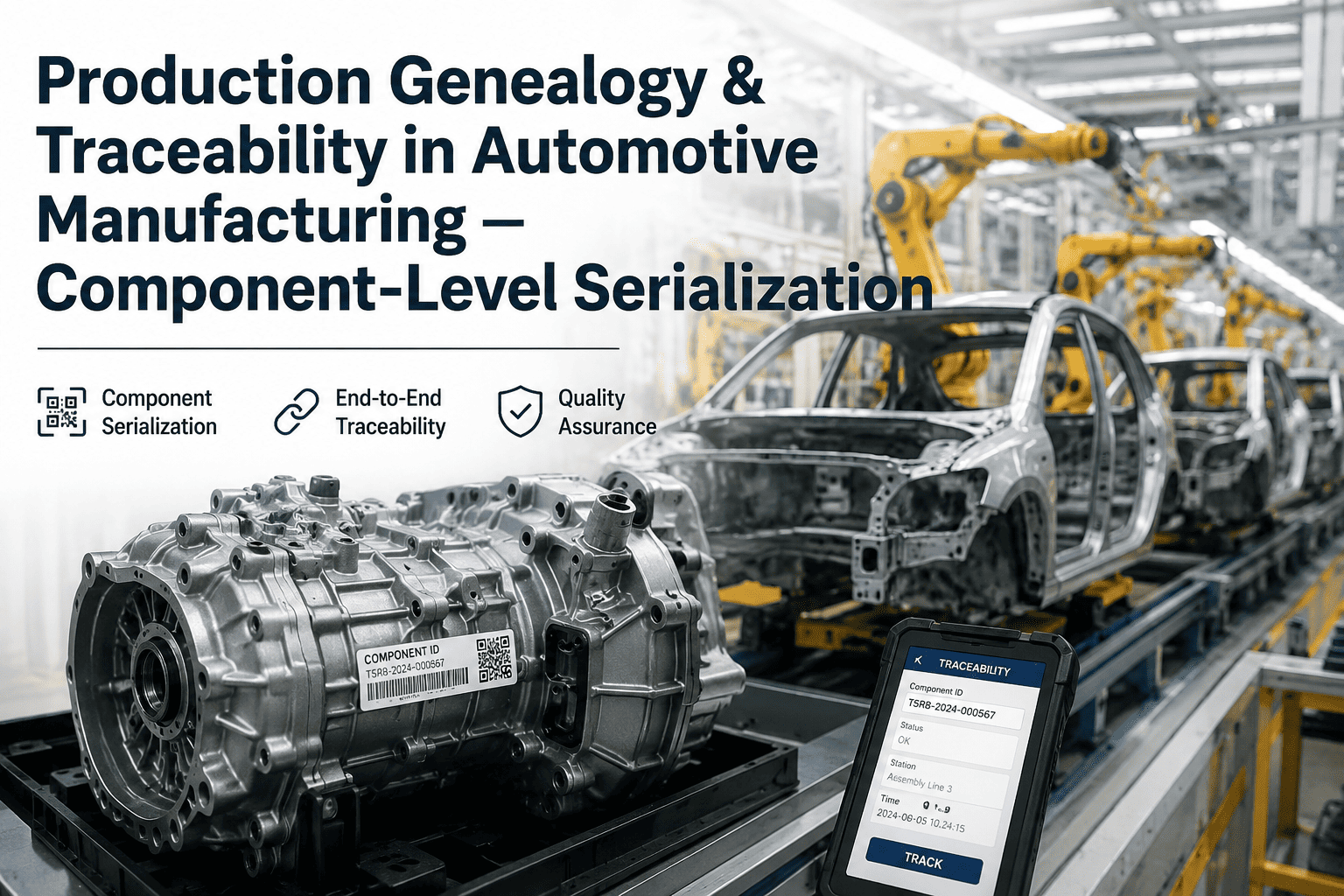
Component Linking
Every major component installed on the vehicle, tied back to its own supplier lot and part revision, so a component-level issue can be checked against a specific VIN in either direction.
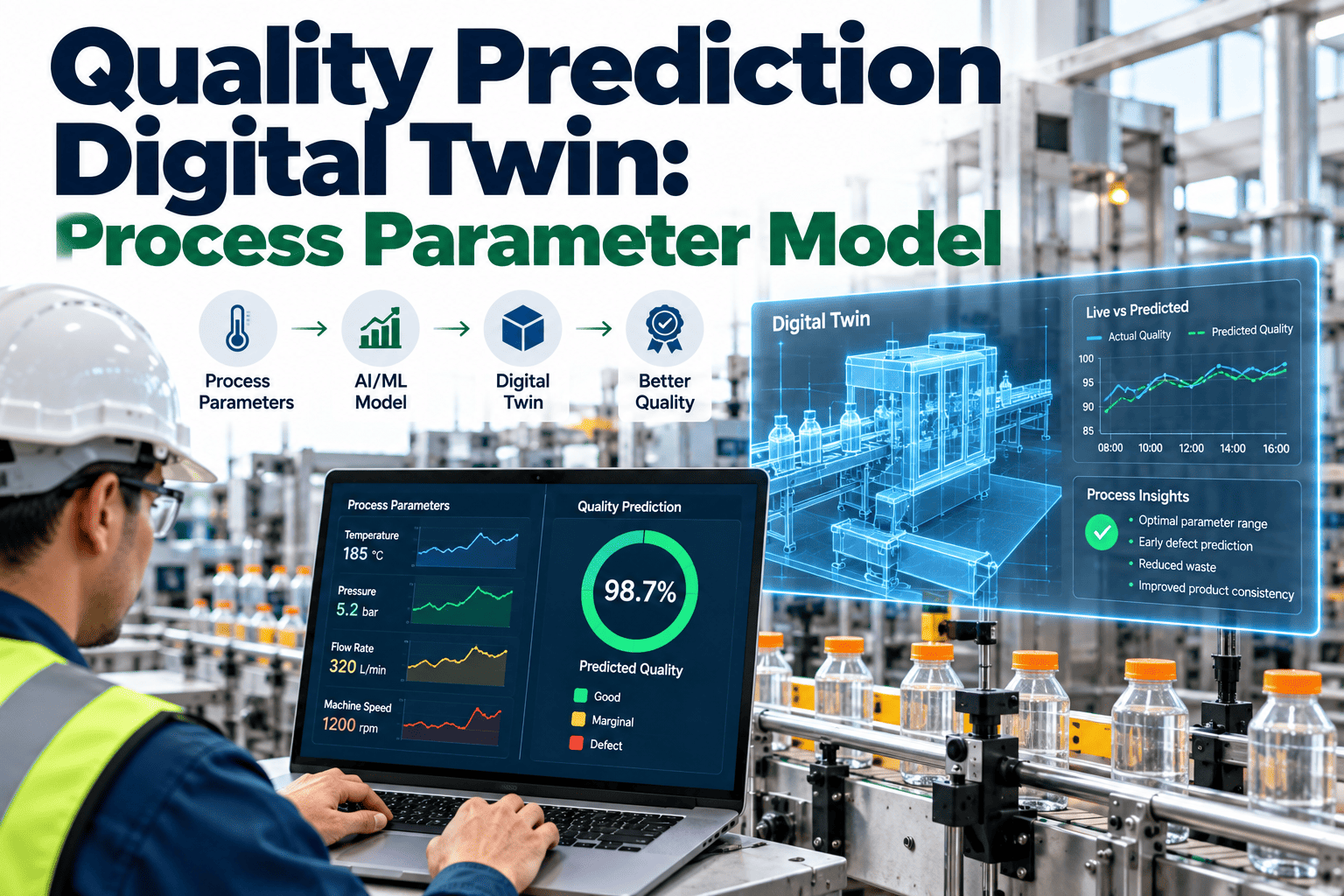
Process Parameters
Torque values, weld parameters, cure times, and other process data captured at each station the vehicle passed through, associated with that specific VIN rather than only logged by station and shift.
Quality Results
Inspection outcomes, test results, and any rework performed on the vehicle, recorded against the same VIN so a quality investigation can see both what was checked and what was found.
Production History
The sequence and timing of stations the vehicle actually passed through, useful for correlating a defect with what else was happening on the line at that specific moment.
Why Warranty-Level VIN Data Isn't Enough for Recall Investigations
Most plants already have some form of VIN-linked data, typically built to support warranty claims — which component was installed, and roughly when. That's sufficient for a warranty conversation, but a recall or a quality escape investigation usually needs more granularity: the exact process parameters recorded at the station where a defect likely originated, not just which component was present.
| Traceability Depth | Warranty-Level VIN Data | Full VIN-Level Traceability |
|---|---|---|
| Component Detail | Part number and approximate install date | Part number, lot, revision, and exact install record |
| Process Data | Not typically captured at VIN level | Station-level parameters tied directly to VIN |
| Investigation Speed | Adequate for single-component questions | Supports root-cause investigation across the full build |
| Recall Scoping Precision | Limited to component presence/absence | Can incorporate process parameter thresholds |
That last row, recall scoping precision, is where the gap matters most. A component-only record can tell you which vehicles received a part from a given lot, but a full process record can go further — narrowing the affected population to vehicles where a specific process parameter also fell outside its normal range, which is often a meaningfully smaller and more precisely targeted set than the lot alone would suggest.
Give Every VIN a Complete Build Record, Not Just a Warranty Snapshot
iFactory links component, process, and quality data to every VIN automatically, so a single lookup returns the full build history instead of a partial one.
A Composite Scenario: The Investigation That Depended on Torque Data Nobody Had Linked
An automotive OEM received a small but concerning pattern of customer complaints related to a suspension mounting point on one model. The plant's VIN records confirmed which vehicles had received components from a specific supplier batch, but the investigation team suspected the actual root cause might be an assembly torque issue rather than a component defect — a hypothesis the existing VIN data couldn't confirm or rule out, because torque values from the fastening station had never been linked to individual VINs, only logged by station and shift as a general process record.
Reconstructing which specific vehicles had torque readings outside the target range required cross-referencing station timestamps against approximate build sequence — an imprecise, time-consuming process that ultimately confirmed the torque hypothesis, but weeks later than a direct VIN-level query would have. The investigation's outcome directly shaped the plant's next traceability upgrade: torque and other critical process parameters were connected to VIN-level records station by station, specifically so that the next time a similar hypothesis needed testing, the answer would be a query instead of a multi-week reconstruction project.
Building VIN-Level Traceability: The Practical Steps
Assign the VIN as early in the build as possible
The earlier a vehicle identity is established, the more of the build process can be captured against it rather than reconstructed after the fact.
Identify which process parameters actually matter
Not every process value needs VIN-level linkage — prioritize the parameters most likely to matter in a future safety or quality investigation, such as torque, weld energy, or cure time.
Connect station equipment to write back to the VIN record
Configure each relevant station to log its data against the vehicle's VIN automatically, rather than only to a general shift or station log.
Validate the record with a full-build test query
Periodically pull a complete VIN record end to end to confirm every intended data point is actually present, rather than assuming the connections are working correctly.
One VIN Query Should Answer the Whole Investigation
iFactory ties component, process, and quality data to every VIN from the first station forward, so recall and root-cause investigations start with a complete record.
Frequently Asked Questions
What's the difference between VIN-level and lot-level traceability?
Lot-level traceability identifies which vehicles received components from a specific supplier batch, while VIN-level traceability goes further, tying process parameters and quality results directly to an individual vehicle so an investigation can look beyond component presence into how that specific vehicle was actually built. Visit support to see how the two levels work together.
Which process parameters are most valuable to link at the VIN level?
Parameters tied to safety-critical joints and connections — fastener torque, weld energy, adhesive cure time — tend to provide the most investigative value, since these are the process values most likely to matter in a future root-cause or recall scoping question.
Can VIN-level traceability narrow a recall more precisely than component data alone?
Yes — when process parameters are linked at the VIN level, a recall can potentially be scoped not just to vehicles that received a specific component lot, but further narrowed to vehicles where an associated process parameter also fell outside its normal range. Book a demo to see how this narrowing works in practice.
Does building VIN-level traceability require new station hardware?
Often existing station equipment already generates the relevant process data — the gap is usually in connecting that data to the vehicle's VIN rather than in capturing it in the first place, which means the upgrade is frequently more about integration than new hardware.
How far back does VIN-level traceability typically need to go for an investigation?
This depends on the nature of the question, but investigations tied to safety or warranty issues often need to reach back several years, which means the underlying data retention and record structure needs to support long-term queries, not just recent production. Contact support to review retention requirements for your specific traceability setup.