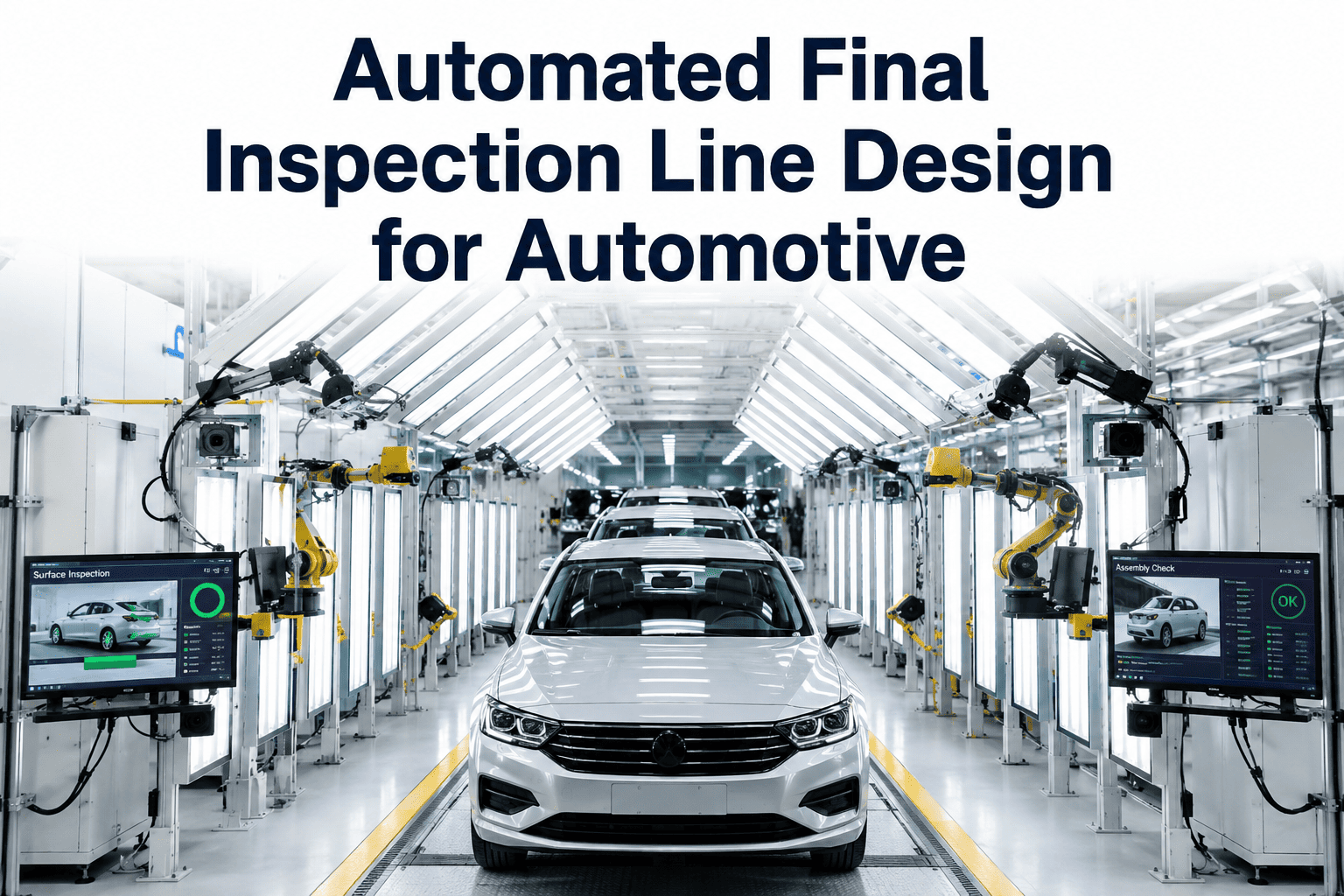
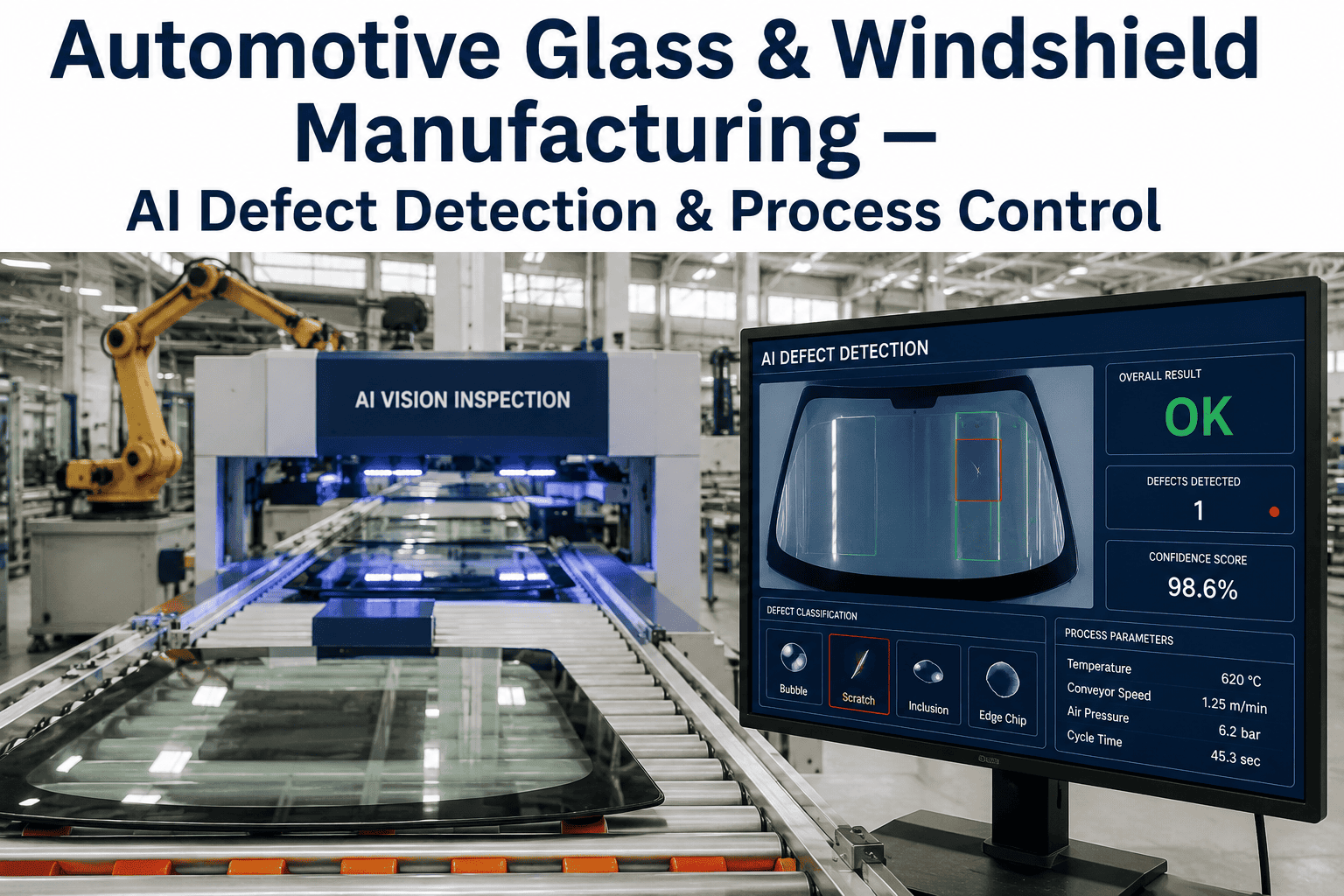
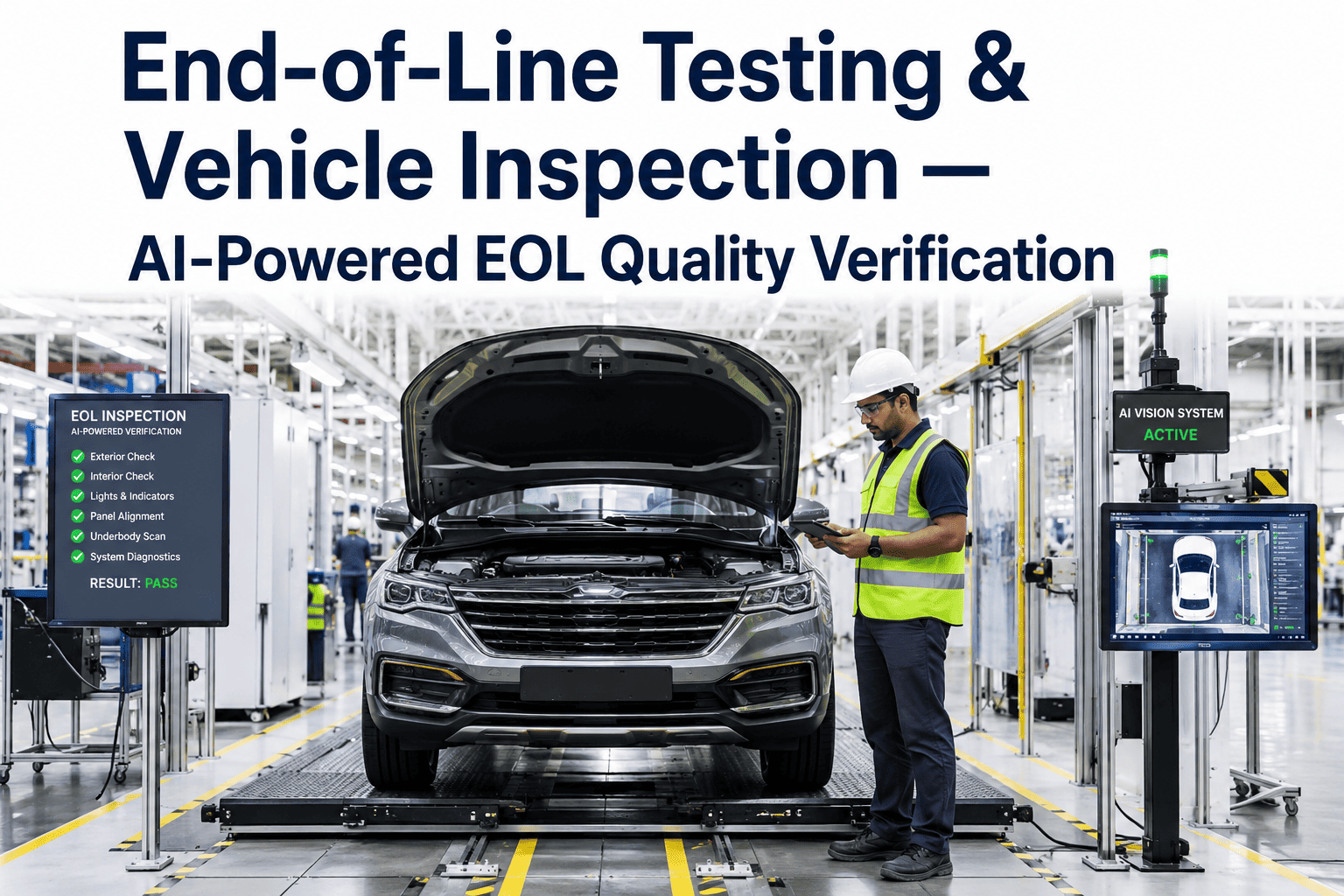
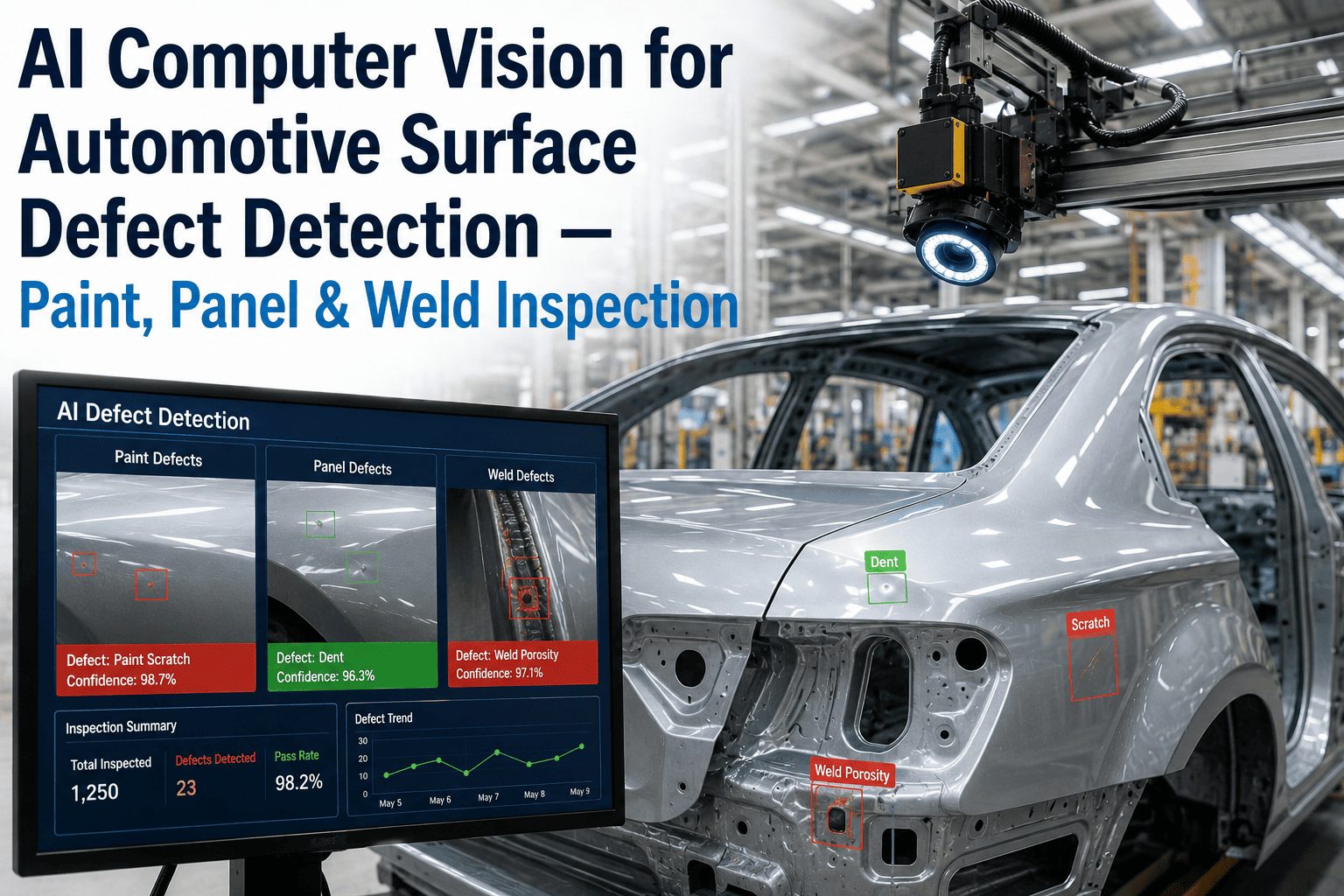
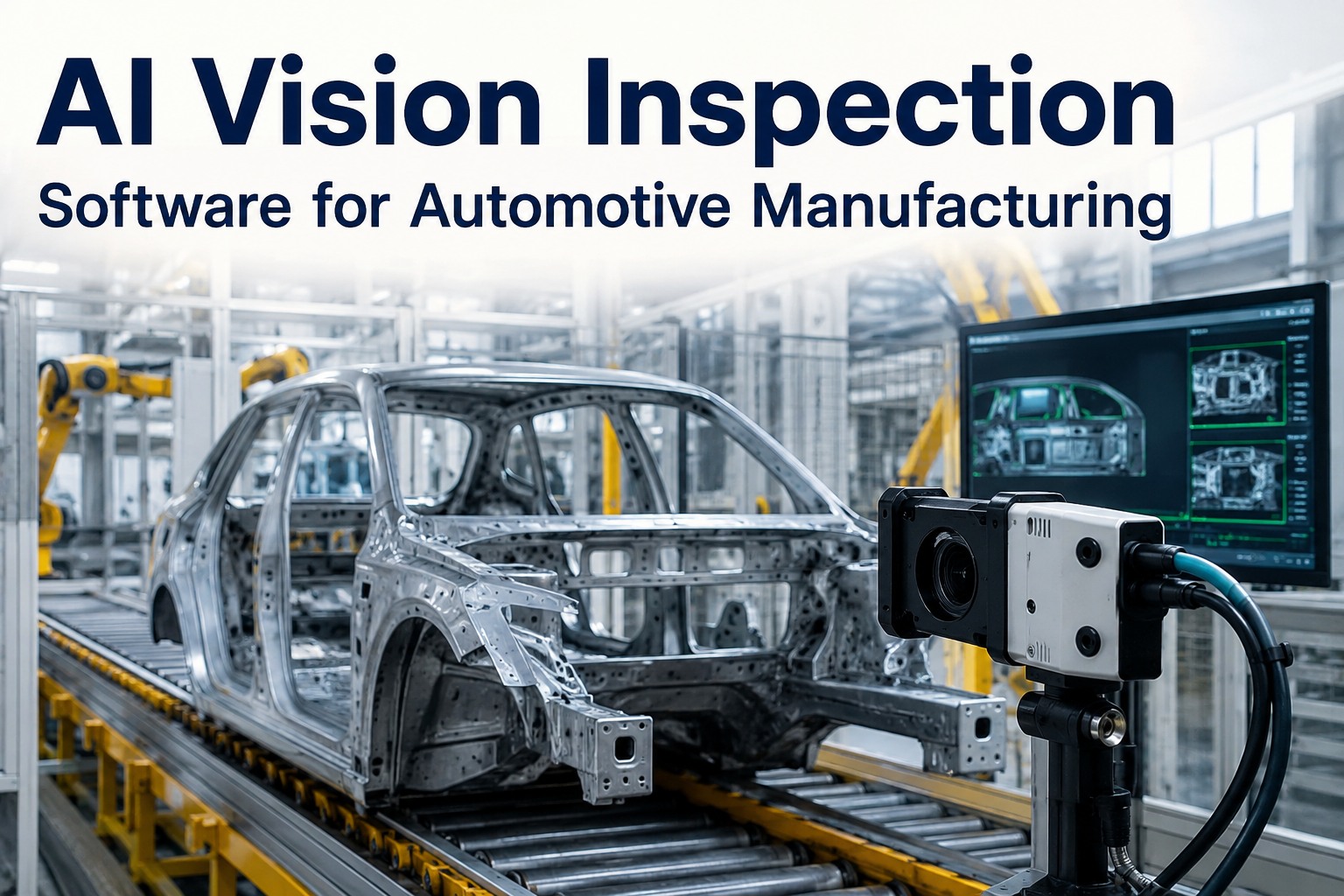
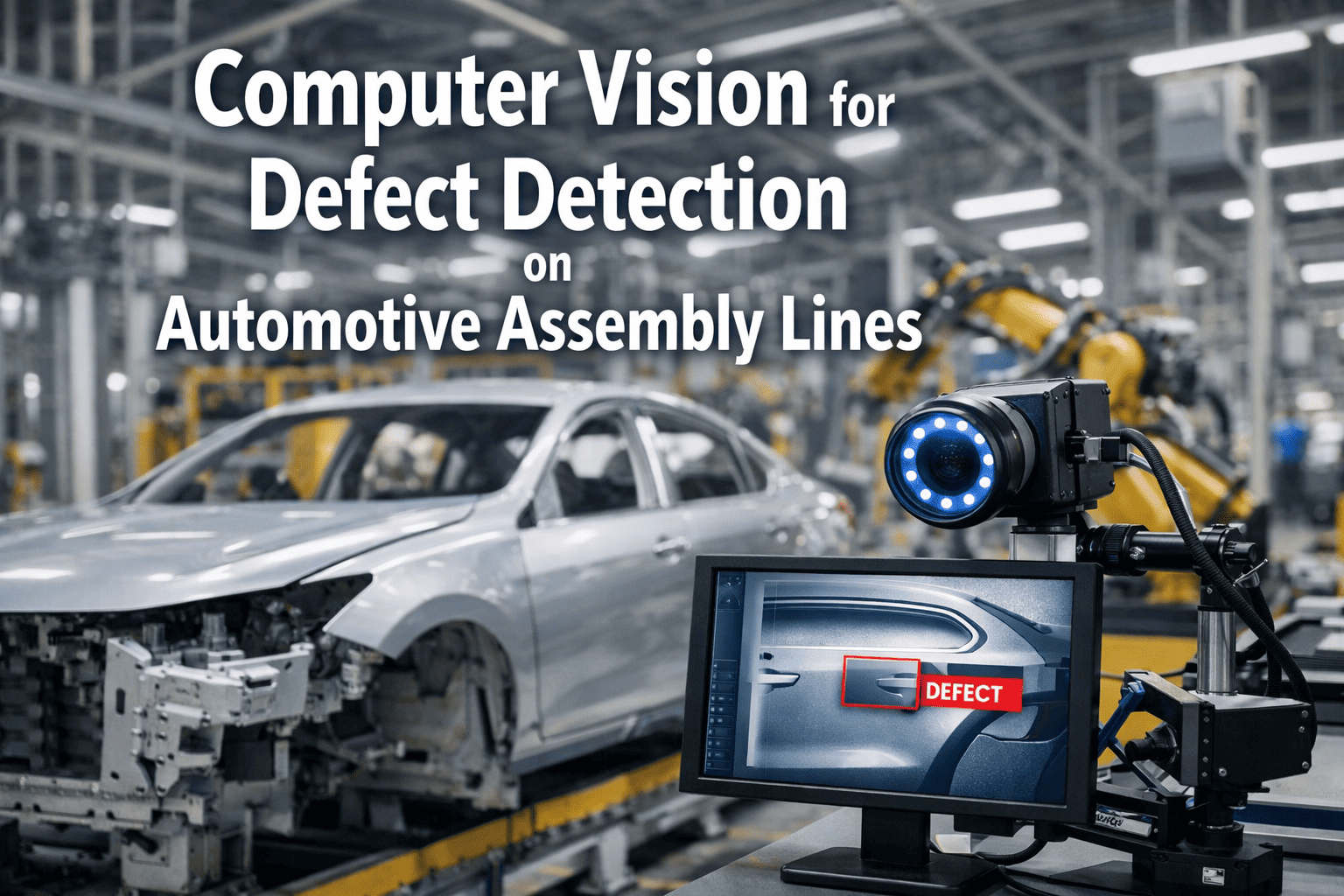
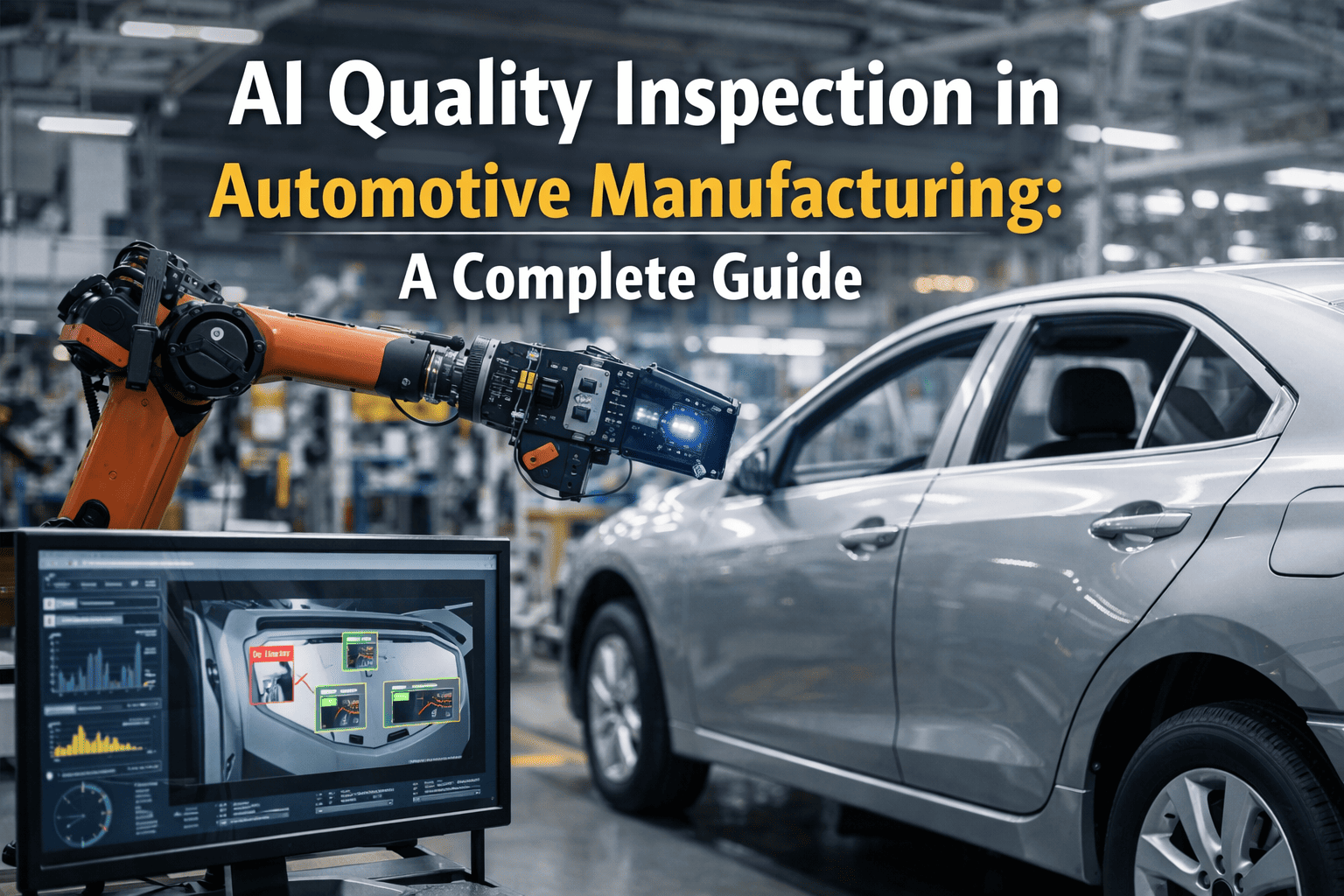
Automotive plants lose $2.3 million per hour to unplanned production downtime, with defect-related rework accounting for up to 12% of total manufacturing cost across global OEM facilities experiencing downtime costs that rose 113% since 2019. Traditional end-of-line quality inspection catches defects after value has already been added at every preceding station, making rework exponentially more expensive than prevention while human inspectors correctly reject only 85% of defective vehicles, missing 15% of quality escapes that result in costly recalls, warranty claims, and brand reputation damage. AI-powered final vehicle inspection deployed at end-of-line stations detects surface defects, assembly errors, missing components, and paint imperfections in real time with 99.7% accuracy before vehicles leave the production line, eliminating manual inspection inconsistencies and preventing defect escapes that trigger recalls affecting over 30 million vehicles annually in the US alone. The shift from manual inspection to AI-powered zero-defect manufacturing is no longer competitive advantage but production survival requirement in automotive sector where quality control determines customer satisfaction, regulatory compliance, and profitability. Book demo to see iFactory AI Vision configured for your automotive production lines.
99.7% Detection Accuracy, 68% Reduction in Defect Escapes, 42% Rework Cost Savings
The Critical Quality Crisis in Automotive Manufacturing
Modern automotive assembly lines produce vehicles at unprecedented speeds through stamping, body-in-white welding, paint shop coating, powertrain integration, battery module assembly for EVs, and final assembly stations installing hundreds of components per vehicle requiring absolute precision. Equipment failures at any station halt entire production lines costing automotive manufacturers $2.3 million per hour in downtime losses, $600 per second while plants average 25 downtime incidents monthly with 81-minute average recovery times consuming 675 hours of lost production annually per facility.
Traditional manual quality inspection relies on human inspectors examining vehicles at end-of-line stations checking for paint defects, assembly completeness, dimensional accuracy, and visual imperfections during 10-30 minute inspection periods that struggle to maintain consistency across shifts. Research demonstrates skilled inspectors correctly reject 85% of defective items while incorrectly rejecting 35% of acceptable parts, creating quality escapes where defective vehicles reach customers and false positives sending good vehicles to rework unnecessarily. Inspector fatigue, inconsistent visual assessment, and high-volume production pressures compound these challenges, resulting in over 30 million vehicle recalls in 2025 alone affecting manufacturers with massive financial losses and irreparable brand damage.
What Modern Automotive Plants Need: AI-Powered Final Inspection
Automotive manufacturers require end-of-line inspection systems capable of detecting surface defects smaller than 1mm, verifying assembly completeness against digital build records, confirming paint quality across curved body panels, inspecting weld integrity on body-in-white structures, validating battery module assembly for EV production with zero-tolerance standards, and tracking dimensional accuracy on stamped components all at production line speeds without creating bottlenecks or requiring inspection tunnels that halt vehicle flow.
How iFactory AI Vision Transforms Final Vehicle Inspection
Platform Comparison: AI Vision Solutions
| Capability | iFactory | IBM Maximo | SAP EAM | QAD Redzone | Evocon |
|---|---|---|---|---|---|
| AI Vision Inspection | Dedicated Module | None | None | None | None |
| MES/PLC Integration | Native Auto | Add-on | Custom | Partial | Limited |
| IATF 16949 Support | Built-in | Add-on | Add-on | None | None |
| Work Order Auto | AI-Driven | Manual | Manual | Semi-Auto | None |
| Automotive Fit | Purpose-Built | Enterprise | General | Mfg Focus | Mfg Focus |
| Deployment Time | 4-6 Weeks | 6-18 Mo | 9-24 Mo | 4-8 Wks | 2-4 Wks |
Regional Automotive Manufacturing Challenges
| Region | Key Challenges | Compliance | How iFactory Solves |
|---|---|---|---|
| US | IATF 16949 requirements from Big 3, aging line equipment, high labor cost driving automation, supplier scorecard pressure | IATF 16949, AIAG MSA, OSHA | Pre-validated MSA-compliant inspection, automated IATF documentation, OEE quality rate integration for Big 3 reporting |
| UK | Post-Brexit traceability, strict HSE regulations, EV transition creating battery inspection requirements | UKCA, IATF 16949, HSE | Pre-configured battery module AI inspection for EV production, HSE-documented station safety assessments |
| UAE | Extreme heat degrading camera performance, rapid plant expansion, limited trained quality workforce | ESMA, UAE AI standards, ISO 9001 | Dust-rated IP67 enclosures for desert environments, rapid deployment templates for greenfield commissioning |
| Canada | Remote locations, extreme cold affecting calibration, cross-border traceability with US OEMs | CSA, IATF 16949, Provincial OHS | Temperature-compensated AI baselines, US MES compatibility for cross-border supply chain |
| Europe | EU AI Act compliance, GDPR implications, EU Machinery Regulation, carbon reduction mandates | EU AI Act, GDPR, Machinery Reg, IATF | EU AI Act conformity documentation, GDPR-compliant vision with no operator biometric capture |
From hardware installation through model training to live inspection with full MES and PLC integration in 4-6 weeks
Frequently Asked Questions
Cameras, models, MES integration, work order automation, and IATF compliance documentation across your full production line quality gates