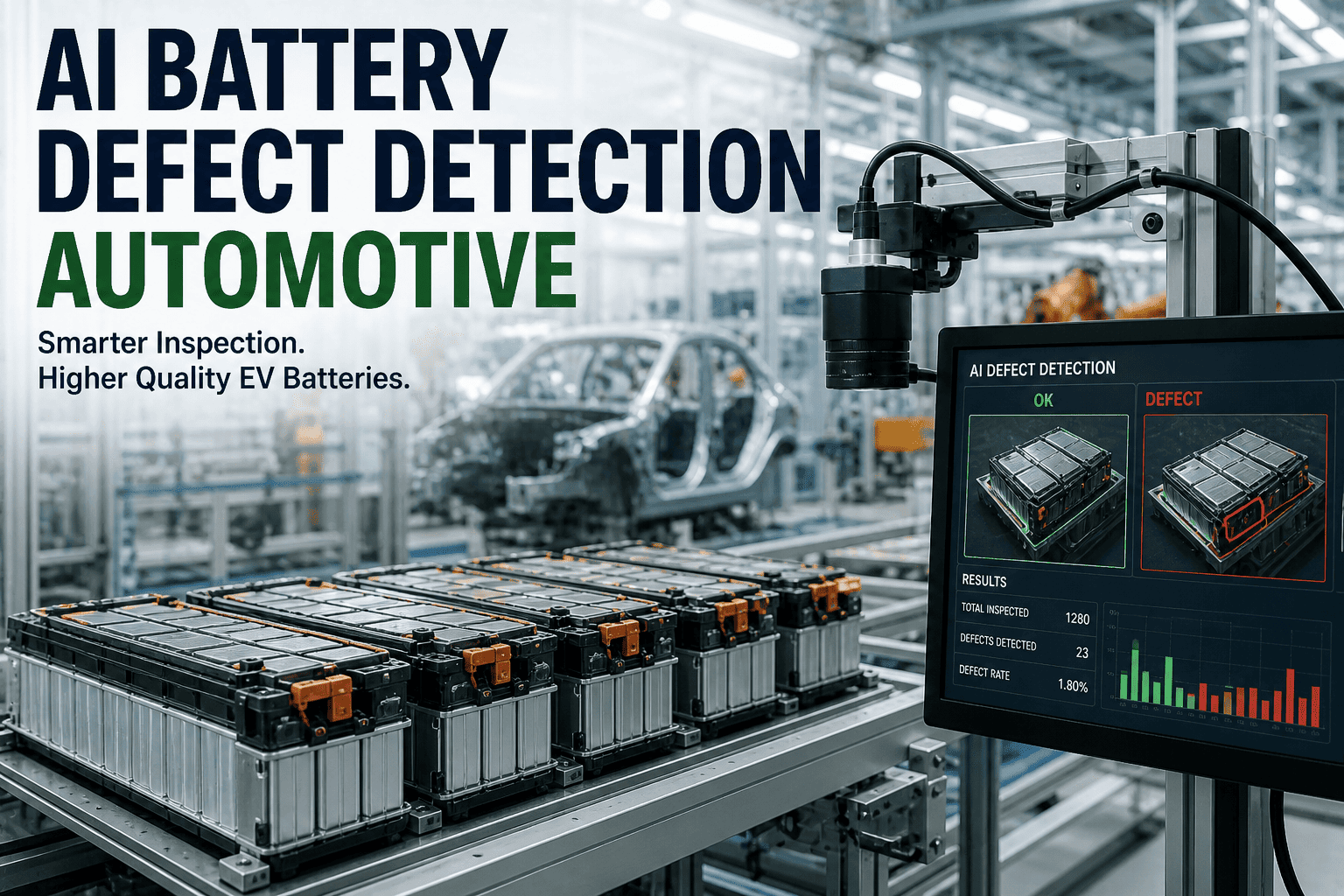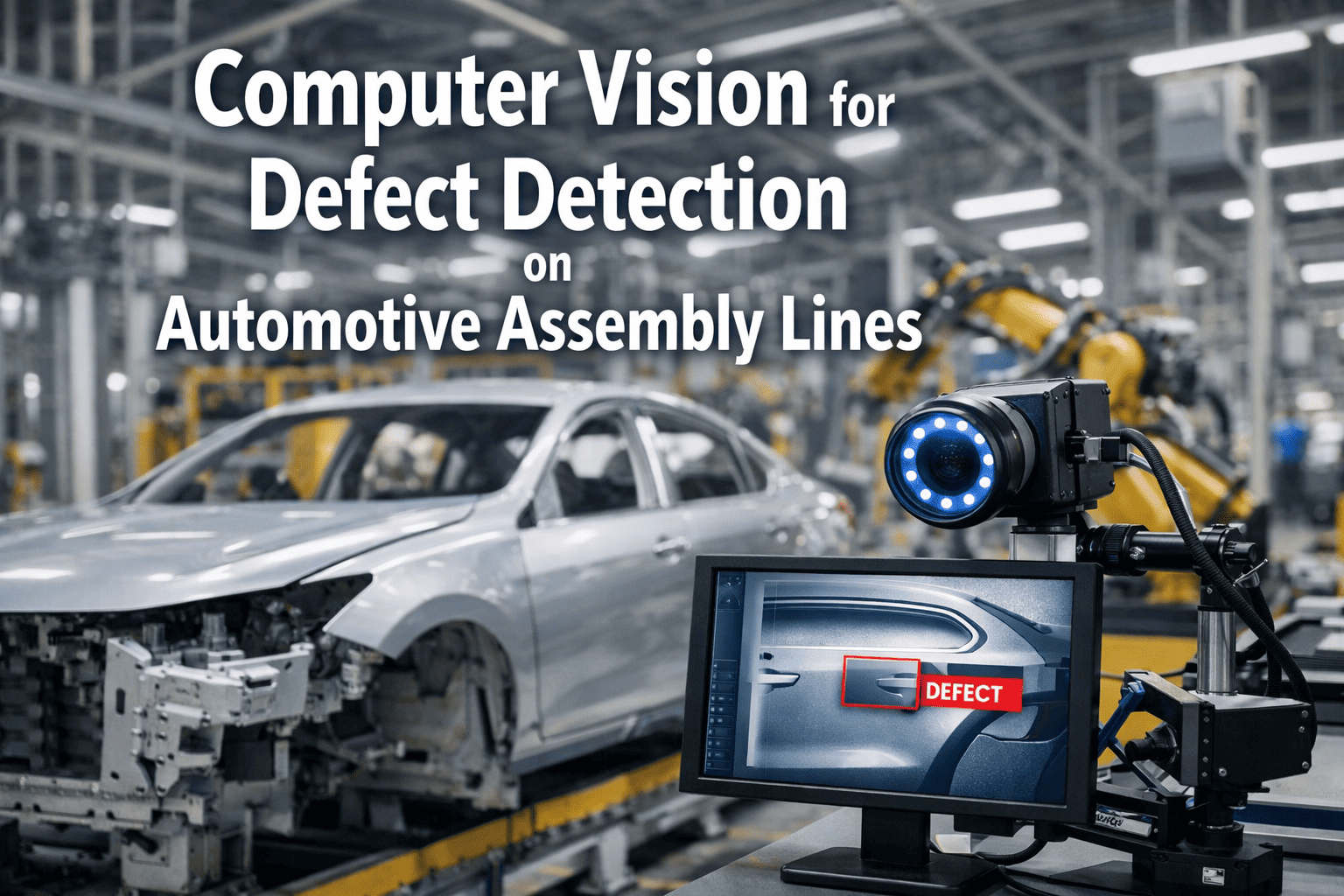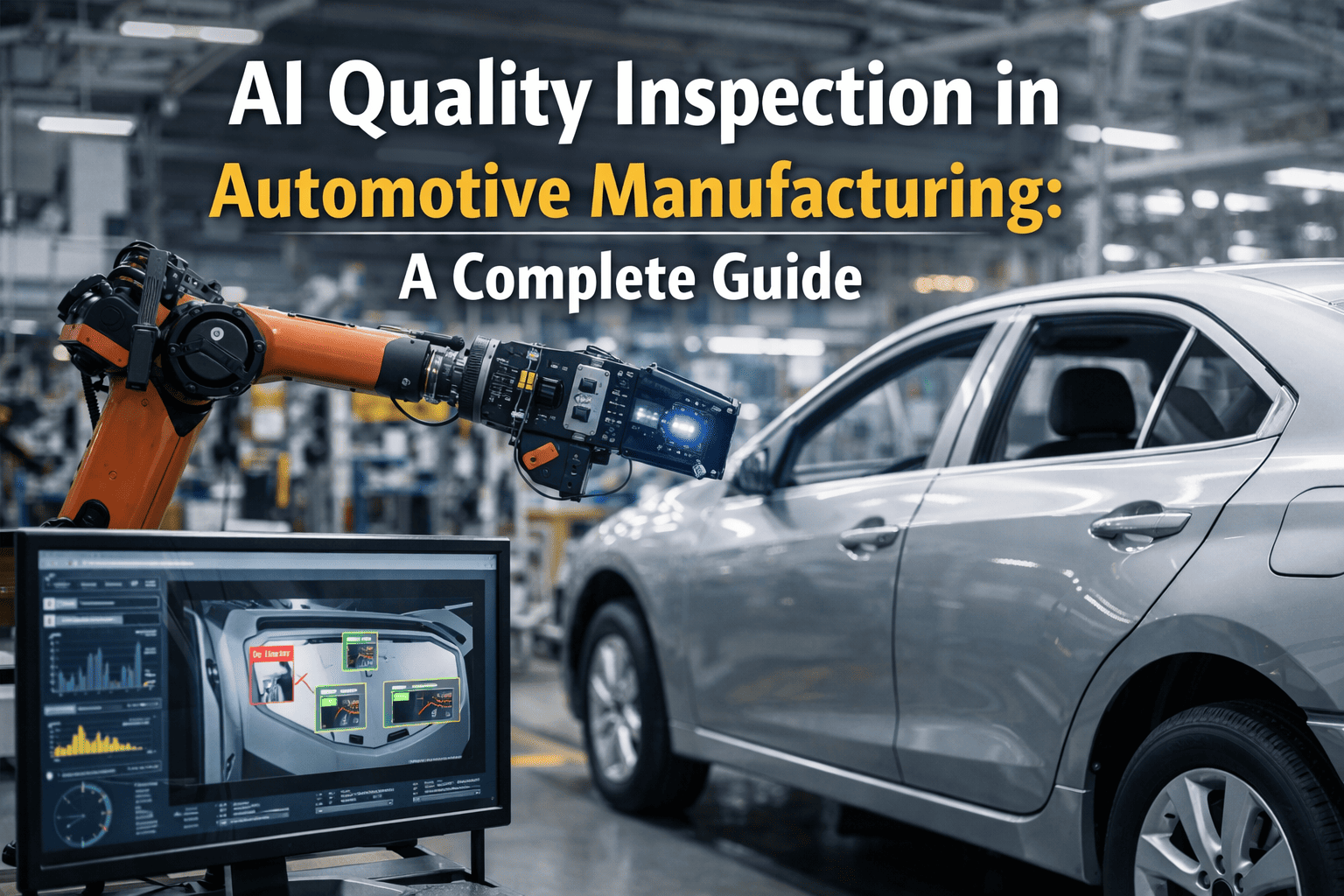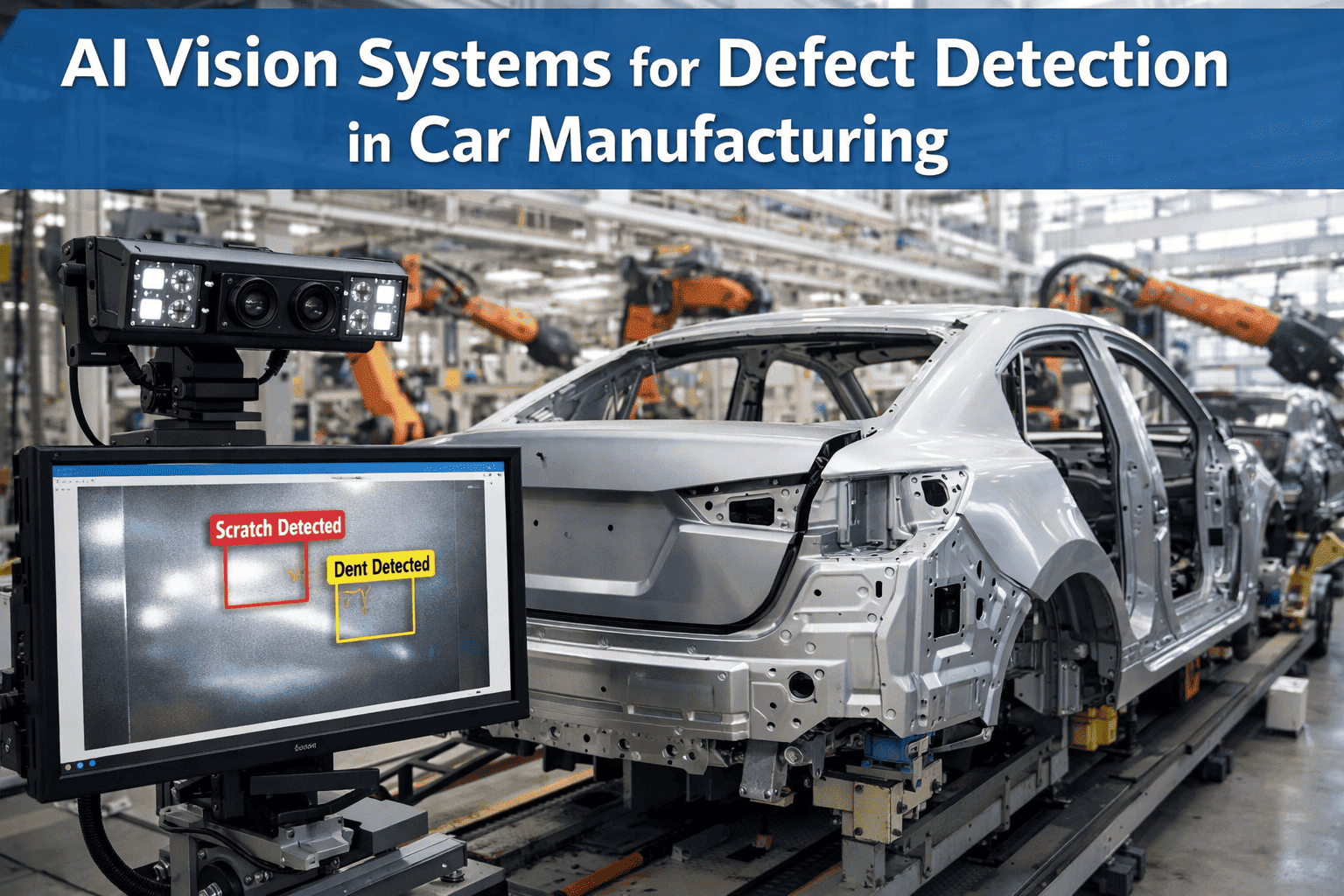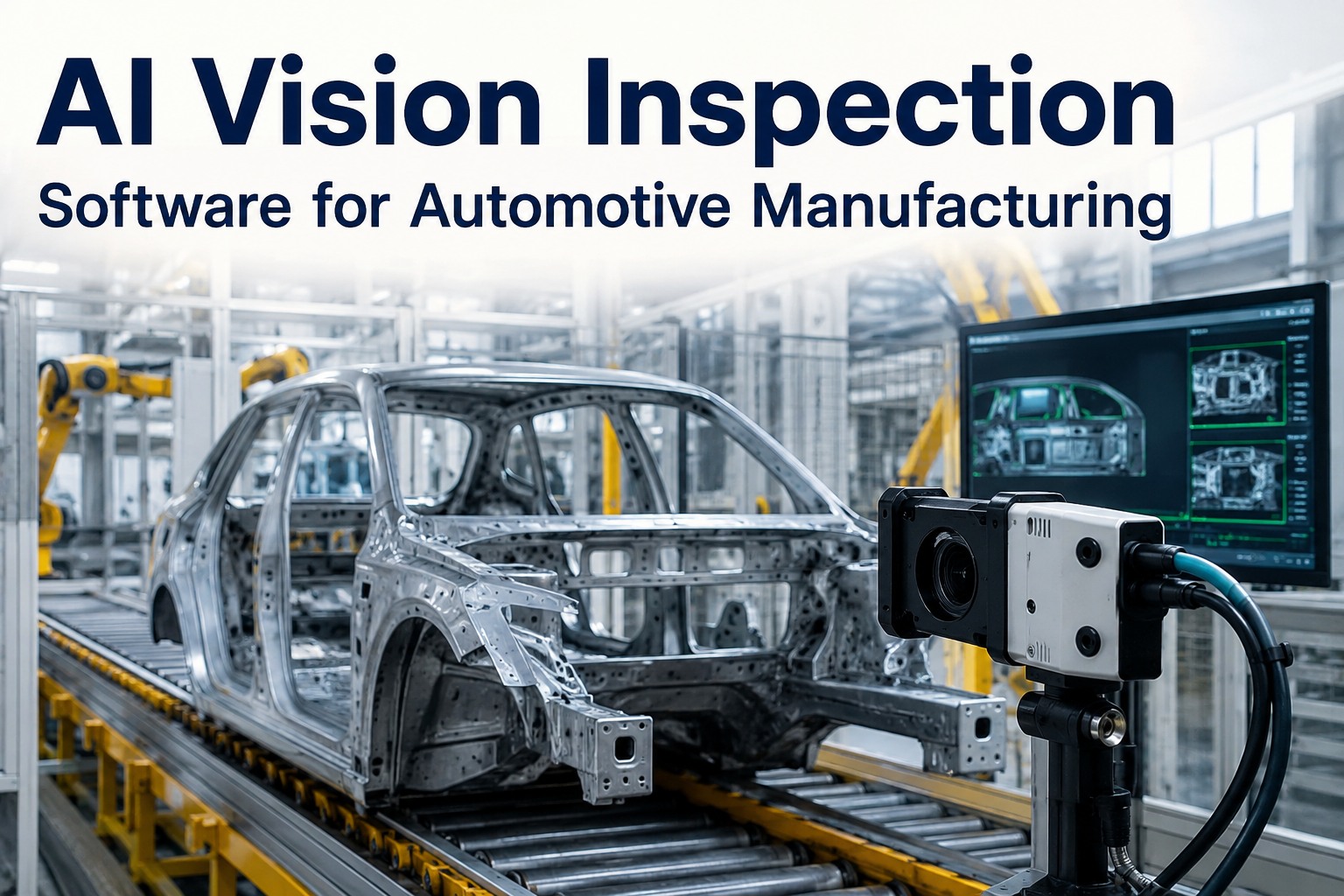
A trained human inspector catches 78–84% of surface defects on a good day shift — and by hour ten of a night shift, that drops below 70%. In a 2026 automotive plant running 60–90 vehicles an hour with 200-plus checkpoints per body, those missed percentage points become escaped defects, warranty chargebacks, and supplier-scorecard damage. AI vision inspection closes that gap: cameras plus deep learning now hit 99%+ detection accuracy at line speed, inspecting 100% of parts every shift without fatigue. This guide explains how AI vision inspection software works for automotive manufacturing — the four-layer architecture, the defect classes it catches, the brutal economics of catching defects early, and how iFactory deploys it on-premise as a modern alternative to SAP MII and DMC, live in 6–12 weeks instead of 18 months of pilot limbo.
AI Vision Inspection Software for Automotive Manufacturing
Inspect 100% of production at line speed — paint defects, weld porosity, panel gap and flush, missing fasteners, assembly errors — with 99%+ accuracy that never blinks. On-premise NVIDIA hardware, sub-100ms edge inference, IATF 16949 traceability, and SAP/MES integration. A modern SAP MII and DMC alternative, deployed in 6–12 weeks.
Why Human-Only Inspection No Longer Holds in 2026
The case for AI vision isn't that inspectors are bad — it's that the conditions have outgrown manual inspection. Three forces converged this year. OEMs now enforce zero-defect delivery with automated supplier scorecards, where a single escaped defect can trigger chargebacks of $500–$5,000+ per incident and risk preferred-supplier status. Experienced inspectors are retiring faster than they can be replaced. And inter-inspector agreement on defect severity sits at just 55–70%, meaning identical parts get different verdicts depending on who's looking and when. AI vision removes the variance: the same standard, applied to every part, on every shift.
Want to see where your line is losing defects to shift variance? Book a 30-minute demo — iFactory will analyze your current defect and escape data and show exactly which stations deliver the fastest AI-vision ROI. Sessions available this week.
How AI Vision Inspection Actually Works — The Four Layers
Strip away the marketing and every modern AI vision deployment is the same four-layer architecture: capture, process, decide, act. What separates a system that works shift after shift from a stalled pilot is execution quality at each layer — camera and lighting selection, model architecture, edge compute, and the loop back to the production line.
From part on the line to closed-loop action in under 100ms
The Defect Classes It Catches in Automotive
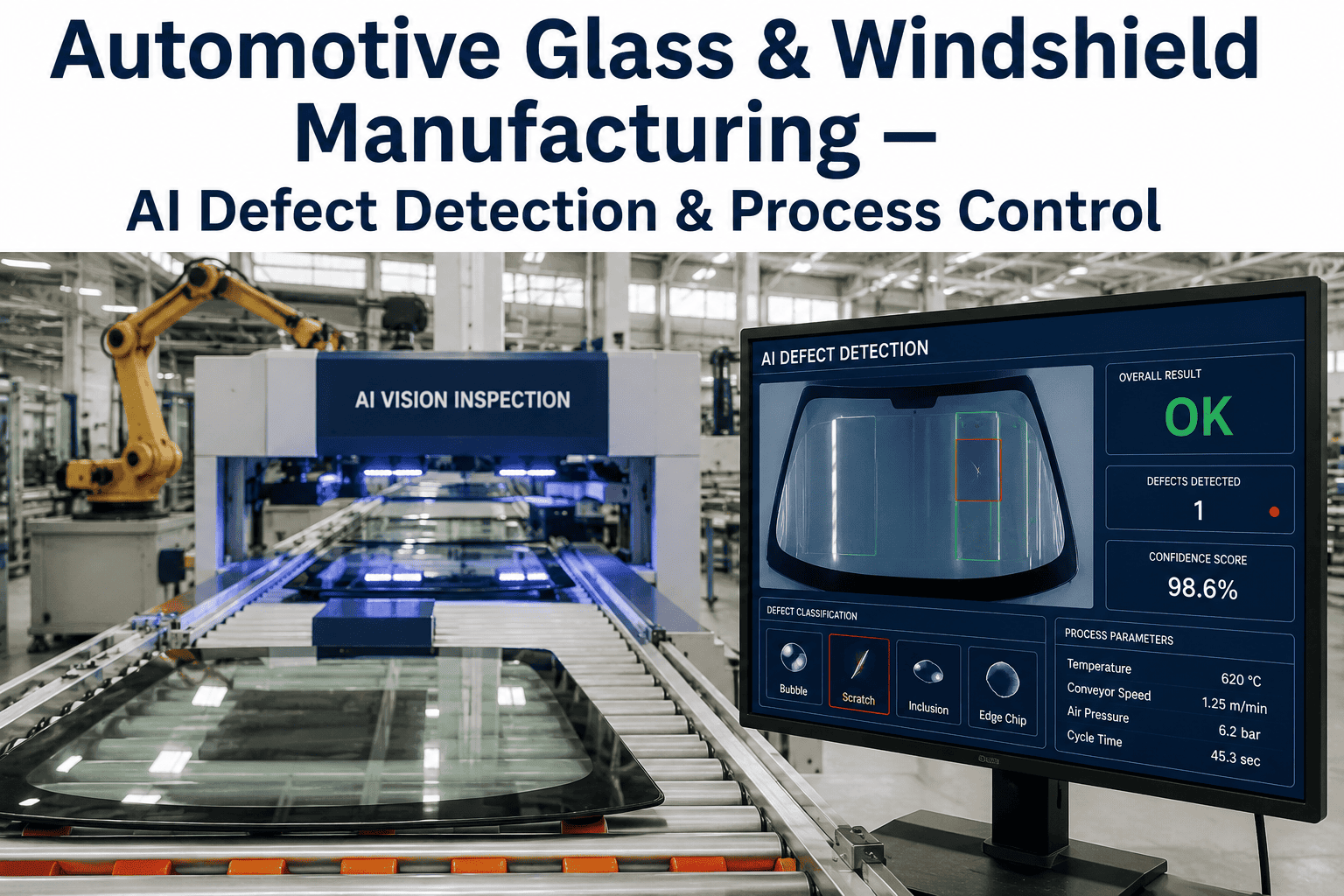
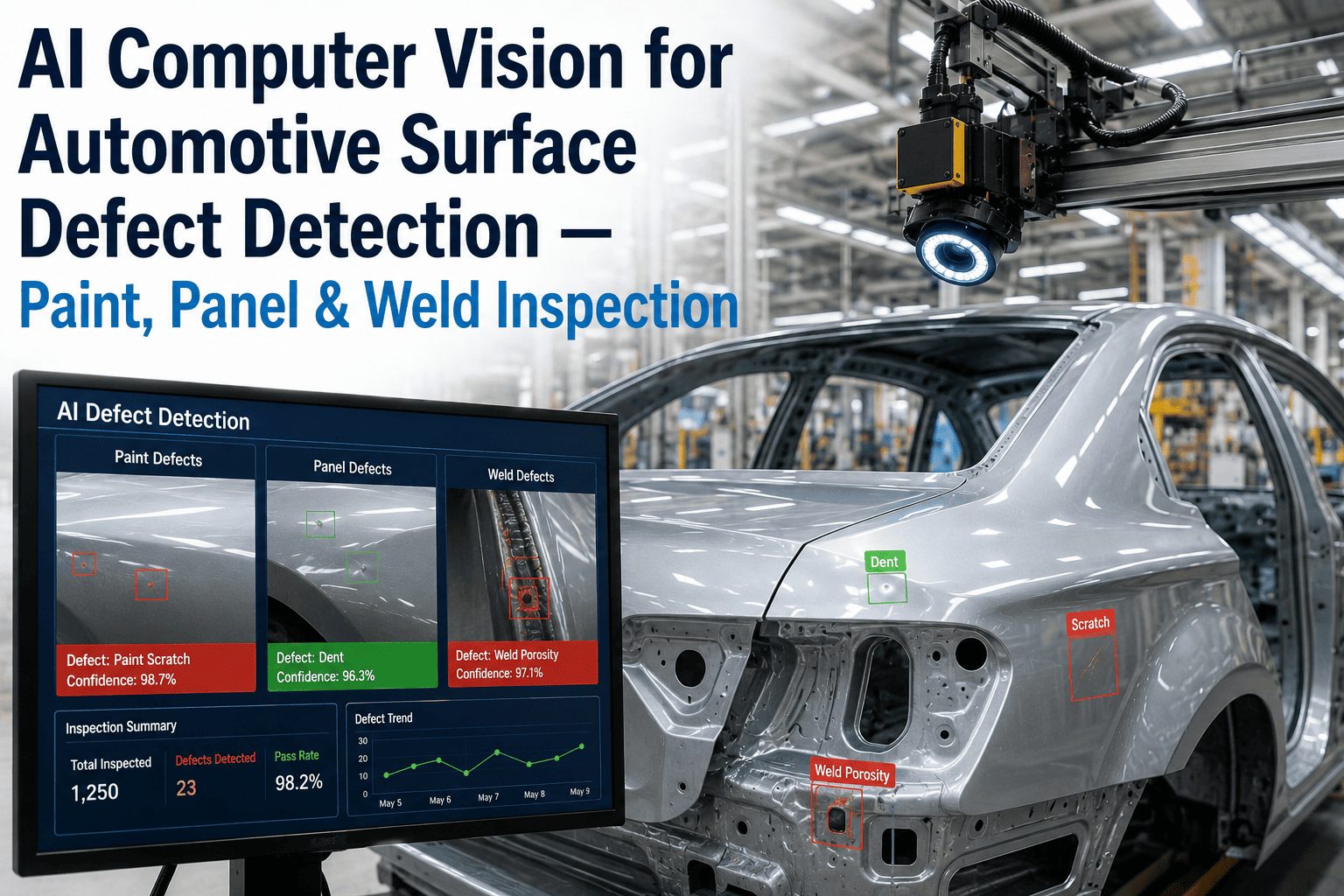
iFactory ships pre-trained models for common defect types and fine-tunes on your specific parts during deployment with 500–2,000 labeled samples. Across paint, body shop, and final assembly, these are the defect families AI vision detects at production speed.
Paint & surface
Scratches to 50µm, dents, runs, orange peel, color mismatch on compound curves and high-gloss panels.
Weld quality
Weld porosity, cracks, spatter, and missed or undersized welds — surface and sub-surface via specialized lighting.
Gap & flush
Panel gap and flush deviations beyond tolerance — doors, hoods, trunk lids, and body-side alignment.
Assembly completeness
Missing fasteners, studs, clips, and components — presence verification before the part leaves the station.
Label & marking
Missing, crooked, torn, or smeared labels; liner-not-removed; VIN and traceability mark verification.
Dimensional deviation
Hairline cracks to 0.3mm, dimensional drift, and forming defects flagged at full line speed.
Not sure AI vision can catch your specific defect type or whether your existing cameras qualify? Ask iFactory Support — send a few sample images and your camera specs (5+ MP with appropriate lighting usually works), and the team will confirm feasibility before you evaluate. Typical response within 3 business days.
The 1-10-100 Rule: Why Catching Defects Early Pays
Every automotive quality engineer knows the 1-10-100 rule instinctively, but few plants have instrumented it. The cost of a defect multiplies the further downstream it escapes — and AI vision's value is catching it at the earliest, cheapest stage, on every part.
This is why escape reduction — not just detection accuracy — is the metric that moves the P&L. Automotive teams report escaped-defect drops of 76–83% and scrap-and-rework reductions around 45% after deploying AI vision, with typical payback in 8–18 months depending on line volume. At $400K–$2.1M in annual escape cost per line, the math closes quickly.
Deployment: On-Premise NVIDIA, or Cloud
For automotive, where quality images carry process IP and OEM-confidential detail, on-premise is the default — inference runs at the line, your data never leaves the plant, and the system is air-gap capable. Cloud is available for multi-plant model management and benchmarking, with the same vision engine either way.
iFactory On-Premise Appliance The automotive default — IP stays in the plant
- Pre-configured NVIDIA edge server — racked, loaded, ready.
- Sub-100ms inference at the line — no cloud round-trip.
- Air-gap capable — images never leave your network.
- SAP / MES / CMMS integration — closes the detection loop.
iFactory Cloud For multi-plant model management
- Fully managed — no on-site hardware to maintain.
- Same vision engine — CNN/ViT models, full defect library.
- Cross-plant benchmarking — compare escape rates site to site.
- Central model updates — push improvements fleet-wide.
A Modern Alternative to SAP MII and DMC
With SAP MII mainstream maintenance ending and DMC's vision capabilities still maturing, many automotive teams are placing AI vision inspection on a best-of-breed platform rather than waiting on the ERP roadmap. iFactory integrates with SAP, MES, and quality systems — feeding inspection results and auto-generated work orders back into your existing stack — so vision becomes an upgrade, not a rip-and-replace. The phased model proves ROI at one high-impact station first, then scales, with no 18-month pilot purgatory.
Position cameras at your highest-impact station — ~30 min per camera, existing IP cameras (ONVIF/RTSP) or new industrial cameras with optimized lighting.
Capture 500–2,000 images across good, marginal, and defective parts; active learning minimizes labeling effort.
Train & shadow-run the model alongside manual inspection for a week — target >99% recall, <2% false positives.
Go live & scale — hand over the station, then expand line by line with ROI already proven.
Curious how this maps onto your SAP or MES stack? Schedule a demo and iFactory will walk through the integration live — how inspection results, work orders, and IATF traceability records flow into your existing systems. Sessions run 30 minutes; slots open this week.
Your inspectors are good. The conditions outgrew them.
AI vision inspection gives every part the same 99%+ scrutiny on every shift — paint, weld, gap-and-flush, assembly — on a pre-configured on-premise NVIDIA appliance that keeps your data in the plant. Live in 6–12 weeks, ROI proven at one station first. The next step is a 30-minute demo against your own defect data.
Frequently Asked Questions
How accurate is AI vision inspection compared to human inspectors?
AI vision systems reach 99%+ detection accuracy and hold it on every shift, while a trained inspector catches 78–84% under ideal day-shift conditions, dropping below 70% late in a night shift. AI also catches defects as small as 50 microns that no eye spots consistently. The point isn't to replace inspectors — it's to hand them the repetitive, high-volume catches so they focus on edge cases and root-cause work.
Can it keep up with automotive line speed?
Yes. Edge inference runs under 100ms per image on on-premise NVIDIA GPUs, so the system inspects 100% of parts at full line speed — typically 60–90 vehicles per hour — without slowing throughput. Decisions (pass, flag, reject) trigger before the part moves to the next station.
Do we need to replace our existing cameras?
Often not. If your cameras meet roughly 5+ megapixel resolution with appropriate lighting, they usually qualify; the system also works with existing IP cameras over ONVIF/RTSP. Lighting geometry matters as much as the camera, which is why iFactory validates the imaging setup during the first deployment step. If you're unsure, contact iFactory Support with your camera specs and the team will confirm before you commit.
Is this an alternative to SAP MII or DMC?
It complements or replaces the vision-and-quality layer rather than your whole ERP. iFactory integrates with SAP, MES, and CMMS — pushing inspection results and auto-generated work orders into your existing stack — so you get modern AI vision without waiting on the SAP roadmap or running an 18-month pilot. A demo is the fastest way to see the integration; schedule one here.
How long until it's live and paying back?
On-premise deployment runs 6–12 weeks, starting at a single high-impact station and scaling from there. Most automotive deployments see payback in 8–18 months — faster in high-volume operations where scrap reduction alone offsets the investment. The phased approach proves ROI before any plant-wide commitment.
How do I book a demo or get a defect analysis?
Two routes. For a live walkthrough on your own line, schedule a 30-minute demo — it covers the four-layer pipeline, your defect types, a sized ROI estimate, and SAP/MES integration. For a written defect-and-camera feasibility check, contact iFactory Support and expect a response within about 3 business days. No obligation either way.
Make every part get the same look — on every shift.
The 2026 automotive quality baseline is AI vision: 99%+ accuracy, sub-100ms edge inference, full IATF traceability, on-premise so your data stays put. iFactory deploys it in 6–12 weeks as a modern SAP MII and DMC alternative, with ROI proven at one station first. The next step is a 30-minute demo against your own defect data. Sessions available this week.