Power electronics are the nervous system of every EV — inverters, onboard chargers, DC-DC converters, and battery management modules that handle voltages and switching frequencies where a single microscopic solder void or misplaced component can trigger a field failure or worse. Traditional quality control methods — manual visual inspection, end-of-line functional testing — were designed for a world where defect rates of 200–500 PPM were acceptable. In EV power electronics, that standard is no longer defensible. AI quality control is now the only technology that can meet the zero-defect imperative at production speed. Book a demo to see how iFactory brings AI quality control to your EV production line.
AI in EV Manufacturing
AI Quality Control for EV Power Electronics Manufacturing
Achieve zero-defect production at line speed. AI vision, predictive inspection, and real-time anomaly detection — purpose-built for inverters, chargers, and battery modules.
95–99%
AI defect detection accuracy vs. 70–80% for manual inspection
50%
reduction in defects achieved by manufacturers using AI quality control
$6.07B
AI defect detection market size projected by 2035
Why EV Power Electronics Demand a Higher Quality Standard
Power electronics in EVs operate in conditions that punish defects mercilessly. An inverter switching at 20 kHz under 800V bus voltage generates thermal cycles, vibration loads, and electromagnetic stress that amplify every sub-surface crack, every inadequate solder joint, every slightly misaligned IGBT. Unlike consumer electronics where a cosmetic flaw goes unnoticed, a defect in a traction inverter can cause vehicle shutdown on the highway — or worse.
Recall Cost per Vehicle
$500–$1,200
Average OEM cost for EV power electronics field recall
Manual Inspection Defect Escape Rate
20–30%
Defects missed by human inspectors due to fatigue and subjectivity
Cost of Late-Stage Defect Discovery
10–100x
Cost multiplier when defects found in field vs. at incoming inspection
Inspection Speed Advantage
300M+
Product inspections processed daily by AI vision systems globally
The Four Defect Categories AI Must Catch
EV power electronics quality failure modes cluster into four distinct categories — each requiring different detection technology and each carrying different downstream risk. AI systems must address all four simultaneously at production speed.
01
Solder Joint Defects
VoidsCold jointsBridgingInsufficient wetting
Sub-surface voids in high-current solder joints under IGBTs and MOSFETs are invisible to optical inspection but catastrophic under thermal cycling. AI-powered automated optical inspection (AOI) combined with X-ray CT analysis detects void ratios, joint morphology anomalies, and bridging defects that traditional 2D AOI misses entirely.
Risk level: Critical — direct field failure path
02
Component Placement & Orientation Errors
MisalignmentReversed polarityMissing componentsWrong value
High-density power module PCBs with 400+ placements per board cannot be reliably inspected by human operators at production rates. AI vision systems verify every component placement, orientation, and polarity in real time — generating closed-loop feedback to pick-and-place machines before the board advances to reflow.
Risk level: High — causes immediate functional failure
03
Surface & Substrate Anomalies
DelaminationCracksContaminationCopper trace damage
Power module substrates (DBC ceramics, IMS boards) under high thermal load develop delamination and micro-cracks invisible to standard inspection. Hyperspectral and structured-light AI inspection penetrates surface layers to detect substrate integrity failures before assembly — eliminating the most expensive rework scenario.
Risk level: High — long-latency thermal failure
04
Assembly & Enclosure Integrity
Seal failuresTorque anomaliesBusbar alignmentPotting voids
Inverter and OBC housings require watertight integrity (IP67/IP69K) and precise busbar positioning for safe high-voltage operation. AI inspection systems validate seal bead geometry, potting coverage uniformity, and busbar clearance distances — catching assembly drift before it becomes a warranty claim.
Risk level: Medium-High — environmental and safety exposure
How AI Quality Control Works: The Inspection Stack
A complete AI quality control deployment for EV power electronics is not a single technology — it is a layered stack of detection methods, each tuned to the defect types it catches best, connected by a shared data intelligence layer that learns continuously.
Layer 1 — Incoming Material
Predictive Incoming Quality Control
AI models cross-reference supplier history, component batch data, and SPC trends to dynamically adjust incoming inspection intensity. High-risk batches receive deep inspection; validated suppliers pass with streamlined sampling. Defects intercepted before they enter the line.
Layer 2 — In-Process Vision
Real-Time AOI & 3D Solder Inspection
High-resolution multi-angle cameras with structured lighting inspect every board at reflow exit speed. AI identifies solder joint morphology, component placement deviation, and surface anomalies — generating immediate feedback to upstream process parameters to correct drift before the next cycle.
Layer 3 — Sub-Surface Analysis
AI-Guided X-Ray & CT Inspection
AI directs X-ray resources to highest-risk zones identified from Layer 2 data, dramatically reducing inspection time per unit. CT slice analysis with deep learning void detection quantifies solder joint integrity against pass/fail thresholds automatically — removing operator judgment variability from the critical path.
Layer 4 — End-of-Line Intelligence
Functional Test Anomaly Correlation
End-of-line functional test results feed back into the AI quality model, correlating electrical signatures to upstream inspection data. Units that pass visual inspection but show electrical anomalies trigger root-cause analysis automatically — closing the loop between test data and process control.
Layer 5 — Continuous Learning
Quality Digital Twin & Predictive Analytics
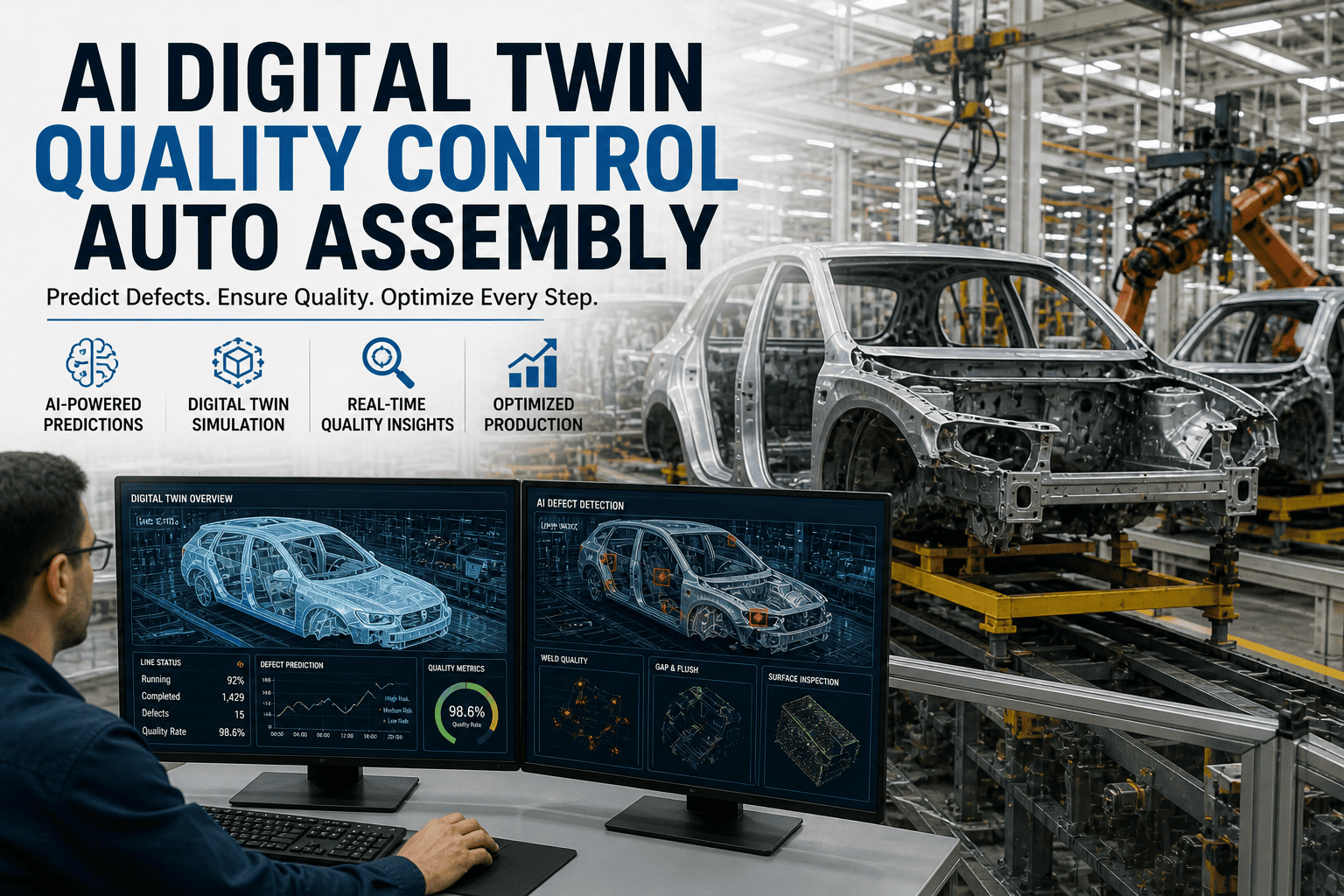
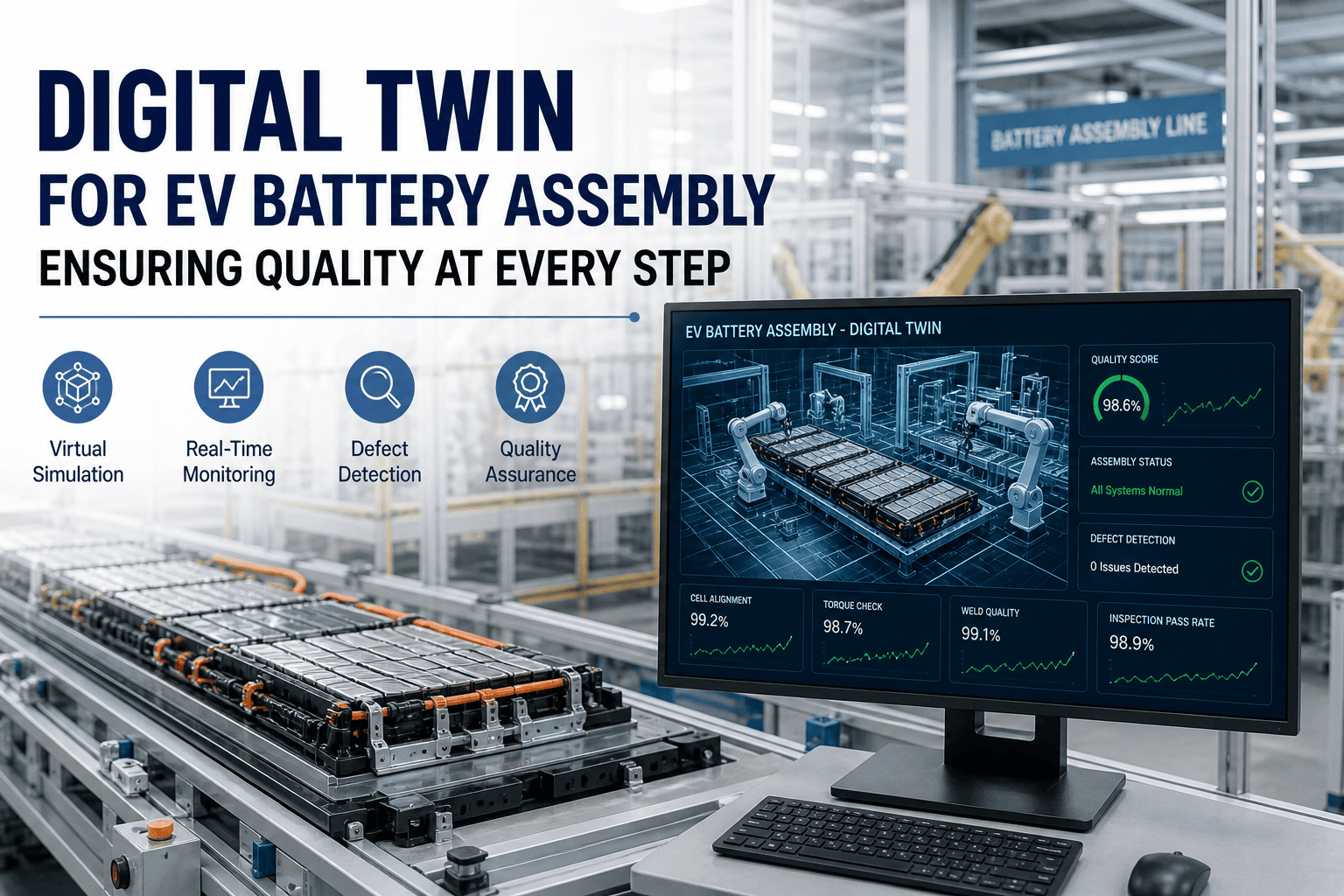
All inspection data from all layers feeds a quality digital twin that models defect generation patterns across equipment, suppliers, operators, and environmental variables. Predictive analytics identify quality drift 12–48 hours before defect rates breach thresholds — enabling proactive intervention rather than reactive firefighting.
KPI Impact: AI vs. Traditional Quality Control
Defect Detection Accuracy
Sources: Spherical Insights Automotive AI Inspection Report 2025, Triconinfotech AI Quality Control Analysis 2025, Future Market Insights AI Defect Detection Market 2025
Real-World Use Cases in EV Power Electronics
An Tier 1 inverter manufacturer was experiencing a 1.8% field return rate on IGBT modules due to thermal fatigue at solder interfaces — a defect invisible to existing 2D AOI. AI-guided X-ray inspection with deep learning void analysis was deployed at reflow exit, automatically classifying solder joint void ratio for every module against IPC-7095 thresholds.
94%
reduction in field returns within 2 production quarters
Zero
IGBT module recalls in 18 months post-deployment
$4.2M
annual warranty cost avoidance
A high-volume OBC manufacturer running 3 shifts with 6 SMT lines was relying on manual final inspection — catching placement errors only after complete assembly. AI vision inspection was integrated inline on all 6 lines, providing real-time placement verification and direct closed-loop feedback to pick-and-place machines.
87%
reduction in placement defects reaching final test
34%
faster throughput vs. manual inspection bottleneck
3 weeks
time to full deployment across all 6 lines
iFactory AI Quality Control for EV Power Electronics
01
AI Vision Inspection Integration
Connect AI inspection outputs from AOI, X-ray, and 3D solder systems into a unified quality data stream — with real-time pass/fail decisions and process feedback loops.
02
Quality Digital Twin
Virtualize your entire quality system — inspection stations, defect patterns, supplier inputs — in a simulation model that predicts quality drift before it reaches the line.
03
Predictive Supplier Quality
AI models incoming component risk by supplier, batch, and component type — dynamically adjusting inspection depth to match actual risk rather than static AQL sampling plans.
04
Process SPC & Root Cause Intelligence
Statistical process control augmented with AI root-cause analysis correlates defect patterns to equipment state, operator shifts, material batches, and environmental variables — automatically.
05
MES & Traceability Integration
Every inspection result, every anomaly flag, every AI classification linked to the unit serial number — giving complete forward and backward traceability from raw material to shipped module.
06
Continuous Model Learning
AI inspection models retrain on production data continuously — improving detection accuracy as new defect types emerge, new component variants are introduced, or process conditions shift.
Zero-Defect EV Production
Your Power Electronics Line Deserves Better Than Manual Inspection
iFactory deploys AI quality control designed specifically for EV power electronics complexity — inverters, OBCs, BMS modules, and high-voltage assemblies. See the difference in a live demo.
AI Vision Inspection
Quality Digital Twin
Predictive IQC
SPC & Root Cause AI
MES Integration
Continuous Learning