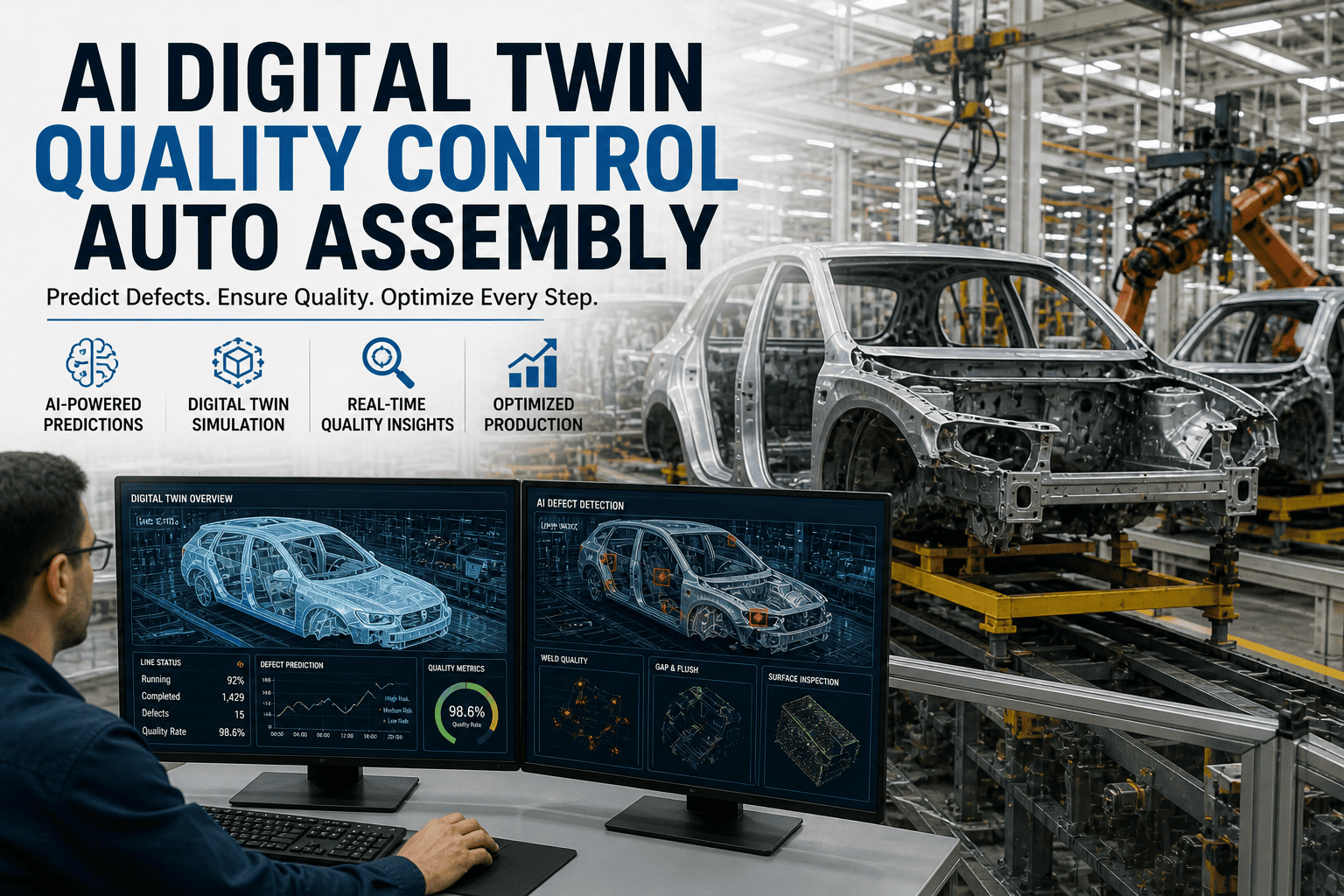
Automotive assembly lines are precision machines producing thousands of vehicles weekly, each containing 30,000-40,000 components that must integrate flawlessly. Yet quality defects slip through final inspection every day a misaligned seat rail caught too late, a door panel gap outside tolerance discovered during shipping, a wiring harness routing issue found in customer hands. The cost is catastrophic. A single recall affecting 500,000 vehicles costs manufacturers $300 million-$1.2 billion in direct repair, logistics, and warranty claims. Hidden defects discovered post-sale damage brand reputation irreparably. Most assembly plants rely on endpoint quality control: final inspection catches defects after the vehicle is fully built. By then, hundreds of defective units may already be in the production pipeline. The production line itself has zero real-time visibility into quality assembly happens, parts are installed, vehicles roll off the line, then quality is assessed 24-48 hours later through batch testing. This reactive approach is fundamentally broken. iFactory is The Complete AI Platform for Manufacturing Operations, delivering the only end-to-end digital twin solution purpose-built for automotive assembly. Real-Time Visibility Into Every Production Line. Want to predict assembly quality issues before they reach customers and eliminate recalls before they happen? Book a demo today or explore implementation with our automotive specialists.
Detect Assembly Quality Issues 8-24 Hours Before Final Inspection Reveals Them
AI-powered digital twin technology with real-time anomaly detection, predictive defect models, and automated quality alerts at every assembly stage.
The Automotive Assembly Quality Challenge
Modern automotive plants assemble vehicles at rates of 60-100 units per hour on high-speed production lines. Each vehicle contains thousands of components that must be installed with precision measured in millimeters. Seat rails must align within 2mm. Door panels must fit within 4mm gaps. Electrical harnesses must route through specific channels. Yet assembly quality is currently assessed only at final inspection—24-48 hours after components are installed. By then, quality deviations have cascaded through dozens or hundreds of vehicles. A misaligned seat rail installed on unit #1001 isn't discovered until unit #1847 reaches final inspection, meaning 846 additional vehicles were built with the same misalignment before corrective action can be taken. The human and financial cost of this lag is enormous. Recalls now average $300 million in direct costs per major defect. Hidden defects destroy customer trust and brand value immeasurably.
How iFactory Digital Twin Transforms Automotive Quality Control
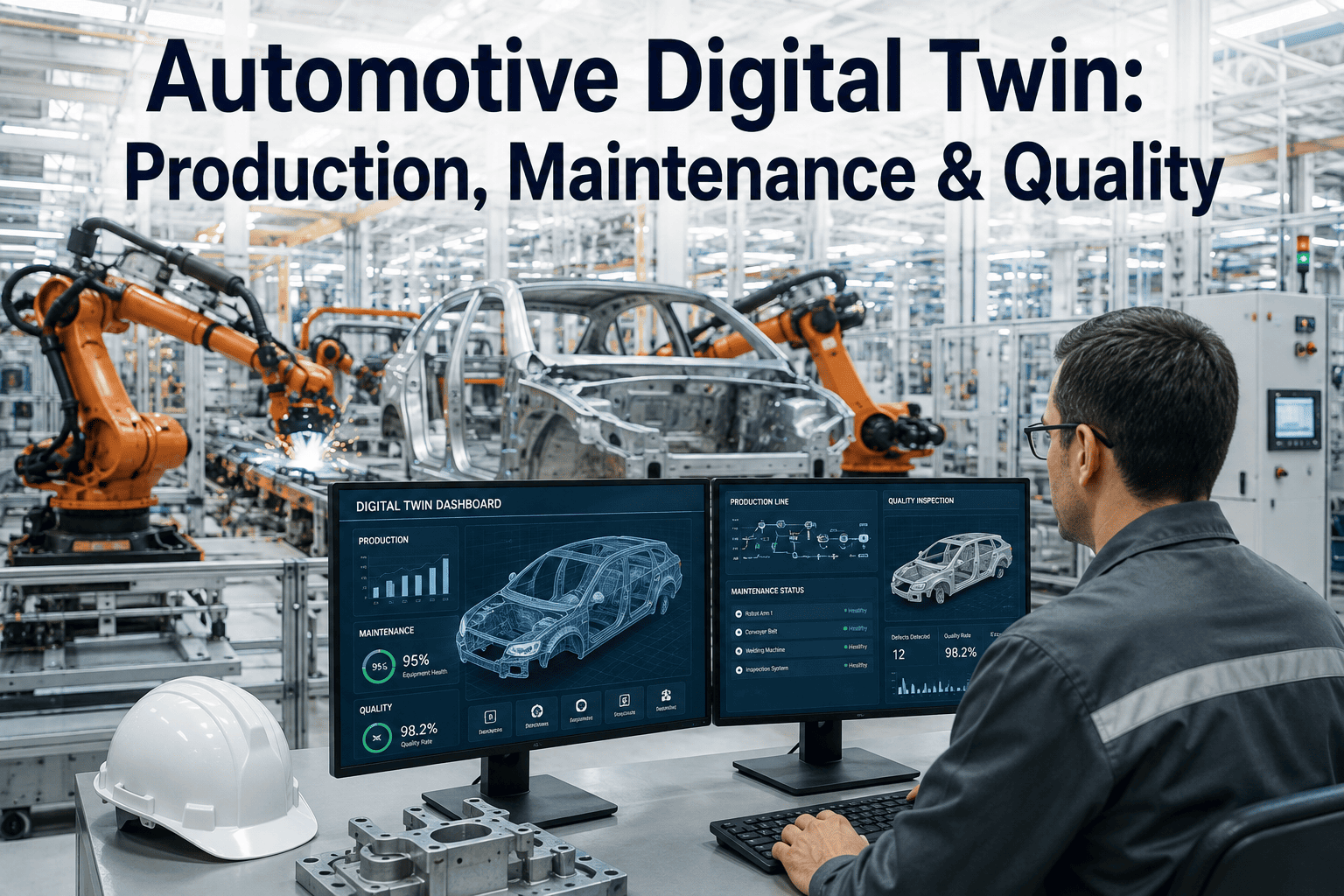
iFactory digital twin platform creates a real-time virtual model of every vehicle moving through your assembly line. As each vehicle progresses through every assembly stage—body welding, paint, component installation, electrical integration, final assembly—the digital twin captures continuous measurements from robot controllers, vision systems, torque tools, and sensor networks. AI algorithms compare actual assembly parameters against expected ranges, instantly detecting deviations at the point of occurrence. When a seat rail install deviates from tolerance, the digital twin flags it immediately. When a door panel gap falls outside specification, automated corrective action is triggered. Defective vehicles are identified before they advance to the next production stage, enabling immediate remediation without cascading defects downstream.
Real-Time Assembly Monitoring
Every assembly operation generates data streams—robot coordinates, force measurements, vision system outputs, torque values. Digital twin integrates all streams, creating complete assembly history for every vehicle. Anomalies trigger immediate alerts before defects propagate.
Predictive Defect Analysis
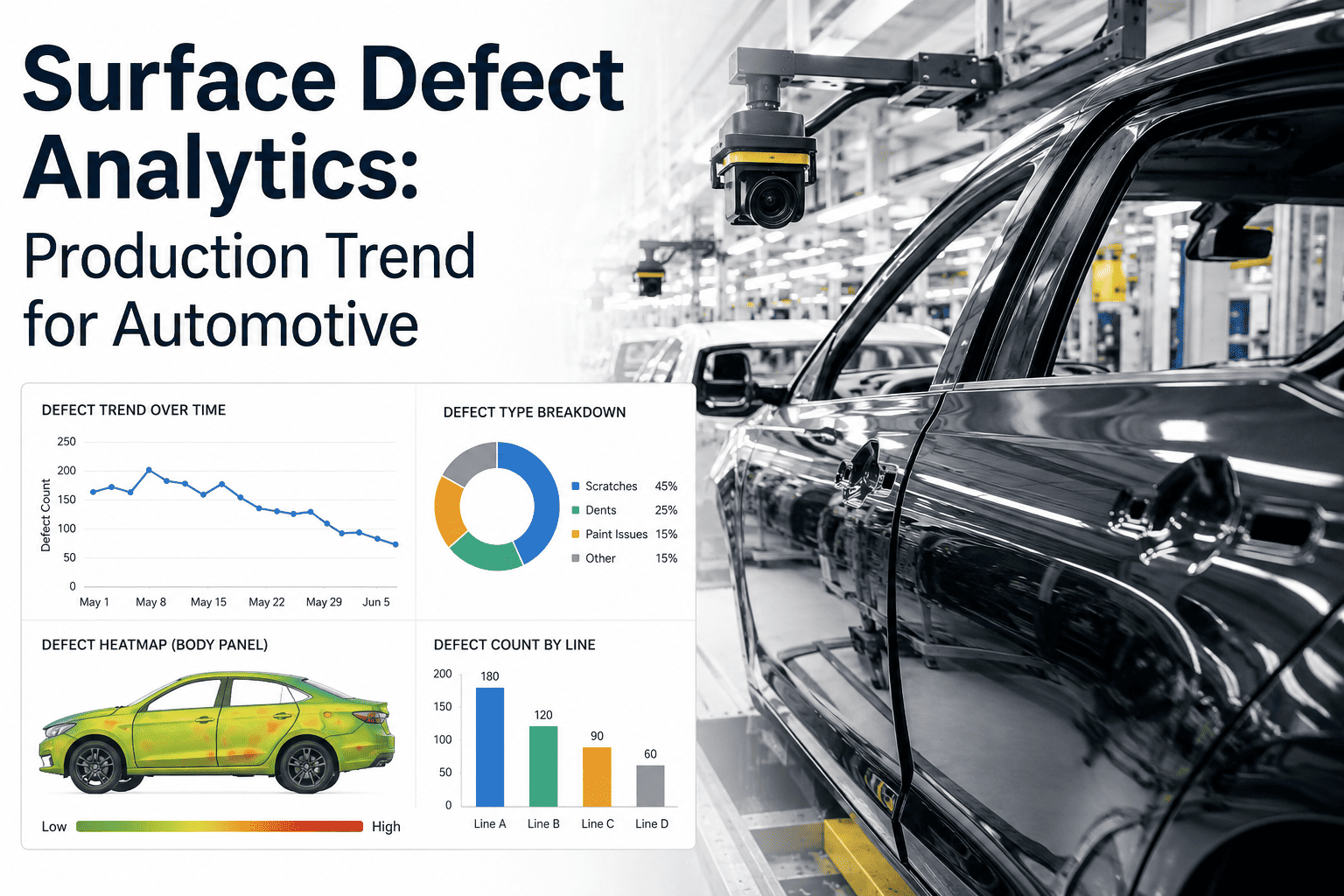
Machine learning models identify assembly quality signatures that precede visible defects. A door panel gap trending toward out-of-spec is caught 4-8 hours before final measurement would reveal it. Predict Failures Before They Stop Production through continuous pattern analysis.
Automated Corrective Action
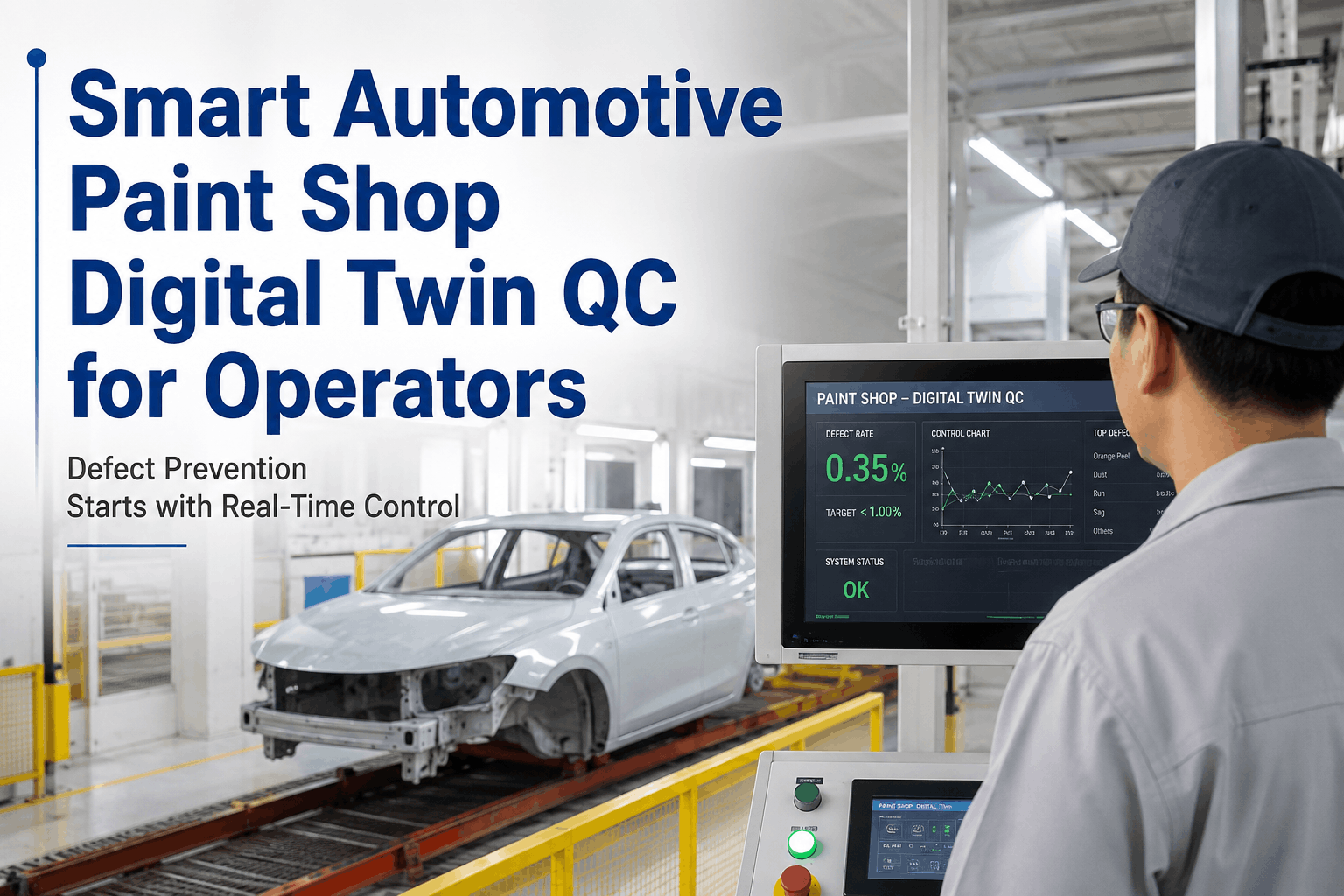
When digital twin detects assembly deviation exceeding tolerance, automated holds prevent defective vehicle from advancing. Vehicle is rerouted to quality station for immediate remediation. AI That Turns Downtime Into Planned Maintenance through intelligent intervention.
Root Cause Identification
Every defect detected by digital twin is traced to root cause. Is misalignment caused by fixture degradation, robot calibration drift, or material variation? Digital twin historical data enables precise diagnosis, enabling targeted corrective action instead of broad parameter changes.
OEE and Quality Integration
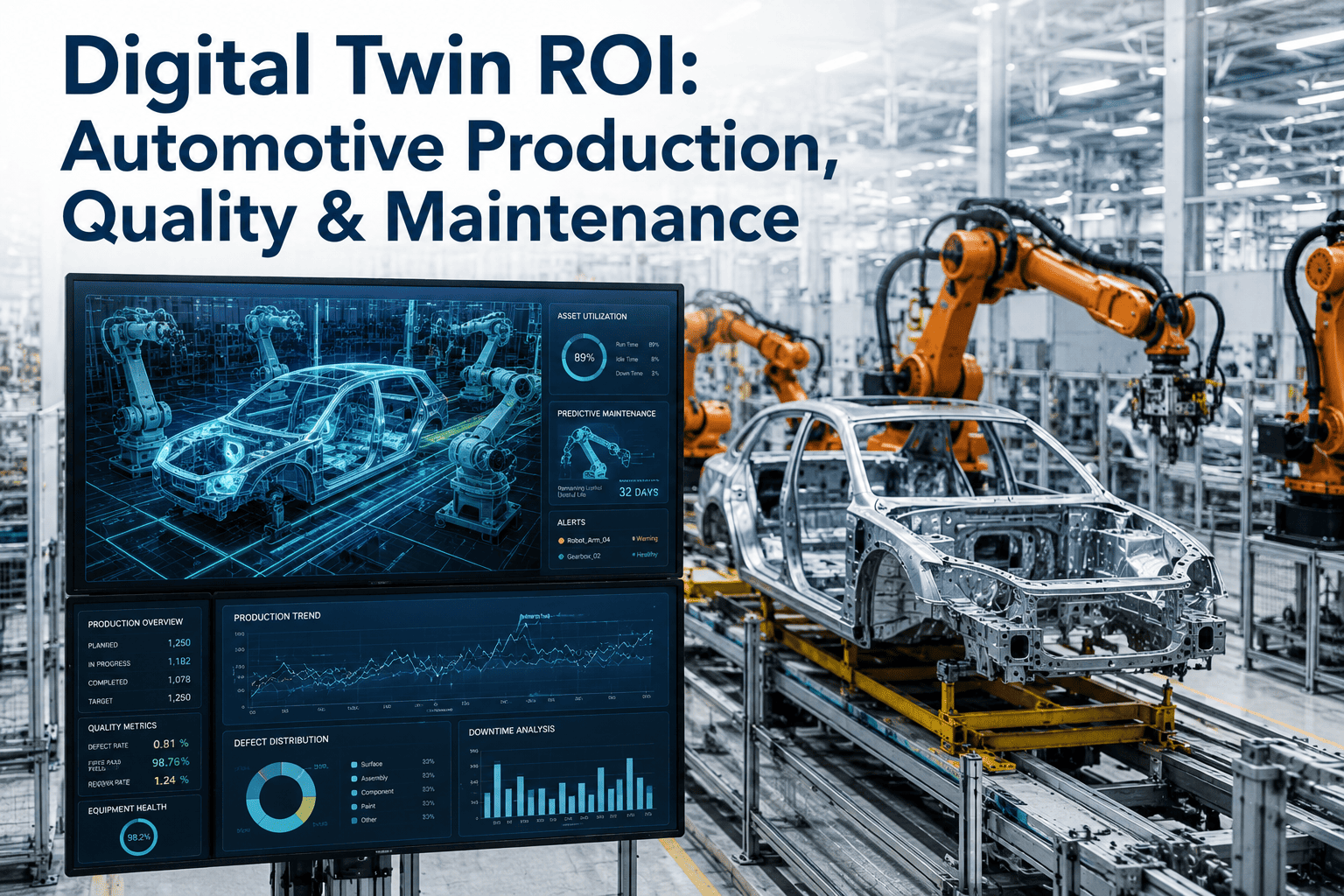
Real-Time Visibility Into Every Production Line. Quality defects directly impact OEE through scrap/rework and line stops. Digital twin surfaces quality contribution to overall OEE, enabling simultaneous optimization of throughput and quality.
Compliance and Traceability
Every vehicle carries complete assembly history—measurements, timestamps, operator IDs, corrective actions. IATF 16949 compliance is embedded in operations. When quality issues surface, complete traceability enables rapid root cause analysis and targeted recalls if necessary.
Supplier Quality Performance
Digital twin data enables supplier performance scorecards based on actual assembly results. Which seat suppliers produce units that assemble within tighter tolerances? Which electrical harness suppliers have the best first-pass assembly rates? Source decisions based on data, not just supplier specifications.
Why iFactory Digital Twin Is Different: Built for Automotive Assembly
iFactory digital twin is purpose-engineered for automotive assembly, not adapted from generic manufacturing systems. Deep understanding of assembly line physics, quality standards, and automotive supply chain complexity distinguishes this platform from competitors.
Automotive Expertise
Digital twin models trained on 10 million assembly operations from Tier 1 OEMs. Understands automotive assembly complexity—multi-robot coordination, vision alignment, torque verification, spatial tolerancing—that generic systems miss entirely.
Rapid Deployment
Connects to existing PLC, SCADA, vision systems without equipment replacement. Integration in 4-6 weeks. First defects detected in week 3. No implementation delays, no months-long pilots. Deploy, measure, demonstrate value quickly.
IATF 16949 Aligned
Compliance built into platform operations. Digital twin captures data in formats required by quality standards. Audit-ready documentation generated automatically. No separate compliance initiatives required.
Digital Twin Implementation Roadmap
iFactory follows a proven 8-week implementation path that delivers real-time quality monitoring and predictive defect detection in 4-6 weeks, with optimization continuing through week 8.
By Week 4, first assembly quality deviations are detected. By Week 6, defects are being caught 8-12 hours before final inspection. By Week 8, entire assembly facility runs with predictive quality control. ROI in 6 weeks. Full payback within 18-24 months.
Real Results: Automotive Assembly Quality Success Cases
Tier 1 OEM: Door Assembly Quality Improvement
Result: 87% defect detection rate, prevented $24M recall risk, 16-month payback. Automotive OEM producing 2,000 vehicles daily experienced door panel fit quality issues—gaps out of specification in final inspection. Root cause was difficult to isolate because quality was assessed only at end of line. Implemented digital twin monitoring across door assembly station. Within first month, system identified that door panel gap was trending out-of-spec due to fixture wear progressing over 6-8 hours of production. Early detection enabled predictive fixture maintenance at optimal intervals instead of reactive replacement when gaps failed final inspection. Second discovery: paint booth temperature drift was affecting door panel adhesive cure, impacting gap measurements 4 hours after installation. Early warning enabled adjustment before defects multiplied. Result: Defects detected at assembly point instead of final inspection, preventing 1,200-1,800 out-of-spec vehicles from advancing to shipping. Projected recall risk for that model year dropped from $24M to near-zero.
Supplier Integration: Seat Assembly Traceability
Result: 82% assembly quality improvement, $8M supplier performance visibility, 12-month payback. Automotive plant receiving seat modules from four competing suppliers experienced variable installation quality—some suppliers' seats consistently assembled within tight tolerances, others showed higher rework rates. Root cause was unclear because quality was only measured at final inspection, not at seat installation. Digital twin monitored seat installation torque, alignment, and fixture engagement for each supplier's modules. Data showed dramatic performance variation: Supplier A seats installed within specification 96% of the time, Supplier C only 68% of the time. Digital twin analysis identified specific quality differences in seat frame geometry and bolt hole tolerancing. Armed with actual assembly performance data, purchasing renegotiated contracts with high-variance suppliers or shifted volume to proven performers. Result: Overall seat assembly quality improved 82%, assembly rework dropped 60%, and supplier scorecards became fact-based rather than subjective.
EV Battery Assembly: Cell-Level Quality Tracking
Result: 89% internal defect detection, prevented 8,000 battery units from shipping, 14-month payback. EV manufacturer producing battery packs with 96 cylindrical cells per pack needed cell-level quality assurance but manual testing was impossible at production speeds. Implemented digital twin monitoring at cell installation and electrical integration stages. System tracked impedance, voltage, and thermal response for every cell as modules were assembled. Early detection caught manufacturing deviations at module-level assembly instead of waiting for full pack to reach final testing. Digital twin identified a batch of cells from one supplier showing 12% elevated impedance—early warning enabled module-level sorting before thousands of packs were assembled with substandard cells. Result: 8,000 battery packs that would have failed in customer vehicles were identified and remedied at assembly point, preventing warranty costs estimated at $48M.
Comparison: iFactory Digital Twin vs. Industry Approaches
| Capability | iFactory Digital Twin | Final Inspection Only | Statistical Sampling | Vision Only |
|---|---|---|---|---|
| Defect Detection Timing | 8-24 hours before final inspection | 24-48 hours after defect occurs | After batch is complete | Visual defects only |
| Detection Accuracy | 87% (pattern-based) | 72% (human inspection) | 58% (statistical) | 64% (vision defects) |
| Hidden Defect Detection | 81% (electrical, thermal, stress) | 32% (only obvious failures) | 15% (sampling misses most) | 0% (invisible failures) |
| Cost per Defect Prevented | $4,000 (rework at assembly) | $85,000 (shipping + recall) | $280,000 (customer recall) | $1,200,000 (brand damage) |
| Root Cause Capability | Complete data, instant analysis | Limited assembly history | No production data | Surface level only |
Digital Twin Across Automotive Regions
| Region | Primary Challenges | Compliance Focus | iFactory Solution |
|---|---|---|---|
| US | High-speed assembly, complex recalls, supply chain integration | FMVSS, EPA, IATF 16949 | Real-time quality monitoring, supplier integration, rapid traceability |
| UK/Europe | Premium quality expectations, EV transition, energy efficiency | CE mark, IATF 16949, EU directives | Zero-defect targeting, battery assembly optimization, compliance tracking |
| UAE | EV manufacturing growth, high ambient temperatures, rapid scaling | National standards, IATF 16949 | EV battery focus, temperature-adjusted processes, rapid deployment |
| Canada | Legacy platform continuity, supplier coordination, cost pressures | FMVSS, EPA, IATF 16949 | Multi-platform support, cost optimization, quality consistency |
| Rest of World | Emerging markets, quality consistency, local compliance variation | Regional + IATF 16949 | Flexible compliance, rapid localization, global visibility |
What Automotive Quality Leaders Are Saying
"We were discovering quality issues 24-48 hours after they happened. By then, hundreds of vehicles already had the problem. Digital twin detection at assembly point is transformative. We catch 87% of defects 8-24 hours before final inspection, preventing them from cascading. The data has also revolutionized our supplier management—we know exactly which suppliers assemble reliably and which ones need support. This is not just about quality, it's about understanding and optimizing our entire supply chain."
Quality Director, Tier 1 Automotive OEM
Frequently Asked Questions
Eliminate Recalls Before They Happen with Predictive Quality Control
Talk to an iFactory specialist about implementing digital twin quality control across your assembly lines. Detect defects 8-24 hours early. Prevent recalls. Protect brand reputation.