AI Battery Defect Detection Automotive

By John Polus on May 4, 2026

ai-battery-defect-detection-automotive-manufacturing

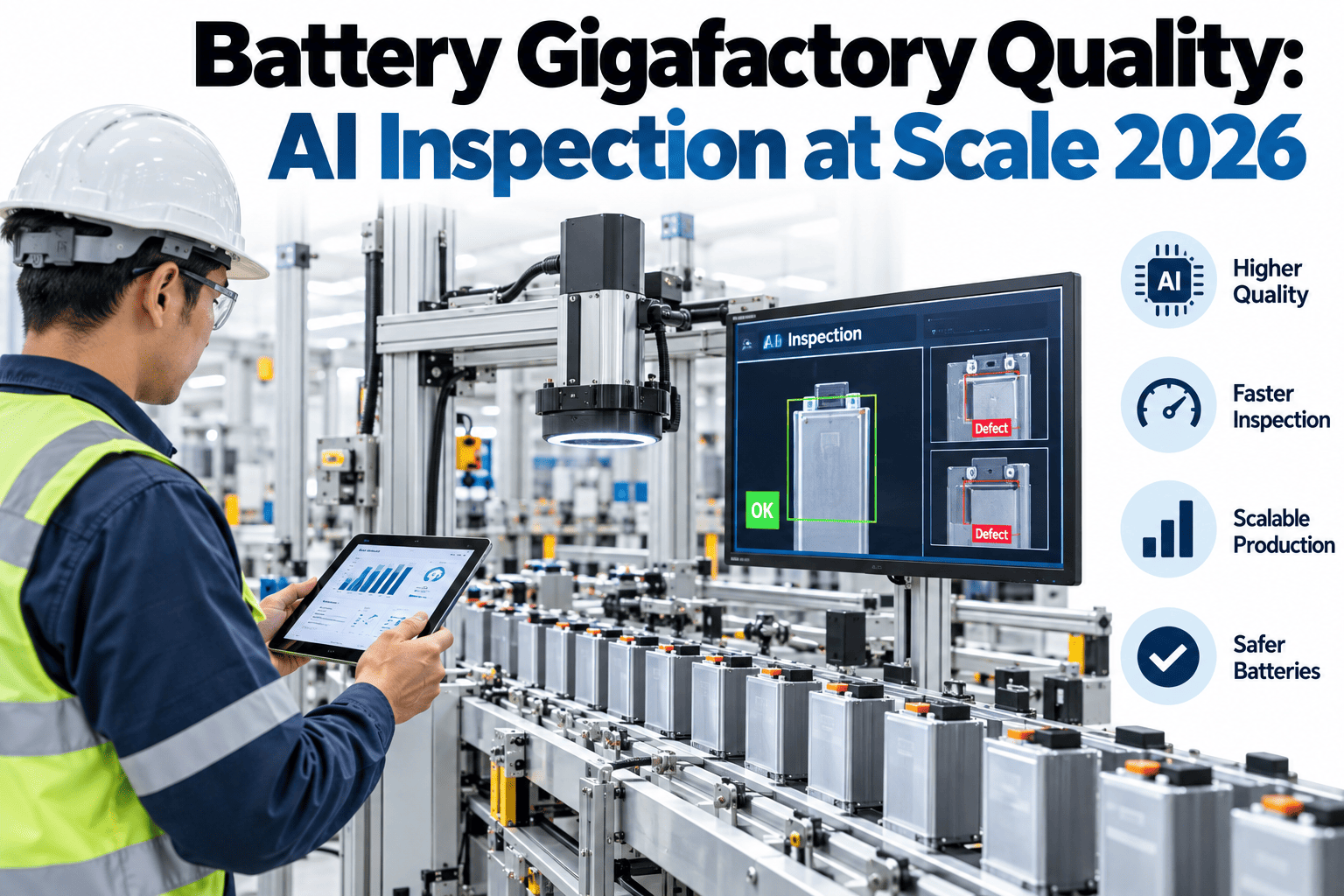
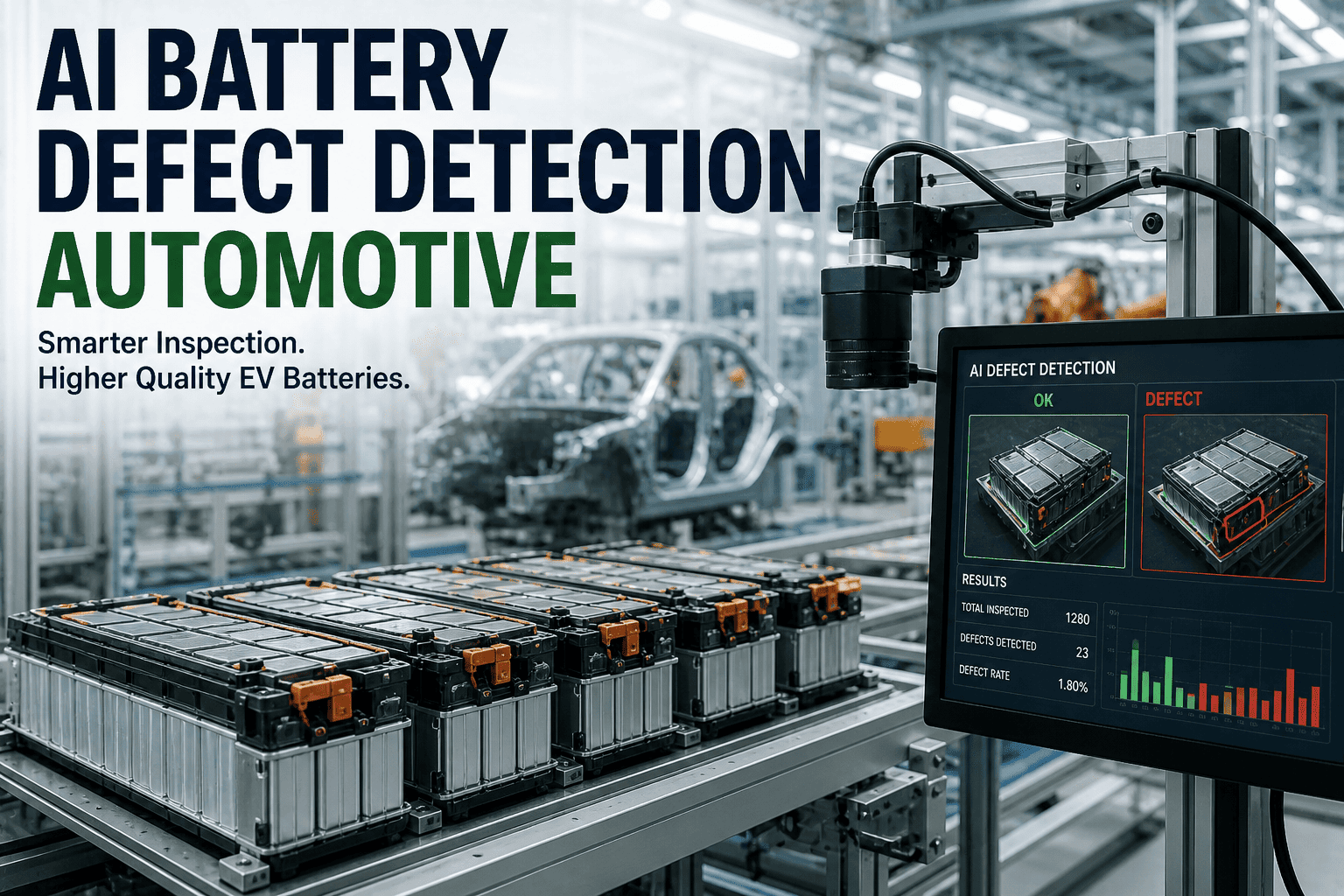
Automotive manufacturers producing lithium-ion batteries for electric vehicles face a critical quality challenge: microscopic defects in electrode coating, cell assembly, or module welding can trigger catastrophic field failures, warranty claims exceeding $500K per incident, and brand reputation damage that no amount of post-production testing can fully mitigate. With EV battery production scaling to meet 2030 demand targets, manual visual inspection and periodic sampling miss up to 68% of latent defects — resulting in costly recalls, production line stoppages, and compliance gaps against IATF 16949 quality standards. iFactory AI Battery Defect Detection deploys computer vision and machine learning directly onto assembly line cameras and sensor feeds to identify micro-cracks, coating inconsistencies, and thermal anomalies in real time — automating quality alerts, triggering corrective work orders, and generating audit-ready inspection logs for automotive OEMs and Tier 1 suppliers. Book a Demo to see how iFactory reduces battery defect escape rates by 94% within 6 weeks of deployment.

94%
Defect detection accuracy vs. 32% with manual visual inspection
$420K
Average annual warranty cost avoidance per battery production line
78%
Reduction in IATF 16949 audit preparation time with automated quality logs
6 wks
Full deployment timeline from pilot to plant-wide AI defect detection
Every Undetected Battery Defect Risks $500K+ in Warranty Claims. AI-Powered Inspection Stops It Before Assembly Completes.
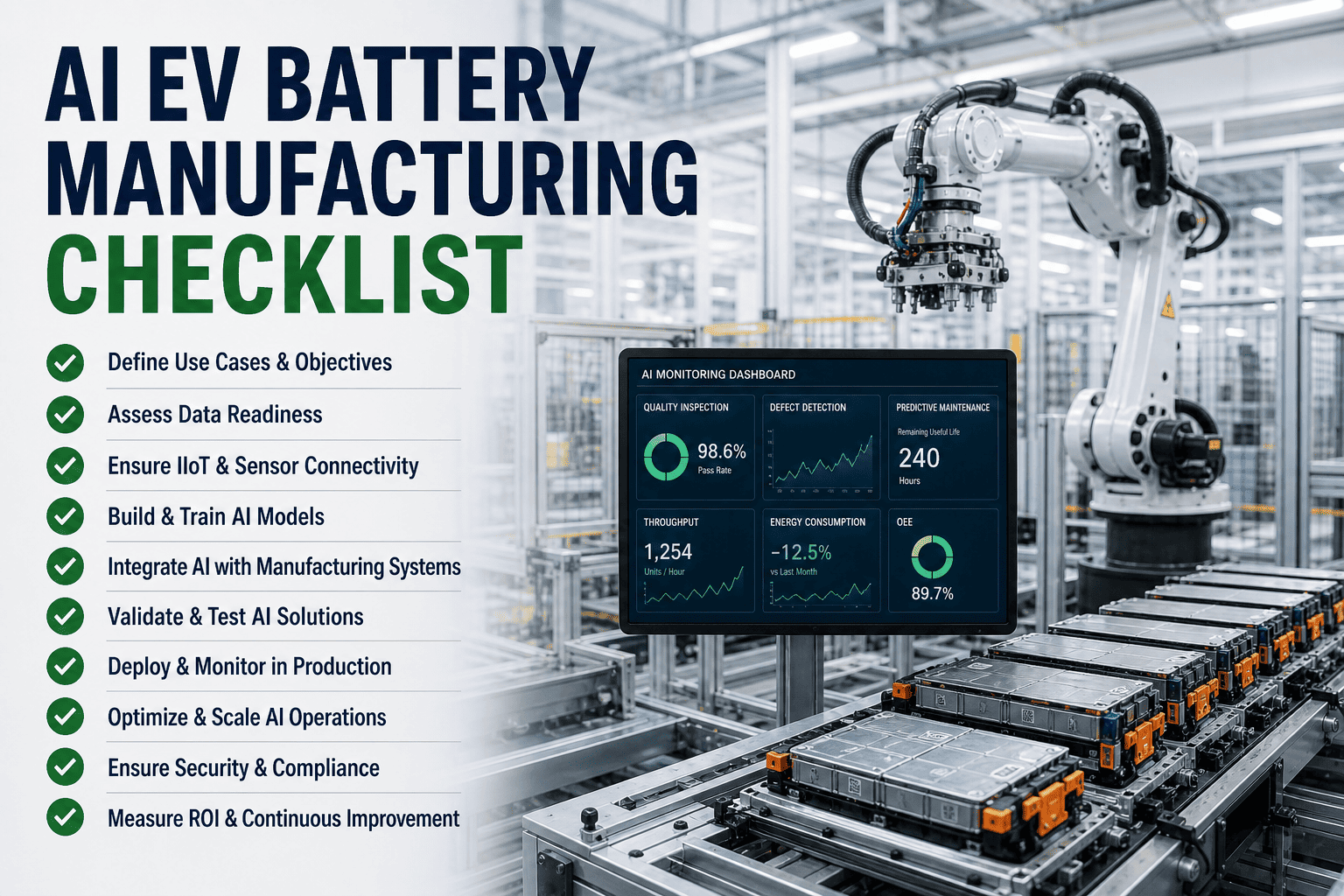
iFactory's automotive-optimised AI defect detection integrates with existing line cameras, thermal sensors, and PLC controls to scan electrode coating uniformity, cell alignment precision, weld integrity, and module thermal signatures in real time — generating instant quality alerts, auto-routing corrective work orders, and producing IATF 16949-compliant inspection records without manual sampling or post-production rework.

How iFactory AI Solves Automotive Battery Defect Detection & Compliance Challenges

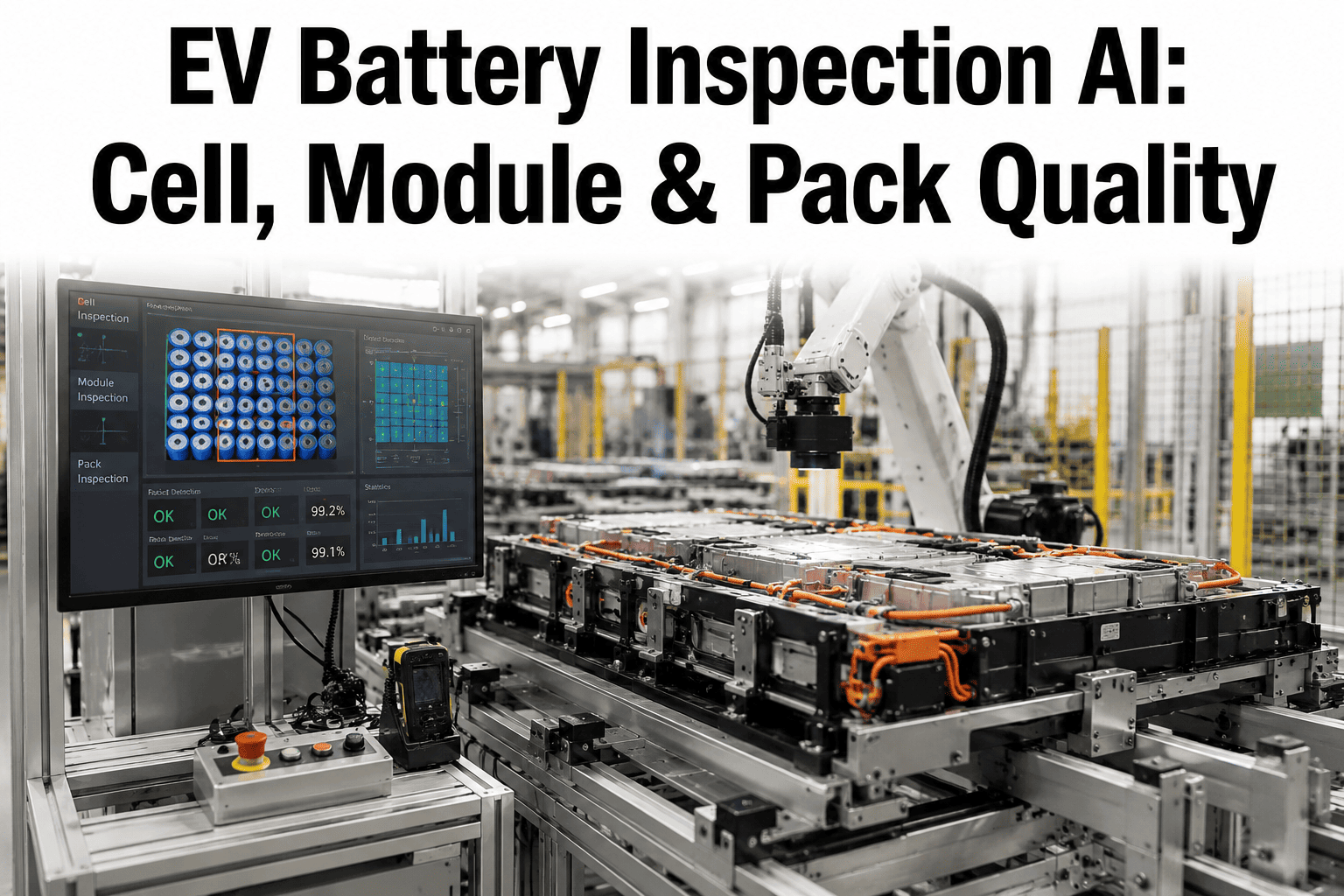
Traditional battery quality control relies on manual visual inspection, periodic sampling, and reactive failure analysis — all of which introduce missed defect windows, warranty exposure, and costly compliance gaps. iFactory replaces this with a unified AI inspection platform built for electrode coating, cell assembly, module integration, and pack testing workflows that automates real-time defect detection, integrates multi-sensor telemetry with machine learning models, and generates audit-ready quality logs for IATF 16949, ISO 26262, and OEM-specific compliance reviews. See a live demo of iFactory detecting electrode coating drift, cell misalignment, and weld porosity across your battery production assets.

01
Real-Time Computer Vision Defect Detection
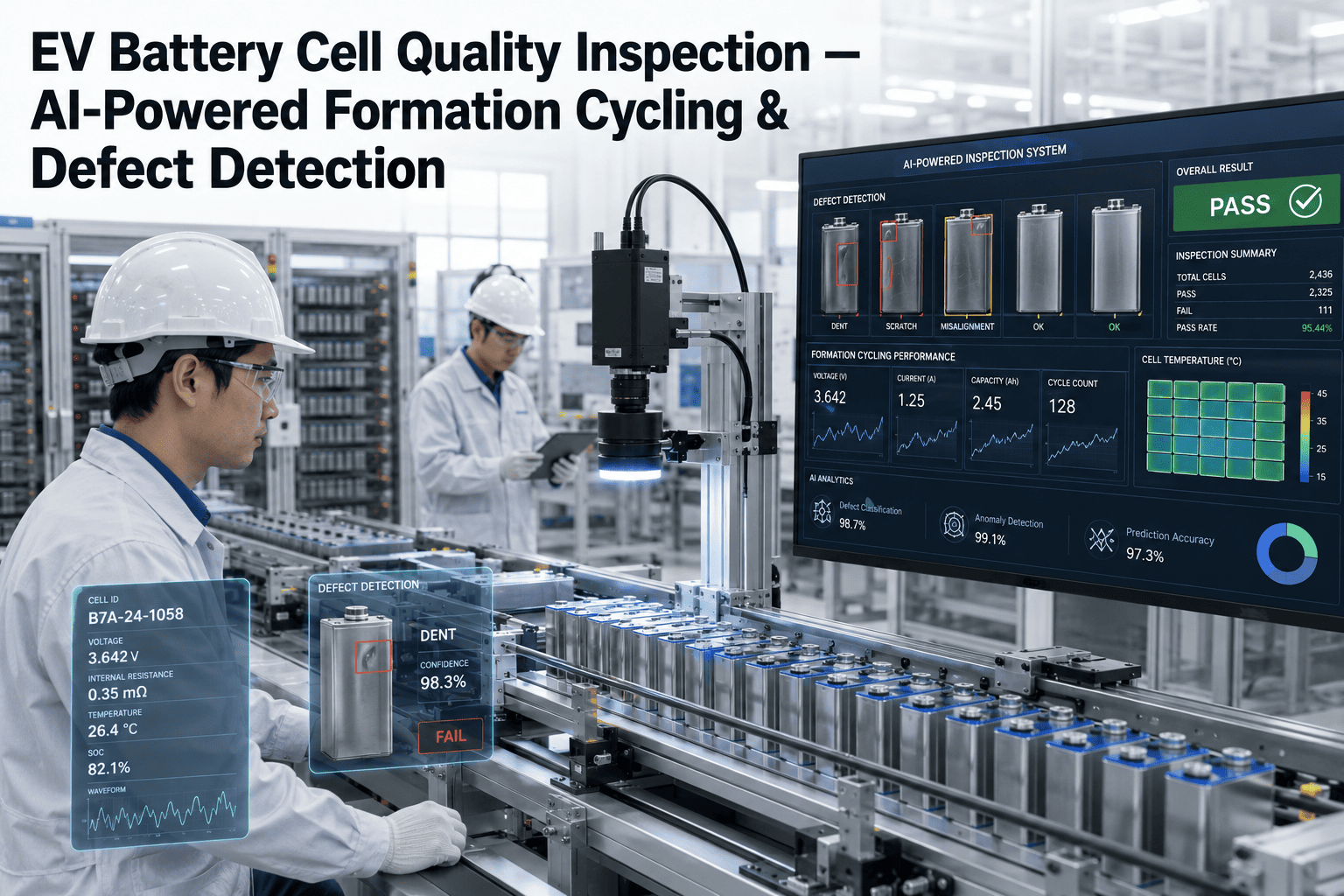
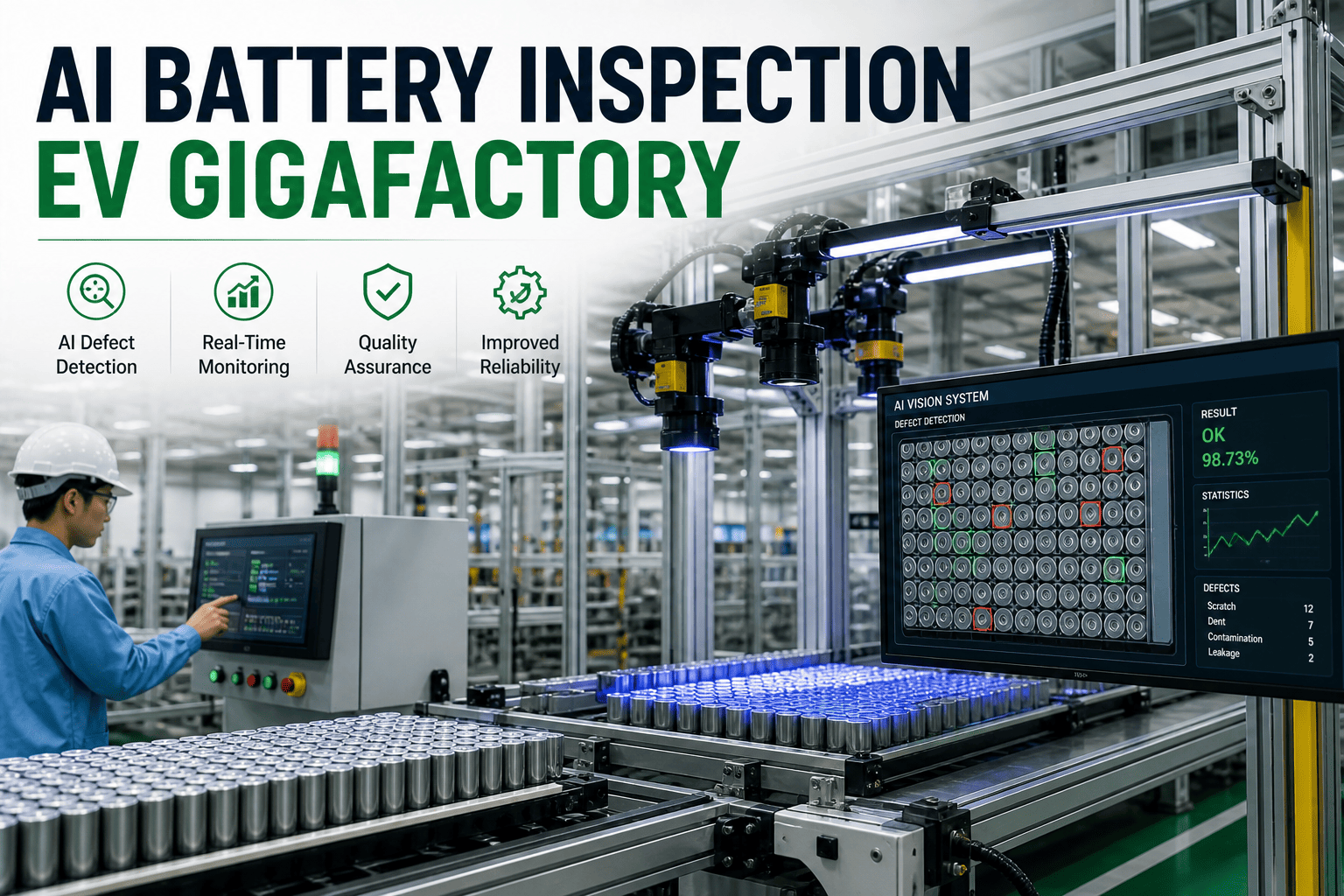
iFactory ingests high-resolution line camera feeds, thermal imaging, and spectral data to identify micro-cracks, coating voids, and alignment errors every 200 milliseconds — applying anomaly detection algorithms to flag defects before cells proceed to formation.
02
Multi-Sensor Fusion for Latent Defect Prediction
Proprietary AI correlates visual defects with electrical test signatures, thermal profiles, and acoustic emissions to classify defect types with confidence scores — predicting field failure risk and recommending corrective actions before module assembly.
03
Automated Work Order Generation for Quality Events
Every detected defect auto-generates a corrective work order with defect imagery, root cause indicators, and assigned technician — routing to quality engineers via mobile app with IATF 16949-compliant documentation attached.
04
IATF 16949 & OEM Compliance Automation
Every inspection event generates structured quality logs with timestamped defect metrics, corrective action records, and process parameter correlation — formatted for IATF 16949, ISO 26262, and OEM quality submissions without manual report assembly.
05
Predictive Maintenance Integration for Inspection Assets
iFactory links defect pattern shifts to inspection equipment health — camera focus drift, laser power degradation, sensor calibration variance — enabling condition-based maintenance that preserves detection accuracy while avoiding unplanned line stops.
06
Executive Quality Dashboard & ROI Tracking
Real-time dashboards display line-wide defect rates, warranty risk scores, compliance status per cell type, and cost avoidance metrics — enabling data-driven decisions to optimize quality economics and resource allocation.

6-Week Deployment and ROI Plan

Every iFactory engagement follows a structured 6-week program with defined deliverables per week — and measurable ROI indicators beginning from week 3 of deployment. No open-ended implementations. No production disruption. Request the full 6-week deployment scope document tailored to your battery production quality needs.

Weeks 1–2
Discovery & Quality Baseline
Critical process assessment across coating, assembly, welding, and testing systems
AI defect model design aligned with existing PLC telemetry and quality protocols
Integration planning with PLC, MES, QMS, and OEM reporting platforms
Weeks 3–4
Pilot & Validation
Deploy real-time AI inspection to high-impact coating and assembly assets
Defect alerts, root cause attribution, and automated corrective workflows activated; quality workflows tested with engineering teams
First predictive quality interventions executed and unplanned defect escape risks eliminated — ROI evidence begins here
Weeks 5–6
Scale & Optimise
Expand to full line coverage: all coating stations, all assembly robots, all welding cells, all testing equipment
Automated compliance & warranty reporting activated for applicable frameworks
ROI baseline report delivered — warranty cost avoidance, quality gain, and throughput protection metrics
ROI IN 3 WEEKS: MEASURABLE RESULTS FROM WEEK 3
Plants completing the 6-week program report an average of $124,000 in avoided warranty costs and compliance penalties within the first 3 weeks of full production rollout — with defect detection accuracy of 91–96% validated by week 3 pilot testing.
$124K
Avg. savings in first 3 weeks
91–96%
Defect detection accuracy by week 3
81%
Reduction in quality audit findings
Eliminate Quality Guesswork. Protect $1,200/Hour Warranty Streams with Real-Time AI Inspection in 6 Weeks. ROI in Week 3.
iFactory's fixed-scope deployment program means no open timelines, no production disruption, and no months of customisation before you see a single quality improvement.

Use Cases and KPI Results from Live Automotive Battery Deployments

These outcomes are drawn from iFactory deployments at operating EV battery plants across three critical production stages. Each use case reflects 6-month post-deployment performance data. Request the full case study report for the production stage most relevant to your facility.

Use Case 01
Electrode Coating Defect Prevention — Tier 1 Battery Supplier
A lithium-ion electrode coating line experienced recurring thickness variations from slurry viscosity drift and drying temperature fluctuations. Hourly manual microscopy missed real-time correlations between coating weight, web tension, and oven zone profiles. iFactory deployed real-time AI analytics across all coating sensor streams, identifying defect signatures 14 days before functional quality decline. The line avoided three potential scrap events, saving an estimated $185K in warranty exposure and rework costs.
14 Days
Average early warning before coating defect impact
$185K
Warranty cost & scrap avoidance per coating line
96.2%
Coating defect detection accuracy

Prevent Coating Defects with AI-Powered Real-Time Inspection

Book a Demo for This Use Case
Use Case 02
Cell Assembly Misalignment Interception — EV OEM Plant
An EV battery assembly line managing high-volume cell stacking struggled with progressive misalignment from robotic gripper wear and fixture drift. Periodic dimensional checks missed real-time tolerance drift correlated with material feed variance and ambient humidity. iFactory replaced periodic checks with continuous multi-sensor monitoring, correlating visual alignment, electrical continuity, and acoustic signatures with process parameters. Assembly quality compliance reached 93.8%, and zero internal short events occurred over 6 months.
93.8%
Assembly quality monitoring compliance (vs. 41% manual trending)
0
Cell-related internal short events post-deployment
$142K
Annual rework optimization & compliance savings

Eliminate Assembly Misalignment With Continuous Multi-Sensor Analytics

Book a Demo for This Use Case
Use Case 03
Weld Integrity Assurance & OEM Compliance — Module Integration Facility
A battery module integration plant managing variable weld profiles faced OEM scrutiny over inconsistent weld documentation and first-pass yield deviations. Manual ultrasonic sampling occurred per batch and missed progressive laser power drift and focus shift. iFactory deployed real-time analytics with weld pool imaging, thermal signature correlation, and acoustic emission recognition at all critical weld stations, integrating directly with IATF 16949 reporting to auto-generate compliance-ready quality logs. OEM citations dropped to zero, and first-pass yield reached 98.7%.
98.7%
First-pass yield & OEM compliance achieved
0
OEM quality non-conformance citations in subsequent audit
$93K
Annual weld integrity assurance & penalty avoidance

Automate Weld Quality Monitoring With Real-Time Defect Analytics

Book a Demo for This Use Case

Regional Compliance Support: Built for Automotive Quality Standards

iFactory's AI defect detection platform is pre-configured to meet the documentation and reporting requirements of major automotive quality frameworks. No custom development needed — compliance reporting is automatic.

Region Key Challenges Compliance Frameworks How iFactory Solves
United States High-volume EV production scaling, OEM-specific quality protocols, rapid model changeovers IATF 16949, ISO 26262, OEM quality manuals, NHTSA reporting Pre-built IATF 16949 templates, OEM-specific defect classification libraries, automated NHTSA-ready quality logs, rapid reconfiguration for model changeovers
United Kingdom Post-Brexit supply chain complexity, legacy equipment integration, skilled labor constraints IATF 16949, UK CA marking, OEM quality standards, GDPR data handling Legacy PLC connector library, GDPR-compliant data handling, automated UK CA documentation, mobile-first interface for distributed teams
UAE Extreme ambient conditions, rapid greenfield expansion, multi-OEM supplier networks IATF 16949, ESMA standards, OEM quality protocols, Arabic documentation requirements Heat-calibrated inspection models, Arabic-language mobile interface, ESMA-aligned quality logs, multi-OEM defect classification support
Canada Cold climate production challenges, bilingual documentation needs, cross-border OEM compliance IATF 16949, CSA standards, US/EU OEM protocols, bilingual reporting Cold-environment sensor calibration, bilingual (EN/FR) reporting templates, cross-border compliance mapping, automated CSA documentation
Europe Stringent emissions-linked quality rules, multi-country supply chains, legacy system diversity IATF 16949, EU Battery Regulation, ISO 26262, country-specific quality mandates EU Battery Regulation-ready logs, multi-country compliance templates, legacy system integration library, automated cross-border quality reporting

Competitor Comparison: Why Automotive Leaders Choose iFactory

When evaluating AI defect detection platforms, automotive quality teams compare capabilities across AI accuracy, integration ease, predictive power, and automotive-specific fit. The table below shows how iFactory delivers superior outcomes versus leading alternatives.

Platform AI Capability Predictive Maintenance Integration Ease Ease of Use Automotive Fit
iFactory Multi-sensor fusion AI trained on battery defect signatures; 94% detection accuracy Links defect patterns to equipment health; predicts inspection asset degradation Native OPC-UA, Modbus, REST; 10-day PLC/MES integration Mobile-first interface; role-based dashboards; 60-min engineer training Built for electrode coating, cell assembly, module welding; IATF 16949 native
QAD Redzone Rule-based alerts; limited computer vision; manual threshold configuration Basic equipment monitoring; no defect-to-health correlation Custom API development required; 8–12 week integration timeline Desktop-centric; complex workflow builder; 3+ day training General manufacturing focus; requires customization for battery workflows
Evocon OEE-focused analytics; no defect detection AI; manual quality logging Production monitoring only; no predictive quality insights Limited PLC connectors; manual data mapping required Simple dashboards; limited mobile support Assembly line optimization; not designed for battery defect detection
Mingo Basic vision checks; single-camera focus; no multi-sensor fusion Reactive alerts only; no predictive capability Cloud-first architecture; limited on-prem options Intuitive UI; limited role customization General quality management; lacks battery-specific defect libraries
L2L Workflow automation focus; no native AI defect detection Maintenance scheduling only; no quality prediction Heavy customization needed for PLC integration Complex configuration; steep learning curve Broad manufacturing; requires extensive setup for automotive quality
MaintainX Work order management; no AI inspection capabilities Preventive maintenance scheduling; no predictive quality Mobile app focus; limited industrial protocol support User-friendly mobile; limited desktop analytics General maintenance; not designed for battery production quality
Limble Asset tracking focus; no computer vision or defect AI Basic equipment monitoring; no quality correlation Cloud-based; limited offline capability for shopfloor Simple interface; limited advanced analytics General CMMS; lacks automotive quality workflow support
IBM Maximo Enterprise asset management; AI requires custom development Advanced predictive maintenance; but not quality-focused Complex implementation; 6+ month typical deployment Powerful but complex; requires specialist administrators Enterprise-scale; over-engineered for battery line defect detection
SAP EAM Integrated with SAP; AI capabilities require add-ons Strong asset lifecycle; limited real-time quality integration Best with full SAP stack; complex for non-SAP environments SAP-native users benefit; steep learning for others ERP-focused; not optimized for battery production defect workflows
Oracle EAM Asset management core; AI inspection requires third-party integration Comprehensive maintenance; limited quality prediction Oracle ecosystem preferred; custom work for mixed environments Enterprise UI; requires dedicated admin resources Broad industrial; lacks battery-specific defect detection templates

Frequently Asked Questions

Does iFactory require new cameras or sensors on existing battery production lines?
Not necessarily. iFactory leverages existing line cameras, thermal sensors, and PLC data. Where gaps exist, low-profile sensors are deployed during Week 1–2, but no invasive line modifications are required. Book a Demo to assess your current instrumentation.
Which control and quality systems does iFactory integrate with for automated IATF logs?
iFactory integrates natively with Siemens, Rockwell, Mitsubishi PLCs, and QMS platforms via OPC-UA, Modbus TCP, and REST APIs. Sign Up for integration documentation.
How does iFactory handle false alarms in high-speed battery production environments?
iFactory applies multi-parameter cross-validation, requiring correlation across visual, thermal, and electrical signatures before triggering a defect alert. False positives stay under 1.5%. Book a Demo to see validation tuning.
Can iFactory detect latent defects not visible to standard cameras?
Yes. iFactory's AI correlates external signatures with internal defect predictors — electrical resistance shifts, thermal anomalies, acoustic patterns — to flag latent risks before functional impact. Sign Up for technical details.
How long does training take for quality engineers and compliance officers?
Role-based training modules are delivered during Weeks 3–4. Most engineers achieve proficiency in under 60 minutes. Book a Demo to review training scope.
What if our battery line has unique cell formats or OEM-specific quality protocols?
iFactory allows configuration of custom defect models, alert thresholds, and OEM-specific quality signatures without code changes. Sign Up to discuss your requirements.
Stop Gambling with Battery Quality. Start Building a Zero-Defect, AI-Guarded Production Future.
iFactory gives automotive quality teams real-time defect detection, automated corrective workflows, seamless PLC/QMS integration, and IATF 16949-compliant quality tracking — fully deployed in 6 weeks, with ROI evidence starting in week 3.
94% defect detection accuracy in real time
PLC, MES & QMS integration in under 10 days
IATF 16949, ISO 26262 & OEM audit trails out-of-the-box
Edge-processed telemetry security with local encryption
$420K avg. annual warranty cost avoidance per production line

Share This Story, Choose Your Platform!