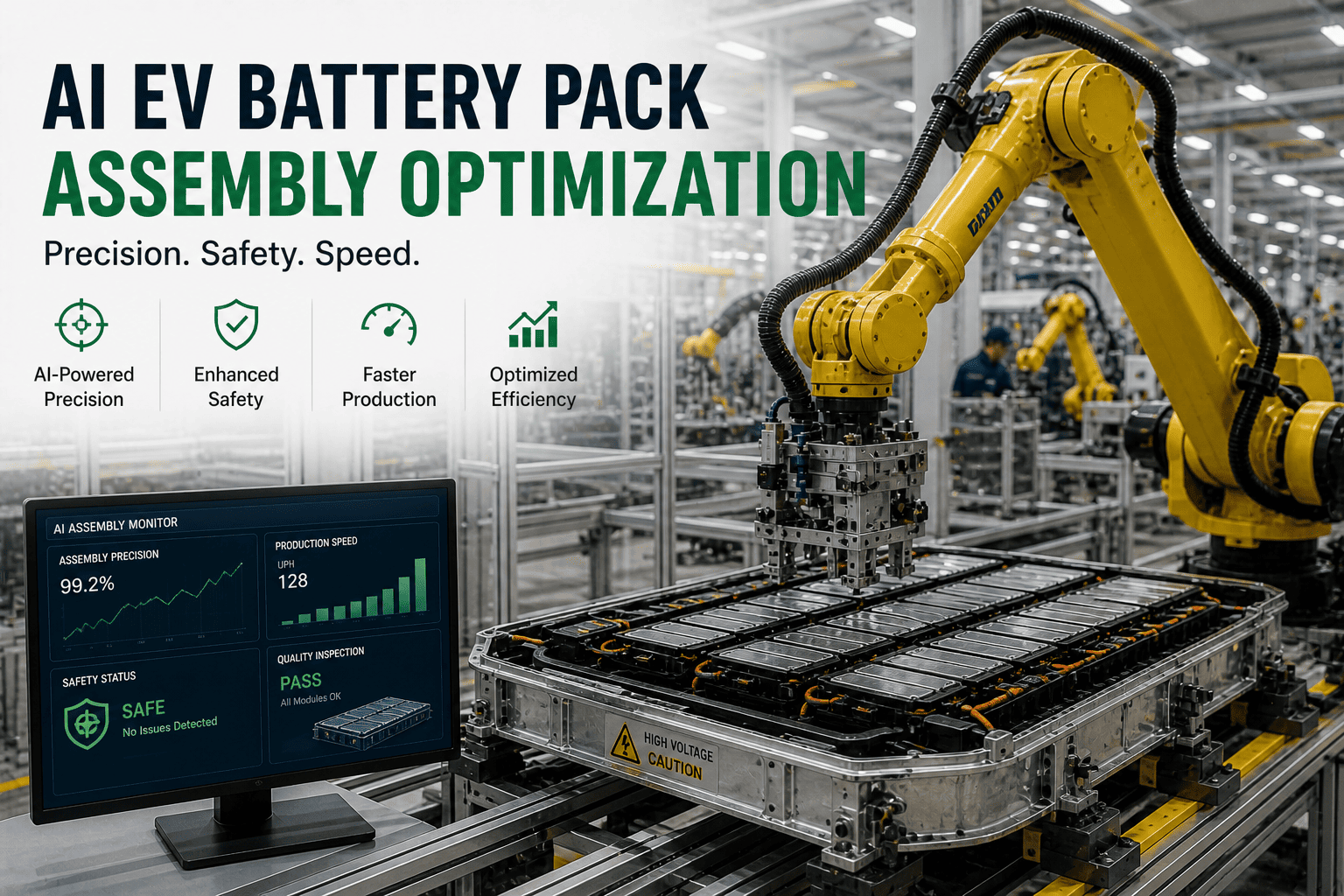
The EV battery gigafactory is the most robotics-intensive manufacturing environment on Earth. Cell production requires cleanroom-grade contamination control, sub-micron tolerance electrode coating, and laser welding precision that conventional industrial automation struggles to maintain consistently at volume. Pack assembly demands the dexterity to seat high-voltage connectors, route thermal management cables, and place battery modules with millimetre accuracy — all under strict safety protocols for high-voltage systems. Humanoid robots and AI-driven automation are converging in the gigafactory faster than anywhere else in manufacturing — because the economics of EV battery cost reduction depend on it. Book a demo to see how iFactory's on-premise and cloud platforms enable AI automation for EV battery plants.
Why the Gigafactory Is the Hardest Automation Challenge in Manufacturing
Building a lithium-ion battery cell requires over 20 sequential processes — each with tighter environmental and quality tolerances than the last. Electrode coating must be uniform to within ±2 microns. Electrolyte filling must occur in environments below 1% relative humidity (dry rooms) where human exposure is limited to 4–6 hours before health protocols mandate rotation. Cell formation and testing generates terabytes of electrochemical data per shift that must be correlated with process parameters to identify yield-killing anomalies before they propagate through a week of production. No other manufacturing process combines environmental extremity, precision tolerance, and data intensity at this scale.
The cost of getting automation wrong in a gigafactory is asymmetric. A single yield excursion on electrode coating that propagates for 2 hours can scrap 10,000+ cells — $50K–$200K in direct material loss. This is why the world's leading battery manufacturers — Tesla, CATL, LG Energy Solution, Panasonic, Samsung SDI — are investing in AI-driven automation and robotic integration faster than any other manufacturing sector. Talk to iFactory about AI integration for your gigafactory production environment.
The Dry Room Challenge: Why Robots Outperform Humans in <1% RH Environments
Lithium reacts violently with moisture — so cell assembly and electrolyte filling must occur in dry rooms where relative humidity is maintained below 1%, and in some processes below 0.1% RH. At these humidity levels, human workers experience acute dehydration, mucous membrane irritation, and contact lens complications within 4–6 hours. OSHA and cell manufacturer protocols typically limit continuous dry room exposure to 4 hours with mandatory rotation. Robots have no such limitation — they operate continuously, without performance degradation, for 24-hour shifts in sub-1% RH environments. Book a demo to see iFactory's dry room AI monitoring integration.
Gigafactory Robot Deployments by Manufacturer — 2026 Overview
Five AI and Robotics Use Cases Delivering ROI in Gigafactories
Machine vision cameras scan electrode coating at line speed — detecting pinholes, edge irregularities, coating weight deviations, and substrate defects in real time. AI models trained on 50,000+ labelled defect images classify findings by type and severity, triggering coating parameter adjustments before defective material advances to the calendar. CATL's Liaoning lighthouse factory operates this system with no human inspection intervention — coating lines run fully autonomously with AI-generated quality records per metre of electrode.
Book electrode AI demoIoT humidity, temperature, and dew point sensors at 200+ positions throughout dry room zones feed an AI model that predicts humidity excursions 8–12 minutes before they breach the 1% RH threshold — giving HVAC control systems time to respond before cell assembly is affected. Excursion events that previously occurred 3–4 times per shift in peak load periods were reduced to less than once per week after AI-driven predictive HVAC control was deployed. Talk to iFactory about dry room monitoring integration.
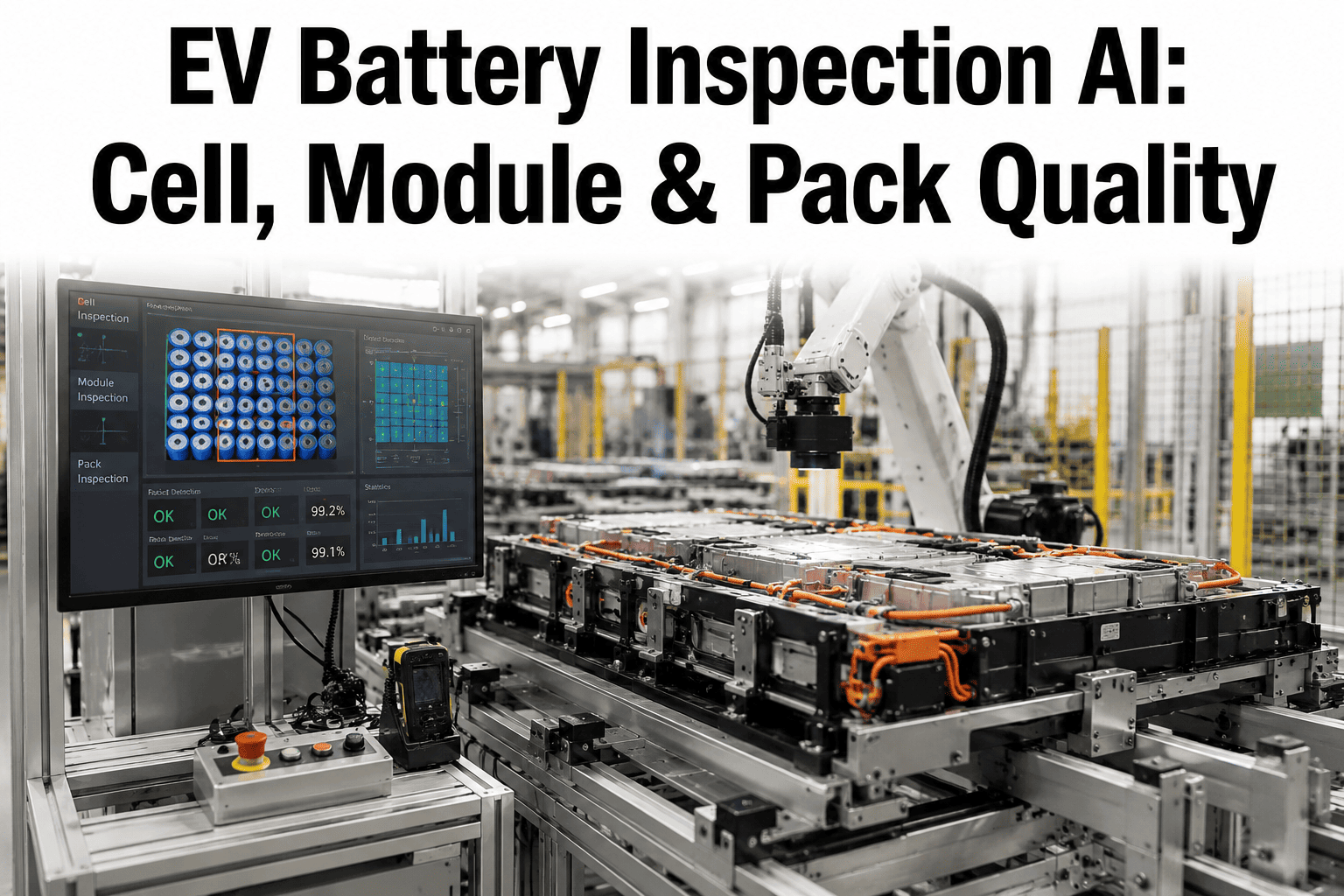
Formation — the first charge/discharge cycles that activate the cell's electrochemical system — generates voltage, current, and temperature curves that predict long-term cell performance and safety. AI models analyse these formation curves in real time, detecting subtle deviations from the target signature that indicate internal short circuit risk, separator damage, or electrolyte contamination. Anomalous cells are flagged for enhanced testing or scrapped before aging — preventing field failures from reaching vehicles.
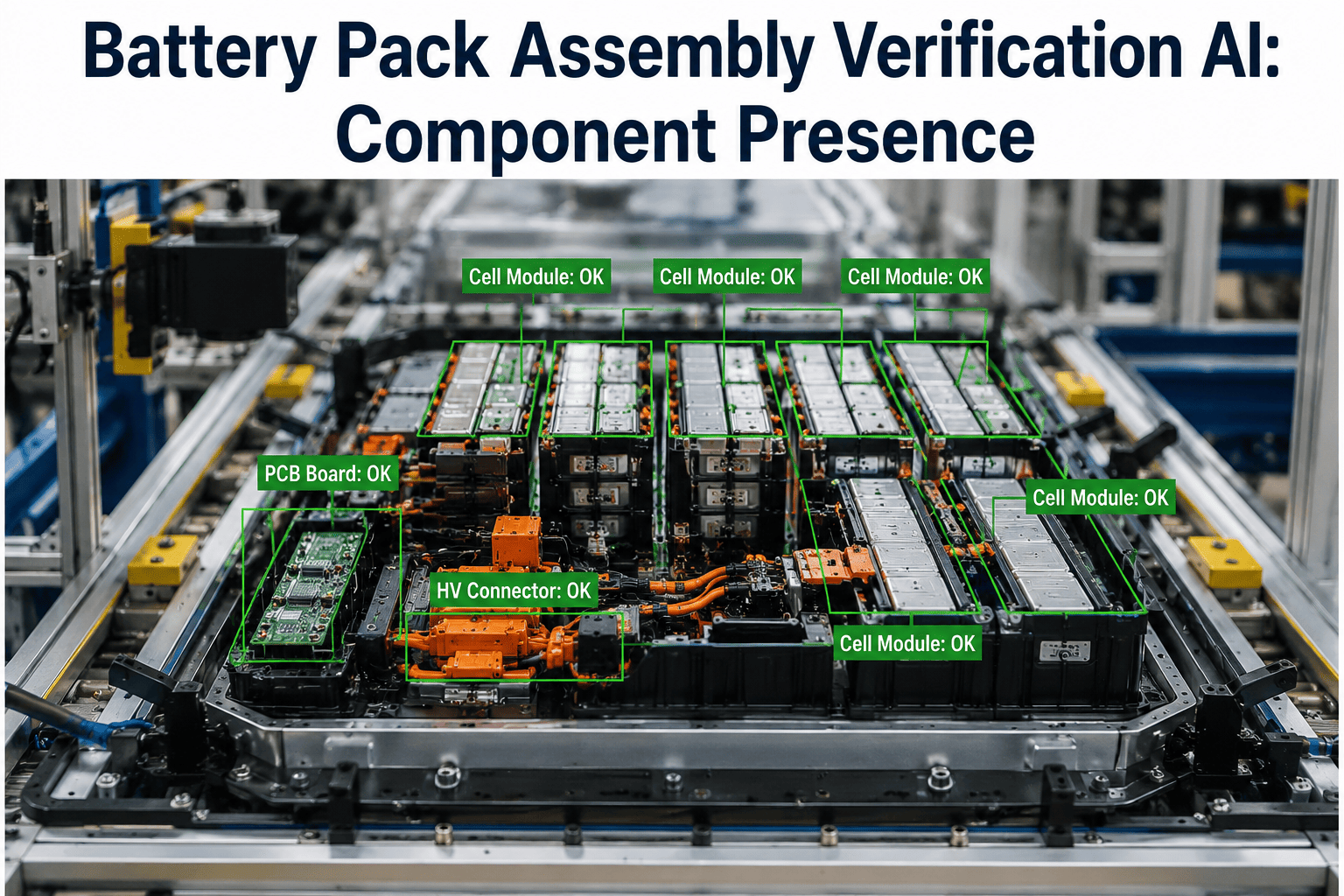
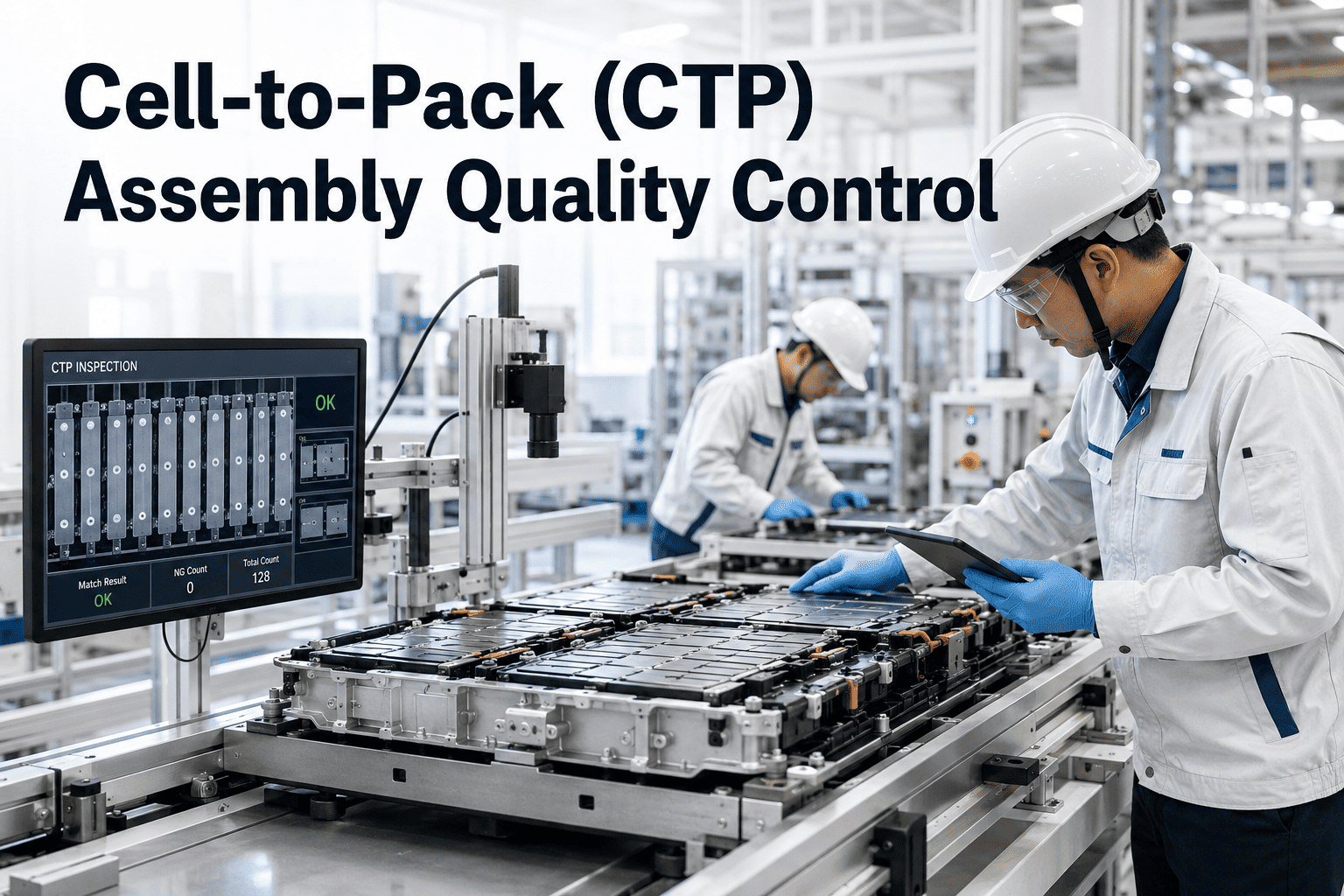
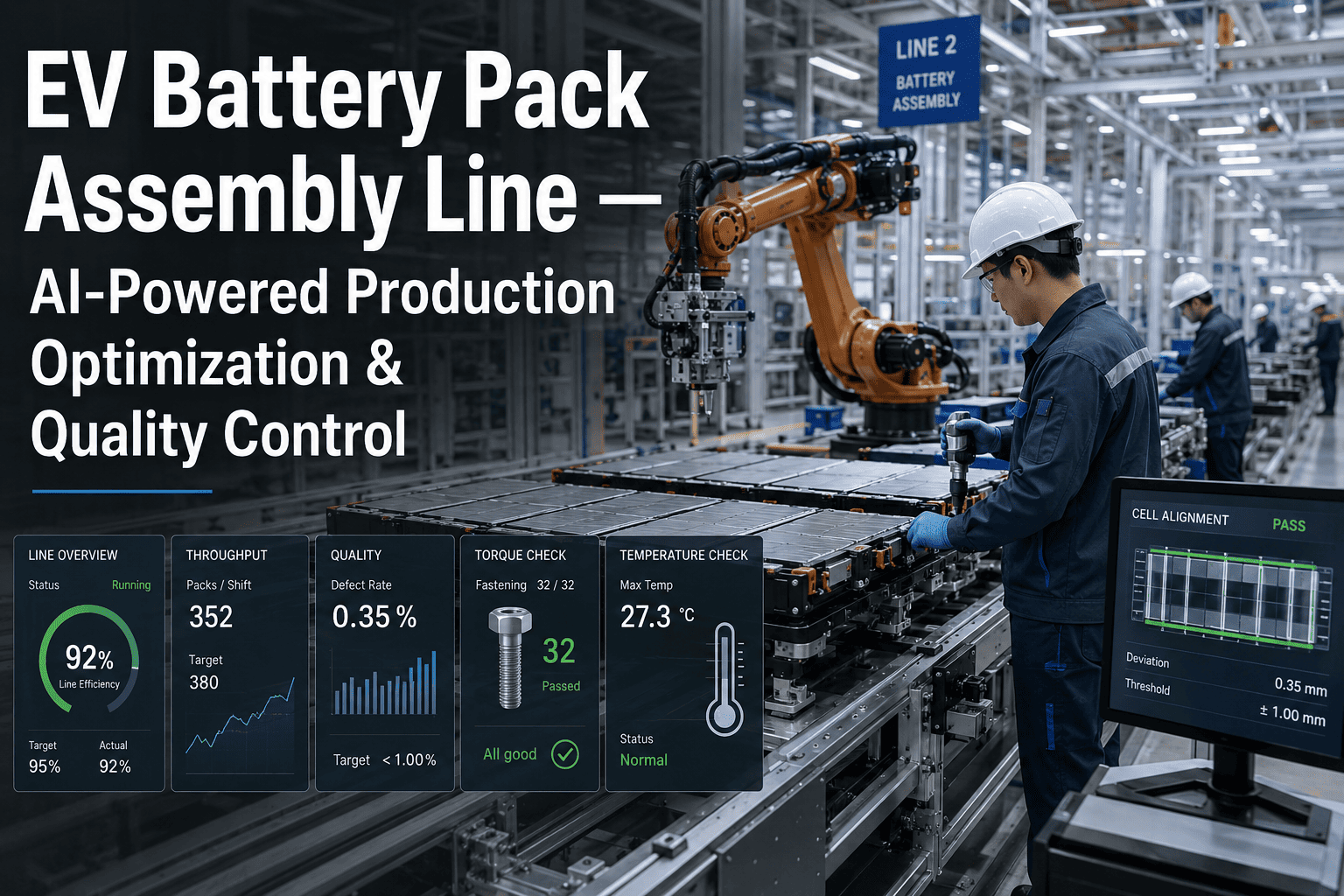
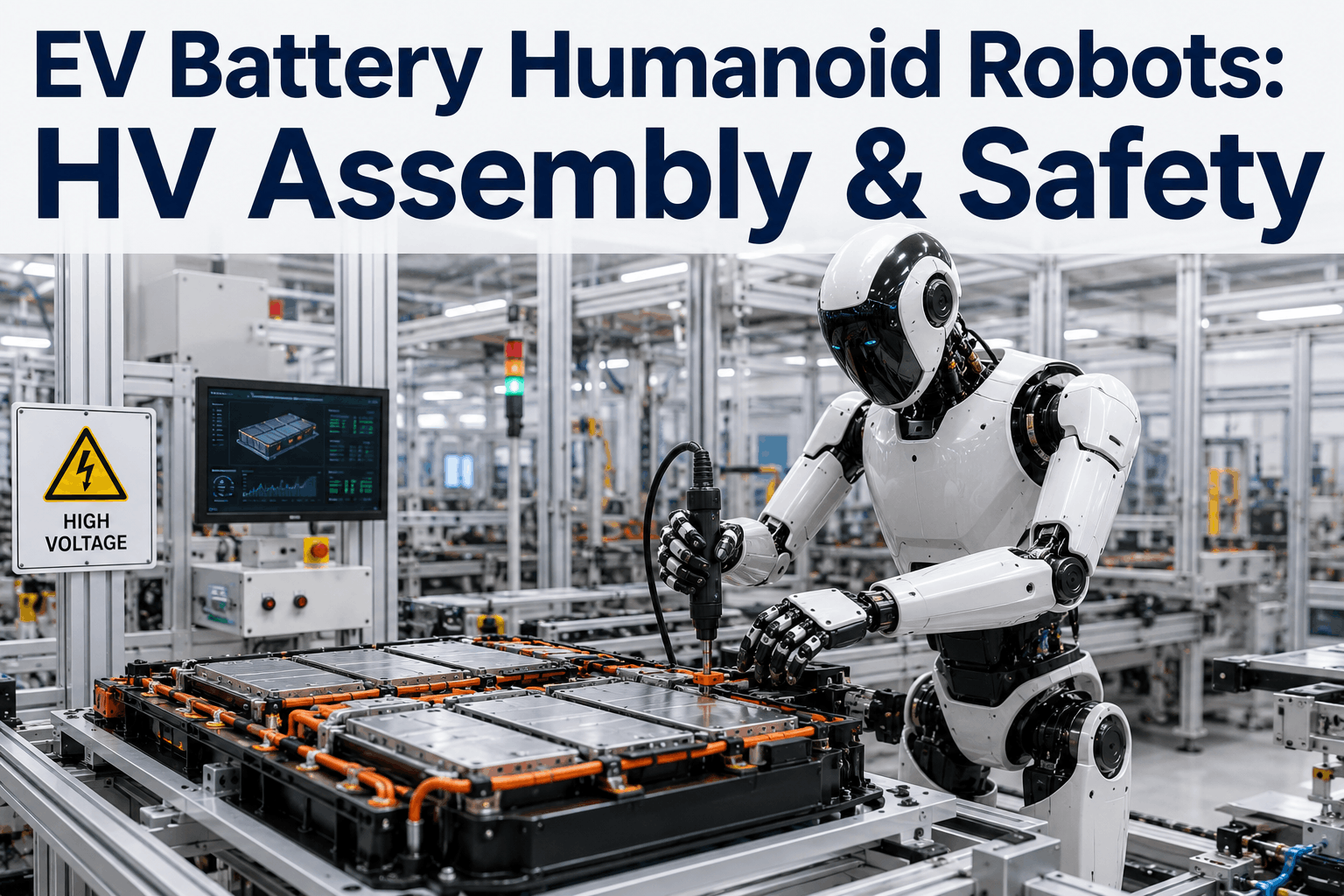
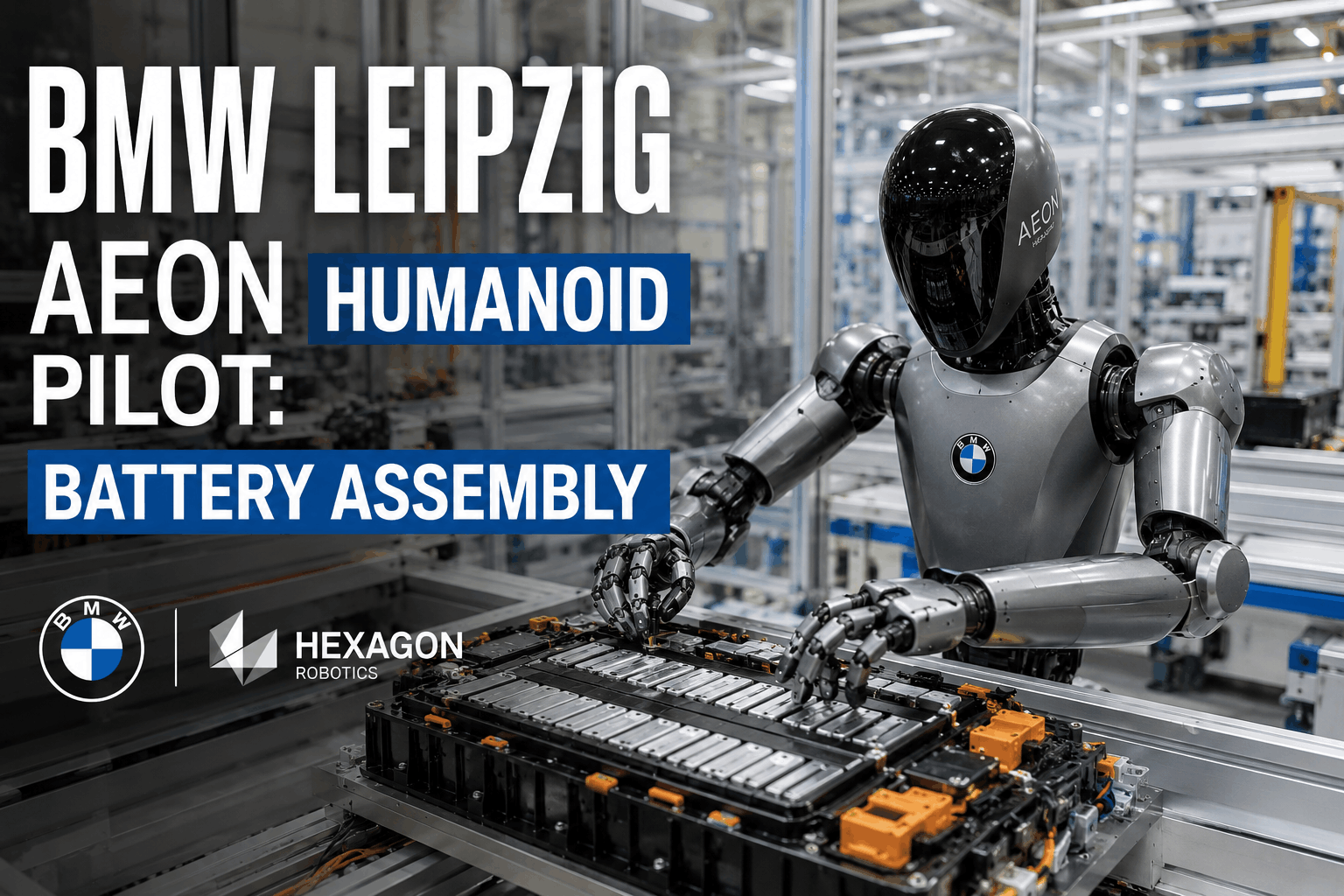
Schedule formation analytics demoBattery pack assembly — seating high-voltage bus bar connectors, routing thermal management tubes, placing battery modules in the pack frame, and installing the pack cover — requires the precise dexterity that humanoid robots with 22-DOF hands are uniquely capable of delivering consistently. Tesla's Optimus Gen 3 deployment at Fremont performs these tasks with reported >99% accuracy, generating quality records per vehicle that feed directly to the vehicle's digital twin. Pack assembly is the primary humanoid robot expansion zone at every major gigafactory in 2026.
Gigafactories move enormous volumes of cells, modules, and pack frames between processes continuously — from formation chambers to grading stations, from module assembly to pack assembly, from pack testing to vehicle assembly. AI fleet management software, connected to MES production sequencing, dispatches AGVs dynamically based on real-time production status rather than fixed route schedules. Transport delays — previously the second most common cause of formation chamber starvation — fell by 28% in the first 6 months of AI fleet deployment at one gigafactory. Book a demo — gigafactory AGV fleet management.
How iFactory Connects Gigafactory Robots to Production Intelligence
Gigafactory AI systems generate data at an order of magnitude higher density than conventional automotive plants — formation curve data alone from a 10GWh facility exceeds 5TB per day. Without a production integration layer connecting this data to MES, quality management, and enterprise analytics, gigafactory AI delivers islands of intelligence rather than a connected production system. iFactory provides the integration layer in two deployment models — on-premise for facilities with data sovereignty requirements and cloud-connected for enterprise fleet management — both available as part of the same platform.
FAQ: EV Battery Plant Robotics and Gigafactory Automation
Deploy AI and Robotics Intelligence Across Your Gigafactory — On-Premise, Cloud, or Both
iFactory connects gigafactory robots, formation analytics, and process AI to your MES, LIMS, and quality systems — available as on-premise edge deployment for data sovereignty, cloud analytics for multi-plant fleet management, or a hybrid of both. Purpose-built for the data intensity, environmental extremity, and yield consequence of EV battery manufacturing.