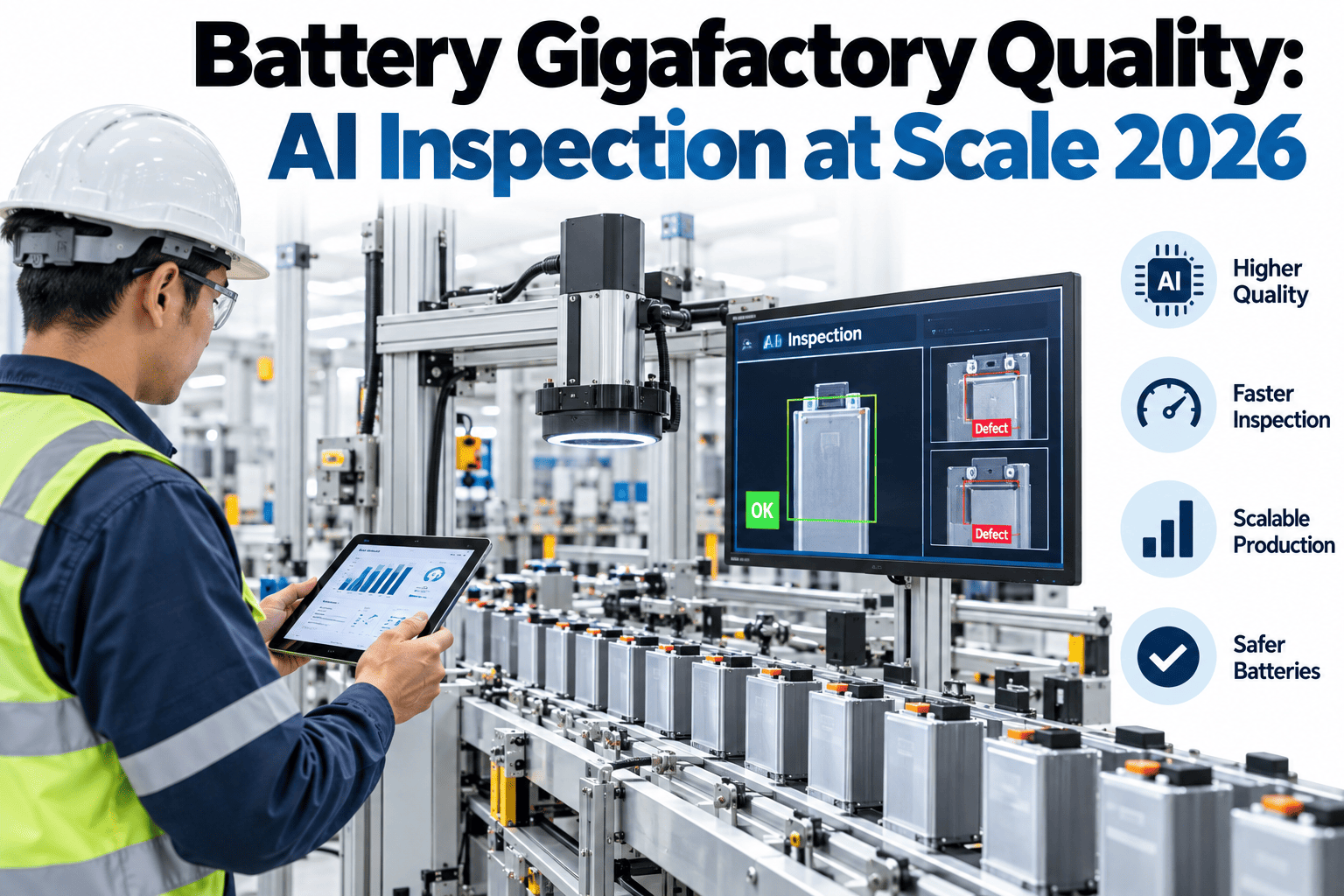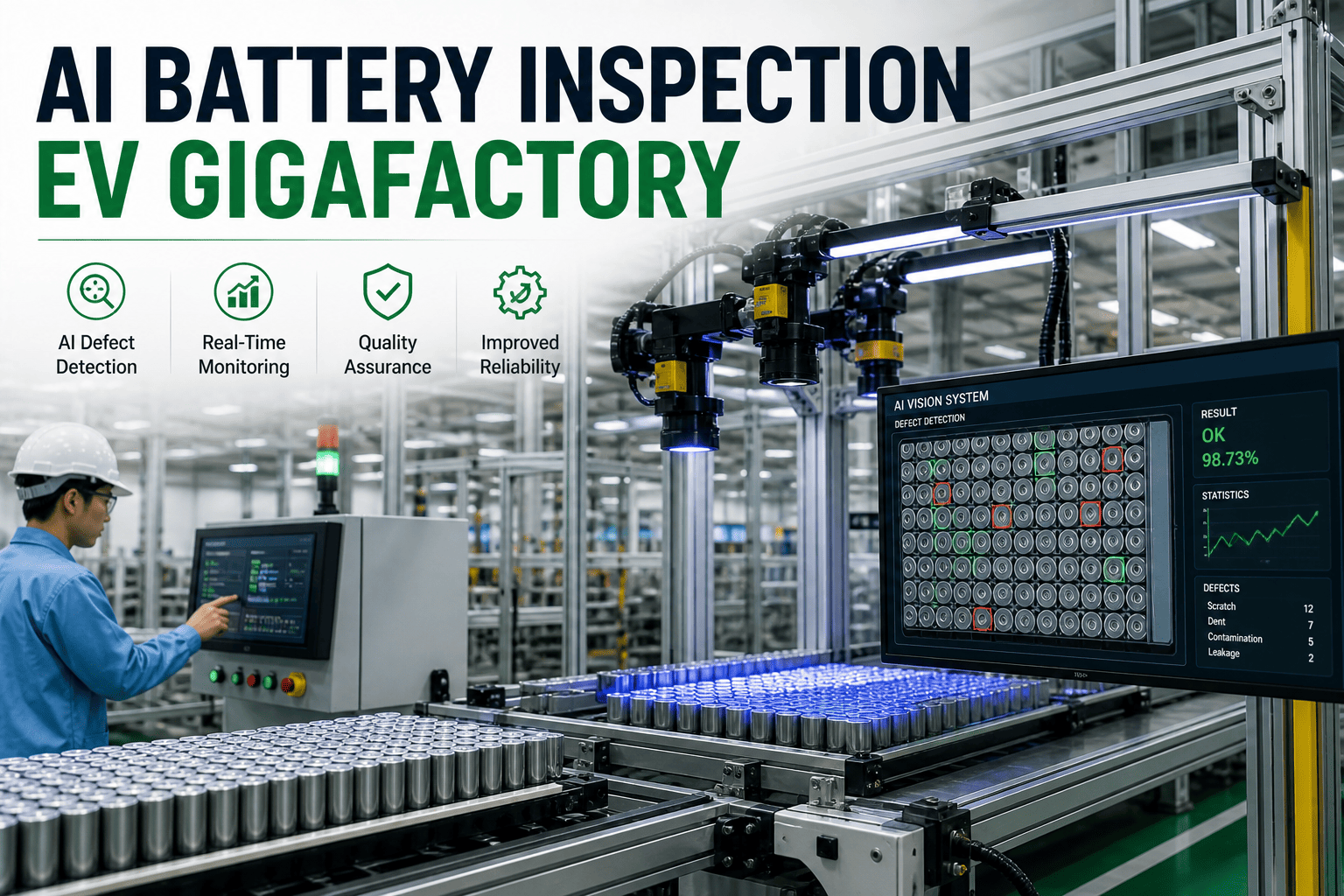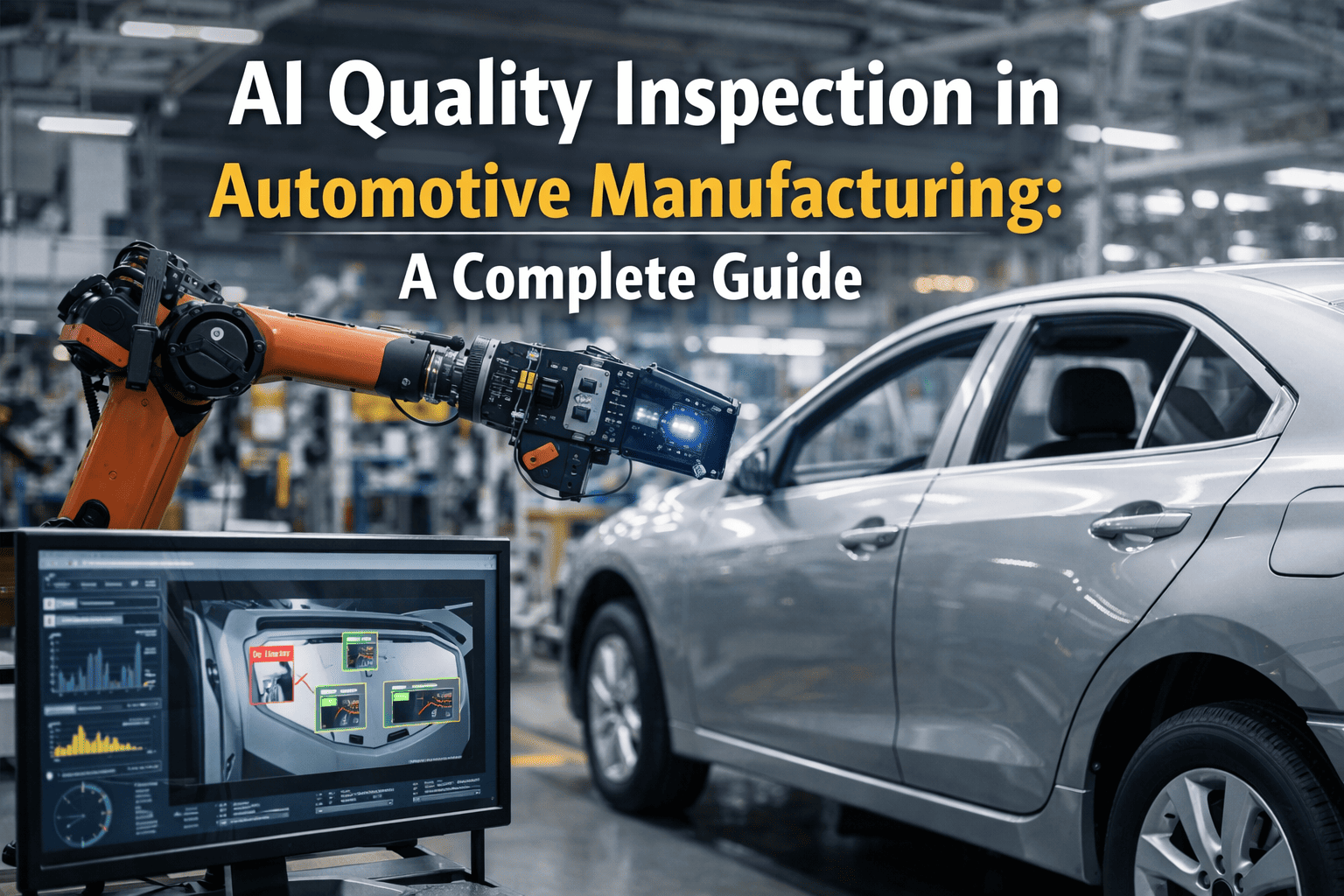
A single defective battery cell can turn a $50,000 electric vehicle into a fireball, and by the time a defect reaches pack assembly, it has already survived electrode coating, tab welding, formation cycling, and module stacking without being caught. Quality defect rates during production ramp-up commonly run 12 to 15%, far above the 2 to 3% typical of established internal combustion plants — and traditional post-formation testing catches problems only after a cell has already completed its first charge cycle. AI vision inspection changes where in that chain defects get caught, running at cell, module, and pack level rather than relying on a single end-of-line test to catch everything. Battery manufacturers ready to see cell-level inspection running at production speed can Book a Demo to walk through a live deployment.
Catch the Defect Before It Becomes a Thermal Event — At Every Level of the Battery
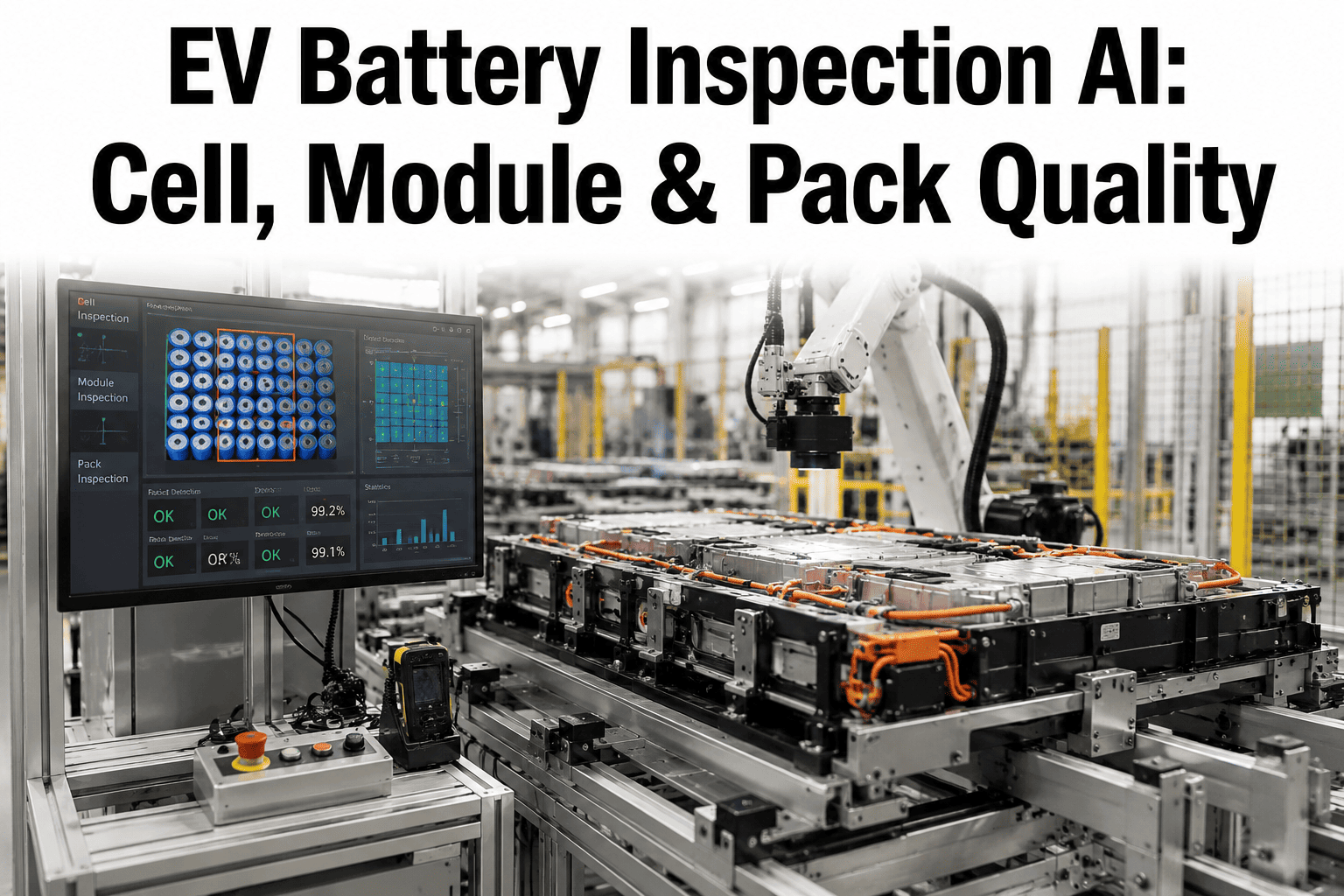
iFactory deploys AI vision inspection across cell, module, and pack production stages, catching electrode, weld, and assembly defects at the point they occur — not weeks later when a warranty claim or recall makes the cost undeniable.
Three Levels, Three Defect Profiles
A battery pack is only as reliable as the weakest defect that slipped through at any of its three manufacturing levels. Each level has a distinct set of failure modes, and inspection strategy has to match the level rather than applying one generic camera setup everywhere.
Cell
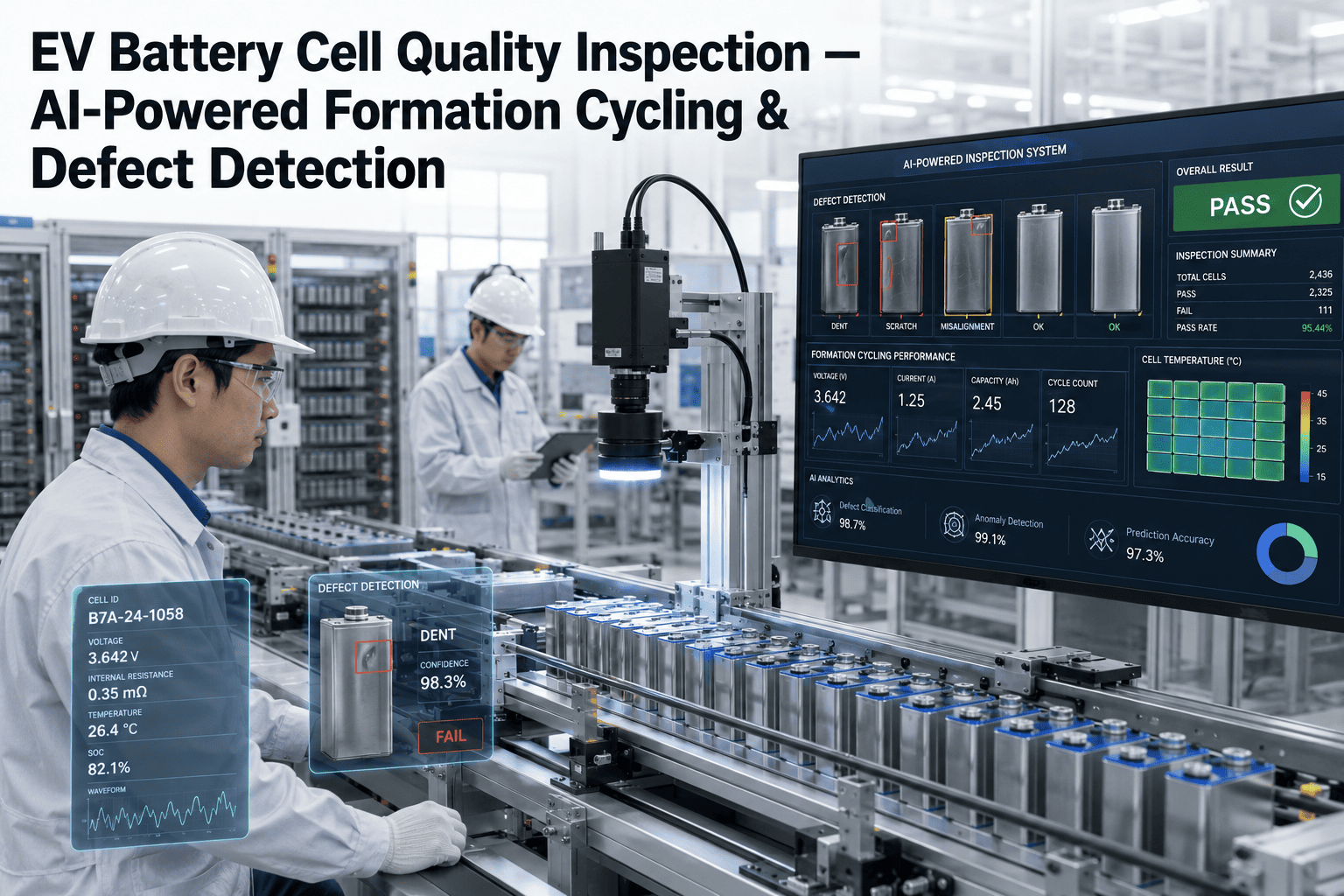
Electrode coating pinholes, agglomerates and thickness variation, tab weld position and fusion quality, and seal integrity — defects here are the root cause of most downstream thermal events.
Module
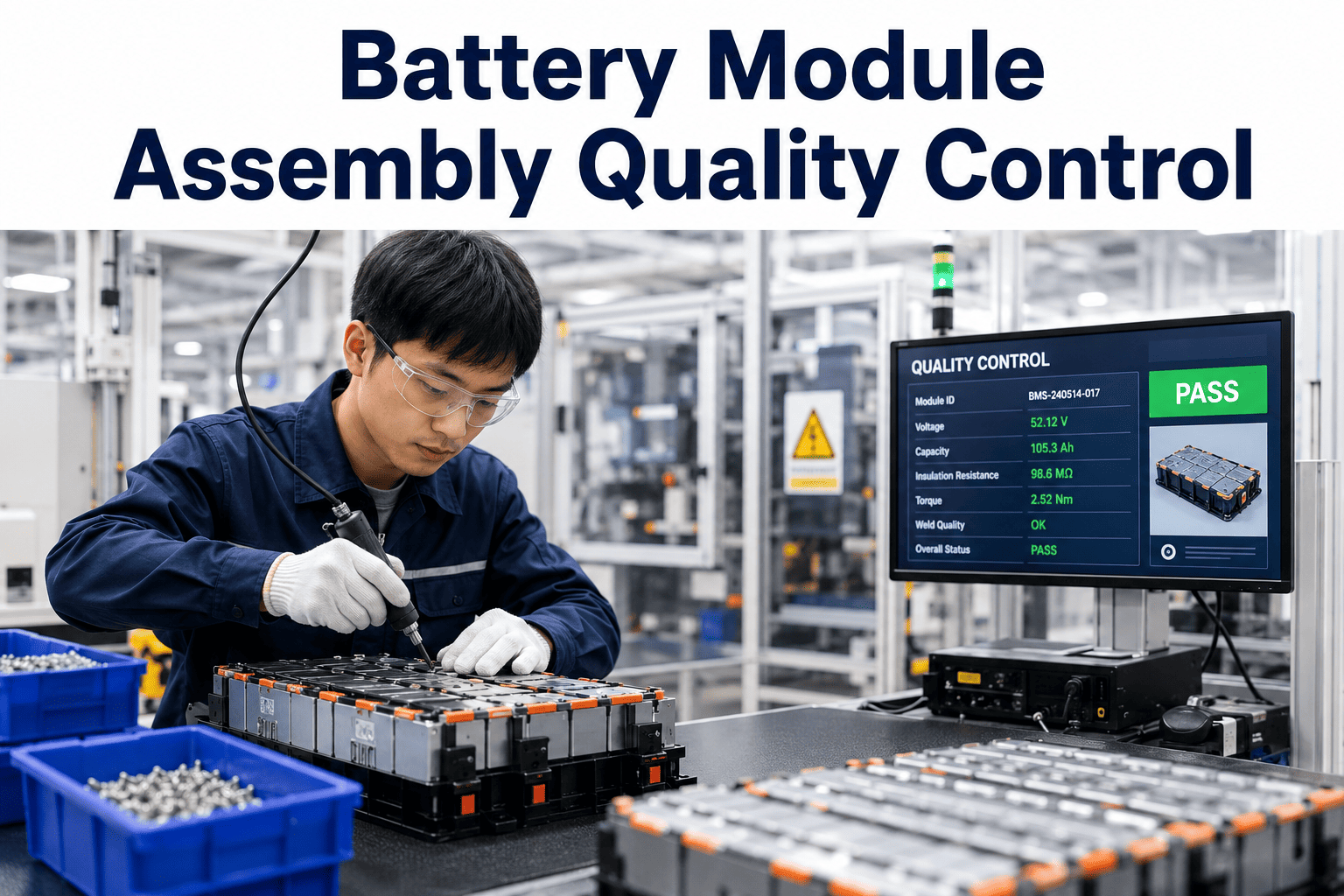
Cell-to-cell alignment, busbar weld quality, interconnect torque verification, and thermal interface material coverage — defects here create resistance imbalances across the module.
Pack
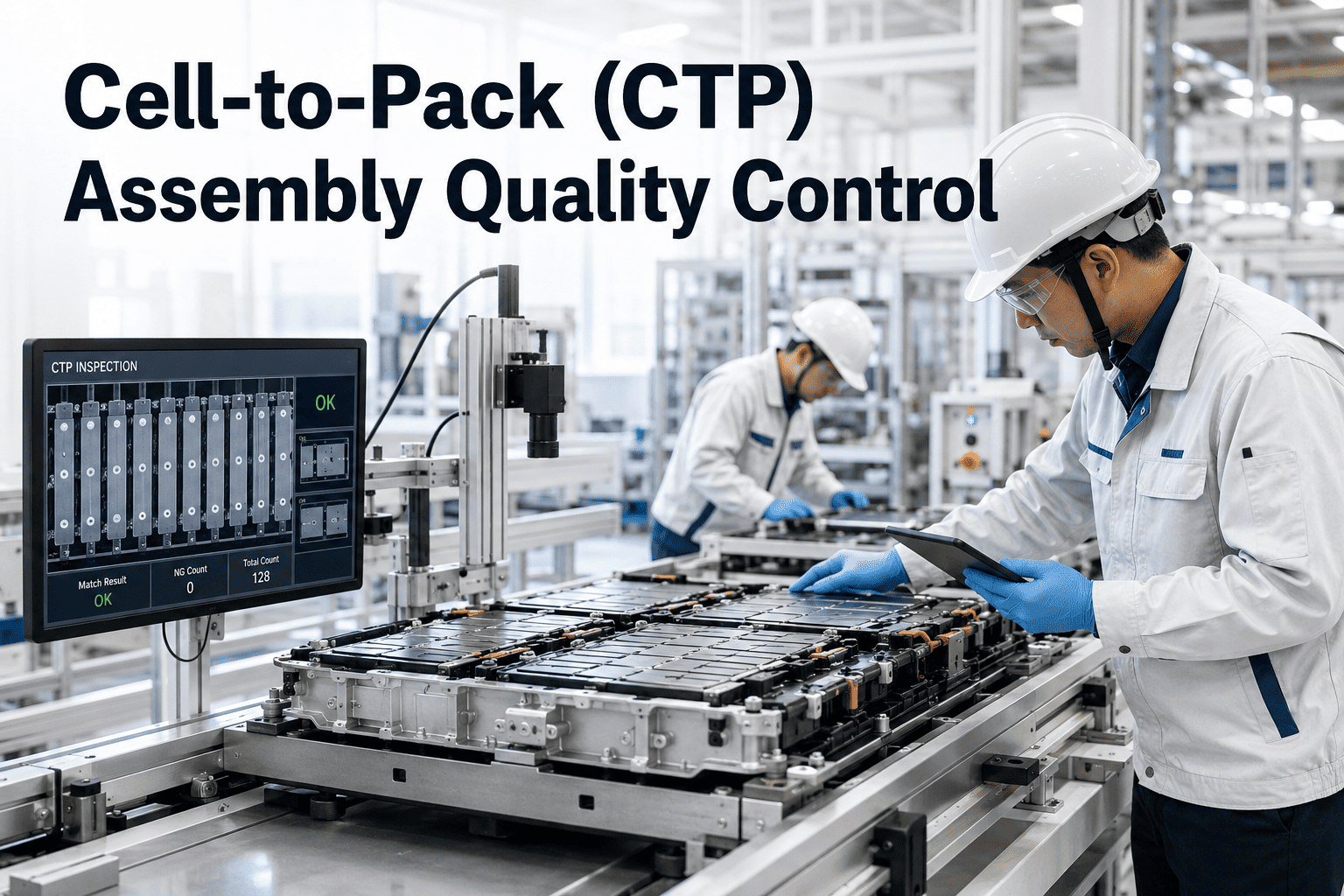
Component presence verification, connector seating, fastener torque, coolant line sealing, and enclosure integrity — the final gate before the pack ships to vehicle assembly.
Detection Timeline: Traditional Testing vs AI Vision
The core problem with traditional battery quality control is timing. Post-formation testing and destructive sampling both catch defects after significant value-added work has already gone into the cell — AI vision moves detection to the point of manufacture, before the defect compounds.
| Defect Origin | Traditional Detection Point | AI Vision Detection Point |
|---|---|---|
| Electrode coating pinhole | Post-formation testing, or field failure | Inline during coating, roll-to-roll |
| Tab weld defect | Sample destructive testing | Inline immediately after weld, 100% inspection |
| Cell misalignment in module | End-of-line electrical test | Inline during stacking |
| Pack component omission | Final QC audit, sampled | Inline at assembly station, every unit |
Why Sampling-Based Testing Isn't Enough at Gigafactory Volume
Traditional post-production testing samples only 1 to 2% of manufactured cells, relying on manual inspection judgment for the rest. At gigafactory scale, that sampling rate has a real cost.
cells a large gigafactory can produce daily
defective cells that can escape into packs daily at typical escape rates
estimated cost per cell when a defect is discovered in the field
Move From 2% Sampling to 100% Inline Inspection
AI vision inspects every cell, every module, and every pack — not a statistical sample — closing the gap where defective units currently reach the field.
What Full-Stack Inspection Delivers Beyond Defect Catch Rate
Inspecting at all three levels does more than catch individual defects — it builds a connected quality record that traces a field issue back to its exact origin, something single-point testing structurally cannot do.
Root Cause Traceability
A pack-level failure can be traced back to the specific cell and module where the originating defect occurred, rather than treating the whole pack as an unexplained failure.
Reduced Rework Cost
Cell-level detection prevents a defective cell from consuming module and pack assembly labor before being caught downstream.
Recall Scope Reduction
Full traceability across all three levels narrows a recall to the specific production window and batch, rather than an entire model year.
Faster Ramp-Up
New production lines reach stable yield faster when defect data at every level feeds directly back into process tuning.
Frequently Asked Questions
Does inspecting at all three levels slow down battery production?
Inline inspection at each level is designed to run at the existing cycle time of that production stage — cell-level cameras operate at roll-to-roll coating speed, and weld and assembly inspection completes within the normal station dwell time, so no additional pause is added to the line. The alternative, sampling-based testing, actually creates more downstream disruption when a defect is caught late and requires unwinding already-completed module or pack assembly work. Teams can Book a Demo to see cycle time impact on a live production line.
What specific defects does cell-level inspection catch that module or pack inspection would miss?
Cell-level inspection catches electrode coating pinholes, agglomerates, thickness variation, and tab weld defects — issues invisible once a cell is enclosed in a module housing or connected via busbar to neighboring cells. These defects are the most common root cause of thermal runaway events, and catching them before the cell moves into module assembly prevents both the safety risk and the wasted labor of building a module around a defective cell. Module and pack-level inspection catches a separate category of defects related to assembly and interconnection quality.
Can AI vision inspection replace formation cycle testing entirely?
No — formation cycle testing measures electrical and electrochemical performance that vision inspection cannot assess, such as voltage stability and impedance under charge and discharge. AI vision inspection is complementary, catching physical and geometric defects before and during assembly so that fewer cells with pre-existing physical defects even reach the formation stage, improving the signal quality of formation test results and reducing the number of cells requiring rework after testing. Reach iFactory Support to discuss how vision inspection complements your existing formation test process.
How does the system handle different cell formats — cylindrical, prismatic, and pouch?
Camera placement, lighting design, and model training are configured specifically for each cell format, since cylindrical, prismatic, and pouch cells present different surfaces, weld geometries, and seal types to inspect. A gigafactory producing multiple formats typically requires a format-specific model trained on that format's defect catalog, though the underlying inspection architecture and MES integration remain consistent across formats.
What does a phased deployment across all three levels typically look like?
Most manufacturers start with cell-level inspection at the highest-risk stage — typically tab welding or electrode coating — since defects caught there prevent the most downstream cost, then expand to module and pack-level inspection over subsequent phases as the cell-level system proves out. This phased approach spreads capital investment over 6 to 18 months while delivering measurable defect reduction from the first deployment, rather than requiring a single large investment across all three levels simultaneously.
Inspect Every Level, Not Just the Ones You Can Sample
iFactory deploys AI vision inspection across cell, module, and pack production stages, tracing every defect back to its origin — turnkey, validated across gigafactory-scale deployments.