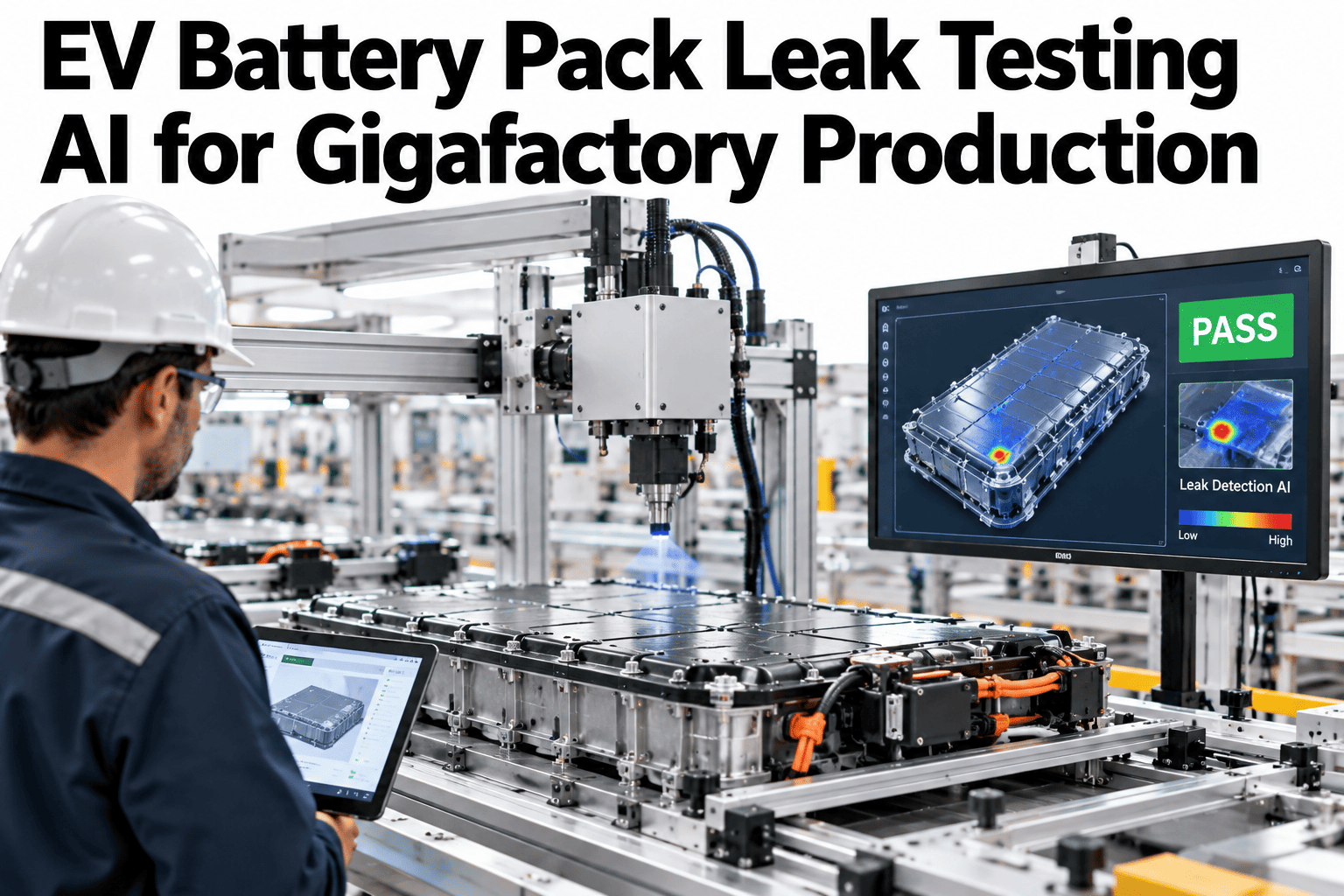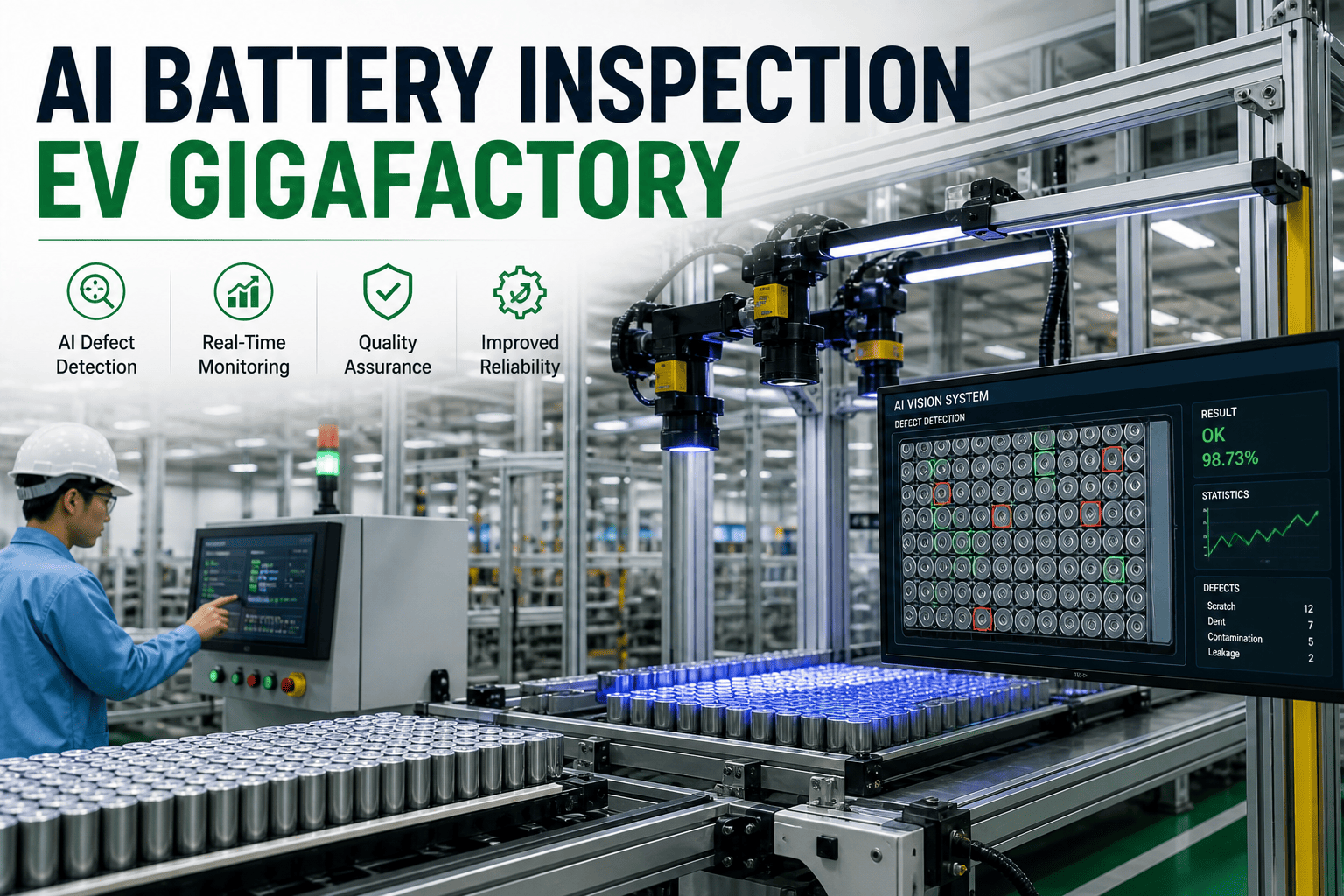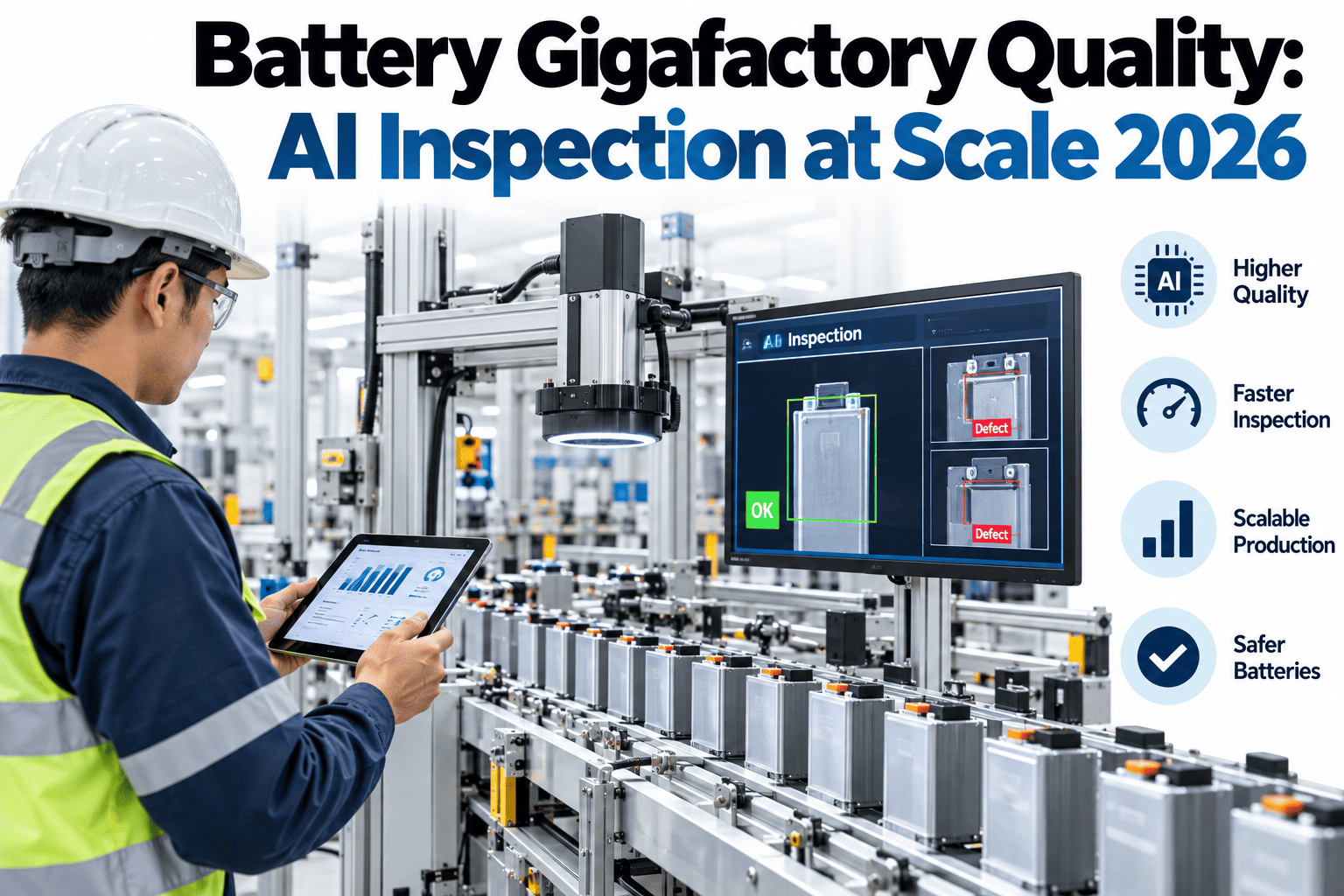
A quality strategy that works perfectly on a pilot line running a few thousand cells a day can collapse the moment it is asked to run across a gigafactory producing millions of cells annually across a dozen parallel lines. The jump from pilot scale to gigafactory scale is not a matter of simply buying more of the same inspection stations — it requires an architecture built from the start to handle multi-line coordination, centralized defect pattern analysis, and a data pipeline that does not buckle under the sheer volume a megascale battery plant generates every single shift. Manufacturers planning this scale-up can start with a conversation with iFactory support about architecture built for gigafactory volume.
What Works on One Line Breaks at Twelve. Design for Scale From Day One.
High-volume inspection architecture and multi-line deployment strategy built for megascale battery production, not retrofitted after the fact.
Why Pilot-Scale Architecture Does Not Survive the Jump to Gigafactory Volume
A pilot line running a single AI vision inspection station generates a manageable stream of images and defect classifications that a small quality team can review directly, tune manually, and adjust as needed without much formal infrastructure around the process. A gigafactory running a dozen parallel lines, each with multiple inspection stations across cell, module, and pack assembly, generates a volume of data that simply cannot be reviewed the same way — the architecture has to shift from direct human review of individual results toward a system that aggregates, prioritizes, and surfaces only the patterns and exceptions that actually need human attention.
This shift is not simply a bigger version of the pilot system — it requires different underlying infrastructure decisions made early, including how defect data is aggregated across lines, how model updates get deployed and validated consistently across every line simultaneously, and how a quality team's attention gets routed to the handful of genuinely significant patterns hidden inside a flood of routine data. Manufacturers who scale a pilot architecture without addressing these questions upfront often find themselves rebuilding the entire data pipeline midway through a ramp, at exactly the moment production pressure makes that rebuild most disruptive.
The Four Pillars of a Gigafactory-Ready Architecture
A quality architecture built for megascale production rests on four structural decisions made before the first additional line goes live, each addressing a specific way pilot-scale thinking breaks down at volume.
Centralized Defect Pattern Analysis
Every line's defect data flows into a single analysis layer, so a pattern appearing on one line can be immediately checked against every other line rather than staying invisible inside that one line's isolated dashboard.
Consistent Model Deployment Across Lines
An inspection model update validated on one line needs a defined, controlled process for rolling out to every other line, rather than each line drifting toward its own independently tuned version over time.
Exception-Based Human Review
Quality staff attention is routed to statistically significant patterns and genuine exceptions, not asked to manually review a volume of routine passing results no human team could realistically keep up with at scale.
Elastic Data Infrastructure
The underlying data pipeline is built to absorb the tenfold or greater increase in volume between pilot and full-scale deployment without requiring a fundamental redesign partway through the ramp.
Plan a Multi-Line Deployment Architecture
Book a 30-minute walkthrough and we will map out a scaling architecture for your specific line count and ramp timeline.
Pilot vs Ramp vs Full Gigafactory: What Changes at Each Stage
The requirements on a quality architecture shift meaningfully at each stage of a gigafactory ramp, and understanding those shifts ahead of time avoids designing a system suited only to the stage currently in front of you.
| Stage | Typical Line Count | Primary Architecture Need | Common Failure Mode |
|---|---|---|---|
| Pilot | 1 line | Validate detection accuracy and defect coverage | Over-tuning to pilot-specific conditions that don't generalize |
| Ramp | 4–6 lines | Establish consistent model deployment across lines | Each line drifting toward its own manually tuned configuration |
| Full Gigafactory | 12+ lines | Centralized pattern analysis and exception-based review | Quality team drowning in disconnected, line-level dashboards |
| Multi-Site | Multiple factories | Cross-site benchmarking and shared defect libraries | Each site treating its own defect history as isolated knowledge |
A Composite Scenario: The Pattern That Would Have Stayed Invisible
A gigafactory operator running eight parallel module assembly lines noticed a modest uptick in a specific weld defect category on one line during a routine review, small enough that it did not trigger any line-level alert threshold on its own. Because defect data across all eight lines flowed into a centralized analysis layer, the same defect signature was cross-checked against the other seven lines automatically, revealing that two additional lines were showing early signs of the same pattern, just below each individual line's own alert threshold.
Investigation traced the shared root cause to a batch of weld consumable material used across all three affected lines, sourced from the same supplier lot. Because the pattern was caught centrally rather than requiring three separate line teams to each independently notice and then compare notes on their own, the affected consumable batch was pulled from all three lines within the same shift, well before the defect rate on any individual line would have crossed its own isolated alert threshold. A quality team relying purely on line-level dashboards would likely not have connected these three signals until the pattern had grown large enough to trigger each line's alert independently, days or weeks later.
Common Mistakes When Scaling Past a Pilot
Assuming a Successful Pilot Guarantees Scale-Up Success
A pilot validates detection accuracy on one line under one set of conditions. Scale-up introduces coordination, data volume, and consistency challenges the pilot never had to face.
Letting Each New Line Build Its Own Configuration
Without a centralized deployment process, each line's local quality team tends to tune inspection parameters independently, producing inconsistent detection standards across a plant that should behave as one system.
Adding Lines Faster Than the Data Pipeline Can Absorb
A data infrastructure sized for four lines does not simply need incremental upgrades to handle twelve — it often needs a fundamentally different architecture, and waiting until performance degrades to address this is a costly way to discover the gap.
Underinvesting in Exception-Based Review Tooling
A quality team asked to manually review results across a dozen lines the same way they reviewed one pilot line will either burn out or start skipping review entirely. The tooling needs to route attention automatically, not rely on manual diligence at scale.
Is Your Plant Ready to Scale Past the Pilot Stage
Your data pipeline has been load-tested against full gigafactory volume, not just pilot volume
Confirming the infrastructure can absorb a tenfold or greater increase in data before it actually arrives avoids discovering the gap under live production pressure during ramp.
You have a defined process for deploying a validated model update across every line consistently
Where this process does not exist yet, it is worth establishing before adding the second and third production lines, since retrofitting consistency across already-diverged lines is considerably harder.
Your quality team has a single, centralized view across every active line
If pattern detection currently depends on someone manually comparing dashboards across lines, that manual step is exactly the bottleneck a centralized architecture is designed to remove.
Staffing and Organizational Design for a Scaled Quality Function
The organizational structure that supports a single pilot line rarely transfers cleanly to a twelve-line gigafactory operation, and manufacturers who scale production without rethinking the quality team's structure often end up with a group that is simultaneously overwhelmed by volume and underutilized in terms of actual analytical skill. A pilot-stage quality team typically consists of a small group directly reviewing inspection results and tuning detection parameters by hand, a structure that works precisely because volume is low enough for that level of direct involvement.
At gigafactory scale, the more effective structure separates the team into two distinct functions: a smaller group of quality engineers focused on investigating the statistically significant patterns and exceptions the centralized system surfaces, and a broader operational quality presence embedded on the floor handling routine process adherence and immediate line-level response. This separation allows the engineering-focused group to spend their time on genuinely valuable analytical work — root cause investigation, cross-line pattern correlation, model performance review — rather than being consumed by the sheer volume of routine inspection results that a well-designed exception-based system should already be filtering out before it reaches them.
Training also needs to evolve alongside this structural shift. A quality engineer accustomed to reviewing individual inspection images directly needs a different skill set to interpret cross-line statistical patterns and understand what the centralized system is actually surfacing and why. Manufacturers who invest in this transition deliberately, rather than assuming the pilot-stage team will naturally adapt to gigafactory-scale responsibilities without support, tend to see a smoother organizational scale-up alongside the technical one.
Vendor Evaluation Criteria Specific to Gigafactory Scale
Evaluating an inspection technology vendor for gigafactory deployment requires a different set of questions than evaluating one for a single pilot line, since capability that looks impressive in a controlled pilot demonstration does not automatically indicate the vendor's architecture can handle the coordination and volume challenges of a full-scale rollout. A vendor demonstration that only shows performance on a single line, without addressing how the same system behaves when deployed across a dozen lines simultaneously, has not actually answered the question a gigafactory buyer needs answered.
Specific questions worth asking include how the vendor's architecture handles centralized pattern detection across multiple simultaneous lines, what the process looks like for deploying a validated model update to every line consistently, and how the system's performance and reliability have held up in other customers' deployments at comparable scale rather than only in pilot or small-scale settings. A vendor with genuine gigafactory-scale experience should be able to speak concretely to each of these questions rather than extrapolating confidently from pilot-scale results alone.
Budgeting for the Full Scale-Up, Not Just the Pilot
Capital planning for a gigafactory quality system is often anchored to the pilot line's cost, which understates the true investment required once centralized infrastructure, cross-line data pipelines, and the organizational restructuring described earlier are accounted for. A pilot deployment's cost per line is not simply multiplied by the eventual line count to arrive at a full-scale budget, since a meaningful share of the centralized infrastructure cost is fixed rather than scaling linearly with each additional line, and failing to account for that fixed cost early tends to produce a budget shortfall precisely when the plant is scaling fastest and least able to absorb disruption.
Manufacturers who budget for the full architecture from the start, even while only the pilot line is operational, tend to have a smoother ramp than those who treat each phase as its own isolated budget request. Building the centralized data pipeline and multi-line deployment process during the pilot phase, when the cost and complexity are still small enough to manage comfortably, avoids paying a rush premium later when the same infrastructure has to be built under the pressure of an active multi-line ramp already underway.
It is also worth budgeting explicitly for the organizational transition described above — training, potential role restructuring, and the ramp-up time for a quality engineering function to develop the cross-line analytical skills gigafactory scale requires. Treating this as a purely technical infrastructure investment while overlooking the organizational cost is one of the more common gaps in gigafactory quality budgeting, and one that tends to surface as a staffing and capability shortfall right as the additional production lines come online.
Connecting Gigafactory Quality Data to Broader Enterprise Systems
A gigafactory's quality architecture does not exist in isolation from the rest of the enterprise, and the value of centralized defect pattern data compounds further when it connects into broader systems such as supplier quality management, engineering change control, and enterprise reporting used by executive leadership. A defect pattern traced back to a specific supplier lot, as described in the weld consumable scenario earlier, becomes far more actionable when that finding flows automatically into a supplier quality system already tracking that vendor's performance, rather than staying siloed inside the plant's own quality dashboard.
Manufacturers planning a gigafactory quality architecture should map out these enterprise connection points early, even if the initial integration work focuses only on the plant-level system first. Designing the centralized data layer with these future connections in mind, using accessible data formats and well-documented interfaces rather than a closed, proprietary structure, avoids a costly re-architecture later when the organization decides it wants supplier quality or executive reporting systems to draw on the same defect pattern data the plant floor already relies on daily.
Frequently Asked Questions
How far in advance of a multi-line ramp should this architecture be planned?
Ideally, the centralized architecture decisions — data pipeline design, model deployment process, and pattern analysis approach — should be planned during the pilot phase itself, even though the pilot only requires a fraction of that infrastructure to function on its own. Retrofitting this architecture after several lines are already running independently is possible but considerably more disruptive than building it in from the start. Manufacturers planning a ramp timeline can walk through architecture planning by reaching out to iFactory support well ahead of the first additional line going live.
Does every line need identical inspection hardware and configuration?
Lines do not need to be physically identical, since equipment vintages and specific station layouts often vary across a multi-year gigafactory buildout, but the underlying detection models and quality thresholds should be deployed and validated consistently across lines producing the same product, so that a pack considered defect-free on one line meets the same standard as one from any other line. The architecture should account for hardware variation while still enforcing a consistent quality bar.
How does centralized pattern analysis avoid becoming its own bottleneck at scale?
Centralized analysis is designed to surface only statistically significant patterns and genuine exceptions to a human review team, rather than routing every individual inspection result through central review. This exception-based design is what allows the architecture to scale — the volume of data flowing into the central system grows with production, but the volume requiring direct human attention stays manageable because only the patterns that actually matter get surfaced.
What happens when lines are added at different times across a multi-year buildout?
A well-designed architecture treats new line onboarding as a repeatable, defined process rather than a custom project each time, with a standard checklist for connecting a new line's data into the centralized pipeline and validating its inspection models against the established quality baseline before it goes fully live. This consistency is what prevents a multi-year buildout from ending up with a patchwork of differently configured lines.
Can this architecture also support quality benchmarking across multiple factory sites?
Yes, the same centralized pattern analysis principle that connects lines within one factory extends naturally to connecting multiple factory sites, allowing a quality organization to benchmark defect rates, detection performance, and process consistency across sites rather than treating each factory's data as isolated. This becomes increasingly valuable for manufacturers operating more than one gigafactory site, since patterns invisible within a single site's own data can become clear once compared against a sister facility. Book a demo to see multi-site benchmarking in practice.
Build a Quality Architecture That Scales With Your Ramp, Not Against It
iFactory designs battery inspection architecture for gigafactory volume from day one — centralized pattern analysis, consistent model deployment, and elastic data infrastructure included. Book a walkthrough to plan your scale-up.