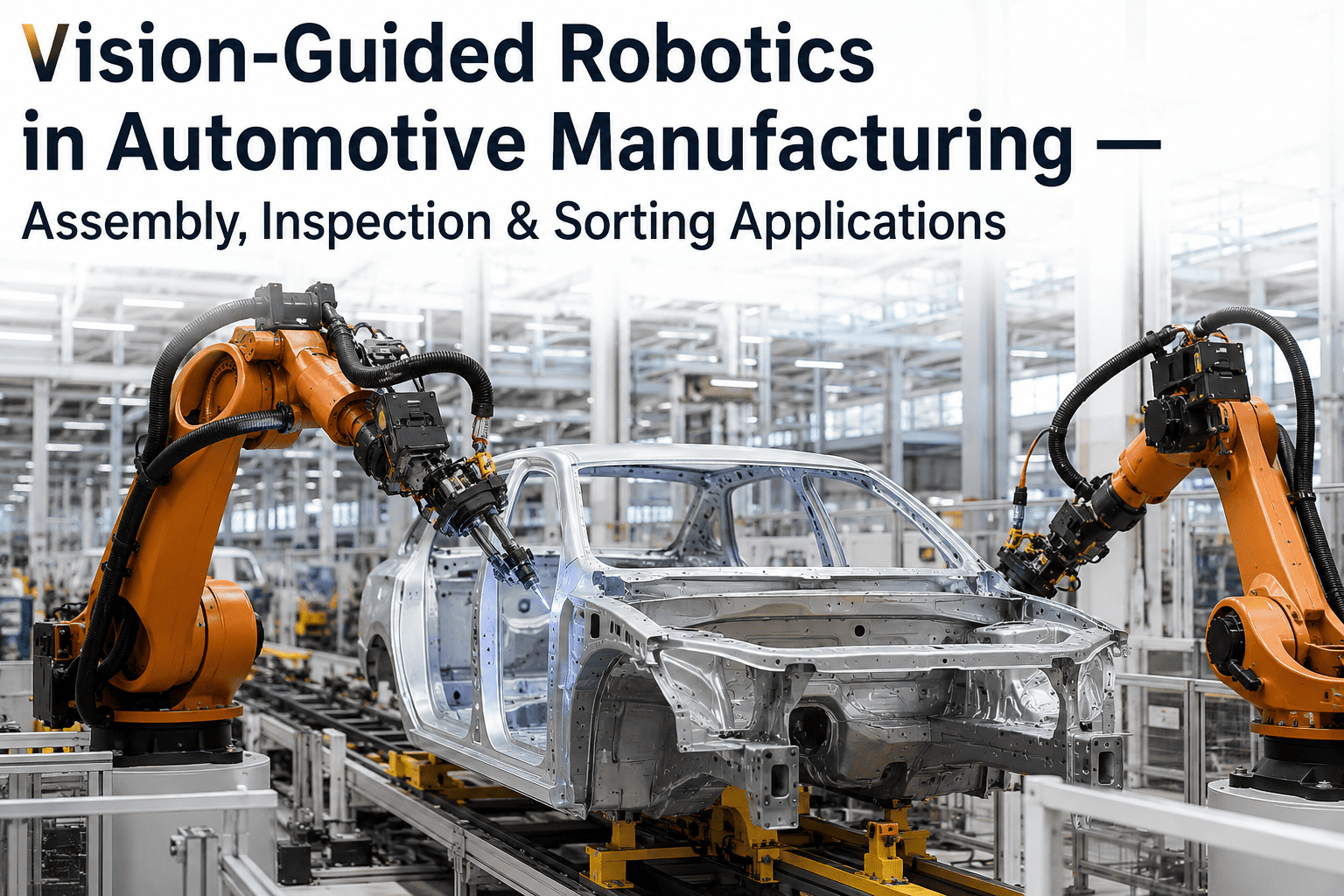
Fixed automation works perfectly until a part arrives slightly out of position, a component variant changes, or a bin of parts sits in random orientation — then the line stops and an operator intervenes. Vision-guided robotics removes that fragility by giving robots the ability to see and adapt, rather than repeat the same blind motion regardless of what is actually in front of them. The automotive sector already accounts for roughly a third of all industrial robot installations worldwide, and vision guidance is what lets those robots handle the part variability that fixed tooling never could. See how iFactory deploys vision-guided robotics on your line — book a demo.
Vision-Guided Robotics + AI
Robots That See What's There — Not Just What Was Programmed.
iFactory deploys vision-guided robotics across assembly, inspection, and sorting — handling part variability without fixture changes or line stops.
How Vision-Guided Robotics Actually Works
1
Capture
2D or 3D cameras image the part or bin at the robot's work envelope, processing frames at speeds exceeding 100 per second.
2
Locate
AI vision identifies part position, orientation, and identity — even in random orientation or partial occlusion — to sub-millimetre accuracy.
3
Adapt
The robot path adjusts in real time to the located position, rather than executing a fixed, pre-taught motion regardless of variation.
4
Verify
Placement or process outcome is confirmed by vision before the robot proceeds, catching errors before they propagate downstream.
What Vision Guidance Delivers in Practice
0.5mm
Typical position accuracy achieved by vision-guided robotic assembly systems
99.9%
Component presence and placement detection reliability reported in automotive deployments
85%
Reduction in assembly defect rate versus purely manual assembly, with vision-guided quality checks in place
Where Vision-Guided Robotics Applies on Your Line
Adaptive Assembly
Robots pick and place components that arrive with natural position variation, without requiring precision fixturing at every station.
Inline Inspection
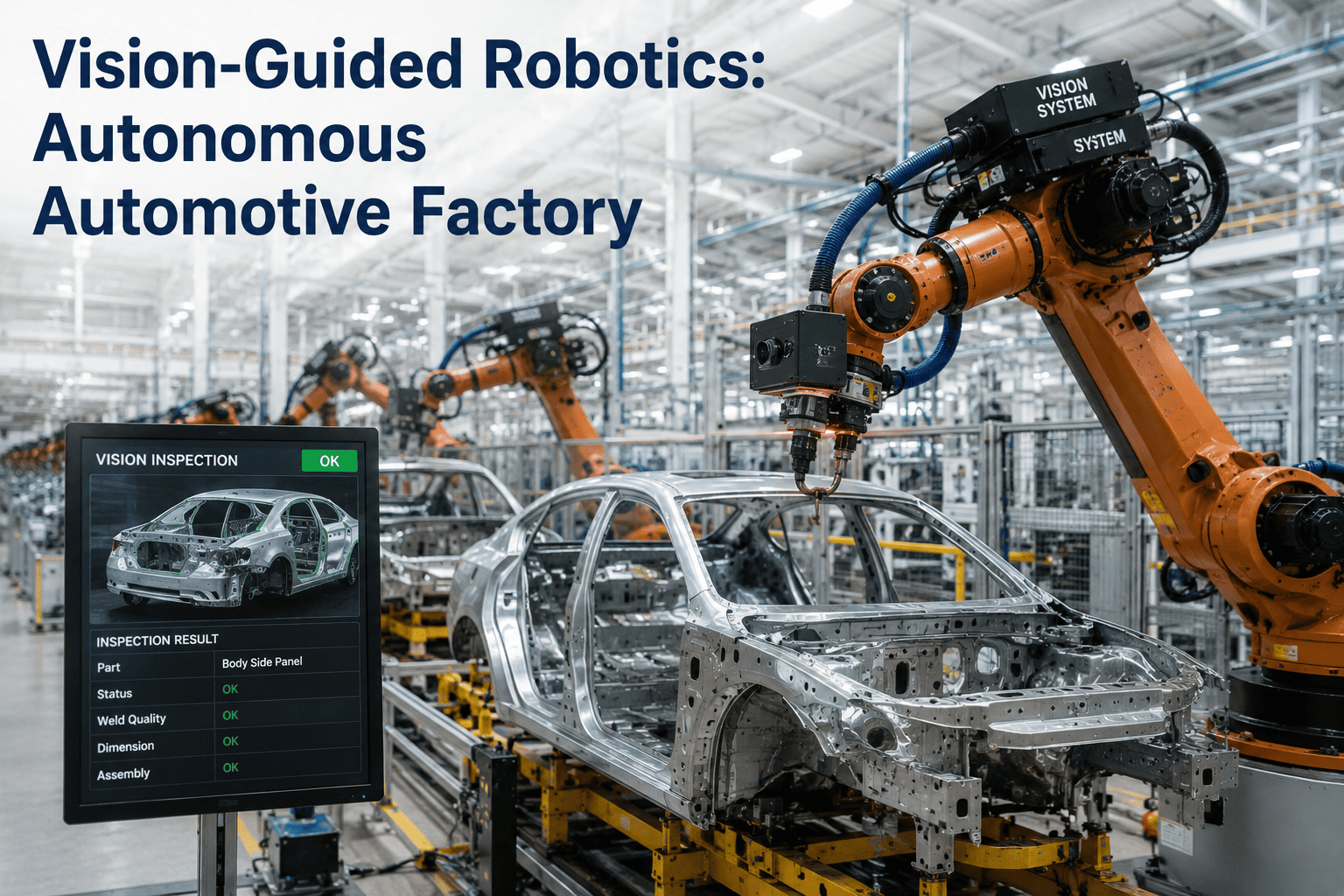
Vision-guided arms position cameras or sensors precisely against curved or variable-geometry surfaces for consistent defect detection.
High-Speed Sorting
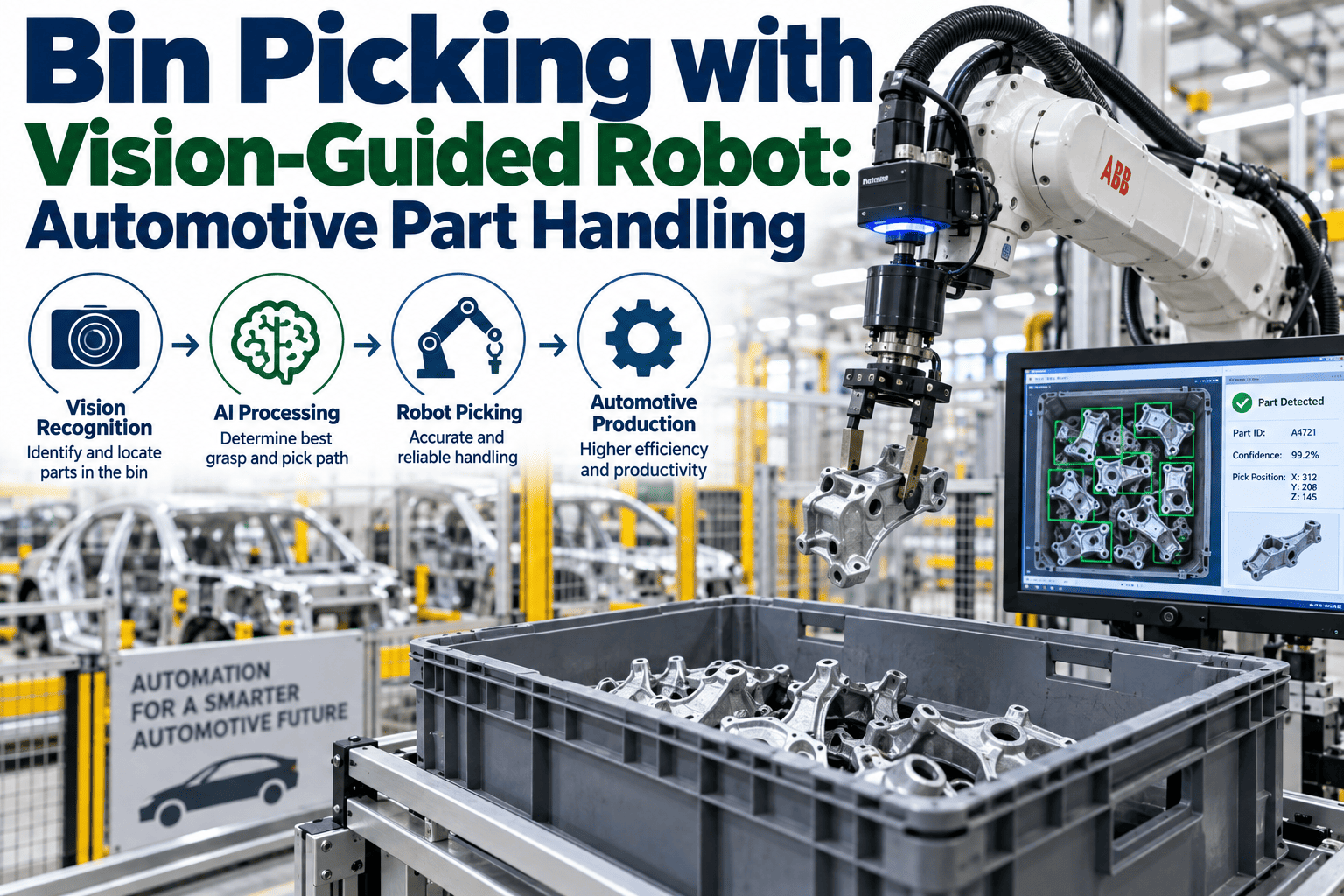
Random-orientation bin picking and sorting is handled without manual pre-orientation, removing an entire upstream process step.
Robotic Fastening
Fastener and connector placement adapts to minor part-to-part variation instead of requiring every part to arrive in an identical position.
Book a Demo — See Vision Guidance on Your Parts
Bring a sample of the parts your robots currently struggle with. iFactory will show you how AI vision handles the variation your fixed tooling can't.
2D vs. 3D Vision Guidance
| Factor | 2D Vision | 3D Vision |
|---|---|---|
| Best suited for | Flat, standardised parts | Complex geometry, bin picking |
| Implementation cost | Lower | Higher, but broader capability |
| Random orientation handling | Limited | Strong |
| Typical automotive share | Majority of installed base today | Fastest-growing segment |
FAQ: Vision-Guided Robotics in Automotive Manufacturing
What is the difference between vision-guided robotics and standard fixed automation?
Fixed automation executes the same pre-programmed motion every cycle, which only works reliably when parts arrive in a precisely repeatable position. Vision-guided robotics adds a camera and AI vision layer that locates the part's actual position and orientation before the robot moves, letting the same robot handle natural variation without a fixture redesign. This is what makes vision guidance valuable specifically where part presentation cannot be perfectly controlled — high-mix lines, bin picking, and flexible assembly.
Do we need to replace our existing robots to add vision guidance?
In most cases, no. Vision guidance is added as a camera and processing layer that integrates with the existing robot controller, rather than requiring a new robot. iFactory evaluates your current robot fleet and recommends where vision guidance can be retrofitted versus where a robot upgrade genuinely makes sense, so the investment targets the highest-value stations first. Ask our team to assess your current robot fleet.
How accurate is vision-guided robot positioning in real production conditions?
Production deployments in automotive assembly commonly achieve position accuracy around 0.5 millimetres, with component detection reliability above 99.9% under normal lighting and part-presentation conditions. Accuracy depends on camera resolution, lighting control, and calibration quality, which is why iFactory validates the specific vision configuration against your actual parts and station environment rather than quoting a generic specification.
Can vision-guided robots handle multiple part variants without reprogramming?
Yes — this is one of the primary advantages over fixed automation. The vision system can be trained to recognise multiple part variants and adjust the robot's approach accordingly, so a model change or component variant does not require a full re-tooling of the station. This flexibility is particularly valuable on EV assembly lines and high-mix production where variant counts continue to grow.
What is the typical payback period for a vision-guided robotics investment?
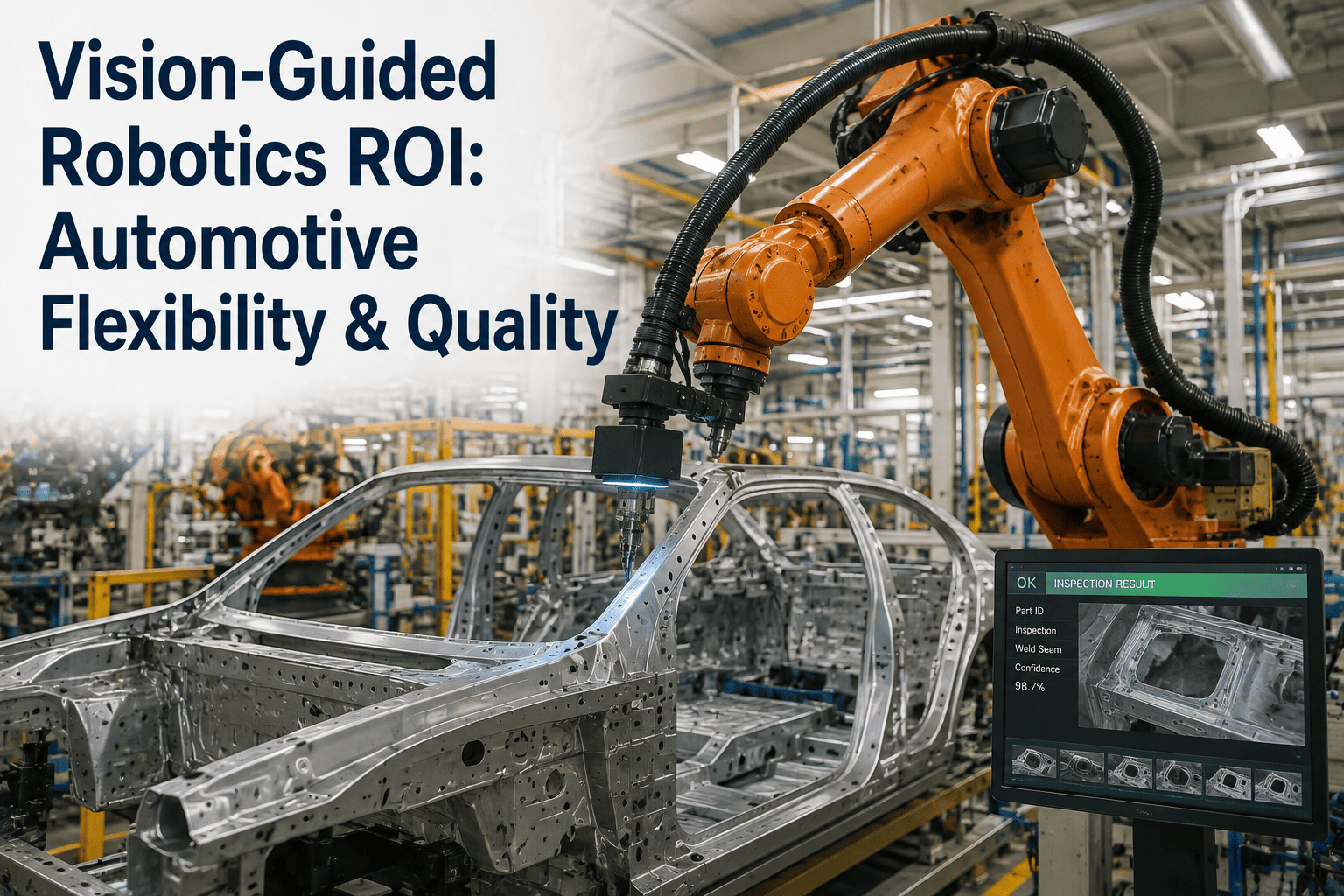
Payback depends heavily on the application, but stations where vision guidance eliminates a manual pre-orientation step, reduces fixture changeover time, or cuts defect-driven rework tend to show the fastest returns, often within 12 to 18 months. The defect rate reduction alone — commonly cited around 85% versus manual assembly — compounds into meaningful warranty and rework savings over the life of the line. Book a demo to model the payback for your specific stations.
Vision-Guided Robotics + iFactory
Stop Redesigning Fixtures Every Time a Part Changes.
iFactory deploys AI-powered vision guidance across your assembly, inspection, and sorting stations — handling variability your fixed tooling never could.