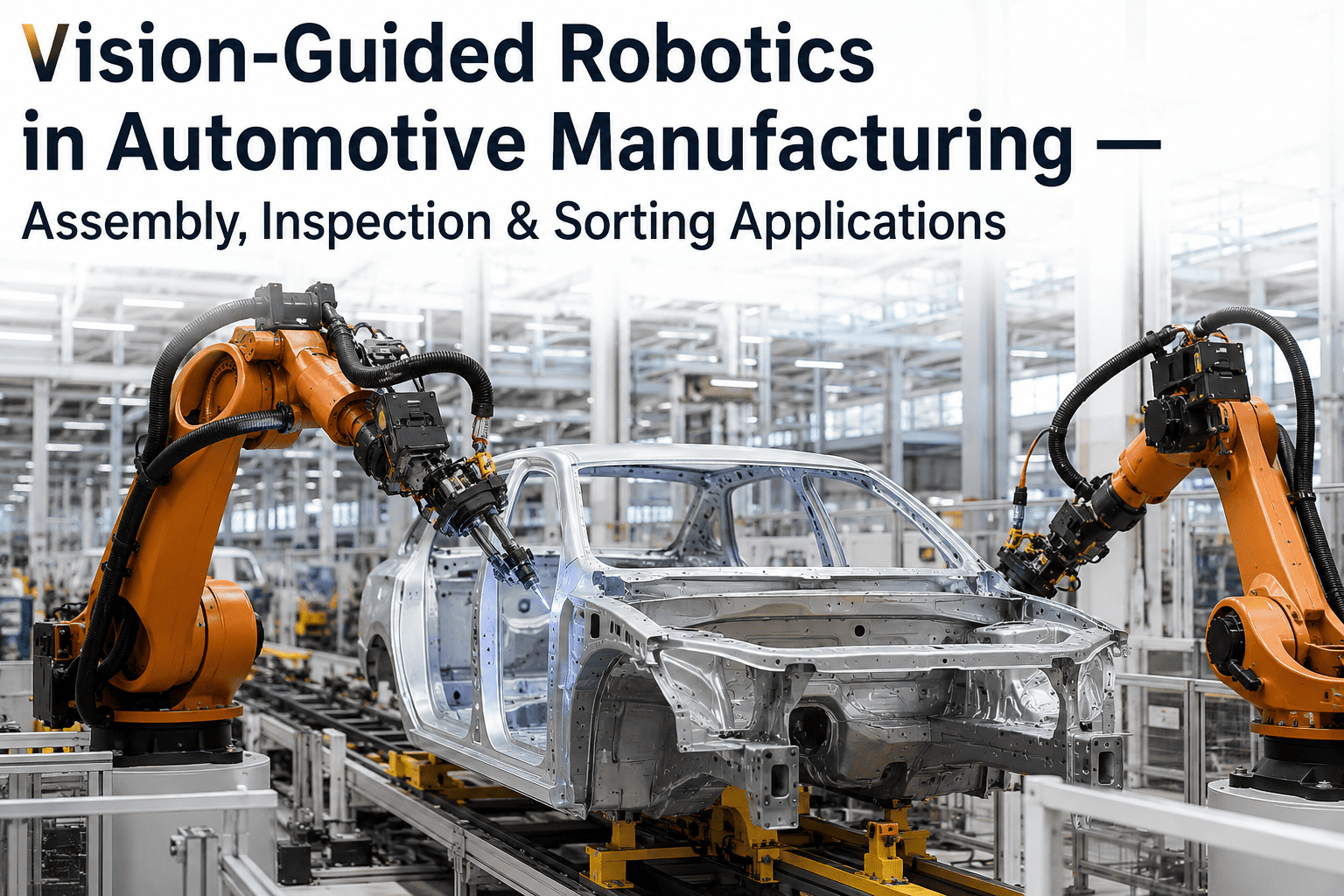
A robot programmed to pick from a fixed coordinate works perfectly until a part arrives a few millimeters off position, at which point it either drops the part, damages the fixture, or the line stops for manual correction. Automotive assembly runs on parts that vary slightly from bin to bin and station to station, and fixed-path robotics has no way to adapt to that variance in real time. Vision-guided robotics closes that gap by giving the robot eyes: confirming exact part position and orientation before every pick, place or inspection move, and adjusting the path accordingly. Book a demo to see vision-guided picking adapt to real part variance on your line.
Vision-Guided Robotics for Automotive
Give Every Robot Eyes Before It Moves
iFactory's vision-guided robotics confirms part position and orientation in real time, adapting pick, place, assembly and inspection moves to actual part variance instead of relying on a fixed path.
Three Ways Automotive Plants Put Vision-Guided Robotics to Work
Vision guidance applies differently depending on what the robot is actually doing, and each use case has a distinct accuracy and speed requirement. Ask support which application fits your specific station.
Assembly Guidance
Fastener placement, connector mating and part alignment are confirmed by vision before the robot commits to the final assembly move, catching misalignment before a bad join is made.
Material Handling
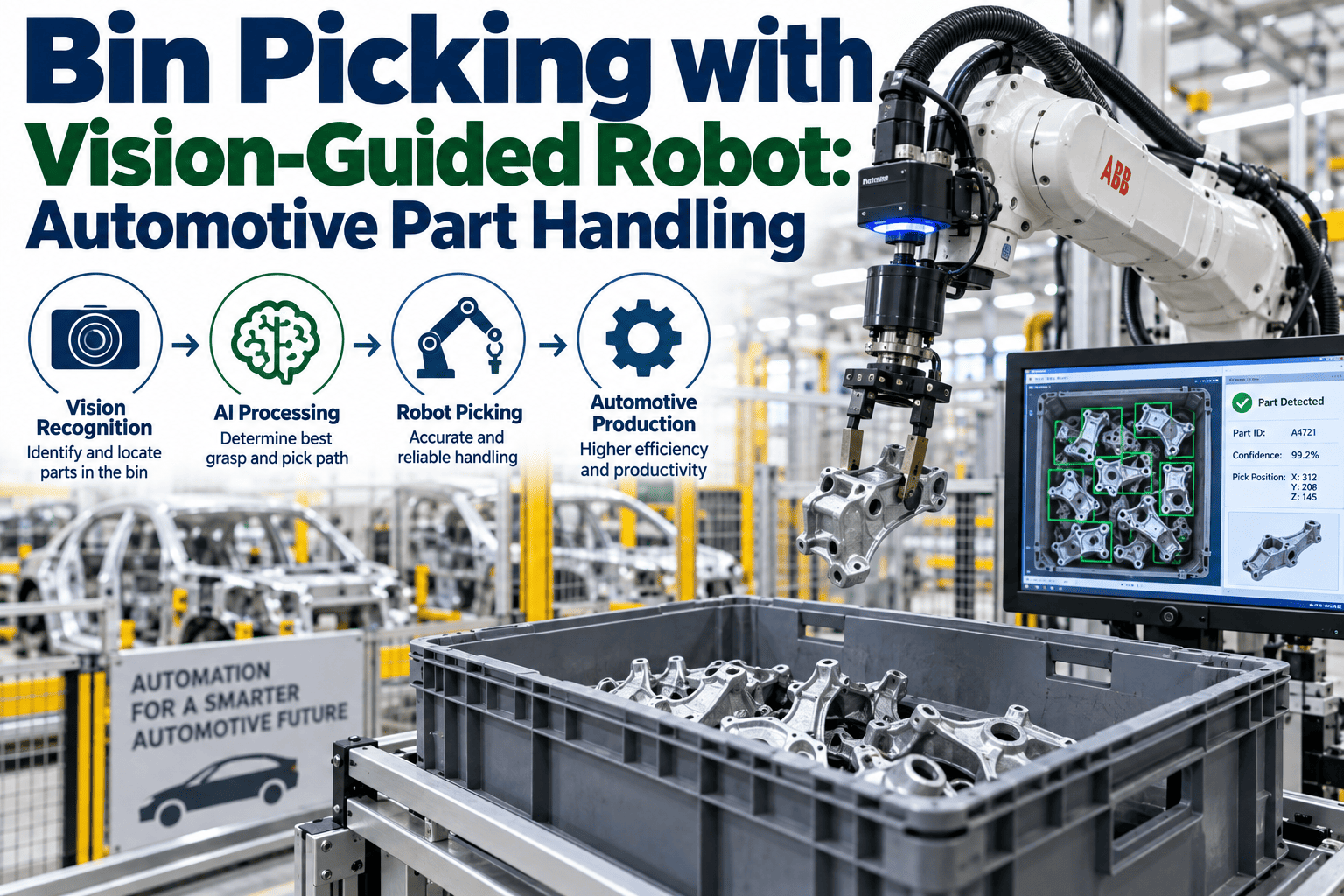
Bin-picking and part transfer adapt to natural variance in part position, orientation and stacking without requiring rigid, pre-programmed fixture positions.
Inspection-Guided Motion
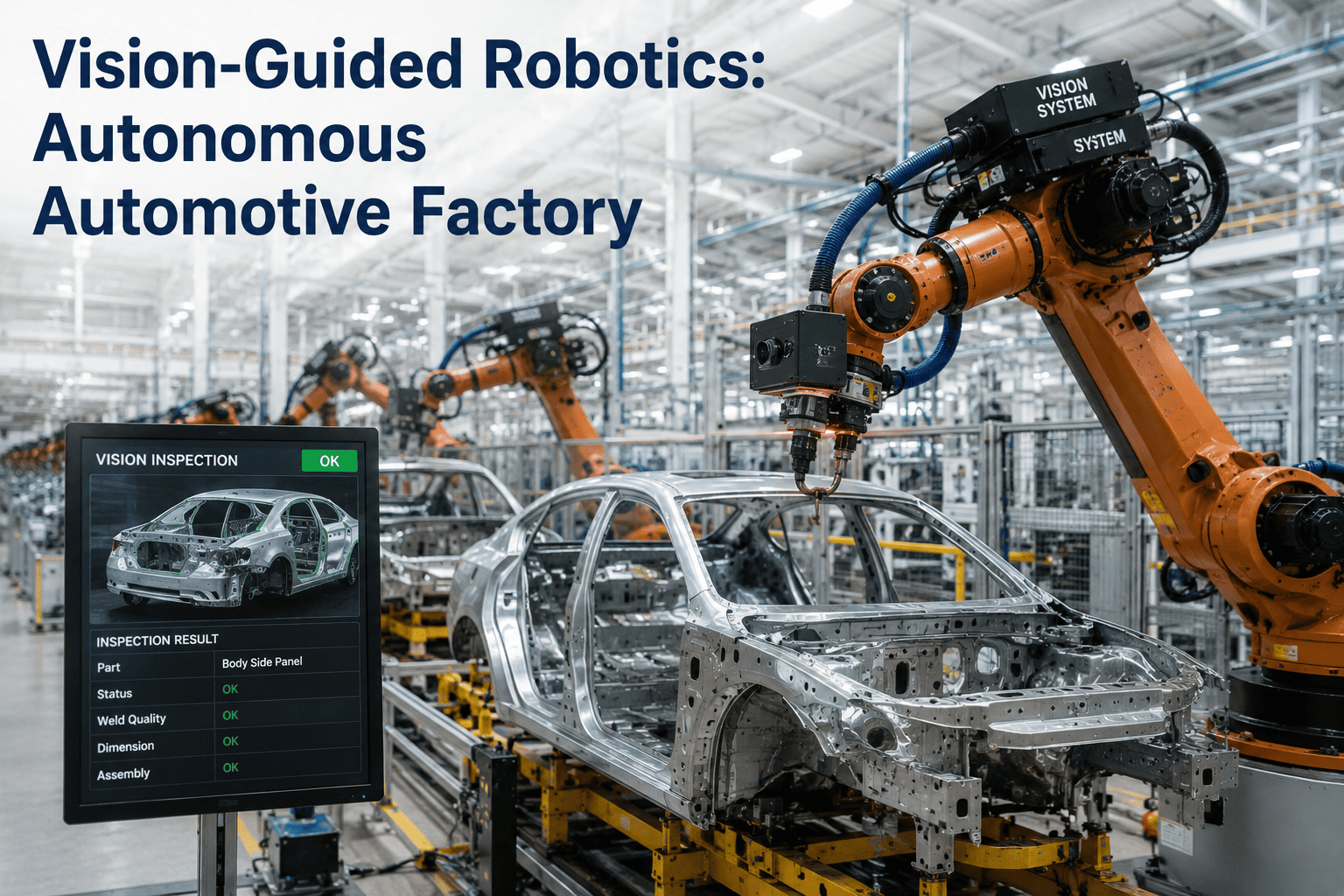
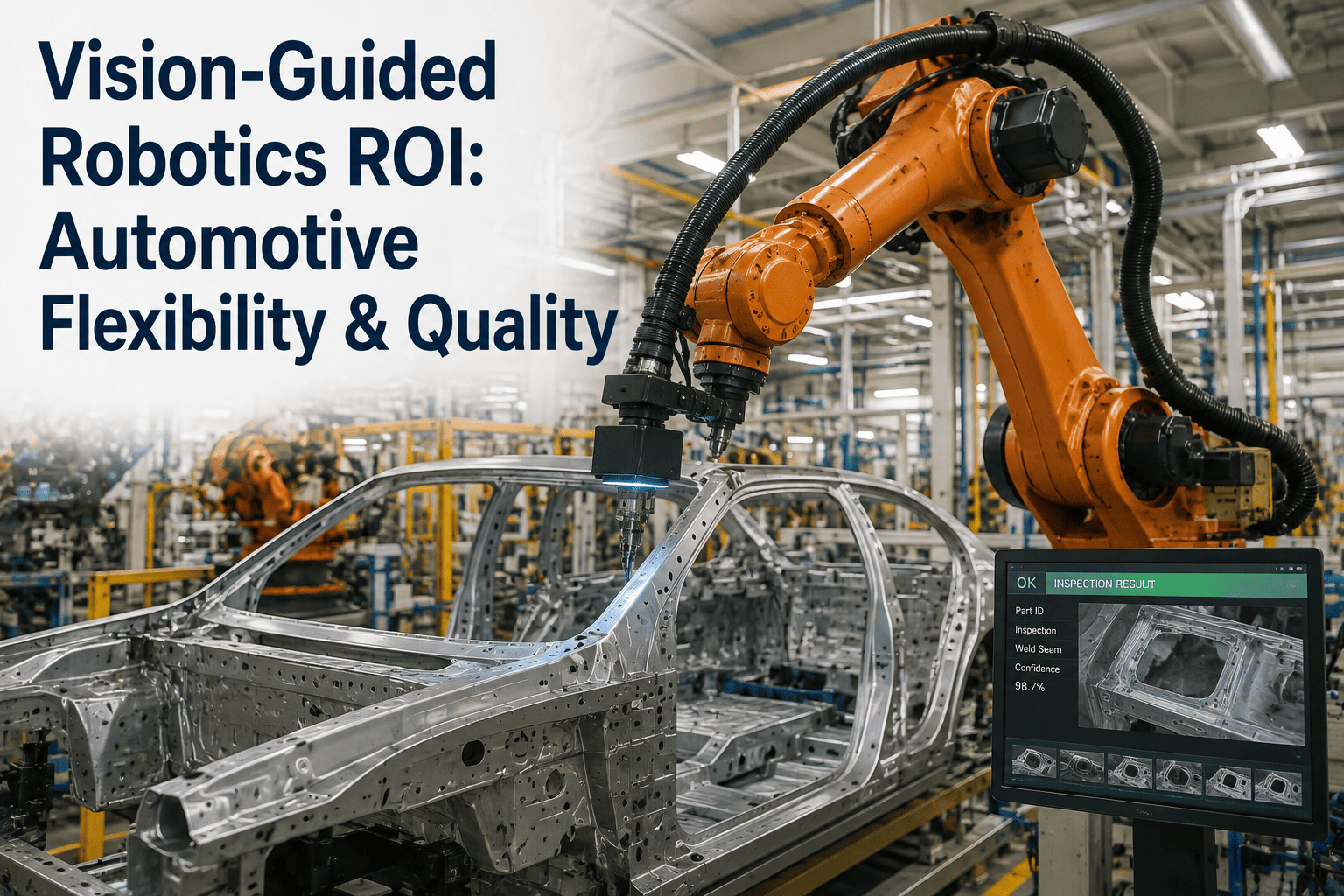
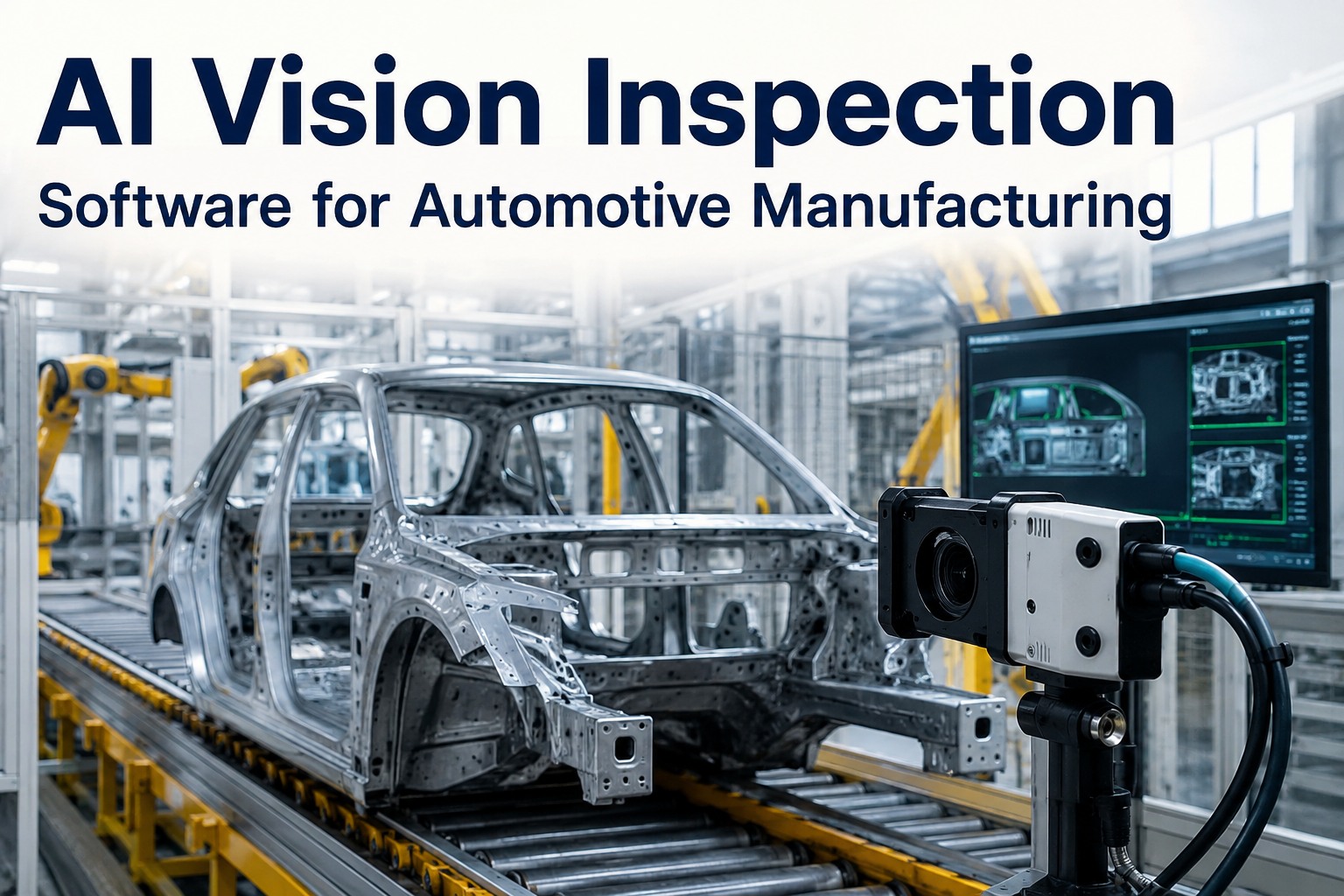
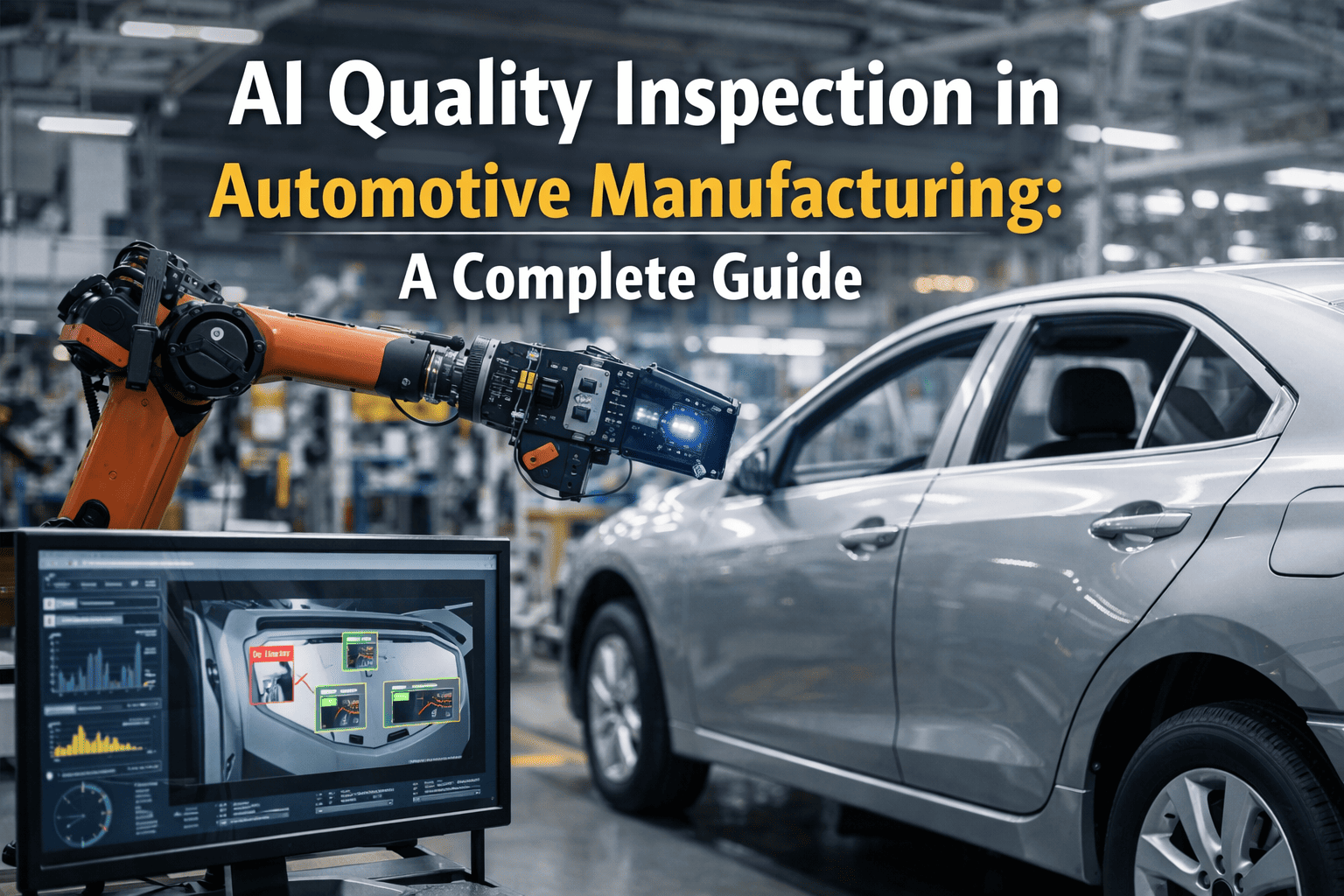
Robots carrying inspection cameras adjust their scan path in real time based on the actual part geometry present, rather than a fixed sweep that assumes perfect positioning.
How Vision Guidance Changes the Pick-to-Place Sequence
Adding vision confirmation to a robotic sequence inserts one critical decision point before every move that used to run open-loop. Book a demo to see the guided sequence running on a sample part.
Part Detected
Vision system locates the part in the work area
→
Position Confirmed
Exact coordinates and orientation calculated against expected geometry
→
Path Adjusted
Robot trajectory updates in real time to match actual part position
→
Move Executed
Pick, place or assembly action completes against confirmed position
→
Result Verified
Vision confirms successful placement before the next cycle begins
Fixed-Path Robotics vs. Vision-Guided Robotics
| Factor | Fixed-Path Robotics | iFactory Vision-Guided Robotics |
|---|
| Part Position Tolerance | Requires tight fixture tolerance; variance causes drops or misplacement. | Adapts to natural part variance in real time before each move. |
| Fixture Requirements | Rigid, precisely positioned fixtures required for reliable operation. | Reduced fixture precision requirements since vision compensates for variance. |
| Error Handling | Line stops or manual correction needed when a part is out of tolerance. | Path adjusts automatically, avoiding stoppage for normal part variance. |
| Assembly Verification | No confirmation the move succeeded correctly before proceeding. | Vision confirms successful placement before the next cycle begins. |
| Changeover Flexibility | New part variants often require significant fixture and programming rework. | New variants added faster since guidance adapts to geometry, not fixed points. |
See Which of Your Stations Would Benefit Most From Vision Guidance
iFactory reviews your current fixed-path stations to identify where part variance is causing the most drops, stoppages or manual correction.
Deploying Vision-Guided Robotics, Stage by Stage
1
Station Assessment
Current fixed-path stations are reviewed for part variance, drop rates and manual correction frequency to prioritize guidance deployment.
2
Camera and Calibration Setup
Vision hardware is positioned and calibrated against the robot's coordinate system for accurate real-time guidance.
3
Guided Sequence Testing
Pick, place or assembly sequences are validated against real part variance samples before running on live production.
4
Live Production Cutover
The station goes live with vision guidance active, monitored closely for cycle time and success rate during ramp-up.
Results From Vision-Guided Robotics Deployments
Automotive Sub-Assembly Line
Part Drop Rate Cut 83% on a High-Variance Bin-Pick Station
A sub-assembly station using fixed-path bin-picking was experiencing frequent drops and manual correction due to natural stacking variance in incoming parts. After deploying vision-guided picking, the robot adapted its approach path to actual part position and orientation, cutting the drop rate by 83% and removing the need for a dedicated operator monitoring that station.
83%
Reduction in part drop rate
1 role
Dedicated monitoring position removed
5 wks
Time to full guided cutover
What Automation Engineers Say
We used to accept a certain drop rate as the cost of doing bin-picking on real parts. Vision guidance made that assumption obsolete almost overnight.
Automation Engineering Manager
Sub-Assembly Plant, Indiana
Adding a new part variant used to mean weeks of fixture rework. With vision guidance, it's mostly a calibration exercise now.
Robotics Systems Lead
Assembly Plant, Ontario
Frequently Asked Questions
Does vision-guided robotics work with our existing robot brand and controller?
iFactory's vision guidance integrates with the major industrial robot brands and controllers used in automotive production through standard communication interfaces, sending position and orientation data the robot's existing controller can act on without a full reprogram. The specific integration approach is confirmed during the station assessment based on your robot model and controller version.
How much part position variance can the system actually handle before it fails?
Tolerance depends on the specific application and camera setup, but vision guidance is generally designed to handle the natural variance seen in real production bins and fixtures, well beyond what a fixed-path system can tolerate. During setup, guidance is validated against samples representing your actual part variance range, not an idealized best case, so the deployed tolerance reflects real operating conditions.
Does adding vision guidance slow down the robot's cycle time?
Vision confirmation adds a small processing step before each move, but this is typically offset by the reduction in drops, misplacements and manual corrections that previously added far more time to the effective cycle. Guided sequence testing measures actual cycle time impact against your specific station before any live cutover decision is made.
Can vision-guided robotics reduce our fixture and tooling costs?
In many cases yes, since guidance compensates for part position variance that would otherwise require tight, precisely machined fixtures, reducing the tolerance requirements and cost of new fixture tooling for future part variants.
Talk to support about fixture requirements for your specific application.
Which stations should we prioritize for vision guidance first?
Stations with the highest current drop rates, most frequent manual correction, or the most part variant changeovers typically show the fastest and clearest return, which is why the station assessment stage ranks candidate stations by current pain points rather than deploying broadly from the start.
Book a demo to see a prioritized assessment for your line.
Stop Programming Robots for a Perfect World That Doesn't Exist on the Floor
iFactory's vision-guided robotics confirms real part position before every move, adapting assembly, material handling and inspection to actual variance instead of a fixed path.
Real-time position and orientation confirmation
Adapts to natural part variance automatically
Reduced fixture precision requirements
Faster changeover for new part variants