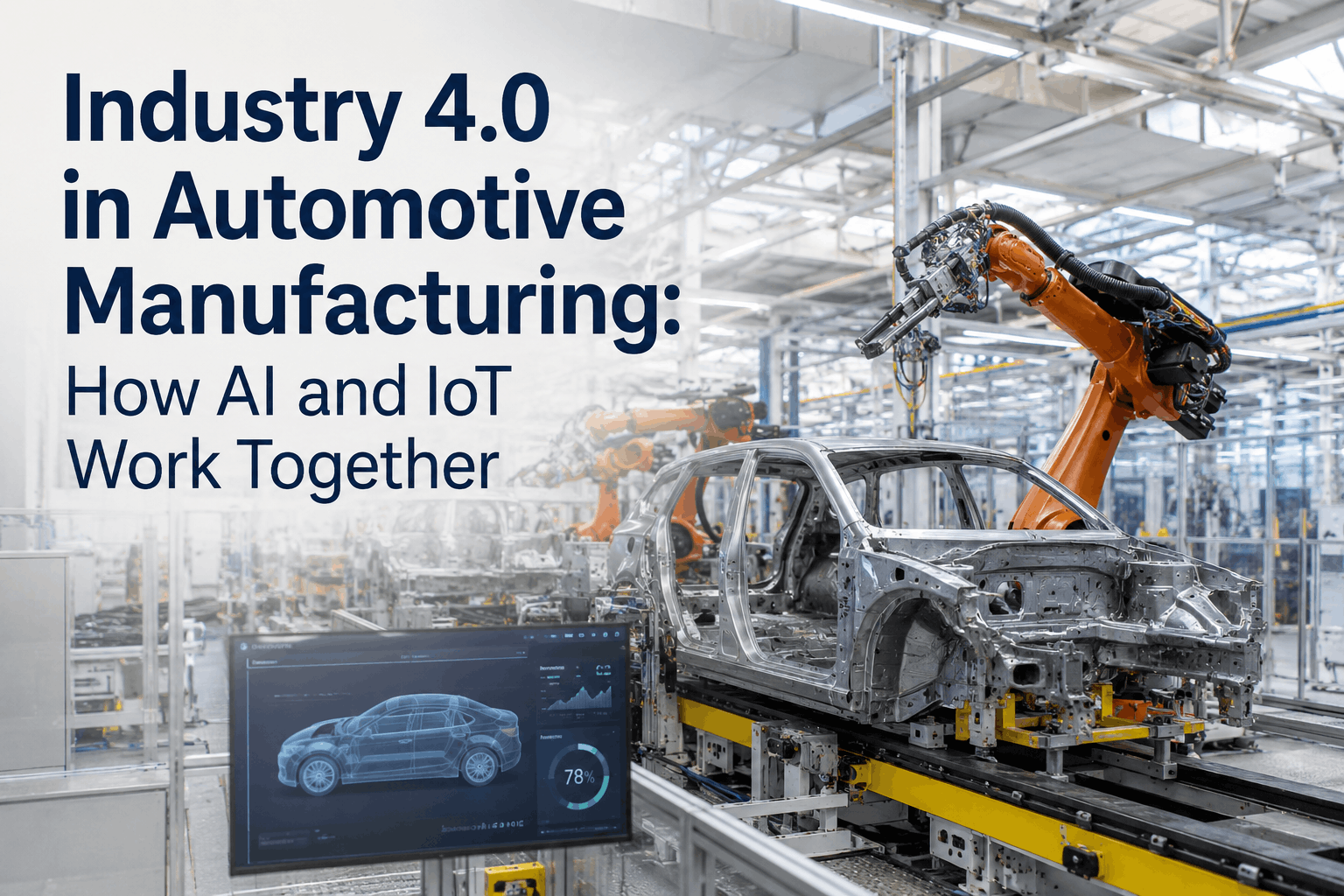
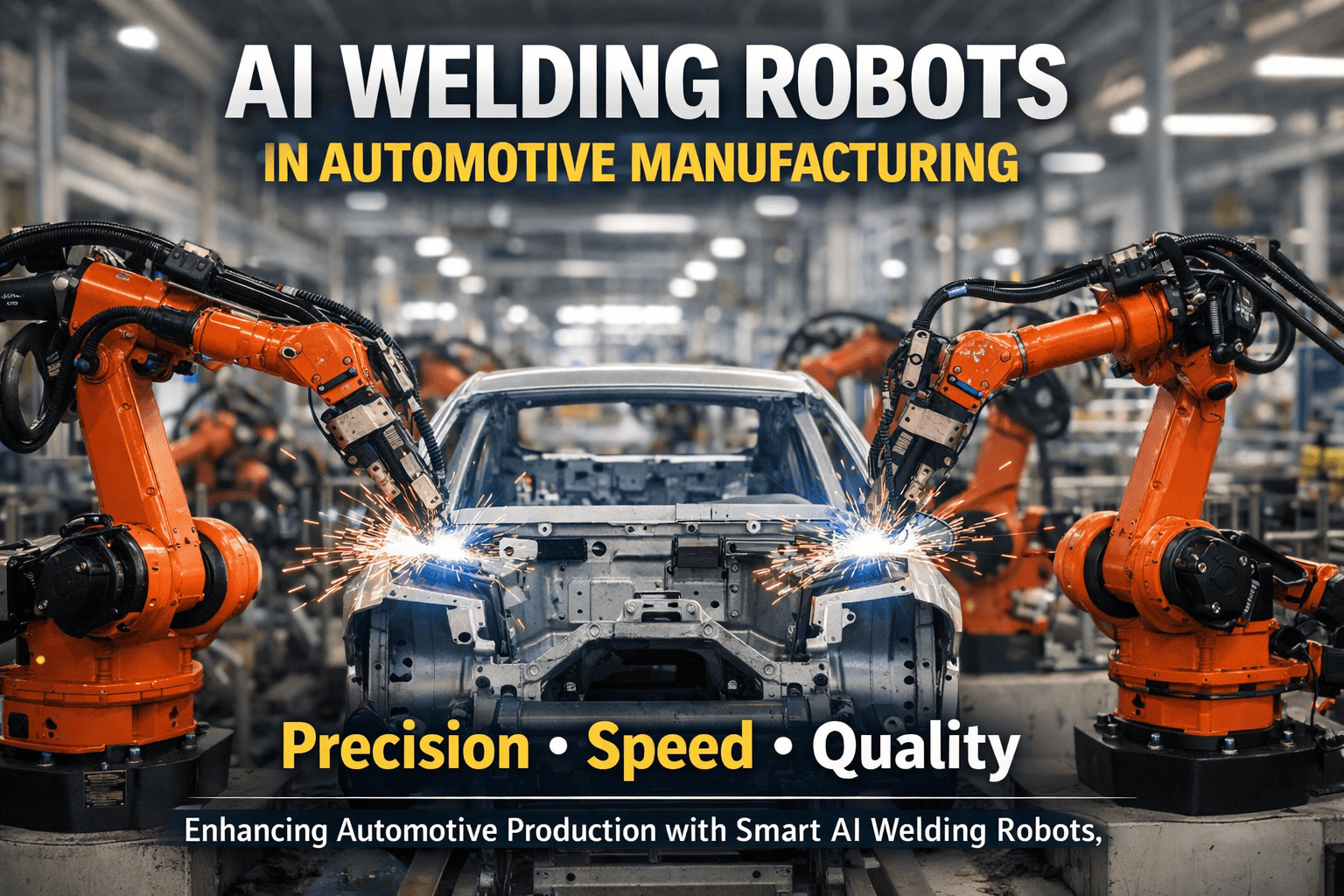
Automotive manufacturing plants running traditional robotic systems lose 18–27% of production efficiency annually to unscheduled robot downtime, teach pendant reprogramming delays, and quality failures from path drift — not from catastrophic breakdowns, but from gradual performance degradation that fixed-program robots cannot self-correct. By the time robotic path deviation triggers quality reject spikes or line stoppages occur, the damage compounds across shifts: scrapped assemblies, rework backlogs, OEE decline, and emergency service calls costing $45K–$120K per incident. iFactory's AI-powered robotic operations platform changes this — detecting torque anomalies, path deviation, gripper wear, and collaborative robot safety drift in real time, auto-adjusting programs before defect generation starts, and integrating directly into ABB, FANUC, KUKA, and Yaskawa robot controllers without cell reprogramming. Book a Demo to see how iFactory deploys AI robot monitoring across your assembly and welding cells within 8 weeks.
How iFactory AI Solves Automotive Robotic Operations Management
Traditional robot monitoring relies on scheduled maintenance intervals, teach pendant reprogramming after quality escapes, and reactive troubleshooting — all of which respond after production loss has already occurred. iFactory replaces this with a continuous AI model trained on automotive assembly and welding robot data that detects the precursors to mechanical and control failure, not the incidents themselves. See a live demo of iFactory detecting simulated servo drift and gripper degradation in a body-in-white welding cell.
How iFactory Is Different from Other AI Robot Monitoring Vendors
Most industrial AI vendors deliver a generic anomaly detection model trained on public datasets and wrapped in a dashboard. iFactory is built differently — from the servo layer up, specifically for automotive assembly environments where robot path accuracy, cycle time consistency, and collaborative safety determine what performance degradation actually means. Talk to our robotics AI specialists and compare your current monitoring approach directly.
| Capability | Generic AI Vendors | iFactory Platform |
|---|---|---|
| Model Training | Generic industrial datasets. No robot-specific fault mode training. High false positive rate on servo drift and path deviation. | Models pre-trained on 9 robot failure modes (servo drift, path deviation, gripper wear, torque loss, calibration shift, teach pendant error, cobot safety drift, cycle time variance, vision misalignment). Robot-specific fine-tuning in weeks, not months. |
| Sensor Coverage | Single-parameter servo monitoring. No multi-source signal fusion across robot networks. | Fuses servo position, torque feedback, gripper force, cycle time logs, vision alignment, and collaborative safety zone data into unified health scores per robot. |
| Alert Quality | Binary threshold alarms. High false positive volumes that production teams learn to ignore within weeks. | Graded alert tiers with confidence scores. False positive rate under 6%. Alert fatigue eliminated across all shifts. |
| System Integration | Requires middleware, API development, or full teach pendant reprogramming. Integration timelines of 6–12 months. | Native OPC-UA, MQTT, and REST connectors for all major robot controller vendors. Integration complete in under 2 weeks without cell downtime. |
| Compliance Output | Raw data exports only. No structured robot documentation for IATF 16949 or ISO 10218 submissions. | Auto-generated integrity reports formatted for IATF 16949, ISO 10218, ISO TS 15066 (collaborative robots), and regional automotive safety directives. |
| Deployment Timeline | 6–18 months to full production deployment. High professional services cost. No fixed go-live date. | 8-week fixed deployment program. Pilot results in week 4. Full production monitoring by week 8 with zero cell reprogramming. |
iFactory AI Implementation Roadmap
iFactory follows a fixed 6-stage deployment methodology designed specifically for automotive robotic operations monitoring — delivering pilot results in week 4 and full production monitoring by week 8. No open-ended implementations. No scope creep.
8-Week Deployment and ROI Plan
Every iFactory engagement follows a structured 8-week program with defined deliverables per week — and measurable ROI indicators beginning from week 4 of deployment. Request the full 8-week deployment scope document tailored to your robotic cell portfolio.
Use Cases and KPI Results from Live Deployments
These outcomes are drawn from iFactory deployments at operating automotive assembly plants across three robotic operation categories. Each use case reflects 6-month post-deployment performance data. Request the full case study report for the robot type most relevant to your plant.
What Automotive Production Teams Say About iFactory
The following testimonials are from plant production directors and robotic operations specialists at facilities currently running iFactory's AI robot performance monitoring platform.
Frequently Asked Questions
Regional Automotive Manufacturing Challenges and How iFactory Solves Them
Automotive manufacturing plants face region-specific challenges driven by local compliance requirements, supply chain complexity, and workforce availability. iFactory's AI robot monitoring platform is configured to address these regional variations with region-specific compliance reporting and integration support.
| Region | Key Challenges | Compliance Requirements | How iFactory Solves |
|---|---|---|---|
| United States | Multi-shift operations with high labor cost. Skilled robotics technician shortages. High scrap cost sensitivity in tier 1 supplier networks. | IATF 16949, OSHA robot safety standards, ISO 10218 compliance for collaborative robots. | iFactory's AI robot monitoring reduces technician dependency by auto-detecting faults before human intervention is required. Graded alerts prioritize high-impact failures first. Full IATF 16949 and OSHA compliance reporting built in. |
| United Kingdom | Legacy robot fleets with limited sensor coverage. High integration cost for multi-vendor controller environments. | IATF 16949, UK HSE robot safety requirements, ISO 10218 collaborative robot directives. | iFactory integrates with legacy ABB, KUKA, and FANUC controllers via OPC-UA without teach pendant reprogramming. Sensor gap analysis completed during Week 1 audit. UK HSE compliance reporting enabled. |
| United Arab Emirates | High ambient temperature impact on robot servo accuracy. Limited local robotics service availability. Rapid production scaling for EV adoption. | IATF 16949, UAE ESMA safety standards, ISO 10218 for collaborative robots in extreme environments. | iFactory's temperature-compensated AI models account for ambient heat impact on servo performance. Remote monitoring reduces local service dependency. Scalable deployment supports rapid EV production expansion. UAE ESMA compliance reporting included. |
| Canada | Cold climate impact on robot hydraulic and pneumatic actuators. Distributed plant networks with limited centralized monitoring. | IATF 16949, CSA Z434 robot safety, ISO 10218 for collaborative robots. | iFactory's cold-climate actuator models detect low-temperature degradation before failure. Cloud-based monitoring supports distributed plant networks. CSA Z434 compliance reporting built in. |
| Europe | Strict collaborative robot safety enforcement. Multi-country compliance complexity. High energy cost sensitivity driving OEE optimization. | IATF 16949, EU Machinery Directive 2006/42/EC, ISO TS 15066 collaborative robot safety, CE marking requirements. | iFactory's collaborative robot safety zone monitoring reduces compliance risk. Multi-country compliance reporting supports EU Machinery Directive and CE marking. Energy-aware OEE optimization reduces cost per part. |
iFactory vs. Competitor Robot Monitoring Platforms
The automotive manufacturing robot monitoring market includes both legacy CMMS platforms and newer AI-driven solutions. iFactory differentiates through automotive-specific AI training, fixed deployment timelines, and robot controller integration depth. Request a side-by-side comparison report tailored to your current monitoring platform.
| Feature | QAD Redzone | Evocon | Mingo | L2L | MaintainX | Limble | IBM Maximo | SAP EAM | Oracle EAM | iFactory |
|---|---|---|---|---|---|---|---|---|---|---|
| AI Predictive Maintenance | Limited. Rule-based thresholds only. | None. Manual OEE tracking. | None. Threshold alarms only. | Basic. No robot-specific models. | None. Reactive work orders. | None. Calendar-based PM. | Generic AI. Not robot-trained. | Generic AI. Not robot-trained. | Generic AI. Not robot-trained. | Robot-specific AI trained on 9 failure modes. False positive rate under 6%. |
| Robot Controller Integration | Limited. Manual data entry. | None. Operator input only. | Basic. OPC-UA only. | Basic. PLC only. | None. Smartphone app. | None. QR code scans. | Middleware required. 6+ month integration. | Middleware required. 6+ month integration. | Middleware required. 6+ month integration. | Native OPC-UA, MQTT, REST for ABB, FANUC, KUKA, Yaskawa. Integration in under 2 weeks. |
| Automotive-Specific Features | None. Generic manufacturing. | None. Generic OEE. | None. Generic downtime. | None. Generic andon. | None. Generic CMMS. | None. Generic CMMS. | None. Cross-industry EAM. | None. Cross-industry EAM. | None. Cross-industry EAM. | IATF 16949 reporting. Weld quality correlation. EV battery assembly support. Collaborative robot safety monitoring. |
| Deployment Timeline | 12–18 weeks. Custom config. | 6–10 weeks. Manual setup. | 8–14 weeks. Custom dashboards. | 10–16 weeks. Integration delays. | 2–4 weeks. Limited features. | 2–4 weeks. Limited features. | 24–36 weeks. Professional services. | 24–36 weeks. Professional services. | 24–36 weeks. Professional services. | 8 weeks fixed. Pilot results in week 4. Full production by week 8. |
| False Positive Rate | High. Threshold-based alarms. | Not applicable. No AI. | High. Threshold-based alarms. | High. Threshold-based alarms. | Not applicable. Reactive only. | Not applicable. Reactive only. | 15–25%. Generic AI models. | 15–25%. Generic AI models. | 15–25%. Generic AI models. | Under 6%. Robot-specific AI with graded confidence scoring. |
| Compliance Reporting | Manual. No templates. | Manual. No templates. | Manual. No templates. | Manual. No templates. | Manual. No templates. | Manual. No templates. | Generic templates. Manual config. | Generic templates. Manual config. | Generic templates. Manual config. | Auto-generated reports for IATF 16949, ISO 10218, ISO TS 15066. No manual documentation. |
| Ease of Use | Moderate. Training required. | Simple. Limited functionality. | Moderate. Dashboard config. | Moderate. Andon setup. | Simple. Mobile-first. | Simple. Mobile-first. | Complex. ERP-style interface. | Complex. SAP ecosystem. | Complex. Oracle ecosystem. | Simple. Production-focused UI. Alert prioritization built in. |
| Pricing Model | Per user. High seat cost. | Per device. Limited scalability. | Per line. Volume pricing. | Per device. Volume pricing. | Per user. Low feature depth. | Per user. Low feature depth. | Enterprise license. High consulting cost. | Enterprise license. High consulting cost. | Enterprise license. High consulting cost. | Per robot. Fixed deployment fee. No hidden consulting costs. |