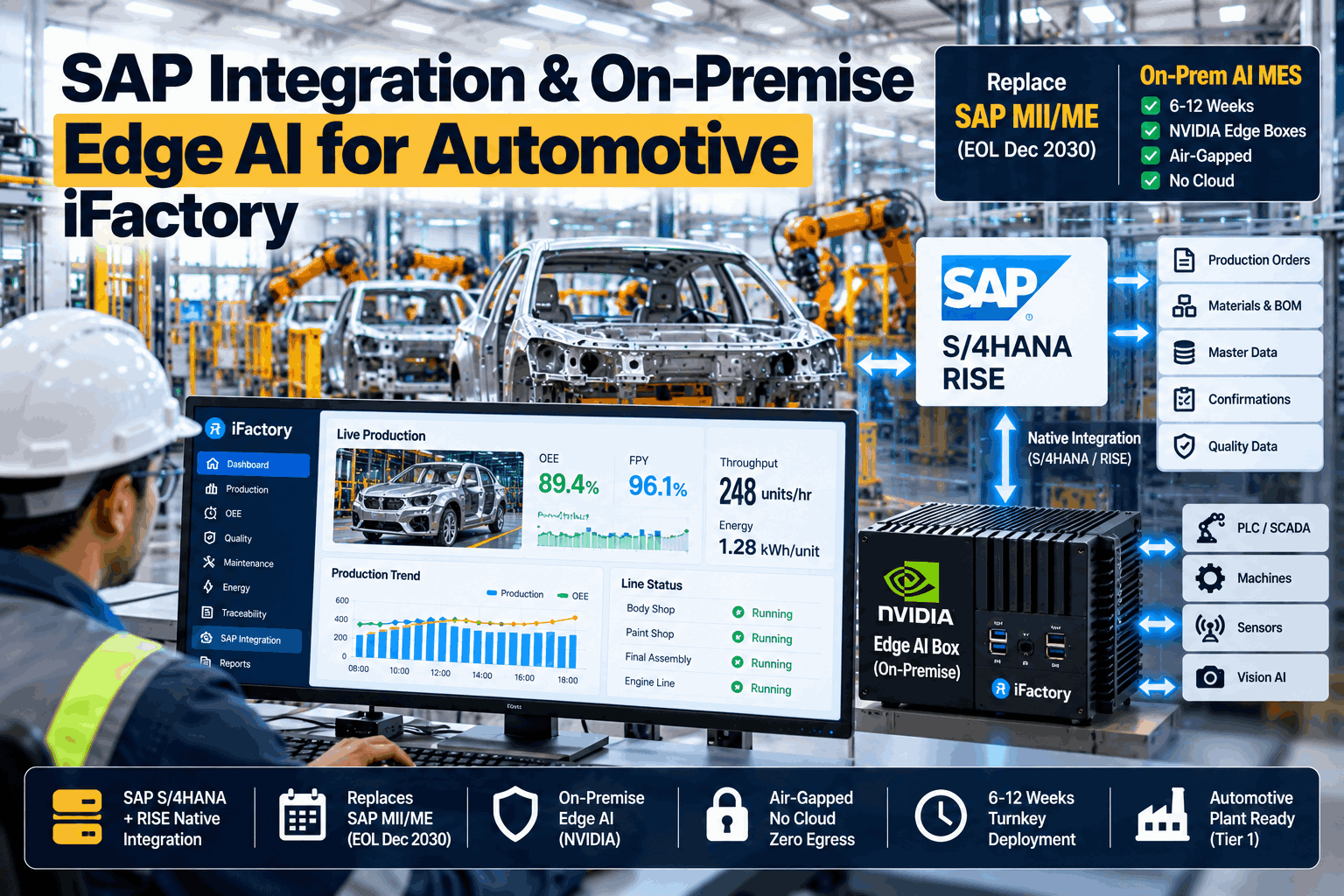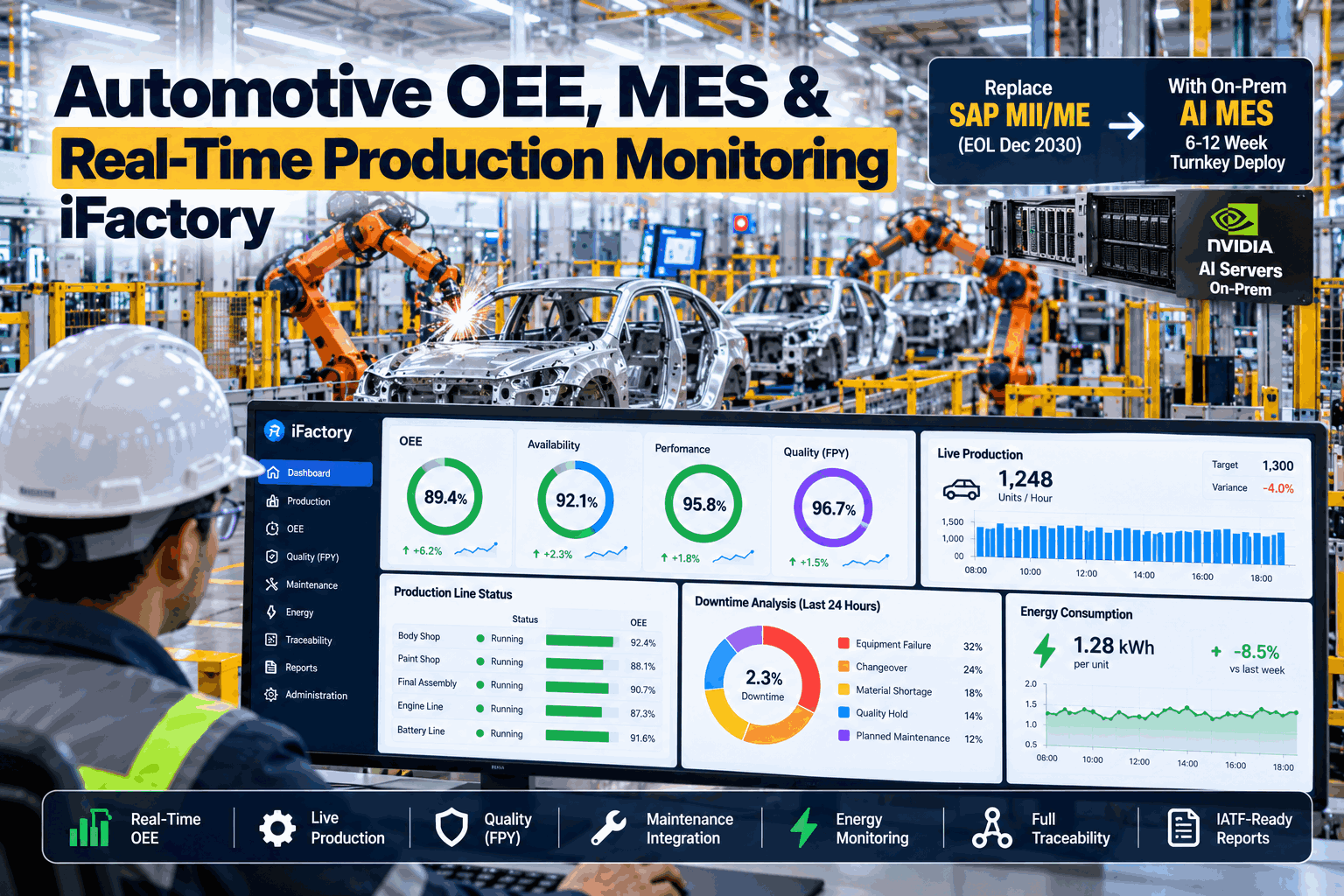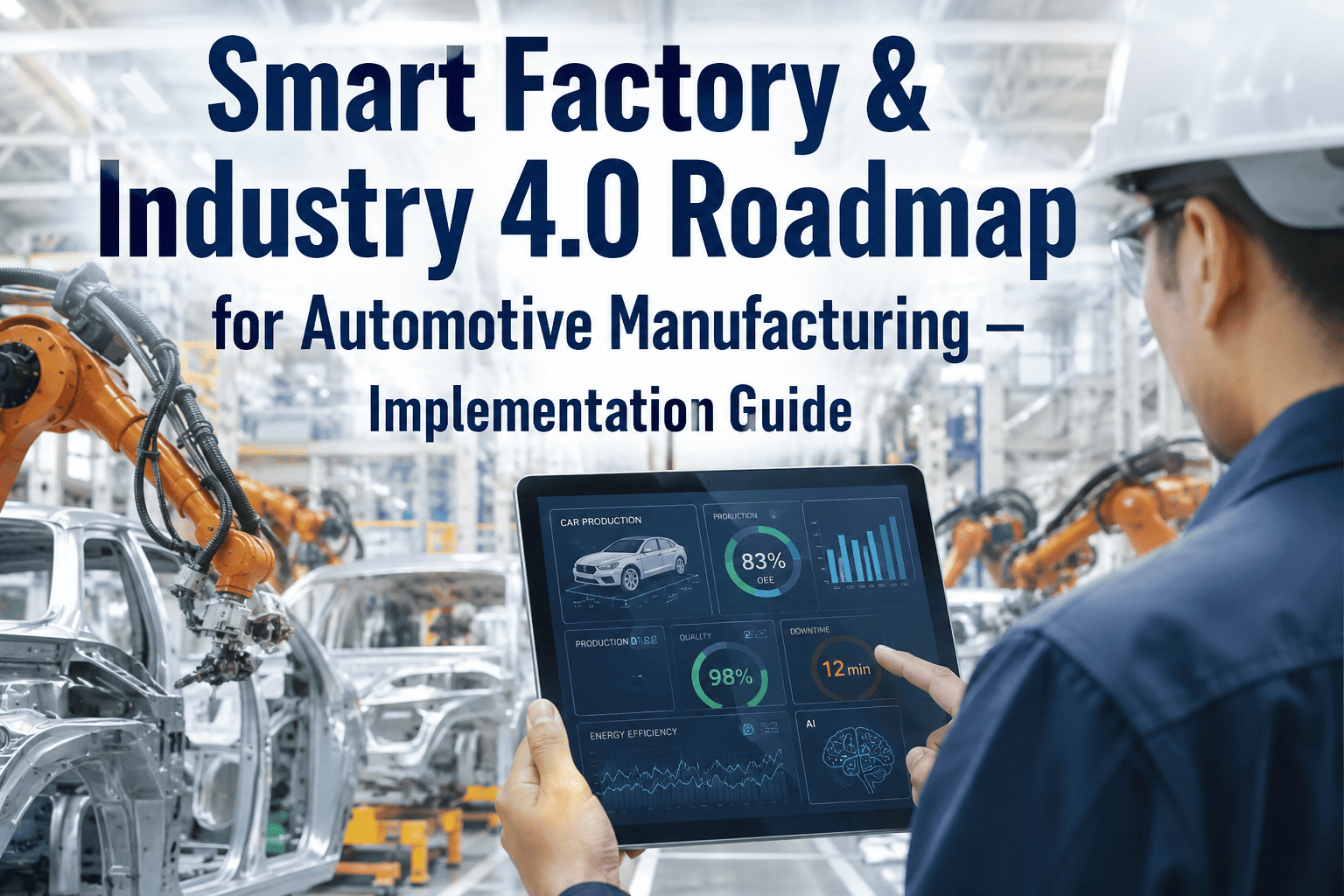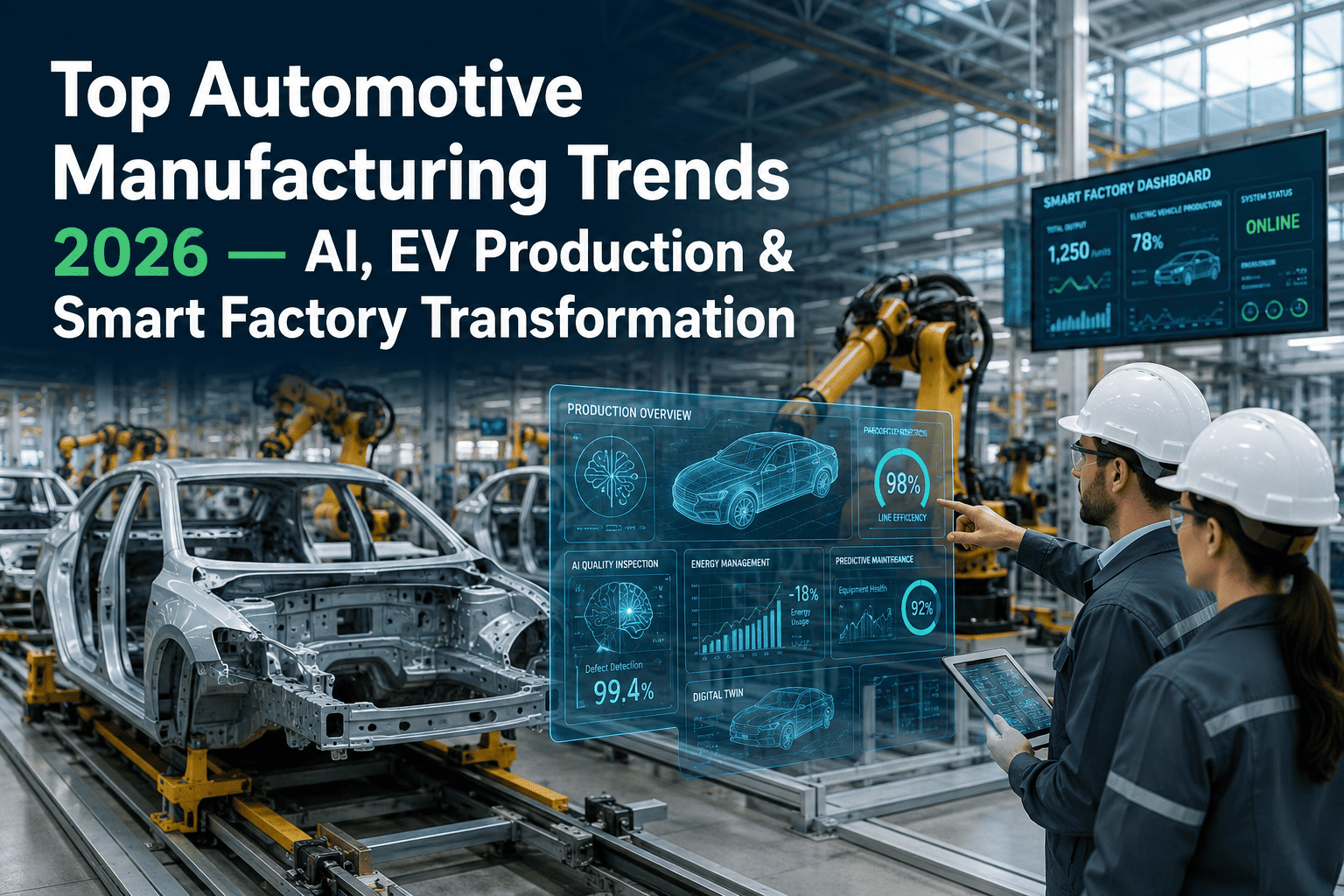
The automotive factory floor has crossed a threshold. Machines now talk to each other. AI models predict failures before they happen. Sensors on every press, weld gun, and conveyor stream live data into systems that make decisions in milliseconds. This is Industry 4.0 — and in automotive manufacturing, it is no longer a future vision. It is the competitive baseline. Book a demo to see how iFactory brings Industry 4.0 to your plant.
What Is Industry 4.0 — And Why Automotive Leads Adoption
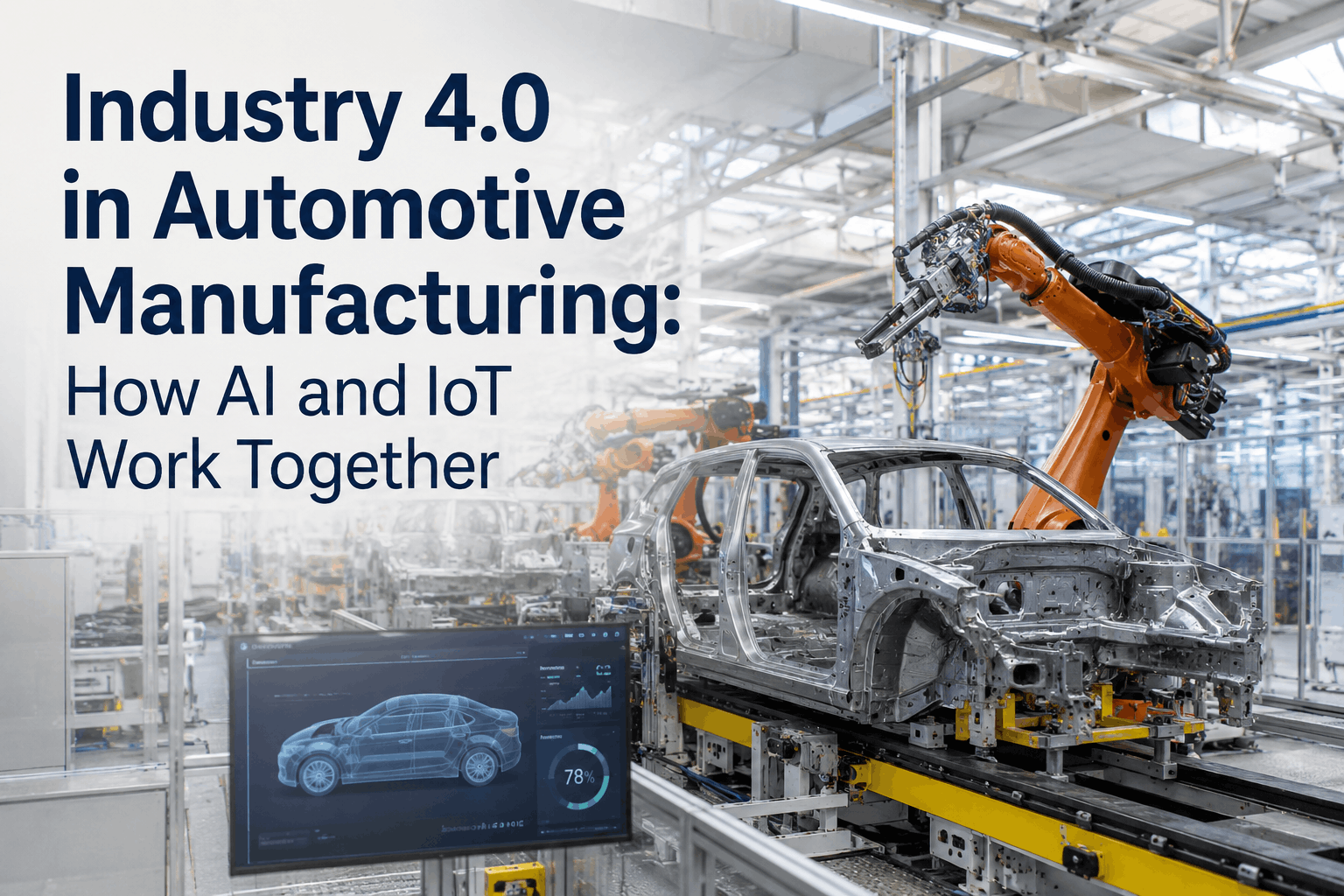
Industry 4.0 is the fourth industrial revolution: the integration of digital technologies — IoT sensors, AI, cloud computing, robotics, and big data — into physical manufacturing processes. Automotive manufacturing is the world's most advanced adopter of Industry 4.0 because no other industry combines such high production volumes, such complex multi-supplier assembly, and such tight quality tolerances under a single roof.
A modern automotive assembly plant produces one vehicle every 60–90 seconds. Each vehicle contains 30,000+ parts from 200+ suppliers assembled across 400+ workstations. At that scale, even a 1% efficiency improvement is worth millions. Industry 4.0 technologies deliver 8–15% efficiency gains in well-implemented plants — making them not optional investments but survival requirements. iFactory's platform is built specifically for automotive-scale Industry 4.0 deployment.
The Industry 4.0 Technology Stack: How the Layers Work Together
Industry 4.0 is not a single technology — it is a stack of complementary layers, each building on the one below. Understanding how they interlock is essential for manufacturers evaluating where to invest and in what sequence.
IoT in Automotive Manufacturing: What Gets Connected and Why
Industrial IoT (IIoT) in automotive manufacturing means placing sensors at every point where physical state changes — and streaming that data upward through the stack in real time. The payoff is complete production visibility: not a snapshot every shift, but a live model of exactly what every machine and workstation is doing at every second. Contact iFactory to assess your plant's IoT readiness.
How AI Turns IoT Data Into Production Intelligence
Raw IoT data is not intelligence — it is signal. A single automotive assembly plant generates 2–5 terabytes of sensor data per day. Without AI, this data sits in historians, queried retrospectively during incident investigations. With AI, the same data stream becomes a continuous prediction engine that surfaces problems before they become stoppages.
Five Industry 4.0 Use Cases Delivering ROI in Automotive Plants Today
Resistance spot welding robots are monitored via current draw and electrode force sensors at 500 Hz. AI models detect weld gun cap degradation patterns 6–8 hours before weld quality drops below spec. Maintenance replaces caps during scheduled breaks — not during production stoppages. A single Tier-1 body shop recovered $2.1M annually in previously lost production time.
High-resolution cameras mounted at paint booth exit capture 360-degree surface images of every vehicle body. AI vision models trained on 50,000+ defect examples classify runs, sags, contamination, and orange peel in under 2 seconds per vehicle. Rework decisions are made before the vehicle exits the paint zone — eliminating end-of-line defect escapes that previously reached customers.
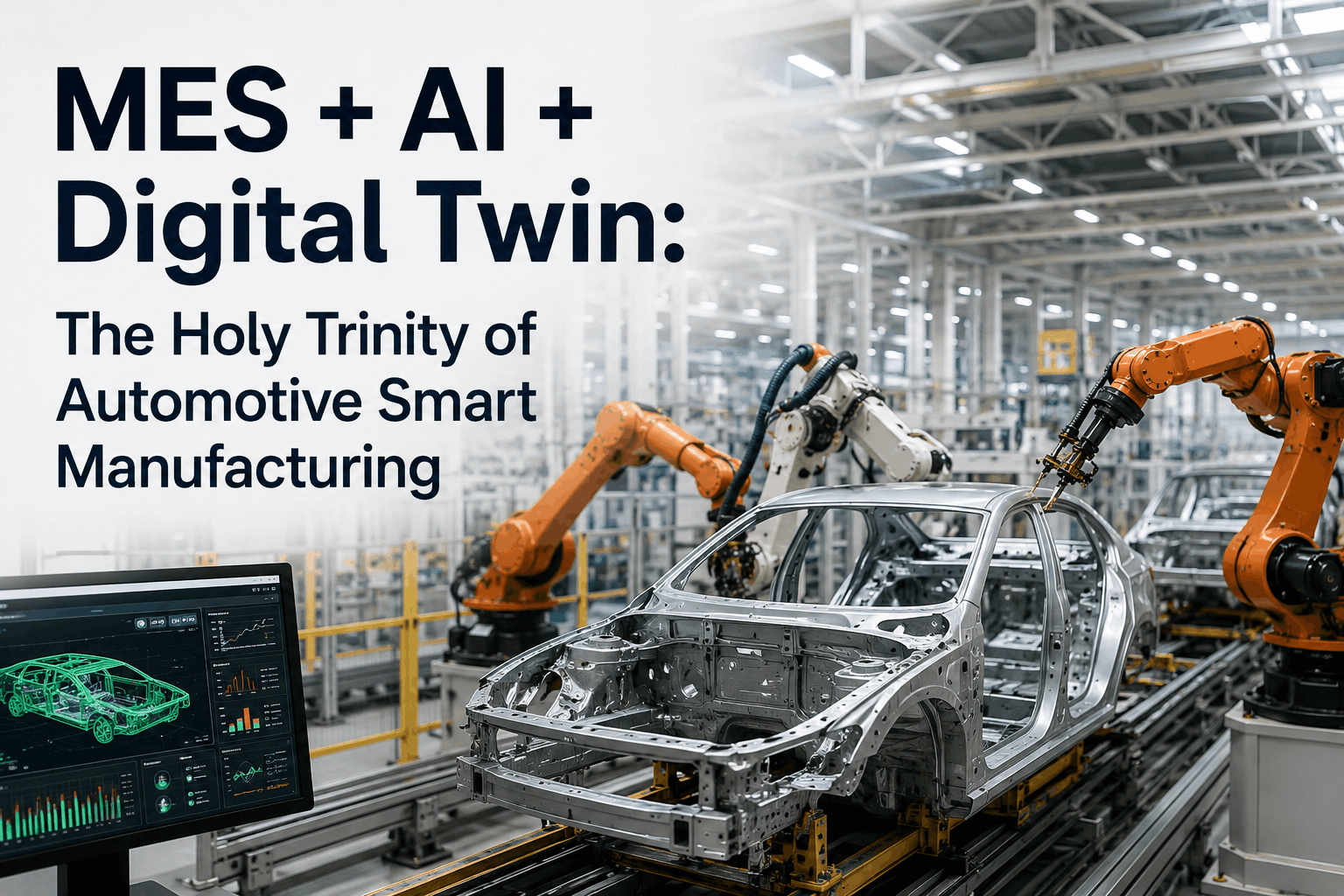
A plant running 14 vehicle variants on a single mixed-model line used a digital twin fed by live IoT data to simulate scheduling scenarios overnight. The AI optimizer identified that resequencing 3 variant types reduced changeover-driven buffer overflows by 31%. The production schedule was updated in MES each morning — capturing 7% additional throughput from the same physical assets.
A final assembly plant replaced fixed conveyor loops with a 47-unit AGV fleet running on a private 5G network. AI fleet management software routes vehicles dynamically based on real-time production sequencing from the MES. When a station signals readiness, the nearest AGV with the correct part is dispatched within 800ms. Material starvation events dropped from 14 per shift to under 2.
Smart meters on 340 machines across a stamping plant stream power consumption data to an AI energy management system. The AI identifies which machines are drawing peak-rate power simultaneously and reschedules non-critical press runs to off-peak windows automatically. Combined with compressor and HVAC optimization, the plant reduced energy cost per vehicle by 18% — equivalent to $31 per car produced.
The Role of Edge Computing and 5G in Automotive Industry 4.0
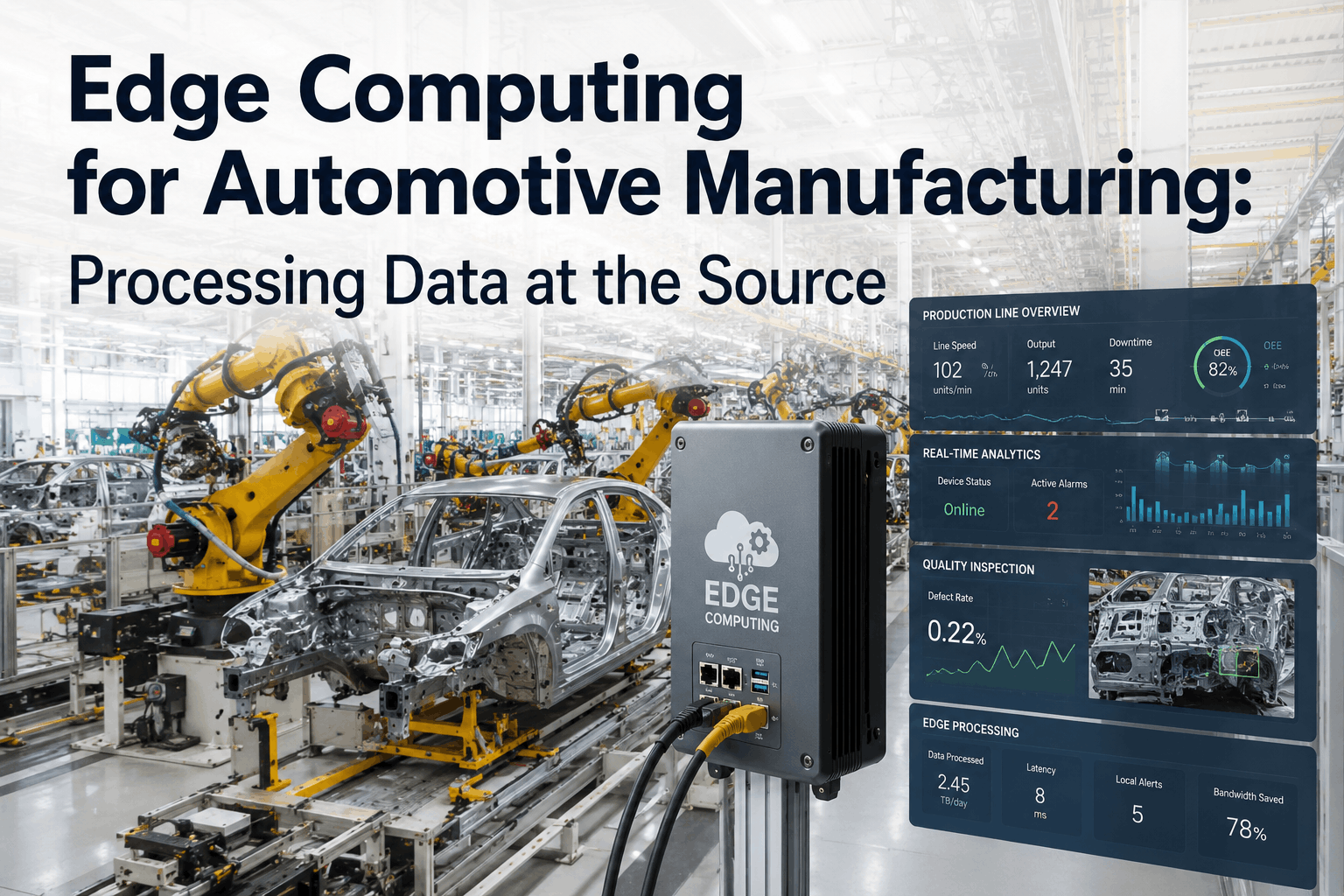
Cloud-only IoT architectures create a fatal flaw for automotive manufacturing: latency. When a welding robot needs quality feedback in 50 milliseconds to catch a bad joint before the next weld, cloud round-trip times of 80–200ms are too slow. Edge computing solves this by processing data locally — at the machine, or in a rack on the plant floor — and acting in microseconds.
5G private networks amplify edge computing by giving AGVs, cobots, and mobile devices wireless connectivity with sub-10ms latency and 99.999% reliability — matching industrial Ethernet performance without cables. Schedule a consultation to evaluate edge and 5G readiness for your plant.
Industry 4.0 Implementation: A Phased Roadmap
FAQ: Industry 4.0, AI & IoT in Automotive Manufacturing
Ready to Build Your Industry 4.0 Roadmap?
iFactory helps automotive manufacturers connect IoT data, deploy AI models, and deliver measurable production improvements — starting with your highest-value use cases and expanding at your pace.