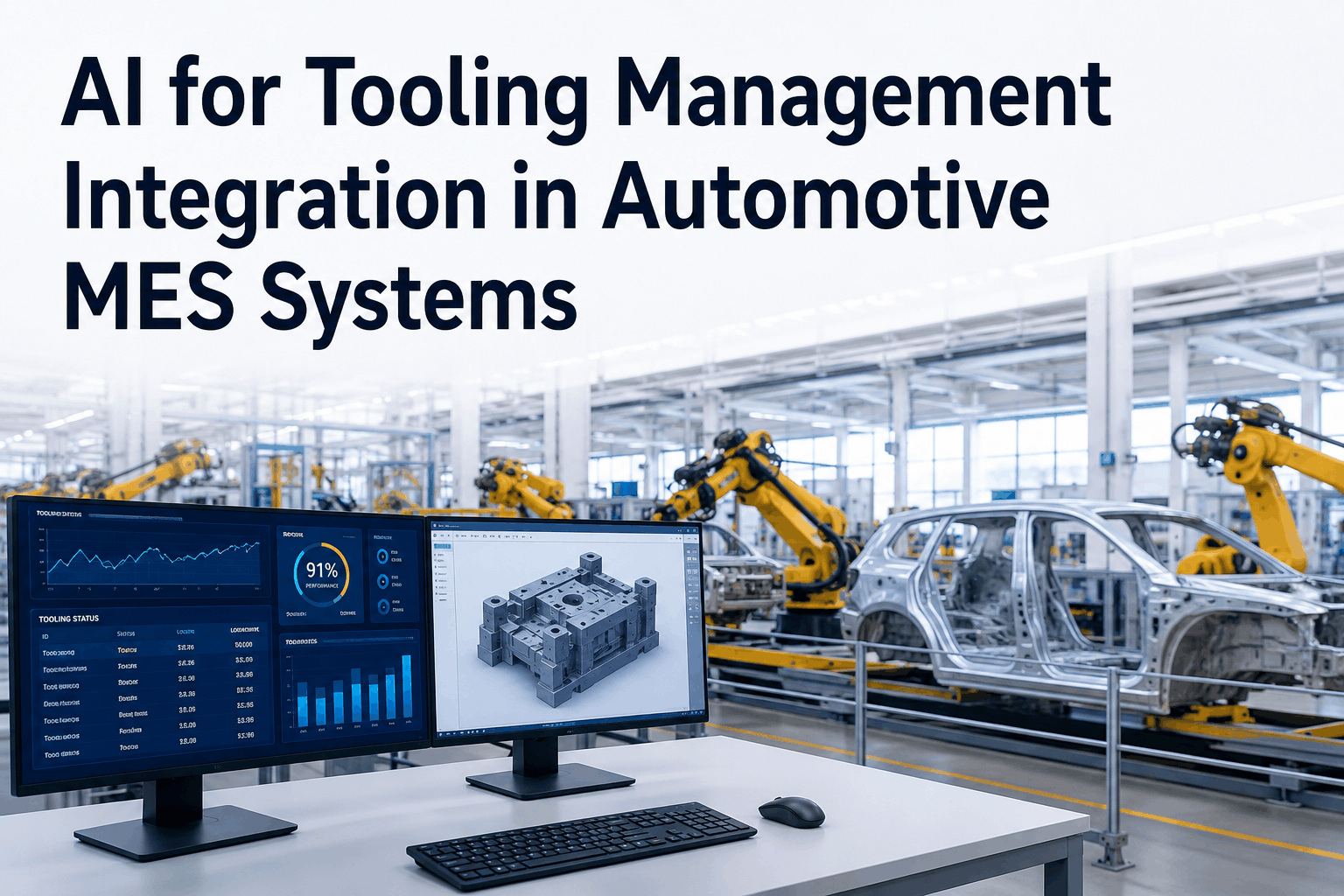
In automotive manufacturing, tooling is the silent production variable that determines everything. A worn stamping die produces out-of-tolerance body panels. An end-of-life cutting insert triggers a machining center fault. A mismatch between the loaded tool and the MES work order causes a quality escape that only surfaces at final inspection. Traditional tooling management — spreadsheets, fixed replacement intervals, operator observation — was designed for a world where tool failures were unpredictable and the cost of over-replacing was considered acceptable. That calculus has changed. With automotive downtime now costing up to $2.3 million per hour (Siemens True Cost of Downtime, 2024), and tooling failures among the leading causes of unplanned line stoppages, AI-powered tooling management integrated with MES is becoming a production necessity, not a premium option. Book a demo to see how iFactory integrates AI tooling intelligence into your automotive MES.
Why Traditional Tooling Management Fails the Modern Automotive Plant
Tooling management in most automotive plants still operates on one of two models — both fundamentally inadequate for the demands of modern high-mix, high-volume production.
The root problem with both traditional approaches is the same: they treat tooling in isolation. They do not connect tool condition to the MES work order being executed, the material batch being processed, the cutting parameters running at that moment, or the downstream quality gate that will validate the output. Talk to an iFactory expert about tooling integration for your plant.
The Five Critical Tooling Failure Modes AI Must Address
How AI Tooling Management Integrates with Automotive MES
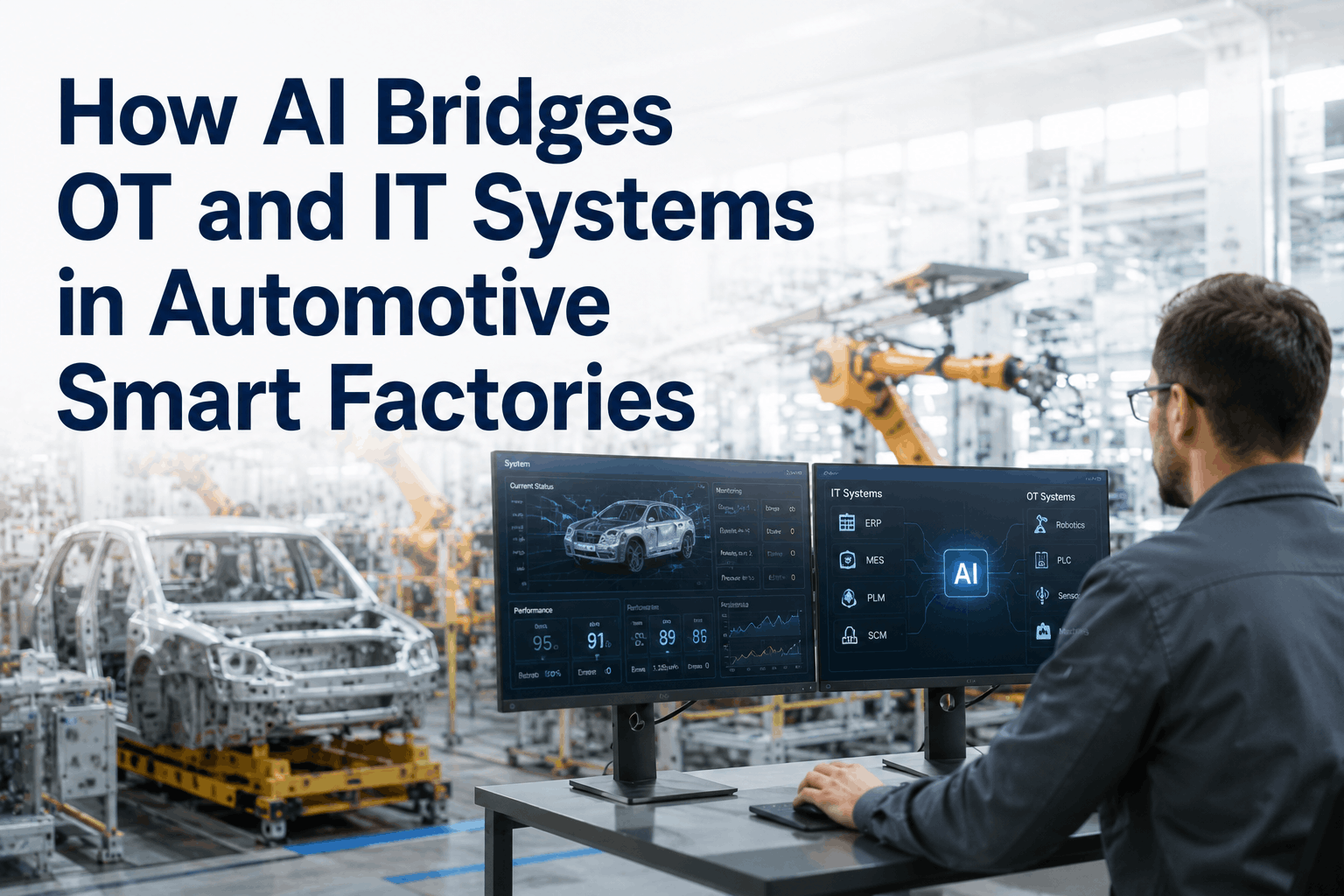
Effective AI tooling management is not a standalone application — it is a data layer that connects machine sensors, tool crib systems, and presetter data to the MES production order in real time. The architecture flows in both directions. Book a demo to see iFactory's MES tooling integration in action.
KPI Impact: AI Tooling Management vs. Traditional Approaches
Real-World Use Cases
A Tier 1 powertrain manufacturer running 24/7 on a cylinder head machining line was experiencing 3–4 unplanned stoppages per week due to insert failures on fine-boring operations. Fixed 500-cycle replacement intervals were set conservatively — but material hardness variation between cast iron batches meant some inserts failed at 380 cycles while others were replaced with 150 cycles of life remaining.
AI remaining useful life prediction was integrated with the MES production order stream. The model ingested spindle load, feed rate, and material batch data to generate a real-time remaining life estimate per insert per operation. Replacements were now triggered by actual condition, not calendar.
An automotive body stamping plant was managing 120 active die sets across 8 press lines. Die wear correlation to part quality was performed manually by tool engineers reviewing CMM data at end-of-shift — meaning quality drift from worn dies was discovered 4–8 hours after it began. AI was connected to both press force signatures and CMM inspection results, learning the relationship between force curve deviation and dimensional drift on each part family.
The model flagged quality risk events 2–3 press cycles before CMM data confirmed deviation — giving maintenance personnel time to schedule the die swap at the next planned break rather than as an emergency stoppage.
FAQ: AI Tooling Management in Automotive MES
iFactory's AI tooling management integrates with SAP Digital Manufacturing, Siemens Opcenter, Rockwell Plex, Wonderware, and custom MES via standard APIs and OPC UA. The integration is bi-directional: the AI reads active work orders and tool assignments from MES, and writes tool replacement alerts, setup validation results, and lifecycle records back into MES. No MES replacement is required. Talk to our team about your specific MES environment.
Most modern CNC machining centres already expose spindle load, torque, feed override, and axis current data via their native OPC UA or MTConnect interfaces — no additional hardware is required for the basic remaining life prediction model. For higher-fidelity breakage detection, external vibration accelerometers or acoustic emission sensors can be added at low cost. iFactory's edge AI deployment option handles sensor connectivity without requiring CNC controller upgrades.
The AI model is tool-type and grade aware — life prediction models are trained per tool family (insert grade, coating, geometry) and per operation type. When a new tool grade is introduced, the model initially applies conservative predictions based on the closest similar tool in its training set and updates its predictions as actual performance data accumulates over the first production runs. Typically, a new tool grade achieves high-confidence life prediction within 2–3 weeks of production data. Contact support to discuss your specific tooling portfolio.
Yes. iFactory supports both cutting tool management (inserts, drills, taps, end mills) and forming tooling management (stamping dies, progressive dies, forming punches). The underlying AI approach differs — cutting tool models focus on spindle load and vibration signals; stamping die models focus on press force curves, dimensional measurement correlation, and tonnage signatures. Both integrate with MES work orders and write replacement alerts and lifecycle records to the same tool management module. Book a demo to see both tooling types demonstrated.
At automotive production rates, the payback calculation is straightforward. A single prevented unplanned downtime event at an automotive plant — which at $2.3M per hour for a major line means even a 30-minute stoppage costs over $1M — can pay for the first year of a tooling AI deployment by itself. For plants with lower downtime exposure, the combination of tooling cost reduction (25–40% maintenance savings) and scrap elimination from tooling-driven quality escapes typically delivers payback within 6–12 months. Industry benchmarks show 27% of manufacturing AI deployments achieve 12-month payback, with time to first measurable value as short as 6–10 weeks.
Yes. iFactory integrates with RFID-tagged tooling and automated tool crib systems (including Zoller, Kennametal, Iscar, and others) to enable full tool identification and location tracking. Tool ID validation at setup — cross-checked against the active MES work order — is one of the highest-impact features for high-mix automotive machining where wrong-tool setups are a persistent risk. The system also pre-stages tool requests to the crib based on the MES production schedule, eliminating "can't find the tool" setup delays.