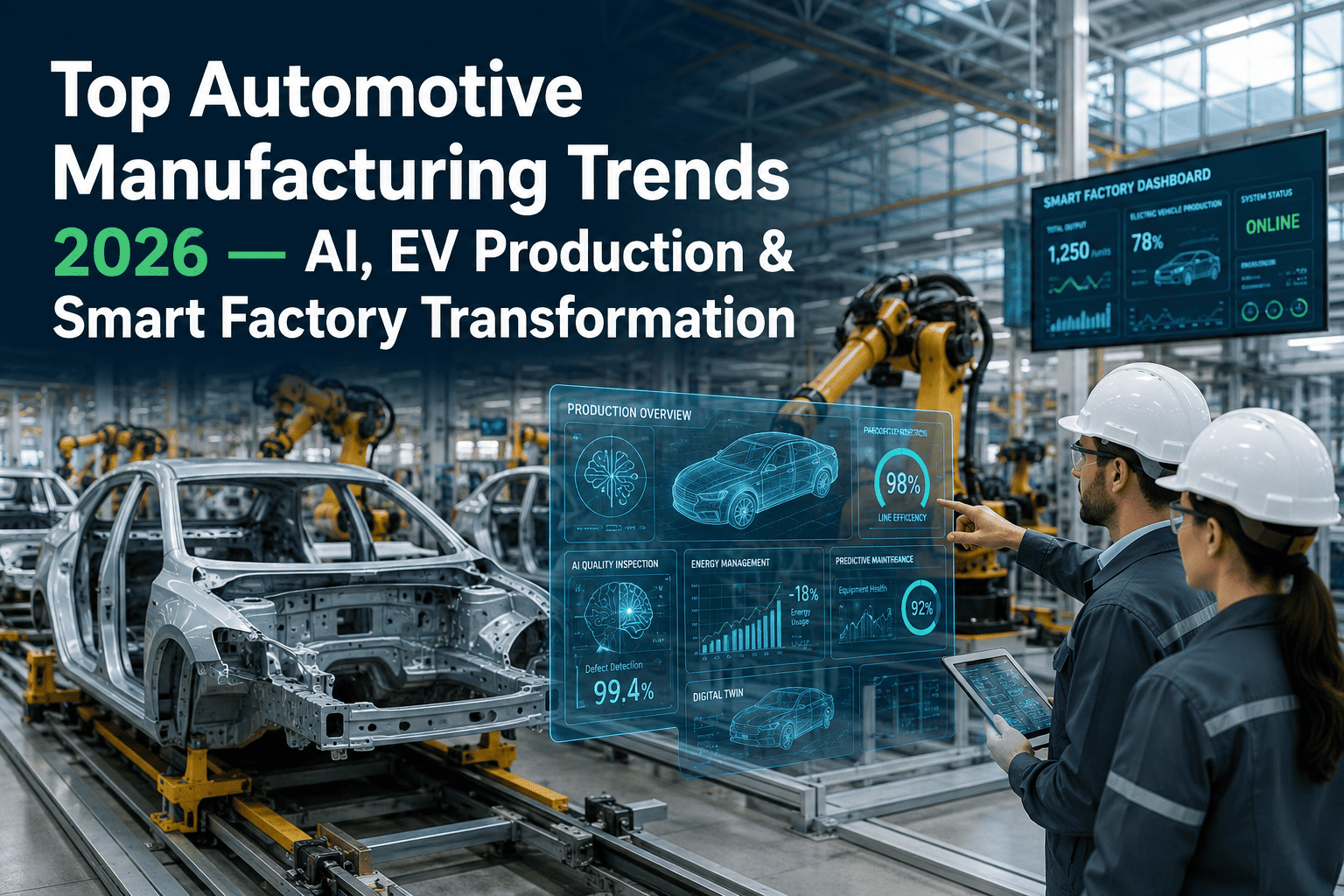
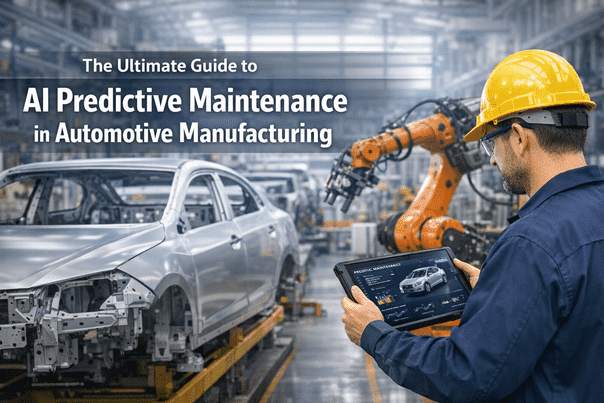
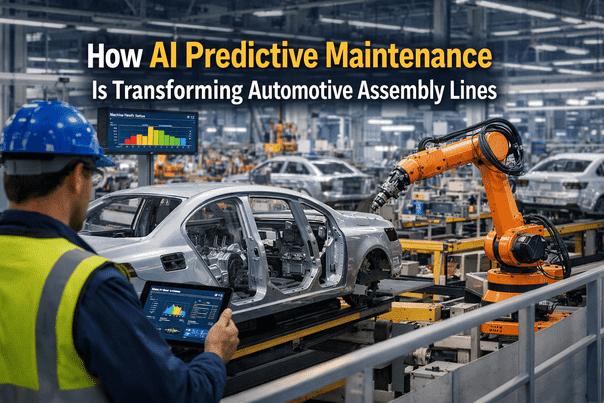
AI and robotics have moved from futuristic concepts to production line essentials in 2026. Together, they're delivering unprecedented efficiency gains40% faster cycle times, 99.5% quality accuracy, and 50% reduction in unplanned downtime. From precision welding robots that adapt in real-time to AI systems that predict equipment failures weeks in advance, this guide explores how leading automotive manufacturers are deploying AI and robotics to transform their production operations.
The AI-Robotics Synergy: How They Work Together
AI and robotics aren't just parallel technologies—they're deeply integrated systems where AI provides the intelligence and robots provide the physical execution. Understanding this synergy is key to maximizing production line efficiency.
AI Provides
- Real-time decision making
- Predictive maintenance alerts
- Quality defect detection
- Production scheduling optimization
- Adaptive process control
- Performance analytics
Robotics Delivers
- Precision task execution
- 24/7 continuous operation
- Consistent repeatability
- Heavy lifting capability
- Hazardous environment work
- High-speed assembly
Ready to see AI-robotics integration in action? Book a demo of iFactory's production line optimization solutions.
5 Key Applications Transforming Production Lines
AI and robotics are being deployed across every stage of automotive production. These five applications deliver the highest efficiency gains.
Precision Welding & Joining
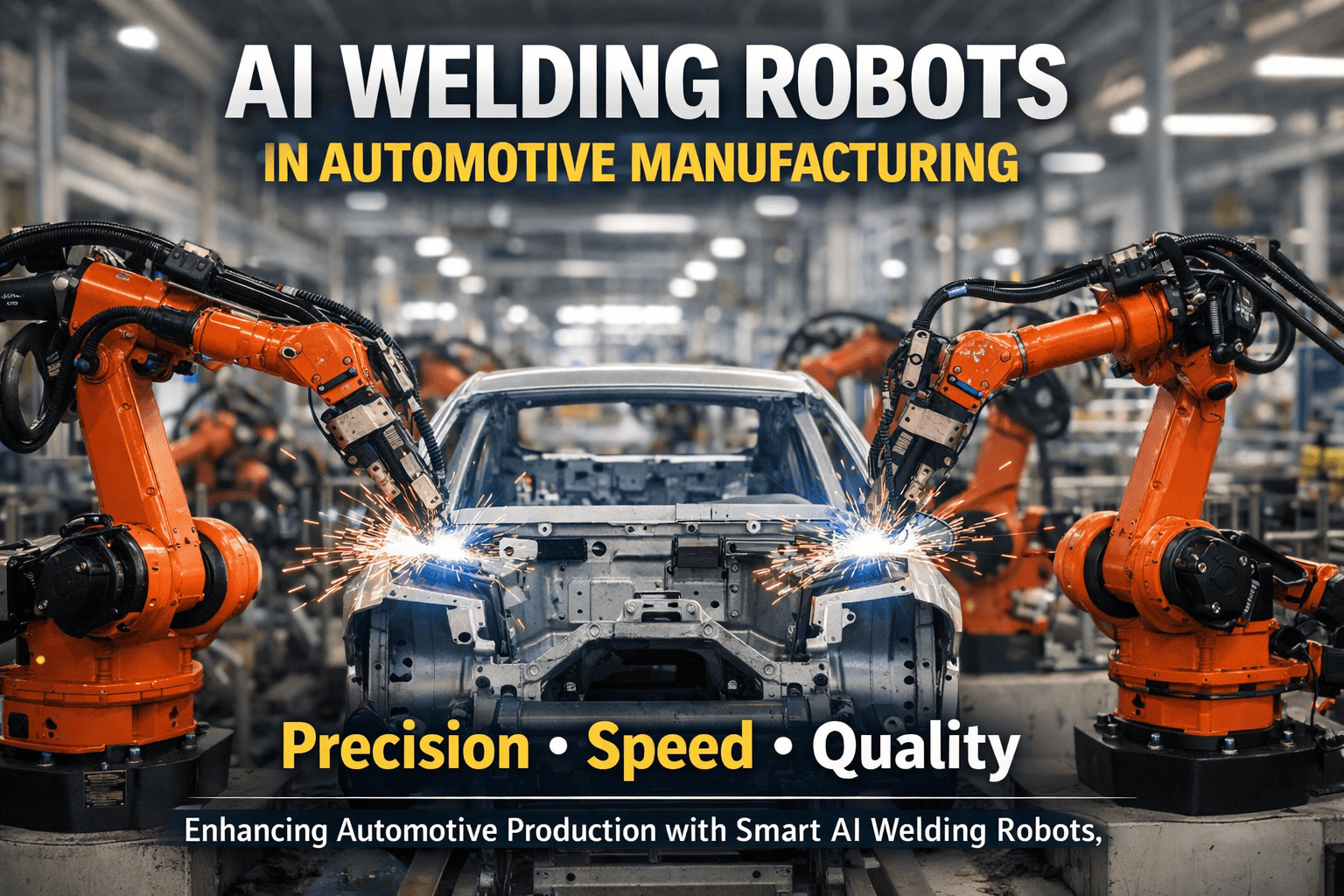
AI-guided welding robots adjust parameters in real-time based on material thickness, gap variations, and thermal conditions. Vision systems verify weld quality instantly, achieving 99.8% first-pass success rates.
Automated Assembly
Multi-robot cells coordinate complex assembly sequences with sub-millimeter precision. AI optimizes task allocation and timing, reducing cycle times while ensuring perfect component alignment every time.
Real-Time Quality Control
AI vision systems inspect every component at production speed, detecting defects invisible to human inspectors. Defective parts are automatically diverted before advancing to the next station.
Predictive Maintenance
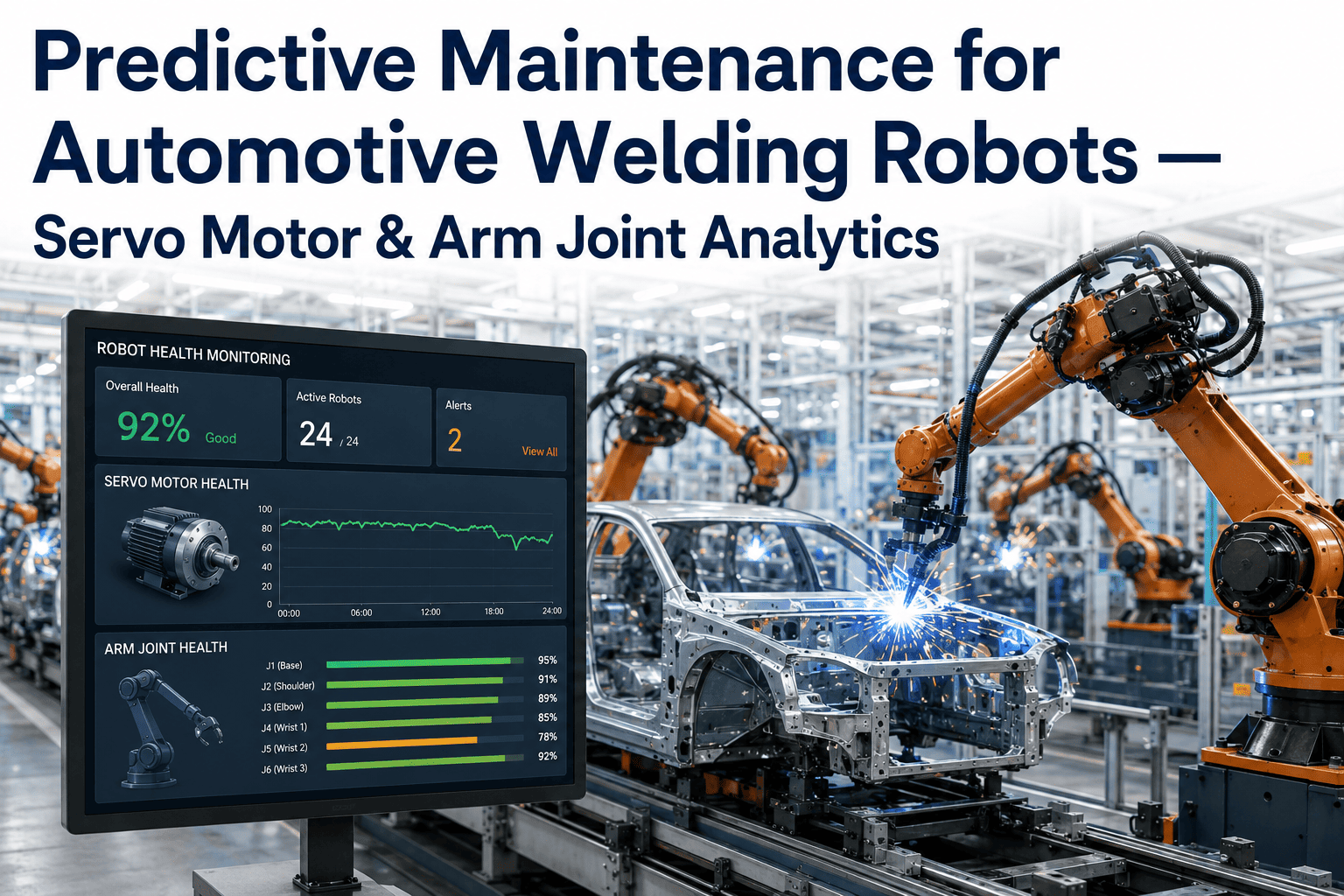
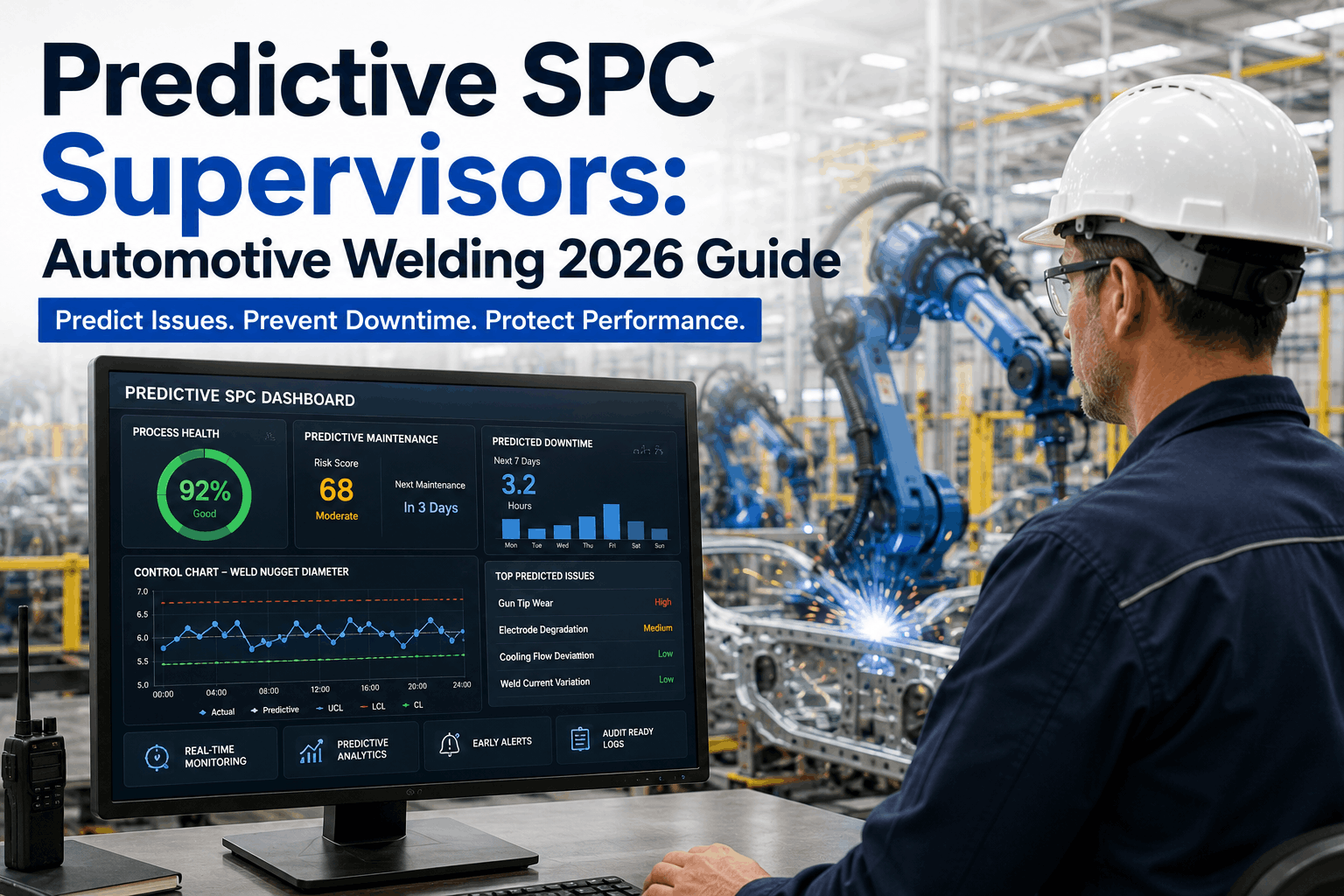
AI monitors robot health continuously, predicting failures 2-4 weeks before they occur. Maintenance is scheduled during planned downtime, eliminating emergency stops that disrupt entire production lines.
Material Handling & Logistics
AGVs and AMRs transport components between stations, guided by AI that optimizes routes in real-time. Integration with production scheduling ensures parts arrive exactly when needed—no earlier, no later.
Want to identify which applications deliver the highest ROI for your plant? Talk to our production optimization experts for a personalized assessment.
Types of Robots on Modern Production Lines
Different robot types serve different production needs. Understanding the capabilities of each helps in designing optimal production line configurations.
Articulated Robots
Most Common6-axis arms offering maximum flexibility. Used for welding, painting, and complex assembly tasks requiring reach and maneuverability.
Collaborative Robots (Cobots)
Fastest GrowingSafe for human interaction without cages. Ideal for tasks requiring human judgment combined with robotic precision and consistency.
SCARA Robots
High Speed4-axis robots optimized for pick-and-place and assembly. Extremely fast and precise for repetitive horizontal movements.
AGVs & AMRs
LogisticsAutonomous vehicles for material transport. AMRs navigate dynamically while AGVs follow fixed paths. Both integrate with production scheduling.
Optimize Your Robot Fleet Performance
iFactory's Asset Performance Analytics tracks every robot on your line—monitoring health, predicting maintenance, and maximizing uptime.
ROI Breakdown: The Numbers Behind AI-Robotics Investment
Implementing AI and robotics requires significant investment. Here's what the data shows about actual returns across automotive production facilities.
Faster cycle times, reduced changeover, and optimized scheduling combine to dramatically increase throughput without adding shifts.
Predictive maintenance eliminates most unplanned stops. When issues occur, AI diagnostics speed repair by identifying root causes instantly.
Robots handle repetitive tasks while workers focus on supervision, maintenance, and complex operations requiring human judgment.
Consistent robot precision plus AI inspection catches defects earlier, reducing scrap, rework, and warranty claims significantly.
Want to calculate potential ROI for your facility? Get a custom efficiency analysis from our team.
Implementation Roadmap: From Planning to Production
Successful AI-robotics implementation follows a structured approach that minimizes disruption while building toward full automation.
Assessment & Strategy
- Audit current production processes and bottlenecks
- Identify high-value automation opportunities
- Define ROI targets and success metrics
- Design robot cell configurations
Pilot Deployment
- Install robots in single cell or station
- Integrate AI monitoring and control systems
- Connect to CMMS for maintenance tracking
- Train operators and maintenance staff
Optimization & Validation
- Refine AI models based on production data
- Optimize cycle times and robot utilization
- Validate quality and efficiency metrics
- Document best practices for scaling
Scale Across Production
- Expand to additional production lines
- Integrate predictive maintenance plant-wide
- Deploy advanced AI analytics dashboards
- Continuous improvement and optimization
Ready to start your AI-robotics journey? Schedule a roadmap planning session with our implementation team.
Expert Perspective
"The plants achieving 40%+ efficiency gains aren't just deploying robots—they're integrating AI at every level. The robot is the muscle; AI is the brain. Facilities that treat these as separate initiatives see modest improvements. Those that architect them as unified systems see transformational results. The technology maturity in 2026 means there's no longer a technical barrier—only an organizational one."
Conclusion
AI and robotics have become inseparable partners on modern production lines. Together, they deliver efficiency gains that neither can achieve alone—40% faster cycle times, 99.5% quality accuracy, and 50% reduction in unplanned downtime. From precision welding and automated assembly to predictive maintenance and real-time quality control, these technologies are reshaping what's possible in automotive manufacturing. The implementation roadmap is proven, the ROI is documented, and the competitive pressure is real. For production leaders, the question isn't whether to deploy AI and robotics—it's how quickly they can scale these technologies across their operations.
Schedule your iFactory demo to see AI-robotics integration in action, or connect with our specialists to discuss your production challenges.
Transform Your Production Line
Join leading manufacturers using iFactory to optimize AI-robotics performance with predictive maintenance, automated work orders, and real-time analytics.