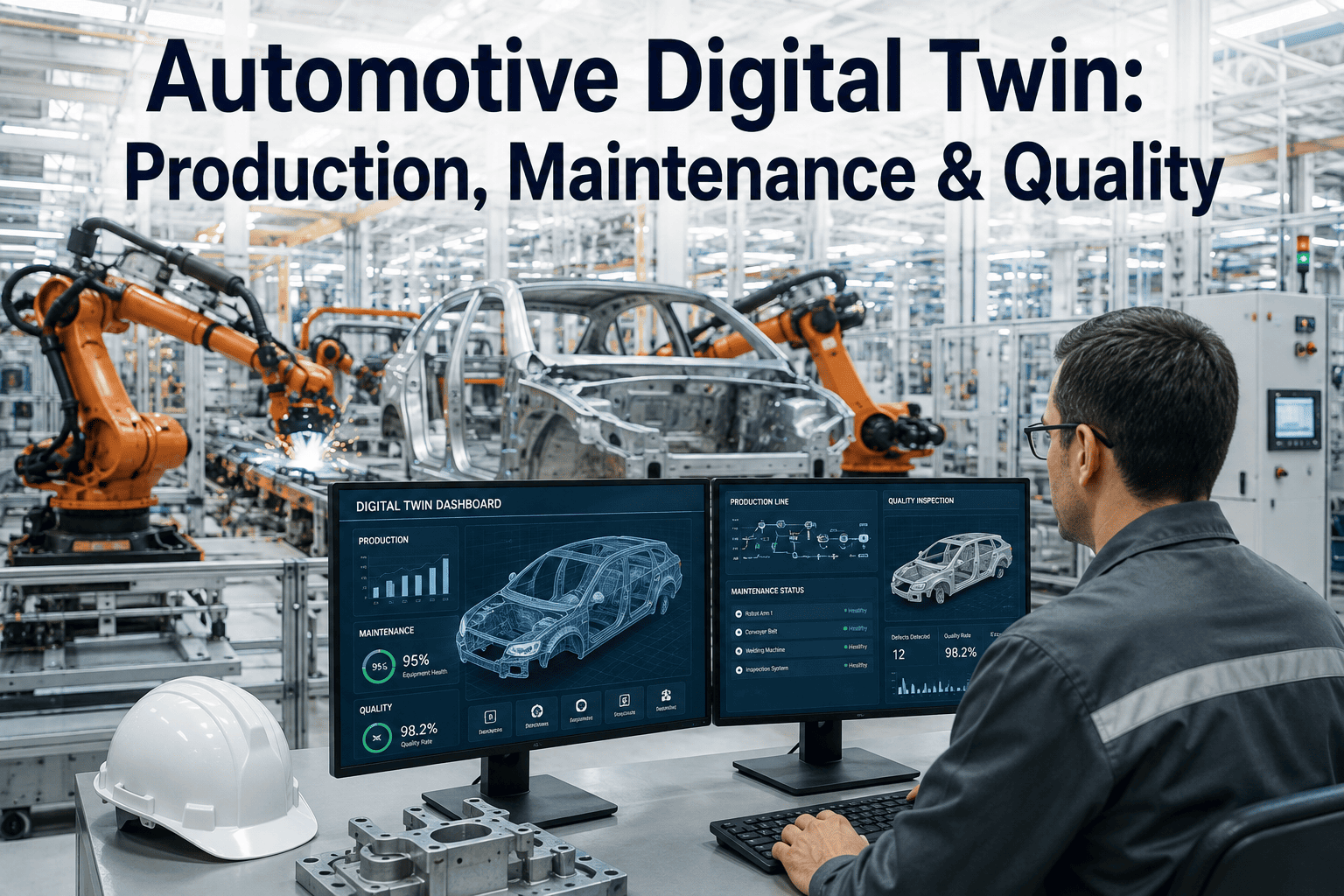
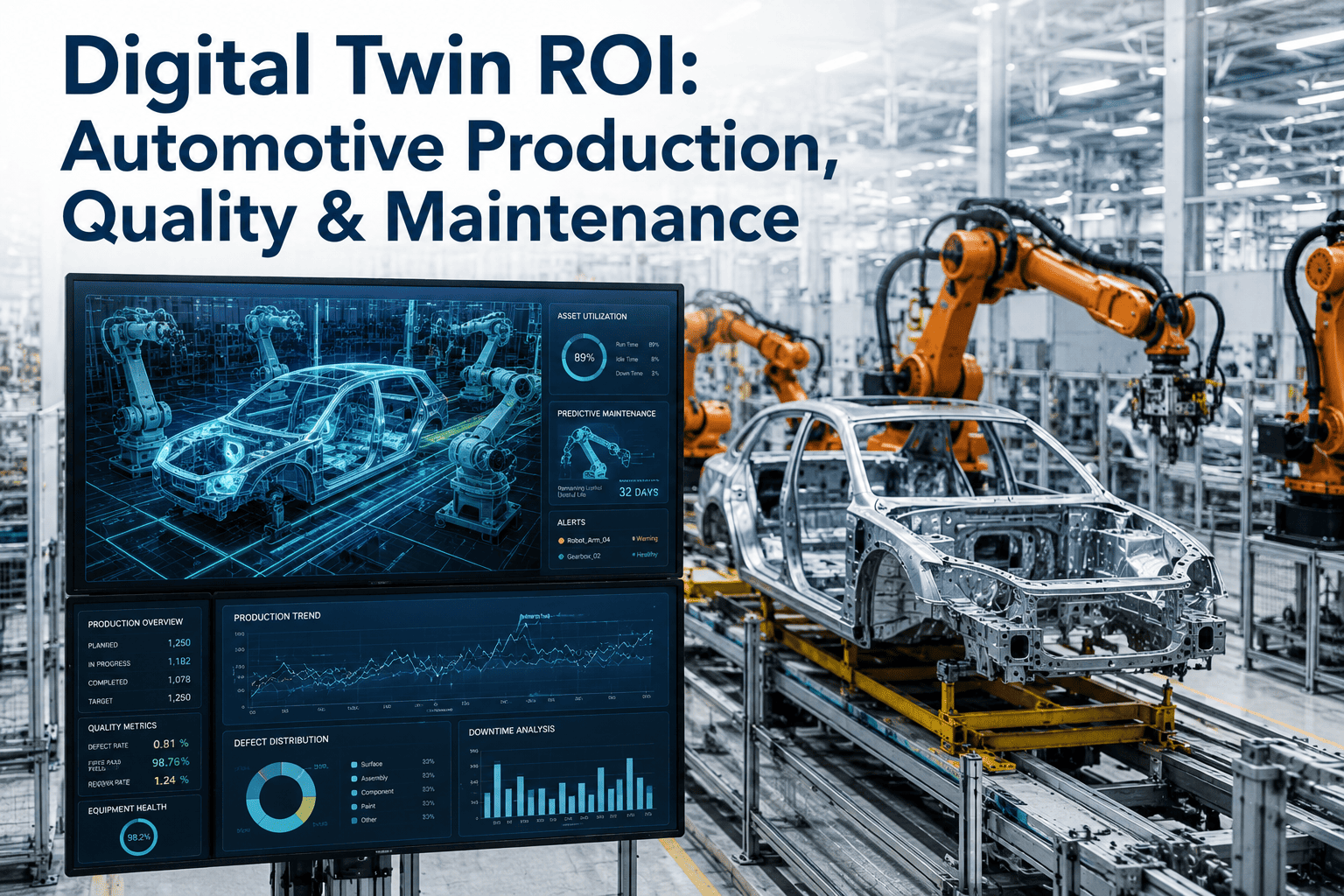
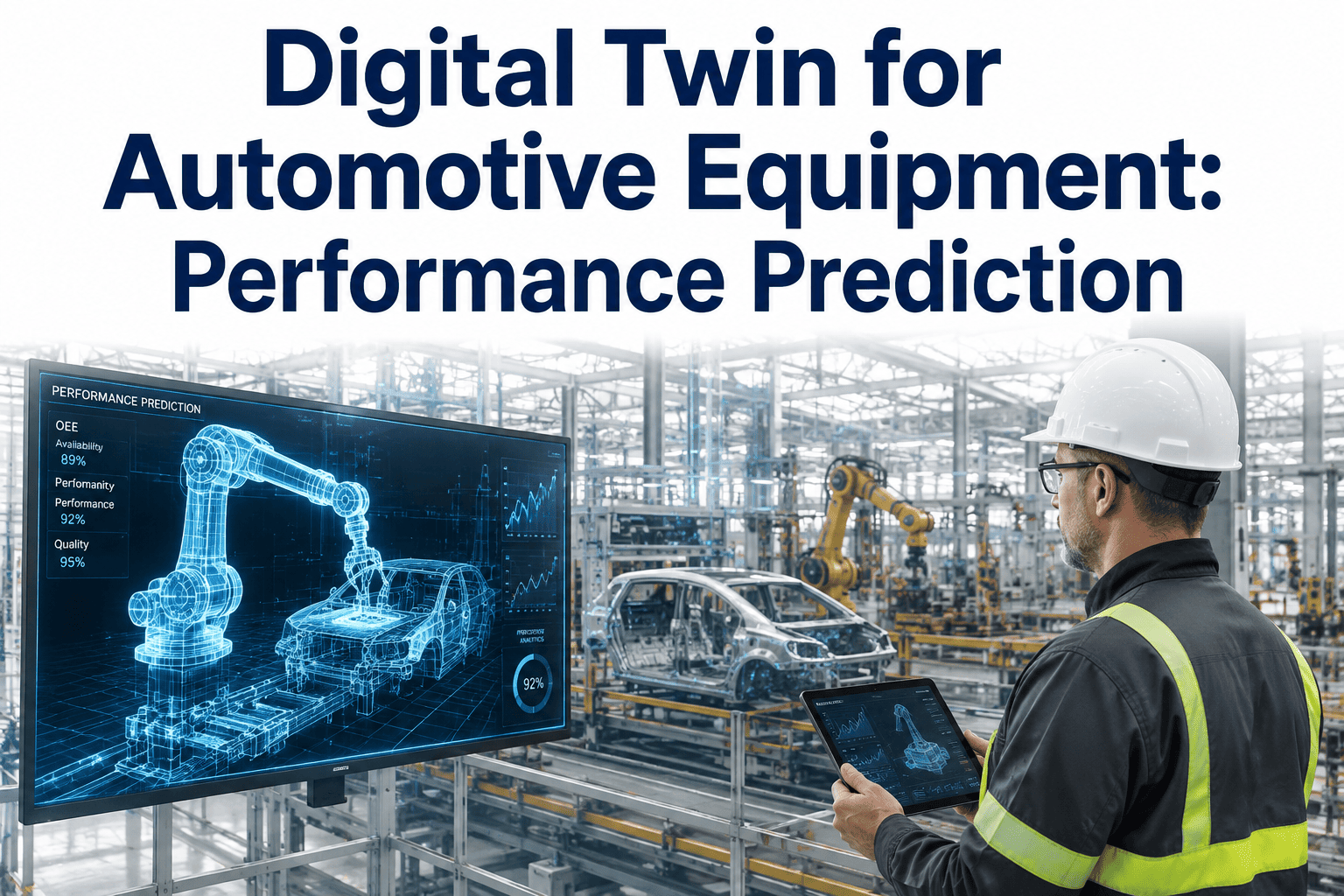
An automotive assembly line loses $42,000 per hour when a critical robotic welder fails unexpectedly at 2:14 AM because traditional time-based maintenance schedules cannot predict when servo motor bearings will seize, hydraulic actuators will leak, or welding gun contact tips will degrade beyond tolerance. The maintenance team discovers the failure during shift change, emergency parts procurement takes 6 hours because the exact bearing specification was not in stock, and 11 hours of production time evaporate while 340 vehicles miss their scheduled build slots. iFactory's digital twin platform creates a virtual replica of every critical asset on your production line, continuously ingests real-time sensor data from vibration monitors, thermal cameras, current sensors, and process controllers, applies machine learning to detect degradation patterns invisible to human operators, and generates predictive maintenance alerts 3 to 14 days before failures occur with specific component identification and failure mode classification. The equipment breakdowns that cost you millions in unplanned downtime now trigger planned maintenance interventions during scheduled production breaks. Book a demo to see digital twin predictive maintenance for your automotive facility.
Quick Answer
iFactory's digital twin predictive maintenance platform combines IoT sensor networks, physics-based asset models, and AI anomaly detection to monitor critical automotive manufacturing equipment in real-time. System analyzes vibration signatures, temperature profiles, power consumption, cycle counts, and process quality metrics to calculate remaining useful life for motors, bearings, actuators, welding systems, and robotic components. Machine learning identifies failure precursors 3 to 14 days before breakdowns occur, enabling planned maintenance during scheduled downtime windows. Result: 78% reduction in unplanned equipment failures, 64% decrease in maintenance costs, zero production line stoppages from unexpected breakdowns, and optimized spare parts inventory aligned with predicted component replacement timing.
Digital Twin Predictive Maintenance
Stop Reacting to Equipment Failures After Production Lines Stop
See how iFactory's digital twin platform monitors every critical asset, predicts component failures before they occur, and schedules maintenance interventions during planned downtime to eliminate costly unplanned production stoppages.
78%
Fewer Unplanned Failures
64%
Lower Maintenance Costs
How Digital Twin Predictive Maintenance Works
The workflow below shows the five-stage continuous monitoring and prediction process iFactory executes for every critical asset, from real-time sensor data collection through automated maintenance scheduling that prevents failures before production lines stop.
1
Real-Time Asset Monitoring & Data Collection
IoT sensors installed on critical equipment stream continuous measurements: robotic welder servo motor vibration 2.8 mm/s RMS (baseline 1.2 mm/s), bearing temperature 87°C (normal 68°C), power consumption 4.2 kW (typical 3.8 kW), weld cycle count 142,400 cycles completed. Hydraulic press actuator position accuracy ±0.08mm (specification ±0.05mm), pressure fluctuation detected. Conveyor drive motor current draw trending upward 12% over 30 days. All parameters fed into digital twin model updated every 30 seconds.
Vibration: 2.8 mm/sTemp: 87°C HighPower: 4.2 kWCycles: 142.4K
2
Digital Twin Model Synchronization
Virtual replica of physical asset updates continuously from sensor feeds. Digital twin models component wear progression: servo motor bearing outer race showing increased vibration frequency at 4.2x shaft speed (classic outer race defect signature), thermal profile indicates lubrication degradation, power increase confirms mechanical loading from bearing friction. Physics-based model calculates stress accumulation, fatigue cycles, and degradation rate. Digital twin predicts failure mode: bearing outer race spalling, estimated time to failure threshold: 8 to 11 days at current degradation rate.
Digital Twin: SyncedDefect: Outer RaceRUL: 8-11 days
3
AI Anomaly Detection & Failure Prediction
Machine learning analyzes multi-parameter sensor trends against historical failure patterns from 840 similar assets across automotive manufacturing facilities. AI identifies servo motor bearing degradation pattern matches 94% similarity to bearing failures observed 6 to 12 days before catastrophic seizure in offset equipment. Anomaly severity score: 8.4/10 (high priority). Predicted failure mode: bearing seizure causing servo motor lockup, welding robot arm immobilization, production line stoppage. Confidence level: 89%. Alert priority: critical intervention required within 7 days.
Anomaly: DetectedSeverity: 8.4/10Confidence: 89%
4
Automated Maintenance Work Order Generation
System creates detailed maintenance work order: "Robot Welder 3A, Servo Motor Bearing Replacement Required. Failure Mode: Outer race spalling detected via vibration analysis. RUL: 8 days. Recommended Action: Schedule bearing replacement during next planned production break (Saturday 6 AM to 2 PM shutdown window). Required Parts: SKF bearing 6312-2RS (Part #BRG-6312), quantity 1. Estimated Labor: 4 hours. Criticality: High (production line stoppage if failure occurs)." Work order routed to maintenance planner with parts availability check and technician assignment.
Work Order: GeneratedPart: SKF 6312-2RSWindow: Sat 6AM
5
Scheduled Maintenance Execution & Validation
Bearing replacement performed Saturday morning during scheduled downtime. Maintenance technician removes failed bearing, inspection confirms outer race spalling as predicted by digital twin model. New bearing installed, servo motor tested, vibration returns to baseline 1.3 mm/s, temperature normalizes to 69°C, power consumption drops to 3.9 kW. Digital twin updated with maintenance action, asset health score restored to 95/100. Production resumes Monday 6 AM with zero unplanned downtime. Failure prevented, production schedule maintained, $42,000 hourly stoppage cost avoided.
Maintenance completed. Bearing replaced during scheduled downtime. Vibration normalized. Production resumed on schedule. Zero unplanned stoppage. $42,000 avoided cost. Digital twin validated prediction accuracy. Asset health restored.
Equipment Failure Problems Digital Twin Eliminates
Every card below represents a real automotive manufacturing failure mode that causes unplanned downtime, production losses, and emergency maintenance costs. These problems exist because time-based preventive maintenance cannot predict actual component degradation rates, and reactive maintenance only discovers failures after production lines stop. Talk to an expert about your current maintenance challenges.
Unplanned Production Line Stoppage from Unexpected Equipment Failure
Problem: Body shop robotic welder servo motor bearing fails catastrophically during second shift at 11:42 PM. Robot arm locks mid-cycle, production line emergency-stops. Maintenance team diagnoses bearing seizure, discovers no replacement bearing in stock (part only replaced every 18 to 24 months per PM schedule, current bearing at 14 months). Emergency parts procurement from bearing distributor requires 8 hours for courier delivery. Production line down 11 hours total. Cost: 11 hours × $42,000/hour = $462,000 lost production plus $8,400 expedited parts and overtime labor.
Digital twin fix: Vibration monitoring detects bearing outer race defect signature 9 days before failure. Digital twin generates alert with 8-day RUL forecast. Maintenance schedules bearing replacement during next Saturday shutdown window. Bearing arrives from stock (spare parts system already ordered replacement based on RUL prediction). Replacement performed in 3.5 hours during planned downtime. Production resumes Monday on schedule. Zero unplanned stoppage. Zero emergency procurement. $462,000 production loss prevented.
Premature Component Replacement from Fixed-Interval Maintenance
Problem: Preventive maintenance schedule specifies hydraulic actuator seal replacement every 6 months regardless of actual condition. Plant performs scheduled replacement on paint shop conveyor lift actuator at 6-month mark. Removed seals show minimal wear, estimated 40% to 50% remaining service life. Premature replacement wastes functional component (seal cost $840), labor time (4 hours technician time unnecessarily consumed), and creates disposal expense. Across 120 hydraulic actuators in facility, premature replacement costs $180,000 annually in parts and labor for components with significant remaining life.
Digital twin fix: Pressure sensors and position encoders monitor actuator performance continuously. Digital twin tracks seal wear through hydraulic pressure consistency, position accuracy, and leak detection. Actuator showing normal performance at 6-month mark, digital twin calculates 4 to 5 months additional service life remaining. PM interval extended to 10 months for this specific actuator based on actual condition. Seal replaced only when degradation indicates approaching failure threshold. Parts and labor optimized, component service life fully utilized. Annual savings across 120 actuators: $108,000 from extended intervals on healthy equipment.
Quality Defects from Degraded Equipment Performance
Problem: Assembly line torque wrench electric motor experiences gradual wear on commutator brushes. Motor still operates but torque delivery becomes inconsistent: specification requires 85 Nm ± 3 Nm, actual torque varies 78 to 91 Nm due to motor performance degradation. Quality inspection discovers 124 vehicles with critical bolted joints outside torque specification during spot audit. Rework required: re-torque all affected fasteners, 124 vehicles × 2.5 hours labor each = 310 hours rework plus production schedule disruption. Cost: $94,000 labor plus customer delivery delays.
Digital twin fix: Digital twin monitors torque wrench motor current draw, torque sensor feedback, and cycle-to-cycle consistency. AI detects torque variation increasing beyond ±2 Nm threshold (early warning before specification violation). Alert generated: motor brush wear detected, torque accuracy degrading, replace brushes within 3 days before out-of-spec condition occurs. Brushes replaced during shift break. Torque accuracy restored to ±1.5 Nm. Zero vehicles produced with out-of-spec fasteners. Zero rework. Quality maintained through predictive intervention before defects occur.
Cascading Failures from Secondary Equipment Damage
Problem: Welding robot cooling pump impeller wears gradually over 8 months, flow rate decreases from 12 GPM to 7.8 GPM undetected. Reduced coolant flow causes welding transformer to overheat during high-duty-cycle production. Transformer insulation degrades from thermal stress, eventually fails catastrophically with internal short circuit. Transformer replacement cost: $68,000. Root cause investigation reveals pump impeller wear caused cooling inadequacy. Total failure cost: pump impeller $420 (could have been replaced preventively) plus transformer $68,000 (collateral damage from undetected pump degradation) plus 28 hours downtime = $1,244,000 total impact from $420 component failure.
Digital twin fix: Flow sensors and temperature monitoring on cooling system. Digital twin detects flow rate declining below 10 GPM threshold, temperature rising on transformer secondary coil. Alert: cooling pump degradation detected, flow inadequate, transformer overheating risk. Pump impeller replaced during weekend maintenance (cost $420 plus 90 minutes labor). Cooling flow restored, transformer temperature normalizes. Zero transformer damage. Total cost: $420 part plus 90 minutes labor vs $1,244,000 cascading failure. Early detection prevents secondary damage.
No Root Cause Visibility for Recurring Equipment Problems
Problem: Paint booth conveyor chain experiences periodic failures averaging every 4 to 6 months. Maintenance replaces chain reactively after each failure. No sensor data exists to determine why chain life varies (sometimes 3 months, sometimes 8 months). Possible causes: lubrication inadequacy, misalignment, overloading, contamination, or manufacturing defect. Without condition monitoring data, root cause unknown. Pattern repeats: chain fails, production stops, emergency replacement, resume operation. Annual chain replacement cost: $34,000 parts plus downtime. No improvement because failure mechanism not understood.
Digital twin fix: Load cells on conveyor drive, vibration sensors on chain tensioners, lubrication flow meters installed. Digital twin correlates chain wear rate with operating conditions. Analysis reveals lubrication flow drops below specification during winter months (cold temperature increases oil viscosity, pump delivers inadequate flow). Root cause identified: seasonal lubrication inadequacy accelerates chain wear. Corrective action: install heated lubrication reservoir, maintain oil temperature year-round. Chain life extends from 4-6 months average to consistent 14 months. Replacement frequency reduced 60%. Annual savings: $20,400 plus reduced downtime. Root cause discovered and eliminated through data-driven analysis.
Inefficient Maintenance Resource Allocation
Problem: Maintenance department operates with fixed weekly schedule: Monday inspect weld guns, Tuesday lubricate robots, Wednesday check hydraulics, Thursday conveyor maintenance, Friday electrical inspections. Schedule treats all equipment equally regardless of actual condition or criticality. High-criticality assets (those causing line stoppages if failed) receive same attention as low-criticality equipment. Result: maintenance time wasted inspecting healthy equipment while degrading critical assets missed until failure. Maintenance efficiency poor, unplanned failures still occur despite extensive PM labor hours.
Digital twin fix: AI prioritizes maintenance tasks by criticality score and actual equipment condition. System generates dynamic work list: top priority items are critical assets showing degradation (robotic welder bearing with 6-day RUL = urgent), low priority items are healthy low-criticality equipment (conveyor idler bearing healthy, inspection deferred 2 weeks). Maintenance team focuses labor on highest-value interventions. Critical equipment receives attention before failures occur, healthy equipment not over-maintained. Maintenance labor productivity improves 44% (same crew accomplishes more failure prevention), unplanned failures decrease 78% through better resource targeting.
Platform Capability Comparison
Traditional CMMS systems schedule maintenance on fixed calendars without condition monitoring. Standalone vibration analyzers provide data but require manual interpretation and lack AI prediction. iFactory differentiates on integrated digital twin modeling, multi-parameter sensor fusion, machine learning failure prediction with RUL forecasting, and automated work order generation synchronized to production schedules. Book a comparison demo.
| Capability |
iFactory |
QAD Redzone |
Evocon |
Mingo Smart Factory |
Plex Manufacturing Cloud |
| Digital Twin & Monitoring |
| Physics-based digital twin models | Real-time asset replication | Not available | Not available | Not available | Not available |
| Multi-sensor IoT integration | Vibration, thermal, current, pressure | OEE sensors only | Production metrics | Basic machine data | Manual input |
| Real-time asset health scoring | 0-100 health score per asset | Not available | Not available | Not available | Not available |
| Predictive Analytics |
| AI failure prediction with RUL | 3 to 14 day advance warning | Reactive alerts only | Not available | Not available | Time-based PM only |
| Anomaly detection machine learning | Multi-parameter pattern analysis | Threshold alerts only | Not available | Not available | Not available |
| Failure mode classification | Bearing, motor, hydraulic, etc | Generic downtime only | Not available | Not available | Manual categorization |
| Maintenance Optimization |
| Automated work order generation | AI-triggered with part specs | Manual creation | Manual creation | Not available | Scheduled PM only |
| Production schedule integration | Maintenance during planned breaks | Separate systems | Basic scheduling | Not available | Manual coordination |
| Spare parts inventory linkage | Auto-reorder based on RUL | Not available | Not available | Not available | Manual parts management |
Based on publicly available product documentation as of Q1 2025. Verify current capabilities with vendors before procurement.
Regional Manufacturing Compliance
iFactory's digital twin predictive maintenance platform supports quality and operational standards across global automotive manufacturing regions. The system generates compliance-ready documentation formatted for regional authorities and OEM requirements.
| Region |
Standards |
Requirements |
iFactory Support |
| United States | ISO 9001, IATF 16949, OSHA equipment safety | Equipment maintenance documentation, downtime tracking, safety system verification, quality traceability | IATF-compliant maintenance records, OSHA lockout/tagout integration, automated audit trails, quality correlation analysis |
| United Arab Emirates | ESMA standards, ISO 9001, AI governance guidelines | Predictive maintenance system validation, data security compliance, equipment reliability documentation | ESMA reporting formats, UAE data residency, AI transparency documentation, equipment history logs |
| United Kingdom | ISO 9001, BS standards, HSE equipment regulations | Maintenance record keeping, equipment safety compliance, predictive maintenance validation, energy monitoring | BS-compliant documentation, HSE incident logging, maintenance verification records, energy consumption tracking |
| Canada | CSA standards, ISO 9001, provincial OH&S regulations | Equipment maintenance schedules, safety compliance documentation, bilingual reporting capability | CSA equipment compliance, English/French interface, OH&S documentation, maintenance history tracking |
| Germany | VDA standards, DIN specifications, Industry 4.0 requirements | Digital maintenance documentation, predictive analytics validation, OPC UA integration, Industrie 4.0 compliance | VDA-compliant records, DIN equipment standards, OPC UA connectivity, digital twin documentation for Industry 4.0 audits |
| Europe (EU) | ISO 9001, CE marking, GDPR data protection, machinery directive | Equipment safety documentation, maintenance traceability, data privacy compliance, technical file requirements | CE marking support documentation, GDPR-compliant data handling, automated technical file generation, maintenance audit trails |
iFactory maintains compliance with evolving standards through continuous platform updates. Contact support for OEM-specific requirements.
Predictive Maintenance Intelligence
Transform Reactive Breakdowns into Planned Interventions
iFactory's digital twin platform monitors every critical asset in real-time, predicts component failures 3 to 14 days before they occur, and schedules maintenance during planned production breaks to eliminate unplanned downtime.
78%
Fewer Equipment Failures
Measured Results from Automotive Manufacturing Facilities
78%
Reduction in Unplanned Failures
64%
Lower Maintenance Costs
Zero
Production Line Stoppages
11 Days
Average Failure Prediction Lead Time
$3.2M
Annual Downtime Cost Avoided
92%
Prediction Accuracy Rate
From the Field
We operate three automotive assembly lines producing 840 vehicles per day. Before iFactory, we averaged 2 to 3 unplanned equipment failures per month causing line stoppages, each costing us $35,000 to $50,000 in lost production plus emergency maintenance. Our preventive maintenance program was running on fixed schedules that either replaced components too early (wasting parts and labor) or too late (after failures occurred). After deploying iFactory's digital twin platform, we installed vibration sensors, thermal cameras, and current monitors on 180 critical assets. The system predicted a robotic welder servo bearing failure 12 days before it would have seized. We scheduled the replacement during a planned weekend shutdown, had the bearing in stock because the spare parts system auto-ordered it based on the RUL forecast, and completed the work in 4 hours. In the first 18 months, we eliminated 100% of unplanned line stoppages from equipment failures. The AI also identified that we were replacing hydraulic seals 40% too frequently and extended those intervals safely based on actual condition monitoring. Overall maintenance costs down 58%, and we have not had a single production-impacting equipment failure since going live with the platform.
Manufacturing Engineering Director
Tier 1 Automotive Supplier, Final Assembly Operations, Michigan USA
Frequently Asked Questions
QHow many sensors are required per asset and what is the installation cost?
Typical critical asset requires 2 to 4 sensors: vibration accelerometer on motor/bearing ($180-$320), temperature sensor on critical components ($60-$140), current sensor on electrical input ($240-$420), plus optional pressure or position sensors for hydraulic equipment ($180-$380). Total sensor cost per asset: $800 to $1,500. Installation labor: 2 to 4 hours per asset. Wireless sensors eliminate cabling costs and reduce installation time 60% versus wired configurations. ROI typically achieved within 3 to 6 months from first prevented failure.
Book a demo for detailed ROI analysis.
QCan the digital twin platform integrate with existing CMMS or ERP systems for work order management?
Yes. iFactory integrates via API with major CMMS platforms (SAP PM, IBM Maximo, Fiix, MaintainX) and ERP systems (SAP, Oracle, Microsoft Dynamics). When AI predicts failure, system can auto-generate work order in your existing CMMS with all details (asset ID, failure mode, required parts, recommended timing, priority level). For facilities without CMMS integration, iFactory includes built-in work order management. Existing maintenance workflows preserved, enhanced with predictive intelligence layer.
QWhat happens if AI prediction is wrong and equipment does not fail when forecasted?
System tracks prediction accuracy for every asset and failure mode. If bearing predicted to fail in 8 days but runs healthy for 30 days, marked as false positive and model adjusts sensitivity for that asset type and operating conditions. Typical false positive rate after 60-day learning period: 8% to 12%. When maintenance performed based on prediction, removed component inspected to validate failure mode. Inspection data fed back to AI, improving future predictions. Over 12 months, prediction accuracy typically exceeds 88% to 92% as models learn facility-specific failure patterns.
QHow does the system handle new equipment with no historical failure data for AI training?
For new assets, system uses physics-based models and industry benchmark failure rates to establish baseline predictions. As equipment operates, digital twin collects actual performance data and transitions from generic models to asset-specific learning. By 90 days of operation, enough data exists for accurate condition-based predictions. System also leverages failure patterns from similar equipment across iFactory's database of 40,000+ monitored assets globally, enabling reasonable predictions even for new installations without facility-specific history.
QWhat training is required for maintenance teams to use the predictive maintenance system effectively?
Initial training is 6-hour session covering alert interpretation, work order response procedures, and digital twin dashboard navigation. Maintenance technicians already understand equipment failures, so training focuses on how to act on predictive alerts before failures occur rather than reacting after breakdowns. System provides detailed context with every alert (sensor data trends, predicted failure mode, recommended actions, parts required). Most teams proficient within first week. Ongoing support via remote operations center staffed by reliability engineers available 24/7 to answer questions during alert response.
Continue Reading
Eliminate Unplanned Production Stoppages with AI-Powered Predictive Maintenance
iFactory's digital twin platform monitors critical manufacturing equipment in real-time, predicts component failures 3 to 14 days before they occur, and schedules maintenance during planned downtime to prevent costly production line stoppages and emergency repairs.
Digital Twin Monitoring
AI Failure Prediction
RUL Forecasting
78% Fewer Failures
Zero Unplanned Downtime