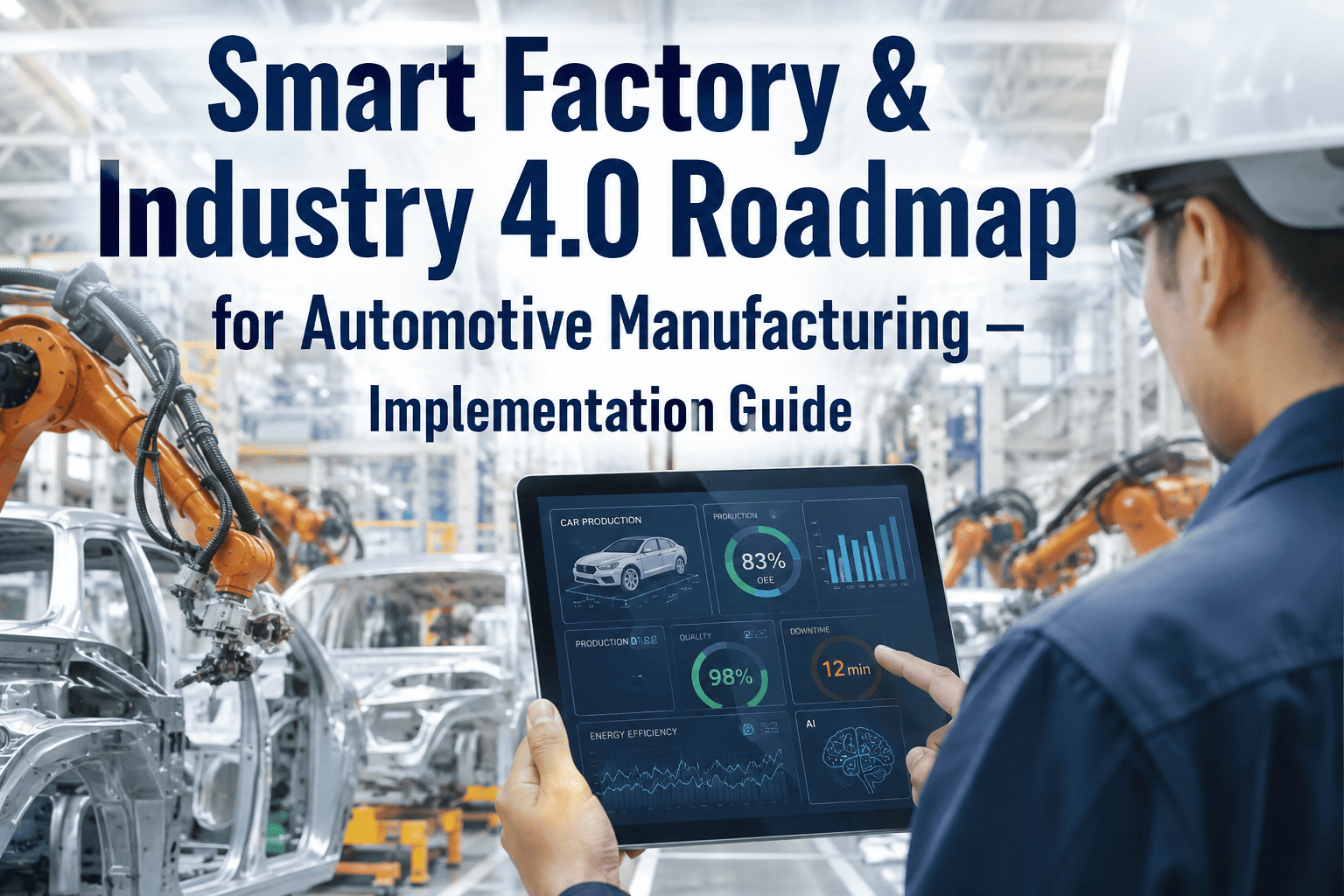
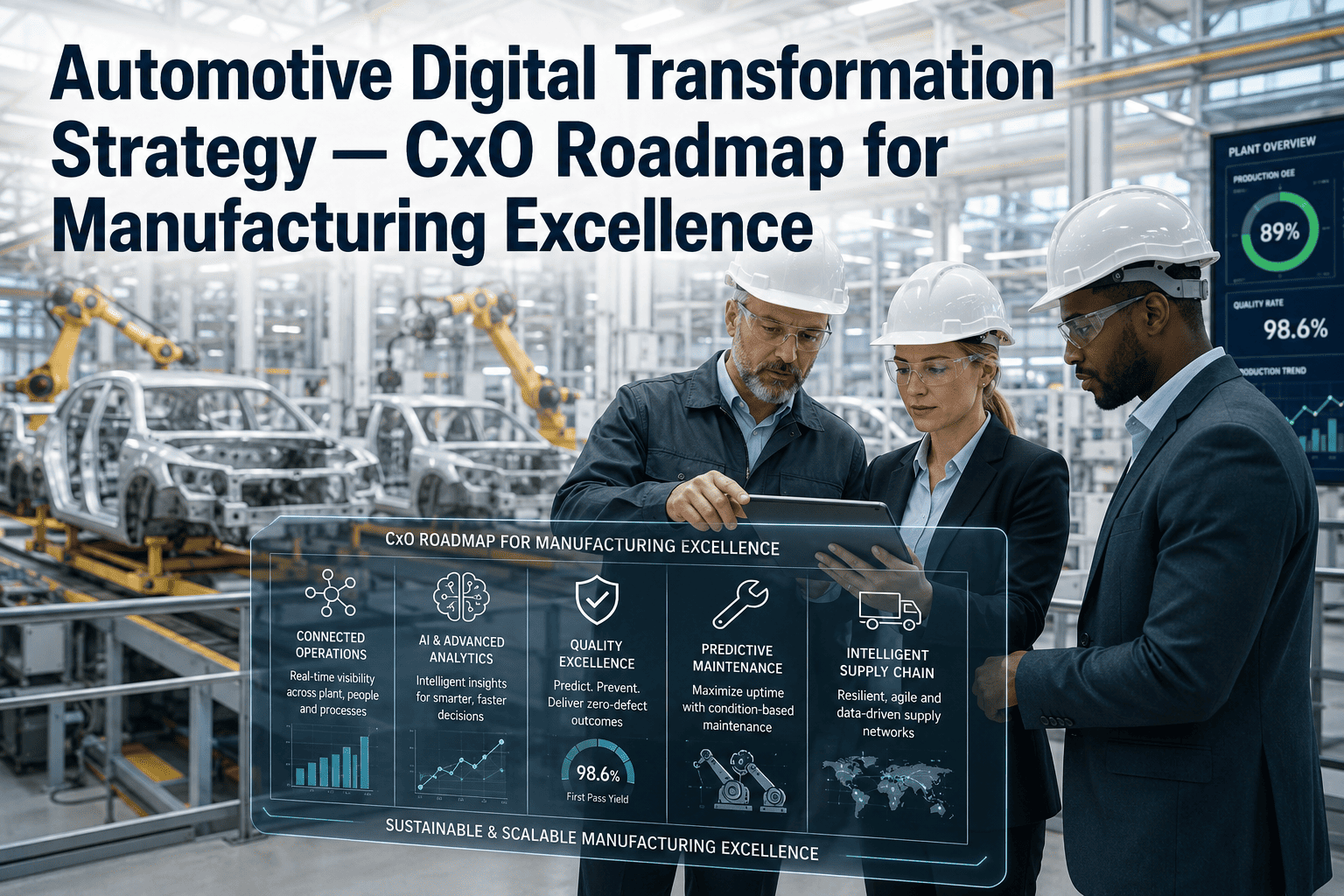
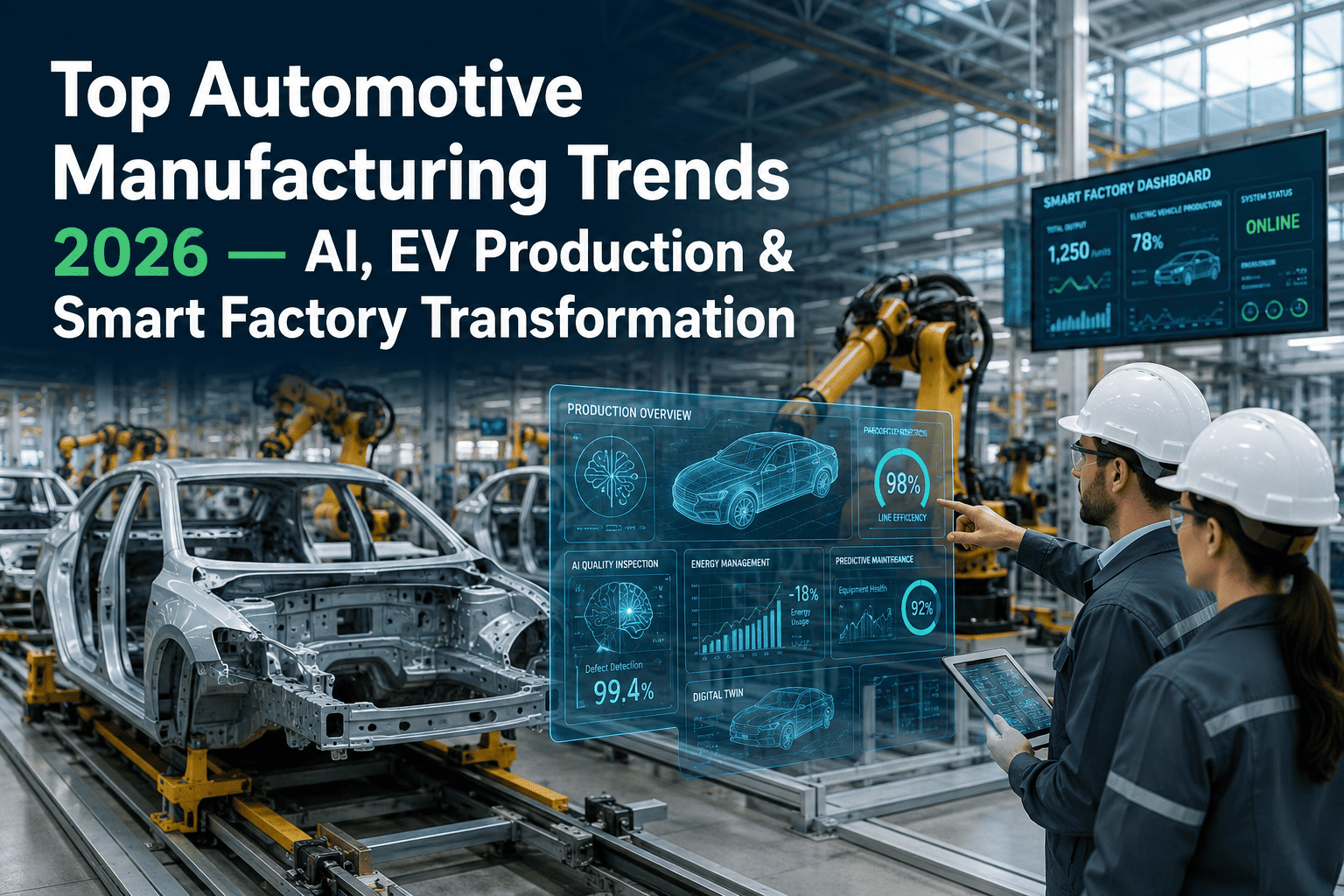
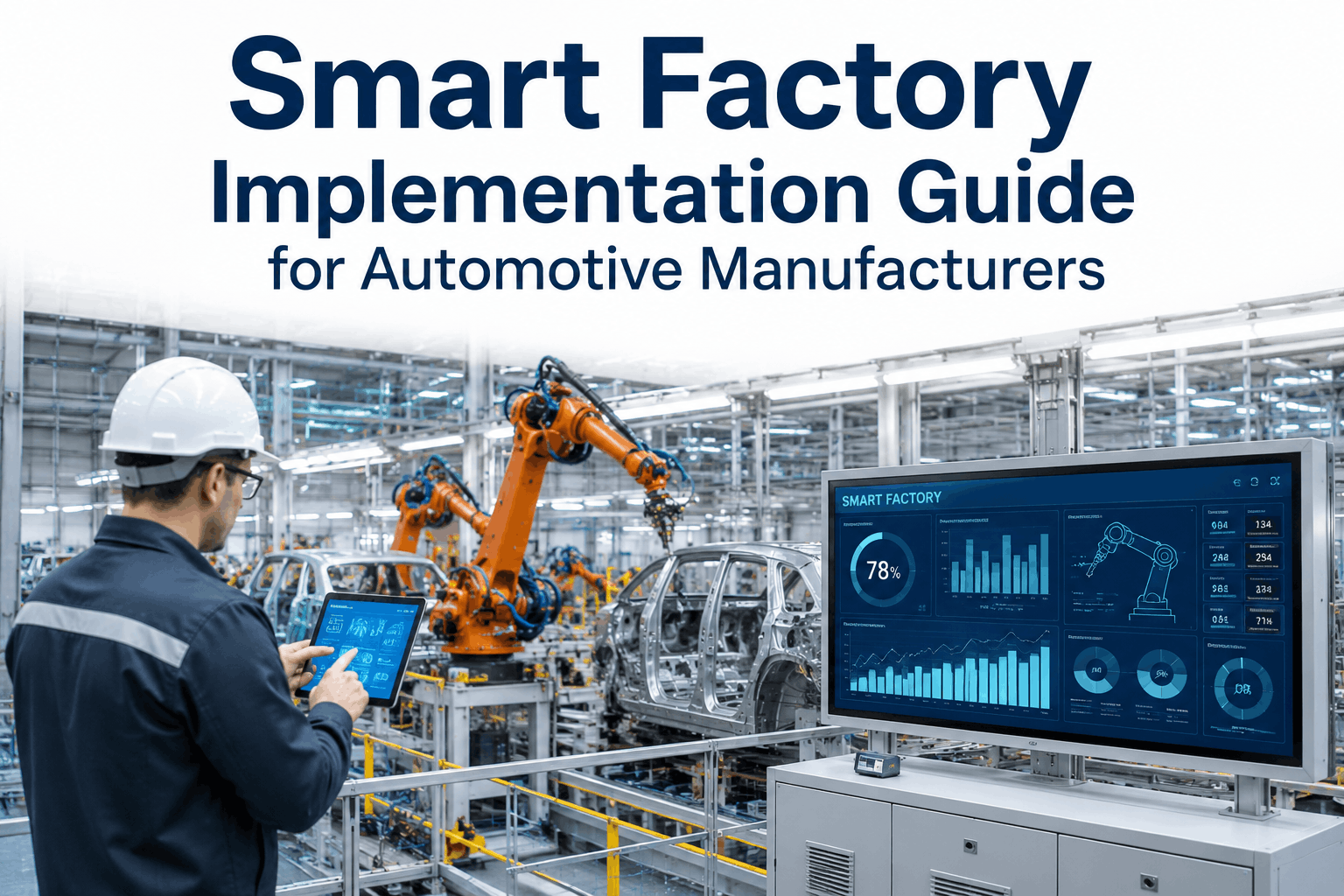
Most automotive plants aren't short on data — a modern body shop alone generates sensor readings from hundreds of robots, dozens of MES transactions, and a SCADA layer tracking every station in real time. What most plants are short on is a coherent path connecting that data into decisions that actually change how the plant runs, and that gap is exactly what a real Industry 4.0 roadmap is supposed to close. VPs of Operations tasked with digital transformation often inherit a patchwork of point solutions — a vision system here, a predictive maintenance pilot there — with no unifying architecture tying them together into a genuine smart factory. A deliberate roadmap sequences that transformation so each phase builds a foundation the next one depends on, rather than accumulating disconnected technology investments. Book a demo to see how a roadmap would sequence against your current plant systems.
AUTOMOTIVE OPERATIONS · SMART FACTORY
Build a Smart Factory Roadmap That Actually Sequences
iFactory unifies MES, SCADA, IoT sensors, and AI analytics into one manufacturing intelligence platform, connecting your plant's data into decisions instead of disconnected dashboards.
The Patchwork Problem
Why Point Solutions Rarely Add Up to a Smart Factory
Ask most automotive plants what their Industry 4.0 investments look like and the answer is usually a list — a vision inspection pilot in the paint shop, a predictive maintenance project on critical presses, an IoT retrofit on one line's conveyor system. Each of these can deliver real value in isolation. What they rarely deliver, without deliberate architectural planning, is the compounding value that comes from those systems sharing data and feeding a common analytics layer.
The reason this matters goes beyond tidiness. A predictive maintenance model that only sees vibration data from one press is working with a fraction of the context available if it could also see upstream material batch data, downstream defect correlation, and MES production scheduling context. Each additional connected data source doesn't just add information — it can meaningfully change what the model is able to predict and how confidently it can predict it.
This is the core argument for a roadmap over an ad-hoc accumulation of point solutions: a roadmap sequences investments so that early infrastructure — a unified data layer, a common IoT architecture — becomes the foundation the later, more advanced capabilities depend on, rather than treating each new pilot as an isolated project that has to solve its own data integration problem from scratch.
Roadmap Phases
A Practical Four-Phase Path to Smart Factory Maturity
Every plant's specific starting point differs, but the general sequence that works reliably across automotive manufacturing follows a consistent logic: connect first, standardize second, analyze third, automate decisions last. Book a demo to see where your plant currently sits on this path.
Phase 1
Connectivity Foundation
Establish IIoT sensor infrastructure and connect existing MES and SCADA systems into a unified data pipeline, closing the gaps where production data currently lives in isolated systems.
Phase 2
Data Standardization
Normalize data formats and naming conventions across zones and systems, so a temperature reading from the paint shop and one from the stamping line can actually be compared and correlated.
Phase 3
Cross-Zone Analytics
Deploy AI models that draw on data across multiple production zones — quality, maintenance, and throughput analytics that see the whole plant rather than one isolated station.
Phase 4
Closed-Loop Automation
Extend validated analytics into automated decision loops — real-time process adjustments, predictive maintenance triggers, and dynamic scheduling that act on insight without waiting for manual review.
Architecture Layers
The Systems a Smart Factory Platform Has to Connect
MES
Production tracking, work order management, and quality data that anchors what's actually happening on the floor against what's planned.
SCADA
Real-time machine and process control data from individual stations, providing the granular operational signal that MES-level data alone doesn't capture.
IoT Sensor Layer
Retrofit and native sensors across vibration, temperature, vision, and other modalities that extend visibility into equipment and process conditions not natively captured by existing control systems.
AI Analytics Layer
The layer where connected data becomes prediction and recommendation — quality correlation, maintenance forecasting, throughput optimization — built on top of the unified data foundation.
ERP Integration
Connects plant-floor data to business systems, so production insight can inform planning, procurement, and financial reporting rather than staying siloed on the shop floor.
Decision Interface
Dashboards and alerting that surface analytics to the specific role that needs to act on them — process engineers, quality managers, and operations leadership each need a different view.
Sequencing Mistakes
Where Smart Factory Initiatives Commonly Stall
Common Sequencing Mistakes and Better Alternatives
Getting Started
Where to Begin the Roadmap Conversation
The most productive starting point for a smart factory roadmap conversation isn't a technology decision — it's an honest audit of where data connectivity and standardization actually stand today across the plant's existing systems. Book a demo to walk through that audit against your current MES, SCADA, and sensor footprint.
1
Current-State System Audit
Map which zones already have MES, SCADA, and sensor connectivity, and which still rely on manual data collection or isolated systems.
2
Priority Zone Selection
Identify the zone where connected analytics would deliver the clearest near-term value, rather than attempting a simultaneous plant-wide rollout.
3
Data Architecture Design
Design the unified data standard and integration architecture that will extend cleanly to additional zones as the roadmap progresses.
4
Phased Zone Expansion
Extend the validated architecture zone by zone, applying lessons from the initial rollout to accelerate each subsequent phase.
SEQUENCE YOUR TRANSFORMATION
See Where Your Plant Sits on the Smart Factory Path
Our team will walk through a roadmap built around your existing MES, SCADA, and sensor infrastructure.
Frequently Asked Questions
Smart Factory and Industry 4.0 Roadmaps — FAQs
Do we need to replace our existing MES and SCADA systems to build a smart factory?
No, in most cases a smart factory roadmap connects and unifies existing MES and SCADA systems rather than replacing them. The priority is establishing a data integration layer that lets these systems share information, not ripping out infrastructure that already works.
How do we decide which zone to start the roadmap with?
Start with the zone where you already have the strongest business case — often the area with the highest defect cost, most frequent unplanned downtime, or clearest data availability.
Book a demo to identify the strongest starting zone for your plant.
What's a realistic timeline for a full plant-wide smart factory transformation?
Full plant-wide maturity typically spans eighteen months to several years depending on plant size and starting data infrastructure, though individual zones can show measurable value within the first several months of a phased rollout rather than waiting for full completion.
How does a smart factory roadmap connect to ERP and business planning?
Plant-floor data integrated through MES and SCADA connectivity is designed to feed upward into ERP systems, giving planning and procurement teams visibility into actual production conditions rather than relying on delayed or manually compiled reports.
Is closed-loop automation required, or can we stop at analytics and dashboards?
Closed-loop automation is the final phase, not a requirement for every deployment. Many plants realize substantial value from advisory-mode analytics alone and choose to extend into automated decision loops only for specific, well-validated use cases.
AUTOMOTIVE OPERATIONS · SMART FACTORY
Connect Your Plant's Data Into a Roadmap, Not a Pile of Pilots
iFactory unifies MES, SCADA, IoT, and AI analytics into a single manufacturing intelligence platform, sequenced to build toward genuine smart factory maturity.