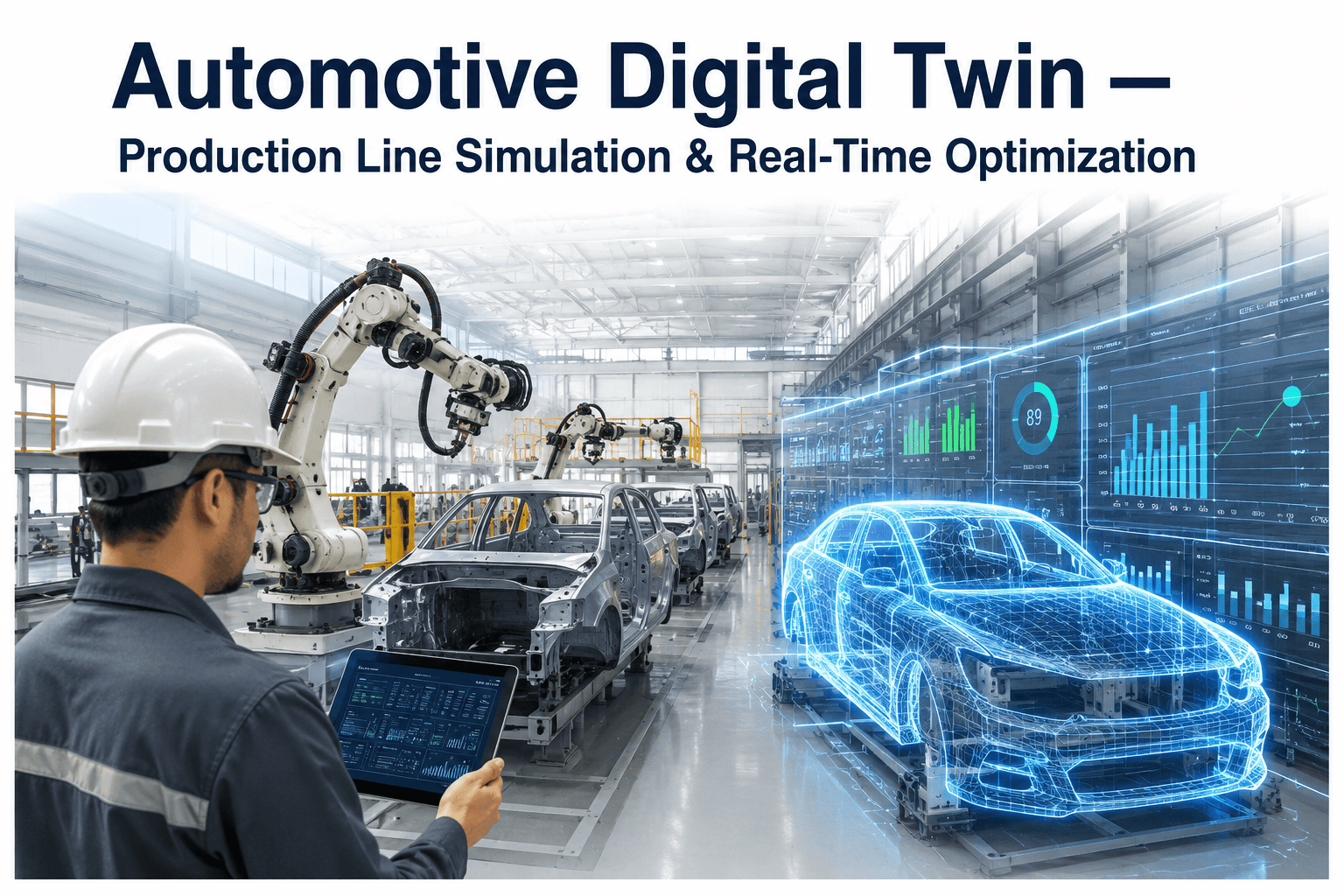
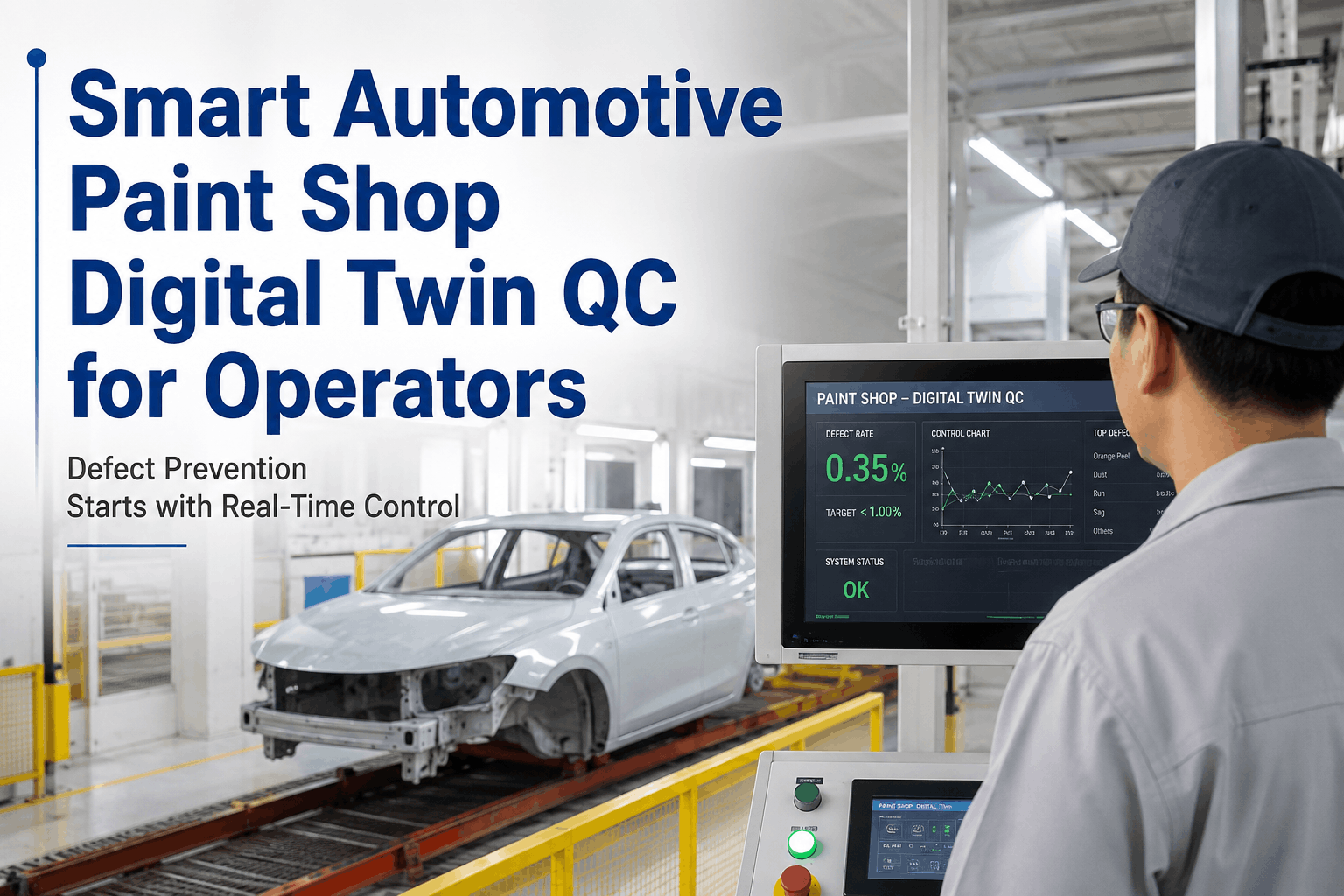
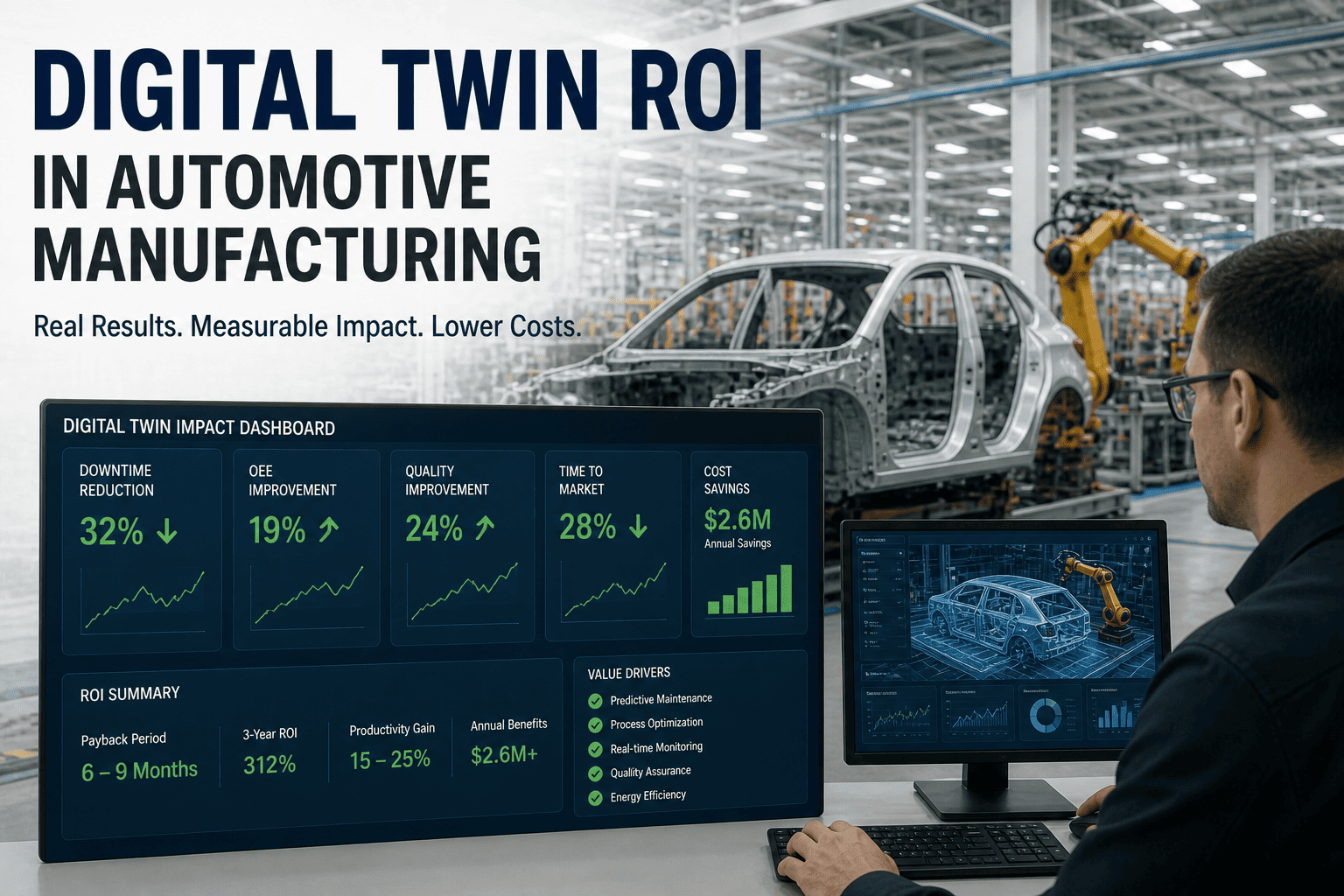
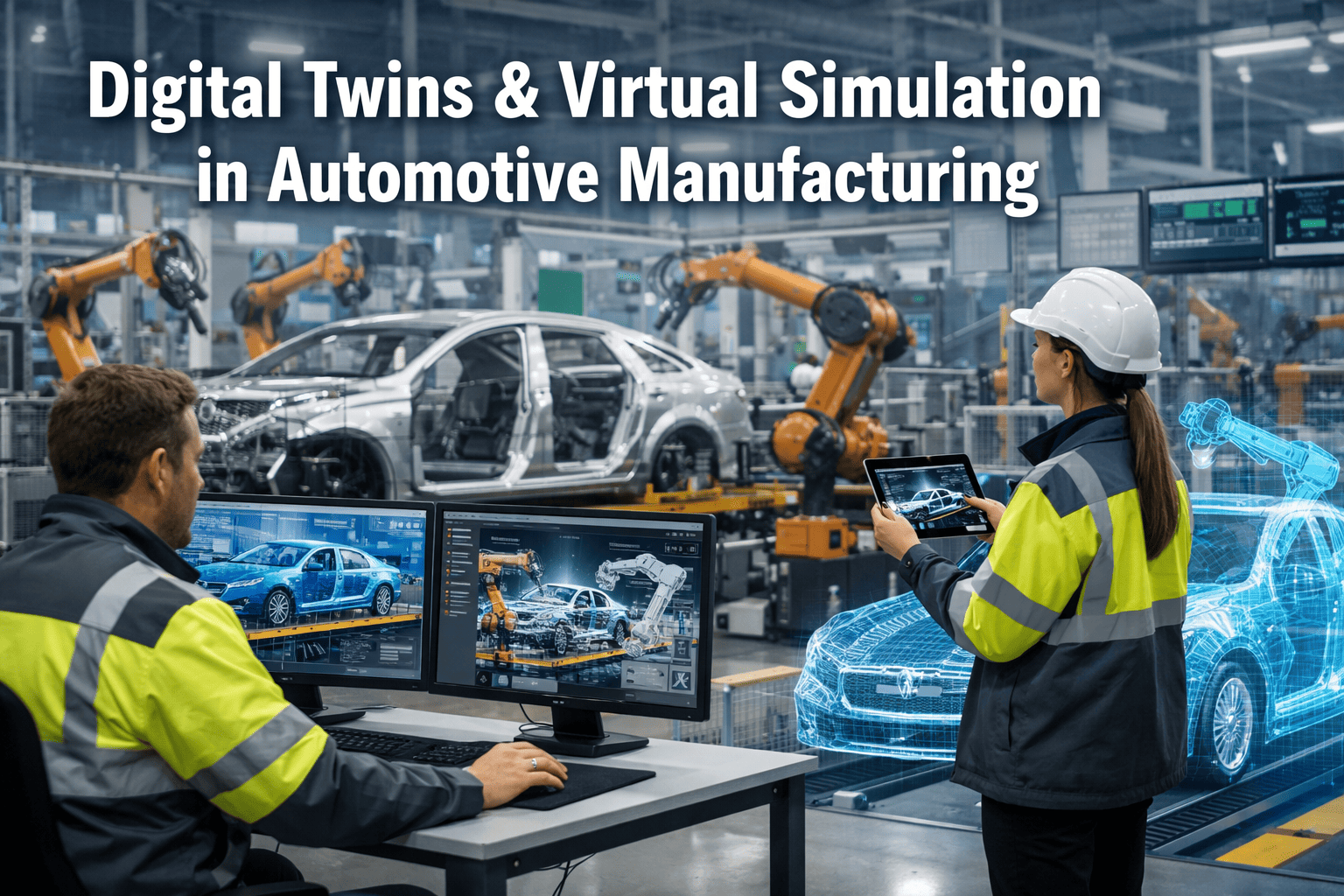
Three technologies are reshaping automotive manufacturing simultaneously — and separately, each one delivers real value. A Manufacturing Execution System (MES) connects the shop floor to production plans. AI turns data into real-time decisions. A Digital Twin creates a virtual replica of the physical plant that can be tested, optimized, and predicted against. But when these three converge in a single integrated platform, something more powerful emerges: a self-optimizing factory that learns continuously, responds instantly, and improves without human intervention at every cycle. That convergence is what the automotive industry is calling smart manufacturing — and the gap between plants that have it and plants that don't is becoming a competitive chasm. Book a demo to see how iFactory unifies MES, AI, and Digital Twin for automotive production.
MES & ERP Integration
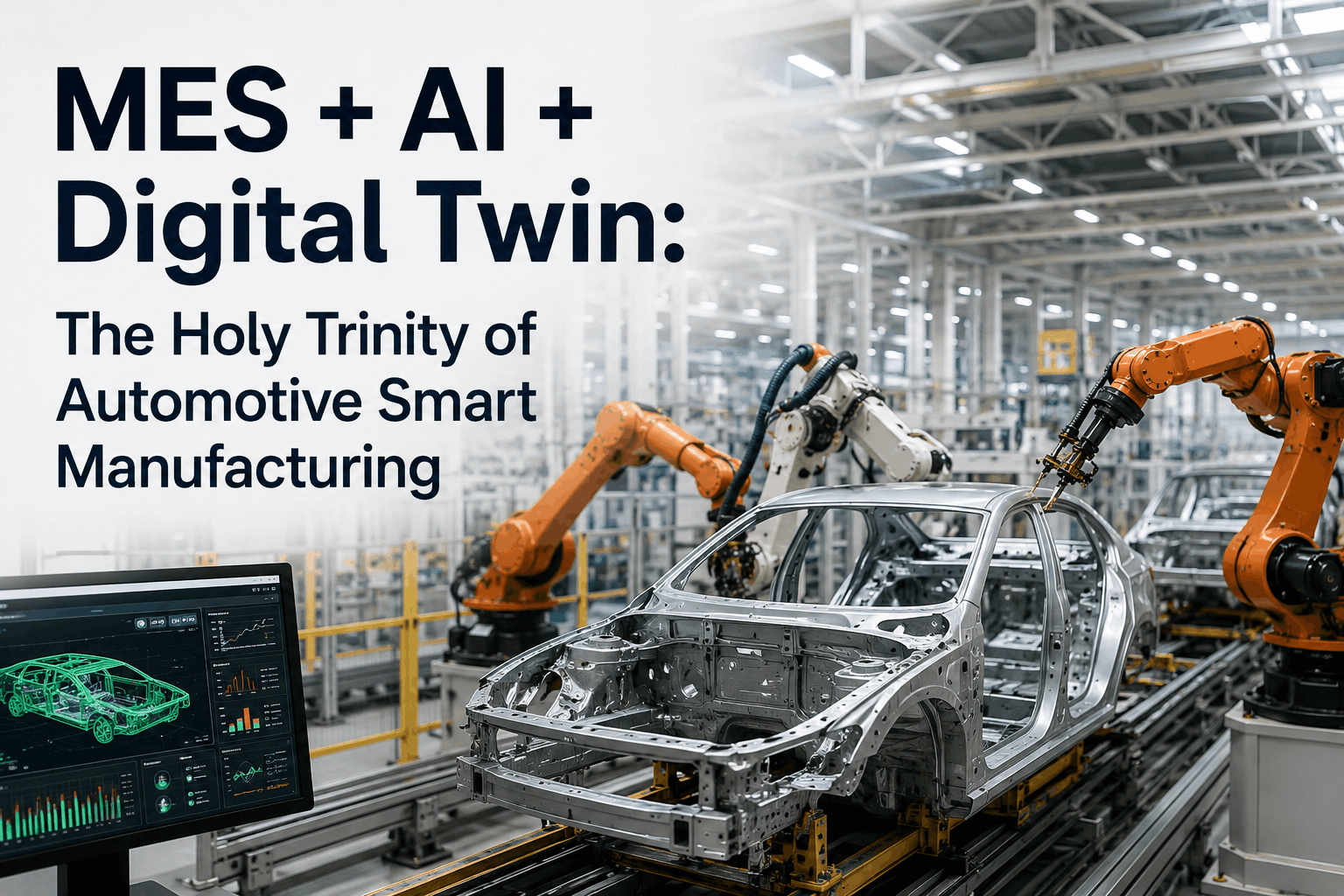
MES + AI + Digital Twin: The Holy Trinity of Automotive Smart Manufacturing
Each technology delivers value alone. Together, they create a production system that monitors itself, optimizes itself, and predicts its own failures — before they happen.
92%
of companies deploying digital twins report ROI above 10% (Hexagon 2025 survey)
20–30%
productivity improvement at plants combining MES, AI, and digital twin
70%+
of automotive manufacturers now piloting or deploying digital twin solutions
Understanding the Three Technologies — and Why Each Alone Is Incomplete
Before understanding the convergence, it helps to understand what each technology does individually — and where each hits its ceiling without the others.
What it does: Connects production orders from ERP to the shop floor. Tracks work-in-progress, records quality data, manages operator instructions, and captures machine status in real time.
Its ceiling without AI + Digital Twin: MES collects excellent data but cannot act on it intelligently. It tells you what happened. It cannot tell you what will happen or optimize what should happen next.
What it does: Detects patterns in manufacturing data that are invisible to human operators. Predicts failures, optimizes schedules, classifies defects, and generates recommendations faster than any human decision process.
Its ceiling without MES + Digital Twin: AI is only as good as the data it receives. Without MES providing real-time shop floor context and a digital twin to validate recommendations safely, AI decisions cannot be trusted or actioned at production speed.
What it does: Creates a virtual replica of the physical production system — equipment, processes, material flows, and constraints — that mirrors real-world state in real time and can be used to simulate future scenarios.
Its ceiling without MES + AI: A digital twin without live MES data is, as industry observers note, an expensive screensaver. Without AI to process the simulation outputs, the twin generates insights that humans cannot act on fast enough to matter.
The Holy Trinity: How MES + AI + Digital Twin Work Together
The magic happens when data flows continuously between all three layers — closing a loop that is impossible to close with any two of them alone. Talk to an iFactory expert to see how this loop is built for your plant.
The Continuous Optimization Loop
Data flows between all three layers every production cycle
1
MES Feeds Live Data
MES captures real-time machine status, WIP position, quality gate results, operator actions, and cycle times — continuously streaming the actual state of the plant.
→
2
Digital Twin Mirrors Reality
MES data updates the digital twin in real time, creating a live virtual model of the plant. The twin reflects current queue depths, equipment health, material positions, and throughput rates.
→
3
AI Analyzes and Optimizes
AI models run against the digital twin — detecting anomalies, predicting failures, optimizing schedules, and simulating the impact of proposed changes before anything is physically altered.
→
4
MES Executes Recommendations
AI-validated recommendations flow back into the MES as updated work instructions, revised schedules, maintenance alerts, and quality hold flags — closing the loop to the shop floor.
What the Trinity Unlocks: Six Capabilities No Single Technology Delivers
01
Predictive Maintenance at Production Scale
MES streams real-time equipment sensor data. The digital twin models expected equipment behavior under current load conditions. AI detects deviation from modeled behavior — predicting failures 12–48 hours before they occur. Maintenance is dispatched before the breakdown, not after. Industry benchmarks show 20–40% reduction in unplanned downtime with this combined approach.
20–40% unplanned downtime reduction
02
Virtual Commissioning and Process Change Validation
Before any physical change — new equipment, process re-sequencing, layout modification — the digital twin allows engineers to simulate it in full. AI stress-tests the virtual model under realistic production scenarios. Wistron reduced physical commissioning time by 50% (from 5 months to 2.5 months) using NVIDIA Omniverse-powered digital twin simulation, avoiding costly physical trial-and-error entirely.
50% commissioning time reduction (Wistron)
03
Real-Time Quality Feedback Loops
MES captures quality gate results at every station. AI correlates quality outcomes to upstream process parameters — identifying which machine settings, operator sequences, and material batches predict defects. The digital twin validates corrective parameter changes before they are deployed to the line. Quality improvement that once took weeks of statistical analysis now happens in hours.
Root cause to corrective action in hours, not weeks
04
Autonomous Production Scheduling
MES provides real-time constraint data: machine availability, material positions, WIP queue depths. The digital twin models downstream capacity. AI re-optimizes the production schedule across all constraints simultaneously — publishing an updated plan to MES work queues in seconds when any constraint changes. The Siemens Nanjing plant achieved 20% productivity improvement through this integrated approach.
20% productivity uplift (Siemens Nanjing)
05
Energy Optimization Across the Plant
The digital twin models the plant's energy consumption patterns. AI identifies peak demand events, optimization opportunities in equipment scheduling, and HVAC management strategies. MES coordinates equipment start/stop sequences to minimize energy draw without affecting throughput. Results of 15–25% energy savings have been demonstrated at plants deploying this integrated approach.
15–25% energy savings at integrated plants
06
New Model Introduction Risk Reduction
When launching a new vehicle program, the digital twin virtualizes the new production configuration before any physical changes. AI stress-tests the virtual line under 100+ scenarios — equipment at 92% uptime, suppliers 3 days late, variant clusters. MES captures actual performance data from early production and feeds it back to the twin for continuous calibration. NMI startup delays drop from an 18-day industry average to under 5 days.
NMI delay: 18 days → under 5 days
ROI Data: What Automotive Plants Are Actually Achieving
92%
of digital twin deployments return above 10% ROI
Hexagon Survey 2025
20–30%
OEE improvement from AI + MES integrated scheduling
Industry benchmark 2025
50%
commissioning time reduction via digital twin validation
Wistron / NVIDIA Omniverse
$500K–2M
annual throughput value unlocked per mid-size plant
Digital Twin ROI analysis 2026
40%
downtime reduction from digital twin predictive maintenance
PatSnap Manufacturing Report 2026
27%
of AI manufacturing deployments achieve 12-month payback
Industry AI ROI benchmark 2025
Sources: Hexagon Digital Twin Survey 2025, PatSnap Manufacturing Digital Twin Report 2026, Customer Times AI Manufacturing Report 2025, NVIDIA Omniverse Case Studies, iFactory Production Data
Want a plant-specific ROI estimate before committing to any investment? Book a demo and our team will model the expected return for your facility.
Implementation Roadmap: How to Build the Trinity
Connect MES to all critical machines via OPC UA or equivalent. Standardize machine IDs, parameter names, and data structures. Establish minimum 3–6 months of historical data. Prioritize connectivity at constraint work centers first — not plant-wide simultaneously.
Convert MES-connected equipment specifications, process parameters, and layout into a discrete-event simulation model. Validate the twin against historical production data. Start with the highest-impact process area — typically the constraint work center or the quality-critical assembly stage.
Deploy AI models for the highest-priority use case: predictive maintenance, quality prediction, or scheduling optimization. Train on MES historical data. Validate predictions against actual outcomes in parallel before any production actions are taken based on AI outputs.
Connect AI outputs back to MES work queues, scheduling systems, and maintenance alerts. Make the twin bidirectional — AI recommendations flow back to the control layer automatically. Establish the continuous optimization loop and begin expanding scope to additional process areas.
FAQ: MES, AI, and Digital Twin Integration
How iFactory Delivers the Holy Trinity
01
MES Connectivity Layer
Native integration with SAP Digital Manufacturing, Siemens Opcenter, Rockwell Plex, and custom MES via OPC UA. Real-time shop floor data — machine status, WIP, quality results — feeds both AI and digital twin continuously.
02
Production Digital Twin
Discrete-event simulation of your production system — equipment, processes, material flows, constraints — updated live from MES data and stress-tested against 100+ scenarios before any physical change is committed.
03
AI Scheduling Engine
Reinforcement learning scheduler optimizes production sequences globally across all work centers, validated against the digital twin before publishing to MES work queues and SAP production orders.
04
Predictive Maintenance AI
Machine learning models trained on MES sensor data predict equipment failure 12–48 hours in advance. Digital twin validates maintenance impact on production throughput before the window is scheduled.
05
Quality Intelligence Loop
AI correlates MES quality gate data to upstream process parameters in real time. Root causes identified automatically. Corrective parameter changes validated in the digital twin before deployment to the line.
06
Unified Plant Intelligence Dashboard
Single operations view across MES data, AI recommendations, digital twin state, and KPI trends — OEE, downtime, quality rate, schedule adherence — updated every 15 minutes for plant managers and operations teams.
Smart Manufacturing
Bring MES, AI, and Digital Twin Together in One Platform
iFactory unifies all three technologies for automotive OEMs and suppliers — delivering the continuous optimization loop that turns your plant data into measurable production gains.
MES Integration
Production Digital Twin
AI Scheduling
Predictive Maintenance
Quality Intelligence
Plant Dashboard