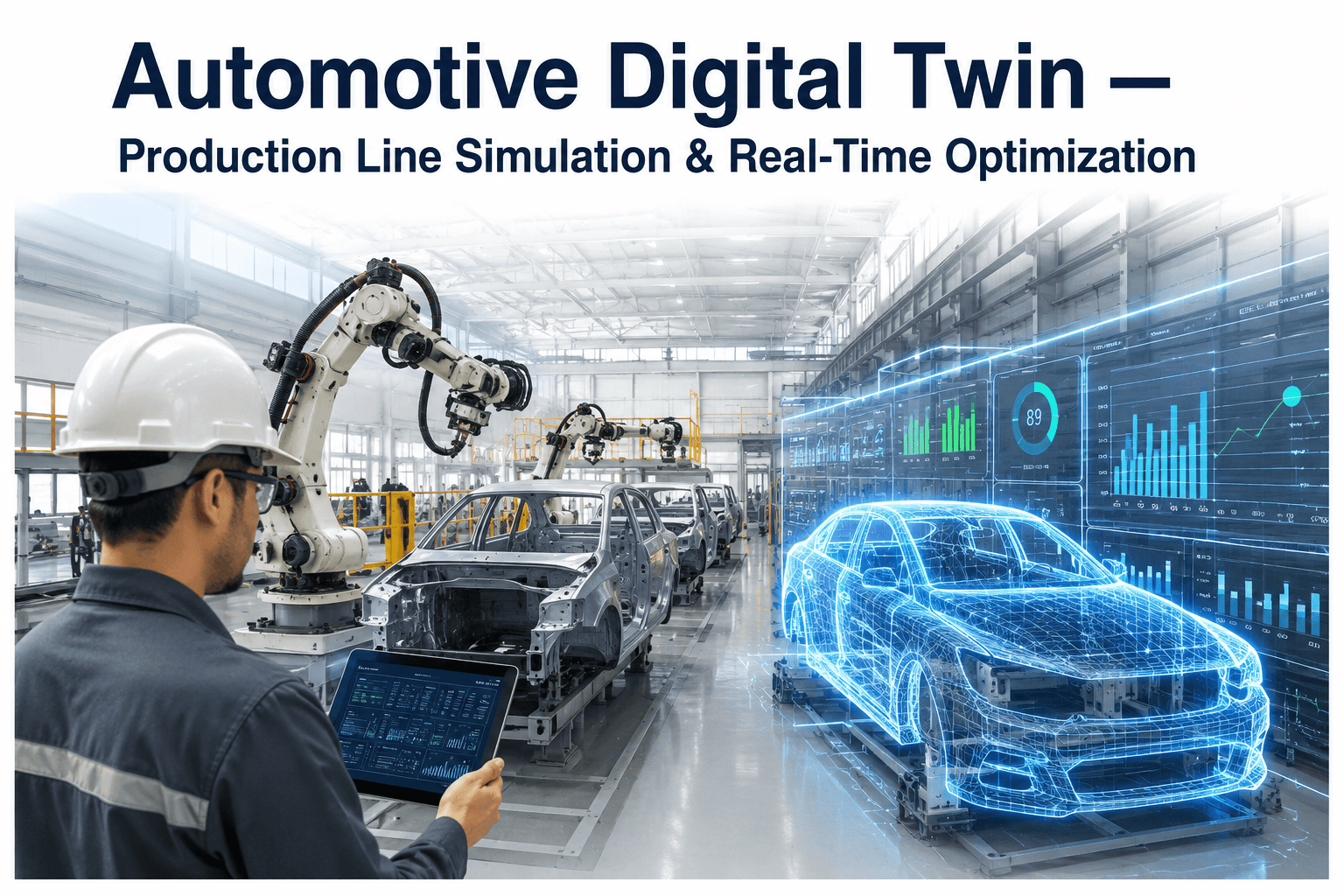
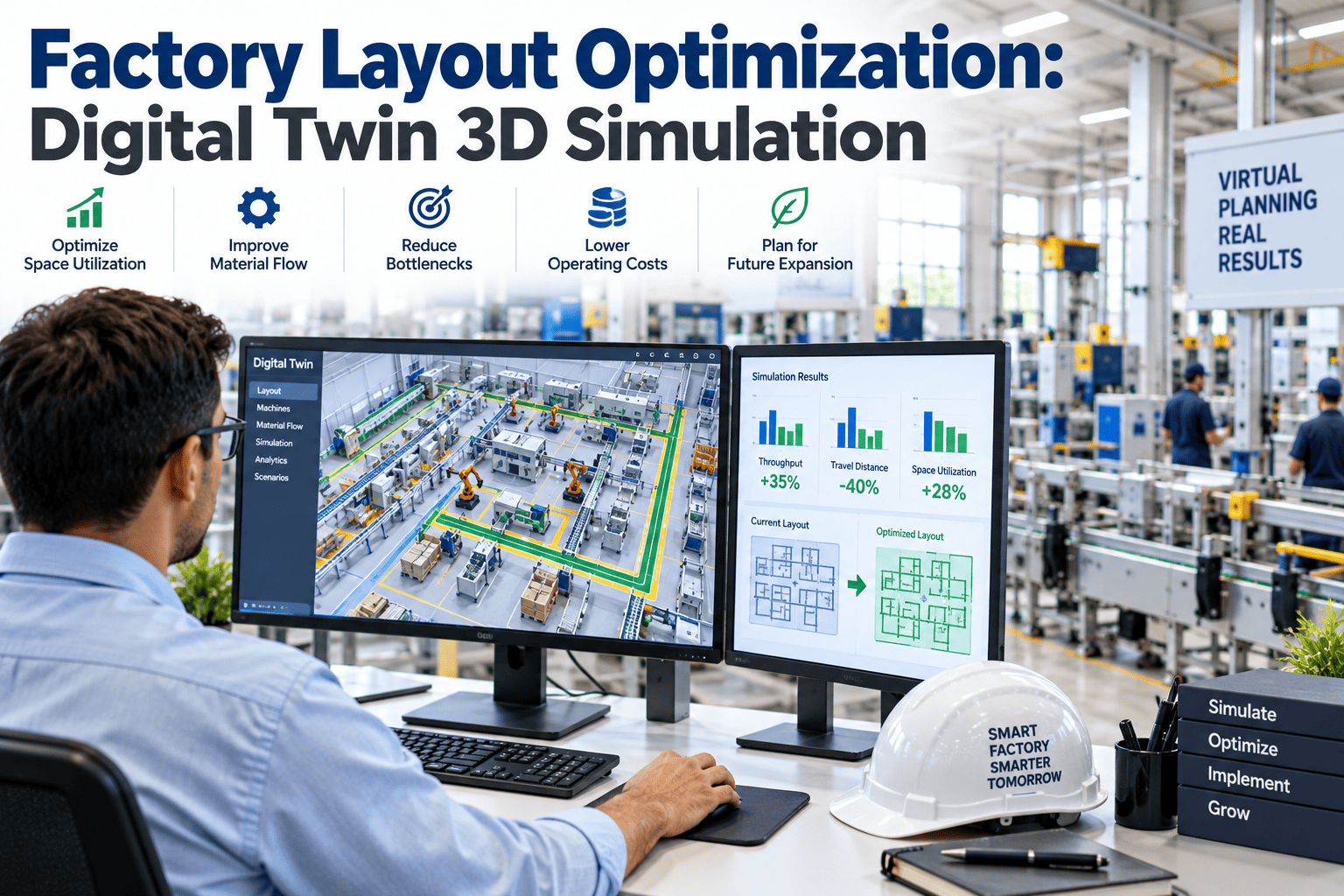
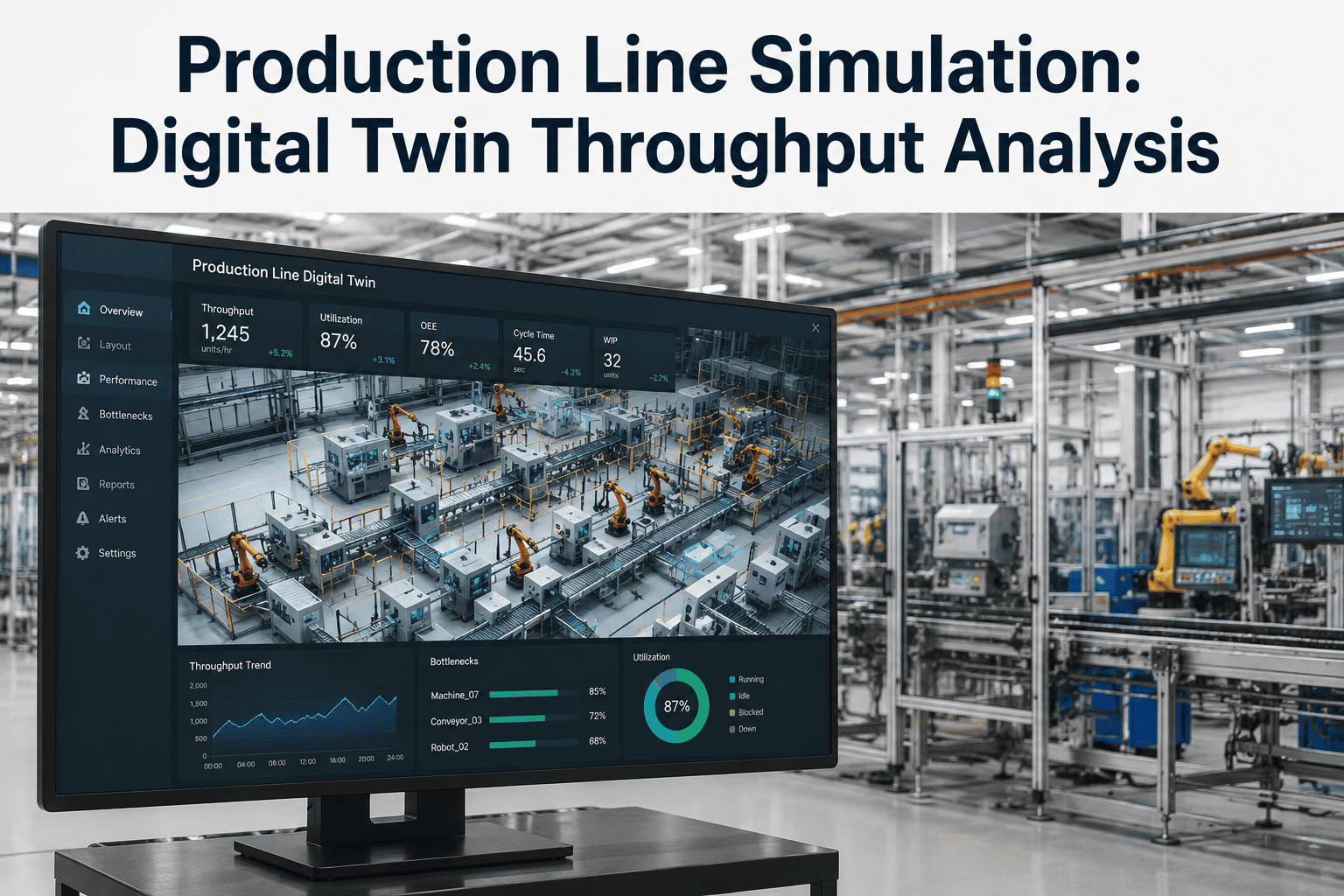
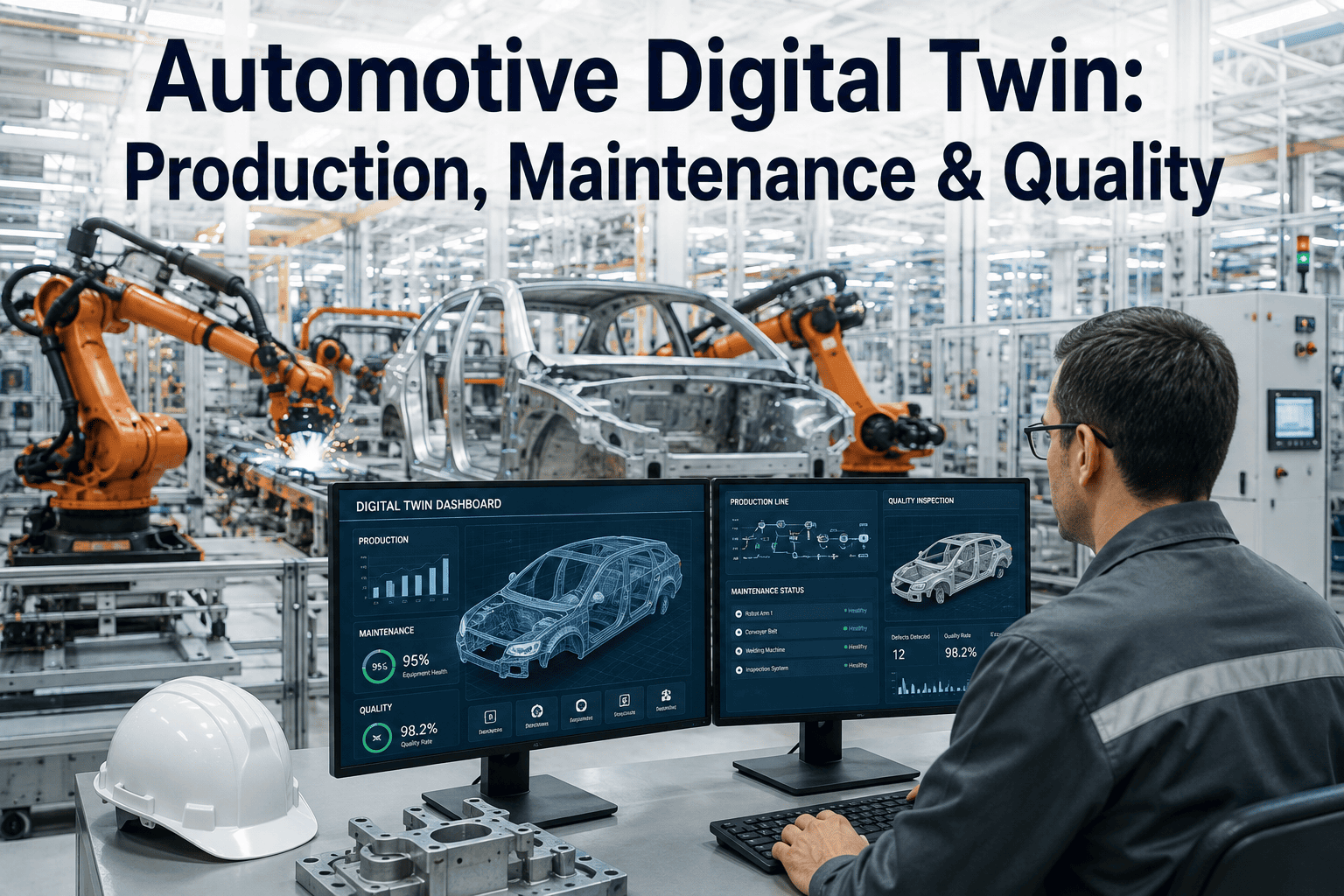
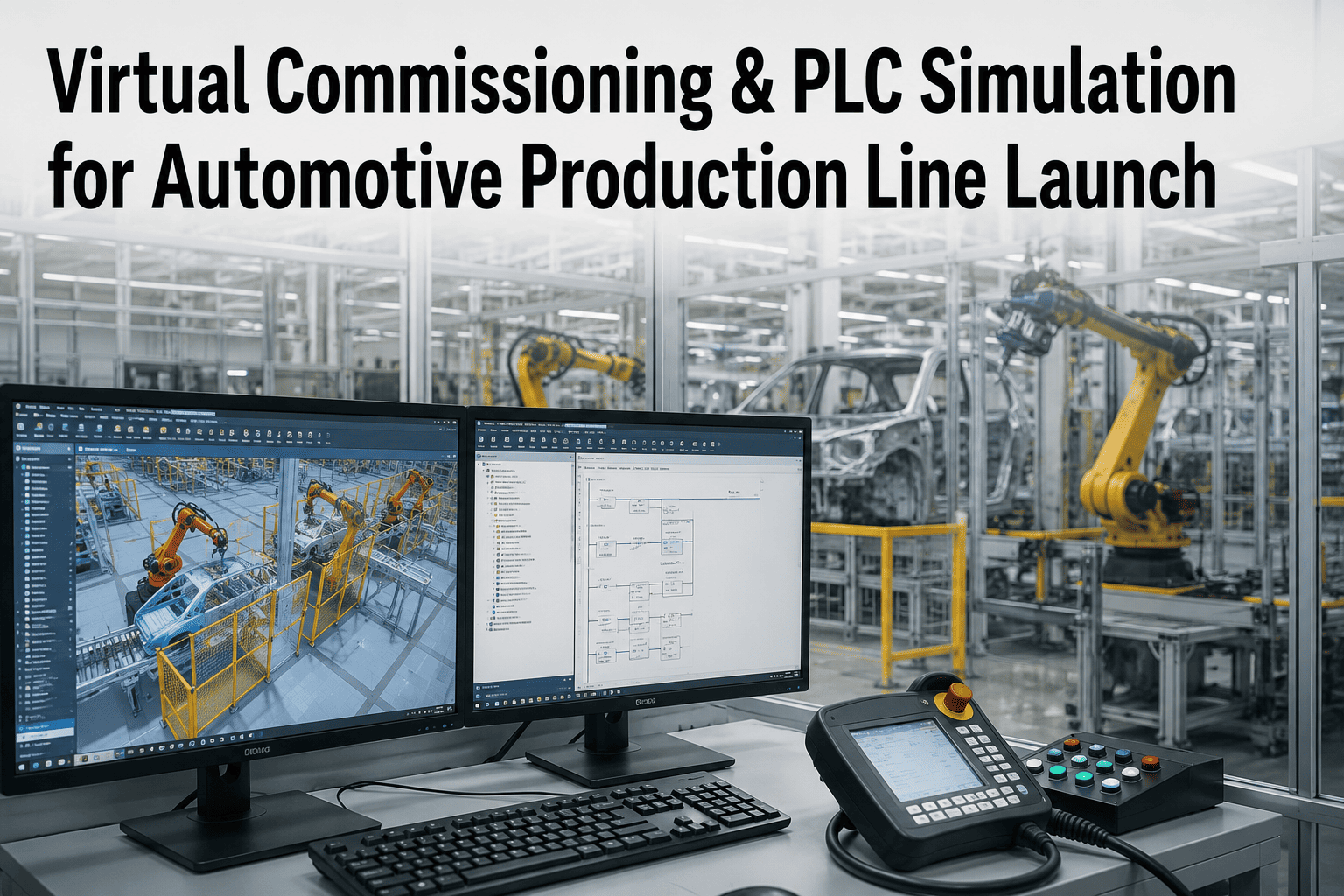
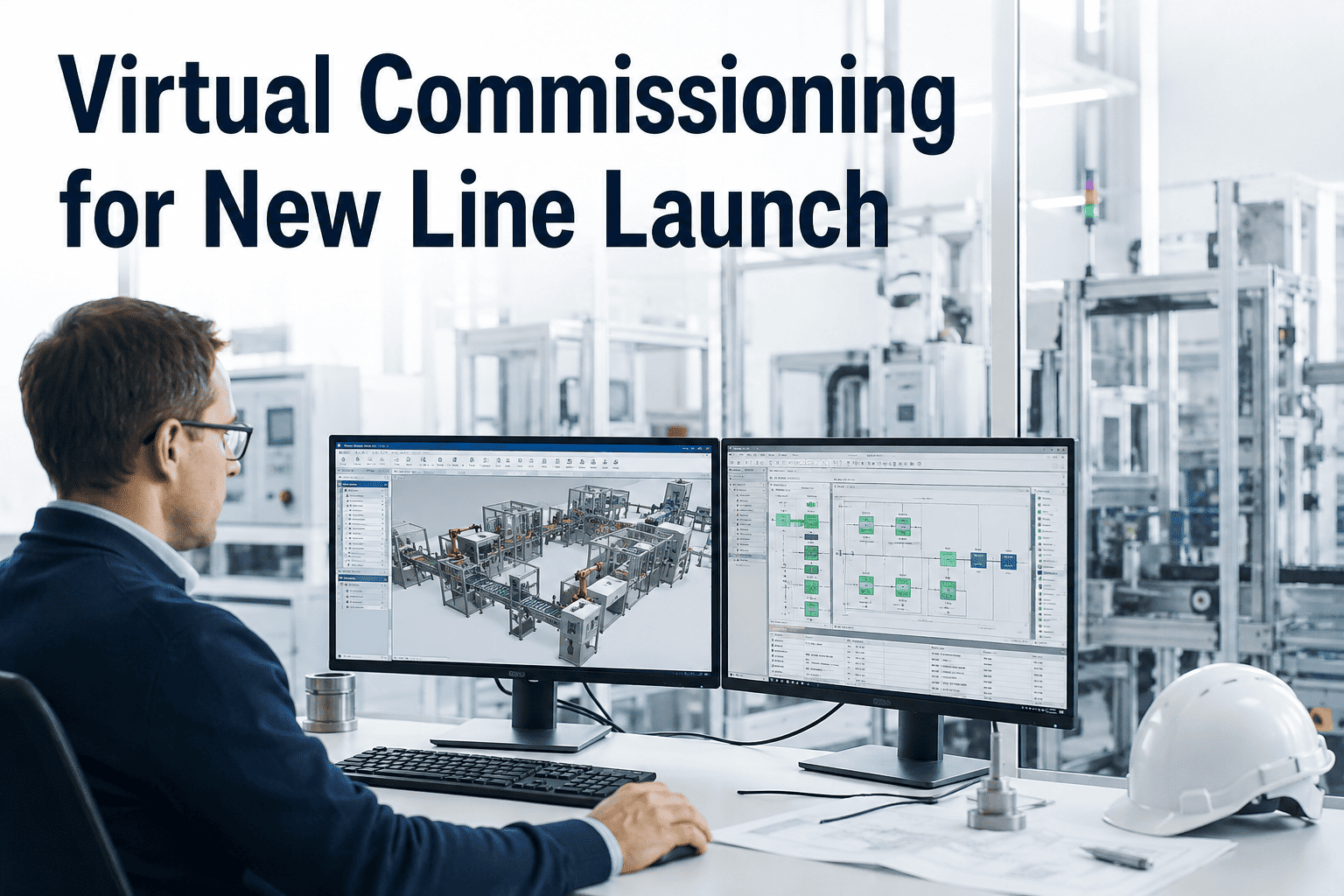
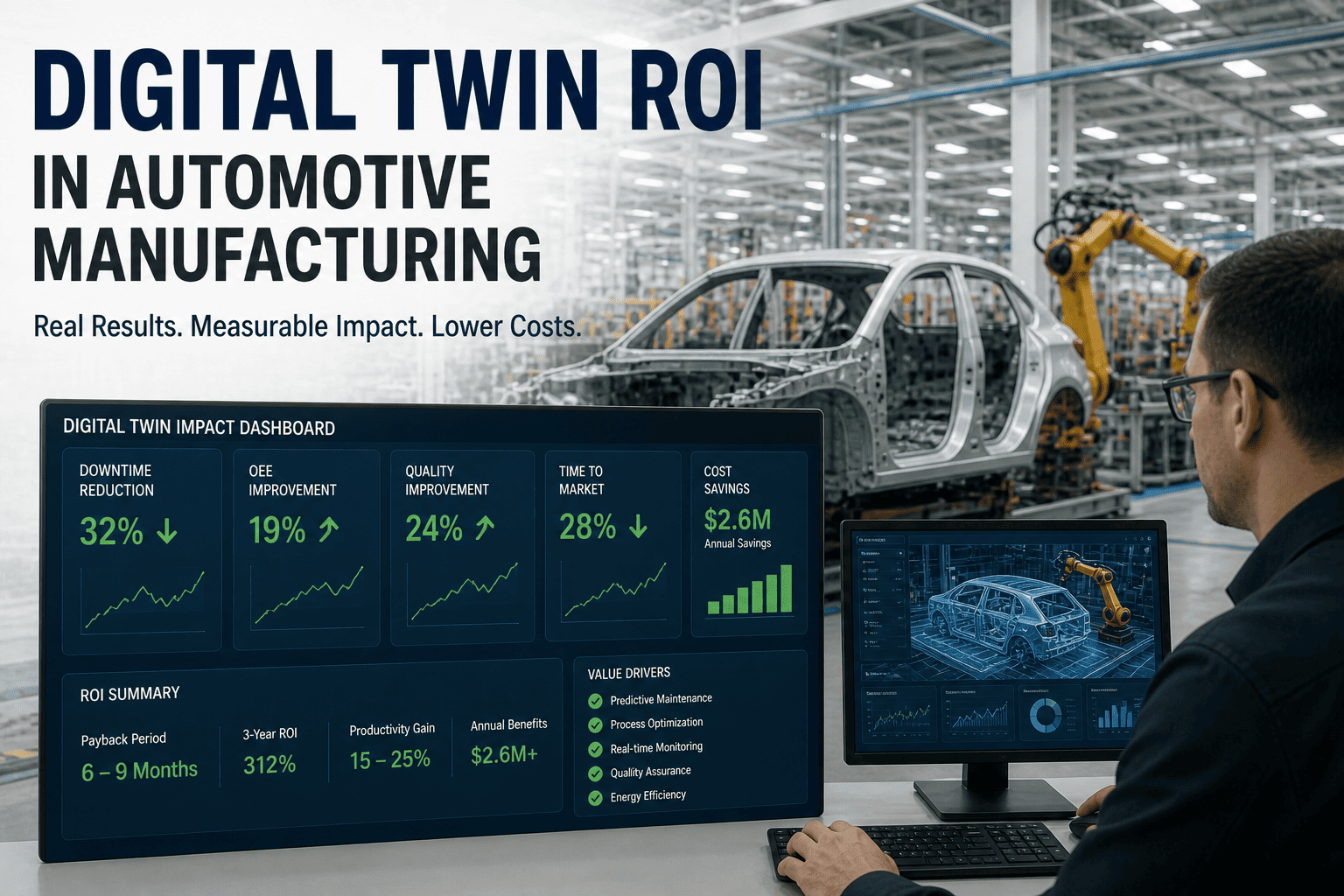
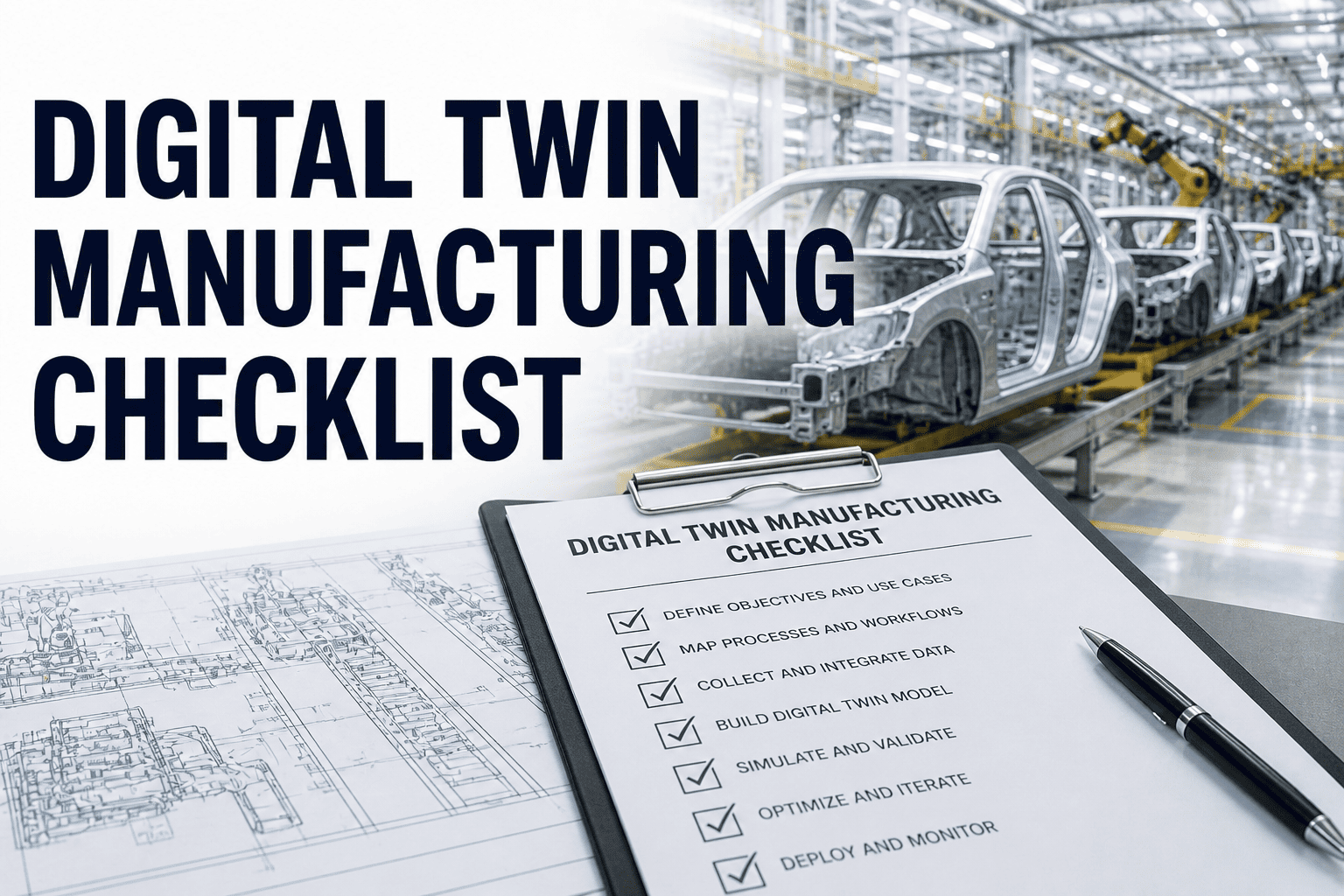
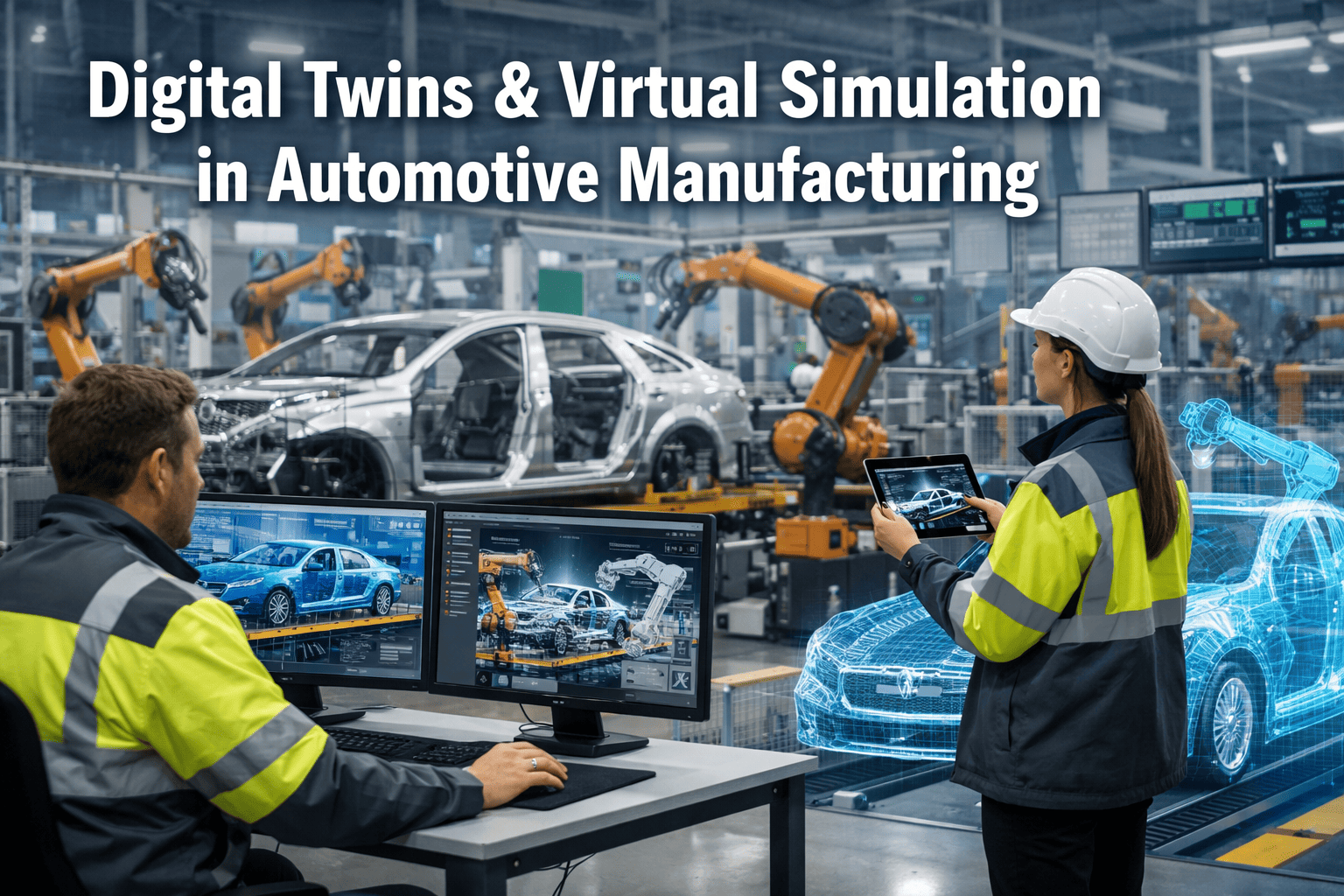
By the time a bottleneck shows up on a production dashboard, it has usually already cost a shift's worth of throughput, and the meeting convened to fix it starts with people arguing over whose station is actually the constraint. Operations directors running automotive production lines that span press shop, body shop, paint, and final assembly are managing a system with more interdependent variables than any single person can hold in their head — cycle time at one station, changeover frequency at another, buffer capacity between the two, and a maintenance schedule sitting on top of all of it. A digital twin gives operations leadership a live, virtual mirror of that entire system, one where a proposed change can be tested in simulation before it's committed to the physical line. Book a demo to see a digital twin built against your own production line layout.
AUTOMOTIVE OPERATIONS · DIGITAL TWIN
Test the Change Before You Commit the Line to It
iFactory's digital twin mirrors your production line from press shop through final assembly, letting operations teams simulate bottlenecks, changeovers, and capacity changes before touching the physical floor.
The Coordination Problem
Why Production Line Decisions Outrun Any One Person's Mental Model
An automotive production line is a chain of interdependent stations where a change anywhere in the chain has ripple effects that aren't always intuitive. Adding capacity at a bottleneck station might simply shift the bottleneck to the next station in line, one that had spare capacity only because it was waiting on the original bottleneck. A new model introduced into a shared body shop line changes the changeover pattern at every downstream station, not just the one where the new model is physically different.
Historically, operations teams have relied on a combination of experience, spreadsheet-based throughput models, and cautious pilot runs to reason through these interdependencies before committing to a change. That approach works, but it's slow, and it tends to underweight second-order effects — the buffer capacity between two stations, the specific sequencing pattern of a mixed-model schedule — because those factors are hard to hold accurately in a static spreadsheet model that doesn't reflect real-time variability.
A digital twin addresses this by building a live simulation model that mirrors actual production data rather than static assumptions. Because it's continuously updated from real line data, it reflects the actual variability, changeover times, and buffer behavior of your specific line rather than an idealized theoretical model, which is exactly the gap that makes spreadsheet-based capacity planning unreliable for anything beyond a rough first estimate.
The Layer Stack
What a Production Digital Twin Is Actually Built From
A digital twin isn't a single piece of software — it's a layered system connecting live data, a simulation engine, and a decision interface. Understanding the layers clarifies what a twin can and can't do at each stage of maturity. Book a demo to see each layer applied to your own line data.
Layer 4
Decision & What-If Interface
Where operations leadership tests proposed changes — added capacity, new model introduction, shift pattern adjustments — against the simulation before committing them to the physical line.
Layer 3
Simulation Engine
Runs the virtual model forward under different scenarios, projecting throughput, bottleneck location, and buffer behavior based on the connected live data and proposed changes.
Layer 2
Process Model
A structured representation of every station, its cycle time distribution, changeover behavior, and its upstream and downstream dependencies across the full line.
Layer 1
Live Data Connection
Continuous data feed from MES, SCADA, and station-level sensors that keeps the model reflecting actual current line performance rather than a stale historical snapshot.
Where It Applies
The Decisions a Digital Twin Actually Improves
Bottleneck Identification
Simulating the full line under current conditions reveals the true constraint station, which is often not the one intuition or a static capacity spreadsheet would point to.
Capacity Investment Planning
Test whether added capacity at a proposed station actually increases overall line throughput or simply shifts the constraint elsewhere, before committing capital.
New Model Introduction
Model how a new body style's changeover pattern and cycle time affects every downstream station on a shared line before the model physically enters production.
Buffer and Layout Optimization
Simulate different buffer sizing and station layout configurations to find the arrangement that best absorbs upstream variability without excessive work-in-process inventory.
Maturity Path
How Operations Teams Typically Build Toward a Full Digital Twin
1
Single-Line Data Integration
Start by connecting live data from one production line or zone into a structured process model, rather than attempting a whole-plant twin from day one.
2
Baseline Simulation Validation
Run the simulation against known historical scenarios to confirm it accurately reproduces real throughput and bottleneck behavior before trusting it for forward-looking decisions.
3
What-If Scenario Testing
Begin using the validated model for lower-stakes scenario testing, building organizational trust in the twin's projections before larger capital decisions are routed through it.
4
Expansion Across the Full Plant
Extend the twin from a single line to the full plant footprint, connecting press shop, body shop, paint, and final assembly into one unified simulation environment.
Common Objections
Addressing the Questions Operations Directors Usually Ask First
Most hesitation around digital twins comes from reasonable, specific concerns rather than general skepticism about the concept. Book a demo to walk through these concerns against your own plant's specific situation.
Common Concerns and How a Twin Addresses Them
SEE YOUR LINE AS A LIVE MODEL
Start With a Twin of Your Highest-Impact Production Line
Our team will walk through what a first digital twin implementation would look like for your specific plant and data maturity.
Frequently Asked Questions
Automotive Digital Twins — FAQs
Do we need a full plant-wide data integration before building a digital twin?
No, most successful digital twin programs start with a single line, zone, or known bottleneck area rather than the entire plant. Starting narrow lets the team validate that the simulation accurately reflects reality before expanding scope, which is a far more manageable path than a full plant-wide rollout from the start.
How do we know the simulation actually matches what happens on the real line?
Baseline validation is a required step before any twin is used for forward-looking decisions — the model is run against known historical scenarios and its projections are compared to actual recorded outcomes.
Book a demo to see this validation process in detail.
What existing systems does a digital twin need to connect to?
Typically MES for production and quality data, SCADA for station-level machine data, and any existing IoT sensor infrastructure already deployed on the line. The specific integration points depend on what systems are already in place at your plant.
Can a digital twin model a mixed-model line with frequent changeovers?
Yes, and this is actually one of the areas where a twin adds the most value, since mixed-model changeover interactions are notoriously difficult to reason through manually. The process model layer captures changeover behavior specific to each model combination running through the line.
How long does it take to get from initial data connection to a usable simulation?
Most single-line implementations reach a validated baseline simulation within eight to twelve weeks, with the process model construction phase typically taking the longest as it requires accurately capturing each station's real cycle time and changeover behavior.
AUTOMOTIVE OPERATIONS · DIGITAL TWIN
Make Your Next Capacity Decision With a Live Model, Not a Guess
iFactory's digital twin gives operations directors a continuously updated virtual mirror of the production line, built for real what-if decision making.