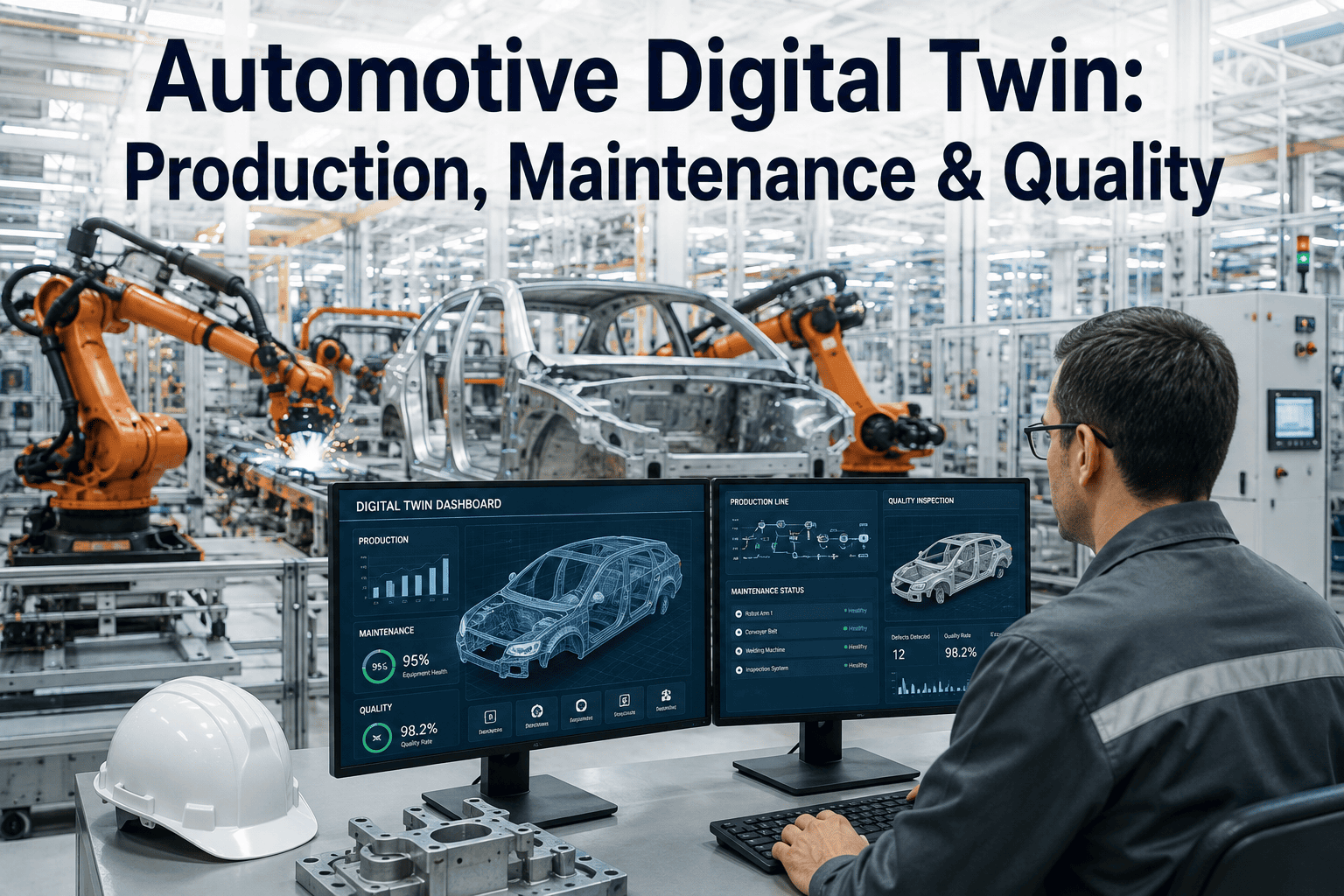
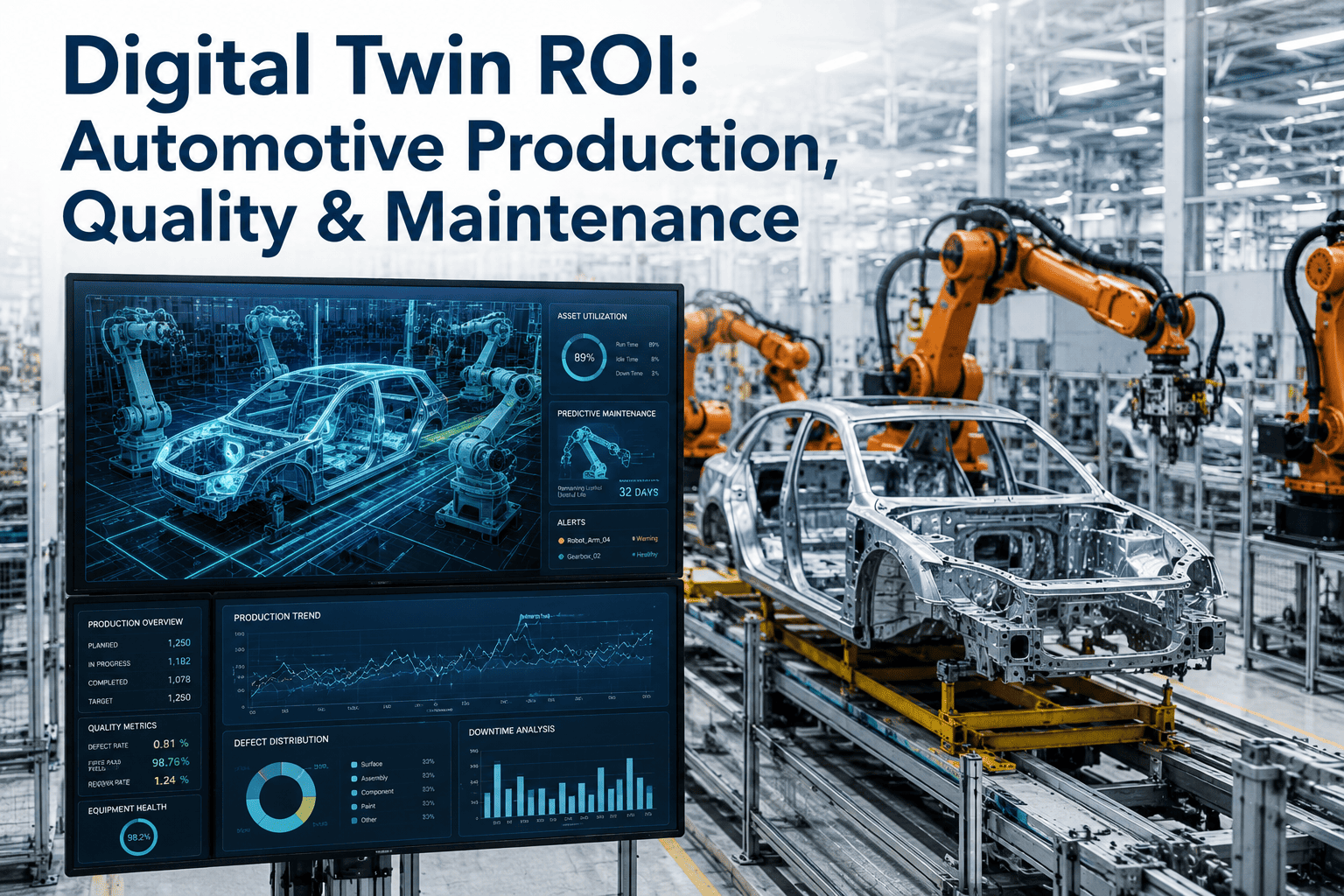
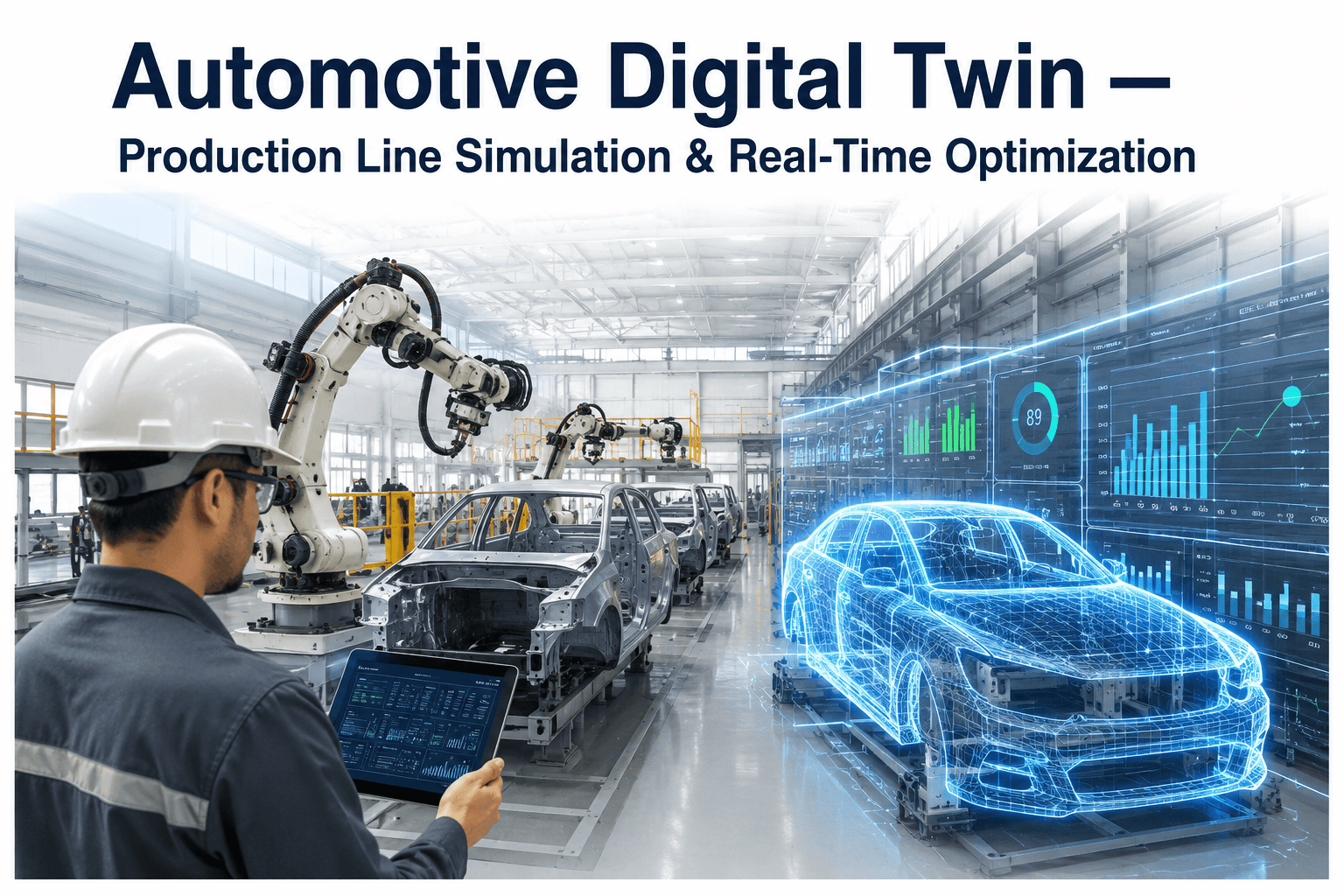
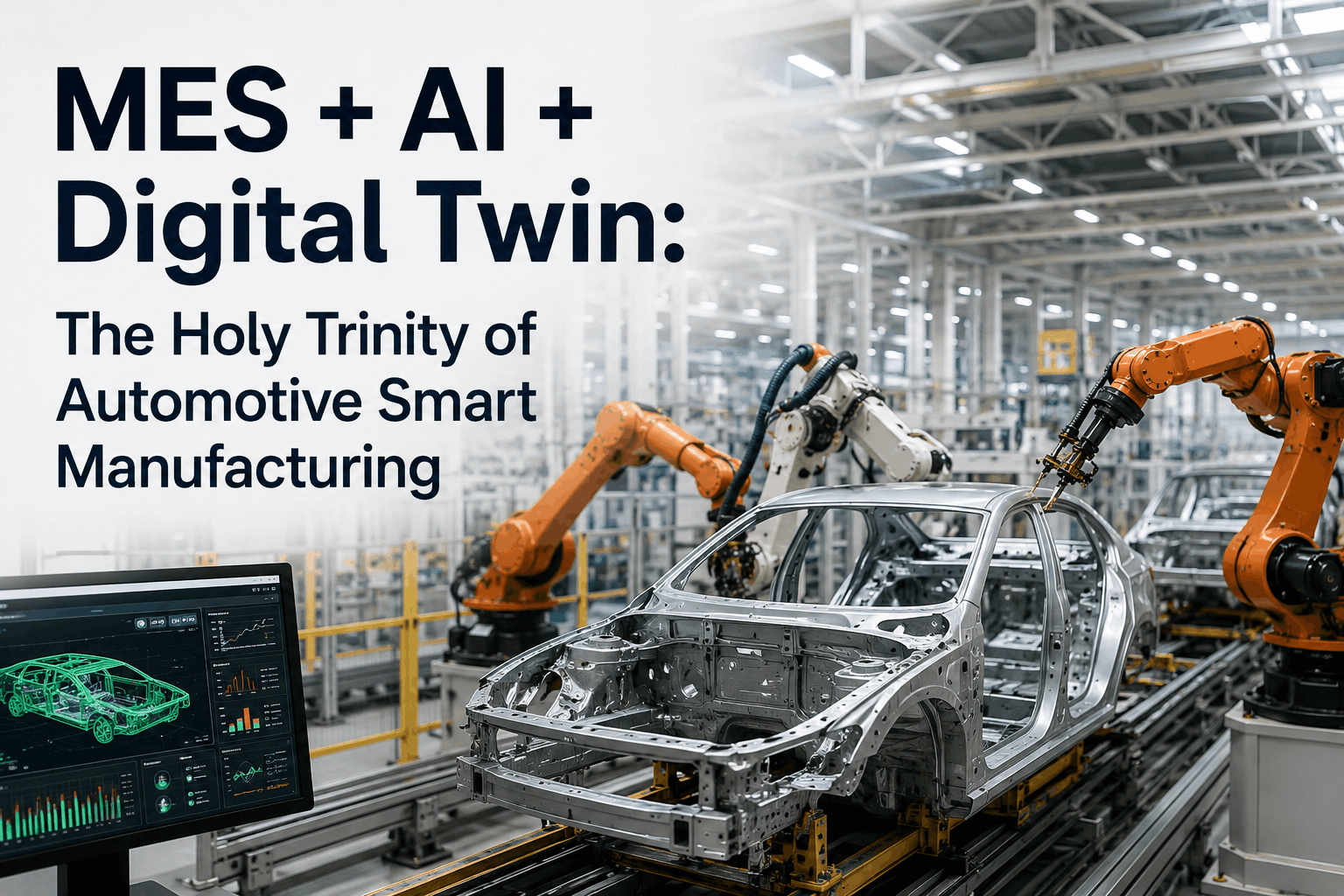
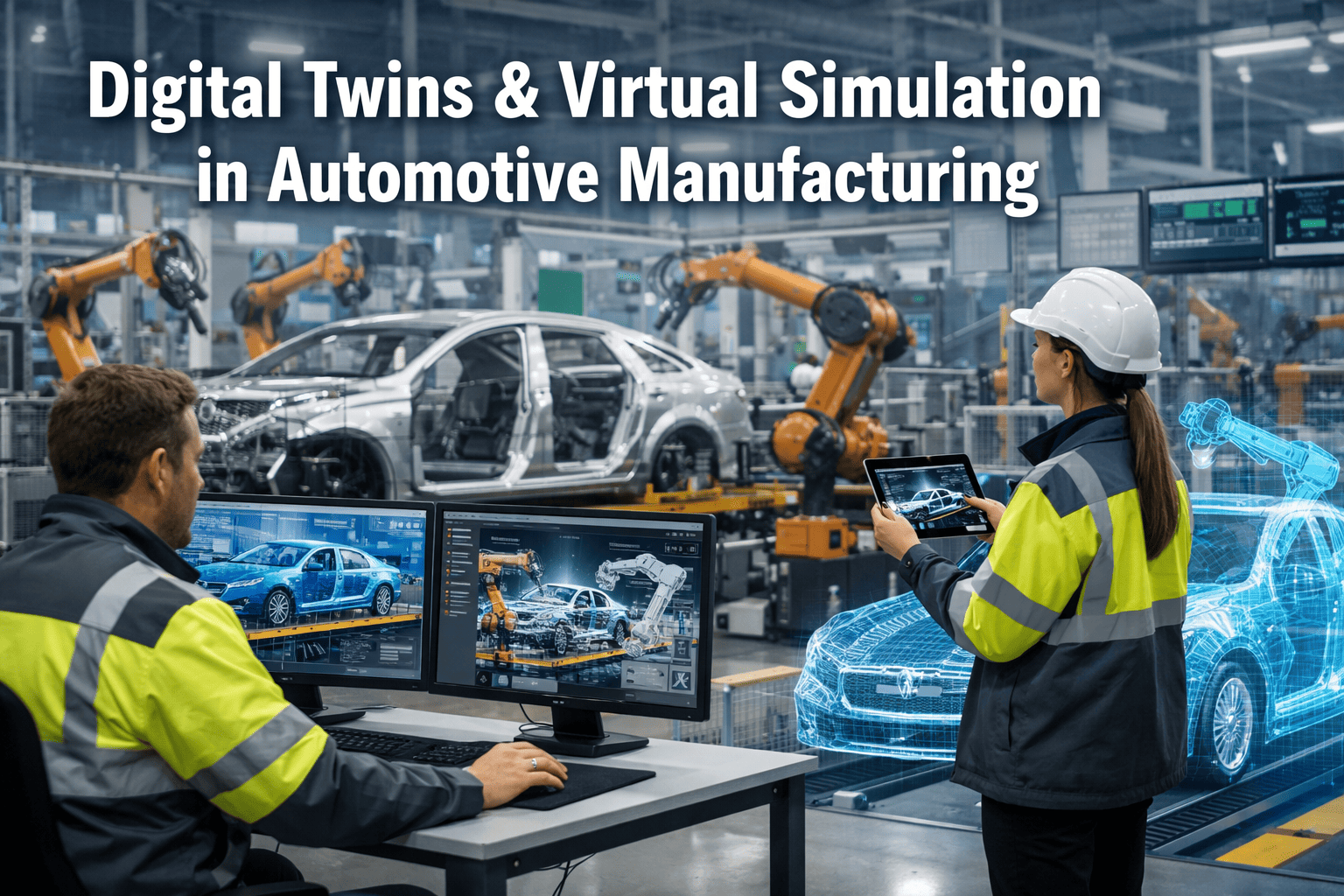
Testing a new production sequence, a maintenance schedule change, or a quality process adjustment directly on a live automotive line is expensive when it goes wrong, and it usually goes wrong at least once before the right configuration is found, which means real units, real downtime, and real cost absorbed during the learning process. A digital twin lets that same trial and error happen against a virtual model of the line first, so the version that finally runs on the physical floor has already been proven out. iFactory builds digital twins that mirror production, maintenance, and quality behavior together, and you can book a demo to see a twin built from your own line data.
DIGITAL TWIN · PRODUCTION, MAINTENANCE & QUALITY
Test the Change on the Twin Before It Touches the Real Line
iFactory models your production flow, maintenance behavior, and quality outcomes together in a single digital twin, so a proposed change is validated virtually before it costs you real units or real downtime.
Physical Line
Real sensors, real output, real constraints
⇄
Digital Twin
Simulated scenarios, tested safely, before deployment
WHY THIS MATTERS FOR AUTOMOTIVE LINES
Every Untested Change Is a Live Experiment on Real Production
Automotive lines run tightly coupled sequences where a change in one station's cycle time, a shifted maintenance window, or a new inspection step can ripple through the whole line in ways that are genuinely hard to predict from experience alone. Without a way to test a change first, the only option is to try it live and watch what breaks, which is exactly the kind of trial that a digital twin is built to absorb instead.
3 domains
Production, maintenance, and quality modeled together, not separately
Virtual
Trial and error absorbed by the model instead of the physical line
Before
Validation happens before deployment, not as a live experiment
WHAT THE TWIN ACTUALLY MODELS
Three Domains, One Connected Simulation
Production Flow
Station cycle times, buffer levels, and line sequencing modeled against actual throughput data.
Maintenance Behavior
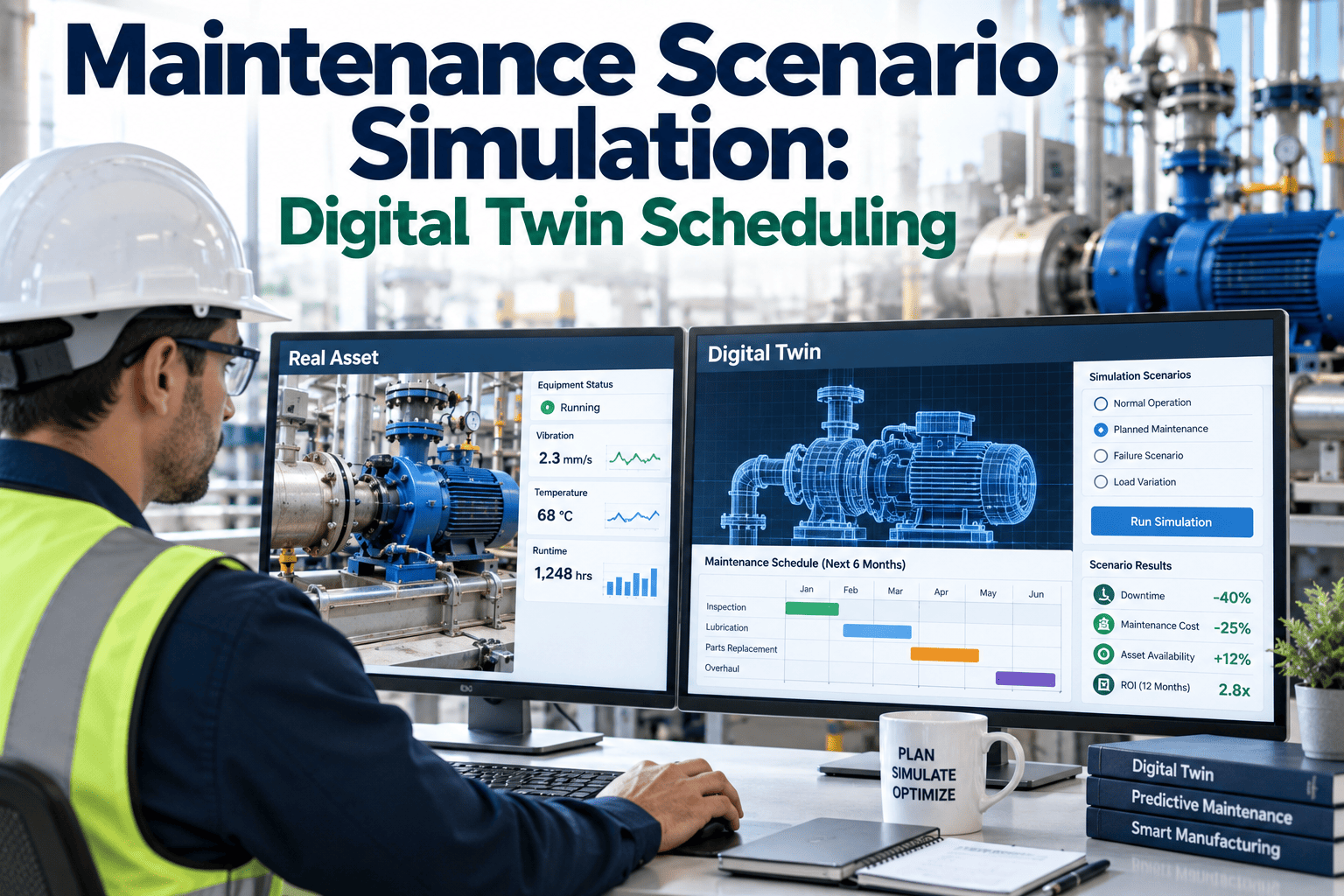
Failure patterns and maintenance windows modeled so schedule changes can be tested against realistic downtime risk.
Quality Outcomes
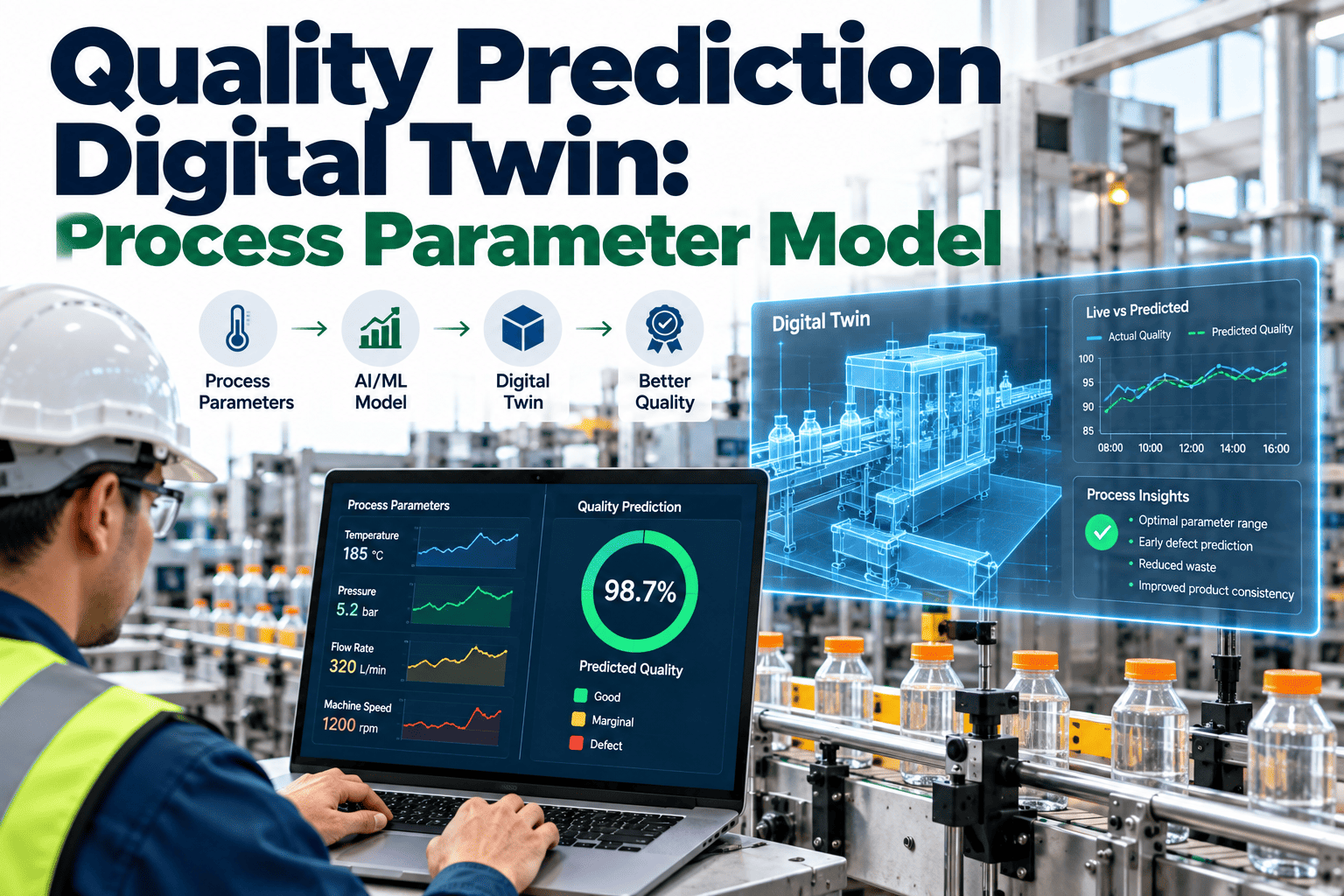
Defect rates and inspection results tied to the production and maintenance conditions that produced them.
See a Change Tested on Your Twin Before It Runs Live
iFactory builds a working model of your line from existing data so proposed changes are validated safely first.
HOW A TWIN GETS BUILT
From Existing Line Data to a Working Model
1
Pull existing production, maintenance, and quality data from current systems to establish the baseline behavior the twin needs to reflect accurately.
2
Model station-level behavior including cycle time variability and known failure patterns, not just theoretical averages.
3
Validate the twin against recent real outcomes to confirm it reproduces actual line behavior before it is trusted for scenario testing.
4
Run proposed changes as scenarios and compare simulated outcomes before committing any change to the physical line.
TESTING ON THE LINE VS TESTING ON THE TWIN
The Difference Shows Up the First Time a Change Goes Wrong
| Factor |
Testing on the Physical Line |
Testing on the Digital Twin |
| Cost of a Failed Attempt |
Real units, real downtime, real scrap |
No production impact from a failed scenario |
| Number of Scenarios Testable |
Limited to what production schedule allows |
Many scenarios run in parallel without disrupting output |
| Speed to Result |
Days to weeks depending on production windows |
Simulated outcomes available quickly for comparison |
WHERE TWINS PROVE OUT VALUE FASTEST
Use Cases Automotive Plants Start With
New Line Sequencing
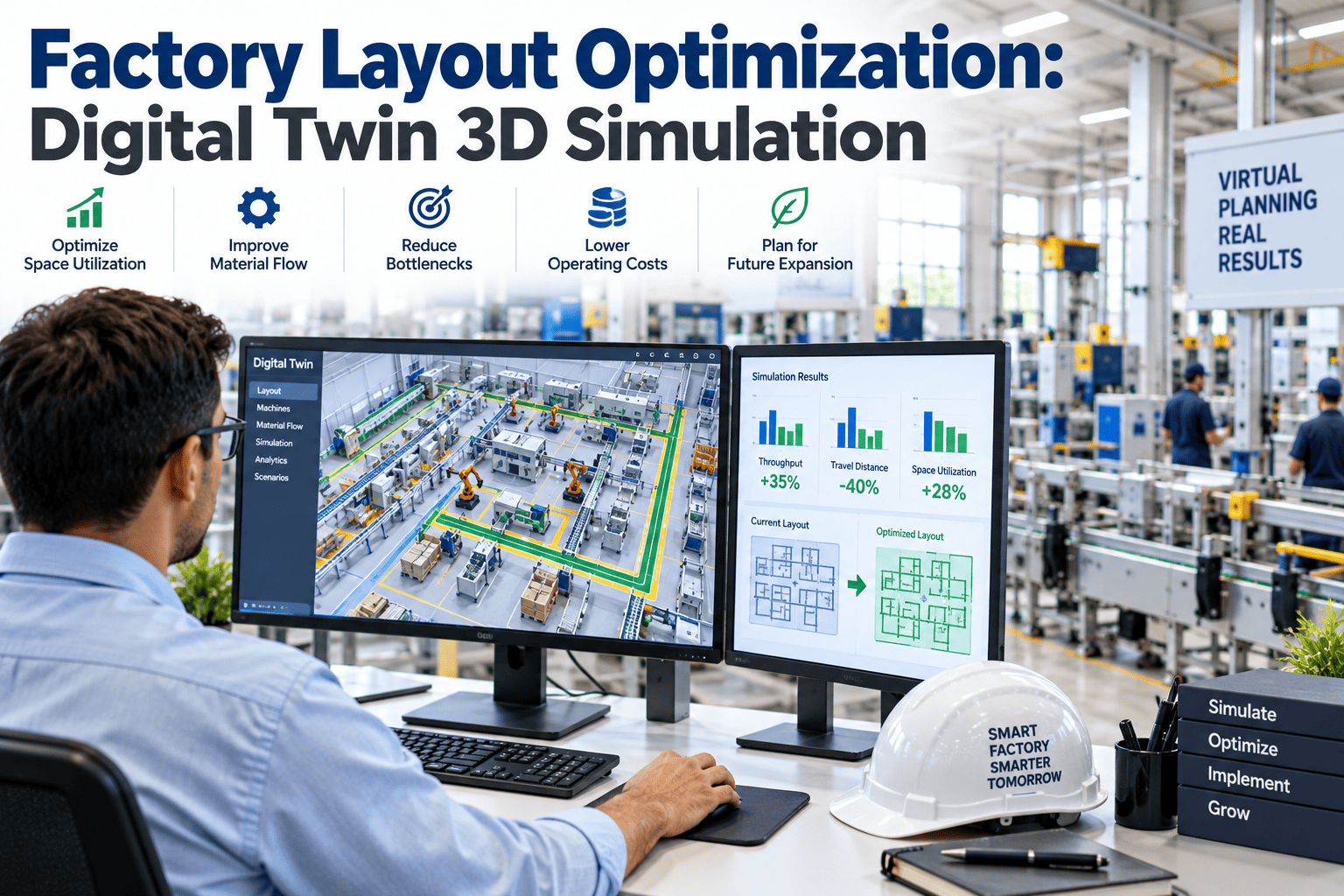
Test a proposed station reordering before committing floor changes and downtime to implement it physically.
Maintenance Window Planning
Compare different preventive maintenance schedules against simulated downtime risk before locking in a plan.
New Model Introduction
Model how a new vehicle variant's added stations affect existing line throughput before launch.
Capacity Planning
Test proposed capacity increases against realistic bottleneck behavior before capital is committed.
FREQUENTLY ASKED QUESTIONS
What Engineering Teams Ask About Digital Twins
How accurate does a digital twin need to be before it can be trusted for real decisions?
The twin is validated against recent real production outcomes before it is used for scenario testing, comparing simulated results to what actually happened over a known period, and only once that validation shows the twin reproducing real behavior closely is it relied on for testing new scenarios rather than treated as a rough approximation.
Book a demo to see the validation process against your own historical data.
Does building a twin require new sensors across the whole line?
Most twins are built initially from data your existing production, maintenance, and quality systems already generate, with additional instrumentation added only where a specific scenario needs visibility the current data does not provide, so a full sensor rollout is not a prerequisite to getting started.
Contact our support team to review what your current data already supports.
Can the twin be updated as the physical line changes over time?
Yes, the twin is designed to be refreshed as new production and maintenance data comes in, so it continues reflecting current line behavior rather than becoming a static snapshot of the line as it existed when the twin was first built.
Book a demo to see how twin updates are managed over time.
How long does it take to build a working twin for an existing line?
Timelines depend on the complexity of the line and the completeness of existing data, but a twin covering core production flow can typically be built and validated faster than a full custom simulation project, since the model draws from data already being generated rather than starting from a blank model.
Contact our support team to scope a realistic timeline for your line.
Can quality outcomes really be modeled reliably alongside production and maintenance data?
Quality outcomes are modeled based on the historical relationship between production conditions, maintenance events, and resulting defect rates, which gives a directionally reliable view of how a proposed change would likely affect quality, though it is treated as a strong estimate to guide decisions rather than a guaranteed prediction of exact defect counts.
Book a demo to see quality modeling against your own defect history.
Validate the Next Line Change Before It Costs You Anything
iFactory builds a digital twin of your production, maintenance, and quality behavior so changes are proven virtually first.