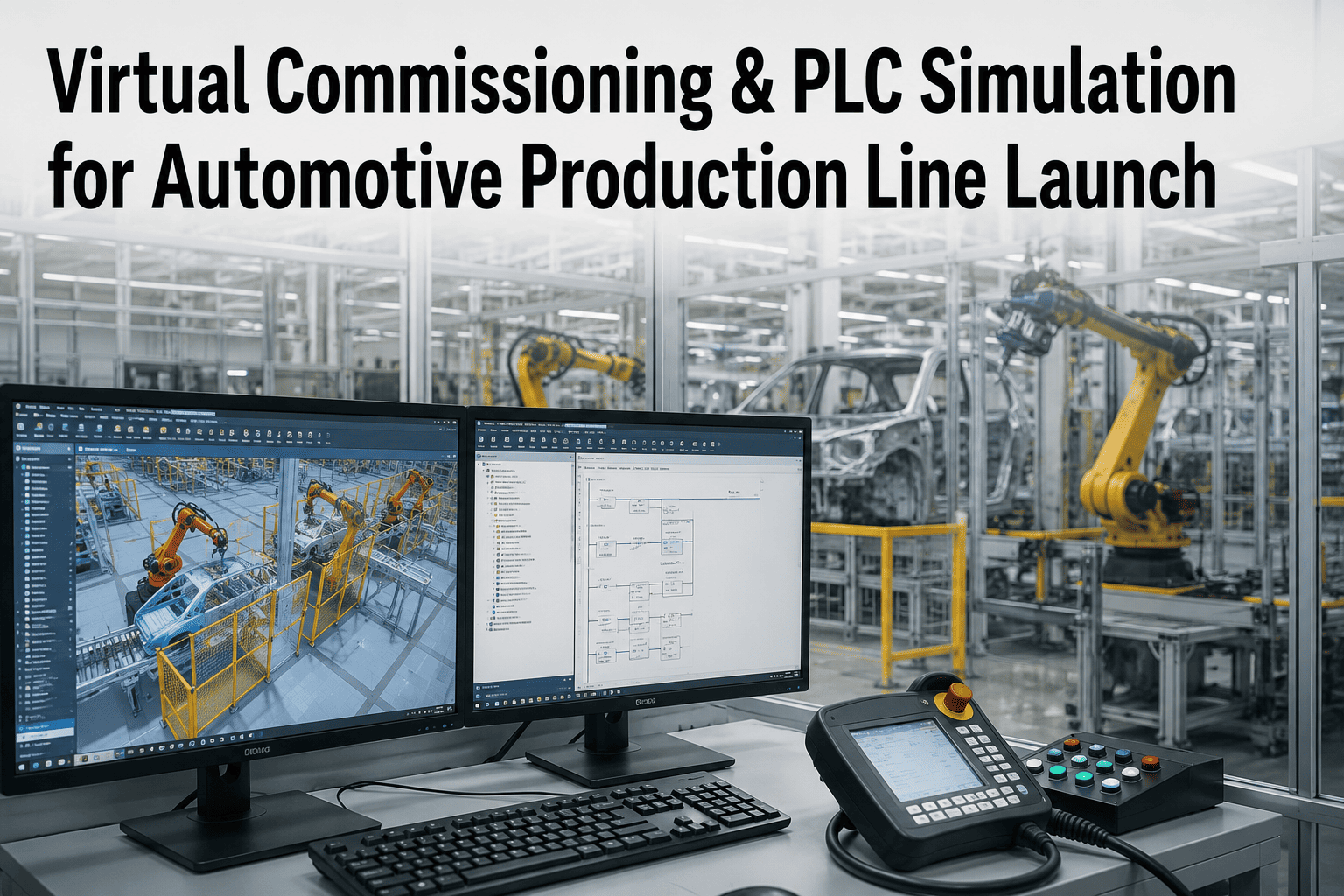
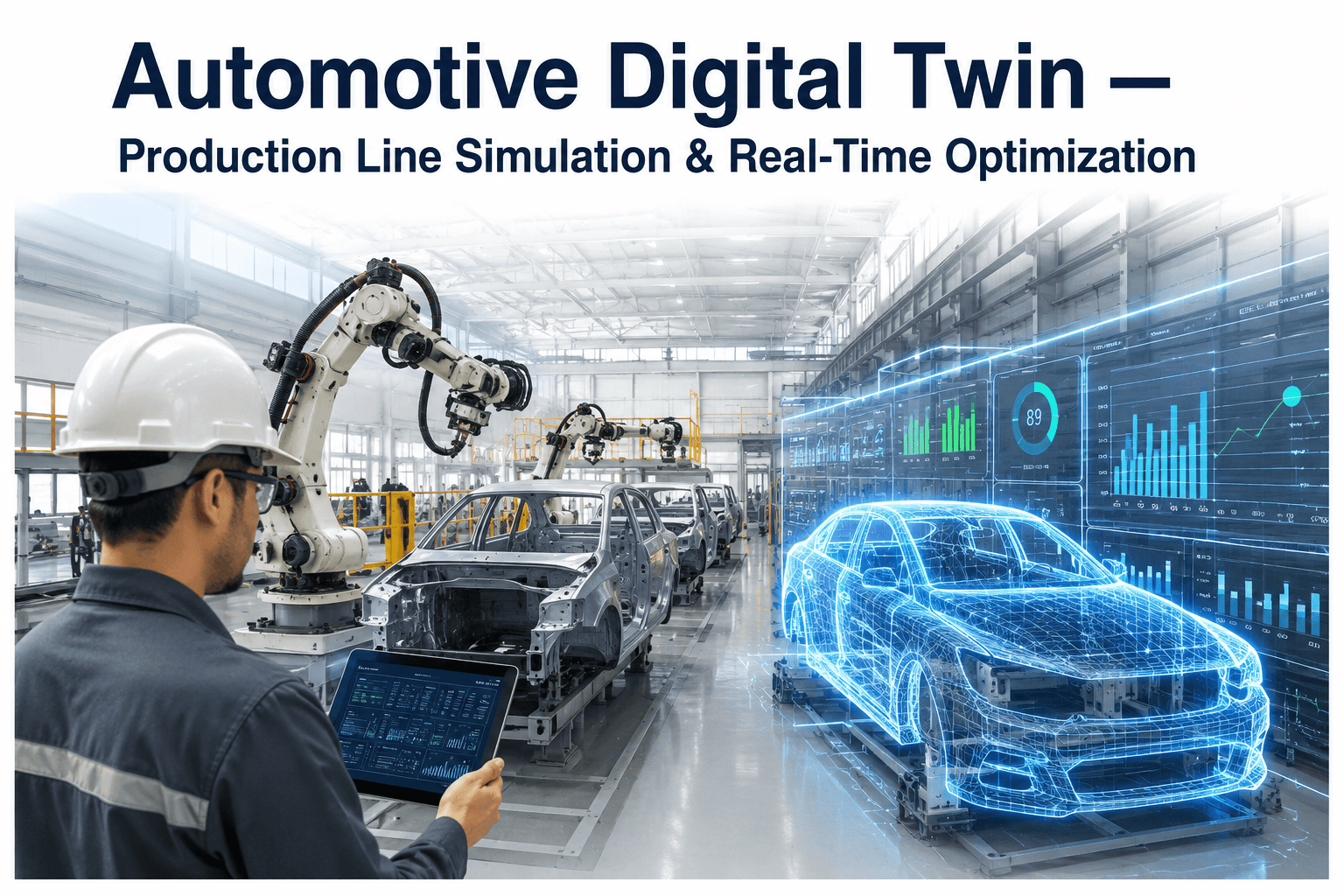
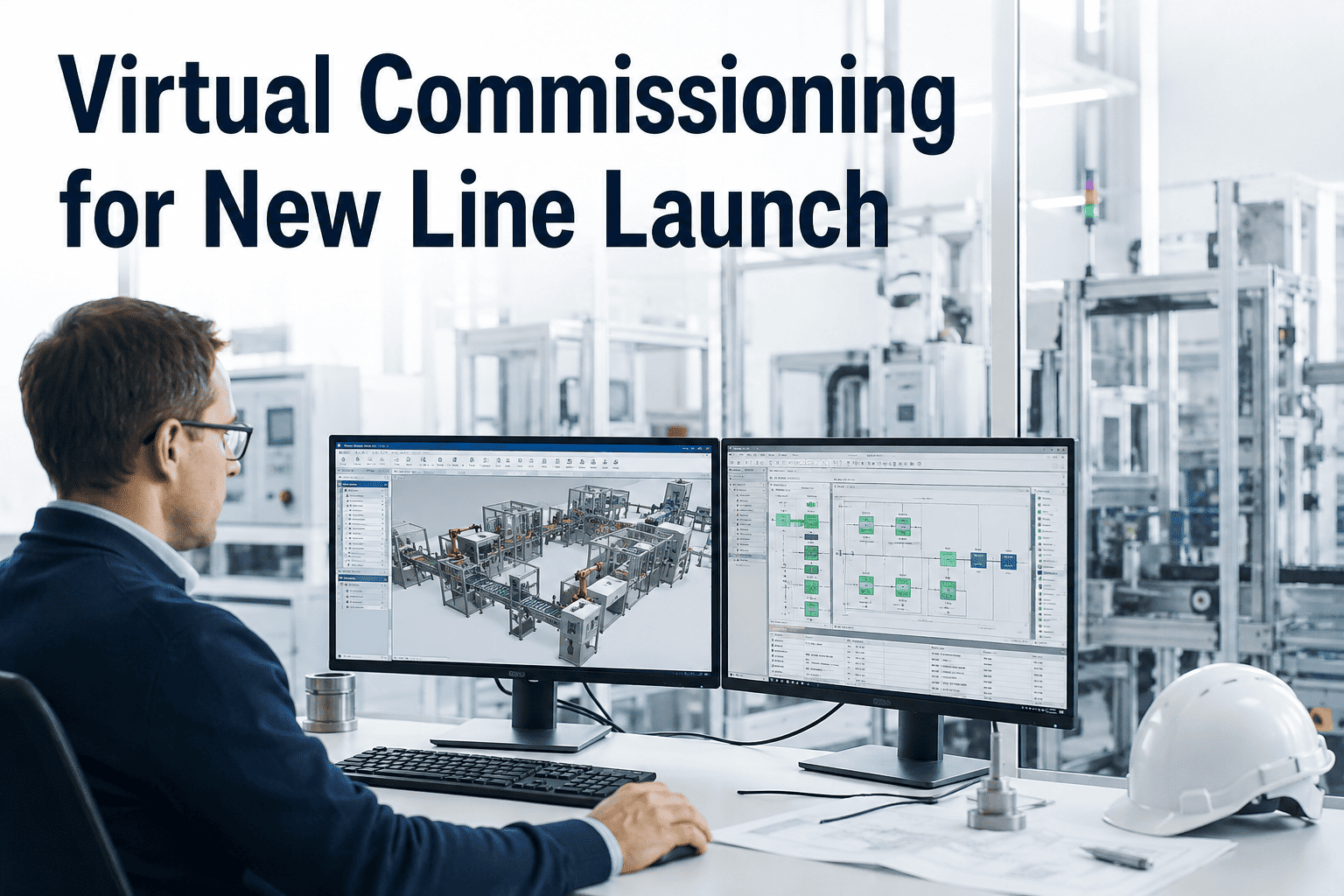
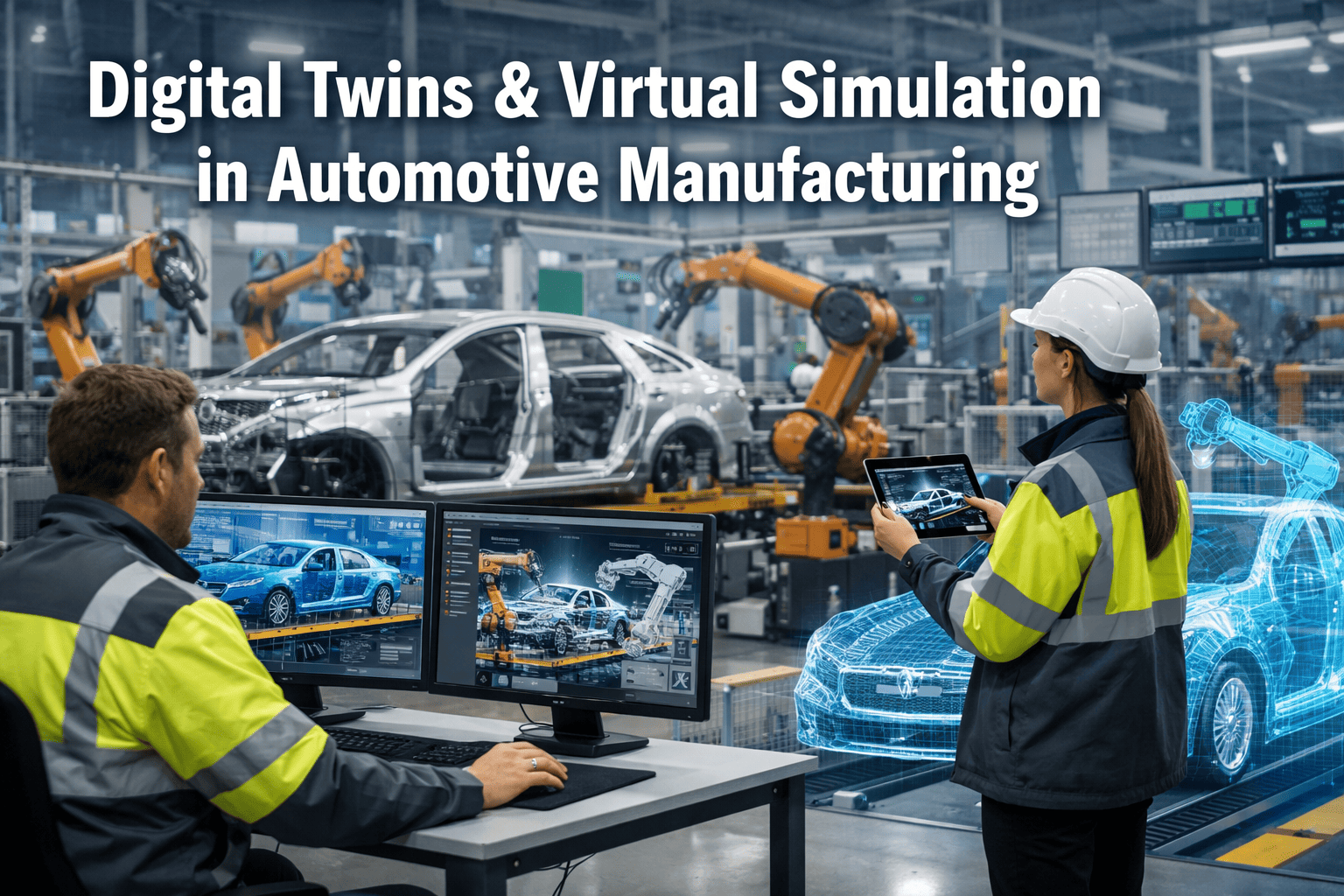
Every week a new automotive production line sits idle during physical commissioning is a week of lost output, overtime labour, and delayed vehicle launch dates. Engineers stand at control cabinets debugging PLC logic that could have been tested months earlier, while robots wait for programs that were never validated against real cycle-time constraints. Virtual commissioning changes this sequence entirely — the entire line is built, tested, and debugged as a digital twin before a single conveyor is bolted to the floor. BMW cut new-line commissioning time by roughly 50% this way, and Ford reported a 30% reduction using the same approach. See how iFactory builds a virtual commissioning environment for your next line launch — book a demo.
Digital Twin + Virtual Commissioning
Debug The Line Before It Exists. Launch It Without Surprises.
iFactory simulates PLC logic, robot programs, and material flow in a full digital twin — so your automotive line launches 40 to 70% faster with a fraction of the on-site debugging.
Where Line Launch Time Actually Goes
Physical-First Commissioning
16weeks average commissioning time for a mid-sized line
20%typical budget overrun from late-stage rework
Weekslost when a PLC fault is only found after installation
iFactory Virtual Commissioning
8–10weeks to commission the same line, digitally validated first
5%of original estimate — rework is resolved before install day
Zerounplanned PLC faults discovered on the physical floor
What Gets Simulated Before Anything Is Installed
A digital twin of the production line is only useful if it behaves exactly like the physical system will. iFactory's virtual commissioning environment models every layer of the line — mechanical motion, electrical control, and software logic — so the simulation and the real line respond identically to the same inputs.
01
3D Mechanical Twin
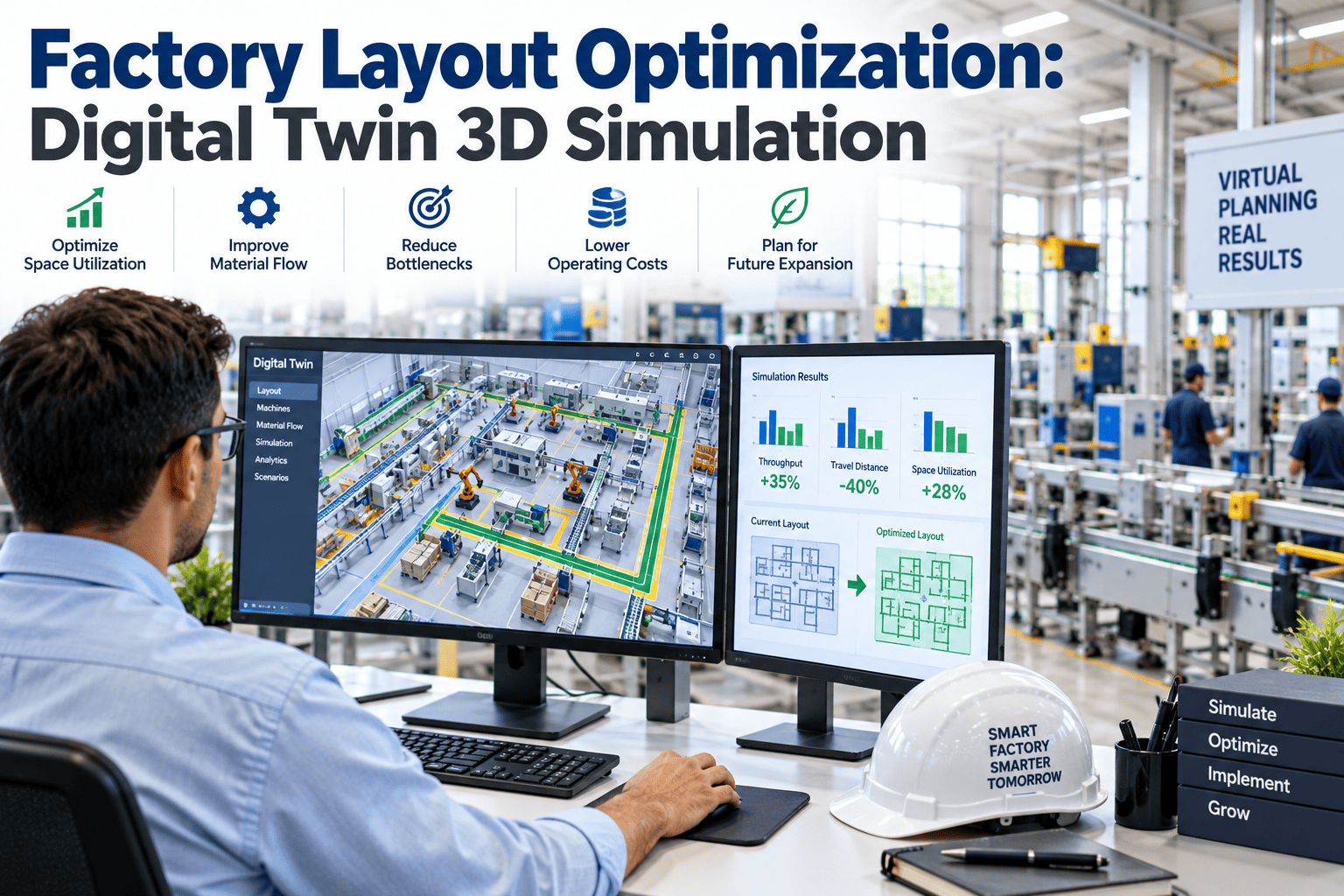
Conveyors, fixtures, robots, and station geometry are modelled to real dimensions and kinematics, so collisions and reach limits are caught before steel is ordered.
02
PLC Logic Validation
The actual PLC program — not a placeholder — runs against the virtual line, exposing sequencing errors, interlock gaps, and timing faults weeks before hardware arrives.
03
Robot Program Simulation
Robot paths, cycle times, and end-of-arm tooling are proven out in the twin, so programs arrive on-site already tuned rather than written from scratch at install.
04
Material Flow & Takt Testing
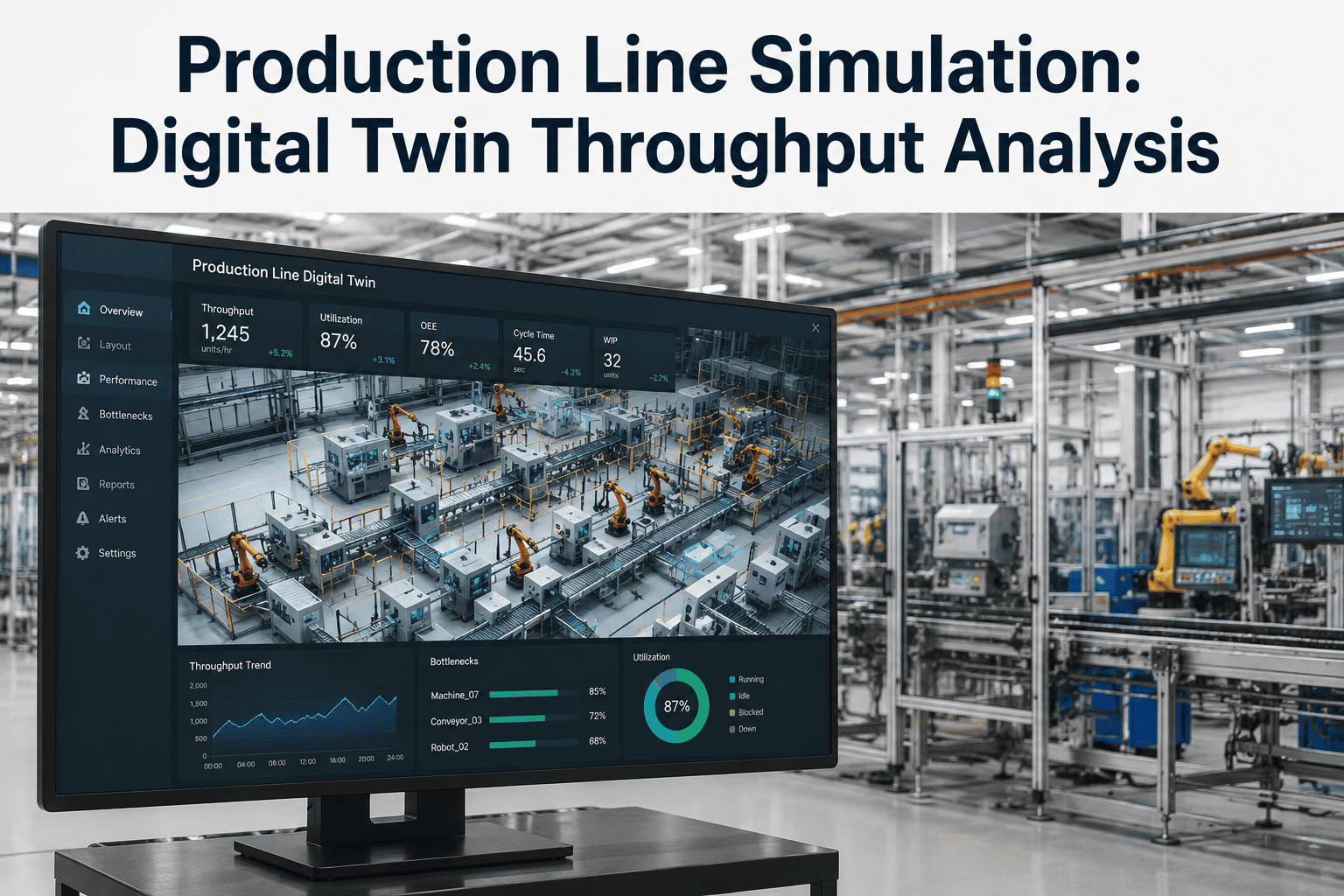
Simulated part flow at target volumes reveals bottlenecks, starved stations, and buffer sizing issues before the line ever runs a single physical unit.
05
Safety & Interlock Scenarios
E-stop chains, light curtains, and zone interlocks are exercised virtually against every failure scenario, so safety validation on-site is confirmation, not discovery.
Proven Results Across Automotive Line Launches
50%
Faster new-line commissioning achieved by a major automaker using virtual commissioning
70%
Reduction in on-site commissioning time reported on a complex assembly-line validation project
98%
Of commissioning effort completed digitally before physical installation began on a robotic line
6+ wks
Of schedule protected on a battery assembly line by resolving issues in the virtual environment first
Book a Demo — See Your Line Simulated First
Bring your line drawings, PLC program, and target takt time. iFactory will show you exactly where a virtual commissioning environment would have caught the issues your last launch found the hard way.
Where Virtual Commissioning Applies Across the Plant
Body Shop & Welding Lines
Multi-robot weld cells with tight cycle-time margins are the highest-risk area for on-site surprises — and the area where simulation pays back fastest.
Paint Shop Automation
Conveyor indexing, robot spray paths, and booth interlocks are validated together, avoiding costly rework inside a controlled paint environment.
Final Assembly Stations
Manual-to-automated handoffs, torque tool sequencing, and poka-yoke logic are proven against real assembly sequences before line balancing begins.
Powertrain & Stamping
Press line transfer systems and high-speed material handling are simulated at full production rate, where physical trial-and-error is the most expensive.
Virtual Commissioning vs. Traditional Line Launch
| Activity | Traditional Launch | iFactory Virtual Commissioning |
|---|
| PLC logic testing | On-site, after installation | Digitally, weeks before installation |
| Robot program tuning | Trial-and-error on the floor | Pre-validated in the twin |
| Collision & reach checks | Discovered during install | Resolved in 3D simulation |
| Safety interlock testing | Sequential, on live equipment | Parallel, in the virtual environment |
| Typical schedule | 16+ weeks | 8–10 weeks |
FAQ: Virtual Commissioning for Automotive Line Launch
How is virtual commissioning different from a standard 3D layout simulation?
A 3D layout simulation checks whether equipment fits and moves without colliding, but it does not run the actual control logic. Virtual commissioning goes further by connecting the real PLC program, HMI, and robot code to a physics-based digital twin, so the control system behaves exactly as it will on the physical line. This means sequencing errors, interlock gaps, and timing faults are caught before installation rather than during it. iFactory builds this connected environment as part of the platform deployment, not as a separate simulation exercise.
Does virtual commissioning require replacing our existing PLC and robot programming tools?
No. iFactory's virtual commissioning environment is built to run the same PLC code and robot programs your engineering team already writes, connecting them to the digital twin through standard industrial protocols. Your team continues working in familiar programming environments while the simulation validates the output. This keeps the transition low-risk and avoids retraining engineers on a new toolchain purely for simulation purposes.
Ask our team which protocols your current systems already support.
How long does it take to build a virtual commissioning environment for a new line?
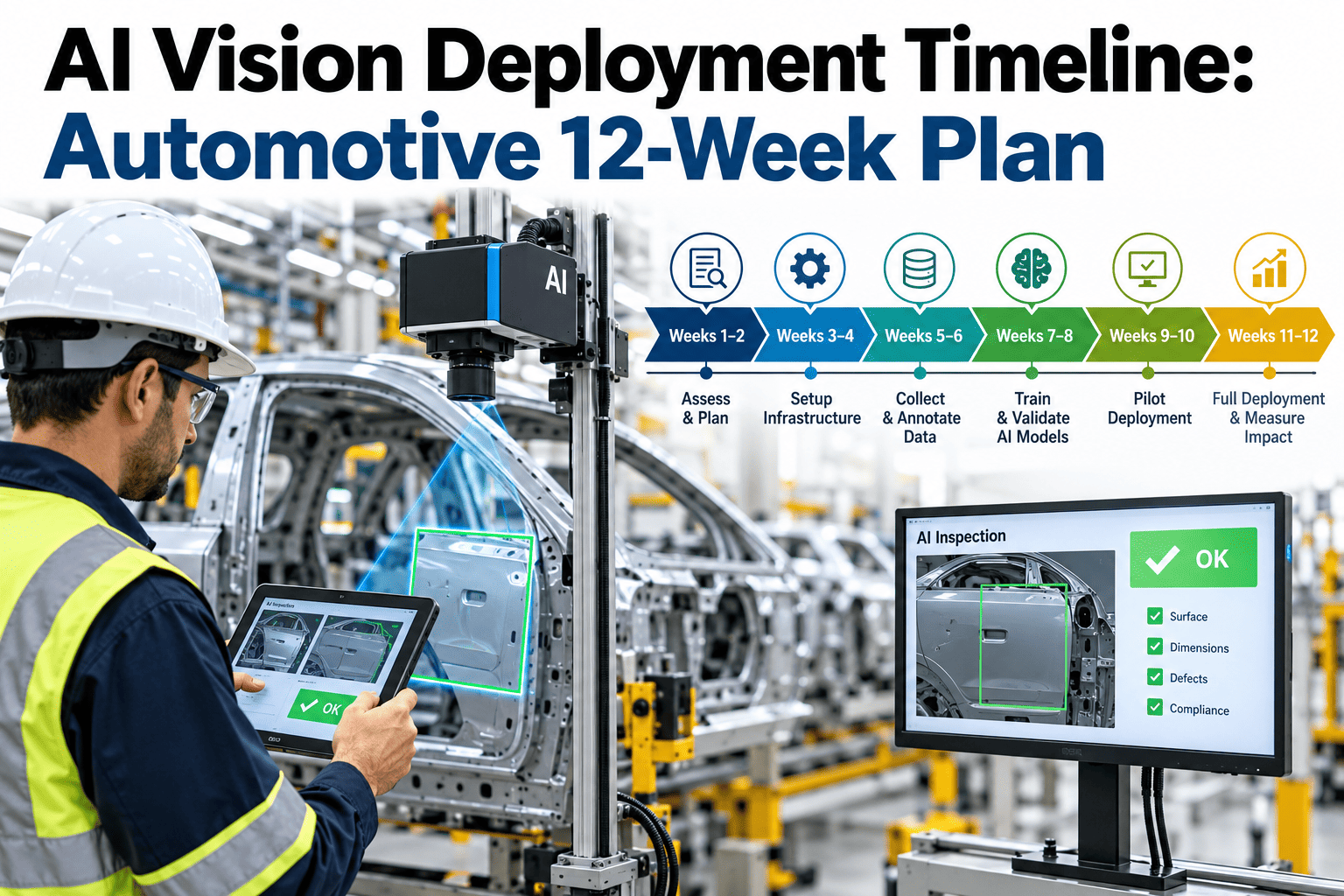
Build time depends on line complexity, but a typical mid-sized automotive assembly or weld line can have a working digital twin ready for PLC and robot testing within 3 to 4 weeks of engagement start, well ahead of when physical equipment begins arriving on site. Because the twin is reused across the full commissioning process, the time invested upfront is recovered many times over during on-site validation, where issues that would have taken days to diagnose are resolved before installation even begins.
Can virtual commissioning be used for line modifications, not just new launches?
Yes, and this is one of the highest-value applications. Adding a station, swapping a robot, or changing a fixture on a running line carries real downtime risk, since any error is discovered on equipment that is currently producing vehicles. Simulating the change first — as demonstrated when a new gluing station was validated virtually and installed with more than two weeks of downtime avoided — lets teams test the modification without stopping production to find problems.
What is the realistic ROI of investing in virtual commissioning for one line launch?
Commissioning time reductions of 40 to 70% translate directly into earlier production starts, which for an automotive line launch often means avoiding six-figure weekly costs of delayed vehicle output. Beyond the launch itself, the same digital twin is reused for future line modifications, operator training, and troubleshooting, so the return compounds well beyond the first project.
Book a demo to model the commissioning timeline for your specific line.
Virtual Commissioning + iFactory
Stop Debugging Your Line After It's Already Installed.
iFactory builds the digital twin, validates your PLC and robot logic against it, and hands you a line that launches right the first time — 40 to 70% faster than a physical-first approach.