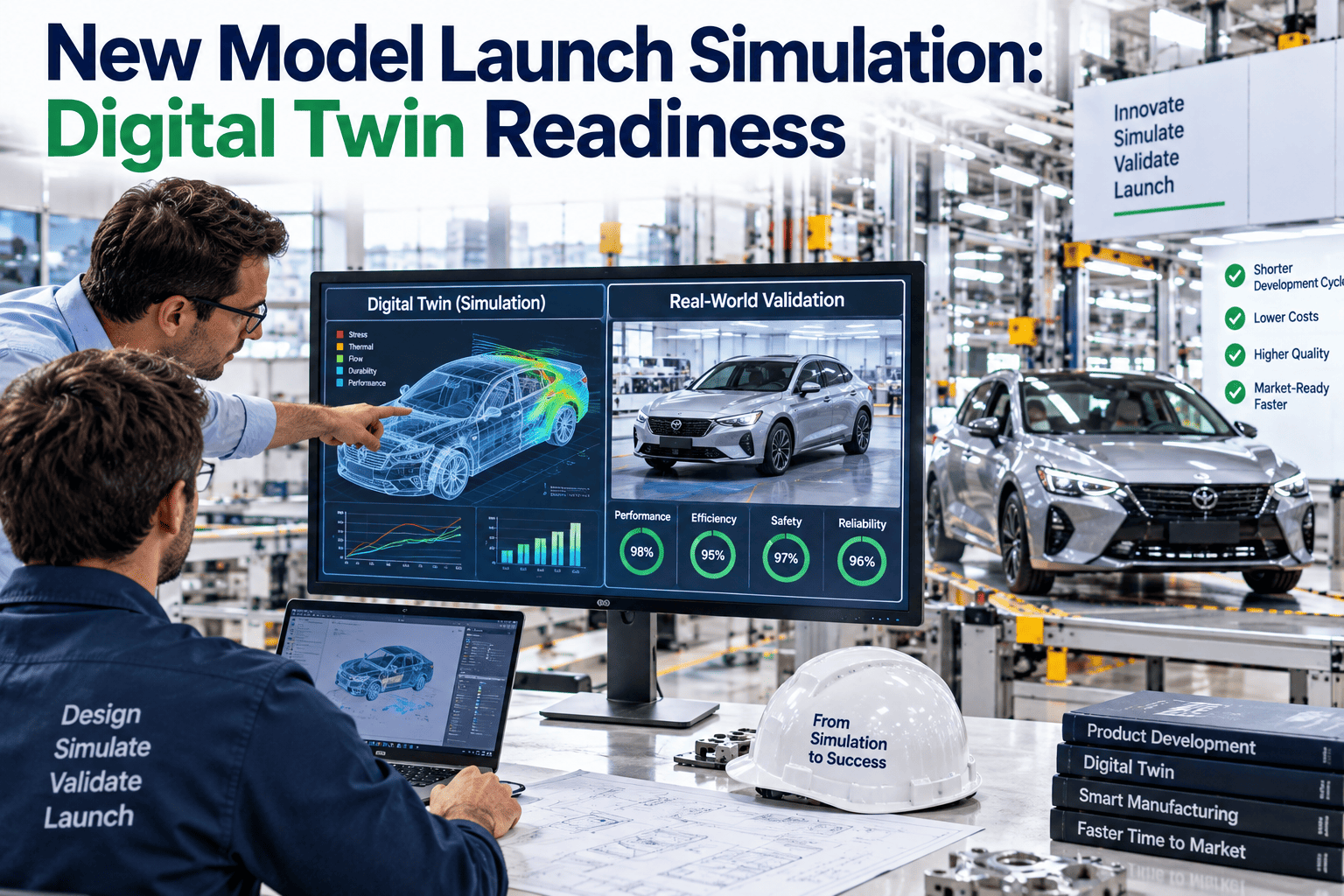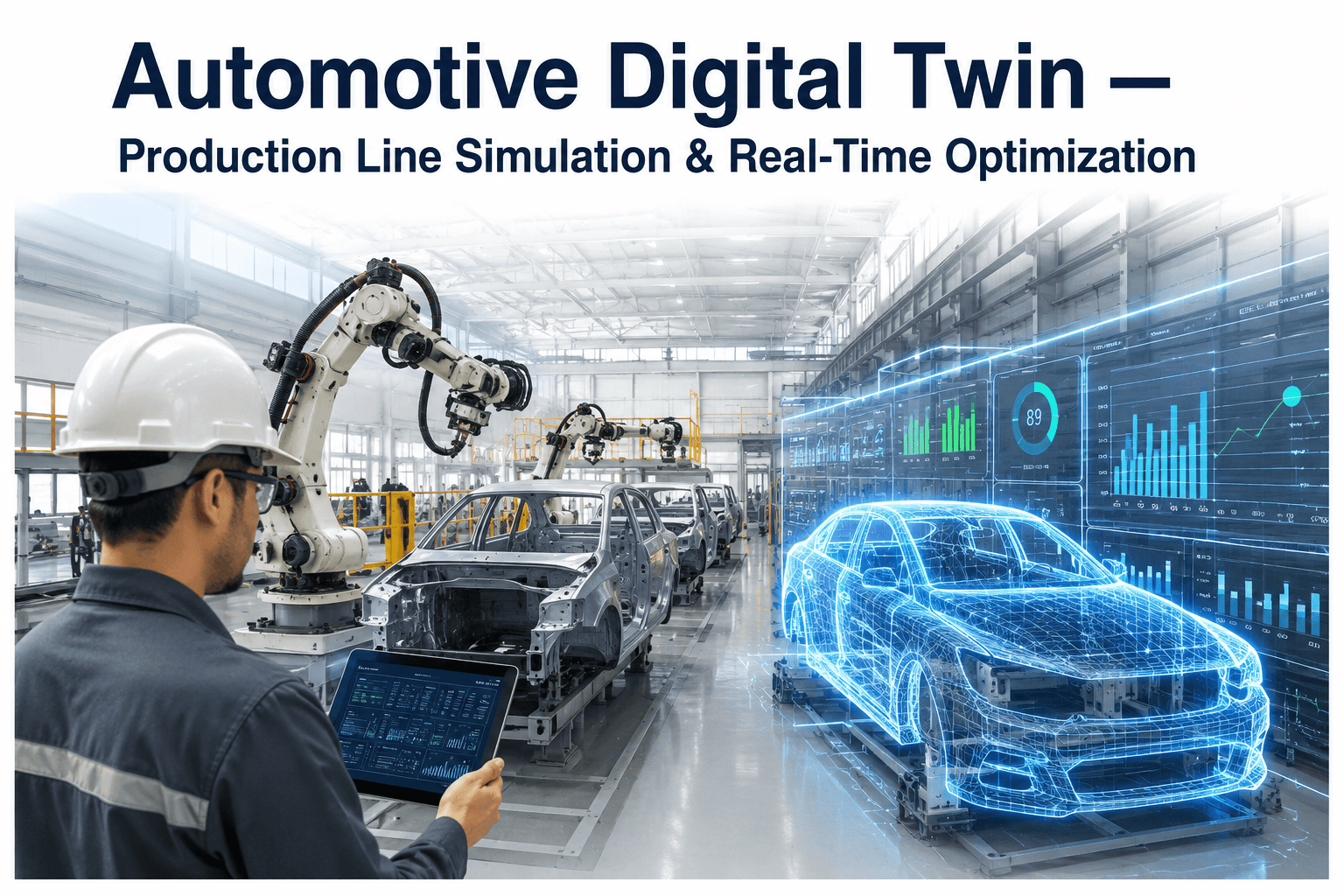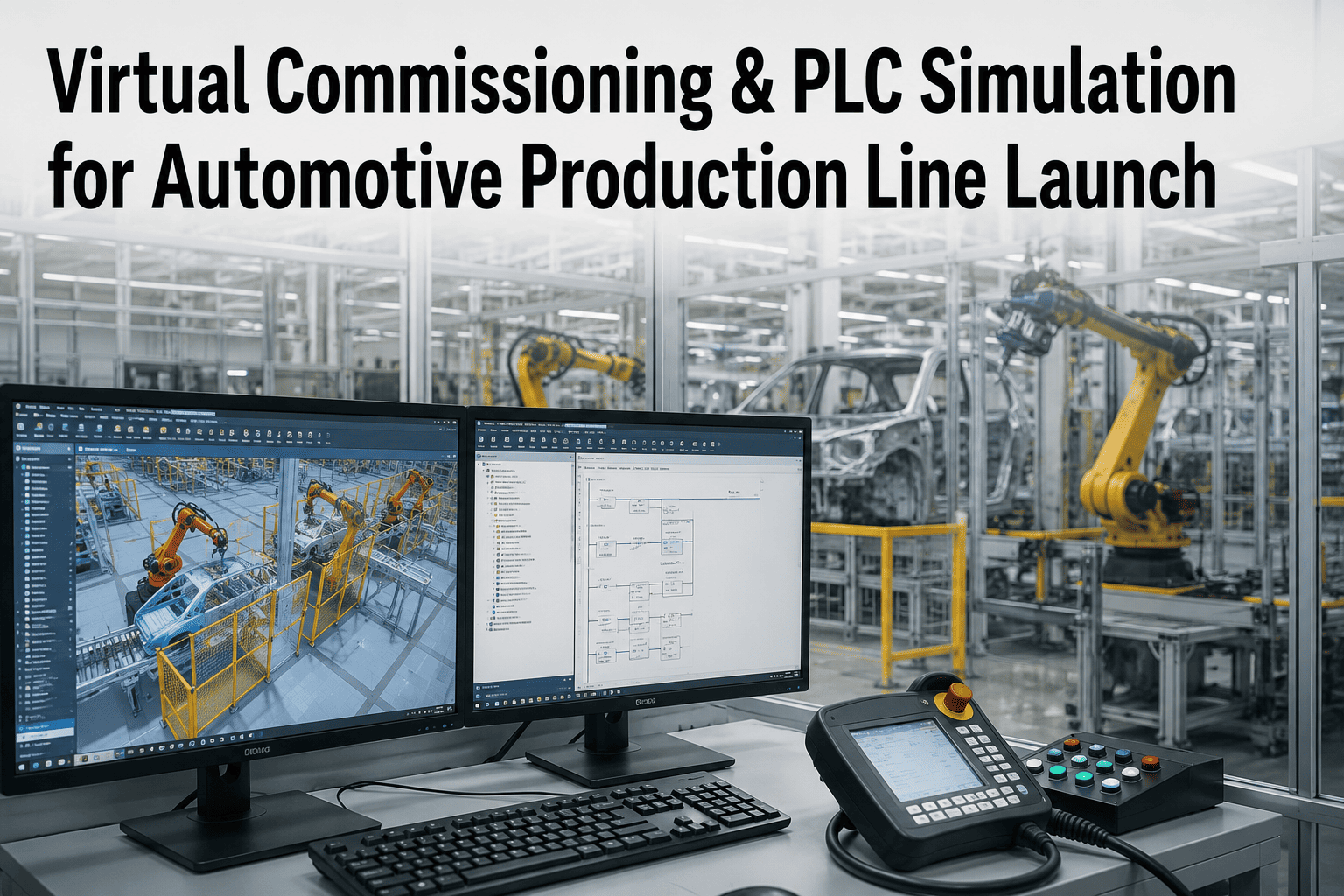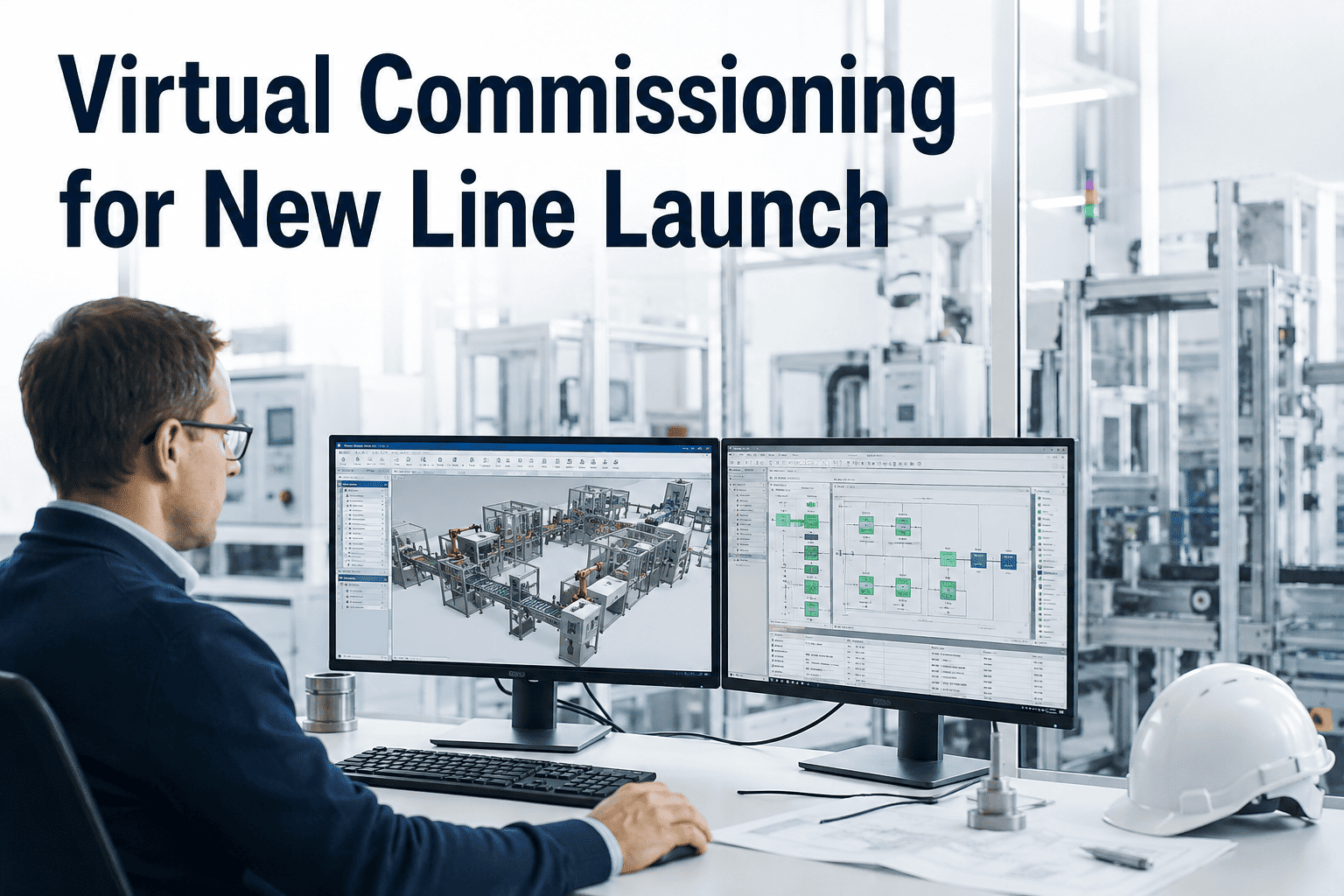
Every week a new production line sits idle during on-site commissioning is a week the plant is not shipping product, and traditional commissioning routinely eats weeks out of every new program launch. Engineers debug PLC logic, robot paths, and conveyor timing directly on physical hardware, discovering collision risks and sequencing errors only after the equipment is already installed and the clock is already running. Virtual commissioning flips that sequence by validating the entire line in a digital twin before a single physical component is powered on, catching the errors that would otherwise cost days of on-site troubleshooting. Plant leaders planning a launch can Book a Demo to see how digital-twin commissioning compresses startup time.
Why On-Site Commissioning Eats Weeks Out of Every Launch
Traditional commissioning happens in the worst possible sequence: equipment is installed first, and only then do engineers discover whether the PLC logic, robot paths, and conveyor timing actually work together as designed. Every collision, every sequencing conflict, and every timing mismatch found at this stage has to be debugged on physical hardware, often with the equipment vendor's engineers on-site at premium day rates, while the rest of the plant waits for the line to be production-ready.
The cost is not just the direct engineering time. Every day a new line sits in commissioning instead of production is a day of lost output that the business case for the investment assumed would already be running. Virtual commissioning addresses this by moving the debugging phase earlier, into a digital twin environment where logic and motion can be tested exhaustively in software, with physical installation beginning only once the design has already been validated against a realistic simulation of the actual line.
Traditional Commissioning vs. Virtual Commissioning
The chart below reflects a representative comparison of the two approaches across a typical mid-size line launch, showing where virtual commissioning compresses the schedule.
What a Digital Twin Actually Tests Before Installation
Virtual commissioning is not a generic simulation — it is a validation of the specific control logic, motion paths, and mechanical layout that will run on the physical line, tested against a model precise enough to catch the errors that matter.
PLC Logic
Control code is run against the virtual line exactly as it will run on the physical PLC, exposing sequencing errors before hardware is powered.
Robot Paths & Collisions
Robot motion is simulated at full speed to catch collision risks and reach limitations that a static layout drawing would never reveal.
Conveyor & Line Timing
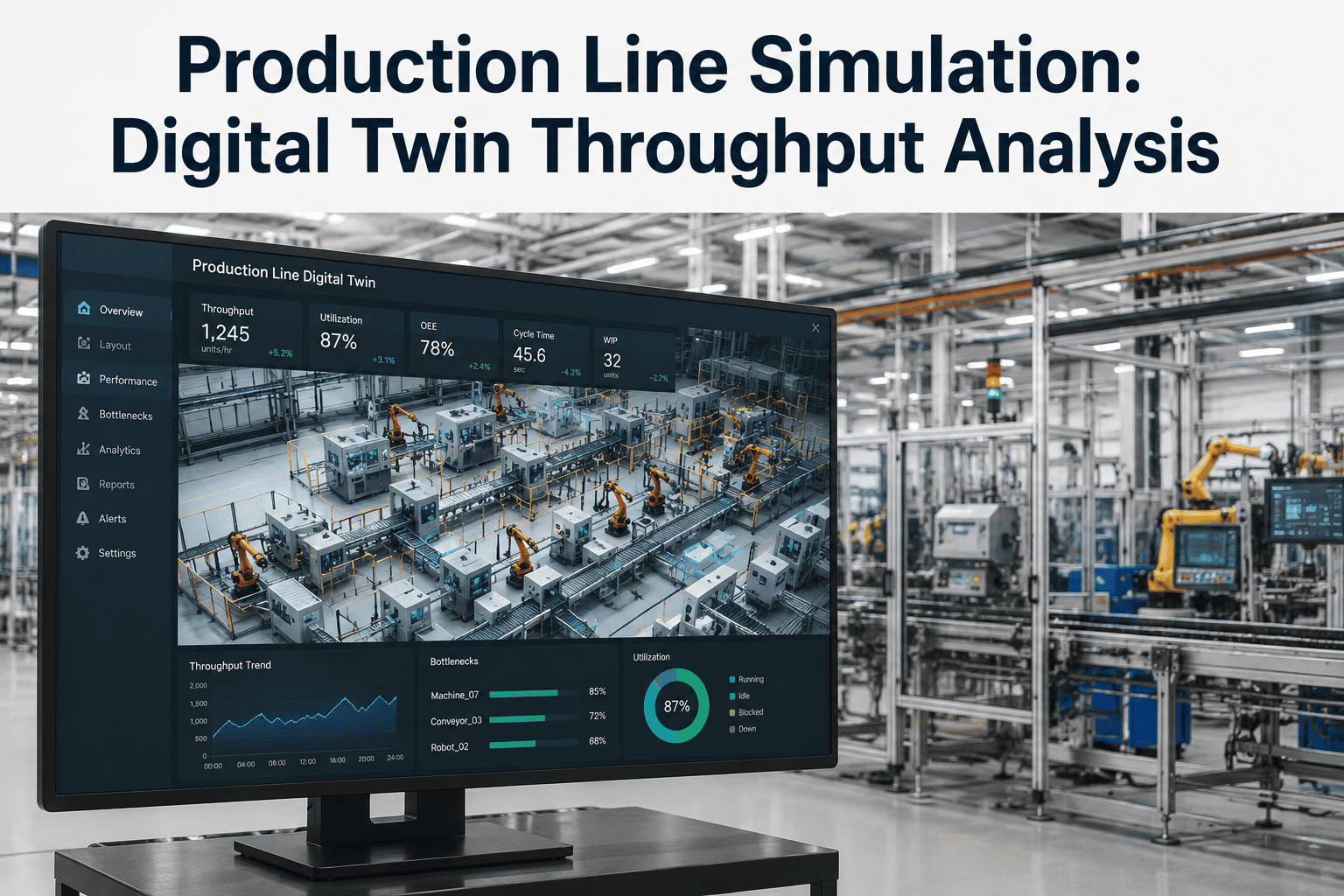
Cycle time and buffer sizing are validated against target throughput, surfacing bottlenecks before the physical conveyor is installed.
Safety Interlocks
Safety zone logic and interlock sequencing are tested in the virtual environment, reducing the risk of a safety-related delay during physical commissioning.
Physical-First vs. Virtual-First Commissioning
| Factor | Physical-First Commissioning | Virtual-First Commissioning |
|---|---|---|
| Where errors are found | On installed hardware | In the digital twin, before install |
| Collision discovery | During physical robot runs | During simulated motion testing |
| Vendor engineering cost | Extended on-site day rates | Reduced on-site scope |
| Startup timeline | 6–10 weeks typical | Compressed by up to half |
| Rework after install | Common | Substantially reduced |
How a Virtual Commissioning Project Actually Runs
Build the Digital Twin
The line layout, robot kinematics, and conveyor geometry are modeled to match the physical design, using CAD data already available from the line design phase.
Connect Real Control Code
The actual PLC program, not a simplified stand-in, is connected to the digital twin so the logic being tested is exactly the logic that will run on the physical line.
Run Exhaustive Scenarios
Normal cycles, fault conditions, and edge cases are run repeatedly in simulation, at a pace that would be impractical or unsafe to test physically.
Install & Confirm
Physical installation proceeds with a validated logic and motion design already in hand, so on-site commissioning becomes confirmation rather than debugging.
What Manufacturers Report on Virtual-First Launches
Typical reduction in on-site commissioning time when logic and motion are validated virtually first.
Robot path and collision risks are identified in simulation, before any physical hardware is exposed to the risk.
Fewer on-site engineering days required when the logic has already been validated in the digital twin.
Virtual Commissioning — Common Questions
Does virtual commissioning eliminate the need for on-site commissioning entirely?
No, and it is not meant to. Virtual commissioning validates logic, motion, and sequencing in software so the errors that would normally consume weeks of on-site debugging are already resolved before installation begins. Physical commissioning still happens, but it shifts from a debugging exercise to a confirmation step, since the control code and robot paths have already been proven against a realistic digital twin of the line before any hardware is powered on.
How accurate does the digital twin need to be for this to work?
The twin needs to model the specific kinematics, timing, and control interfaces of the actual equipment closely enough that logic tested in simulation behaves the same way on physical hardware. This is why virtual commissioning uses the real PLC program connected to the simulated line rather than a simplified stand-in — the goal is to test the exact code that will run in production, not an approximation of it, so the validation carries over directly to the physical install.
Can virtual commissioning be used for a line modification, not just a new launch?
Yes, and it is often lower risk to validate a change to an existing line in a digital twin first, since any errors introduced by the modification are caught in simulation rather than disrupting a line that is currently in production. Manufacturers running continuous improvement programs frequently use the same digital twin built for original commissioning to validate subsequent changes before they touch the physical line.
What CAD or design data is needed to start building the digital twin?
Most of the required geometry — robot kinematics, conveyor layout, station spacing — already exists from the line design phase, and the digital twin build reuses that data rather than starting from scratch. Additional detail is added where needed for accurate collision and timing simulation, and the iFactory Support team can walk through what data is required for a specific line before the project begins.
How long does it take to build and run a virtual commissioning project?
Building the digital twin and running validation scenarios typically completes within four to eight weeks for a mid-size line, running in parallel with physical equipment procurement so the schedule compression is realized rather than simply shifted earlier. Teams planning a new line launch can Book a Demo to scope a virtual commissioning timeline against their launch date.