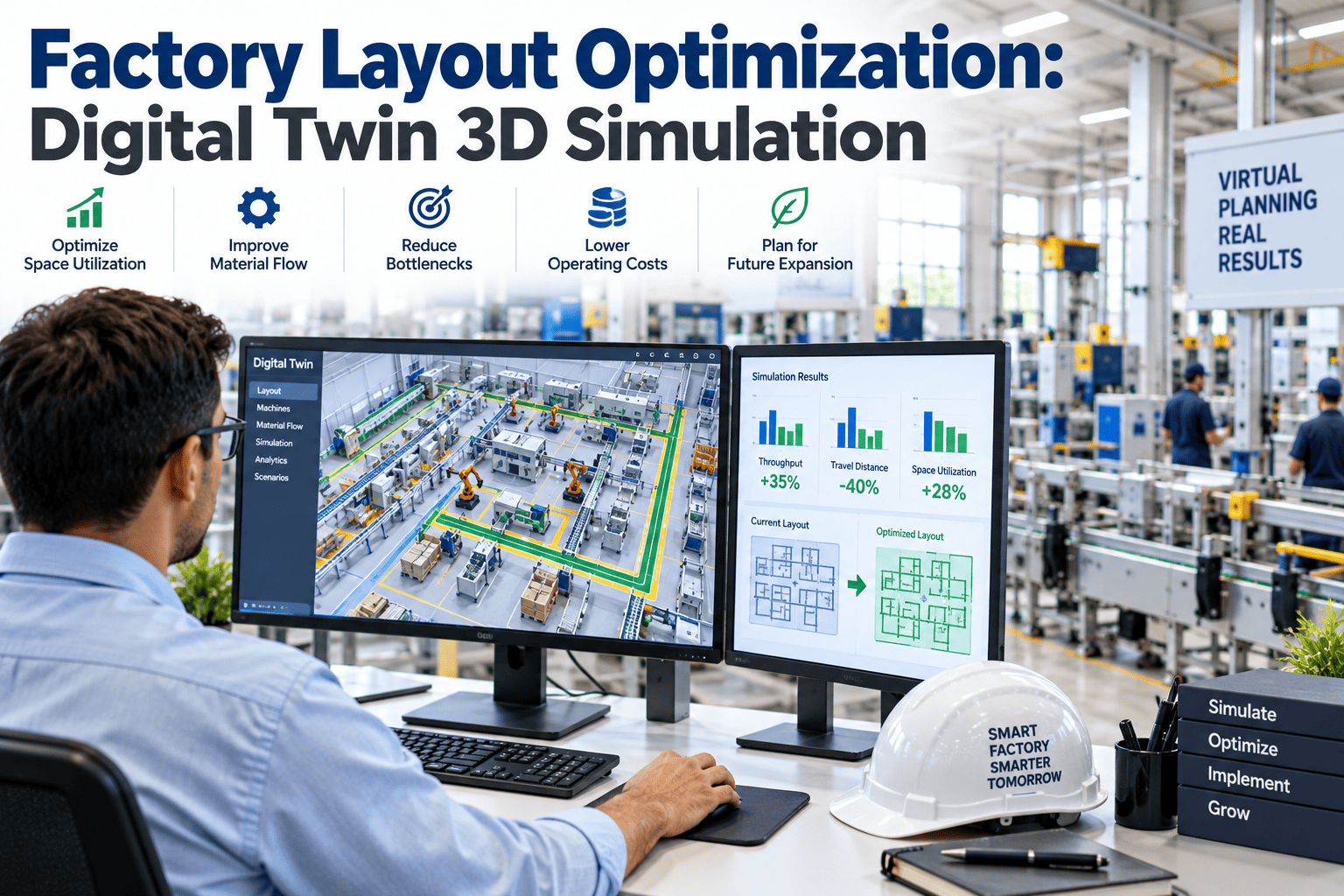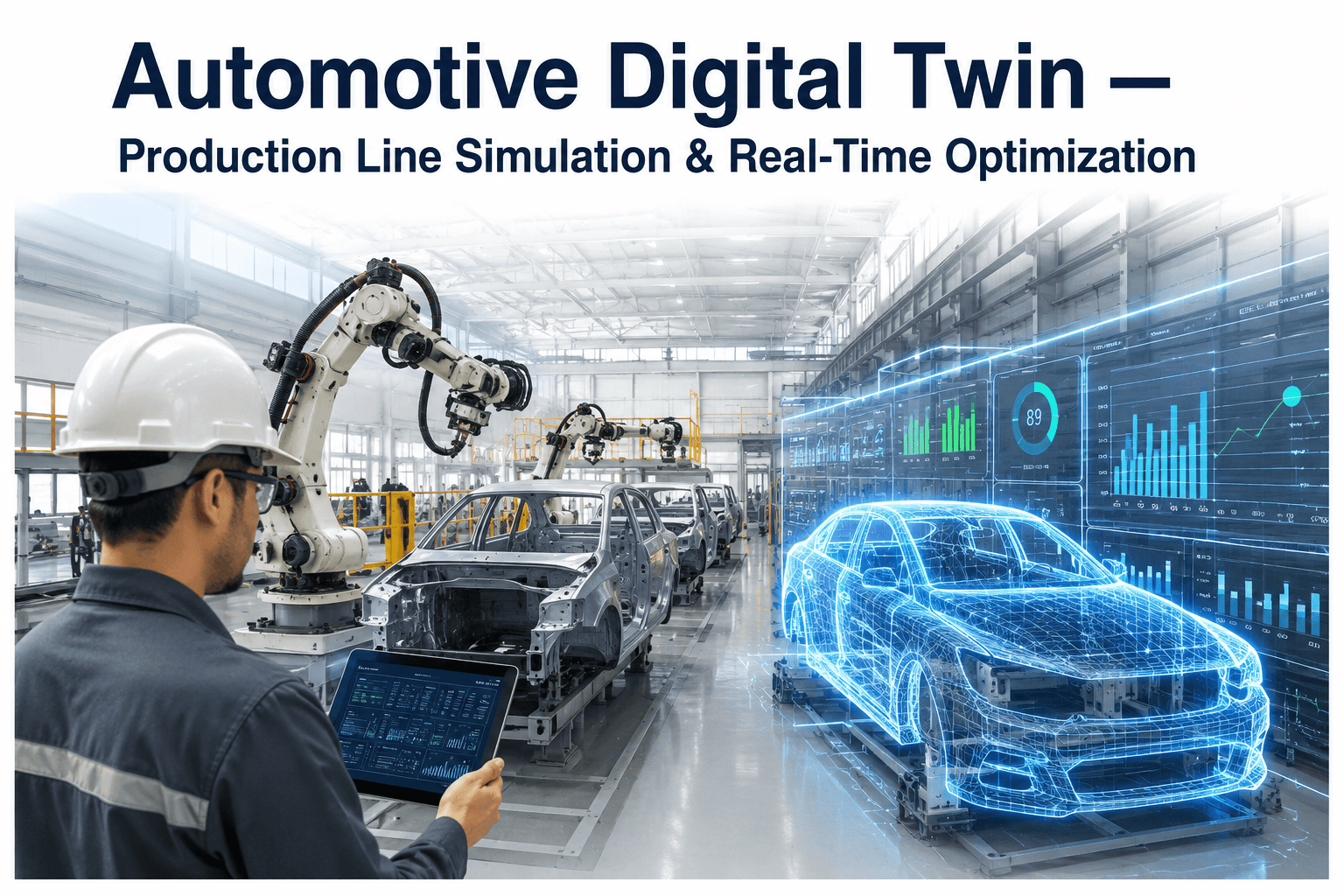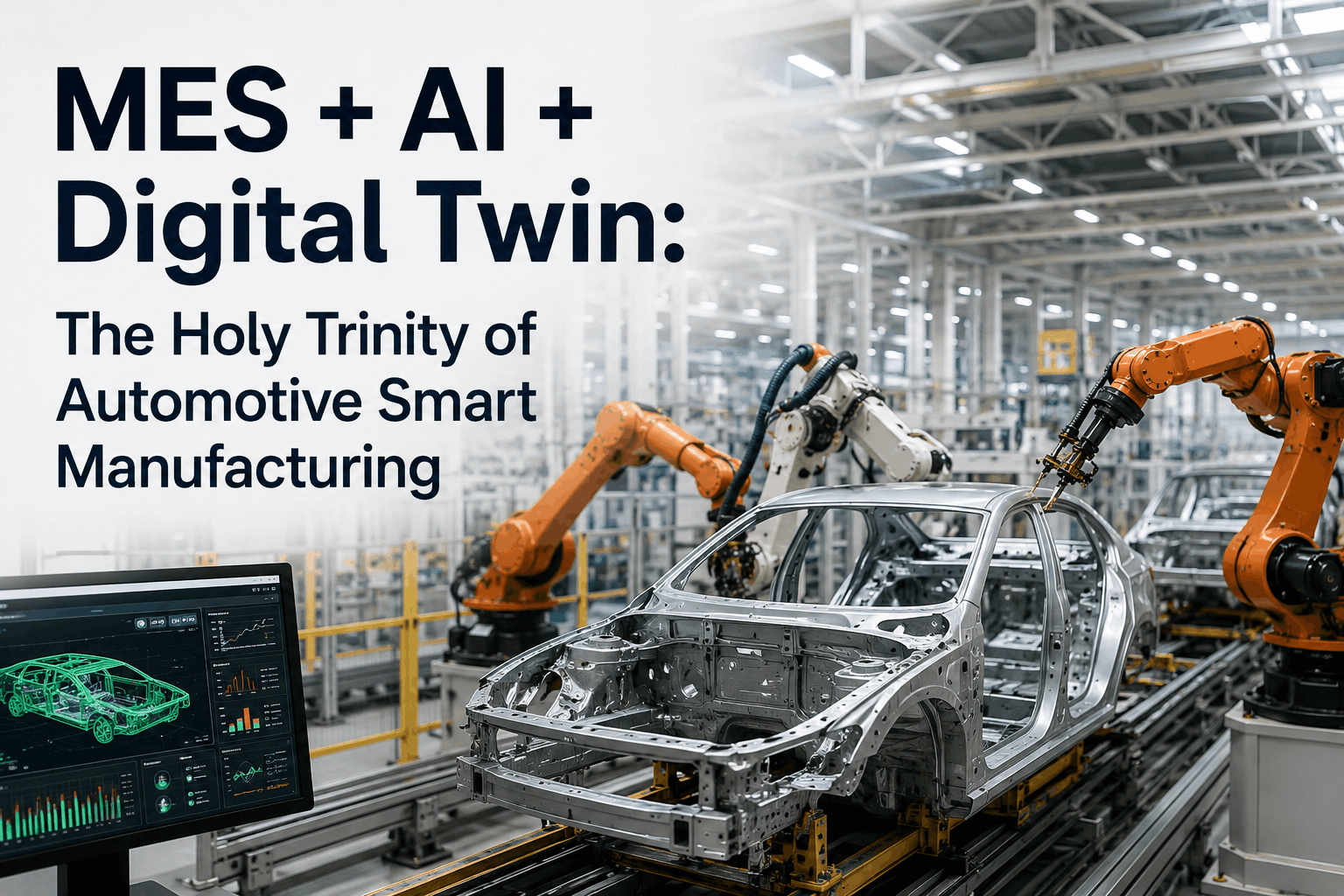
In the relentless pursuit of operational excellence, automotive manufacturers are increasingly turning to digital twins as a cornerstone of Industry 4.0 transformation. A digital twin is not merely a 3D model; it is a dynamic, real-time virtual representation of a physical production system, continuously synchronized with sensor data, machine states, and production flows. For automotive plants, where launch cycles are compressed and error costs are astronomical, a well-architected digital twin can reduce new model launch time by up to 30% and slash startup errors by over 40%. However, the path from concept to deployed, value-generating twin is fraught with technical and organizational challenges. Many initiatives stall due to unclear objectives, data integration complexity, or a lack of alignment with business KPIs. This comprehensive guide provides a pragmatic, step-by-step methodology for building and deploying an automotive plant digital twin that delivers measurable ROI within one year. We will dissect the critical architectural decisions, data strategies, simulation models, and change management practices required to succeed. Whether you are a plant manager, a CTO, or a digital transformation lead, this article equips you with the technical roadmap and strategic insights to turn your digital twin vision into a competitive advantage. Book a Demo to see how iFactoryApp can accelerate your digital twin journey.
Ready to Build Your Plant Digital Twin?
Reduce launch time by 30% and eliminate startup errors. Start your digital twin journey today.
Why Automotive Plants Need Digital Twins Now
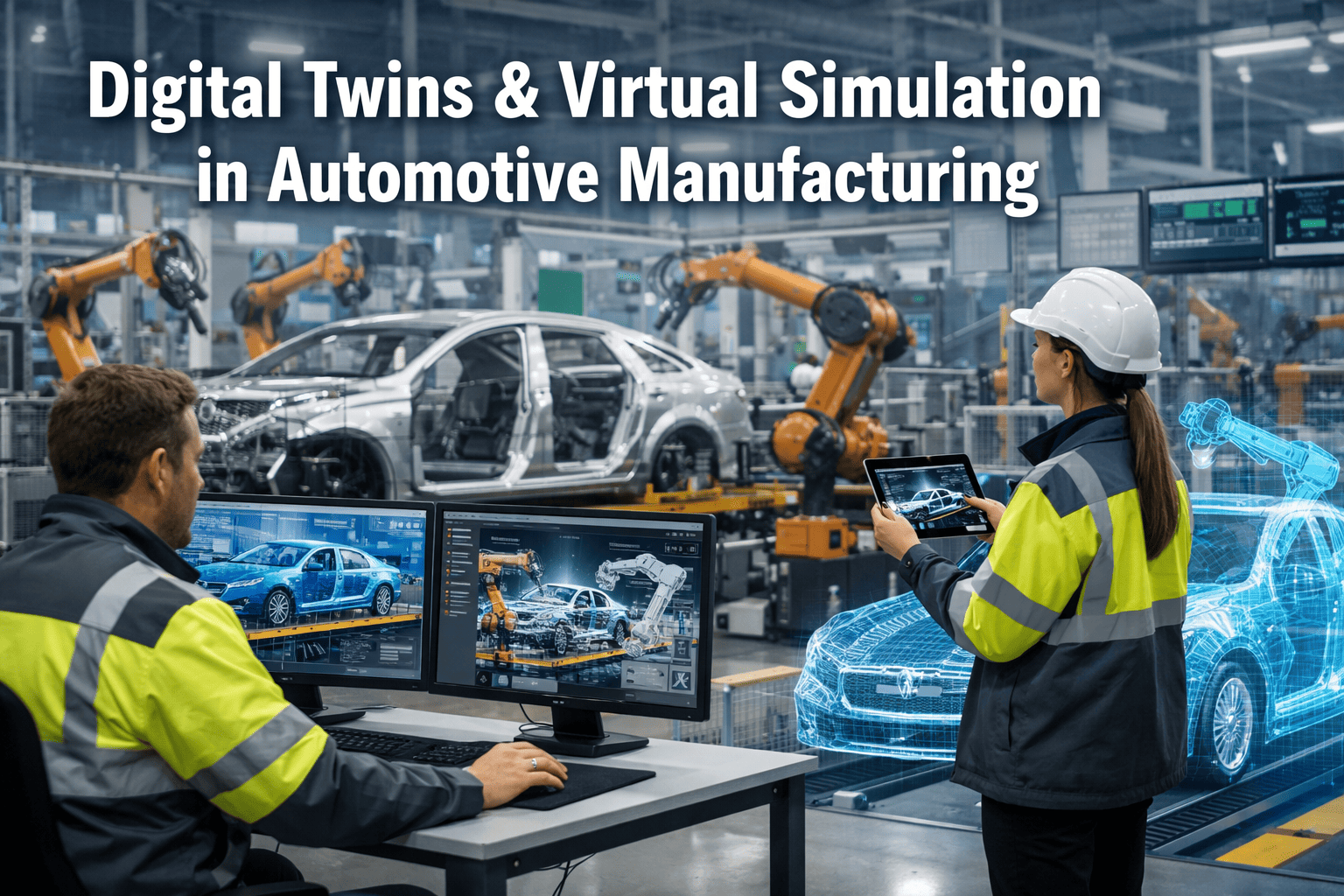
Automotive manufacturing is under immense pressure: shorter model cycles, increasing customization, and the shift to electric vehicles demand unprecedented flexibility and quality. Traditional static simulations and siloed data systems cannot keep pace. A digital twin offers a unified, real-time view of the entire production ecosystem, enabling proactive decision-making. By integrating data from PLCs, sensors, MES, and ERP systems, the twin mirrors the current state of the plant, allowing engineers to simulate changes, predict bottlenecks, and optimize workflows without disrupting physical operations. The result is a dramatic reduction in launch time, lower rework costs, and higher overall equipment effectiveness (OEE). For example, a leading European OEM used a digital twin to validate a new body shop layout, identifying 12 critical interference issues before a single robot was installed, saving over $2 million in potential downtime. The twin also enabled virtual commissioning of control logic, cutting onsite commissioning time by 50%. These tangible benefits make a compelling case for investment, but only if the twin is built with a clear focus on business outcomes and data integrity.
Defining the Scope: What to Twin First
One of the most common mistakes is trying to build a plant-wide digital twin from the start. This approach leads to data overload, integration paralysis, and delayed value. Instead, adopt a phased, value-driven scope definition. Begin by identifying the production line or area with the highest impact on throughput, quality, or launch risk. Typically, this is the body shop or final assembly line, where complexity and changeover frequency are highest. Define clear, measurable objectives for the twin: reduce cycle time by 10%, decrease defect rate by 15%, or improve changeover efficiency by 20%. These objectives guide the level of detail required. For instance, if the goal is to reduce cycle time, the twin must model conveyor speeds, robot motions, and operator tasks at a granular level. If the goal is to improve quality, the twin should integrate real-time sensor data from inspection stations and correlate it with process parameters. By starting small and proving value, you build organizational confidence and secure funding for subsequent phases. A successful pilot in one area can be replicated across the plant, creating a scalable digital twin ecosystem.
Data Acquisition Layer
Real-time data from PLCs, sensors, and IIoT gateways forms the foundation. Ensure data quality and latency meet simulation requirements.
Integration Middleware
Connect MES, ERP, and QMS systems to provide context. Use APIs and message brokers for seamless data flow.
Simulation Engine
Select a physics-based or data-driven simulation platform that can model discrete events, continuous processes, and agent-based behaviors.
Visualization & UI
Develop intuitive dashboards and 3D visualizations that allow operators and engineers to interact with the twin and derive insights.
Data Architecture: The Backbone of a Successful Twin
The fidelity of a digital twin is directly proportional to the quality and granularity of its data. A robust data architecture is therefore non-negotiable. Start by conducting a thorough data audit: identify all available data sources, their sampling rates, data formats, and communication protocols. Common sources include PLCs (OPC UA, Modbus), industrial sensors (IO-Link), vision systems, and vibration monitors. It is critical to establish a unified data model that maps physical assets to their digital counterparts. This model should include static attributes (e.g., asset ID, location, manufacturer) and dynamic attributes (e.g., temperature, speed, cycle count). Implement a time-series database (e.g., InfluxDB, TimescaleDB) to handle the high-frequency data streams typical in automotive production. Data governance policies must define data ownership, retention, and quality rules. For instance, set thresholds for acceptable data latency (e.g., <100 ms for real-time control) and implement automated data validation checks. Without a solid data foundation, the digital twin will produce unreliable insights, eroding trust and ROI.
Comparison of Data Integration Approaches
| Approach | Latency | Scalability | Complexity | Best For |
|---|---|---|---|---|
| OPC UA Direct | Low (ms) | Medium | Medium | Real-time machine control |
| MQTT Broker | Low (ms) | High | Low | Distributed sensor networks |
| REST API Polling | Medium (s) | Medium | Low | MES/ERP integration |
| Edge Gateway | Very Low (sub-ms) | High | High | High-speed automation lines |
Building the Simulation Model: From Static to Dynamic
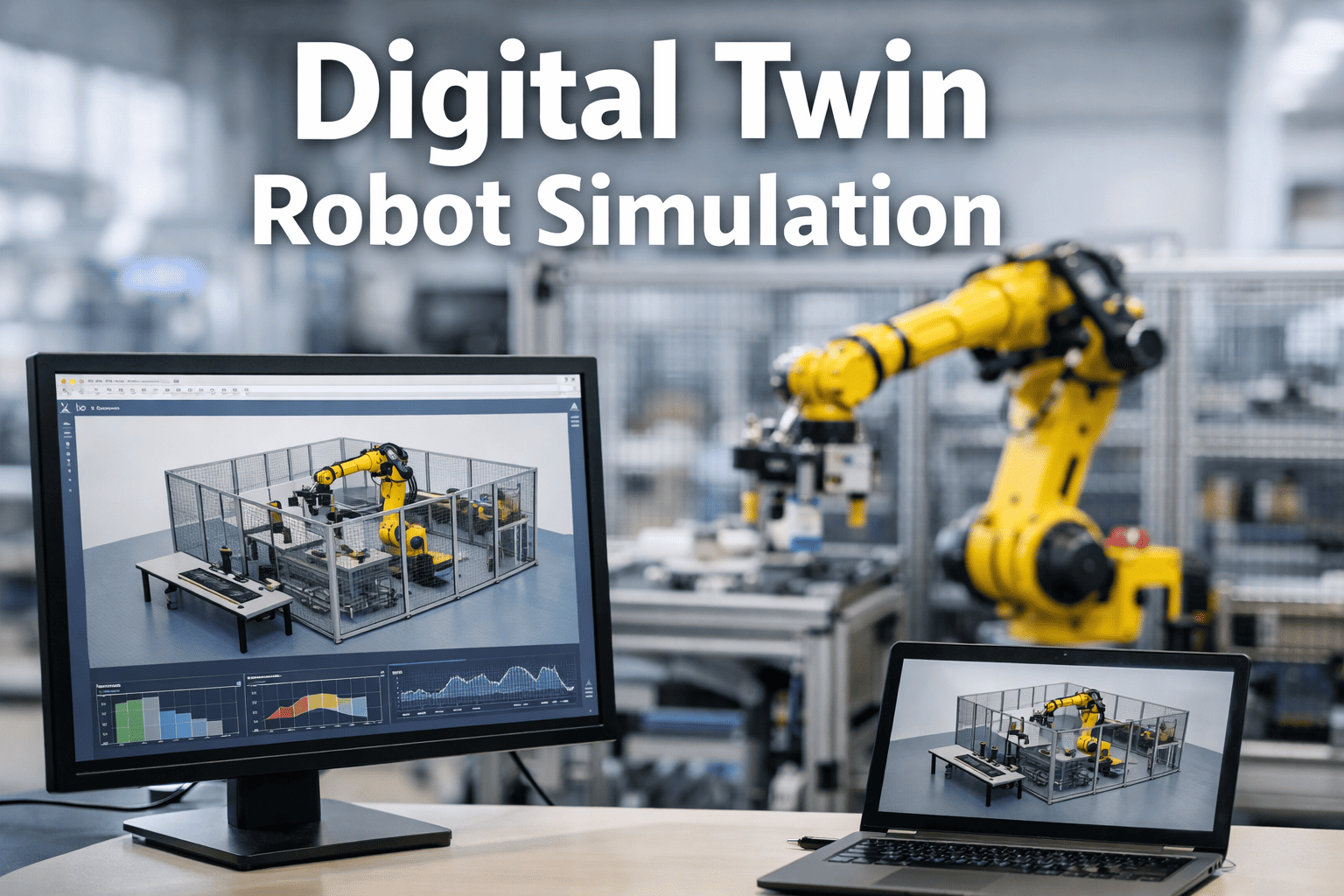
Once data flows are established, the next step is to build the simulation model. Start with a static 3D representation of the plant layout, including all machinery, conveyors, buffers, and workstations. This model serves as the visual anchor. Then, layer on dynamic behavior by connecting the model to live data streams. For example, each robot in the model should reflect its real-time position, speed, and program state. Conveyor belts should show actual throughput and jam status. Use discrete event simulation (DES) for flow analysis and agent-based modeling for human-robot collaboration scenarios. Calibrate the model using historical data to ensure accuracy. For instance, compare simulated cycle times with actual cycle times over a one-month period and adjust model parameters (e.g., acceleration rates, dwell times) to minimize error. The goal is to achieve a model that can predict future states with high confidence. Once validated, the twin can be used for what-if analysis: what happens if a robot fails? What is the impact of increasing batch size? These simulations empower decision-makers to optimize operations without risk.
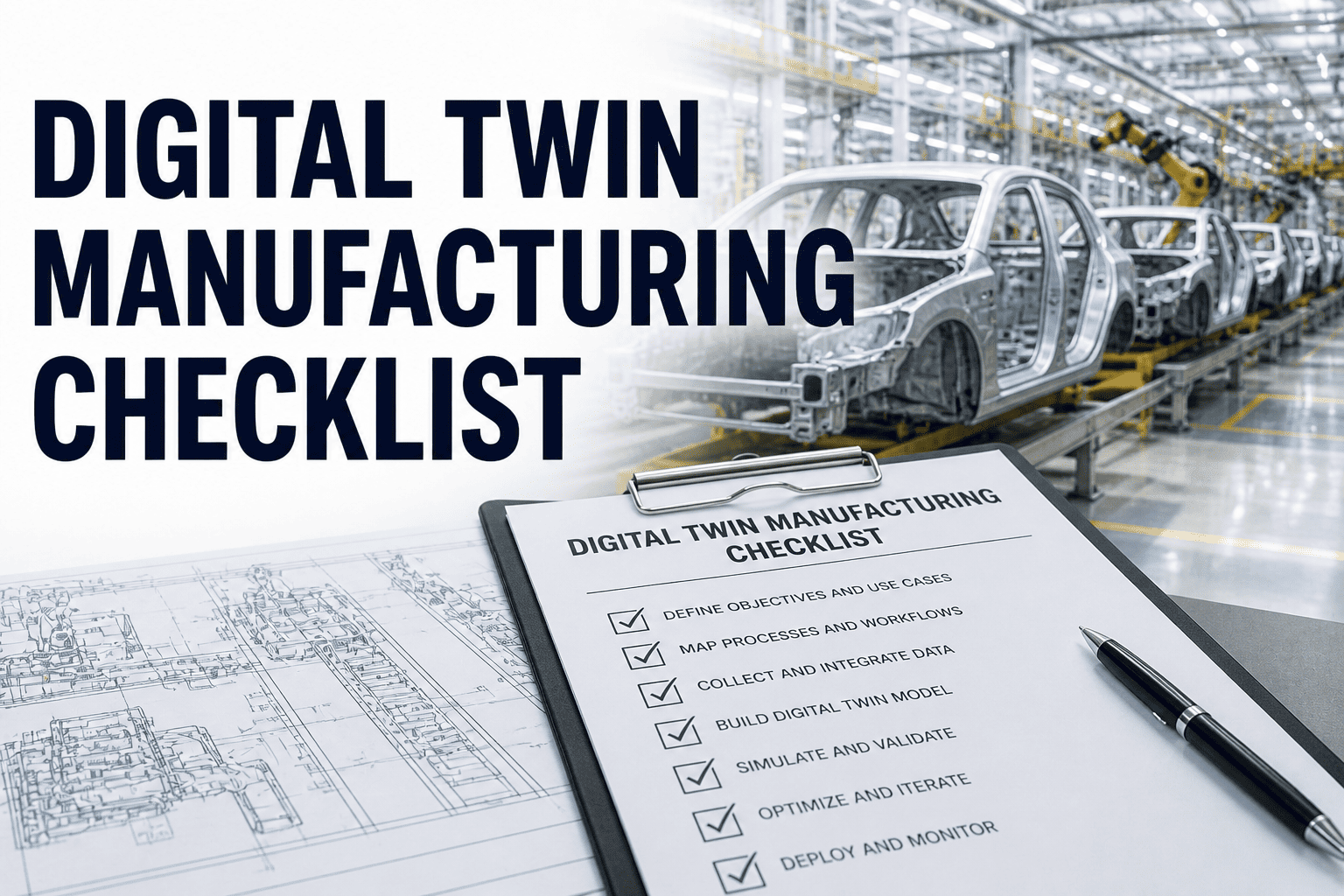
Month 1-2: Scope & Data Audit
Define objectives, identify critical line, and audit data sources.
Month 3-4: Data Integration & Model Build
Set up data pipelines, build static model, and establish data governance.
Month 5-6: Simulation Calibration
Connect live data, calibrate model, and validate against historical data.
Month 7-8: Use Case Deployment
Implement first use case (e.g., bottleneck detection, predictive maintenance).
Month 9-12: Scale & Optimize
Expand to additional lines, refine models, and measure ROI.
Accelerate Your Digital Twin Deployment
Our platform reduces integration time by 50% and delivers actionable insights from day one. See it in action.
Predictive Maintenance Integration: A High-Value Use Case
One of the most compelling applications of a digital twin is predictive maintenance. By continuously monitoring machine parameters such as vibration, temperature, and current draw, the twin can detect anomalies that precede failures. For example, a gradual increase in spindle vibration in a machining center may indicate bearing wear. The twin can correlate this data with historical failure patterns and predict remaining useful life (RUL) with high accuracy. This enables maintenance teams to schedule interventions during planned downtime, avoiding costly unplanned stops. In an automotive plant, where a single hour of unplanned downtime can cost upwards of $100,000, the ROI of predictive maintenance is substantial. The digital twin also facilitates root cause analysis by linking failure events to process parameters, helping engineers identify and eliminate recurring issues. To implement this, integrate the twin with the CMMS (Computerized Maintenance Management System) to automatically generate work orders when a predictive alert is triggered. This closed-loop system transforms maintenance from reactive to proactive, significantly improving OEE.
Virtual Commissioning: Reducing Launch Risk
New model launches are high-risk events that often involve extensive physical testing and debugging. Digital twins enable virtual commissioning, where control logic (PLC code, robot programs) is tested against the digital model before deployment on the physical line. This approach catches programming errors, logic conflicts, and timing issues early, when they are cheap to fix. For example, an automotive OEM used virtual commissioning to test a new welding cell. The twin revealed that a robot trajectory would collide with a fixture under certain conditions. The issue was resolved in the virtual environment, avoiding a costly physical rework. Virtual commissioning also allows for operator training in a safe, realistic environment, reducing the learning curve and improving startup efficiency. The key is to ensure that the digital twin accurately represents the physical system's behavior, including sensor noise, actuator delays, and communication latencies. By investing in high-fidelity models, manufacturers can compress launch timelines by 30-40% and achieve first-time-right production.
Bottleneck Analysis
Identify and eliminate production bottlenecks in real-time using simulation and live data.
Quality Optimization
Correlate process parameters with defect data to optimize settings and reduce scrap.
Energy Management
Monitor energy consumption of each asset and identify savings opportunities.
Changeover Simulation
Model changeover procedures to find the fastest, safest sequence.
Change Management: Winning the People Side
Technology alone does not deliver value; people do. Implementing a digital twin requires a shift in mindset and workflows. Plant operators may be skeptical of a virtual model, especially if they perceive it as a threat to their expertise. It is essential to involve them early in the design process, showing how the twin can make their jobs easier. For example, use the twin to provide real-time guidance on complex assembly tasks, reducing cognitive load. Engineers need training on how to use the twin for simulation and analysis. Establish a center of excellence (CoE) that champions the twin and shares best practices. Communicate successes regularly, such as a 20% reduction in changeover time achieved through twin-optimized sequence. Recognize and reward teams that contribute to the twin's accuracy and adoption. Without a robust change management plan, even the most technically perfect digital twin will fail to achieve its potential. Allocate at least 15% of the project budget to training, communication, and organizational support.
Measuring ROI: Metrics That Matter
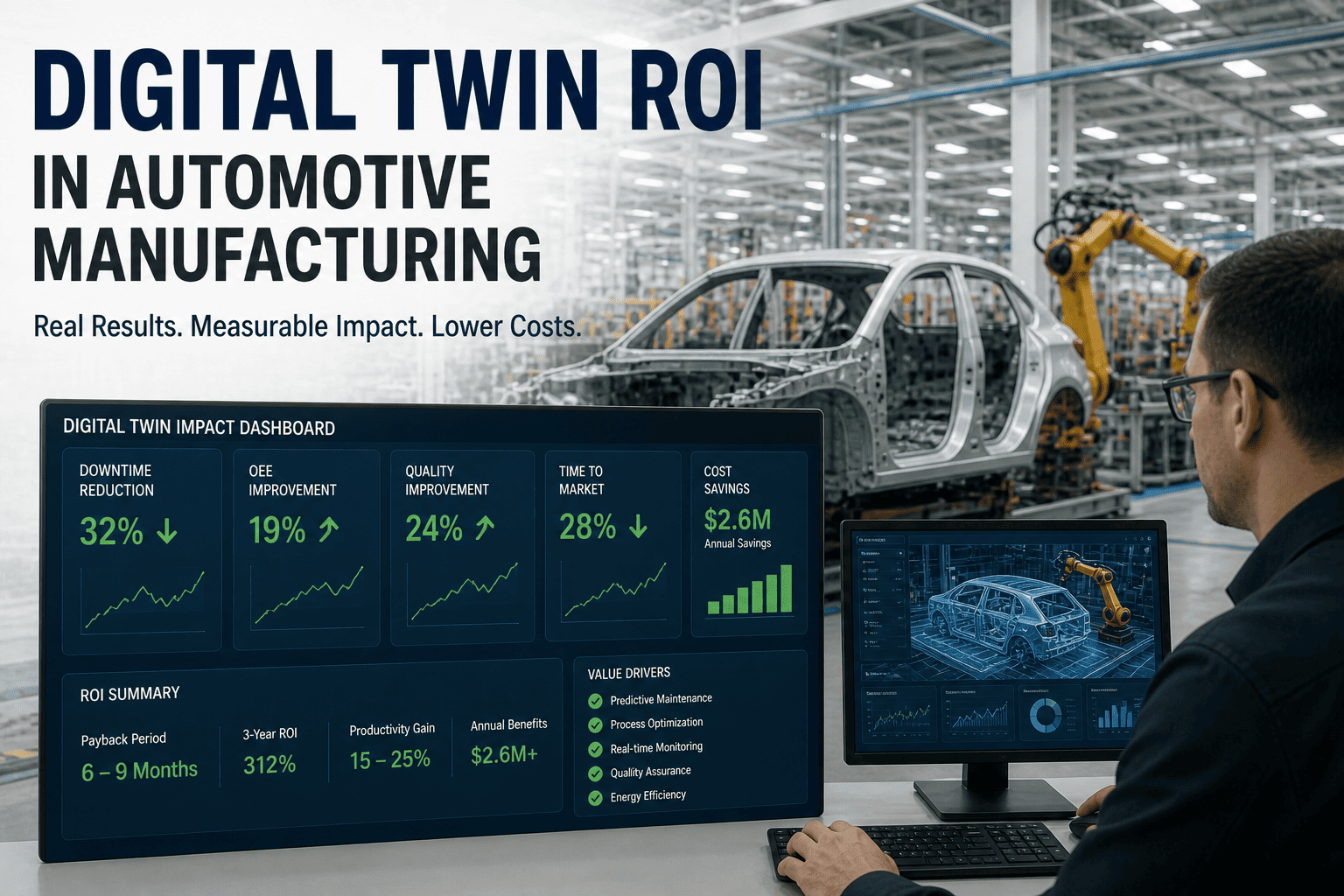
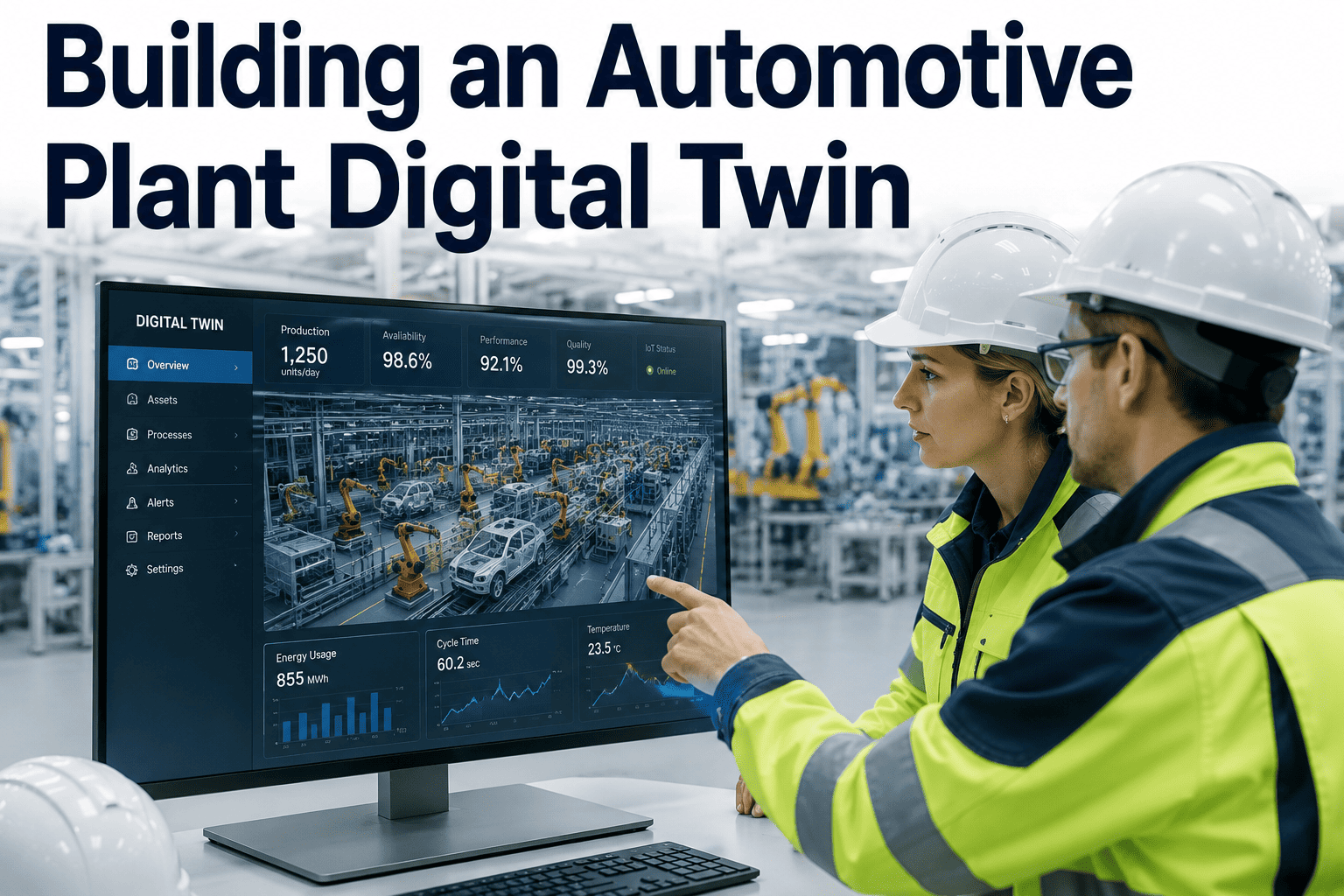
To justify continued investment, you must track and communicate the ROI of the digital twin. Define a set of key performance indicators (KPIs) aligned with the original objectives. Common metrics include reduction in launch time, decrease in defect rate, improvement in OEE, and reduction in unplanned downtime. Quantify the financial impact: for example, if the twin reduces launch time by two months, what is the revenue impact of getting the product to market earlier? If predictive maintenance prevents one major failure per year, what is the cost avoidance? Track these metrics monthly and report them to stakeholders in a simple dashboard. It is also important to capture intangible benefits, such as improved collaboration between engineering and production, or faster problem-solving. One automotive supplier reported that their digital twin paid for itself within eight months through a combination of reduced rework, lower energy costs, and improved throughput. Use these case studies to build a compelling narrative for expansion. Remember, ROI is not just about cost savings; it is about enabling new capabilities that drive competitive advantage.
ROI Impact Areas and Measurement
| Impact Area | Metric | Typical Improvement | Measurement Method |
|---|---|---|---|
| Launch Time | Days to SOP | 30% reduction | Compare actual vs. planned launch timeline |
| Quality | Defects per vehicle | 15% reduction | Track defect rates before and after twin deployment |
| Downtime | Unplanned downtime (hrs) | 25% reduction | Monitor OEE and downtime events |
| Energy | kWh per vehicle | 10% reduction | Compare energy bills and production data |
Common Pitfalls and How to Avoid Them
Despite the clear benefits, many digital twin initiatives fail. The most common pitfalls include: (1) Scope creep – starting too broad and losing focus. Avoid by defining a clear, bounded pilot. (2) Data quality issues – garbage in, garbage out. Implement rigorous data validation from day one. (3) Lack of executive sponsorship – without top-down support, the project will struggle for resources. Secure a champion in the C-suite. (4) Over-reliance on vendors – ensure your team has the skills to maintain and evolve the twin. Invest in training. (5) Ignoring cybersecurity – a digital twin connected to operational technology creates new attack surfaces. Implement network segmentation, encryption, and access controls. By anticipating these challenges and proactively addressing them, you can significantly increase the probability of success. Learn from the failures of others and build a resilient digital twin program that delivers sustained value.
Future Trends: AI and Autonomous Optimization
The next frontier for digital twins is the integration of artificial intelligence (AI) and machine learning (ML). Rather than just simulating what might happen, AI-powered twins can autonomously optimize production parameters in real-time. For example, an ML model can learn the optimal temperature profile for a paint oven based on current humidity and vehicle geometry, adjusting setpoints dynamically to minimize defects. Reinforcement learning can be used to train agents that manage material flow, reducing congestion and improving throughput. These capabilities turn the digital twin from a passive monitoring tool into an active optimization engine. As AI models become more interpretable and robust, we will see broader adoption in safety-critical applications. Automotive manufacturers that invest in AI-augmented digital twins today will be well-positioned to lead in the era of smart, self-optimizing factories. Start by collecting high-quality, labeled data for training, and collaborate with AI experts to build and validate models. The journey is complex, but the potential rewards are immense.
Frequently Asked Questions
What is the typical cost of building a plant digital twin?
The cost varies widely depending on scope, complexity, and existing infrastructure. A pilot digital twin for a single production line can range from $50,000 to $200,000, including software, integration, and consulting. Plant-wide implementations can cost several million dollars. However, the ROI is typically realized within 12-18 months through reduced downtime, improved quality, and faster launches. For a detailed cost estimate tailored to your plant, Book a Demo with our experts.
How long does it take to deploy a digital twin?
A pilot deployment can be completed in 3-6 months, depending on data availability and integration complexity. Full-scale plant-wide deployment typically takes 12-18 months. The timeline is influenced by factors such as the number of data sources, the need for custom simulation models, and organizational readiness. Our phased approach ensures quick wins and continuous value delivery. Contact Support for a personalized timeline.
What data is required to build a digital twin?
At a minimum, you need static data (asset lists, layouts, specifications) and dynamic data (real-time sensor readings, machine states, production counts). Ideally, you also integrate data from MES, ERP, and quality systems for context. The level of detail depends on your use case: for cycle time optimization, you need high-frequency data from PLCs; for quality analysis, you need inspection data. Our team can help you conduct a data audit to identify gaps. Book a Demo to discuss your data landscape.
Can a digital twin be integrated with existing systems?
Yes, a well-architected digital twin is designed to integrate with existing OT and IT systems. Common integrations include PLCs (OPC UA), MES, ERP (SAP), CMMS, and quality management systems. We use standard APIs and middleware to ensure seamless data flow. The key is to define a unified data model that maps all systems to the twin. Contact Support for integration best practices.
What skills are needed to maintain a digital twin?
Maintaining a digital twin requires a cross-functional team with skills in data engineering, simulation modeling, software development, and domain expertise in manufacturing. We recommend building a dedicated digital twin team or partnering with an experienced vendor. Training existing staff is also crucial. Our platform includes tools that simplify model updates and data management. Book a Demo to learn about our support and training programs.
Transform Your Plant with a Digital Twin
Join leading automotive manufacturers who have reduced launch time by 30% and achieved ROI in under a year. Let's build your twin together.