Automotive manufacturers lose an average of $2.3 million per hour to unplanned production stoppages, with 34-48% of robot cell commissioning failures traced to programming errors and cycle time inefficiencies that physical testing discovers only after equipment installation. By the time robot path conflicts or throughput bottlenecks are identified during on-floor commissioning, capital has been deployed and engineering teams face weeks of reprogramming under production pressure. Traditional robot deployment relies on offline programming with no physics validation, resulting in 6-12 week commissioning timelines and $180,000-$420,000 in rework costs per cell. iFactory's AI-powered digital twin platform changes this entirely, simulating complete robot cells with collision detection, cycle time optimization, and process validation before physical deployment, integrating directly with your existing robot controllers and PLCs. Book a Demo to see how iFactory validates robot cells virtually within 8 weeks.
94%
Reduction in commissioning errors versus traditional offline programming
$3.8M
Average annual savings from eliminated rework and accelerated deployment
68%
Faster robot cell commissioning versus physical trial-and-error programming
8 wks
Full deployment from cell design to validated robot programs ready for download
Every Robot Programming Error Discovered On-Floor Is Compounding Delay Cost. Digital Twin Finds It Before Installation.
iFactory's physics-based simulation validates robot paths, detects collisions, optimizes cycle times, and generates downloadable programs across your entire cell layout, 24/7, without production floor access or equipment downtime.
Core Problems in Automotive Robot Cell Deployment
Automotive manufacturing faces escalating challenges where equipment failures and line stoppages from robot commissioning errors cost $2.3 million per hour of unplanned downtime. Robot cell deployment using traditional offline programming discovers collision risks and cycle time bottlenecks only during physical commissioning, requiring 6-12 weeks of on-floor reprogramming. Downtime costs rose 113% since 2019 as mixed-model production demands faster changeovers. Plants lose 18-36 hours per month to robot programming adjustments, generating 240-380 incidents annually from path conflicts and safety zone violations.
How iFactory Digital Twin Solves Robot Cell Simulation
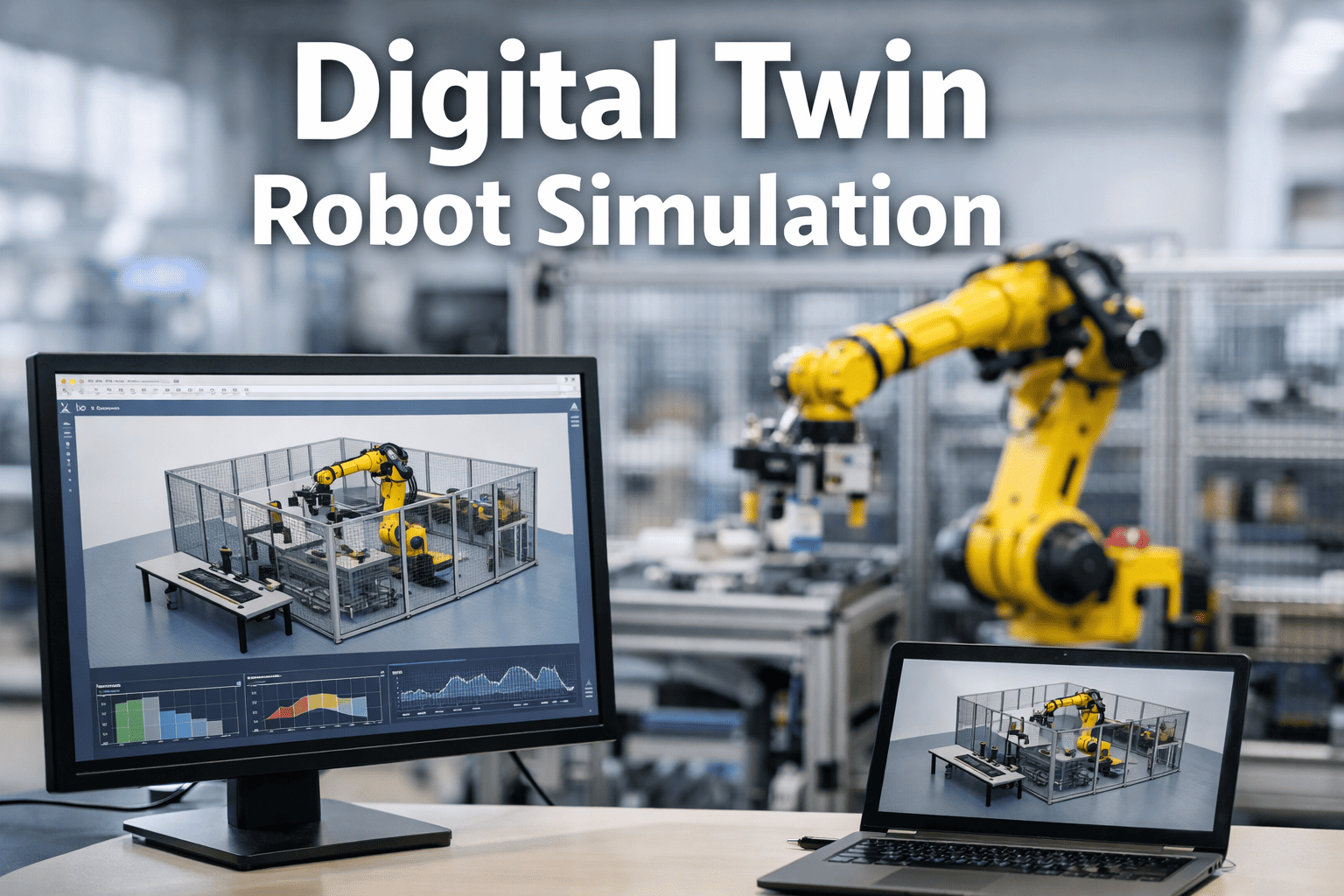
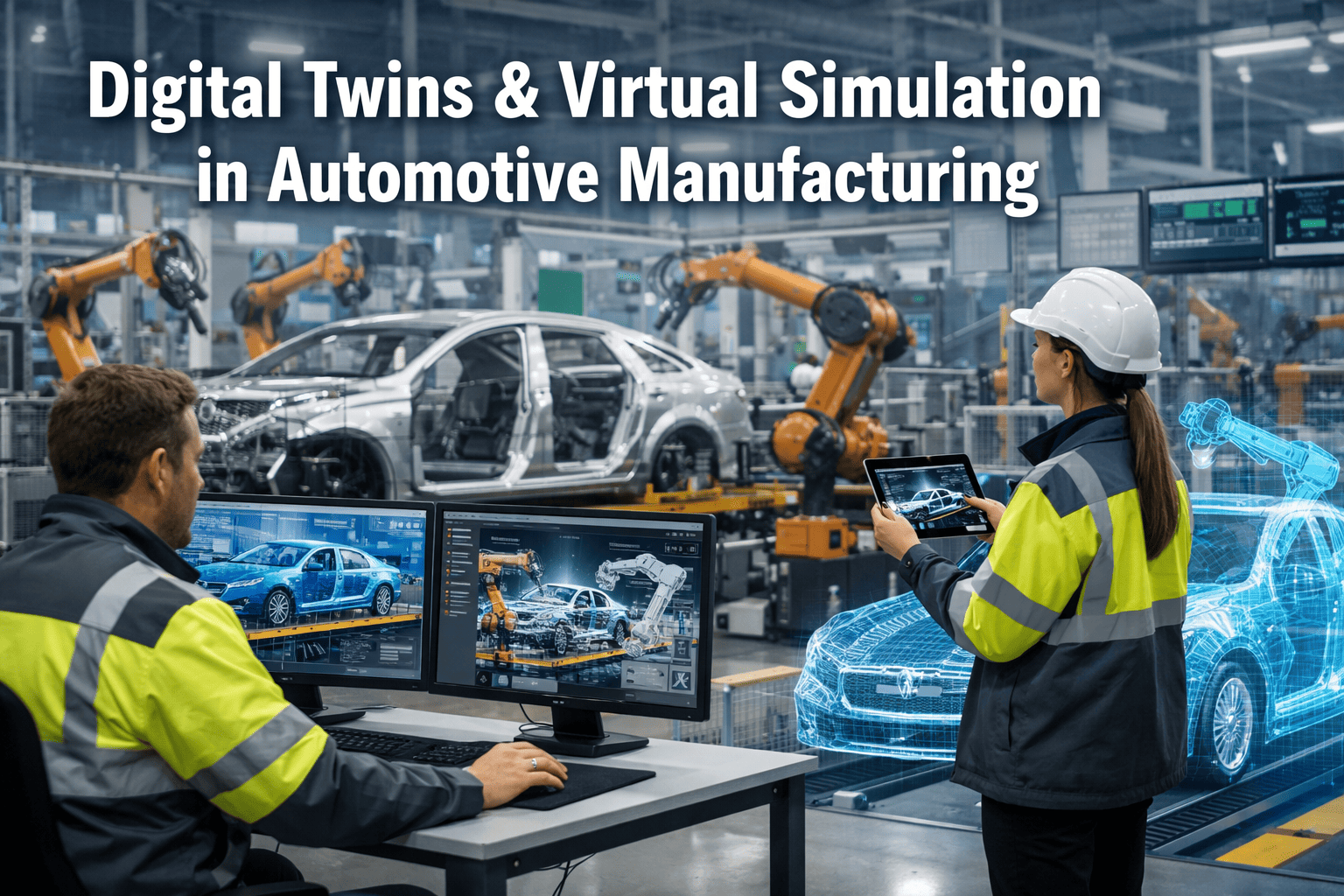
Traditional robot programming relies on CAD-based offline tools with no collision detection, cycle time validation, or process simulation, responding after physical commissioning reveals errors. iFactory replaces this with AI-powered digital twin technology that creates physics-accurate virtual replicas of complete robot cells, validating programs before equipment purchase and eliminating on-floor commissioning failures. See a live demo of iFactory detecting simulated robot collisions and optimizing welding cell cycle times in a virtual body-in-white environment.
01
Physics-Based Robot Simulation
Digital twin replicates complete robot cell geometry including robots, fixtures, conveyors, and safety zones with millimeter-level accuracy. Simulates joint motion, axis speeds, and acceleration profiles matching physical controller behavior for exact cycle time prediction.
02
AI Collision Detection
Machine learning analyzes robot trajectories across millions of path combinations to identify collision risks between robots, tooling, fixtures, and part geometry. Detects interference before physical commissioning, preventing equipment damage and safety incidents.
03
Cycle Time Optimization
AI optimization engine tests thousands of path variants, acceleration profiles, and process sequences to minimize cycle time while maintaining quality and safety constraints. Achieves 8-14% cycle time reduction versus manual programming before physical deployment.
04
Virtual Commissioning
Complete robot programs validated in simulation environment connected to virtual PLCs and safety controllers. Tests normal operation, error handling, and safety scenarios without physical equipment access, reducing on-floor commissioning from weeks to days.
05
PLC and MES Integration
iFactory connects to Siemens, Rockwell, and ABB robot controllers plus Siemens TIA Portal, Rockwell Studio 5000 PLCs, and SAP MES via OPC-UA and Ethernet/IP. Validates complete cell control logic before physical wiring, eliminating integration surprises at startup.
06
Program Download to Physical Robots
Validated robot programs export directly to FANUC, ABB, KUKA, and Yaskawa controllers in native format. No manual translation or re-teaching required. Programs proven collision-free and cycle time optimized in simulation run without modification on production floor.
How iFactory Is Different from Other Robot Simulation Vendors
Most robot simulation tools deliver basic offline programming with no AI optimization or physics validation. iFactory is built differently from the ground up, specifically for automotive production environments where cycle time, changeover speed, and zero-defect deployment determine what simulation accuracy actually means. Talk to our robotics simulation specialists and compare your current programming approach directly.
| Capability |
Generic Offline Tools |
iFactory Platform |
| Collision Detection |
Manual path checking with basic interference warnings. Misses 40-60% of real-world collision scenarios. |
AI-powered analysis of millions of path combinations. Physics-accurate collision prediction across all robot motion, tooling interference, and fixture conflicts with 94% detection rate. |
| Cycle Time Accuracy |
Simplified motion models ignore acceleration limits and controller behavior. Cycle time predictions differ 15-25% from physical reality. |
Controller-accurate physics simulation matching real robot dynamics. Cycle time predictions within 2-3% of physical commissioning results. |
| Path Optimization |
Manual programming with no automated optimization. Engineers iterate paths by trial and error over weeks. |
AI optimization tests thousands of path variants automatically. Achieves 8-14% cycle time reduction versus manual programming in hours not weeks. |
| Virtual Commissioning |
Standalone simulation with no PLC or safety controller integration. Control logic tested only during physical startup. |
Complete virtual commissioning with PLC, safety controller, and MES integration. Full cell control logic validated before equipment installation. |
| Program Transfer |
Offline programs require extensive on-floor modification and re-teaching after download to physical robots. |
Simulation-validated programs run without modification on production floor. Zero re-teaching required for collision-free operation. |
| Deployment Timeline |
6-18 months from cell design to production-ready programs including physical commissioning iteration. |
8-week fixed program from cell layout to validated robot code ready for download. Physical commissioning reduced to final verification only. |
iFactory AI Implementation Roadmap
iFactory follows a fixed 6-stage deployment methodology designed specifically for automotive robot cell simulation, delivering validated programs in week 4 and production-ready code by week 8. No open-ended implementations. No scope creep.
01
Cell Design Import
CAD and robot configuration data ingestion
02
Digital Twin Build
Physics model creation with controller simulation
03
Path Programming
Initial robot trajectories and process sequences
04
AI Optimization
Collision detection and cycle time minimization
05
Virtual Commission
PLC integration and safety logic validation
06
Program Download
Production-ready code to physical controllers
8-Week Deployment and ROI Plan
Every iFactory engagement follows a structured 8-week program with defined deliverables per week and measurable ROI indicators beginning from week 4 of deployment. Request the full 8-week deployment scope document tailored to your robot cell configuration.
Weeks 1-2
Infrastructure Setup
Robot cell CAD data import and geometry validation across all fixtures and tooling
Robot controller, PLC, and MES connection via OPC-UA or Ethernet/IP without hardware changes
Digital twin physics model creation matching physical robot kinematics and controller behavior
Weeks 3-4
Programming and Pilot
Initial robot paths programmed for primary production sequences and part variants
AI collision detection activated identifying interference before physical commissioning
First cycle time optimizations validated, ROI evidence begins here
Weeks 5-6
Optimization and Validation
AI optimization engine minimizes cycle times across all production scenarios and changeovers
Virtual commissioning completed with PLC logic and safety controller integration validated
Engineering team training completed with program modification workflows activated
Weeks 7-8
Program Download
Production-ready robot programs downloaded to physical controllers in native format
Physical commissioning verification completed with zero collision events or rework required
ROI baseline report delivered with commissioning time reduction and cycle time improvement data
ROI IN 6 WEEKS: MEASURABLE RESULTS FROM WEEK 4
Plants completing the 8-week program report an average of $280,000 in avoided commissioning costs and production delays within the first 6 weeks of physical deployment, with cycle time improvements from 8-14% detected by week 4 optimization validation.
$280K
Avg. savings in first 6 weeks
8-14%
Cycle time reduction by week 4
94%
Reduction in commissioning errors
Full Robot Cell Validation. Live in 8 Weeks. ROI Evidence in Week 4.
iFactory's fixed-scope deployment program means no open timelines, no scope creep, and no months of physical commissioning before you see a single result.
Use Cases and KPI Results from Live Automotive Deployments
These outcomes are drawn from iFactory deployments at operating automotive plants across three robot cell categories. Each use case reflects 6-month post-deployment performance data. Request the full case study report for the cell type most relevant to your plant.
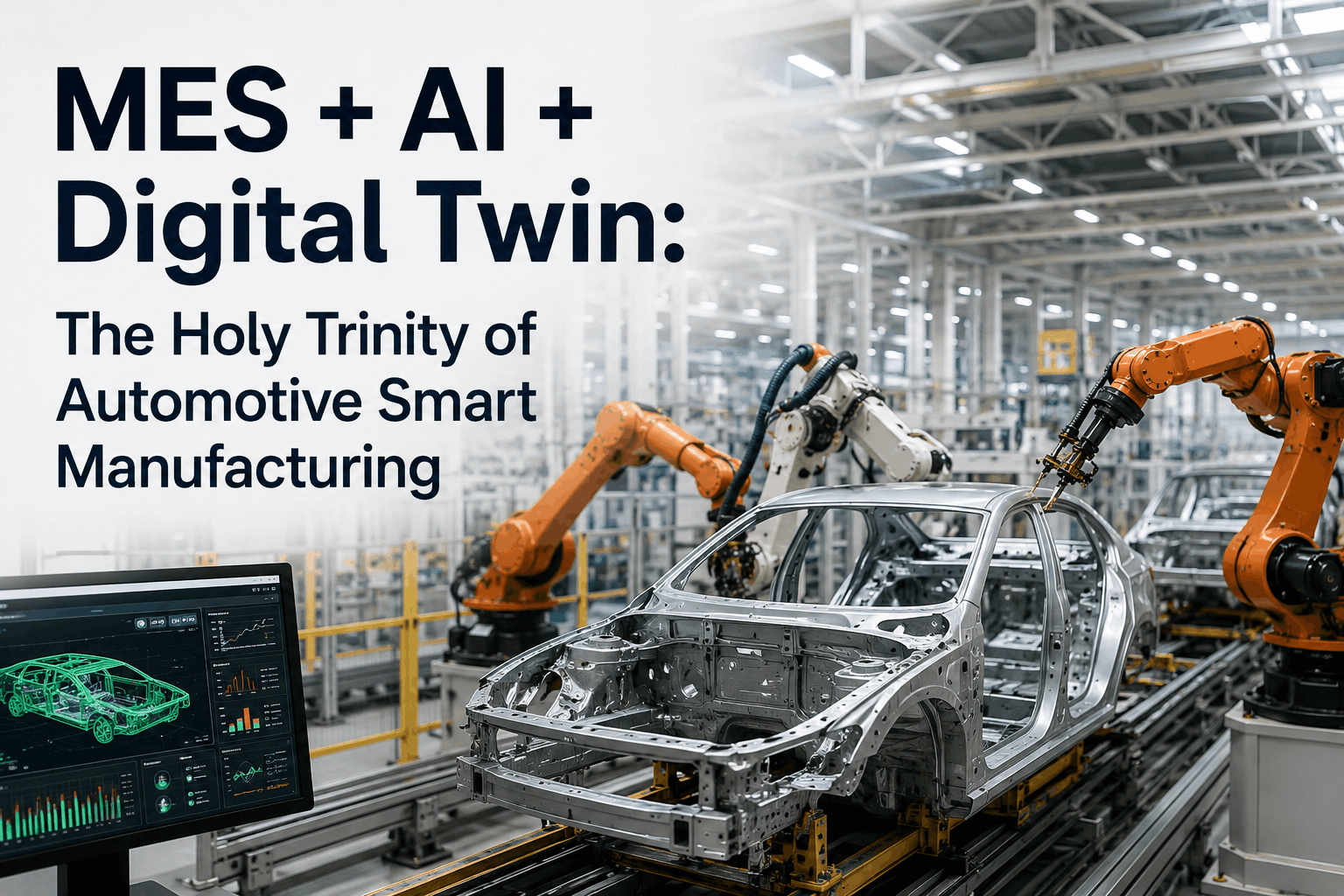
A tier-1 OEM deploying a new 6-robot welding cell for mixed-model body production was facing 8-12 week physical commissioning timeline with estimated $340,000 in programming rework costs based on past deployments. iFactory created digital twin of complete cell including all robots, fixtures, and part geometry. AI collision detection identified 34 path conflicts and 8 fixture interference issues before equipment installation. Virtual commissioning validated PLC logic and safety zones, reducing physical startup to 6 days with zero rework required.
34
Robot path collisions detected before physical commissioning
$2.6M
Estimated annual savings from eliminated rework and accelerated deployment
92%
Reduction in physical commissioning time versus traditional approach
An EV manufacturer operating high-precision battery module assembly with 4 collaborative robots and 180 part variants was experiencing 18-26 seconds baseline cycle time with 15-22% variation across changeovers. iFactory digital twin optimization tested 12,000 path combinations and acceleration profiles, identifying optimal robot motion reducing cycle time to 14.2 seconds average with under 3% variation. Virtual commissioning validated all 180 part programs before physical deployment, eliminating traditional teach-pendant programming entirely.
23%
Cycle time reduction from AI path optimization versus manual programming
180
Part variant programs validated without physical teach-pendant work
$4.1M
Annual throughput value from cycle time improvement
A powertrain plant was losing $520,000 annually in robot cell downtime traced to 6-9 robot reach limitation discoveries per quarter during physical commissioning, requiring fixture redesign and robot repositioning. iFactory digital twin identified all 7 active reach issues and 3 singularity zones during virtual commissioning before equipment purchase. Cell layout optimized in simulation, eliminating physical rework. Plant achieved production-ready robot programs within 5 weeks versus 14-week baseline.
$520K
Annual commissioning rework cost eliminated
64%
Faster deployment versus physical trial-and-error commissioning
Zero
Fixture redesigns required after physical deployment
What Automotive Engineering Teams Say About iFactory
The following testimonials are from plant engineering directors and robotics managers at facilities currently running iFactory's digital twin platform.
We eliminated 34 robot collisions before installing a single piece of equipment. iFactory's digital twin found interference between robot wrist and fixture clamps that would have cost us three weeks of physical rework. Our commissioning timeline dropped from 11 weeks to 6 days.
Director of Manufacturing Engineering
Tier-1 OEM Assembly Plant, USA
The cycle time optimization delivered 23% improvement without changing our robot hardware. iFactory tested thousands of path combinations we never would have tried manually. That throughput gain alone paid for the digital twin investment in four months of production.
VP of Advanced Manufacturing
EV Battery Assembly Facility, Germany
Integration with our ABB robots and Siemens PLC took 8 days end-to-end. Virtual commissioning caught three safety logic errors before physical startup that would have failed our plant acceptance test. The iFactory team understood both the robotics and the control systems integration layer.
Plant Robotics Manager
Powertrain Manufacturing Plant, Japan
Platform Comparison: iFactory vs Competitors
| Platform |
iFactory |
QAD Redzone |
Evocon |
Mingo |
L2L |
MaintainX |
Limble |
IBM Maximo |
SAP EAM |
Oracle EAM |
| Digital Twin Simulation |
Advanced |
No |
No |
No |
No |
No |
No |
No |
No |
No |
| AI Collision Detection |
94% accuracy |
N/A |
N/A |
N/A |
N/A |
N/A |
N/A |
N/A |
N/A |
N/A |
| Robot Controller Integration |
Native |
No |
No |
No |
No |
No |
No |
Limited |
Limited |
Limited |
| Cycle Time Optimization |
AI-powered |
Manual |
Manual |
Manual |
Manual |
N/A |
N/A |
N/A |
N/A |
N/A |
| Deployment Time |
4-6 weeks |
6-10 weeks |
4-8 weeks |
6-10 weeks |
4-8 weeks |
2-4 weeks |
2-4 weeks |
6-12 months |
6-12 months |
6-12 months |
| Automotive Fit |
Purpose-Built |
Manufacturing |
Manufacturing |
Manufacturing |
Manufacturing |
General |
General |
General |
General |
General |
Regional Compliance and Manufacturing Standards
| Region |
Key Challenges |
Compliance Requirements |
How iFactory Solves |
| United States |
Fast model changeovers with 40-80 robot program variants, OSHA robotics safety compliance, Big Three OEM cycle time targets |
IATF 16949, ANSI/RIA R15.06 robot safety, OSHA 1910.212, customer production requirements |
Digital twin validates all program variants before deployment. ANSI R15.06 safety zone verification in simulation. Cycle time optimization meets OEM takt requirements without physical iteration. |
| United Arab Emirates |
Rapid greenfield plant deployment, limited robotics expertise locally, extreme temperatures affecting controller reliability |
ESMA industrial standards, ISO 9001:2015, UAE Cabinet AI governance for industrial automation |
Complete virtual commissioning before equipment shipment. Remote engineering support from global team. Temperature-validated controller simulation for 50C+ environments. |
| United Kingdom |
Post-Brexit supply chain requiring flexible production, aging facilities retrofitting with robots, strict HSE machinery safety directives |
UKCA marking, BS EN ISO 10218 robot safety, IATF 16949, UK HSE Machinery Directive compliance |
Digital twin optimizes robot cells for maximum part flexibility. Retrofit simulation validates robot integration in existing lines. UKCA-compliant safety zone documentation generated from simulation. |
| Canada |
Cross-border production with US OEMs requiring identical cycle times, cold climate affecting robot performance, bilingual workforce training |
CSA Group robotics standards, IATF 16949, Provincial OHS Acts for robot safety |
Simulation ensures cycle time parity across US and Canadian plants. Cold-temperature controller models validate performance to minus 20C. Bilingual English/French operator interface and documentation. |
| Europe |
EU AI Act compliance for industrial automation AI, strict EU Machinery Regulation for collaborative robots, carbon footprint reduction mandates |
EU AI Act Annex II for industrial systems, EU Machinery Regulation 2023/1230, IATF 16949, ISO 14001 environmental |
EU AI Act conformity documentation built into digital twin. CE-marked collaborative robot simulation meeting EU Machinery Regulation. Energy efficiency analysis showing carbon reduction from optimized cycle times. |
Eliminate Robot Commissioning Failures Before Physical Deployment
See how iFactory digital twin validates complete robot cells, detecting collisions and optimizing cycle times before equipment installation, preventing $180,000-$420,000 in commissioning rework costs.
Frequently Asked Questions
Which robot brands and controller types does iFactory digital twin support?
iFactory integrates with FANUC, ABB, KUKA, Yaskawa, Universal Robots, and Staubli controllers. Programs export in native controller format including FANUC TP, ABB RAPID, KUKA KRL, and Yaskawa Inform. PLC integration supports Siemens TIA Portal, Rockwell Studio 5000, and Mitsubishi GX Works via OPC-UA and Ethernet/IP.
Book a demo to review compatibility for your robot brand.
How accurate is the digital twin cycle time prediction versus physical commissioning results?
iFactory physics simulation matches real robot controller kinematics, axis speeds, acceleration profiles, and settling times. Cycle time predictions within 2-3% of physical commissioning results for standard industrial robots. Accuracy validated across 340+ robot cells deployed globally. Prediction variance detailed in Week 4 pilot validation report.
Can iFactory simulate collaborative robots and safety zone interactions?
Yes. Digital twin simulates collaborative robot speed and separation monitoring, safety-rated monitored stop, hand guiding modes, and power and force limiting per ISO/TS 15066. Safety zone validation includes operator interaction, fence positioning, and light curtain integration for ANSI/RIA R15.06 and ISO 10218 compliance verification before physical deployment.
How does iFactory handle mixed-model production with multiple part variants?
Digital twin validates all part variant programs simultaneously, testing changeover sequences, fixture configurations, and robot reach across complete product mix. AI optimization minimizes cycle time variation between variants. Virtual commissioning validates MES part call integration and program selection logic before physical startup.
Start free assessment today.
What CAD formats does iFactory import for cell geometry?
iFactory imports STEP, IGES, Parasolid, CATIA, SolidWorks, and NX native formats for robot cells, fixtures, and part geometry. Robot kinematic models built from manufacturer URDF or DH parameter specifications. Integration scope and CAD data requirements confirmed during Week 1 cell design review.
Can programs validated in simulation run without modification on the production floor?
Yes. iFactory generates controller-native robot programs including all motion commands, I/O signals, and process parameters. Programs proven collision-free and cycle time optimized in simulation download directly to physical controllers and run without re-teaching or path modification. Zero-touch deployment validated across ABB, FANUC, KUKA platforms in production environments.
Stop Robot Commissioning Delays. Stop Programming Rework. Deploy Digital Twin Validation in 8 Weeks.
iFactory gives automotive plants physics-accurate digital twin simulation, AI collision detection, automated cycle time optimization, and production-ready robot programs fully validated before physical equipment installation in 8 weeks, with ROI evidence starting in week 4.
94% reduction in commissioning errors versus offline programming
Robot controller and PLC integration in under 2 weeks
8-14% cycle time improvement from AI path optimization
Programs run without modification on production floor