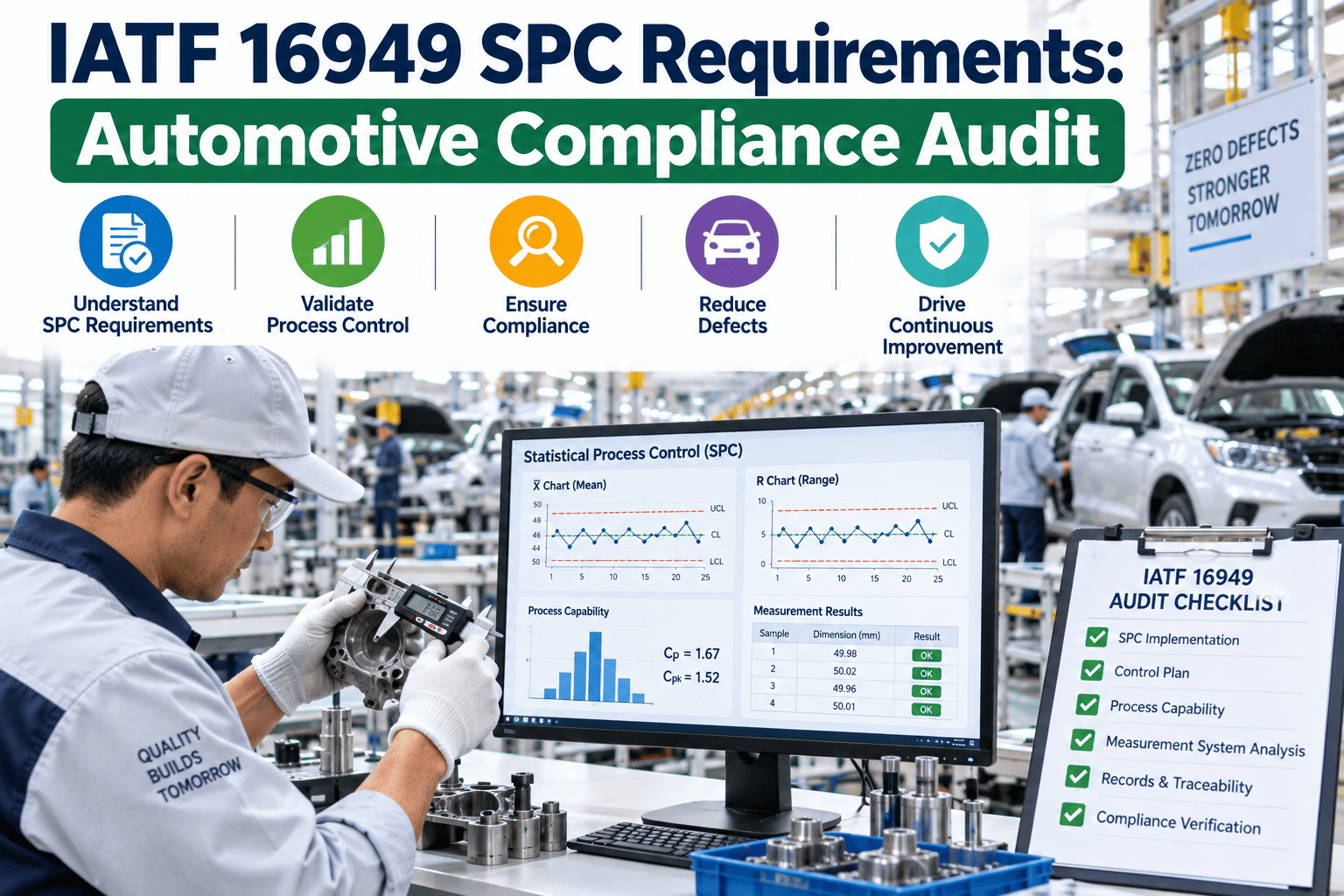
An IATF 16949 auditor sitting down with your control charts is not checking whether you own SPC software. They are checking whether you can demonstrate, characteristic by characteristic, that you identified which dimensions actually needed statistical monitoring, applied the right control methodology to each one, and can produce capability data showing the process is actually in control rather than just being watched. This distinction between having SPC and demonstrably using it correctly is where the overwhelming majority of audit findings in this area actually originate, and it is a distinction that a plant can easily miss if the SPC program was implemented primarily to satisfy the letter of a customer requirement rather than to genuinely control the process. Plants that treat SPC as a checkbox, running generic charts on whatever characteristics were easiest to measure rather than the ones the customer's control plan actually flagged as special or key characteristics, consistently generate audit findings even though they technically have SPC running somewhere in the plant. Getting this right requires understanding exactly what IATF 16949 expects at the characteristic level, not just having charts posted on the wall. If you want to walk through your specific audit readiness gaps, you can book a demo with iFactory's team.
Make Sure Your SPC Program Actually Satisfies IATF 16949, Not Just the Software Requirement
iFactory structures control charting around the specific characteristics, capability targets, and documentation IATF 16949 auditors actually check, not a generic SPC rollout.
The Four Areas an IATF 16949 Auditor Checks on SPC Specifically
Auditors are not evaluating whether SPC software exists. They are evaluating whether the program is applied correctly to the characteristics that matter and whether the documentation trail proves it. The four areas below cover the bulk of SPC-related findings in real automotive audits, and a plant that scores well on all four is generally in strong audit position even if the underlying SPC software itself is relatively basic, since auditors are ultimately assessing process discipline rather than software sophistication.
Characteristic Identification
Special and key characteristics from the customer control plan must be correctly identified and flagged for statistical monitoring, not left to plant discretion alone.
Appropriate Control Methodology
The specific chart type and sampling plan applied to each characteristic must be justified by its data type and process behavior, not defaulted to a single generic template.
Capability Study Evidence
Documented Cpk or Ppk studies must demonstrate the process is capable of meeting specification, with a clear record of what action was taken when capability fell short.
Out-of-Control Response Documentation
A documented, followed reaction plan for out-of-control signals is required, showing the specific corrective action taken each time a chart flagged a shift.
Matching Control Requirements to Characteristic Classification
Not every dimension on a print requires the same level of statistical rigor. The table below outlines how classification typically drives the required control approach under a standard automotive control plan structure.
| Characteristic Class | Typical Control Requirement | Common Audit Gap |
|---|---|---|
| Critical / Safety | Full SPC with tight control limits, 100% traceability, and documented capability | Sampling frequency too low to catch drift before out-of-spec parts are produced |
| Key / Significant | SPC with defined reaction plan and periodic capability re-verification | Reaction plan exists on paper but is not actually followed when signals occur |
| Standard | Process monitoring appropriate to risk, not necessarily full control charting | Over-applying full SPC uniformly, diluting attention away from higher-risk characteristics |
| Cosmetic / Minor | Basic inspection sufficient in most cases, control plan dependent | Missing documentation link explaining why full SPC was not applied |
What the Audit Trail Actually Needs to Show
Having a control chart is not the same as having an audit-ready documentation trail. The elements below are what an experienced IATF 16949 auditor will specifically ask to see connected together, not just individually present somewhere in the plant.
Control Plan Linkage
Each monitored characteristic must trace directly back to the specific line item in the customer or internal control plan that required it.
Chart-to-Reaction Traceability
Every out-of-control signal on a chart needs a corresponding, dated record of what corrective action was taken and by whom.
Capability Study History
Initial and ongoing capability studies must be retained and show the trend over time, not just a single point-in-time snapshot.
Gauge and Method Validation
Measurement system analysis records demonstrating the gauge used to generate chart data is itself capable and calibrated.
A Realistic Timeline for Closing SPC Compliance Gaps Before an Audit
Discovering SPC gaps close to an audit date is common, and the timeline below reflects a realistic remediation path depending on how far in advance the gap is identified.
Full Gap Assessment
Time to review every characteristic against its control plan classification and correct any systematic misclassification issues.
Documentation Cleanup
Focus on ensuring reaction plan records and capability study history are complete and traceable for the characteristics already correctly monitored.
Targeted Priority Fixes
Address the highest-risk gaps first, typically critical and key characteristics with missing reaction plan documentation.