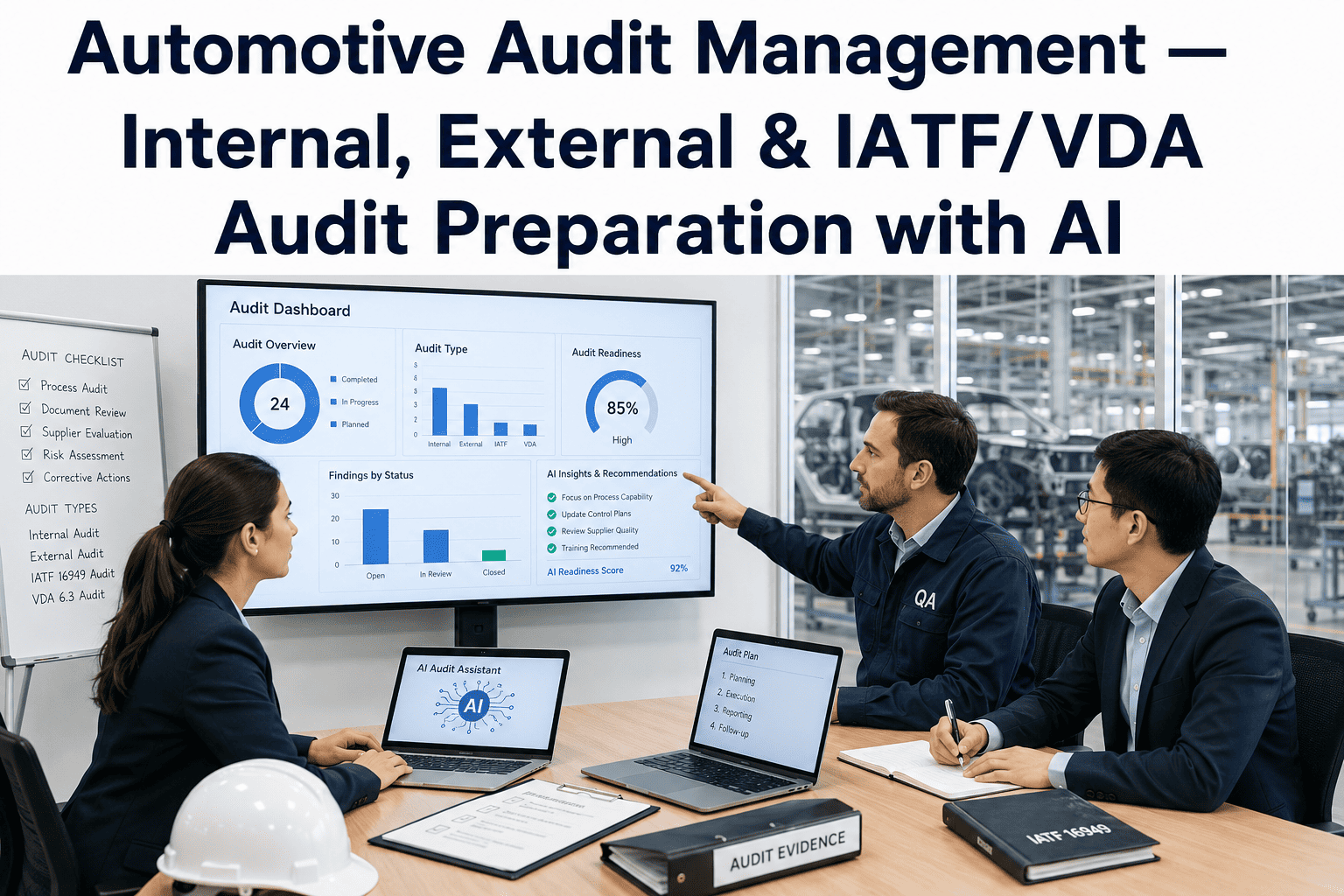
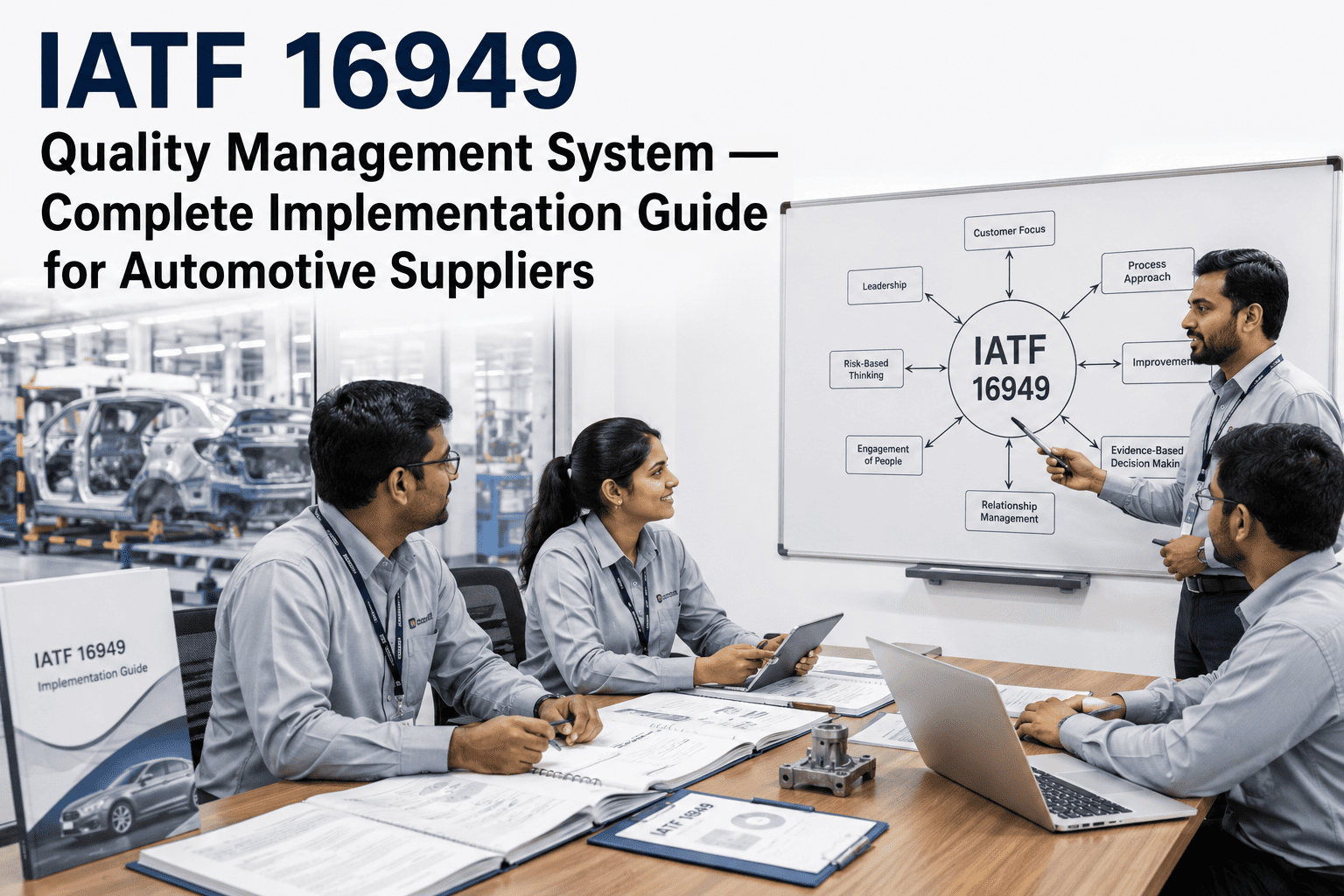
A compliance officer preparing for an IATF 16949 surveillance audit or a customer's VDA 6.3 process audit usually spends the week before scrambling to pull findings, evidence, and corrective action status from wherever each department happened to store them, whether that's a shared drive, an inbox, or someone's personal notes from the last internal audit. The standards themselves are demanding enough without the added burden of reconstructing an audit trail by hand every time an auditor is on site. Audit management software built around how automotive audits actually work, spanning internal QMS, manufacturing process, and product audits alongside third-party certification visits, keeps findings and evidence organized continuously instead of assembled under deadline pressure. Compliance officers can book a demo to see it against their own audit calendar.
IATF 16949 & VDA 6.3 · AUDIT MANAGEMENT
One System for Every Audit Type on Your Calendar
Internal QMS audits, manufacturing process audits, product audits, and third-party certification visits are tracked in one place, with findings and evidence organized continuously rather than assembled under deadline pressure.
QMS Audit
Full system audit covering the main site and support locations, required within every three-year cycle
Manufacturing Process Audit
Focused audit on each individual manufacturing process against IATF and customer requirements
Product Audit
Verifies finished product conformity against customer-specific criteria and specifications
External / Certification Audit
Third-party certification body or customer audit against IATF 16949 or VDA 6.3
Why Compliance Officers End Up Juggling So Many Threads
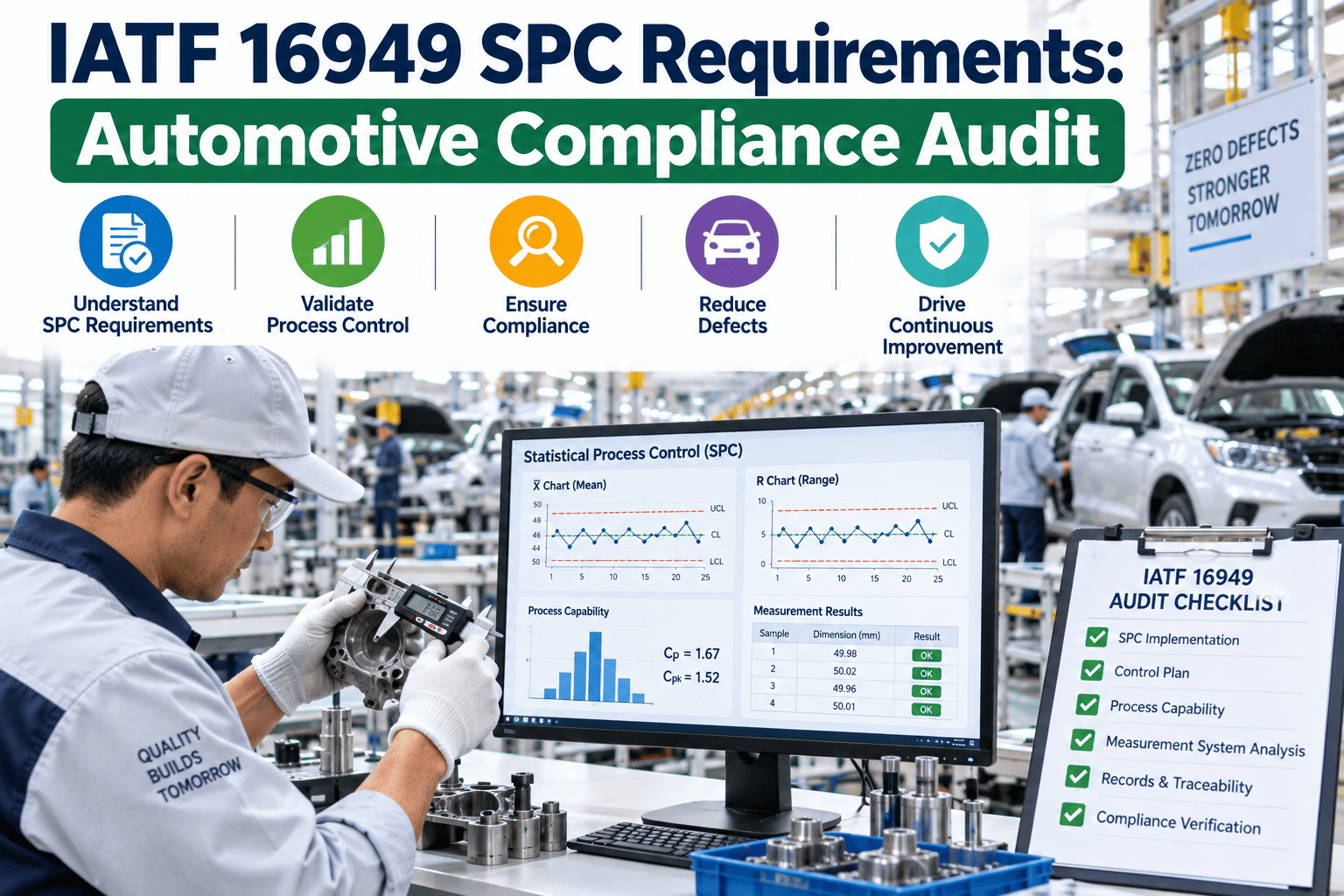
IATF 16949 requires a documented, risk and performance-based internal audit schedule that covers the full system within a rolling three-year cycle, and that schedule alone spans QMS-level audits, process-specific audits, and product audits, each generating its own findings, corrective actions, and supporting evidence. Add customer-specific requirements, some of which call for VDA 6.3 process audits conducted by certified auditors, and a compliance officer is effectively managing several parallel audit programs that all need to stay inspection-ready at once.
The difficulty isn't any single audit, it's that findings from an internal process audit in one quarter need to be provably closed out before the next customer or certification body audit references the same process, and without a connected system, confirming that closure means digging back through whatever format the previous finding was recorded in.
SEE YOUR OWN AUDIT CALENDAR CONNECTED
Walk Through a Finding From Open to Verified Closure
See how a single finding stays traceable across internal, customer, and certification audits.
Mapped to the VDA 6.3 Process Elements
VDA 6.3 structures a process audit around seven defined process elements spanning the full product realization cycle, from potential analysis through serial production and beyond. Organizing findings and evidence against these same elements means a VDA-based customer audit and an internal process audit can reference the same underlying structure instead of two incompatible formats.
P2Project Management
P3Planning Product & Process Development
P4Product & Process Development Realization
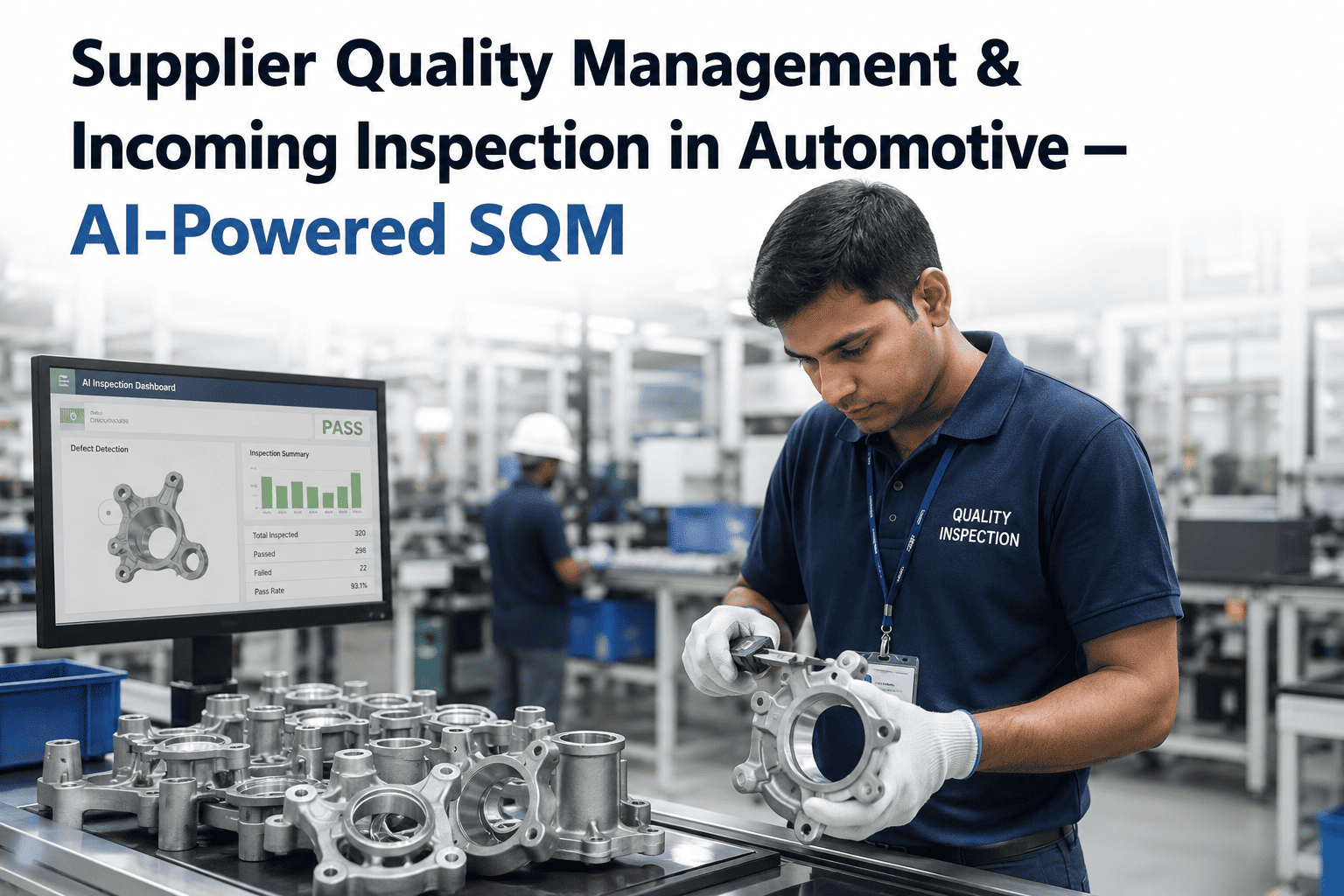
P5Supplier Management
P6Process Analysis / Production
P7Customer Care, Service & Complaints
From Finding to Verified Closure
1
Finding logged against the specific process element, clause, and audit type it was raised under, with evidence attached at the point of capture.
2
Root cause and corrective action assigned to an owner with a due date, visible to the compliance team without a separate status meeting.
3
Evidence of implementation collected directly against the finding record rather than in a separate email or folder.
4
Effectiveness verified and the finding formally closed, with the full history preserved for the next audit that touches the same process.
Audit Types at a Glance
| Audit Type | Typical Scheduling Basis | Who Conducts It |
| QMS Audit |
Risk and performance-based, full system within 3 years |
Internal or contracted auditors trained to IATF 16949 |
| Manufacturing Process Audit |
Scheduled per process, more frequent for higher-risk lines |
Internal auditors independent of the area audited |
| Product Audit |
Ongoing, against customer-specific product criteria |
Internal quality staff or customer representatives |
| VDA 6.3 Process Audit |
Per customer-specific requirement, often annual |
Certified VDA 6.3 process auditors |
| Certification Body Audit |
Per certification cycle, typically annual surveillance |
Accredited external certification body |
3-Year Cycle
Full system must be covered by internal QMS audits within a rolling three-year period
7 Elements
VDA 6.3 process audits are structured around seven defined process elements
Independent Auditors
IATF 16949 requires auditors to be independent of the area they audit
What a Compliance Officer Told Us
Before this, every surveillance audit meant a week of pulling together finding history from three different internal audit types plus whatever the last customer visit turned up, all in different formats. Now an auditor can ask about any process and I can pull up its full history, including whether a previous finding was actually verified closed, in the same view.
Compliance Officer, Tier 1 Automotive Supplier
Evidence That Holds Up When an Auditor Asks for It
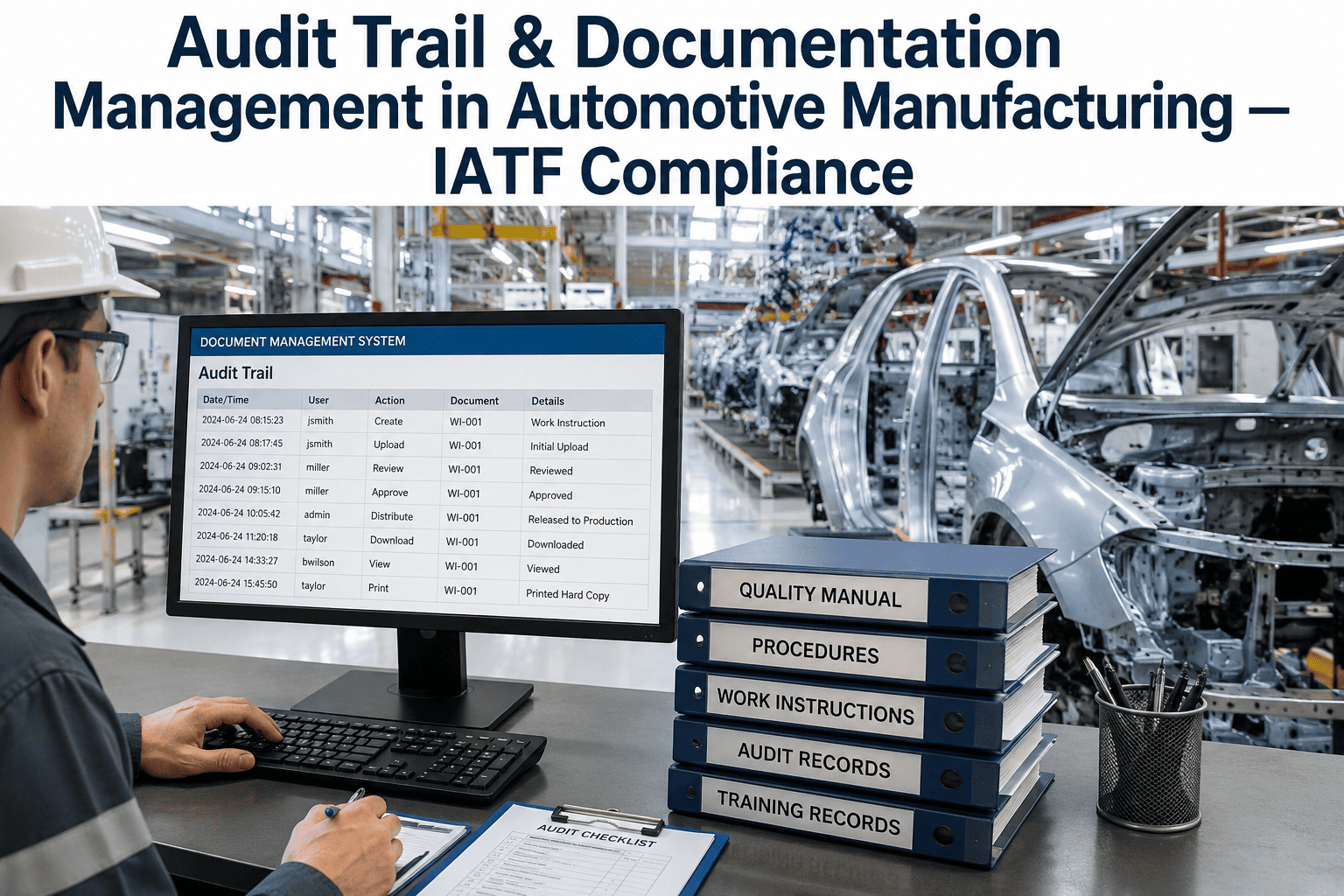
An auditor's most common follow-up question is some version of "show me the evidence," whether that's proof a corrective action was actually implemented or documentation that a previous finding was verified closed rather than just marked resolved. Evidence attached directly to the finding record, timestamped and traceable to the person who uploaded it, holds up far better under that kind of scrutiny than a folder of files someone has to locate and hope is the right version.
Frequently Asked Questions
Can this handle both IATF 16949 and VDA 6.3 audit structures at once?
Yes, findings and evidence can be organized against IATF clause structure, VDA 6.3 process elements, or both simultaneously, since many automotive suppliers are audited against both standards depending on the customer. This means a single finding raised during an internal audit can be referenced correctly whether the next audit touching that process is an IATF surveillance visit or a customer VDA 6.3 audit. Teams can
book a demo to see both structures configured together.
Does this help build the risk-based internal audit schedule itself?
Yes, the system supports building and maintaining a risk and performance-based schedule that covers the full system within the required cycle, and it flags processes that are approaching their audit due date or that carry elevated risk based on prior finding history. This removes the manual spreadsheet tracking that many compliance teams currently rely on to manage schedule compliance.
How does this support customer-specific requirements that go beyond the base standard?
Customer-specific requirements, including additional VDA-based audit obligations that some automotive customers require beyond the base IATF standard, can be configured as their own audit type or checklist within the system. This keeps customer-specific obligations visible and trackable rather than living in a separate document that's easy to overlook during scheduling. Specific customer requirement setups can be discussed through
support.
Can auditors from a certification body or customer access findings directly?
Most deployments provide a controlled read-only view that an external auditor can be given during an on-site visit, showing finding history and closure evidence for the specific processes being audited without exposing unrelated internal data. This is typically set up ahead of a scheduled audit rather than granted as standing access.
How long does it take to get a full audit history migrated into the system?
Most compliance teams start by migrating open and recently closed findings first, since those are what the next audit is most likely to reference, then backfill older historical records over the following weeks. A full multi-year history migration typically completes within a month, though the system is usable for active audit management well before that's finished.
STOP RECONSTRUCTING AUDIT HISTORY UNDER DEADLINE
Keep Every Audit Type Inspection-Ready, Continuously
See how your own audit calendar and finding history come together in one system.