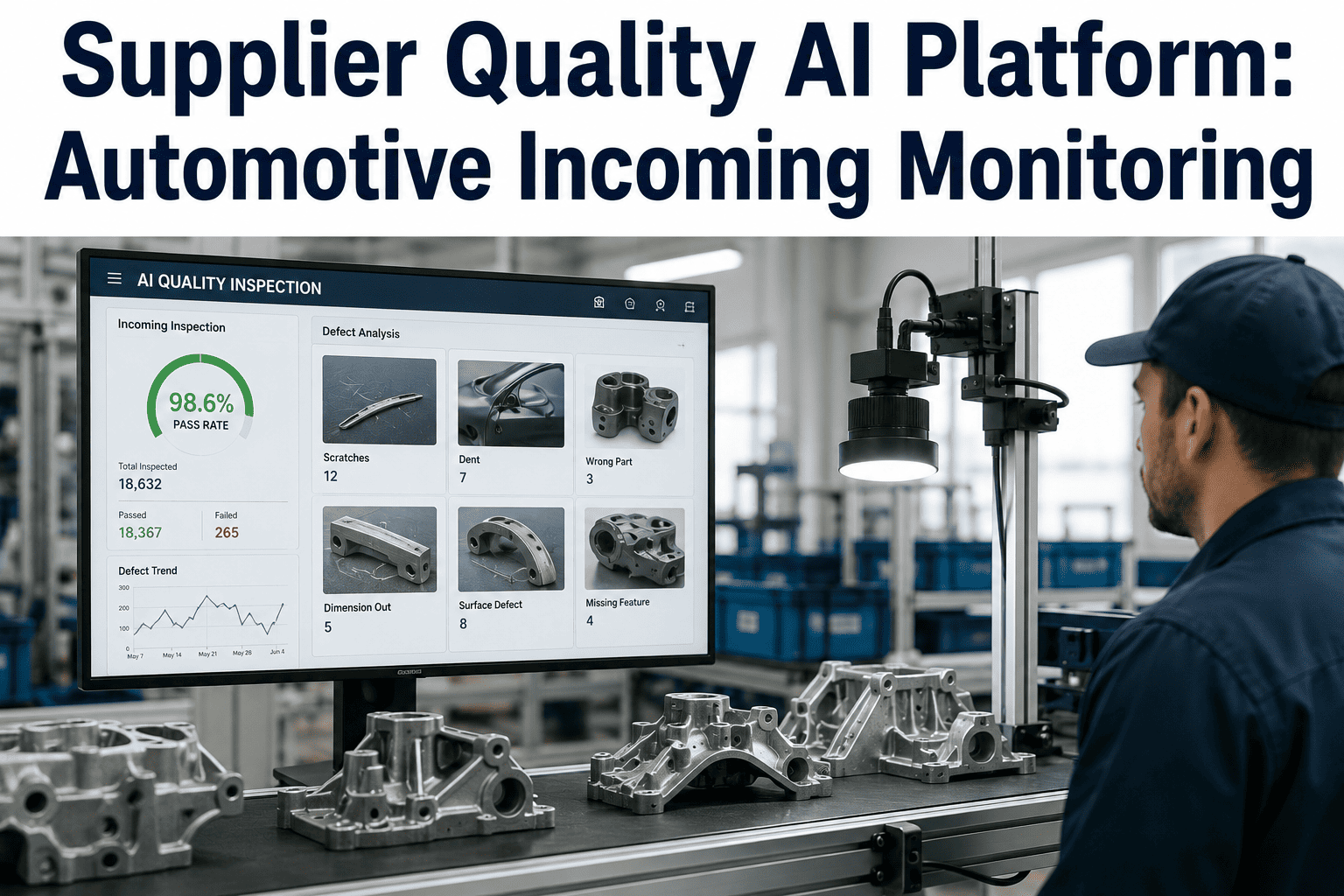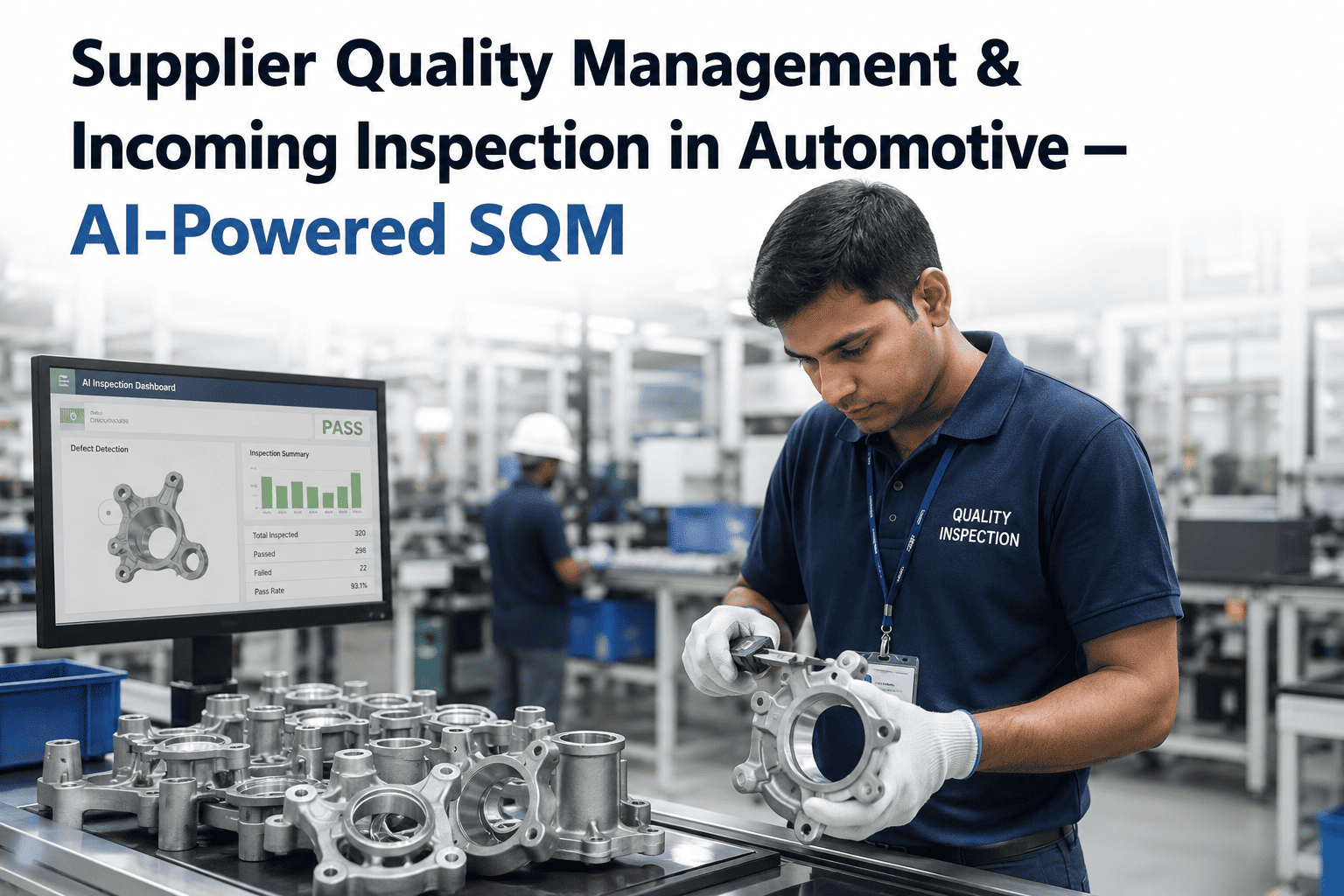
Incoming inspection catches maybe one fifth of what actually matters — a sample-based dock check tells you whether the parts in front of you meet spec today, but it says almost nothing about whether the supplier's process is drifting between shipments. A supplier can pass every incoming lot check for months while their process capability quietly erodes, and the first real signal often arrives as a line stop that takes two or three shifts to trace back to its source. Modern supplier quality management closes that gap by scoring suppliers continuously, not just at the dock, and by letting proven suppliers earn reduced inspection while new or inconsistent ones get watched closely. iFactory's support library covers how these risk-based inspection rules get configured.
Supplier Quality Management & Incoming Inspection in Automotive Manufacturing
Sample-based dock inspection alone misses most process drift. This guide covers how AI-powered supplier scorecarding, dynamic inspection rules, and skip-lot decisions work together to catch supplier quality issues before they reach your line.
Why Dock Inspection Alone Can't Catch Supplier Process Drift
AQL sampling — checking a statistically representative fraction of a lot rather than every part — exists to make incoming inspection practical at volume, and it works well for what it's designed to do: deciding whether a specific lot meets spec. What it isn't designed to do is reveal whether a supplier's underlying process is stable between shipments. A supplier's tooling can wear, a raw material lot can shift slightly, or a process parameter can drift, and none of that necessarily shows up as an out-of-spec lot at the sample size incoming inspection typically uses.
This is why supplier quality management has moved beyond lot-by-lot AQL decisions toward continuous process visibility — ingesting a supplier's own SPC data, process capability trends, and prior performance history to build a live risk score, rather than relying solely on what a sample from the current lot happens to reveal. When supplier process data is available in real time, a risk flag can be raised before a lot even arrives, based on the trend rather than waiting for a defect to surface at the dock.
How Dynamic Inspection Rules Scale With Supplier Trust
New or At-Risk Suppliers
Full or high-percentage sampling applied to new suppliers or those with recent nonconformances, until sustained improvement is demonstrated.
Standard AQL Sampling
Standard ANSI/ASQ Z1.4 or ISO 2859-1 sampling plan applied to suppliers with an established, acceptable track record.
High-Performing Suppliers
Smaller sample sizes applied to suppliers with a sustained record of clean lots, reducing inspection burden without eliminating oversight.
Proven, Low-Risk Suppliers
Lots proceed to conditional release with minimal or no physical sampling, reserved for suppliers with a long, consistent quality history and low part criticality.
Safety-critical components — airbag inflators, brake parts, steering components — typically remain on required critical-characteristic verification regardless of how strong a supplier's overall scorecard is, since the consequence of an undetected defect on these parts outweighs the efficiency gained from reduced sampling.
Let Inspection Rigor Follow Supplier Performance Automatically
iFactory AI recalculates supplier risk scores from live process data and automatically applies Normal, Tightened, Reduced, or Skip-lot rules — no manual sampling plan updates required.
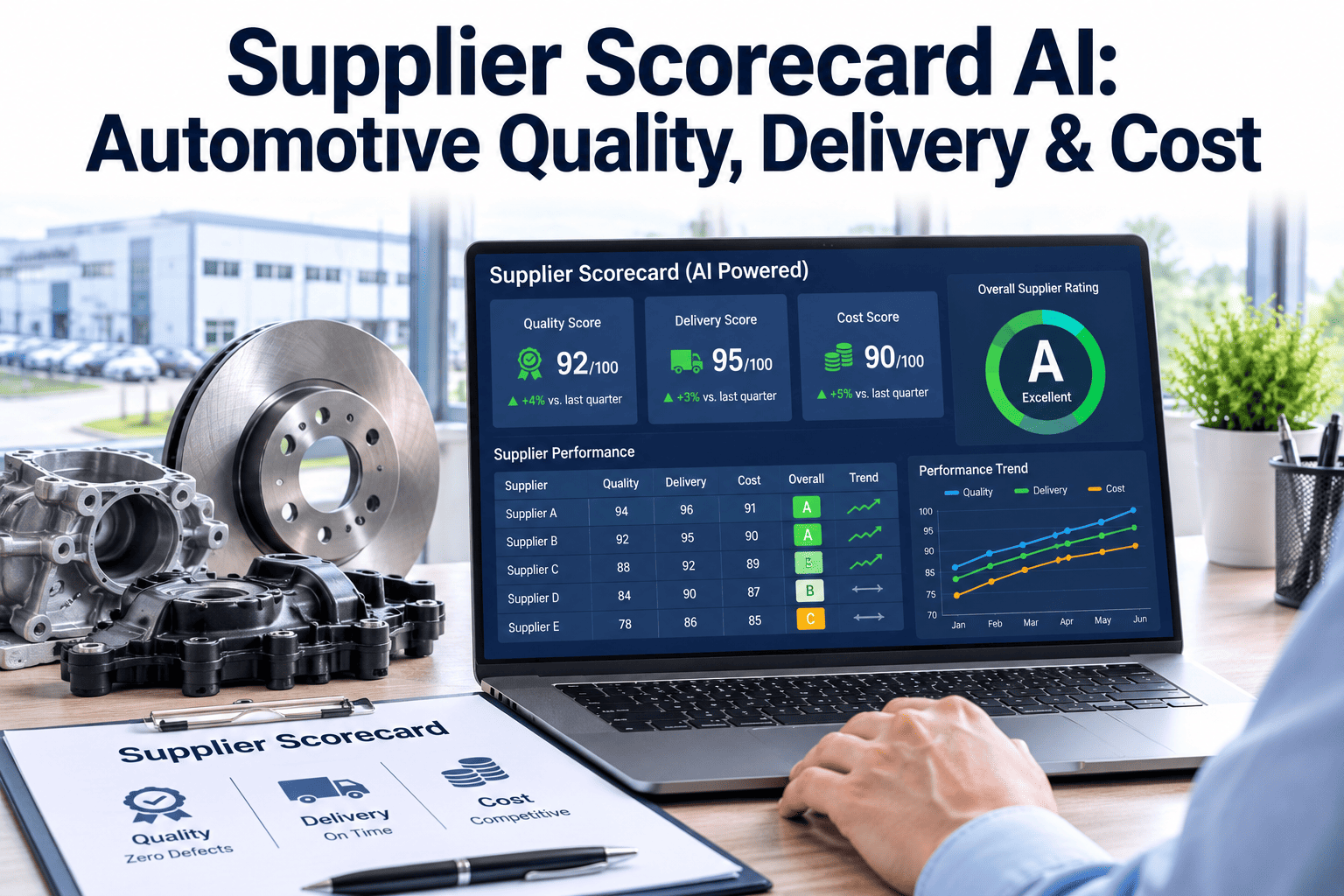
What a Modern Supplier Quality Scorecard Actually Tracks
PPM Defect Rate & First-Pass Yield
Parts-per-million rejection rate and first-pass acceptance rate at incoming inspection, tracked as a trend rather than a single snapshot.
SCAR Response and CAPA Closure Time
How quickly a supplier responds to a Supplier Corrective Action Request and closes it with a verified, effective corrective action.
On-Time Delivery Performance
Delivery reliability tracked alongside quality, since a supplier switching rules should weigh both dimensions rather than quality in isolation.
Live Process Capability Signals
Where available, ingested SPC or process data from the supplier's own operation, correlated against lot outcomes and line performance on receipt.
Industry Perspective on Supplier Quality Strategy
The conversation I have most often with new supplier quality engineers is about the difference between a clean lot and a stable process. A supplier can pass incoming inspection for six months straight and still be one tooling change away from a serious problem, because the sample simply never happened to catch the drift. What actually protects you is visibility into the supplier's own process data, not a bigger sample size at the dock — a bigger sample catches more of what's already wrong in this lot, but it doesn't tell you anything about tomorrow's lot. Once we started building risk scores from live supplier process trends instead of only lot history, we started flagging problems before they ever generated a nonconformance at receiving.
Common Questions About Supplier Quality Management
See Your Supplier Risk Scores Update in Real Time
iFactory AI turns incoming inspection, SCAR history, and supplier process data into one live scorecard that drives your inspection rules automatically.