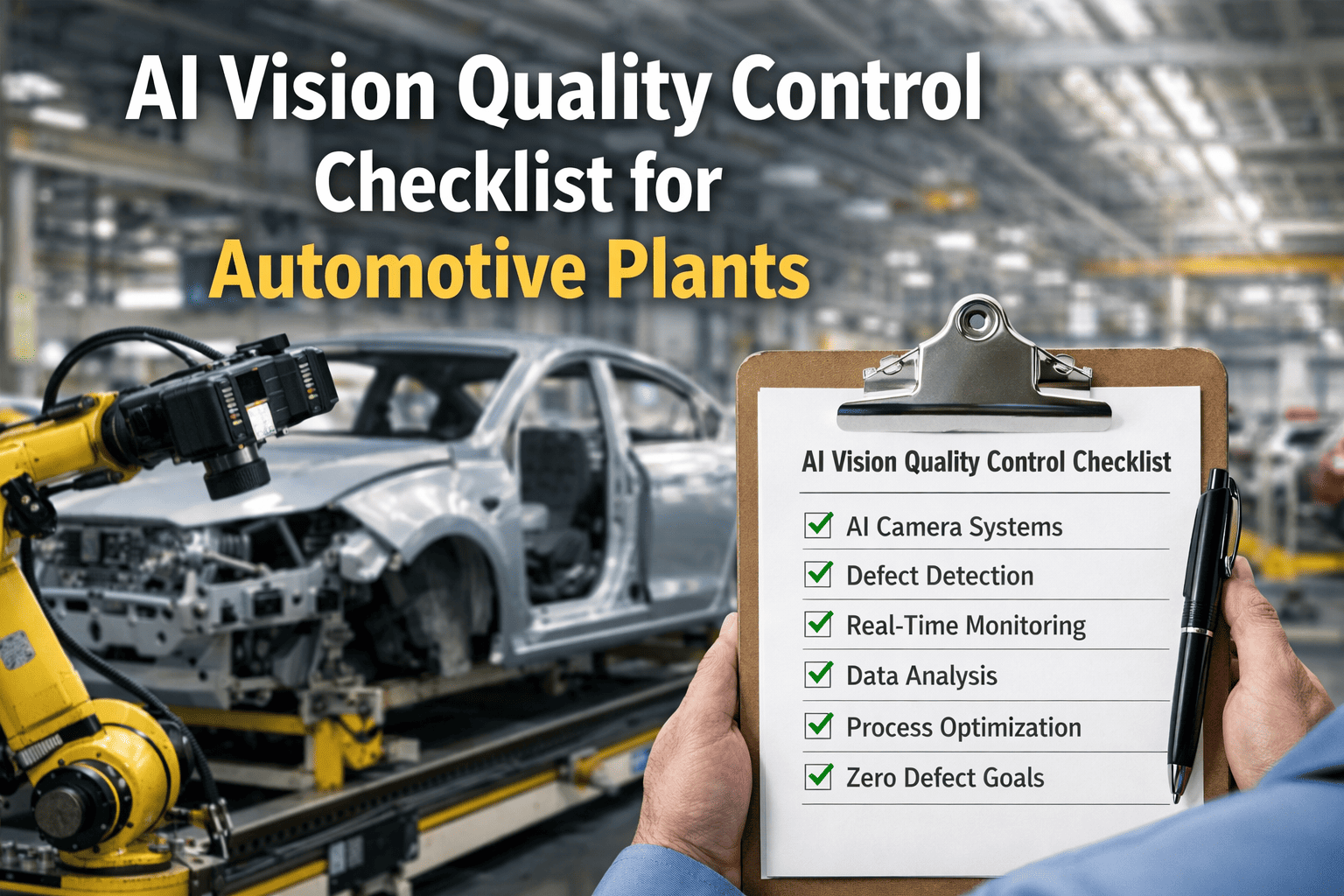
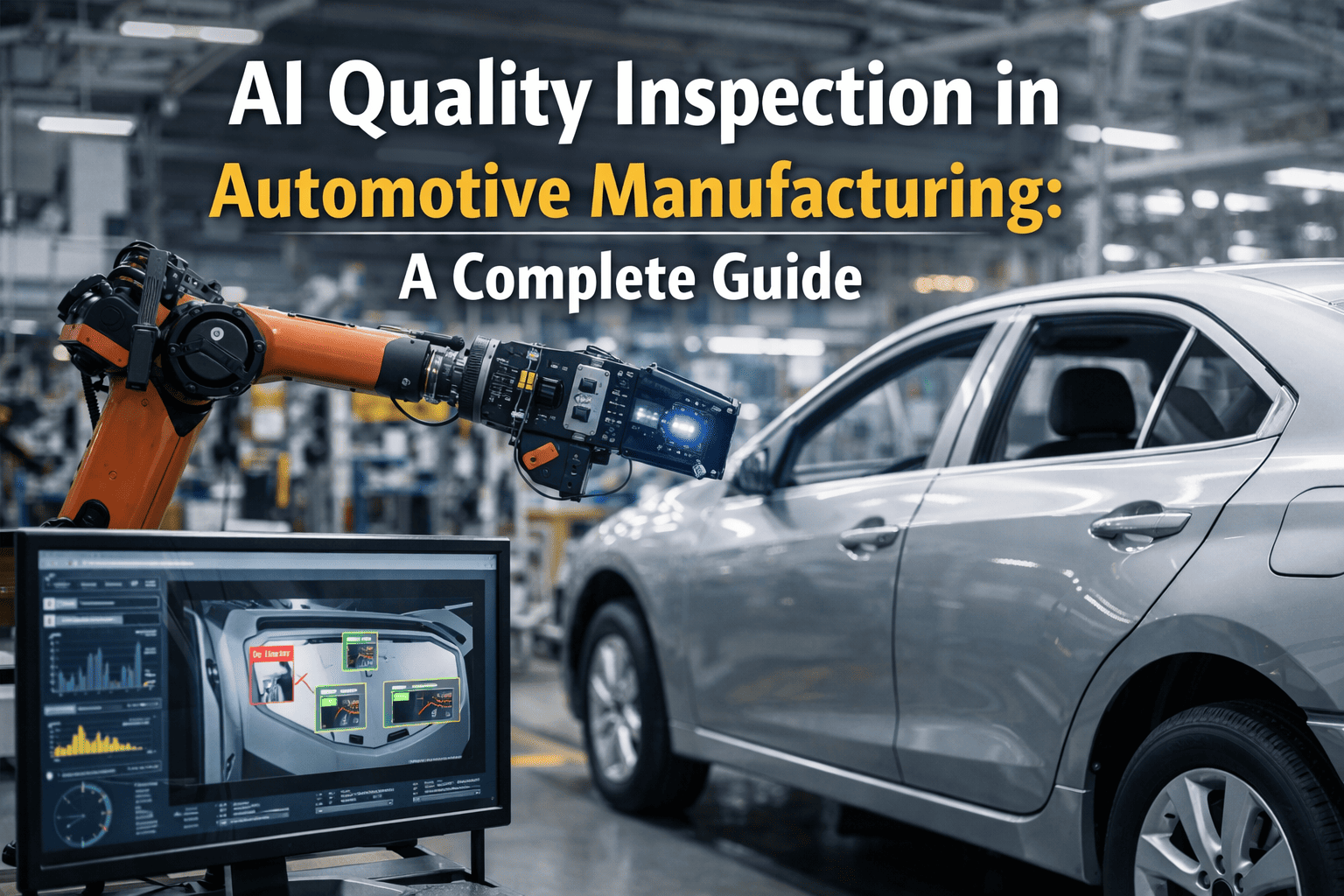
Automotive assembly lines operate with equipment utilization rates above 85%, where unplanned downtime from conveyor failures, robotic arm malfunctions, or press brake degradation costs $22,000 per minute in lost production, yet traditional preventive maintenance schedules based on fixed intervals miss 64% of failures that occur between scheduled inspections. iFactory's AI predictive maintenance platform continuously monitors vibration signatures from stamping presses, thermal patterns in welding robots, hydraulic pressure anomalies in lifting systems, and bearing wear progression across conveyor drives to predict equipment failures 2-4 weeks before breakdown occurs. The deployment checklist below guides automotive manufacturers through the structured implementation process from initial asset assessment to full production operation. Book a demo to map AI predictive maintenance for your assembly line configuration.
Implementation Overview
Deploying AI predictive maintenance in automotive manufacturing requires structured execution across four phases: asset criticality assessment and sensor installation planning (Week 1-2), IoT sensor deployment and data pipeline configuration (Week 3-4), machine learning model training on historical failure data (Week 5-6), and production validation with maintenance workflow integration (Week 7-8). This checklist ensures systematic deployment covering equipment selection, data infrastructure, model accuracy validation, and operational handoff to maintenance teams.
AI Predictive Maintenance Deployment
Implement Failure Prediction in 8 Weeks with Structured Checklist
Follow this proven deployment framework used by automotive manufacturers to implement AI predictive maintenance across stamping lines, body shops, paint systems, and final assembly without production disruption.
8 Weeks
Deployment Timeline
Phase 1: Pre-Deployment Assessment (Week 1-2)
Identify Critical Production Assets
Document all equipment where failures cause production stoppage: stamping presses (tonnage 800-2500T), body shop welding robots (6-axis articulated arms), paint booth conveyor systems, final assembly torque tools, automated guided vehicles (AGVs). Prioritize assets by downtime cost impact: Tier 1 (critical path equipment causing full line stoppage), Tier 2 (redundant equipment with backup capacity), Tier 3 (support equipment with minimal production impact).
Collect Historical Failure Data
Gather 12-24 months of maintenance records showing equipment failures, root causes, repair actions, and downtime duration. Required data fields: asset ID, failure date/time, failure mode (bearing wear, hydraulic leak, electrical fault), mean time between failures (MTBF), mean time to repair (MTTR). Data used to train AI models on plant-specific failure patterns rather than generic industry benchmarks.
Assess Existing Sensor Infrastructure
Audit current condition monitoring equipment: PLC-integrated sensors (temperature, pressure, flow), standalone vibration analyzers, thermal cameras for electrical panels. Identify gaps where critical equipment lacks monitoring: stamping press ram position sensors, robot joint torque feedback, conveyor motor current draw. Plan new sensor installations to fill monitoring coverage gaps without disrupting production.
Define Success Metrics and Baseline Current Performance
Establish measurable targets for AI predictive maintenance deployment: reduce unplanned downtime by 35-45%, increase equipment availability from current 82% to target 94%, extend MTBF by 28-40%, reduce emergency maintenance costs by 50%. Document baseline metrics before AI deployment to quantify improvement post-implementation. Typical automotive plant baseline: 12-18 unplanned downtime events per month, average 4.2 hours per event, $280,000 monthly emergency maintenance spend.
Secure Stakeholder Buy-In and Budget Approval
Present business case to plant management, maintenance leadership, and production teams showing ROI from downtime reduction. Typical investment: $180,000-$320,000 for 50-asset deployment including sensors, edge computing hardware, AI platform subscription, and implementation services. Expected payback period: 8-14 months from avoided downtime costs. Secure commitment from maintenance team to act on AI-generated alerts within defined response windows (critical alerts within 4 hours, scheduled maintenance within 48 hours).
Phase 2: Infrastructure Deployment (Week 3-4)
Install IoT Sensors on Priority Equipment
Deploy wireless vibration sensors on rotating equipment (motors, gearboxes, bearings): triaxial accelerometers with 0.5-10 kHz frequency range, battery life 3-5 years, IP67 rated for industrial environments. Install current sensors on motor control panels for electrical signature analysis. Mount thermal sensors on hydraulic systems and electrical connections. Typical sensor density: 3-5 sensors per critical asset (motor bearing DE/NDE, gearbox input/output, driven equipment coupling). Sensors communicate via LoRaWAN or industrial WiFi to edge gateway.
Configure Edge Computing and Data Pipeline
Install edge gateway devices (industrial PCs or ruggedized compute modules) at strategic plant locations to aggregate sensor data before cloud transmission. Edge devices perform local preprocessing: vibration FFT analysis, temperature trend calculation, anomaly pre-screening to reduce cloud data transmission bandwidth. Configure secure data pipeline from edge to iFactory cloud platform using TLS encryption, cellular or plant network connectivity. Implement data retention policy: high-frequency raw sensor data stored at edge for 30 days, aggregated features and alerts stored in cloud indefinitely.
Integrate with Existing CMMS and SCADA Systems
Establish API connections between iFactory AI platform and plant maintenance management system (SAP PM, IBM Maximo, or similar CMMS). Configure automated work order creation when AI predicts failure within defined RUL threshold (typically 14-21 days remaining useful life). Integrate with SCADA for production context data: equipment run hours, production counts, process parameters (temperature setpoints, pressure targets). Context data improves AI model accuracy by correlating operating conditions with failure progression.
Verify Data Quality and Completeness
Validate sensor data streams reaching AI platform: check sampling rates (vibration sensors typically 10-25 kHz for bearing fault detection, temperature sensors 1 sample per minute), confirm data timestamp accuracy synchronized to plant time server, verify sensor calibration against known-good reference equipment. Run data quality checks identifying missing data periods, sensor malfunctions (stuck readings, out-of-range values), communication dropouts. Target data availability: 98%+ uptime for critical asset sensors.
Phase 3: AI Model Training and Validation (Week 5-6)
Train Failure Prediction Models on Historical Data
iFactory data science team trains machine learning models using plant historical failure records combined with global automotive manufacturing database (1,200+ failure examples across similar equipment types). Models learn failure signatures: bearing outer race defects produce specific vibration frequency patterns (BPFO harmonics), motor rotor bar cracks show current signature slip frequency modulation, hydraulic pump wear generates pressure ripple at pump rotation frequency. Training validates model accuracy on holdout dataset: target 85-92% correct failure predictions with 5-8% false positive rate.
Establish Remaining Useful Life (RUL) Calculation Parameters
Configure RUL algorithms for each failure mode using degradation rate modeling. Bearing RUL calculated from vibration amplitude growth trend extrapolated to ISO 10816 alarm threshold. Motor insulation RUL derived from temperature rise rate and thermal aging model. Hydraulic seal RUL estimated from leak rate progression and contamination particle count trends. RUL forecasts include confidence intervals: 90% confidence RUL between 12-18 days means 90% probability failure occurs within that window. Conservative threshold triggers maintenance action at lower confidence bound.
Define Alert Thresholds and Escalation Rules
Configure alert severity levels based on RUL and asset criticality. Critical alerts (RUL under 7 days on Tier 1 equipment): immediate notification to maintenance supervisor via SMS and email, auto-generate emergency work order. Warning alerts (RUL 7-21 days): standard work order creation for next available maintenance window. Advisory alerts (RUL 21-45 days): informational notification, plan parts procurement and maintenance scheduling. Suppress nuisance alerts: require degradation trend confirmation over 3-5 measurement cycles before triggering warning to avoid false positives from transient anomalies.
Conduct Pilot Testing on High-Risk Equipment
Deploy AI predictive models on 5-10 pilot assets with known degradation issues or recent maintenance history. Run parallel monitoring: AI system generates predictions while existing preventive maintenance schedule continues unchanged. Validate AI predictions against actual equipment condition during planned maintenance: bearing inspection confirms AI-predicted inner race spalling, motor winding resistance test validates AI thermal degradation alert. Pilot period typically 4-6 weeks, validates model accuracy before full production deployment.
Phase 4: Production Deployment and Continuous Improvement (Week 7-8+)
Train Maintenance Team on AI Alert Response Workflow
Conduct training sessions for maintenance technicians, planners, and supervisors covering: AI alert interpretation (understanding RUL forecasts and confidence intervals), diagnostic verification procedures (confirming AI predictions with manual inspections or vibration analysis), work order response protocols (critical vs warning alert actions), feedback loop for model improvement (recording actual failure modes found during repairs). Provide quick reference guides for common failure signatures and recommended corrective actions. Establish clear ownership: reliability engineer reviews all alerts daily, maintenance planner schedules corrective work, technicians execute repairs and document findings.
Transition from Preventive to Predictive Maintenance Strategy
Gradually reduce fixed-interval preventive maintenance tasks for AI-monitored equipment. Initial transition: extend PM intervals by 25-50% while AI monitors equipment health (example: bearing lubrication interval increased from 2,000 to 3,000 operating hours with vibration monitoring confirmation). After 3-6 months validation period showing zero AI-missed failures, transition to fully condition-based maintenance: repairs performed only when AI predicts degradation, eliminating time-based PM on healthy equipment. Maintain critical safety inspections and regulatory-required maintenance tasks regardless of AI monitoring status.
Implement Continuous Model Improvement Process
Establish monthly review cycle where iFactory data science team analyzes AI prediction accuracy: compare predicted vs actual failures, investigate false negatives (failures AI missed), reduce false positives (alerts where no failure found). Update models based on new failure data collected from plant operations. Retrain algorithms quarterly incorporating latest 3-month operational data. Track model performance KPIs: prediction accuracy (target 88-94%), false positive rate (target under 8%), average prediction lead time (target 18-25 days before failure). Continuous improvement increases accuracy over time as models learn plant-specific operating conditions and failure modes.
Expand Coverage to Additional Assets and Production Lines
After successful pilot validation on initial 50 assets, develop expansion roadmap for plant-wide deployment. Prioritize next deployment phase: Tier 2 critical equipment, high-maintenance-cost assets, equipment with repetitive failure history. Scale sensor installation and model training following proven pilot methodology. Target 18-24 month timeline for complete plant coverage: stamping shop (120 assets), body shop (280 assets), paint shop (95 assets), final assembly (340 assets), utilities and support equipment (180 assets). Total coverage 1,000+ monitored assets across full automotive manufacturing facility.
Measure and Report ROI and Performance Improvements
Track quantifiable benefits from AI predictive maintenance deployment: unplanned downtime reduction (hours per month), equipment availability improvement (percentage increase), emergency maintenance cost savings (dollars per month), extended equipment life (MTBF increase), spare parts inventory optimization (reduction in safety stock for AI-monitored components). Generate executive dashboard reporting key metrics: downtime prevented (production hours saved), cost avoidance (emergency repair costs eliminated), equipment health score trending, prediction accuracy performance. Typical automotive plant results after 12 months: 38-42% unplanned downtime reduction, $340,000-$480,000 annual maintenance cost savings, equipment availability increase from 84% to 93%, ROI achievement in 9-13 months.
Structured Implementation
Deploy AI Predictive Maintenance with Proven 8-Week Framework
iFactory's automotive implementation methodology guides manufacturers through systematic deployment from asset assessment to full production operation, validated across 40+ automotive assembly plants globally.
Platform Capability Comparison
Generic condition monitoring systems collect sensor data but lack automotive-specific failure models. Enterprise CMMS platforms manage work orders but provide no predictive analytics. iFactory differentiates on pre-trained automotive failure libraries, automated RUL calculation for stamping presses and robotic systems, seamless CMMS integration with auto work order generation, and continuous model improvement from global automotive manufacturing data. Book a comparison demo.
| Capability |
iFactory |
QAD Redzone |
Evocon |
Fiix (Rockwell) |
MaintainX |
| Predictive Analytics |
| AI failure prediction models |
Pre-trained automotive library |
Not available |
Not available |
Add-on module |
Not available |
| RUL forecasting |
Automated with confidence intervals |
Not available |
Not available |
Basic trending |
Not available |
| Deployment timeline |
8 weeks to production |
4-6 weeks (no predictive) |
3-5 weeks (no predictive) |
12-16 weeks with predictive |
2-4 weeks (no predictive) |
| Automotive-Specific Features |
| Stamping press monitoring |
Force curve analysis |
Not available |
Not available |
Generic only |
Not available |
| Robot joint degradation tracking |
Torque signature analysis |
Not available |
Not available |
Via third-party integration |
Not available |
| Conveyor system health monitoring |
Chain tension and bearing analysis |
Basic OEE tracking |
Basic OEE tracking |
Motor current signature |
Not available |
| Integration & Workflow |
| CMMS auto work order creation |
SAP, Maximo, Oracle integration |
Native work orders |
Manual work order creation |
Native CMMS included |
Native work orders |
| SCADA integration for context data |
OPC UA and Modbus |
Machine connectivity |
Production data integration |
Rockwell native integration |
Limited integration |
| Mobile technician app |
iOS and Android native |
Mobile app included |
Mobile app included |
Mobile app included |
Mobile-first design |
Based on publicly available product documentation as of Q1 2025. Verify current capabilities with each vendor before procurement decisions.
Regional Automotive Manufacturing Compliance
iFactory's AI predictive maintenance platform helps automotive manufacturers meet equipment safety, environmental monitoring, and quality system requirements across global automotive manufacturing jurisdictions. The platform automatically generates compliance-ready maintenance records formatted for regional automotive standards.
| Region |
Key Standards |
Compliance Requirements |
iFactory Implementation |
| United States |
OSHA 1910 machinery safety, EPA Clean Air Act (paint booth emissions), IATF 16949 automotive quality, ANSI B11 press safety standards |
Preventive maintenance documentation for press brake safety systems, lockout/tagout procedures with equipment-specific energy isolation verification, paint booth exhaust system performance monitoring records, quality system maintenance records supporting IATF certification audits |
Automated PM compliance tracking with OSHA-compliant safety inspection checklists, lockout/tagout procedure integration with work order workflows, real-time paint booth airflow and temperature monitoring with EPA emission compliance reporting, IATF 16949-formatted maintenance records with full equipment history traceability |
| United Arab Emirates |
UAE Industrial Safety Regulations, Dubai Municipality environmental permits, ESMA product safety standards, ISO 14001 environmental management |
Equipment safety inspection records for high-risk machinery (presses, robots, material handling), environmental monitoring for paint operations and chemical storage areas, preventive maintenance documentation supporting ESMA certification, energy consumption tracking for Dubai Green Building requirements |
Safety inspection workflows with UAE regulatory checklist templates, automated environmental monitoring data collection for Dubai Municipality permit compliance, ESMA-compliant maintenance documentation with equipment certification tracking, energy usage analytics integrated with equipment condition monitoring for efficiency optimization |
| United Kingdom |
Health and Safety at Work Act 1974, PUWER regulations (work equipment safety), Environmental Permitting Regulations, WLTP emissions testing equipment calibration |
Thorough examination records for lifting equipment and power presses per PUWER requirements, maintenance documentation for environmental permit compliance (VOC emissions from paint operations), calibration records for emissions testing equipment supporting WLTP certification, risk assessment updates based on equipment condition monitoring data |
PUWER-compliant thorough examination scheduling and documentation, automated environmental monitoring with permit condition tracking and exceedance alerting, calibration management system with UKAS-traceable certification records, equipment risk scoring integrated with HSE Management of Health and Safety at Work Regulations compliance framework |
| Canada |
Canada Labour Code Part II occupational safety, provincial regulations (Ontario OHSA, Quebec CNESST), Environment Canada industrial emissions reporting, CSA standards for machinery safety |
Machinery safeguarding inspection records per provincial OHS regulations, preventive maintenance documentation for equipment covered under Canada Labour Code, environmental monitoring supporting National Pollutant Release Inventory reporting, CSA-compliant maintenance procedures for electrical and mechanical systems |
Provincial OHS regulation-specific inspection templates and compliance tracking, Canada Labour Code Part II maintenance documentation with prescribed machinery inspection intervals, automated NPRI emissions data collection from paint booth monitoring systems, CSA standard-aligned maintenance procedures with technical specification verification workflows |
| Germany |
BetrSichV machinery safety ordinance, DGUV regulations for industrial safety, TA Luft air quality standards for paint operations, VDA automotive quality standards |
Recurring inspections (wiederkehrende Prüfungen) for machinery per BetrSichV requirements with qualified inspector certification, DGUV-compliant maintenance documentation for high-risk equipment, TA Luft emission monitoring records for paint booth operations with continuous compliance verification, VDA process audit preparation with maintenance KPI tracking and equipment capability studies |
BetrSichV inspection interval management with qualified inspector assignment and certification tracking, DGUV accident prevention regulation compliance documentation integrated with equipment condition monitoring, TA Luft continuous emission monitoring with automated reporting for regulatory submissions, VDA-compliant maintenance process documentation supporting Automotive Industry Action Group quality system audits |
| Europe (EU) |
Machinery Directive 2006/42/EC, ATEX Directive for explosive atmospheres (paint operations), REACH chemical management, ISO 45001 occupational health and safety |
CE marking technical file maintenance documentation for safety-critical machinery modifications, ATEX zone classification verification and equipment certification for paint booth operations, REACH compliance tracking for maintenance materials and lubricants, ISO 45001 OH&S management system integration with equipment safety monitoring and incident investigation |
Machinery Directive-compliant maintenance records supporting CE marking technical documentation requirements, ATEX equipment certification tracking with explosion protection inspection scheduling, REACH substance registration database integrated with maintenance parts and materials inventory management, ISO 45001 OH&S performance monitoring with equipment safety metrics and predictive maintenance correlation analysis |
iFactory maintains compliance with evolving regional standards through regular software updates. Contact support for specific automotive industry certifications in your operating region.
Measured Results from Automotive Plants Using iFactory
40%
Reduction in Unplanned Downtime
90%
Failure Prediction Accuracy
22 Days
Average Failure Prediction Lead Time
93%
Equipment Availability Achievement
$420K
Avg Annual Maintenance Cost Savings
11mo
Average ROI Achievement Period
Frequently Asked Questions
QHow accurate are AI failure predictions for automotive assembly line equipment?
iFactory achieves 88-92% prediction accuracy on automotive manufacturing equipment after 3-month learning period with plant-specific failure data. False positive rate typically 5-8%, meaning 92-95% of alerts correspond to actual developing failures requiring maintenance intervention. Prediction accuracy improves over time as models learn plant operating conditions and failure patterns.
Book a demo to see validation results from similar automotive plants.
QCan iFactory integrate with our existing SAP or Maximo CMMS system?
Yes. iFactory provides pre-built API connectors for SAP PM, IBM Maximo, Oracle EAM, and major CMMS platforms. Integration enables automated work order creation when AI predicts failure within defined RUL threshold, equipment master data synchronization, and maintenance history import for model training. Integration typically configured during Week 3-4 of deployment timeline, requires IT coordination for system credentials and API access approval.
QWhat is the total investment required for 50-asset pilot deployment?
Typical investment for 50 critical assets: $180,000-$240,000 including wireless vibration sensors ($800-$1,200 per asset), edge gateway hardware ($8,000-$12,000), iFactory platform subscription ($24,000-$36,000 annual), and implementation services ($40,000-$60,000 for 8-week deployment). ROI typically achieved in 9-13 months from avoided downtime costs. Payback period varies by plant downtime cost per hour (automotive assembly lines typically $18,000-$28,000 per hour unplanned downtime).
QHow does AI predictive maintenance differ from traditional vibration analysis programs?
Traditional vibration analysis requires reliability engineer to manually review vibration spectra, interpret fault frequencies, and diagnose failure modes based on expertise. AI automates interpretation: machine learning models trained on thousands of failure examples automatically detect bearing defects, misalignment, imbalance, and other fault patterns from vibration data. AI provides RUL forecasts and automated alerts vs manual review requiring specialized training. Traditional programs typically monitor 10-20% of assets due to labor constraints, AI scales to 100% coverage with automated analysis.
QWill AI predictive maintenance work for our legacy equipment without existing sensors?
Yes. iFactory deployment includes wireless sensor installation on legacy equipment lacking built-in condition monitoring. Sensors are battery-powered (3-5 year life), wirelessly connected (no equipment wiring modifications required), and magnetically mounted (non-invasive installation). Legacy presses, motors, gearboxes, and conveyors equipped with wireless vibration, temperature, and current sensors during Week 3-4 installation phase. Equipment age does not limit AI monitoring capability as long as mechanical access allows sensor placement.
Book a demo to discuss your legacy equipment configuration.
Continue Reading
Deploy AI Predictive Maintenance in Your Automotive Plant with Proven Checklist Framework
iFactory's structured 8-week implementation methodology guides automotive manufacturers through systematic AI predictive maintenance deployment from asset assessment to full production operation, validated across 40+ assembly plants globally with 40% average downtime reduction.
8-Week Deployment
90% Prediction Accuracy
40% Downtime Reduction
11-Month ROI
Full CMMS Integration