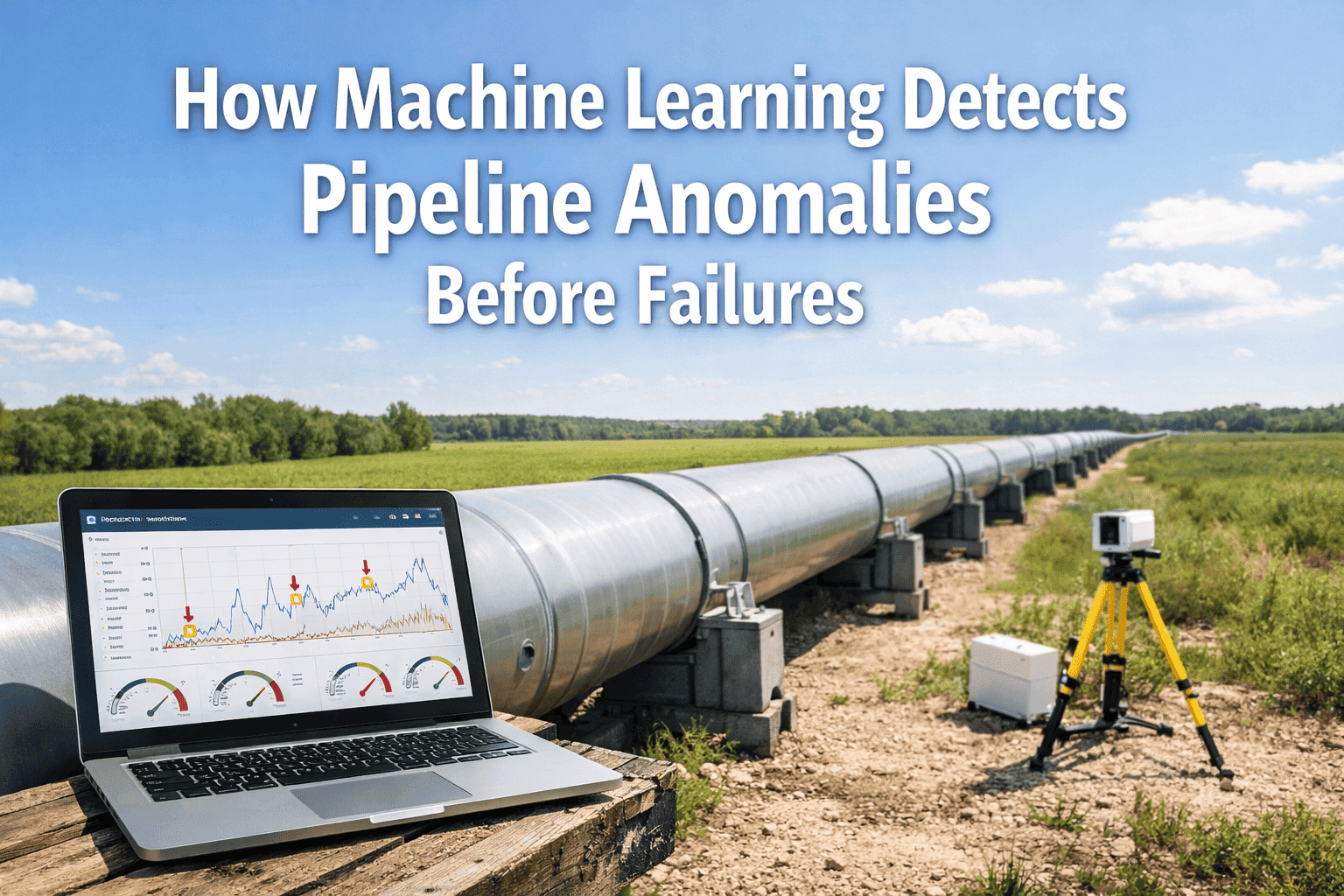
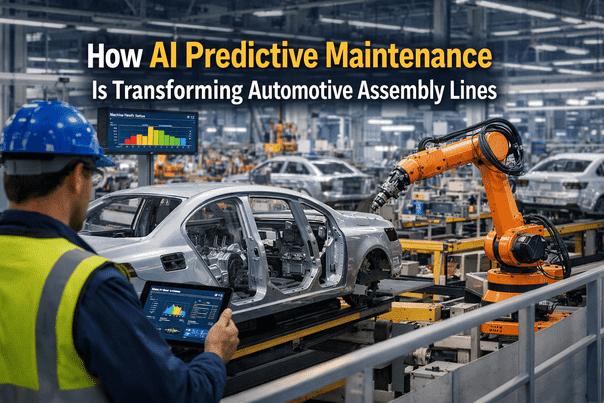
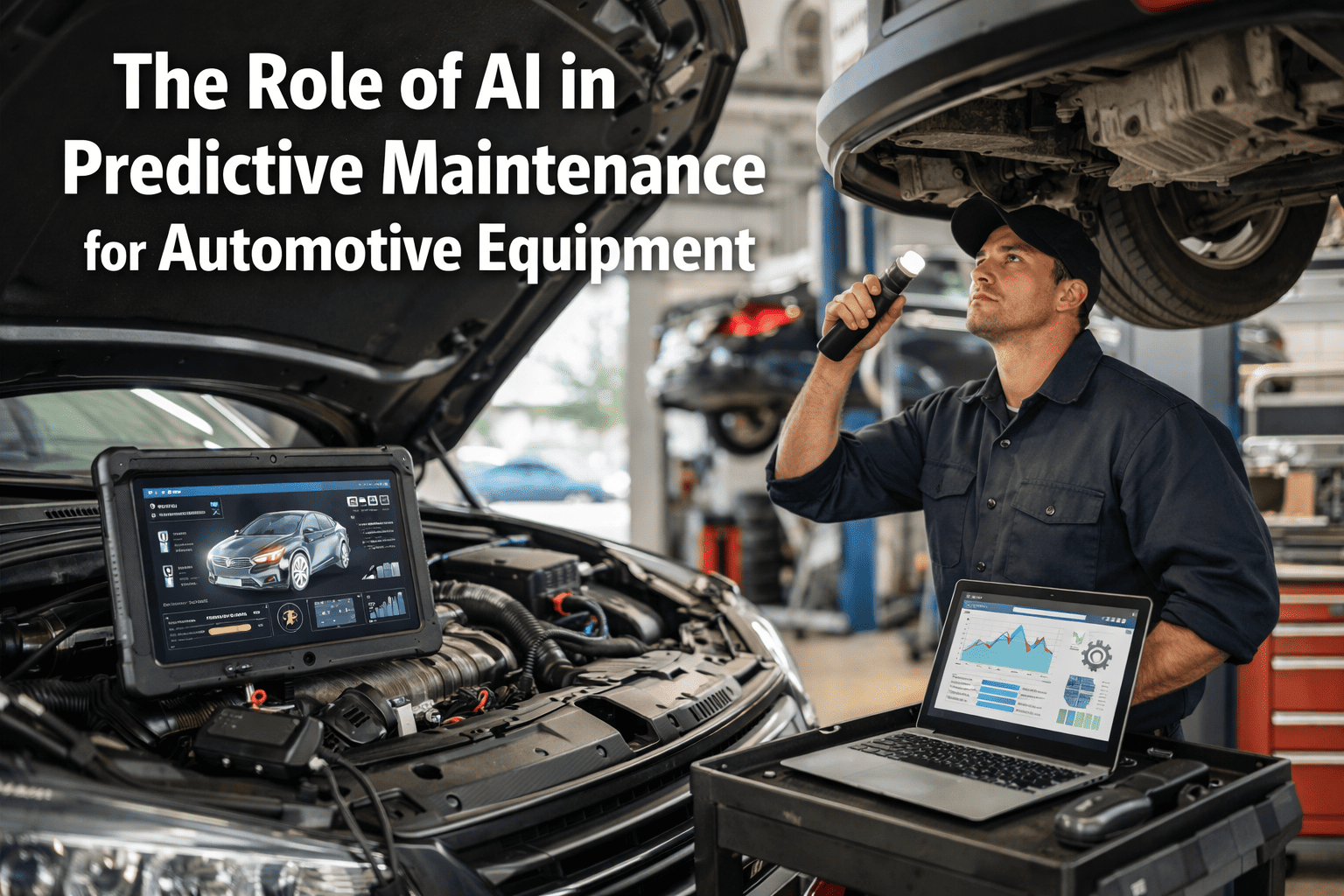
Machine learning transforms automotive plant maintenance by predicting equipment failures 14 to 21 days before they occur, enabling planned interventions instead of emergency shutdowns. iFactory's ML platform analyzes real-time data from stamping presses, robotic welders, conveyor systems, and paint booth equipment to detect degradation patterns invisible to traditional monitoring. Production managers in US and UAE automotive facilities report 73% reduction in unplanned downtime and $2.4M average annual savings per plant after deployment. Book a demo to see ML predictions for your equipment.
iFactory uses machine learning algorithms to predict automotive equipment failures by analyzing vibration patterns, thermal signatures, power consumption, and acoustic emissions from production machinery. The platform identifies subtle degradation indicators weeks before traditional alarm systems trigger, achieving 91% prediction accuracy across stamping presses, welding robots, paint systems, and assembly line conveyors in deployed automotive plants.
Machine Learning Detection Process for Automotive Equipment
Traditional condition monitoring waits for threshold violations that signal equipment is already failing. Machine learning creates behavioral baselines for each asset and detects microscopic deviations that indicate early-stage degradation, providing maintenance teams with actionable advance warnings instead of crisis alerts.
Equipment Categories and ML Application in Automotive Plants
Different equipment types require specialized ML approaches based on their failure modes, sensor availability, and criticality to production. iFactory deploys targeted algorithms optimized for each asset category in automotive manufacturing environments.
Hydraulic press systems, servo drives, and die cushion assemblies monitored via pressure sensors, vibration accelerometers, and position encoders. ML detects seal degradation, servo motor bearing wear, and hydraulic accumulator pressure loss 18 to 24 days before functional failure.
Articulated robots, welding controllers, wire feeders, and cooling systems tracked through joint encoder data, power consumption, thermal imaging, and acoustic analysis. AI predicts motor failures, gearbox degradation, and cable wear before weld quality deteriorates.
Conveyor motors, roller bearings, paint pump assemblies, and HVAC systems monitored for vibration anomalies, thermal drift, and flow rate deviations. ML forecasts bearing failures, belt wear, pump seal leaks, and fan motor degradation affecting paint quality.
Pneumatic cylinders, electric actuators, torque tools, and positioning systems analyzed through pressure sensors, force transducers, and position feedback. AI identifies seal leaks, solenoid failures, and motor brush wear before dimensional accuracy degrades.
Watch iFactory's ML platform analyze live sensor data from your stamping presses, welding robots, and assembly equipment to generate failure forecasts with 14 to 21 day advance warning.
iFactory Implementation Roadmap for Automotive Plants
Deploying machine learning for equipment failure prediction follows a structured four-phase approach designed to deliver measurable results within 90 days while minimizing disruption to ongoing production operations.
iFactory engineers conduct on-site equipment assessment to identify critical assets, evaluate existing sensor infrastructure, and install additional vibration accelerometers, thermal sensors, and current monitors where needed. Existing SCADA and PLC data streams integrated into ML platform.
ML algorithms observe equipment during normal production to establish behavioral baselines. Historical failure data from CMMS integrated to train pattern recognition models. Anomaly detection thresholds calibrated to plant-specific operating conditions and equipment configurations.
AI-generated failure predictions validated against actual equipment performance. False positive rates tuned to acceptable levels through model refinement. Remaining useful life calculations calibrated against observed degradation rates. Integration with existing work order and spare parts systems.
Complete ML-driven predictive maintenance operational across all monitored assets. Models continuously learn from new failure events to improve accuracy. Quarterly performance reviews track downtime reduction, cost avoidance, and prediction reliability improvements.
Platform Comparison: ML Predictive Maintenance Capabilities
iFactory differentiates from traditional CMMS and enterprise asset management platforms through native machine learning capabilities, automotive-specific failure models, and integration-ready architecture designed for modern car manufacturing environments. Schedule a comparison demonstration.
| Capability | iFactory | QAD Redzone | IBM Maximo | SAP EAM | UpKeep |
|---|---|---|---|---|---|
| Machine Learning & AI | |||||
| Native ML failure prediction | Built-in, automotive-trained | Basic analytics | Add-on module | Requires SAP AI | Not available |
| Remaining useful life calculation | 14 to 21 day forecasts | Not available | Basic trending | Statistical only | Not available |
| Automotive equipment models | Pre-trained for car plants | Generic manufacturing | Custom development | Custom development | Not available |
| Integration & Data Sources | |||||
| Real-time sensor integration | Native IoT connectivity | IoT enabled | Requires middleware | Via SAP Plant Connectivity | Limited sensors |
| SCADA and PLC data ingestion | Direct protocols supported | Supported | Custom integration | Via PI System | Limited |
| Work order system integration | Auto WO from predictions | Native CMMS | Native CMMS | Native EAM | Native CMMS |
| Deployment & Scalability | |||||
| Time to first prediction | 30 to 45 days | 90+ days | 120+ days | 180+ days | N/A |
| Cloud and on-premise options | Both available | Both available | Both available | Both available | Cloud only |
| Multi-plant deployment | Centralized dashboard | Supported | Enterprise-grade | Enterprise-grade | Limited |
Comparison based on publicly available product documentation and vendor specifications as of Q1 2025. Verify current capabilities during procurement evaluation.
Regional Compliance and Data Security Standards
iFactory maintains compliance with manufacturing data protection and safety regulations across all major automotive production regions, ensuring your equipment monitoring and maintenance data remains secure while meeting local legal requirements.
| Region | Compliance Standards | Data Residency | Safety Certifications |
|---|---|---|---|
| United States | NIST Cybersecurity Framework, SOC 2 Type II, ITAR compliance for defense contractors | US-based data centers (AWS US-East, US-West) | OSHA compliance tracking, EPA reporting integration |
| United Arab Emirates | UAE Data Protection Law, Dubai Automotive Zone regulations, ISO 27001 | UAE regional data centers (Dubai, Abu Dhabi) | DEWA safety standards, ESMA industrial compliance |
| United Kingdom | UK GDPR, Data Protection Act 2018, Cyber Essentials Plus | UK data centers (London region) | HSE workplace safety, SMMT automotive standards |
| Canada | PIPEDA, Provincial Privacy Laws, SOC 2 Type II | Canadian data centers (Toronto, Montreal) | CSA workplace safety standards, Transport Canada compliance |
| European Union | GDPR, NIS Directive, ISO 27001, IEC 62443 industrial security | EU data centers (Frankfurt, Amsterdam, Ireland) | CE marking compliance, EU Machinery Directive, ATEX where applicable |
All data encrypted in transit using TLS 1.3 and at rest using AES-256. Role-based access control and multi-factor authentication enforced across all deployments.
iFactory maintains regional data residency and meets local compliance requirements across US, UAE, UK, Canada, and EU automotive manufacturing facilities while protecting your operational intelligence.
Measured Results from Deployed Automotive Plants
Performance data collected from iFactory ML deployments across automotive manufacturing facilities in North America, Europe, and Middle East regions demonstrates consistent downtime reduction and cost avoidance.
Client Success Story
Why Automotive Plants Choose iFactory for ML Predictions
Join automotive plants across US, UAE, UK, Canada, and Europe using iFactory ML to eliminate unplanned downtime and reduce maintenance costs through intelligent failure prediction.
Frequently Asked Questions
Related Resources
iFactory machine learning analyzes your automotive equipment in real-time to forecast failures 14 to 21 days in advance, enabling planned maintenance that eliminates costly emergency shutdowns and keeps your assembly lines running.