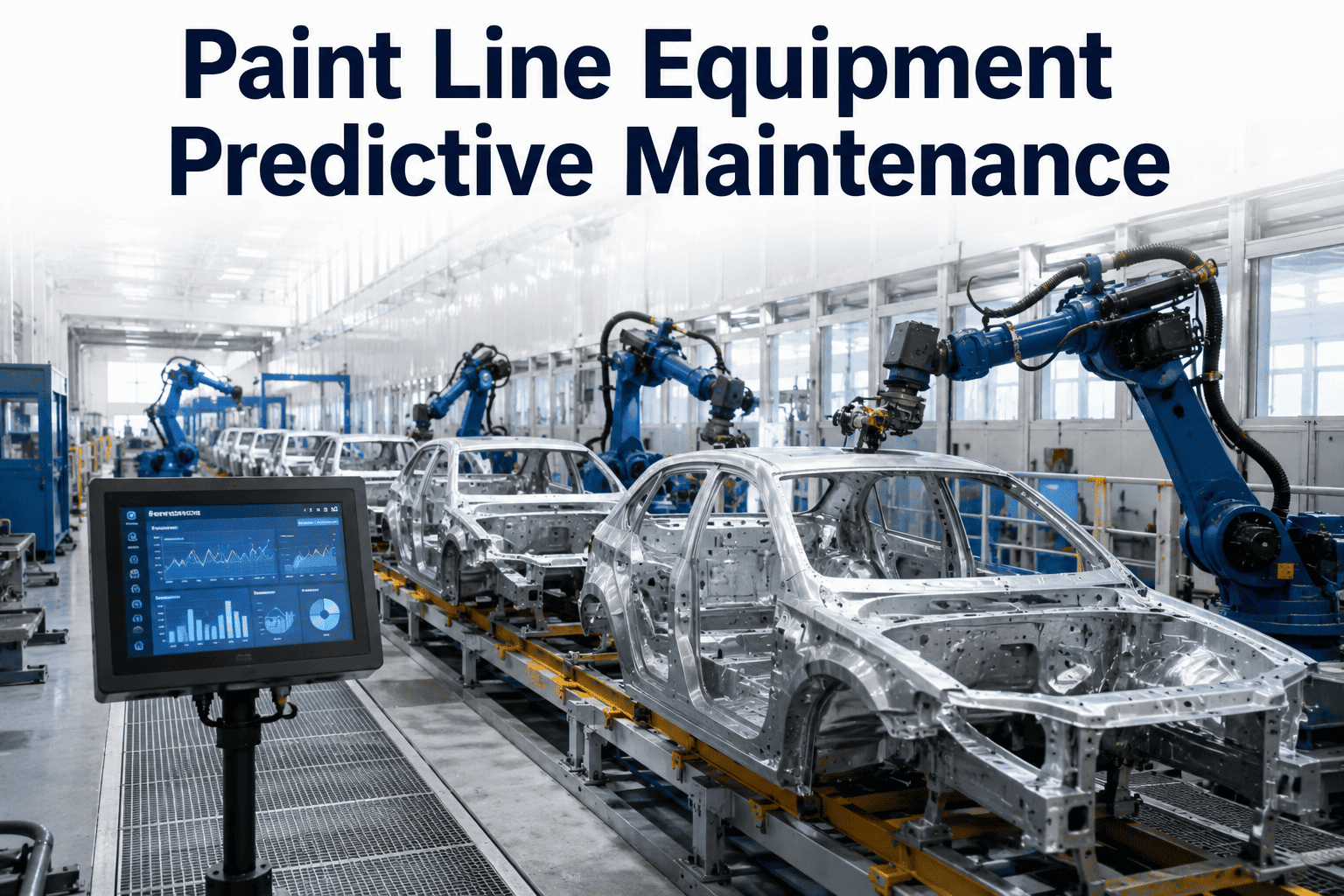
A single unplanned stop on a paint line is one of the most expensive minutes in an automotive plant, because every booth downstream sits idle, every body already coated in that booth risks a contamination defect from the extended dwell time, and the atomizer or pump that failed often takes hours to diagnose before a repair can even start. Bell cups, pumps, conveyors, and ovens all degrade gradually before they fail suddenly, leaving a window where the right sensor data could have predicted the stop days in advance. Most paint shops still run on a fixed preventive maintenance calendar that replaces parts on a schedule rather than based on actual condition, which means healthy parts get replaced early and failing parts sometimes don't get caught in time. iFactory's AI platform monitors the real condition of paint line equipment continuously, and you can book a demo to see failure predictions running on your own line before the next unplanned stop happens.
PAINT LINE · PREDICTIVE MAINTENANCE · EQUIPMENT HEALTH · AI MONITORING
Know Which Pump Fails Next Week, Not After It Stops the Line
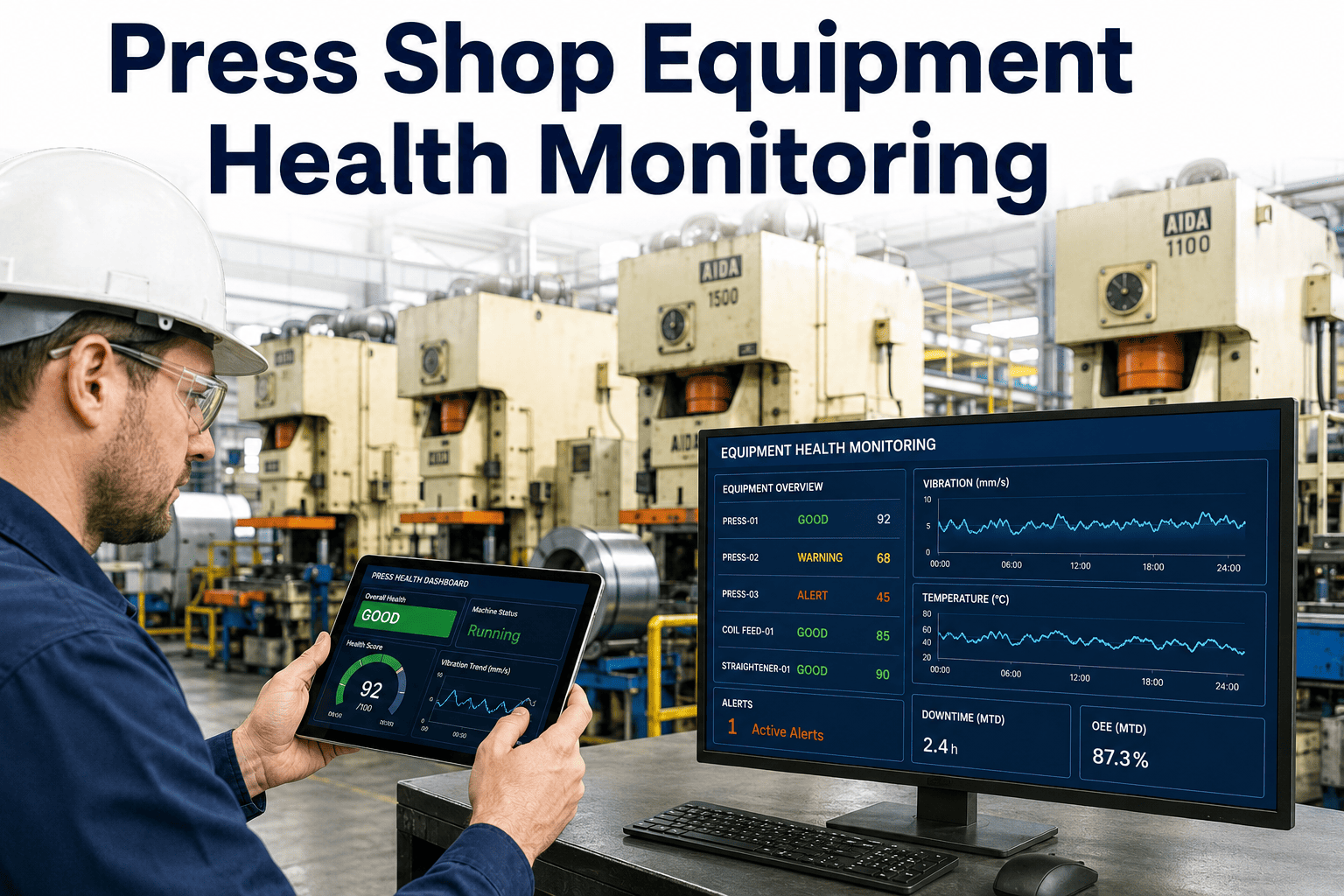
iFactory's AI platform continuously tracks the condition of pumps, atomizers, and conveyors across your paint line, predicting failures early enough to schedule repair during planned downtime instead of losing production to an unplanned stop.
Bell Cup Motor B3
HEALTHY — 88%
Sealer Pump P7
WATCH — 52%
Conveyor Drive C1
HEALTHY — 91%
THE MAINTENANCE PROBLEM
Why Calendar-Based Maintenance Misses Real Equipment Condition
A fixed preventive maintenance schedule assumes every pump and motor degrades at the same rate, which almost never matches reality on the plant floor. The consequences below are why paint shops running purely on a calendar still experience unplanned stops between scheduled service intervals.
Healthy Parts Replaced Early
A pump running well below its rated hours gets swapped anyway because the calendar says so, wasting the part's remaining useful life and the labor spent replacing it unnecessarily.
Failing Parts Missed Between Services
A component that starts degrading right after a scheduled service can fail weeks before the next one is due, causing exactly the unplanned stop the maintenance schedule was meant to prevent.
No Visibility Into Actual Wear
Vibration, current draw, and pressure trends that reveal early-stage wear are rarely reviewed continuously, so gradual degradation goes unnoticed until it produces an audible or visible symptom.
Reactive Repair Under Pressure
When a failure does happen mid-shift, the repair happens under maximum time pressure with the line stopped, rather than during a planned window with parts and technicians already staged.
DEGRADATION TRACKING
Watching the Slow Decline That Precedes Every Sudden Failure
Very few paint line failures happen instantly. A pump seal that will fail next Tuesday is already showing a slow pressure drift today, and a bell cup bearing that will seize next month is already running a few degrees warmer than its baseline. iFactory's platform tracks these trends continuously against each asset's own historical baseline.
Week 1
Week 2
Week 3
Week 4
Week 5
Sealer Pump P7 discharge pressure trend, showing gradual drift from baseline starting Week 4
Stop Discovering Equipment Problems When the Line Already Stopped
iFactory's AI platform surfaces the early warning signs of pump, motor, and conveyor degradation days or weeks before failure, giving your maintenance team the time to schedule repair during planned downtime. Book a demo to see it monitoring your paint line assets.
FAILURE MODE COVERAGE
What the Platform Watches Across Each Major Equipment Type
Different equipment types fail in different ways, so the platform is configured with failure modes specific to each asset class rather than a single generic health score applied uniformly across the whole paint line.
Bell Cup Atomizers
Bearing wear, turbine imbalance, and air motor efficiency loss tracked through vibration signature and rotational speed stability over time.
Paint and Sealer Pumps
Seal degradation, cavitation onset, and diaphragm wear identified through discharge pressure stability and cycle time consistency trends.
Conveyor Drive Systems
Chain stretch, drive motor current drift, and gearbox wear surfaced through speed variance and current draw pattern analysis across each cycle.
Oven Burner Assemblies
Burner efficiency decline and airflow restriction tracked through temperature recovery time and fuel consumption trend relative to baseline.
HEAD TO HEAD
Calendar-Based Maintenance vs AI Predictive Maintenance
The table below compares the two approaches across the factors that determine whether your paint line experiences another unplanned stop this quarter.
MEASURED OUTCOMES
Results From AI Predictive Maintenance Deployments
These figures reflect paint shops where iFactory's platform was deployed for equipment condition monitoring and tracked over a minimum six-month production period.
57%
Reduction
In Unplanned Paint Line Stops
12 Days
Average Lead Time
Between First Warning and Actual Failure Point
31%
Reduction
In Parts Replaced Ahead of Actual Need
$240K
Annual Savings
From Avoided Downtime and Optimized Parts Spend
FREQUENTLY ASKED QUESTIONS
Questions From Paint Maintenance Leads About Predictive Monitoring
What sensors need to be added to our existing pumps and motors for this to work?
Many paint line assets already have vibration, current, and pressure sensors feeding into existing PLCs, and iFactory's platform can often connect to that existing data stream without new hardware. Where an asset lacks adequate sensing, iFactory recommends specific low-cost sensor additions during the assessment phase rather than a blanket sensor package across every asset.
Book a demo to review what your current equipment already provides.
How long does the system need to learn our equipment before predictions become reliable?
The platform establishes an initial baseline within the first two to four weeks of data collection for each asset, and prediction accuracy improves progressively as it observes more operating cycles and, ideally, at least one natural degradation event to calibrate against. Assets with prior maintenance history can be onboarded faster since that historical data helps establish the baseline more quickly.
Can the platform integrate with our existing CMMS to automatically generate work orders?
Yes. iFactory's platform can push predicted failure alerts directly into most common computerized maintenance management systems as work order recommendations, including the affected asset, predicted failure mode, and recommended action, so your maintenance planners see the alert in the system they already use daily.
Contact our support team to confirm compatibility with your specific CMMS platform.
What happens if the model predicts a failure that doesn't actually happen?
False positives are tracked and used to continuously refine each asset's model, and the platform reports a confidence level alongside every prediction so maintenance teams can weigh the urgency appropriately rather than treating every alert as equally critical. Over time, as the model observes more outcomes at your specific plant, prediction accuracy improves and the rate of false alerts decreases.
Does this replace our maintenance technicians' expertise, or work alongside it?
The platform is designed to work alongside your technicians' expertise, surfacing which asset needs attention and why, while your team still makes the final call on repair approach based on their knowledge of the specific equipment and plant history. Many facilities find that technicians trust the system more once they see its predictions confirmed by their own hands-on findings.
Book a demo to see how the platform presents recommendations to a maintenance team.
Your Paint Line Assets Are Already Telling You When They'll Fail
iFactory's AI platform reads the early condition signals from your pumps, atomizers, and conveyors so your maintenance team can plan repairs on their schedule instead of reacting to a line stop. Book a demo to see predictive maintenance running on your paint shop equipment.