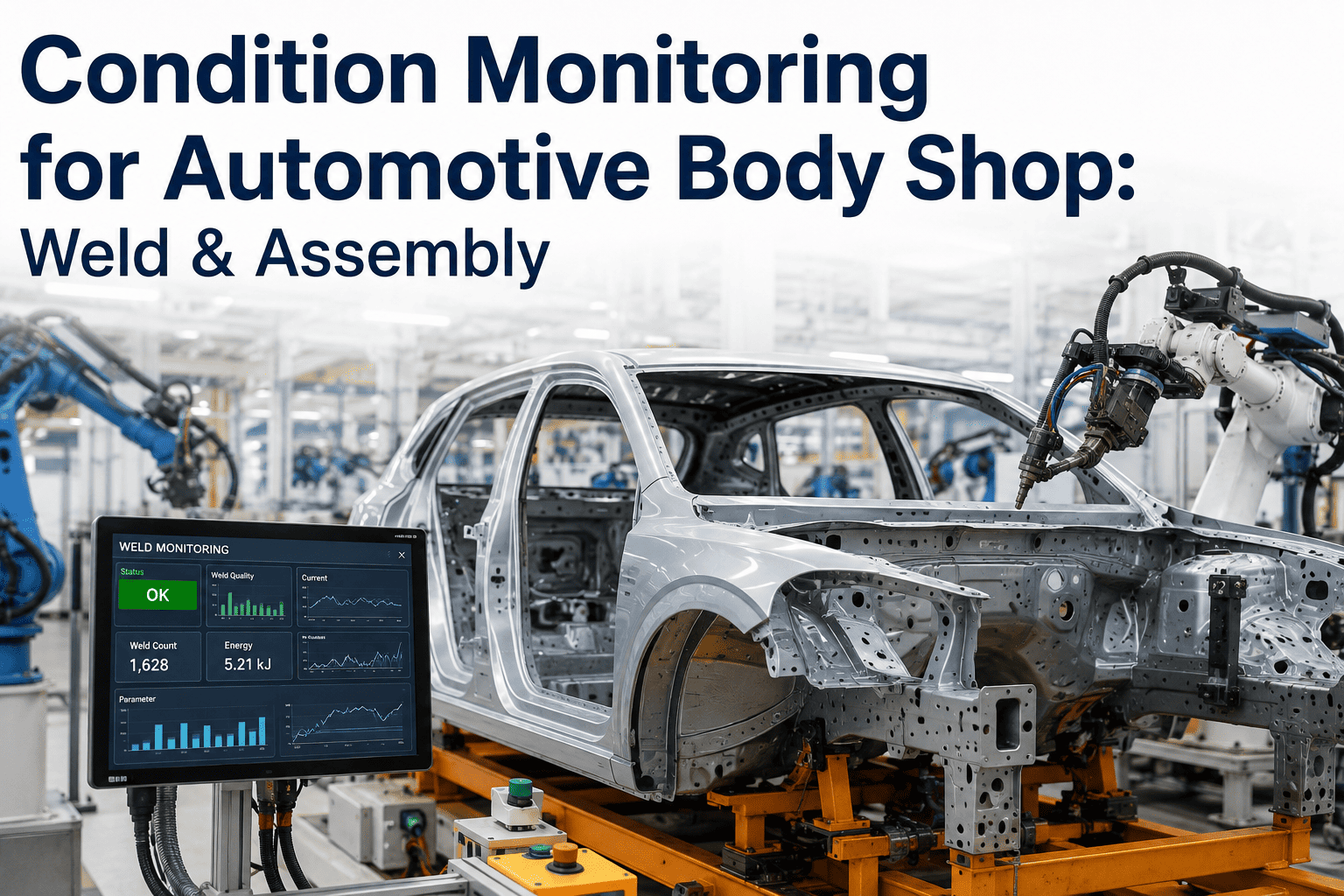
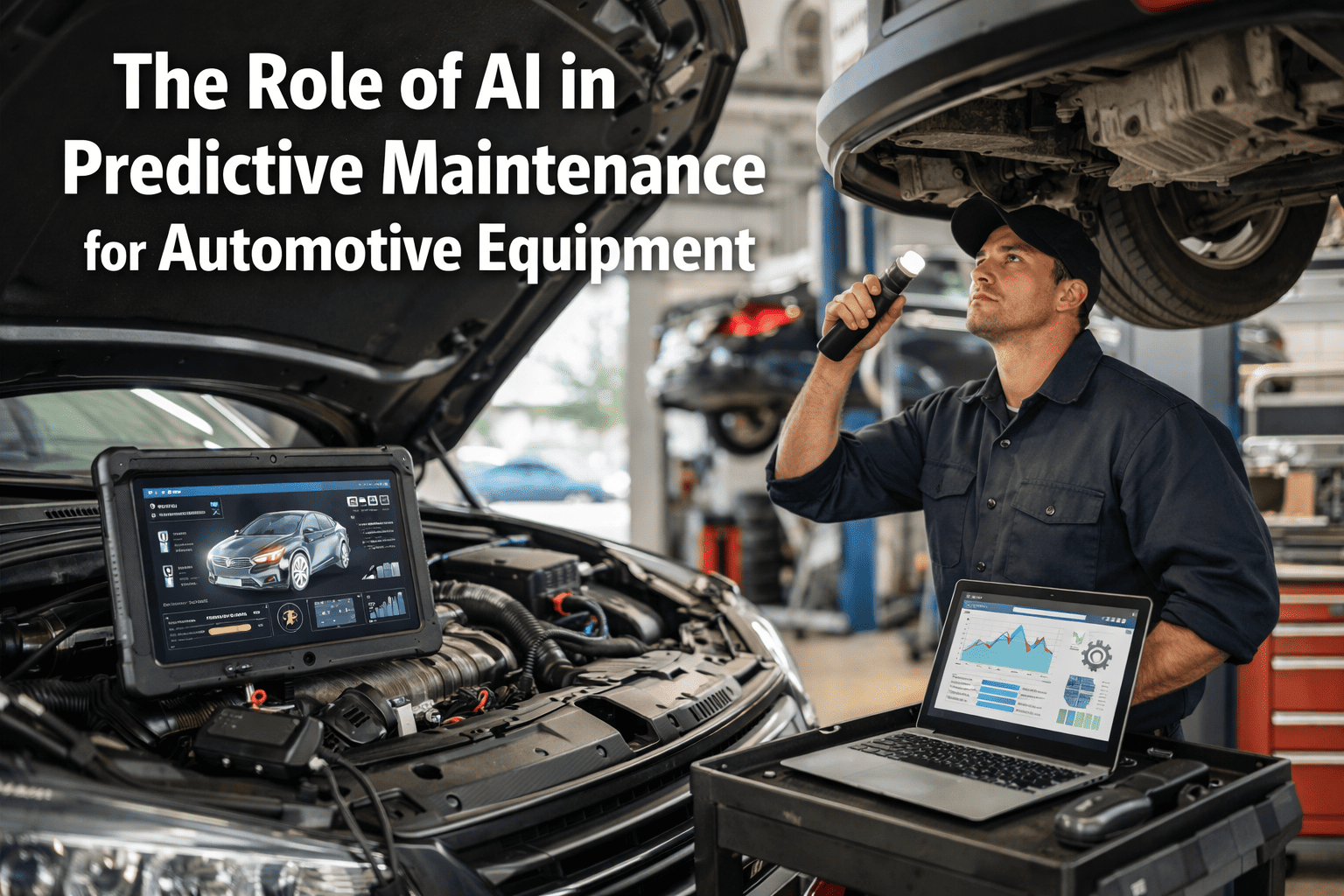
Most automotive plants are still running time-based preventive maintenance schedules written before AI-driven condition monitoring existed. Bearings get replaced at fixed intervals whether they are healthy or degrading. Gearboxes get inspected on a calendar, not a condition. The result is a maintenance strategy that simultaneously over-maintains healthy equipment and misses the actual failures that cause unplanned downtime. iFactory AI changes that calculus entirely by replacing calendar-driven schedules with continuous condition data — so your maintenance team acts when the equipment tells you to, not when the calendar does. Book a demo to see predictive maintenance working on automotive equipment.
Predictive maintenance uses real-time sensor data and machine learning to predict failures before they occur, enabling maintenance only when needed. Preventive maintenance uses fixed time or usage intervals — replacing parts regardless of actual condition. For automotive plants, iFactory AI predictive maintenance delivers 40% less unplanned downtime, 28% lower maintenance cost, and 18% reduction in spare parts spend compared to traditional preventive schedules.
The Core Difference — When You Act and Why
The fundamental distinction between predictive and preventive maintenance is the trigger for action. Understanding this distinction is the starting point for calculating which strategy delivers better outcomes for your automotive plant.
Head-to-Head Comparison — Predictive vs Preventive in Automotive Plants
The table below compares both strategies across the metrics that matter most to plant managers, maintenance directors, and operations VPs in automotive manufacturing. Book a demo to see iFactory AI predictive maintenance performance data.
| Comparison Metric | Preventive Maintenance | iFactory AI Predictive | Advantage |
|---|---|---|---|
| Downtime and Reliability | |||
| Unplanned downtime reduction | 10-15% vs reactive | 40% vs reactive baseline | Predictive |
| Failures between maintenance events | 12-18% of assets still fail | Near zero on monitored assets | Predictive |
| Advance warning before failure | None — interval-based | 2 to 6 weeks average | Predictive |
| Cost and Resource Efficiency | |||
| Total maintenance cost vs reactive | 15-20% lower | 28% lower | Predictive |
| Parts replaced with remaining life | 25-35% of all replacements | Under 3% | Predictive |
| Spare parts inventory spend | Fixed safety stock required | 18% reduction via RUL-driven procurement | Predictive |
| Maintenance labor utilization | Fixed schedule regardless of need | Directed by condition priority | Predictive |
| Implementation and Operations | |||
| Implementation complexity | Low — schedule-based | Medium — sensor + ML deployment | Context-dependent |
| Time to first value | Immediate | 8-12 weeks to first predictions | Preventive short-term |
| OEE improvement potential | 5-8% availability gain | 12-18% availability gain | Predictive |
| IATF 16949 compliance support | Manual records required | Automated audit-ready records | Predictive |
iFactory AI data based on deployed automotive plant outcomes. Preventive maintenance benchmarks from industry research across US and European automotive facilities.
Book a 30-minute session where iFactory engineers model your current preventive maintenance cost against a predictive deployment — using your equipment types and failure history.
Where Preventive Maintenance Still Makes Sense
A complete predictive maintenance strategy does not eliminate preventive maintenance — it replaces it where condition monitoring delivers better ROI and retains it where it remains the right tool. iFactory AI helps automotive plants build a hybrid strategy that applies the right approach to each asset class.
iFactory AI — How the Predictive Strategy Works in Automotive Plants
iFactory AI does not just generate alerts — it replaces the entire preventive maintenance workflow for critical assets with a condition-driven system that handles detection, classification, work order creation, and scheduling automatically.
iFactory AI vs. Competitor Platforms — Predictive Maintenance Capability
Most competitors in the automotive maintenance software market offer either CMMS work order management or OEE dashboards — not integrated predictive maintenance from sensor to work order. iFactory AI delivers the complete stack.
| Capability | iFactory AI | QAD Redzone | Fiix (Rockwell) | MaintainX | IBM Maximo | UpKeep |
|---|---|---|---|---|---|---|
| Predictive Maintenance Core | ||||||
| Continuous condition monitoring | IIoT sensors, edge AI | OEE focus only | Partner integration | CMMS only | APM add-on required | CMMS only |
| ML failure mode classification | Automotive-trained | Not available | Basic threshold alerts | Not available | Maximo APM add-on | Not available |
| RUL forecast per asset | Per failure mode | Not available | Not available | Not available | APM only | Not available |
| Work Order Automation | ||||||
| Auto work order from prediction | Fully automated | Manual trigger | Alert notification | PM scheduling only | Workflow add-on | Manual from alert |
| Hybrid PM and predictive scheduling | Built-in strategy mix | Not available | CMMS PM only | PM calendar only | Configurable | PM calendar only |
| Compliance and Data | ||||||
| IATF 16949 audit records | Automated generation | Partial | Not available | Not available | Configurable | Not available |
| Edge / on-premise deployment | Edge-native | Cloud only | Cloud only | Cloud only | On-premise option | Cloud only |
Based on publicly available product documentation as of Q1 2025. Verify current capabilities with each vendor before procurement decisions.
Regional Compliance — Maintenance Strategy Requirements by Region
Automotive manufacturers operating across US, UAE, UK, Canada, and European markets face different regulatory frameworks governing maintenance documentation, machinery safety, and data handling. iFactory AI is configured to meet compliance obligations in all major automotive manufacturing regions.
| Region | Key Standards | iFactory AI Coverage | Data Residency |
|---|---|---|---|
| United States | OSHA 29 CFR 1910.217, IATF 16949, ISO 55001 asset management, NFPA 70E electrical safety | OSHA-aligned PM and inspection records, IATF 16949 maintenance traceability, automated audit documentation for plant safety programs | US data centers. On-premise edge processing. No production data leaves plant perimeter. |
| United Arab Emirates | UAE Federal OSH Law No. 8, ADNOC HSE maintenance standards, MOIAT equipment safety regulations, Gulf Cooperation Council industrial standards | Arabic-language interface, UAE OSH-compliant digital inspection records, ADNOC-aligned asset management and maintenance reporting | UAE local edge deployment. Full on-premise option for sovereign data requirements. |
| United Kingdom | PUWER 1998, HSE L140 maintenance guidance, ISO 55001, IATF 16949, Control of Vibration at Work Regulations 2005 | PUWER inspection record automation, HSE-compliant maintenance documentation, ISO 55001 asset lifecycle reporting | UK data centers. Post-Brexit UK GDPR compliant. Edge processing on-site. |
| Canada | CSA Z432 machine safeguarding, provincial OHSA requirements, federal Canada Labour Code Part II, IATF 16949 | Bilingual EN/FR interface, province-specific safety checklist templates, CSA-aligned PM and predictive inspection modules | Canadian data residency available. PIPEDA compliant. Edge processing on-site. |
| Europe (EU) | EU Machinery Directive 2006/42/EC, EN 13306 maintenance standard, Physical Agents Directive 2002/44/EC, GDPR, IATF 16949 | CE compliance documentation, EN 13306 work order taxonomy, GDPR data processing agreements, multilingual: DE, FR, IT, ES, PL | EU-only data processing. GDPR Article 46 compliant. Frankfurt and Amsterdam data centers. |
Why iFactory AI Predictive Delivers More Value Than Preventive
The shift from preventive to predictive maintenance in automotive plants is not just a technology upgrade — it restructures the economics of your entire maintenance operation. These six value dimensions capture the compounding returns iFactory AI generates beyond the headline downtime reduction.
Client Results — Automotive Plants That Transitioned to Predictive
iFactory AI engineers will model your current PM cost structure against a predictive deployment and show you the exact ROI gap — using your equipment list, your failure history, and your downtime cost numbers.
Frequently Asked Questions
Continue Reading
iFactory AI gives your automotive plant the tools to transition from calendar-driven maintenance to condition-driven intelligence — reducing downtime, cutting maintenance costs, and eliminating the waste built into every fixed-interval PM schedule.