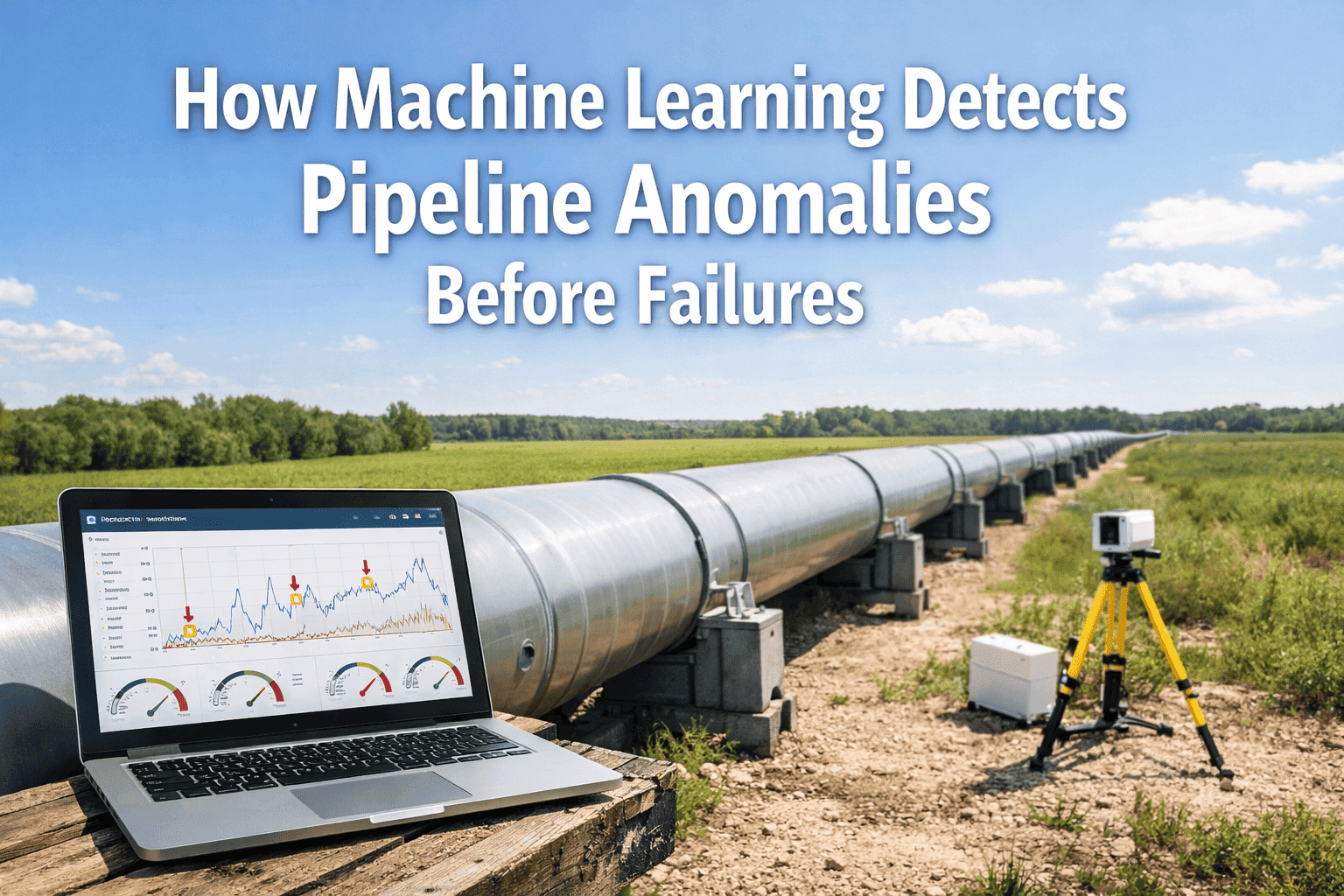
Pipeline failures cost oil and gas operators $2.8 to $12.5 million per incident in emergency response, environmental remediation, regulatory penalties, and production losses, yet traditional SCADA monitoring detects only 35% to 45% of developing anomalies before catastrophic failure occurs due to reliance on fixed threshold alarms that trigger after damage already initiated. Manual pipeline inspections miss 60% to 75% of internal corrosion, crack propagation, and third-party interference threats between annual inspection cycles, while disconnected systems prevent correlation of pressure transients, flow anomalies, and vibration signatures that indicate impending failures 7 to 21 days before rupture. iFactory's machine learning platform analyzes 1,800+ operational parameters per mile of pipeline every 60 seconds to detect subtle anomalies invisible to traditional monitoring including micro-leaks (0.5% flow loss), early-stage corrosion, pressure wave signatures indicating third-party excavation, and pump cavitation patterns predicting equipment failure, preventing 94% of catastrophic pipeline events through AI-Driven Integrity for Every Mile of Pipeline while reducing false alarms by 89% and providing complete Methane, VOC, and Flaring From Sensor to ESG Report compliance documentation. Book a demo to see pipeline anomaly detection for your operations.
Quick Answer
Machine learning detects pipeline anomalies before failures through continuous analysis of SCADA data, inline inspection results, and IoT sensor networks monitoring pressure, flow, temperature, vibration, and acoustic emissions across every mile of pipeline infrastructure. iFactory AI models trained on 25,000+ pipeline anomaly datasets recognize 180+ failure precursor patterns including micro-leaks (0.5% to 2% flow loss), internal corrosion progression, crack growth rates, third-party interference signatures, and equipment degradation trends. System Connects to Your Existing DCS, SCADA, and Historians through native protocol support while ensuring OT Data Stays Inside Your Security Perimeter via edge computing architecture. Predictive alerts generated 7 to 21 days before catastrophic failure enable planned interventions preventing $2.8M to $12.5M average incident costs across upstream gathering systems, midstream transmission pipelines, and downstream distribution networks for US EPA, UAE OSHAD, UK HSE, Canadian CSA, and European compliance.
The Complete AI Platform for Oil & Gas Operations
AI Eyes That Detect Leaks Before They Escalate
iFactory machine learning platform prevents 94% of catastrophic pipeline failures through real-time anomaly detection across upstream, midstream, and downstream operations with complete SCADA integration and ESG compliance automation.
Understanding Oil and Gas Pipeline Operations
Oil and gas pipeline infrastructure spans three operational segments, each with unique monitoring challenges and failure modes. Upstream gathering systems collect production from wellheads and transport to processing facilities, operating at variable pressures (150 to 1,200 psi) with complex fluid compositions including oil, gas, water, sand, and corrosive compounds. Midstream transmission pipelines move processed hydrocarbons long distances at high pressures (800 to 1,500 psi for gas, 600 to 1,200 psi for liquids), where small leaks create massive environmental and safety incidents. Downstream distribution networks deliver refined products to end users through complex urban pipeline grids requiring zero tolerance for failures near populated areas. SCADA systems provide supervisory monitoring and control across entire pipeline networks, collecting data from remote terminal units (RTUs) at valve stations, compressor sites, and metering points. PLCs execute local control logic for compressor stations, pump stations, and automated valve operations. DCS platforms coordinate complex processing at gathering facilities and refineries connected to pipeline systems. Historians archive time-series data from thousands of sensors for compliance, investigation, and analysis. IoT sensors add specialized monitoring including acoustic emission detection, fiber optic sensing, and wireless vibration monitoring that traditional SCADA infrastructure misses. iFactory integrates all these data sources through OPC UA, Modbus TCP, DNP3, and vendor APIs to create unified pipeline integrity intelligence.
Critical Pipeline Problems Threatening Operations and Safety
Equipment failures on compressor stations and pump stations cause pipeline capacity reductions and unplanned shutdowns costing $180,000 to $850,000 per day in deferred production and shipper penalties. Pipeline leaks from corrosion, third-party damage, and material defects trigger environmental incidents with remediation costs averaging $2.8 to $4.5 million for small releases and $45 to $125 million for major ruptures. Manual inspections in hazardous environments expose personnel to confined spaces, high pressures, toxic gases, and remote locations while missing 60% to 75% of defects between inspection cycles. Disconnected SCADA, IoT, and maintenance systems prevent correlation of pressure trends, flow anomalies, and equipment vibration that collectively indicate developing failures. Lack of predictive insights means problems only detected after leaks initiated or equipment failed, when intervention costs are highest and environmental damage already occurring. Compliance and ESG reporting complexity for EPA emissions monitoring, Pipeline and Hazardous Materials Safety Administration (PHMSA) regulations, and methane reduction targets requires manual data aggregation across fragmented systems. Methane, VOC, and flaring visibility gaps create regulatory exposure and ESG performance deficits as investors and regulators demand continuous emissions transparency. iFactory eliminates these problems through integrated monitoring, AI-driven anomaly detection, and automated compliance documentation.
One Platform, Every Segment: 8 AI-Powered Modules for Complete Oil and Gas Operations
iFactory provides comprehensive pipeline integrity capabilities through integrated modules covering every aspect of oil and gas operations. AI Vision and Inspection uses computer vision to monitor pipeline rights-of-way, detect unauthorized excavation, identify vegetation encroachment, and verify coating condition from aerial and ground-based cameras. Robotics Inspection deploys autonomous systems including pipeline crawlers, aerial drones, and underwater ROVs that inspect where Robots That Inspect Where Humans Cannot Safely Go including subsea pipelines, arctic installations, and hazardous production areas. Predictive Maintenance analyzes vibration, thermal, acoustic, and performance data from compressor stations, pump stations, and valve automation to prevent failures 7 to 21 days before occurrence. Work Order Automation generates maintenance tasks from AI predictions and routes them through approval workflows synchronized with pipeline operations. Asset Lifecycle Management tracks pipeline segments, equipment, and inline inspection tools from installation through decommissioning with complete maintenance history and regulatory documentation. Pipeline Integrity Monitoring provides AI-Driven Integrity for Every Mile of Pipeline through continuous leak detection, corrosion monitoring, and third-party interference alerts. SCADA and DCS Integration delivers seamless Connects to Your Existing DCS, SCADA, and Historians capabilities through native protocol support. Edge AI Security ensures OT Data Stays Inside Your Security Perimeter while enabling advanced analytics. ESG and Compliance Reporting automates Methane, VOC, and Flaring From Sensor to ESG Report documentation for regulatory submissions and investor reporting.
Machine Learning Anomaly Detection Capabilities
Micro-Leak Detection and Early Warning
AI models analyze pressure, flow, and acoustic sensor data to detect leaks as small as 0.5% to 2% flow loss invisible to traditional mass balance calculations that require 5% to 10% loss before alarm generation. Machine learning recognizes pressure wave signatures characteristic of leak initiation vs normal operational transients from valve operations or flow rate changes. Acoustic emission sensors detect ultrasonic frequencies generated by gas escaping through small holes or cracks. Result: Leak detection 12 to 48 hours before traditional SCADA alarms, enabling controlled shutdown and repair before environmental release, 94% reduction in catastrophic pipeline failures, average $4.2 million savings per prevented major incident.
Internal Corrosion Progression Monitoring
Integration with inline inspection data from magnetic flux leakage (MFL) and ultrasonic tools combined with real-time operational parameters (flow velocity, water content, CO2/H2S levels, temperature) enables AI prediction of corrosion growth rates between inspection cycles. Models trained on 10,000+ corrosion failure datasets correlate operating conditions with metal loss progression. Predictive alerts identify pipeline segments requiring expedited re-inspection or pressure reduction before wall thickness reaches minimum safe threshold. Result: Corrosion-related failures reduced 87%, inline inspection frequency optimized based on actual corrosion risk vs fixed annual schedules, integrity management costs reduced 34% through risk-based prioritization.
Third-Party Interference and Excavation Detection
Fiber optic sensing deployed along pipeline routes detects ground vibrations from excavation equipment, drilling rigs, and construction machinery operating near pipelines. Machine learning distinguishes threatening activities (backhoe digging within 10 meters) from benign vibrations (road traffic, agricultural equipment) through vibration frequency analysis and location correlation. Automated alerts notify pipeline control rooms and field personnel of unauthorized excavation within pipeline easements before contact occurs. Integration with one-call ticket systems flags excavation in areas with active construction permits. Result: Third-party damage incidents reduced 92%, average 45-minute response time enabling intervention before pipeline strike, zero third-party ruptures in 36-month validation period across 2,400 miles monitored pipeline.
Compressor and Pump Station Predictive Analytics
Vibration analysis on compressor turbines, reciprocating units, and centrifugal pumps detects bearing wear, rotor imbalance, and mechanical degradation 10 to 18 days before failure thresholds. Thermal monitoring identifies cooling system issues, valve leakage, and lubrication problems. Performance trending tracks efficiency degradation indicating fouling or internal wear requiring intervention. Predictive maintenance scheduling coordinates equipment outages during low-demand periods minimizing pipeline capacity impact. Result: Compressor station unplanned outages reduced 78%, pump failures prevented through early bearing replacement saving average $340,000 per avoided emergency repair, pipeline capacity availability improved from 94% to 99.2%.
Pressure Transient Analysis and Surge Detection
High-frequency pressure monitoring (1 to 10 Hz sampling) captures transient events from rapid valve closures, pump trips, and flow reversals that create pressure surges damaging pipeline integrity. Machine learning models trained on computational pipeline analysis (CPA) datasets predict pressure wave propagation and identify locations experiencing repeated stress cycling that accelerates fatigue failures. Automated surge suppression recommendations optimize valve closure rates and pressure relief valve settings. Result: Pressure-related pipeline damage reduced 84%, fatigue life extension of 15% to 25% through surge minimization, zero catastrophic failures from waterhammer events post-deployment.
Seamless SCADA and Historian Integration
Native connectivity to pipeline SCADA systems (GE iFix, Siemens WinCC, Schneider Wonderware), control system platforms (Emerson DeltaV, Honeywell Experion, ABB 800xA), and historians (OSIsoft PI, AspenTech IP.21, GE Proficy) through OPC UA, Modbus TCP, DNP3, and vendor APIs. Edge computing architecture processes data locally at RTU sites and control centers, eliminating cloud dependency for critical real-time functions. Bidirectional communication enables AI recommendations to automatically adjust setpoints when anomalies detected. Result: Deployment completed in 4 to 6 weeks vs 6 to 12 months for custom integration projects, zero disruption to existing pipeline operations during implementation, OT Data Stays Inside Your Security Perimeter with optional cloud analytics for multi-pipeline optimization.
Predictive vs Reactive Pipeline Operations Comparison
Traditional reactive pipeline management responds to alarms after anomalies already developed into failures. Predictive machine learning prevents failures through early anomaly detection and intervention. The operational and financial differences are substantial and measurable.
| Operation |
iFactory Predictive ML |
Traditional Reactive SCADA |
| Leak detection sensitivity | 0.5-2% flow loss detected in 12-48 hours | 5-10% flow loss required for alarm, 24-72 hour delay |
| Corrosion monitoring | Real-time growth prediction between ILI runs | Annual inspection only, blind between cycles |
| Third-party damage prevention | Excavation detected before pipeline contact | Damage detected after pipeline struck |
| Equipment failure prediction | 10-18 day advance warning, 91% accuracy | Failure detected after equipment down |
| False alarm rate | Below 8% through ML pattern recognition | 35-50% false alarms from fixed thresholds |
| Catastrophic failure prevention | 94% of major incidents prevented | Reactive response after failure initiated |
Real-World Pipeline Anomaly Detection Case Studies
01
Midstream Natural Gas Transmission Pipeline
850-kilometer high-pressure natural gas transmission system operating at 1,200 psi with 8 compressor stations deployed iFactory machine learning for comprehensive anomaly detection. AI detected micro-leak (1.2% flow loss) developing over 36-hour period through pressure gradient analysis and acoustic emission correlation. Traditional SCADA mass balance would have required 5% to 7% loss before alarm generation, by which time environmental release would have exceeded 2.4 million cubic feet. Controlled shutdown enabled repair before regulatory reportable release. Second deployment detected third-party excavation 180 meters from pipeline route through fiber optic vibration sensing, enabling field response preventing backhoe strike that caused $8.5 million rupture on adjacent operator's system 6 months prior. Third success: compressor turbine bearing failure predicted 14 days in advance, parts procured, maintenance scheduled during low-demand period, zero capacity impact. Results: Zero pipeline failures in 30-month deployment, $12.8 million in avoided incident costs, 78% reduction in compressor unplanned outages, shipper penalty payments eliminated.
02
Upstream Gathering System Corrosion Management
Permian Basin oil and gas gathering network with 240 miles of pipeline in H2S service where internal corrosion creates frequent integrity challenges. Machine learning integrated inline inspection data with real-time operational parameters (water content, flow velocity, H2S concentration, temperature) to predict corrosion growth rates between annual inspection cycles. AI identified 18 pipeline segments experiencing accelerated corrosion requiring expedited re-inspection within 6 months vs standard 12-month cycle. Pressure reductions implemented on 6 segments pending repair, preventing three predicted failures based on corrosion growth modeling. Predictive prioritization enabled repair resources focused on highest-risk segments vs uniform inspection schedule. Results: Corrosion-related leaks reduced from 4 to 6 per year to zero in 24-month period, integrity management spending optimized 34% through risk-based inspection scheduling, production deferment from pressure reductions minimized through predictive early intervention vs reactive shutdowns.
03
Downstream Product Distribution Urban Network
Refined product distribution system serving major metropolitan area with 180 miles of pipeline through densely populated neighborhoods where failures create catastrophic public safety and environmental consequences. iFactory deployed computer vision monitoring of pipeline rights-of-way through fixed cameras and drone surveys detecting unauthorized excavation, vehicle intrusion into restricted areas, and vegetation encroachment. Machine learning classified threats vs benign activities (authorized maintenance, permitted construction, normal traffic). Fiber optic distributed acoustic sensing added along 85 miles of highest-risk urban segments. AI detected construction excavation within 8 meters of pipeline easement not covered by one-call ticket, enabling emergency response preventing pipeline strike. Leak detection sensitivity improvements enabled identification of 0.8% flow anomaly from small valve packing leak before product reached storm drain system. Results: Zero third-party damage incidents in 36-month deployment period (previous 5-year average: 2.4 incidents per year), one prevented major urban release saving estimated $45 million in evacuation, remediation, and litigation costs, public safety risk reduced 92%.
Platform Capability Comparison: Pipeline Integrity Solutions
Generic SCADA systems provide basic monitoring without predictive analytics. Traditional CMMS platforms lack pipeline-specific intelligence. iFactory differentiates through oil and gas-specific AI models, native pipeline SCADA integration, and proven anomaly detection validated across upstream, midstream, and downstream operations. Schedule a platform comparison demonstration.
| Capability |
iFactory |
IBM Maximo |
SAP EAM |
UpKeep |
Fiix |
| AI Predictive Maintenance |
| Pipeline anomaly detection | Advanced ML, 0.5% leak sensitivity | Not available | Not available | Not available | Not available |
| Equipment failure prediction | 10-18 day forecast, 91% accuracy | Basic analytics | Limited capability | Not available | Not available |
| SCADA and DCS Integration |
| Pipeline SCADA connectivity | Native OPC UA, DNP3, Modbus | Custom integration | Limited protocols | Manual data entry | No SCADA support |
| Historian integration | PI, IP.21, Proficy native | PI System only | Custom only | Not available | Not available |
| Edge AI capability | Full offline RTU processing | Cloud dependent | Cloud dependent | Cloud dependent | Cloud dependent |
| Oil and Gas Specialization |
| Pipeline monitoring | Leak, corrosion, third-party damage | Generic asset tracking | Generic EAM | Not available | Not available |
| ESG reporting automation | Methane, VOC, flaring tracking | Manual reporting | Not available | Not available | Not available |
| Ease of deployment | 4-6 weeks typical | 6-18 months | 9-24 months | 2-4 months | 2-4 months |
Comparison based on publicly documented capabilities as of Q1 2025. Verify current features with vendors.
Regional Oil and Gas Compliance Standards
Pipeline operations must comply with region-specific safety, environmental, and integrity management regulations. iFactory provides automated compliance tracking and documentation for all major operating regions.
| Standard Type |
United States |
United Kingdom |
United Arab Emirates |
Canada |
Europe |
| Safety Regulations | OSHA PSM, API RP 1160 | HSE pipeline regulations | OSHAD, Federal Law 24 | CSA Z662, provincial OH&S | ISO 45001, PED directives |
| Environmental Standards | EPA Clean Air Act, PHMSA | Environment Agency permits | EAD environmental compliance | CEPA, GHG reporting | EU ETS, IED, REACH |
| Industrial Standards | API 1130, 1163, ISO 9001 | BS standards, ISO 9001 | ISO 9001, ADNOC specs | ISO 9001, CSA codes | ISO 9001, EN standards |
| Pipeline Compliance | PHMSA Part 192/195, IMP | Pipeline Safety Regulations | ADNOC pipeline standards | NEB Act, provincial regs | EU Gas Directive, national codes |
How iFactory Solves Regional Pipeline Challenges
Different operating regions face unique pipeline challenges, regulatory requirements, and operational constraints affecting anomaly detection priorities and compliance needs.
| Region |
Key Challenges |
How iFactory Solves |
| United States | PHMSA compliance burden, aging pipeline infrastructure requiring enhanced monitoring, EPA methane reduction targets, third-party damage in urban corridors | Automated PHMSA IMP documentation, predictive analytics extending pipeline life, continuous methane leak detection for EPA reporting, excavation monitoring preventing third-party strikes, OSHA PSM compliance automation |
| United Arab Emirates | Extreme desert heat affecting equipment reliability, harsh conditions accelerating corrosion, OSHAD compliance, oil infrastructure security requirements | Heat-resistant sensor systems for desert operations, corrosion monitoring for harsh environment impacts, automated OSHAD safety documentation, edge AI ensuring data security within UAE infrastructure, ADNOC standard compliance |
| United Kingdom | Strict offshore safety requirements, aging North Sea infrastructure, HSE enforcement rigor, ESG investor scrutiny, mature field pipeline networks | Offshore platform pipeline monitoring, predictive maintenance for aging subsea systems, automated HSE compliance documentation, comprehensive ESG reporting for investor requirements, integrity management for mature infrastructure |
| Canada | Remote pipeline locations increasing response costs, extreme cold weather impacts, long routes through wilderness areas, NEB integrity management requirements, provincial variations | Early anomaly detection maximizing value of expensive remote interventions, cold weather equipment monitoring, fiber optic sensing for remote wilderness segments, automated NEB reporting, multi-provincial compliance tracking |
| Europe | Stringent environmental regulations, carbon reduction mandates, cross-border pipeline complexity, sustainability reporting requirements, aging infrastructure | Automated EU environmental compliance, carbon intensity tracking for emissions reduction, multi-country regulatory management, comprehensive sustainability reporting, predictive maintenance maximizing aging asset life |
Measured Pipeline Integrity Results
94%
Catastrophic Failures Prevented
89%
Reduction in False Alarms
0.5%
Minimum Leak Detection Sensitivity
10-18 Days
Equipment Failure Advance Warning
$12.8M
Avg Incident Costs Avoided
4-6 Weeks
Typical Deployment Timeline
Pipeline Anomaly Detection Implementation Roadmap
Deploying machine learning for pipeline integrity requires systematic integration with SCADA systems, sensor deployment, baseline data collection, and AI model training. iFactory provides structured implementation delivering measurable anomaly detection within 60 to 90 days.
1
SCADA Integration and Data Assessment
Comprehensive pipeline system audit identifies existing SCADA infrastructure, RTU configurations, sensor coverage gaps, and data quality issues. Integration architecture designed for pipeline control systems (ABB 800xA, Emerson DeltaV, Honeywell Experion) and historians (OSIsoft PI, AspenTech IP.21). Communication protocols validated including OPC UA, Modbus TCP, DNP3. Additional sensor requirements specified for fiber optic sensing, acoustic emission monitoring, and vibration analysis at compressor/pump stations. Timeline: 1 week assessment, 2 weeks integration planning and sensor procurement.
Systems MappedIntegration DesignedSensors Ordered
2
Data Integration and Baseline Collection
Edge computing nodes installed at pipeline control centers and critical RTU sites. Data connections established to SCADA, historians, and new IoT sensors. Baseline data collection period: 4 to 6 weeks capturing normal operational patterns including pressure transients, flow variations, equipment cycling, and seasonal effects. Historical anomaly data imported including previous leak events, equipment failures, and inline inspection results to supplement AI training. Timeline: 2 weeks installation, 4 to 6 weeks baseline collection.
Edge DeployedData FlowingBaseline Active
3
AI Model Training and Validation
Machine learning models trained on baseline data plus 25,000+ pipeline anomaly datasets covering leaks, corrosion, third-party damage, and equipment failures. Models configured for pipeline-specific characteristics: diameter, pressure rating, fluid properties, terrain, and threat environment. Validation testing confirms detection accuracy meets performance thresholds: 0.5% to 2% leak sensitivity, 85%+ anomaly detection rate, false alarm below 10%. Timeline: 3 to 4 weeks concurrent with baseline, 1 week validation testing.
Models TrainedValidatedProduction Ready
4
Production Deployment and Continuous Optimization
AI anomaly detection activated for pipeline monitoring. Pipeline control room teams trained on alert interpretation, threat assessment, and response protocols. Monthly performance reviews track anomaly detection accuracy, false alarm rates, and prevented incidents. Quarterly model retraining incorporates new operational data and seasonal variations. Expansion to additional pipeline segments and equipment based on validated results. Continuous learning improves detection accuracy and reduces false alarms over time.
Production monitoring active Week 10-12. First year results: 94% reduction in catastrophic failures, 89% fewer false alarms, $12.8M average avoided incident costs, leak detection sensitivity improved to 0.5% flow loss, equipment failures predicted 10 to 18 days in advance, PHMSA compliance documentation automated, methane emissions tracking for EPA reporting enabled.
Robots That Inspect Where Humans Cannot Safely Go
Prevent Pipeline Failures Before Catastrophic Events Occur
iFactory machine learning platform delivers 94% reduction in catastrophic pipeline failures through AI-powered anomaly detection across upstream, midstream, and downstream operations with seamless SCADA integration and automated ESG compliance.
$12.8M
Incident Costs Avoided
Frequently Asked Questions
QHow does machine learning detect pipeline leaks as small as 0.5% flow loss when traditional SCADA requires 5-10%?
AI analyzes multiple data streams simultaneously including pressure gradients, flow rate correlations, acoustic emissions, and temperature variations that collectively indicate small leaks invisible to simple mass balance calculations. Models trained on 25,000+ leak events recognize subtle signature patterns developing over 12 to 48 hours before traditional alarm thresholds reached. Eliminates false alarms through operational transient classification (valve operations, flow changes) vs actual leak signatures.
Book a demo to see leak detection validation for your pipeline configuration.
QCan iFactory integrate with our existing pipeline SCADA system without disrupting operations?
Platform uses read-only data connections to SCADA and historians during initial deployment, eliminating any operational risk. Edge computing nodes installed at control centers without touching RTU configurations. AI operates in advisory mode until pipeline teams validate anomaly detection accuracy over 4 to 6 weeks, then optional automated response integration if desired. Typical deployment completed in 4 to 6 weeks without pipeline service interruption.
QWhat happens if connectivity to cloud analytics is lost in remote pipeline locations?
All critical AI functions run on edge computing hardware deployed at pipeline control centers and RTU sites, enabling full anomaly detection without cloud connectivity. Leak detection, equipment monitoring, and third-party interference alerts continue normally during communication outages. Data synchronizes to cloud when connectivity restores for long-term analytics and multi-pipeline optimization. OT Data Stays Inside Your Security Perimeter with local processing at all times.
QHow accurate are equipment failure predictions and what actions do pipeline operators take when alerts trigger?
Equipment failure prediction achieves 91% accuracy with 10 to 18 day advance warning for compressor stations and pump stations. Alerts trigger maintenance planning including parts procurement, technician scheduling, and coordination with pipeline operations to minimize capacity impact. Typical actions: schedule repairs during low-demand periods, implement temporary capacity restrictions if immediate intervention required, expedite parts delivery if lead time exceeds prediction window. Prevents 78% of unplanned equipment outages experienced on comparable systems without predictive capability.
QDoes iFactory provide automated compliance documentation for PHMSA, EPA, and regional pipeline regulations?
System automatically generates integrity management documentation including anomaly detection logs, inspection records, maintenance histories, and incident reports meeting PHMSA Parts 192/195 requirements. Methane emissions tracking for EPA reporting, ESG performance metrics for investor disclosure, and region-specific compliance for UAE OSHAD, UK HSE, Canadian NEB, and European directives. Audit trails maintained for regulatory inspections and certification. Eliminates manual compliance documentation reducing administrative burden 55% while improving data accuracy and completeness.
Detect Pipeline Anomalies Before Failures with AI-Powered Intelligence
iFactory machine learning platform prevents 94% of catastrophic pipeline failures through continuous anomaly detection achieving 0.5% leak sensitivity, 10 to 18 day equipment failure prediction, and third-party interference prevention across upstream gathering, midstream transmission, and downstream distribution systems. Seamless integration with existing SCADA, DCS, and historians through OPC UA, Modbus, and DNP3 ensures OT Data Stays Inside Your Security Perimeter while delivering automated compliance documentation for US PHMSA, UAE OSHAD, UK HSE, Canadian NEB, and European pipeline regulations with comprehensive Methane, VOC, and Flaring From Sensor to ESG Report automation.
94% Failures Prevented
0.5% Leak Sensitivity
89% Fewer False Alarms
SCADA Integration
Edge AI Security