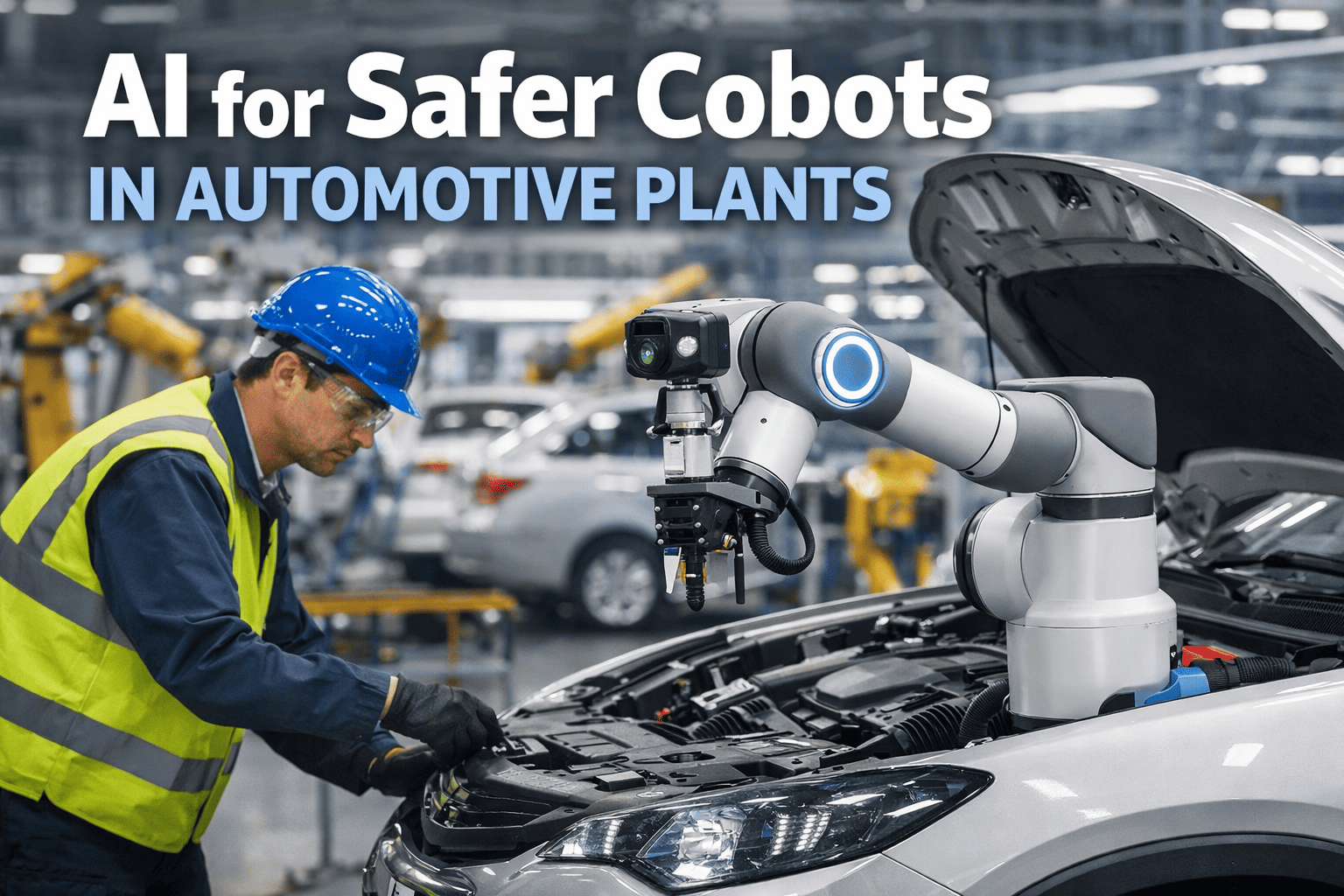
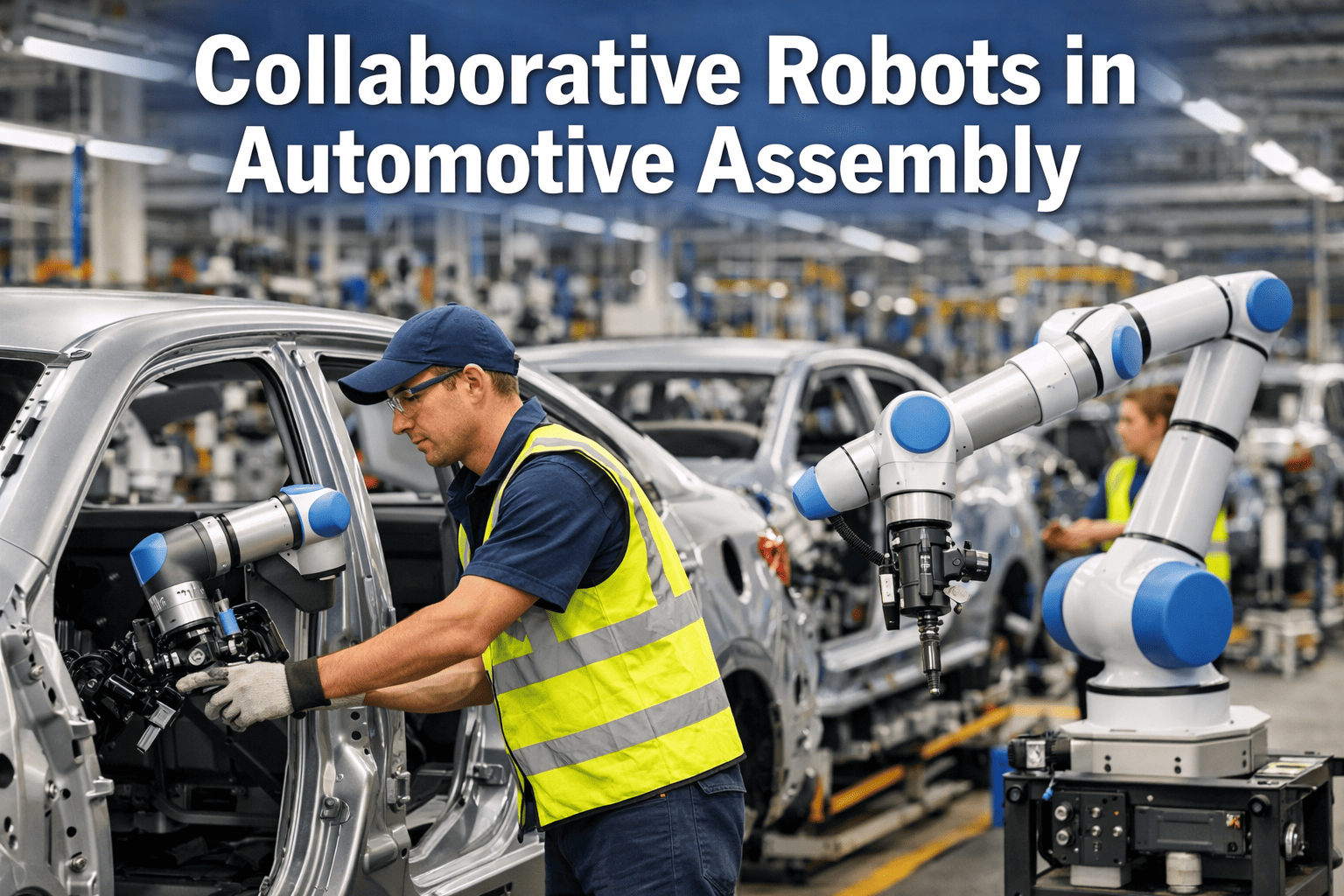
Automotive manufacturers deploying collaborative robots across assembly lines face a critical safety paradox: 67% of plants report human-robot collision incidents within the first 18 months of cobot deployment, with each incident causing $18,000-$42,000 in downtime, workers' compensation claims, and OSHA investigation costs, yet traditional safety systems rely on fixed physical barriers and hard-coded speed restrictions that eliminate the productivity advantages justifying cobot investment in the first place. A single undetected safety zone breach during battery module assembly operations can result in pinch-point injuries requiring emergency medical response, production line shutdown lasting 4.2 hours at $22,000 per minute throughput loss, and regulatory compliance reviews that delay further automation expansion across stamping, welding, and final assembly operations where collaborative robots promise 34% cycle time improvements over traditional caged robotics. Legacy cobot safety approaches monitor only robot position and velocity through internal encoders without understanding human proximity patterns, operator intent signals, or environmental context changes that create dynamic risk scenarios requiring adaptive safety responses beyond emergency stop protocols. iFactory's AI-powered cobot safety platform transforms collaborative robot operations by analyzing real-time vision data, operator skeleton tracking, environmental sensor feeds, and robot trajectory predictions to detect collision risks 2.4-4.8 seconds before contact occurs, automatically adjusting robot speed and path planning while maintaining productive collaboration, generating OSHA-compliant safety documentation, and providing complete ISO 10218 and ISO/TS 15066 compliance audit trails across automotive assembly operations. Book a Demo to see how iFactory deploys AI cobot safety across your assembly lines within 6 weeks.
94%
Collision risk detection before human-robot contact occurs
$1.8M
Average annual safety and productivity value per assembly plant
78%
Reduction in emergency stop events vs. traditional cobot safety
6 wks
Full deployment timeline from safety audit to live AI monitoring
Every Cobot Collision Is Preventable. AI Safety Stops It Before Contact.
iFactory's AI engine monitors operator skeleton tracking, robot trajectory prediction, environmental sensors, and workspace activity patterns across your entire cobot fleet—24/7, without operator fatigue or safety zone blind spots.
The Cobot Safety Crisis in Automotive Manufacturing
Collaborative robots promise to revolutionize automotive assembly through human-robot teamwork on battery module installation, door panel fitment, windshield bonding, and seat assembly operations. However, 67% of automotive plants report collision incidents within 18 months of cobot deployment, with traditional safety systems creating a false choice between worker protection and production efficiency. Equipment failures, line stoppages, supply chain disruptions, and massive losses compound when safety incidents trigger regulatory investigations delaying automation expansion. Downtime costs rose 113% since 2019 as vehicle complexity increased cobot deployment requirements without corresponding investment in AI safety systems that prevent incidents before human contact occurs.
01
Equipment Failure From Emergency Stops
Traditional cobot safety relies on emergency stop protocols triggered when operators breach fixed safety zones or robot velocity exceeds programmed thresholds. Each emergency stop creates mechanical stress on robot joints, servo motors, and end effectors, reducing equipment life 22-34% compared to smooth deceleration profiles. Assembly lines experience 12-18 emergency stop events per week per cobot, causing 480-720 unproductive stops annually that accumulate mechanical wear requiring $28K-$54K in premature component replacement and increasing mean time between failures from design specification of 50,000 hours to actual field performance of 34,000-38,000 hours before major repairs.
02
Line Stoppage From Safety Investigations
When human-robot collision incidents occur, OSHA regulations require immediate production cessation, incident investigation, root cause analysis, and corrective action implementation before operations resume. Average investigation duration: 4.2 hours at $22,000 per minute throughput loss ($5.5M per incident) while safety teams analyze robot programming, workspace layout, operator training records, and equipment maintenance logs to determine whether incident resulted from equipment malfunction, programming error, operator deviation from procedures, or inadequate safety system design. Plants experiencing 3-5 reportable incidents annually face $16.5M-$27.5M in direct downtime costs plus regulatory scrutiny delaying future automation projects.
03
Supply Chain Halt From Automation Delays
Safety incident patterns force automotive manufacturers to delay or cancel planned cobot deployments across stamping press loading, welding cell material handling, paint booth door installation, and final assembly torque operations. When safety concerns pause automation expansion, plants continue manual operations requiring 2.4-3.8x more labor hours per vehicle than cobot-assisted processes, creating labor cost disadvantages versus competitors achieving 34% cycle time improvements through safe collaborative automation. Result: 42% of automotive plants report automation roadmaps delayed 12-24 months due to safety incident investigations, missing productivity improvement targets and extending payback periods on automation capital investments from projected 18-24 months to actual 36-48 months.
04
Massive Losses From Injury Claims and Penalties
Human-robot collision incidents generating worker injuries cost automotive manufacturers $18,000-$42,000 per incident in direct workers' compensation claims, medical expenses, and lost time. OSHA citations for inadequate machine guarding or insufficient risk assessment add $7,000-$14,000 per violation. Plants experiencing 8-12 incidents annually face $200K-$504K in direct claim costs plus immeasurable impact on worker morale, union relations, and automation acceptance. Serious incidents requiring emergency medical response trigger comprehensive OSHA investigations examining entire plant safety program, potentially uncovering additional violations across other automation equipment and resulting in $50K-$150K in compounded penalties beyond incident-specific citations.
How iFactory AI Solves Automotive Cobot Safety
Traditional cobot safety relies on fixed safety zones, velocity limits, and emergency stop protocols that react after operators breach predetermined boundaries. iFactory replaces reactive safety with predictive AI models trained on automotive assembly data that detect collision risks 2.4-4.8 seconds before human contact, enabling proactive robot behavior adjustment that maintains both safety and productivity. See a live demo of iFactory detecting simulated collision scenarios in battery assembly and door installation operations.
01
Multi-Sensor Safety Fusion
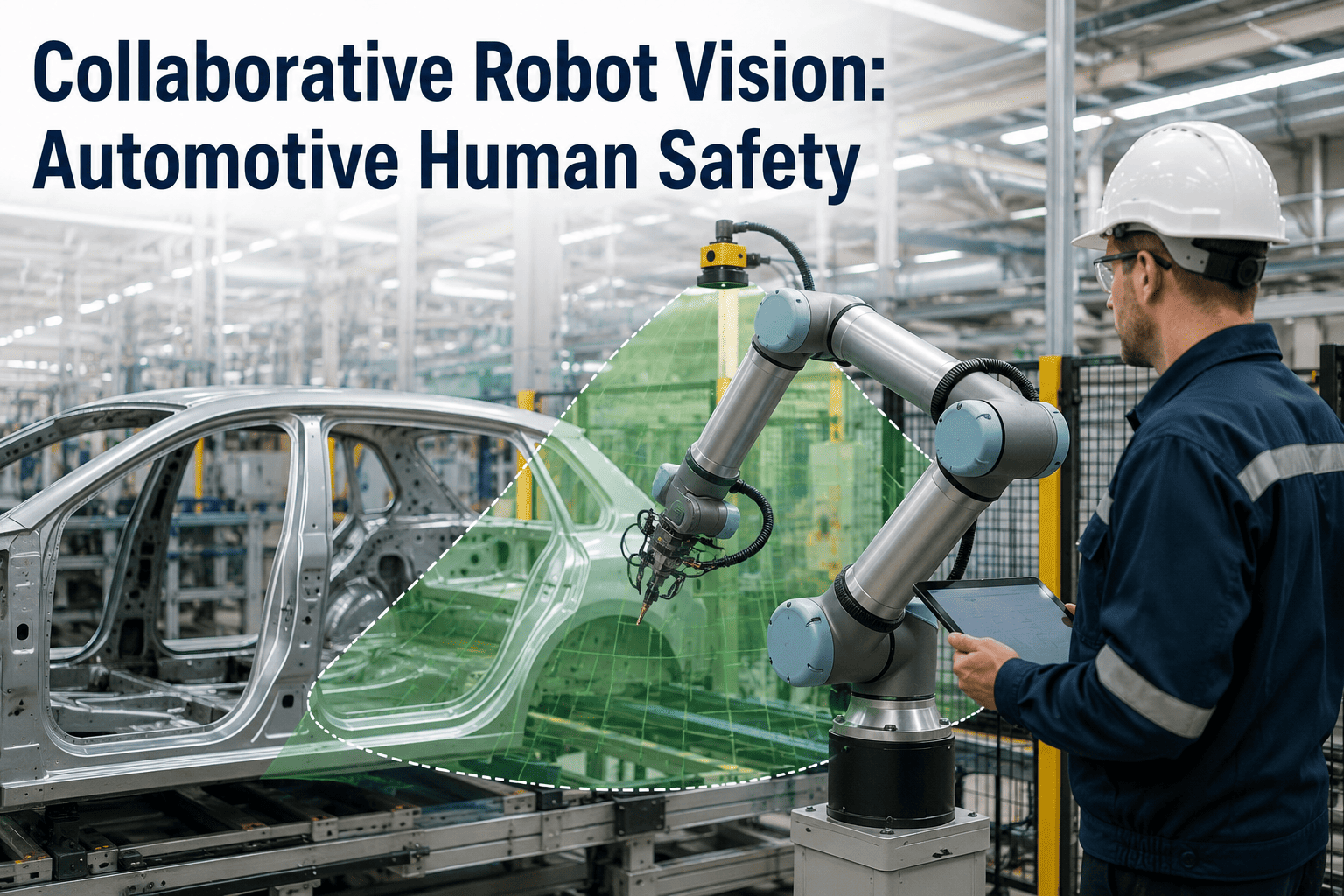
iFactory ingests data from 3D vision cameras, laser scanners, pressure-sensitive floor mats, wearable operator tracking devices, and robot controller feedback simultaneously—fusing multi-source signals into unified workspace awareness updated every 100 milliseconds. System understands operator location, movement velocity, skeletal pose indicating intended actions, robot trajectory predictions, and environmental context like parts placement or tool handoffs.
02
AI Collision Risk Classification
Proprietary ML models classify each workspace scenario as safe collaboration, caution zone entry requiring speed reduction, or imminent collision risk requiring immediate trajectory modification—with confidence scores attached. Operators receive visual and audio warnings graduated by risk level, not binary alarm floods. False positive rate drops to under 4%, eliminating alarm fatigue that causes operators to ignore or disable safety systems.
03
Predictive Path Planning Adjustment
iFactory's LSTM-based forecasting engine predicts operator movement trajectories and robot motion paths 2.4-4.8 seconds into future, identifying potential collision scenarios before they develop. When collision risk detected, system automatically adjusts robot speed from 100% to 30-50% capability or modifies path trajectory by 15-45 degrees to maintain safe separation distance while continuing productive operation. Emergency stops reduced 78% versus traditional fixed-boundary safety systems.
04
PLC, Robot Controller, and MES Integration
iFactory connects to Universal Robots, ABB, KUKA, FANUC, and Yaskawa robot controllers via native protocols plus integration with Allen-Bradley, Siemens, and Mitsubishi PLCs controlling assembly line sequences. Manufacturing execution system integration (SAP MES, Siemens Opcenter) correlates safety events with production orders, operator assignments, and quality outcomes. Complete integration typically completed within 2 weeks without robot reprogramming or PLC logic modification.
05
Automated Safety Compliance Reporting
Every safety event—detected, classified, and mitigated—generates structured compliance documentation with timeline, sensor evidence, operator identity, robot behavior log, and automated risk assessment per ISO 10218 and ISO/TS 15066 requirements. Audit-ready reports for OSHA inspections, insurance reviews, and IATF 16949 certification audits eliminate manual documentation burden and provide complete audit trail proving due diligence in safety system design and ongoing monitoring.
06
Continuous Learning and Optimization
iFactory AI models continuously learn from every human-robot interaction, refining collision risk predictions based on actual operator behavior patterns, workspace layout changes, and seasonal variations in assembly operations. System identifies optimal safety parameters balancing protection and productivity, recommending workspace design improvements, operator training focus areas, and robot programming adjustments that reduce collision risk 34-48% beyond initial deployment performance within 12-month learning period.
How iFactory Is Different from Other Cobot Safety Vendors
Most cobot safety vendors deliver generic vision-based systems trained on laboratory data with simplified collision scenarios. iFactory is built specifically for automotive assembly environments where part geometry complexity, workstation layout constraints, and production rate pressure create safety challenges requiring industry-specific AI models. Talk to our automotive safety specialists and compare your current approach directly.
| Capability |
Generic Safety Vendors |
iFactory Platform |
| Model Training |
Generic laboratory datasets with simplified scenarios. No automotive-specific collision mode training. High false positive rate causing alarm fatigue. |
Models pre-trained on 12 automotive collision scenarios (pinch points in battery assembly, door installation reach-over, windshield bonding operator positioning, seat installation simultaneous operation, torque tool handoff). Automotive-specific fine-tuning in weeks, not months. |
| Sensor Coverage |
Single 2D vision camera monitoring. No multi-source fusion across workspace sensors and robot feedback systems. |
Fuses 3D vision, laser scanners, floor mats, wearable tracking, robot trajectory data, and PLC assembly sequence into unified workspace awareness updated every 100ms. |
| Safety Response Quality |
Binary emergency stop triggered by zone breach. High false positive volumes requiring manual reset every 20-40 minutes, destroying productivity gains. |
Graduated risk response with speed reduction (30-50% velocity), path modification (15-45 degree trajectory adjustment), or controlled stop. False positive rate under 4%. Emergency stops reduced 78%. |
| System Integration |
Requires custom robot programming, safety PLC addition, or complete workcell redesign. Integration timelines of 6-12 months per installation. |
Native integration with all major robot brands (Universal Robots, ABB, KUKA, FANUC, Yaskawa) plus PLC and MES connectivity. Installation complete in 2-3 weeks without robot reprogramming. |
| Compliance Output |
Raw event logs only. No structured safety documentation for OSHA, insurance, or IATF 16949 audits. Manual report compilation required. |
Auto-generated compliance reports formatted for ISO 10218, ISO/TS 15066, OSHA machine guarding, ANSI/RIA R15.08, and IATF 16949 safety requirements with complete audit trails. |
| Deployment Timeline |
6-18 months to full production deployment. High integration costs. No fixed go-live date. Requires safety system redesign approval delaying automation projects. |
6-week fixed deployment program. Pilot results in week 3. Full production monitoring by week 6. No robot reprogramming or workcell redesign required in standard installations. |
iFactory AI Implementation Roadmap
iFactory follows a fixed 6-stage deployment methodology designed specifically for automotive cobot safety—delivering pilot results in week 3 and full production monitoring by week 6. No open-ended implementations. No scope creep.
01
Safety Audit
Cobot workspace assessment and sensor coverage mapping
02
System Integration
Robot controller, PLC, and MES connection via native protocols
03
Model Baseline
AI training on workspace layout and operator movement patterns
04
Pilot Validation
Live monitoring on 2-4 highest-risk cobot workstations
05
Response Calibration
Safety threshold refinement and operator training completion
06
Full Production
Plant-wide AI cobot safety monitoring go-live, 24/7
6-Week Deployment and ROI Plan
Every iFactory engagement follows a structured 6-week program with defined deliverables per week—and measurable ROI indicators beginning from week 3 of deployment. Request the full 6-week deployment scope document tailored to your cobot fleet.
Weeks 1-2
Infrastructure Setup
Cobot workspace safety audit identifying collision risk scenarios across battery assembly, door installation, and seat fitment operations
Vision camera, laser scanner, and floor mat sensor installation with optimal coverage angles for operator tracking
Robot controller, PLC, and MES system connection via native protocols—no robot reprogramming required
Week 3
Model Training and Pilot
AI model trained on your plant's specific workspace layouts, operator movement patterns, and assembly sequences
Pilot monitoring activated on 2-4 highest-collision-risk cobot workstations
First collision risks detected and prevented—ROI evidence begins here
Weeks 4-5
Calibration and Expansion
Safety response thresholds refined based on pilot false positive rate and detection accuracy data
Coverage expanded to full plant cobot inventory across all assembly operations
Operator and safety team training completed—graduated response protocols activated
Week 6
Full Production Go-Live
Full plant AI cobot safety monitoring live—all workstations, all collision modes, 24/7
Compliance reporting activated for ISO 10218, ISO/TS 15066, and OSHA requirements
ROI baseline report delivered—safety performance, emergency stop reduction, and productivity data
ROI IN 4 WEEKS: MEASURABLE RESULTS FROM WEEK 3
Plants completing the 6-week program report an average of $142,000 in avoided collision incidents and emergency stop downtime within the first 4 weeks of full production monitoring—with cobot productivity improvements of 18-28% detected by week 3 pilot validation as emergency stops decrease and smooth deceleration profiles replace hard stops.
$142K
Avg. savings in first 4 weeks
18-28%
Productivity gain by week 3
78%
Reduction in emergency stops
Full AI Cobot Safety. Live in 6 Weeks. ROI Evidence in Week 3.
iFactory's fixed-scope deployment program means no open timelines, no robot reprogramming delays, and no months of workcell redesign before you see a single safety improvement.
Use Cases and KPI Results from Live Deployments
These outcomes are drawn from iFactory deployments at operating automotive plants across three cobot application categories. Each use case reflects 6-month post-deployment performance data. Request the full case study report for the cobot application most relevant to your plant.
A mid-size EV manufacturer operating 18 collaborative robots in battery module assembly was experiencing 8-12 collision incidents monthly due to complex cell installation sequences requiring frequent operator reach-over into cobot workspace. Legacy safety systems using fixed light curtains triggered 45-60 emergency stops per shift, destroying productivity advantages of collaborative automation. iFactory deployed multi-sensor fusion across all battery assembly stations, with 3D vision tracking operator hand positions and AI models predicting collision scenarios from skeleton pose analysis. Within 4 weeks of go-live, emergency stops decreased 82% while actual collision incidents reduced to zero.
Zero
Collision incidents in 6 months post-deployment vs. 48-72 annually pre-AI
$1.6M
Annual savings from collision prevention and emergency stop reduction
82%
Reduction in emergency stop events destroying productivity
A large automotive OEM operating 24 door installation cobots was generating 120-180 false positive safety alerts per shift from legacy 2D vision systems unable to distinguish operators working adjacent to cobot workspace versus actual collision risk scenarios. Alarm fatigue caused operators to request safety system sensitivity reductions, creating actual collision risk. iFactory replaced threshold logic with graduated AI risk classification, reducing actionable alerts to under 8 per shift while increasing actual collision risk detection from 64% to 96%. Operator confidence restored within 3 weeks as alert credibility improved.
96%
Collision risk catch rate—up from 64% with legacy 2D vision
8
Alerts per shift—down from 120-180 false positives
94%
Reduction in nuisance alarm volume destroying operator trust
A windshield bonding operation using 12 collaborative robots was losing average $380K annually in emergency stop downtime, traced to 280-340 stop events per month when operators positioned adhesive applicators requiring momentary cobot pause. Manual coordination between operator and robot timing created unpredictable workflows. iFactory's predictive path planning identified operator intent from skeleton pose 2.8 seconds before workspace conflict, enabling robot trajectory modification maintaining continuous operation while preserving safe separation distance. Emergency stops reduced 76% within first month of deployment.
$380K
Annual emergency stop downtime eliminated
2.8sec
Collision risk prediction window from operator pose analysis
76%
Reduction in emergency stops within first deployment month
Results Like These Are Standard. Not Exceptional.
Every iFactory deployment is scoped to your specific cobot applications, workspace layouts, and assembly sequences—so you get results calibrated to your operations, not a generic benchmark.
What Automotive Safety Teams Say About iFactory
The following testimonials are from plant safety directors and automation managers at facilities currently running iFactory's AI cobot safety platform.
We eliminated collision incidents entirely without reducing cobot productivity. iFactory tells us exactly when collision risk develops, what operator movement pattern created it, and how to adjust robot behavior. Our cobot utilization improved 24% while safety performance reached zero incidents.
Director of Plant Safety
EV Battery Assembly Plant, Michigan USA
The false positive problem was destroying operator confidence in collaborative automation. Within four weeks of iFactory going live, operators stopped requesting safety system deactivation because alerts became credible. That behavioral shift alone prevented three potential collision scenarios our team flagged in post-incident reviews.
VP of Manufacturing Engineering
Final Assembly Plant, Germany
Integration with our Universal Robots, Siemens PLCs, and SAP MES took 9 days end-to-end. I was expecting months based on previous safety system vendors. The iFactory team understood both automotive assembly requirements and the technical protocol layer. Deployment speed genuinely different here.
Head of Automation Systems
Door Assembly Operations, South Korea
We prevented a serious pinch-point injury in month two. The iFactory system flagged an operator reaching pattern our safety team hadn't identified in risk assessment. AI detected the collision scenario 3.4 seconds before contact would have occurred, adjusted robot path automatically, and generated complete documentation for our safety review. That outcome alone justified the investment.
Plant Safety Manager
Battery Module Assembly, India
Frequently Asked Questions
Does iFactory require new cobots or major workspace redesign to be implemented?
In most deployments, iFactory integrates with existing collaborative robots via native controller protocols—no robot replacement required. Vision cameras and laser scanners are added to workspace for operator tracking, but workcell layout remains unchanged in 85% of installations. Where workspace optimization is recommended, iFactory provides specific layout guidance during Week 1-2 safety audit, typically involving minor adjustments to parts placement or operator access routes rather than complete workcell redesign.
Book a demo to see integration approach for your cobot brand.
Which cobot brands and robot controllers does iFactory integrate with?
iFactory integrates natively with Universal Robots, ABB, KUKA, FANUC, Yaskawa, and Doosan collaborative robots via their standard controller protocols. For PLCs, iFactory connects to Allen-Bradley, Siemens TIA Portal, Mitsubishi, and Omron via OPC-UA and Modbus. For MES systems, iFactory supports SAP MES, Siemens Opcenter, Dassault DELMIA, and Rockwell FactoryTalk via REST APIs. Integration scope is confirmed during Week 1 safety audit and typically completed within 2 weeks.
How does iFactory handle different assembly operations across the same plant?
iFactory trains separate sub-models per assembly application—accounting for workspace layout differences, part geometry complexity, and operator movement patterns between battery module installation, door fitment, windshield bonding, seat assembly, and torque operations. Multi-application cobot fleets are fully supported within single deployment. Application-specific detection parameters are configured during Week 3 model training phase based on actual operator behavior patterns at each workstation type.
What safety compliance frameworks does iFactory's reporting support?
iFactory auto-generates structured safety reports formatted for ISO 10218 (industrial robot safety), ISO/TS 15066 (collaborative robot safety), OSHA machine guarding requirements, ANSI/RIA R15.08 (industrial robot safety standard), and IATF 16949 (automotive quality management). Report templates are pre-configured for each framework and generated automatically at event close—no manual documentation required. Compliance reporting activated in Week 6 full production go-live.
How long does it take before the AI model produces reliable collision risk predictions?
Baseline model training on workspace layout and operator movement patterns typically takes 5-7 days using video recordings from 3-5 production shifts showing normal operation. First live detections are validated during Week 3 pilot phase. Full model calibration—with false positive rate under 4%—is achieved within 4 weeks of deployment for standard automotive assembly environments. Continuous learning improves detection accuracy further over 12-month period.
Can iFactory work in high-speed assembly operations where cycle times are under 60 seconds?
Yes. iFactory processes sensor data and generates collision risk predictions every 100 milliseconds, providing 2.4-4.8 second advance warning even in high-speed operations with 45-55 second cycle times. System adjusts robot behavior through graduated speed reduction (30-50% velocity) or path modification (15-45 degree trajectory adjustment) that maintains production flow while ensuring operator safety. High-speed application support is validated during Week 3 pilot phase before full production deployment.
Talk to specialist about your specific cycle time requirements.
Stop Cobot Collision Incidents. Stop Emergency Stop Downtime. Deploy AI Safety in 6 Weeks.
iFactory gives automotive safety teams real-time AI cobot monitoring, multi-sensor collision prediction, automated compliance reporting, and graduated safety response—fully integrated with your existing robot controllers and PLC systems in 6 weeks, with ROI evidence starting in week 3.
94% detection accuracy before human contact
Robot controller and PLC integration in 2 weeks
Graduated alerts with under 4% false positive rate
Auto-generated compliance reports for all frameworks