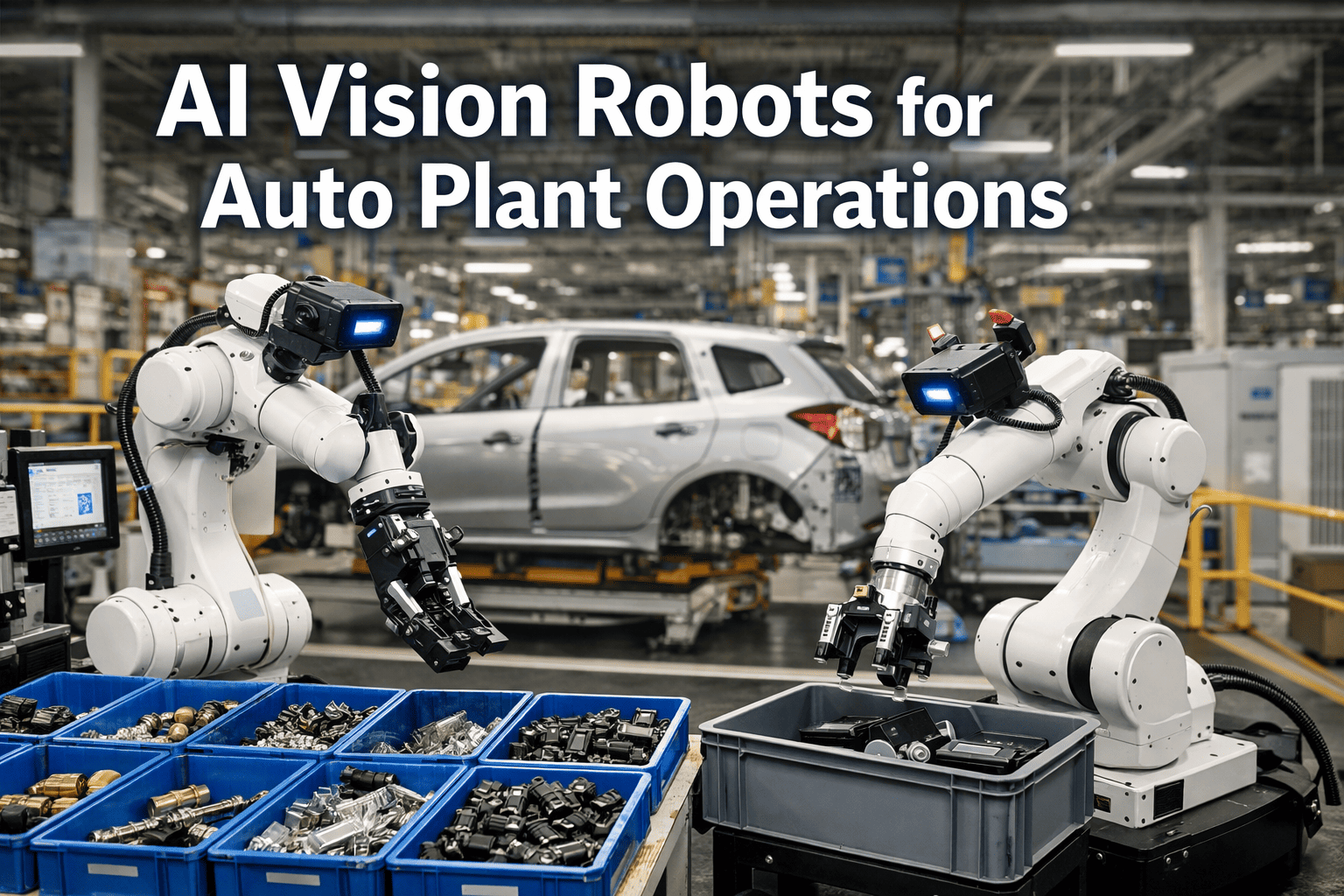
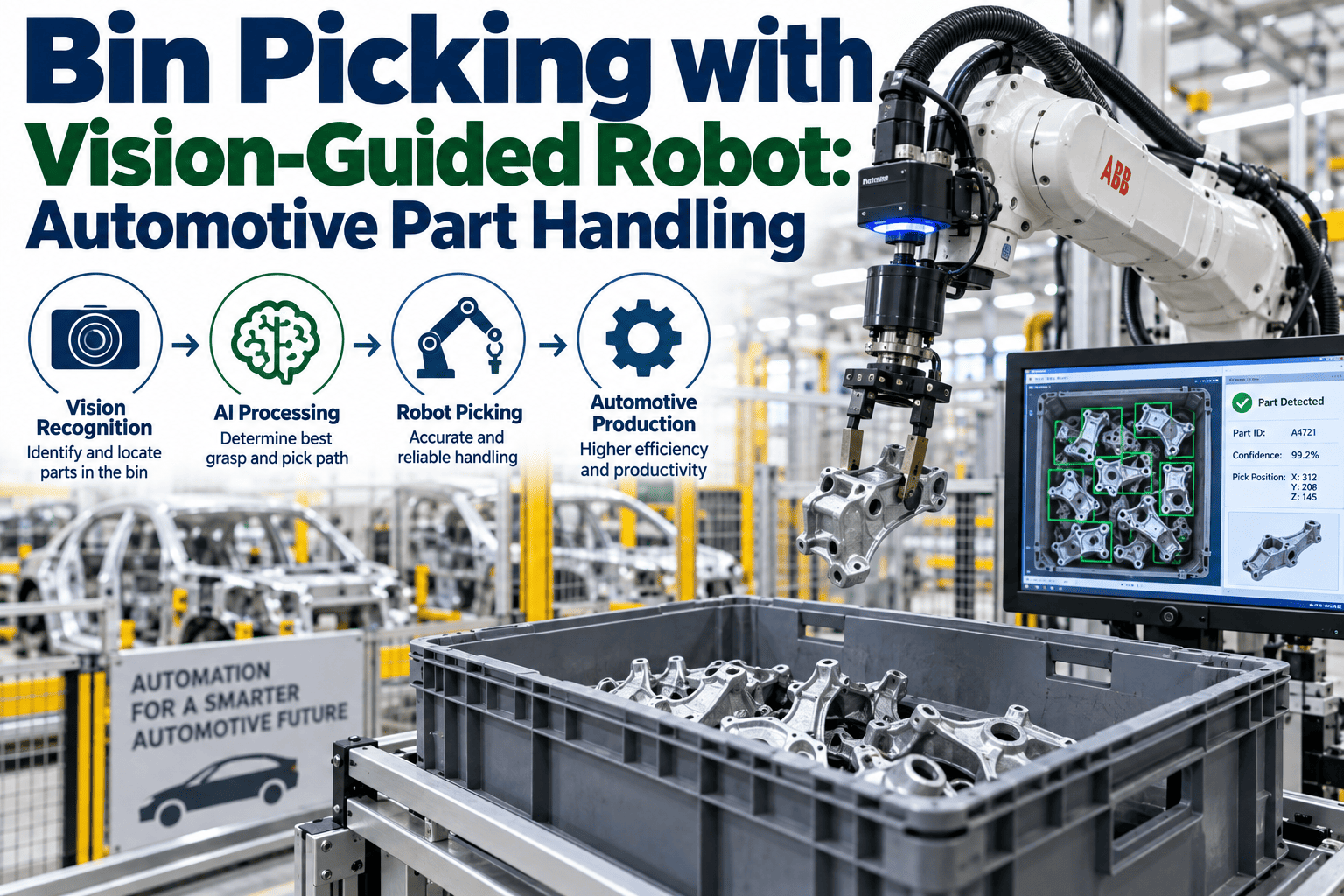
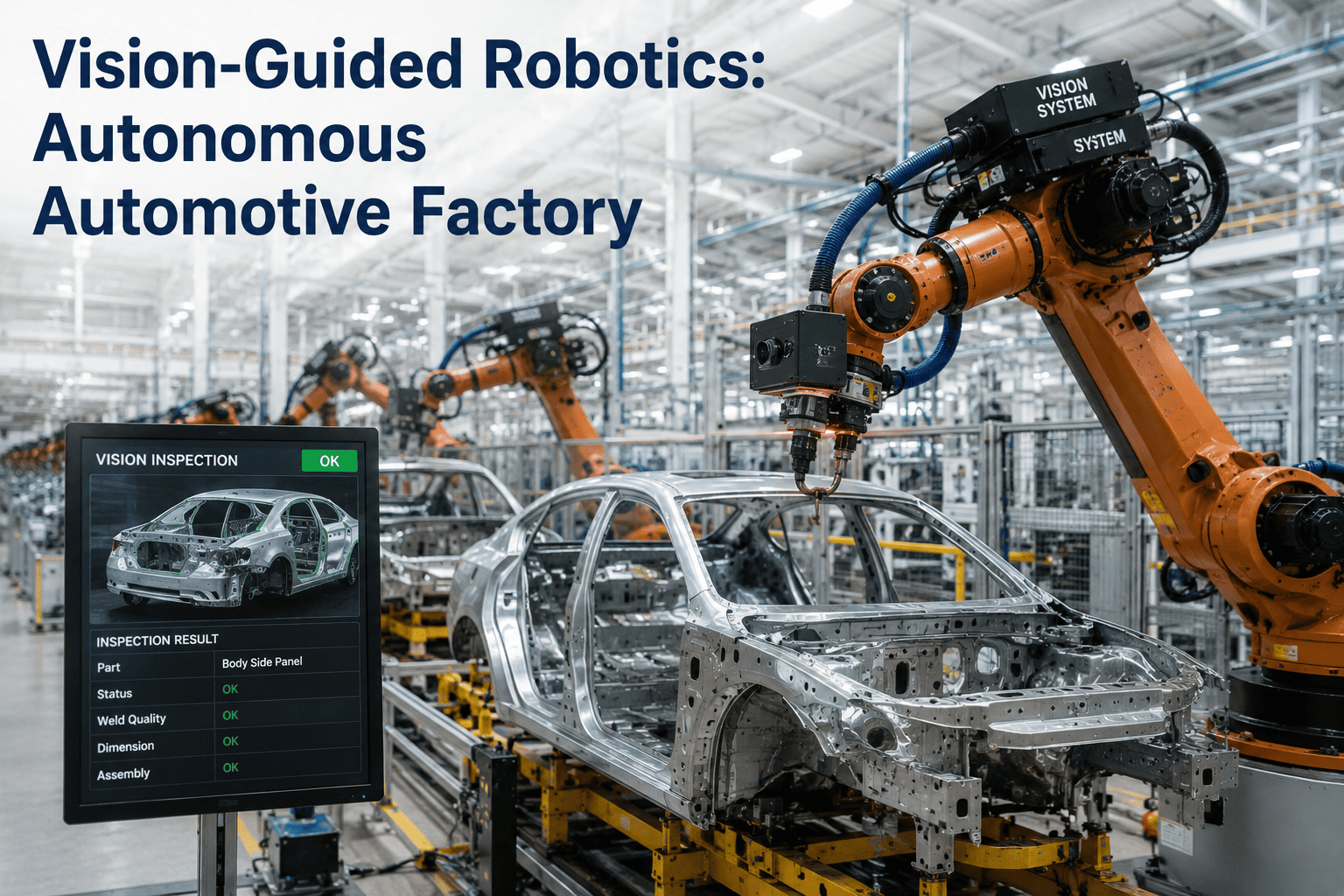
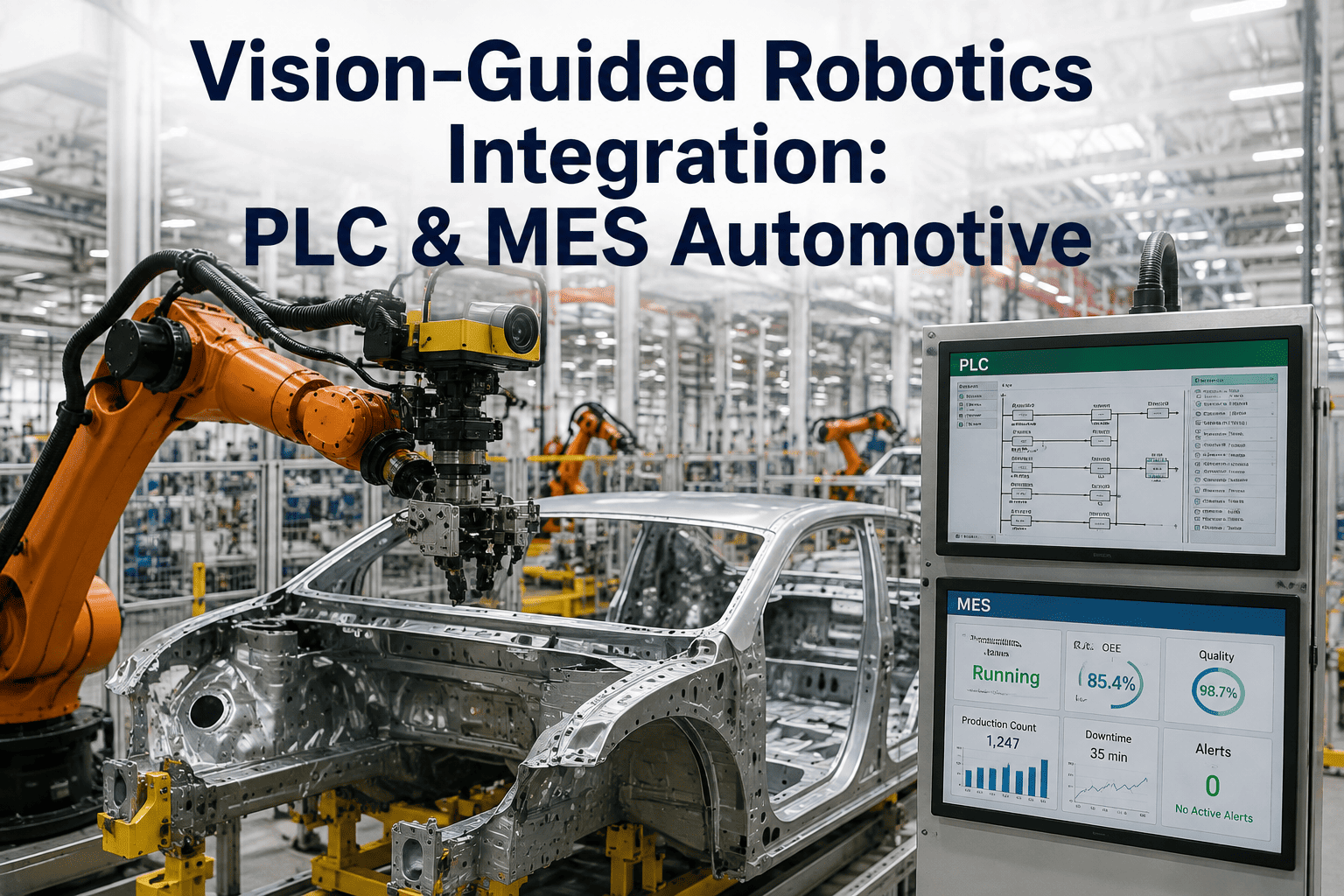
Automotive plants lose an average of $2.3 million per hour to unplanned line stoppages, and manual part picking errors account for 18-26% of assembly quality defects across global OEM facilities. By the time incorrect parts are detected at final inspection, value has already been added downstream, making rework exponentially more expensive than prevention. Traditional manual kitting and barcode-based picking cannot match speed, accuracy, and flexibility requirements of modern mixed-model assembly lines where 40-80 part variants must be sequenced correctly across 200+ stations per shift. iFactory's AI vision-guided robotic picking platform changes this entirely, detecting part identity, orientation, and defects in real time at 0.3 second cycle times, integrating directly into your existing MES, PLC, and warehouse management systems. Book a Demo to see how iFactory deploys AI vision robots within 8 weeks.
99.8%
Part picking accuracy eliminating wrong-part installation defects
$4.6M
Average annual rework cost avoided per assembly plant
73%
Reduction in kitting labor hours versus manual picking operations
8 wks
Full deployment from station audit to live robotic picking go-live
Every Wrong Part Picked Is Compounding Rework Cost. AI Vision Robots Stop It at the Source.
iFactory's AI vision system identifies part numbers, verifies orientation, detects surface defects, and guides robotic pick-and-place across your entire kitting and subassembly workflow, 24/7, without operator fatigue or picking errors.
Core Problems in Automotive Part Picking and Assembly
Automotive manufacturing faces escalating challenges where downtime costs rose 113% since 2019, averaging $2.3 million per hour of unplanned line stoppage. Manual kitting operations generate 18-26% of assembly quality defects from wrong-part installation and incorrect orientation. Plants operating mixed-model assembly lines with 40-80 part variants per station experience picking accuracy below 95% under manual operations, causing downstream rework averaging $180,000 per shift.
How iFactory AI Vision Robots Solve Automotive Part Picking
Traditional picking relies on barcode scanners, manual verification, and operator training that cannot scale to mixed-model complexity or maintain accuracy across 200+ daily changeovers. iFactory replaces this with AI vision-guided robotic systems trained on automotive part databases that identify components by visual features, verify correct orientation before placement, and detect surface defects in real time. See a live demo of iFactory robots picking fasteners, brackets, and electrical connectors across a simulated kitting workflow.
01
AI Vision Part Recognition
Computer vision trained on automotive part catalogs identifies components by geometry and surface features without barcode labels. Recognizes 200+ part variants per station at 0.3 second cycle times with 99.8% accuracy.
02
Robotic Pick-and-Place Automation
Collaborative robots equipped with AI vision guidance execute picking from bulk bins, placement into kitting trays, and assembly station loading without human intervention. Adapts to part orientation variations, handles mixed SKUs, and maintains cycle times under 2 seconds per pick.
03
Defect Detection at Picking
Vision system inspects every picked part for surface damage and dimensional deviations before placement. Rejects defective components at picking stage, preventing wrong-part installation downstream where rework cost escalates 10x.
04
MES and PLC Integration
iFactory connects to Siemens, Rockwell, and SAP MES environments via OPC-UA and REST APIs. Receives build sequences from production control, updates kitting status in real time, and triggers replenishment alerts when part inventory reaches reorder thresholds.
05
Traceability and Quality Documentation
Every picked part generates traceability record linking part number, lot code, picking timestamp, and destination assembly station to vehicle VIN. Audit-ready documentation for IATF 16949 compliance without manual data entry.
06
Predictive Maintenance for Robots
AI monitors robot actuator performance, gripper wear, and vision system accuracy degradation. Predicts maintenance needs 7-21 days ahead, scheduling interventions during planned downtime to prevent mid-shift robot failures that halt kitting operations.
How iFactory Is Different from Other Vision Robotics Vendors
Most industrial robot vendors deliver generic bin-picking solutions trained on public datasets with no automotive part specificity. iFactory is built differently from sensor layer up, specifically for automotive kitting workflows where mixed-model complexity, cycle time pressure, and zero-defect requirements determine what picking accuracy actually means. Talk to our automotive robotics specialists and compare your current kitting approach directly.
| Capability |
Generic Robot Vendors |
iFactory Platform |
| Part Recognition |
Barcode-dependent systems requiring labeled parts. Fails on unmarked components or damaged labels. |
AI vision trained on automotive part catalogs. Identifies components by geometry without barcode dependency. 99.8% accuracy across 200+ variants. |
| Cycle Time |
3-6 seconds per pick including vision processing and motion planning. Cannot match assembly line takt times. |
0.3 second vision recognition, 2 second total cycle time including pick-and-place. Scales to 1800 picks per hour. |
| Defect Detection |
No integrated quality inspection. Relies on downstream manual inspection after parts already kitted. |
Surface defect detection during picking. Rejects damaged parts before placement, preventing downstream quality escapes. |
| MES Integration |
Standalone systems requiring manual data export for production tracking. |
Native OPC-UA and REST API connectors to Siemens, Rockwell, SAP MES. Real-time kitting status and VIN traceability integration. |
| IATF 16949 Support |
No traceability documentation. Requires manual quality record creation for customer audits. |
Auto-generated traceability linking part lot, picking time, and VIN for full IATF 16949 audit trail without manual data entry. |
| Deployment Timeline |
6-18 months to full production deployment. Extensive programming and teaching required per part variant. |
8-week fixed deployment program. AI learns new part variants from sample images in hours, not weeks. |
iFactory AI Implementation Roadmap
iFactory follows a fixed 6-stage deployment methodology designed specifically for automotive kitting and picking operations, delivering pilot results in week 4 and full production capacity by week 8. No open-ended implementations. No scope creep.
01
Station Audit
Part variant analysis and workflow mapping
02
MES Integration
PLC/MES connection via OPC-UA, REST
03
Vision Training
AI model training on part catalog images
04
Pilot Validation
Live picking on 2-3 highest-volume stations
05
Accuracy Calibration
Threshold refinement and operator training
06
Full Production
Plant-wide robotic picking go-live, 24/7
8-Week Deployment and ROI Plan
Every iFactory engagement follows a structured 8-week program with defined deliverables per week and measurable ROI indicators beginning from week 4 of deployment. Request the full 8-week deployment scope document tailored to your assembly line configuration.
Weeks 1-2
Infrastructure Setup
Critical kitting station audit and part variant catalog across monitored assembly zones
MES, PLC, and WMS connection via OPC-UA or REST without infrastructure replacement
Historical part usage and quality data ingestion for baseline model training
Weeks 3-4
Vision Training and Pilot
AI vision model trained on your plant's specific part catalog and picking workflows
Pilot picking activated on 2-3 highest-volume kitting stations
First wrong-part detections and defect catches, ROI evidence begins here
Weeks 5-6
Calibration and Expansion
Recognition accuracy refined based on pilot false positive and detection rate data
Coverage expanded to full plant kitting and subassembly picking inventory
Operator team training completed with alert response protocols activated
Weeks 7-8
Full Production Go-Live
Full plant AI vision picking live across all stations, all shifts, 24/7
IATF 16949 traceability reporting activated for applicable quality frameworks
ROI baseline report delivered with rework reduction, picking accuracy, labor optimization data
ROI IN 6 WEEKS: MEASURABLE RESULTS FROM WEEK 4
Plants completing the 8-week program report an average of $220,000 in avoided rework costs and eliminated wrong-part defects within the first 6 weeks of full production operation, with picking accuracy improvements from 94% to 99.8% detected by week 4 pilot validation.
$220K
Avg. savings in first 6 weeks
99.8%
Picking accuracy by week 4
84%
Reduction in wrong-part installation defects
Full AI Vision Robotics. Live in 8 Weeks. ROI Evidence in Week 4.
iFactory's fixed-scope deployment program means no open timelines, no scope creep, and no months of robot programming before you see a single result.
Use Cases and KPI Results from Live Automotive Deployments
These outcomes are drawn from iFactory deployments at operating automotive plants across three assembly categories. Each use case reflects 6-month post-deployment performance data. Request the full case study report for the assembly type most relevant to your plant.
A tier-1 OEM operating mixed-model powertrain assembly with 180 fastener variants per shift was experiencing wrong-part installation defects averaging 22 per week from manual kitting errors. Legacy barcode systems identified wrong parts only after assembly completion, 4-6 stations downstream. iFactory deployed AI vision robots at 8 kitting stations with part recognition trained on OEM catalog. Within 6 weeks, vision robots detected 34 wrong-part picks at kitting stage before assembly delivery.
34
Wrong-part picks detected before assembly in first 6 weeks
$2.8M
Estimated annual rework and scrap cost prevented
99.7%
Picking accuracy on mixed-model fastener kitting
An EV manufacturer operating high-mix battery module assembly with 240 electrical connector variants was generating 65-90 picking errors per shift from look-alike connector confusion. iFactory replaced manual picking with AI vision-guided robots trained on connector geometry and pin configuration. Vision system reduced picking errors to under 3 per shift while increasing throughput from 180 to 320 picks per hour.
96%
Reduction in connector picking errors versus manual operations
320
Picks per hour throughput, up from 180 manual
78%
Kitting labor hour reduction from automation
A final assembly plant was losing $480,000 annually in rework costs traced to 6-9 wrong bracket installations per shift that escaped kitting verification. Manual visual inspection identified wrong brackets only after welding or fastening, requiring disassembly. iFactory's vision robots identified all 12 bracket variants by mounting hole pattern and geometry, rejecting wrong parts at picking stage. Plant achieved zero wrong-bracket installations within 4 weeks.
$480K
Annual bracket rework cost eliminated
Zero
Wrong-bracket installations within 4 weeks of go-live
$920K
Annual quality and labor value from zero-defect picking
What Automotive Operations Teams Say About iFactory
The following testimonials are from plant operations directors and quality managers at facilities currently running iFactory's AI vision robotics platform.
We reduced wrong-part defects by 91 percent without replacing our MES or PLC systems. iFactory vision robots identify every part variant, catch orientation errors, and reject damaged components before assembly. Our First Pass Yield has never been this consistent.
Director of Manufacturing Operations
Tier-1 OEM Assembly Plant, USA
Integration with our Siemens PLC and SAP MES took 9 days end-to-end. I was expecting months based on past robot vendor experience. The iFactory team understood both the vision AI and the production control protocols. Technical depth is genuinely different here.
VP of Advanced Manufacturing
EV Battery Assembly Facility, Germany
We prevented three major quality escapes in the first two months. The vision system flagged wrong electrical connectors that looked identical to operators but had different pin configurations. Those catches alone justified the investment before we even measured the labor savings.
Plant Quality Manager
Final Assembly Plant, Japan
Platform Comparison: iFactory vs Competitors
| Platform |
iFactory |
QAD Redzone |
Evocon |
Mingo |
L2L |
IBM Maximo |
SAP EAM |
MaintainX |
Limble |
| AI Vision Robotics |
Advanced |
No |
No |
No |
No |
No |
No |
No |
No |
| Part Recognition Accuracy |
99.8% |
N/A |
N/A |
N/A |
N/A |
N/A |
N/A |
N/A |
N/A |
| MES/PLC Integration |
Native |
Partial |
Partial |
Partial |
Partial |
Custom |
Custom |
No |
No |
| IATF 16949 Traceability |
Built-in |
Partial |
No |
No |
No |
Add-on |
Add-on |
No |
No |
| Deployment Time |
4-6 weeks |
4-8 weeks |
2-4 weeks |
4-8 weeks |
4-8 weeks |
6-12 months |
6-12 months |
2-4 weeks |
2-4 weeks |
| Automotive Industry Fit |
Purpose-Built |
Manufacturing |
Manufacturing |
Manufacturing |
Manufacturing |
General |
General |
General |
General |
Regional Compliance and Manufacturing Standards
| Region |
Key Challenges |
Compliance Requirements |
How iFactory Solves |
| United States |
Mixed-model complexity with 40-80 variants per station, OSHA ergonomic compliance, Big Three customer-specific quality requirements |
IATF 16949, AIAG FMEA, OSHA 1910.217, customer PPAPs |
AI vision handles unlimited part variants without reprogramming. Automated IATF traceability documentation. Robotic picking eliminates repetitive motion injuries meeting OSHA standards. |
| United Arab Emirates |
Extreme heat affecting robot performance, rapid facility expansion, skilled labor shortages for manual kitting operations |
ESMA industrial standards, ISO 9001:2015, UAE Cabinet AI governance |
Temperature-rated robots operate in 50C+ environments. Rapid deployment templates for greenfield plants. Arabic-language operator interface for local workforce. |
| United Kingdom |
Brexit supply chain complexity, EV transition requiring new component types, strict HSE workplace automation regulations |
UKCA marking, BS EN ISO 9001, IATF 16949, UK HSE Machinery Directive |
Vision system learns new EV component variants from sample images in hours. UKCA-compatible hardware. HSE-documented robot safety assessments for collaborative picking zones. |
| Canada |
Cross-border supply chains with US OEMs, cold climate affecting robot calibration, union consultation for automation introduction |
CSA Group standards, IATF 16949, Provincial OHS Acts |
US MES and IATF traceability compatibility for cross-border operations. Cold-climate robot packages operate to minus 20C. Bilingual English/French operator interface. |
| Europe |
EU AI Act compliance for industrial AI systems, strict EU Machinery Regulation for collaborative robots, carbon footprint reduction mandates |
EU AI Act Annex II, EU Machinery Regulation 2023/1230, IATF 16949, ISO 14001 |
EU AI Act conformity documentation built into vision system. CE-marked collaborative robots meeting EU Machinery Regulation. Energy efficiency reporting showing carbon reduction from reduced rework. |
Eliminate Wrong-Part Defects and Rework Costs Before They Escalate
See how iFactory vision robots pick with 99.8 percent accuracy across 200+ part variants, preventing wrong-part installations that cost $180,000 per shift in rework and material waste.
Frequently Asked Questions
Does iFactory require new robots or can it integrate with existing collaborative robots?
iFactory vision software integrates with most collaborative robot brands including Universal Robots, ABB YuMi, FANUC CRX, and KUKA LBR. Existing robots can be retrofitted with iFactory vision guidance without hardware replacement. New robot deployments use pre-integrated iFactory vision packages for faster installation.
Book a demo to review robot compatibility for your facility.
Which MES, PLC, and warehouse management systems does iFactory integrate with?
iFactory integrates natively with Siemens Opcenter, Rockwell FactoryTalk, SAP MES, Delmia Apriso, and Plex via OPC-UA and REST APIs. For PLC control, iFactory supports Siemens S7, Rockwell ControlLogix, Mitsubishi iQ-R, and Omron NJ via EtherNet/IP and PROFINET. Warehouse systems including SAP EWM, Manhattan WMS, and Oracle WMS connect via standard REST interfaces. Integration scope confirmed during Week 1 audit.
How does iFactory handle new part variants introduced for model year changes?
iFactory AI vision learns new part variants from 20-50 sample images per part, training in 2-4 hours versus weeks of traditional robot programming. Model year changeovers require only image upload and overnight retraining, not production line downtime for robot reprogramming. New variants achieve 99.5 percent picking accuracy within first production shift.
What IATF 16949 compliance documentation does iFactory's traceability system provide?
iFactory auto-generates traceability records linking part number, lot code, supplier, picking timestamp, and destination vehicle VIN for every picked component. Records formatted for IATF 16949 Clause 8.5.2 product identification and traceability requirements. Includes automated PPAP documentation support for customer submissions and full audit trail for warranty investigations.
How long before the AI vision system achieves production-level picking accuracy?
Baseline vision model training on plant-specific part catalog typically takes 4-6 days using manufacturer part images and sample photos. First live picking validated during Week 3-4 pilot phase. Full accuracy calibration achieving 99.8 percent picking rate within 6 weeks of deployment for standard automotive kitting environments.
Start free assessment today.
Can iFactory vision robots handle damaged or dirty parts in real-world production conditions?
Yes. iFactory vision system detects surface defects, contamination, and damage during picking and rejects non-conforming parts before kitting. System trained on clean, dirty, and damaged part examples to maintain recognition accuracy under production conditions. Lighting compensation handles varying illumination from natural daylight and artificial sources across shifts.
Stop Wrong-Part Defects. Stop Rework Costs. Deploy AI Vision Robots in 8 Weeks.
iFactory gives automotive plants AI vision-guided robotic picking, real-time defect detection, automated IATF traceability, and MES integration fully deployed in 8 weeks with ROI evidence starting in week 4.
99.8% part picking accuracy eliminating wrong-part defects
MES, PLC & WMS integration in under 2 weeks
Learns new part variants from images in hours not weeks
Auto-generated IATF 16949 traceability documentation