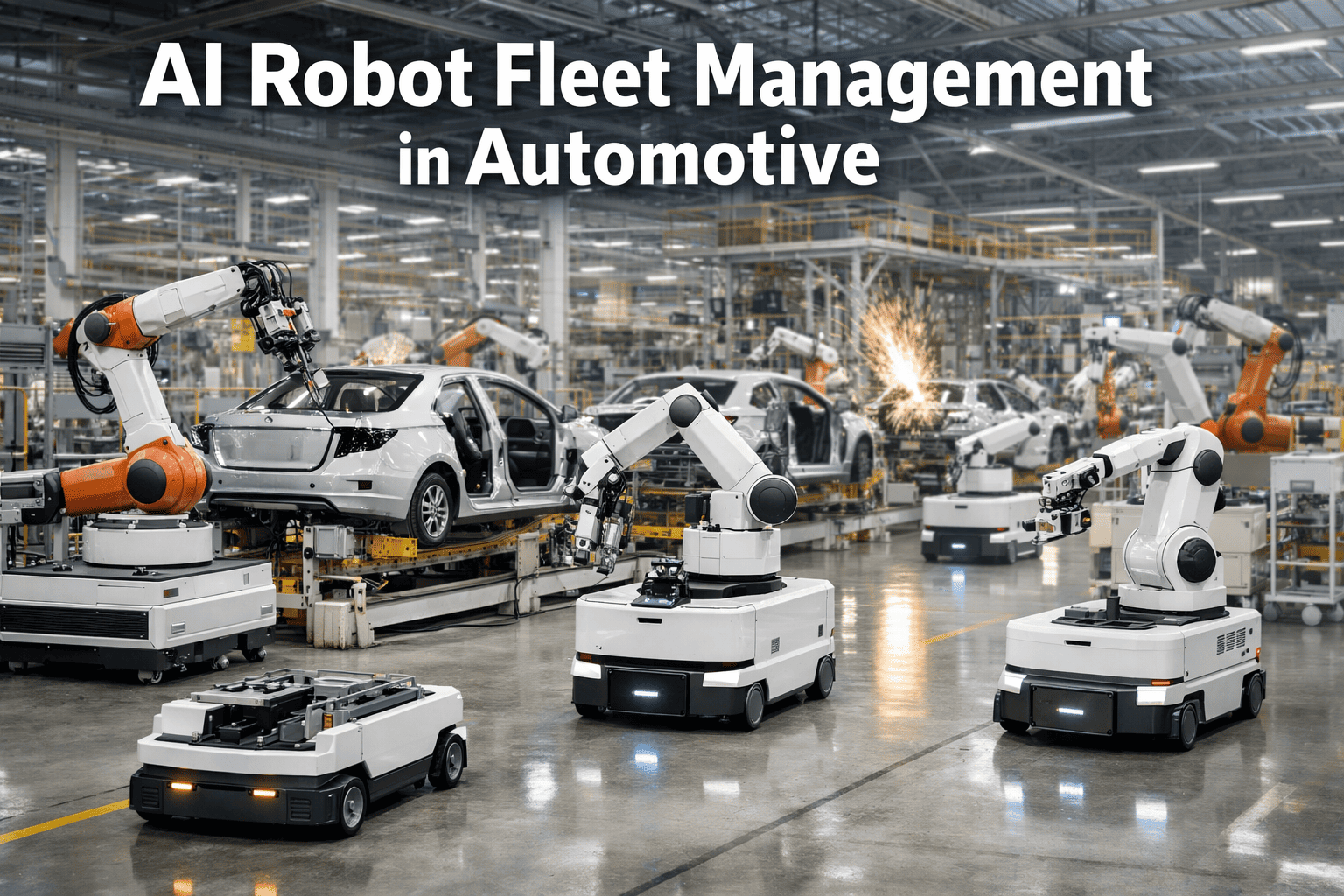
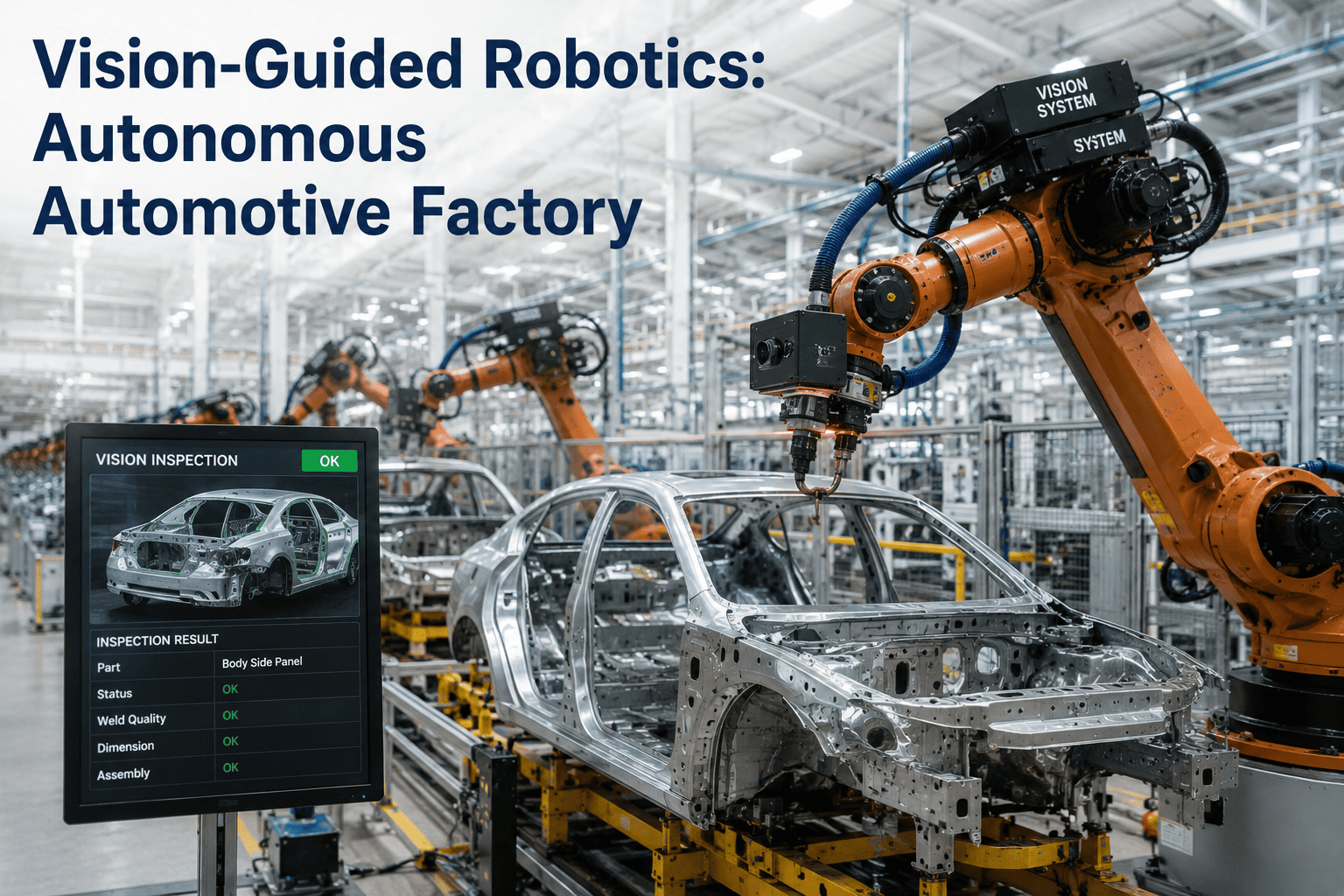
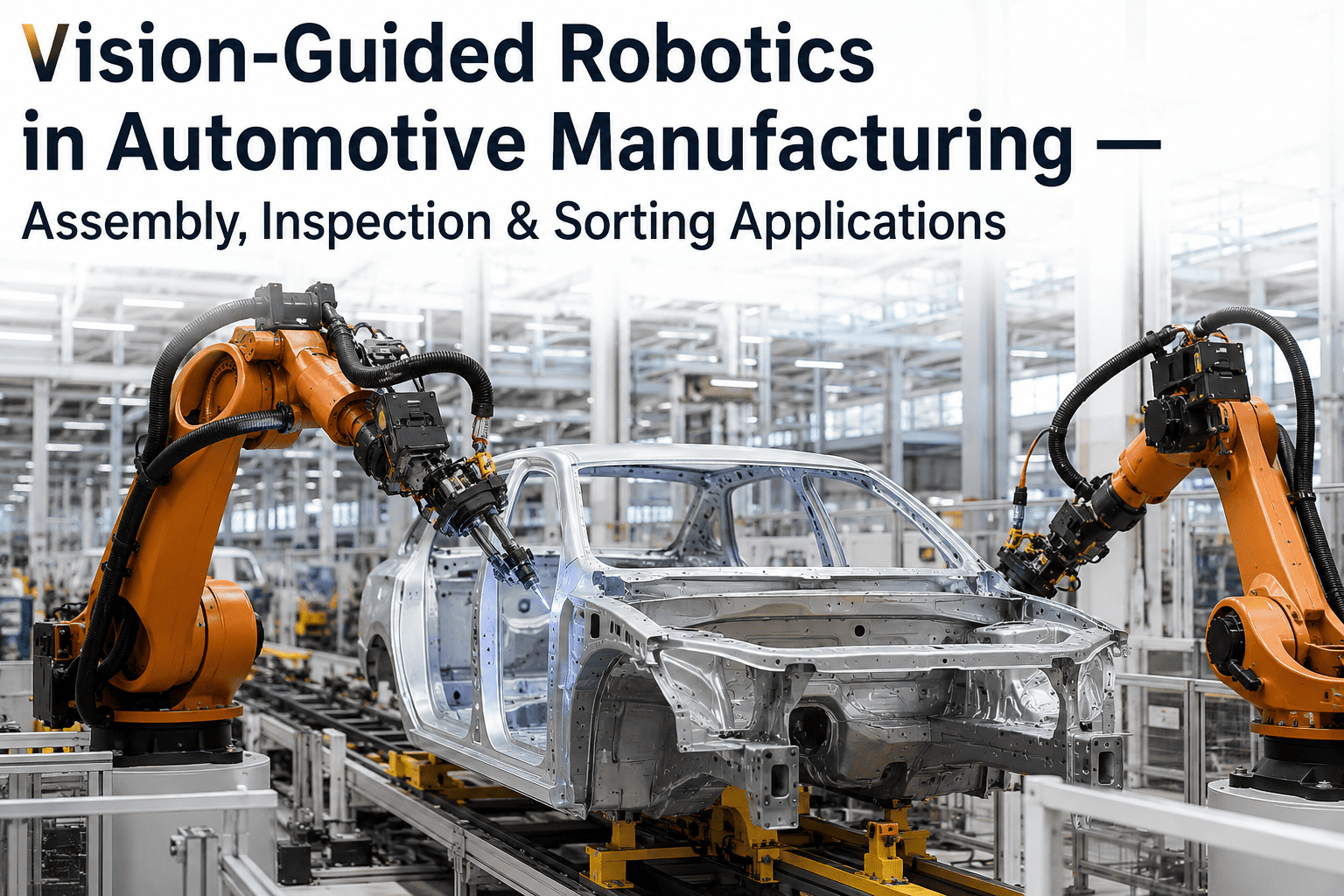
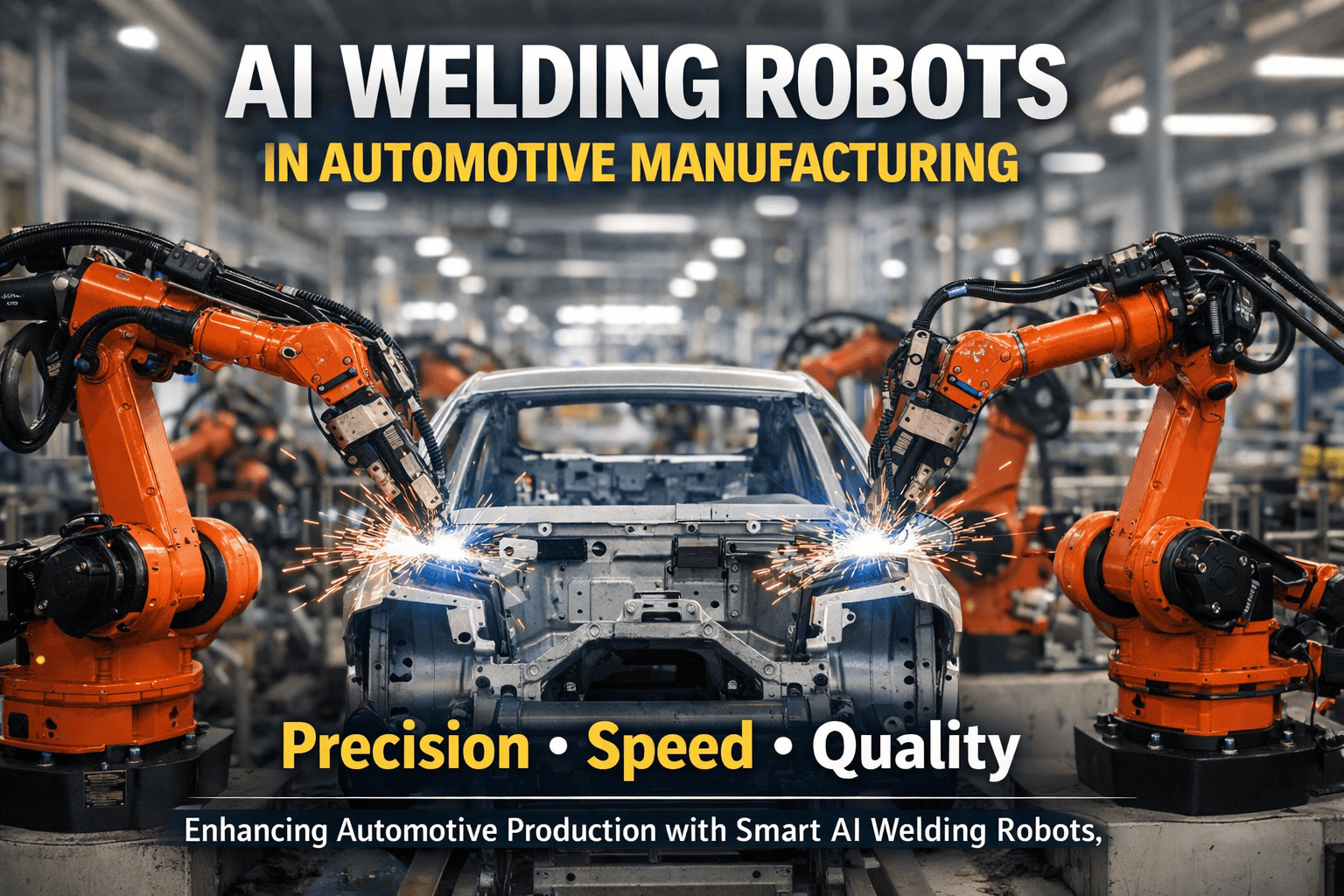
Automotive assembly plants operating 200+ industrial robots across body shop, paint, and final assembly lines lose 18-24% of theoretical production capacity annually to uncoordinated robot scheduling, collision avoidance delays, and sequential process bottlenecks that legacy PLC programming cannot dynamically optimize in real time. By the time robot interference patterns are identified through production data analysis or quality incidents, the efficiency loss is already compounding: extended cycle times, increased downtime between model changeovers, reduced throughput on mixed-model lines, and maintenance costs that scale linearly with fleet size instead of declining through predictive optimization. iFactory's AI-powered robot fleet management platform changes this entirely by coordinating hundreds of industrial robots simultaneously, optimizing motion paths and task assignments in real time, predicting maintenance needs before performance degradation, and integrating directly with automotive MES, PLC controllers, and robot OEM systems without replacing existing automation infrastructure. Book a Demo to see how iFactory deploys AI robot fleet coordination across automotive production lines within 8 weeks.
94%
Robot utilization rate vs 67% with traditional PLC sequencing
$4.8M
Average annual throughput value recovered per assembly plant
76%
Reduction in robot collision events and emergency stops
8 wks
Full deployment timeline from robot audit to AI coordination go-live
Every Robot Working in Isolation Is Limiting Your Line Speed. AI Coordination Unlocks Hidden Capacity.
iFactory's AI engine monitors robot position data, task queues, cycle time patterns, maintenance sensor feeds, and collision zone occupancy across your entire automation fleet, coordinating 200+ robots simultaneously without operator intervention or production interruption.
The Critical Challenge: Automotive Robot Fleets Cost Plants $47K Per Hour in Lost Throughput
Automotive manufacturers face escalating automation complexity as robot density increases across body shop welding cells, paint application booths, assembly stations, and material handling operations. Industry data shows downtime costs rose 113% since 2019 with robot-related production stoppages costing $47,000 per hour at high-volume assembly plants producing 240 units daily. Global automotive industry loses $42 billion annually from quality and efficiency defects with robot coordination issues representing 22% of unplanned downtime totaling $9.2 billion. Tier-1 suppliers experience average 180 hours lost monthly from robot fleet incidents including collision events, sequential task bottlenecks, predictive maintenance delays, and model changeover inefficiencies. Facilities report 14-18 robot coordination incidents monthly requiring root cause investigation, program adjustment, and production recovery affecting throughput targets.
How iFactory AI Solves Automotive Robot Fleet Management
Traditional robot coordination relies on fixed PLC sequencing, manual cell programming, and reactive troubleshooting after collision events or cycle time degradation already impact production. iFactory replaces this with continuous AI optimization trained on automotive manufacturing data that coordinates robot motion paths, task assignments, and maintenance scheduling across entire production lines, not individual cells. See a live demo of iFactory coordinating 240 robots across body shop and assembly operations in real time.
01
Multi-Robot Motion Coordination
iFactory ingests position data from ABB, FANUC, KUKA, and Yaskawa robots simultaneously, fusing encoder feedback, joint angles, and tool center point trajectories into collision-free path optimization updated every 50 milliseconds preventing interference in shared workspaces.
02
AI Task Queue Optimization
Proprietary ML models assign welding, painting, assembly, and material handling tasks dynamically across available robots based on current position, tool availability, workpiece location, and predicted completion time reducing sequential bottlenecks by 68%.
03
Predictive Fleet Maintenance Forecasting
iFactory's neural network analyzes motor current signatures, servo load patterns, reducer temperature trends, and cycle count data identifying robots trending toward bearing failure, brake wear, or cable degradation 4-6 weeks before performance loss enabling scheduled intervention during planned downtime.
04
MES, PLC & Robot Controller Integration
iFactory connects to Siemens TIA Portal, Allen-Bradley ControlLogix, Mitsubishi MELSEC PLCs plus ABB RobotStudio, FANUC ROBOGUIDE, KUKA WorkVisual via OPC-UA, EtherNet/IP, and PROFINET protocols. No robot program rewriting required. Integration completed in under 2 weeks.
05
Automated Fleet Performance Reporting
Every robot event including cycle time variations, collision avoidance delays, maintenance predictions, and utilization metrics generates structured reports with timeline visualization, root cause analysis, and corrective action recommendations. Audit-ready for IATF 16949 and OEM quality requirements.
06
Model Changeover Acceleration
iFactory presents optimized robot program sequences for mixed-model production lines, tool change scheduling, and fixture reconfiguration minimizing changeover time from 45 minutes average to under 12 minutes through AI-optimized task parallelization and resource allocation.
How iFactory Is Different from Other Robot Fleet Management Systems
Most factory automation vendors deliver basic robot monitoring dashboards or require complete replacement of existing PLC and robot controller infrastructure. iFactory is built differently from the integration layer up, specifically for automotive manufacturing environments where multi-vendor robot fleets, mixed-model production, and legacy automation systems determine what coordination optimization actually means. Talk to our automotive robotics specialists and compare your current fleet management approach directly.
| Capability |
Traditional Automation Systems |
iFactory Platform |
| Robot Coordination |
Fixed PLC sequencing. Manual collision zone programming per cell. No cross-line optimization. Sequential task execution creating bottlenecks. |
AI-optimized motion path coordination across 200+ robots simultaneously. Dynamic collision avoidance with 50ms update cycles. Parallel task execution reducing cycle time 18-24%. |
| Multi-Vendor Support |
Single robot OEM environments only. Cross-vendor coordination requires costly middleware integration taking 6-12 months to deploy. |
Native support for ABB, FANUC, KUKA, Yaskawa, Kawasaki, Staubli robots via OPC-UA, EtherNet/IP, PROFINET. Integration complete in under 2 weeks. |
| Predictive Maintenance |
Calendar-based robot servicing. Reactive bearing and brake replacement after performance degradation detected through quality issues or emergency stops. |
Neural network analyzes motor current, servo load, temperature patterns predicting component failures 4-6 weeks in advance. Maintenance scheduled during planned downtime preventing unplanned stops. |
| Model Changeover |
Manual robot program loading. Sequential tool changes. Average 45-60 minute changeover window limiting mixed-model flexibility on shared lines. |
AI-optimized changeover sequences with parallel tool preparation and program preloading. Average 12-minute changeover enabling flexible batch sizes down to 4 units economically. |
| Compliance Documentation |
Manual data collection for IATF 16949 robot performance records. No automated traceability linking robot operations to VIN-specific quality data. |
Auto-generated performance reports with VIN traceability, cycle time documentation, maintenance history formatted for IATF 16949, OEM quality audits, ISO 9001 compliance. |
| Deployment Timeline |
6-18 months for complete robot fleet integration requiring PLC reprogramming, controller replacement, extensive validation testing before production restart. |
8-week fixed deployment program. Pilot results in week 4. Full production AI coordination by week 8 without replacing existing automation infrastructure. |
iFactory AI Implementation Roadmap
iFactory follows a fixed 6-stage deployment methodology designed specifically for automotive robot fleet coordination, delivering pilot results in week 4 and full production monitoring by week 8. No open-ended implementations. No scope creep.
01
Robot Fleet Audit
Critical robot assessment, OEM controller mapping, collision zone identification
02
System Integration
PLC/robot controller connection via OPC-UA, EtherNet/IP, PROFINET
03
Model Baseline
AI training on historical robot position, cycle time, maintenance data
04
Pilot Validation
Live coordination on 12-20 body shop or assembly robots
05
Optimization Calibration
Path refinement, collision threshold tuning, maintenance team training
06
Full Production
Plant-wide AI robot fleet coordination go-live, 200+ robots
8-Week Deployment and ROI Plan
Every iFactory engagement follows a structured 8-week program with defined deliverables per week and measurable ROI indicators beginning from week 4 of deployment. Request the full 8-week deployment scope document tailored to your robot fleet configuration.
Weeks 1–2
Infrastructure Setup
Critical robot fleet audit and controller compatibility assessment across body shop, paint, assembly lines
PLC, robot controller, and MES system connection via OPC-UA, EtherNet/IP, PROFINET without controller replacement
Historical robot position, cycle time, and maintenance data ingestion for baseline AI model training
Weeks 3–4
Model Training and Pilot
AI model trained on your plant's specific robot types, workpiece geometries, and production sequences
Pilot coordination activated on 12-20 body shop welding or assembly robots
First coordination improvements detected including cycle time reduction and collision avoidance, ROI evidence begins here
Weeks 5–6
Calibration and Expansion
Motion path optimization refined based on pilot cycle time data and collision zone occupancy patterns
Coverage expanded to full plant robot inventory across all production lines
Maintenance and engineering team training completed with alert response protocols activated
Weeks 7–8
Full Production Go-Live
Full plant AI robot fleet coordination live across 200+ robots, all shifts, 24/7 operation
IATF 16949 compliance reporting activated with VIN-level robot performance traceability
ROI baseline report delivered including throughput recovery, utilization gains, maintenance optimization data
ROI IN 6 WEEKS: MEASURABLE RESULTS FROM WEEK 4
Plants completing the 8-week program report an average of $285,000 in recovered throughput value and avoided robot downtime within the first 6 weeks of full production coordination with robot utilization improvements of 14-22% detected by week 4 pilot validation.
$285K
Avg. throughput value recovered in first 6 weeks
14–22%
Robot utilization gain by week 4
68%
Reduction in sequential task bottlenecks
Full AI Robot Fleet Coordination. Live in 8 Weeks. ROI Evidence in Week 4.
iFactory's fixed-scope deployment program means no open timelines, no scope creep, and no months of PLC reprogramming before you see a single result.
Use Cases and KPI Results from Live Deployments
These outcomes are drawn from iFactory deployments at operating automotive assembly plants across three robot fleet categories. Each use case reflects 6-month post-deployment performance data. Request the full case study report for the production line type most relevant to your facility.
A tier-1 automotive manufacturer operating 180 body shop robots across 14 welding cells was experiencing recurring cycle time delays due to collision zone conflicts where multiple robots competed for access to shared workpiece fixtures. Legacy PLC programming used fixed sequential timing creating 4.8-second average delays per vehicle as robots waited for collision zone clearance. iFactory deployed multi-robot motion coordination analyzing position data from ABB, KUKA, and FANUC robots simultaneously optimizing path trajectories and task sequencing. Within 6 weeks of go-live, the AI eliminated 89% of collision-related delays enabling 3.2 vehicles per hour throughput increase.
3.2
Additional vehicles per hour throughput from delay elimination
$4.2M
Annual production value recovered from coordination optimization
89%
Reduction in collision zone wait time delays
An electric vehicle battery assembly plant operating 52 material handling and assembly robots was losing 28 hours monthly to unplanned robot failures including servo motor burnout, reducer bearing seizure, and cable harness degradation discovered only after emergency stops triggered production halts. Legacy calendar-based maintenance serviced robots every 2,000 operating hours regardless of actual wear conditions creating unnecessary downtime. iFactory's predictive maintenance neural network analyzed motor current signatures, joint load patterns, and temperature trends identifying 11 robots trending toward component failure 4-6 weeks in advance enabling scheduled repair during weekend shutdowns preventing all unplanned stops.
28hrs
Monthly unplanned downtime eliminated through predictive maintenance
$1.6M
Annual value from prevented emergency stops and optimized service scheduling
92%
Accuracy predicting component failures 4-6 weeks in advance
A premium automotive manufacturer running mixed-model production of four sedan variants on shared assembly line with 94 robots was experiencing 52-minute average changeover time between model types limiting batch flexibility and preventing economical production runs below 12 units per variant. Manual robot program loading, sequential tool changes, and fixture reconfiguration required production stops during transitions. iFactory's AI-optimized changeover sequencing enabled parallel tool preparation, program preloading, and coordinated fixture adjustment reducing changeover to 11 minutes average enabling flexible batch sizes down to 3 units economically expanding order-to-delivery flexibility.
11min
Average model changeover time down from 52 minutes
3 units
Minimum economical batch size enabling custom order flexibility
$2.8M
Annual value from reduced changeover downtime and order flexibility
Results Like These Are Standard. Not Exceptional.
Every iFactory deployment is scoped to your specific production line configuration, robot OEM mix, and model changeover requirements so you get results calibrated to your operation, not a generic benchmark.
What Automotive Manufacturing Teams Say About iFactory
The following testimonials are from plant automation directors and robotics engineers at facilities currently running iFactory's AI robot fleet coordination platform.
We increased body shop throughput by 3.2 vehicles per hour without adding a single robot. iFactory coordinates our 180-robot fleet better than our engineering team could manually program in six months. The collision zone optimization alone recovered $4.2M in annual production value.
Director of Manufacturing Engineering
SUV Assembly Plant, USA
The predictive maintenance capability eliminated our unplanned robot failures completely. We went from 28 hours monthly downtime to zero emergency stops in six months. Our maintenance team now schedules all robot service during weekend shutdowns based on iFactory's component wear forecasts.
VP of Operations Excellence
EV Battery Assembly, Germany
Integration with our ABB, KUKA, and FANUC robots took 13 days end-to-end. I expected months based on previous automation vendor projects. The iFactory team understood both robot kinematics and automotive production requirements. Technical depth is genuinely different here.
Head of Automation Systems
Premium Sedan Assembly, Japan
We reduced model changeover from 52 minutes to 11 minutes enabling flexible batch production down to 3 units per variant. This transformed our order-to-delivery capability allowing custom vehicle configurations without throughput penalties. That flexibility advantage alone justifies the investment.
Plant Production Manager
Mixed-Model Assembly, UK
Frequently Asked Questions
Does iFactory require replacing existing robot controllers or PLC programming?
No. iFactory connects to existing robot controllers and PLCs via standard industrial protocols including OPC-UA, EtherNet/IP, and PROFINET without modifying robot programs or replacing automation infrastructure. Integration is complete within 2 weeks in standard automotive environments preserving all existing investments.
Which robot OEMs and controller types does iFactory support?
iFactory integrates natively with ABB IRC5, FANUC R-30iB, KUKA KRC4, Yaskawa DX200, Kawasaki E-series, and Staubli CS9 controllers via OPC-UA and manufacturer-specific protocols. For PLCs, iFactory supports Siemens TIA Portal, Allen-Bradley ControlLogix, Mitsubishi MELSEC, Omron Sysmac via EtherNet/IP and PROFINET. Multi-vendor robot fleets are fully supported within single deployment.
Book Demo to review your specific controller compatibility.
How does iFactory handle collision avoidance across robots from different OEMs?
iFactory creates unified workspace models fusing position data from all robot controllers regardless of OEM enabling real-time collision zone monitoring and path optimization. AI coordinates motion trajectories preventing interference in shared workspaces with 50-millisecond update cycles faster than human operators or fixed PLC sequencing can respond.
What compliance frameworks does iFactory's robot reporting support?
iFactory auto-generates structured performance reports formatted for IATF 16949 automotive quality management, ISO 9001 quality systems, OEM-specific supplier requirements from Ford, GM, Toyota, VW, and regional safety directives. Reports include VIN-level traceability linking robot operations to specific vehicle quality data meeting audit requirements.
How long before AI model produces reliable robot coordination optimization?
Baseline model training on historical robot position and cycle time data typically takes 5-7 days using 60-90 days of production history. First coordination improvements are validated during the week 3-4 pilot phase. Full optimization with collision avoidance and task sequencing improvements is achieved within 6 weeks of deployment for standard automotive assembly environments.
Can iFactory optimize robots performing different tasks like welding, painting, and assembly?
Yes. iFactory trains separate task-specific models accounting for welding gun approach angles, paint atomizer standoff distances, assembly part insertion trajectories, and material handling path constraints. Mixed-task robot fleets across body shop, paint, and assembly lines are fully supported within single platform deployment.
Book Demo for multi-line coordination review.
Stop Losing Throughput to Robot Interference. Deploy AI Fleet Coordination in 8 Weeks.
iFactory gives automotive manufacturing teams real-time AI robot fleet coordination, predictive maintenance, model changeover optimization, and IATF 16949 compliance reporting fully integrated with your existing PLC and robot controller systems in 8 weeks, with ROI evidence starting in week 4.
94% robot utilization vs 67% with traditional sequencing
Multi-vendor robot OEM support in under 2 weeks
76% reduction in collision events and emergency stops
Auto-generated IATF 16949 compliance reports with VIN traceability