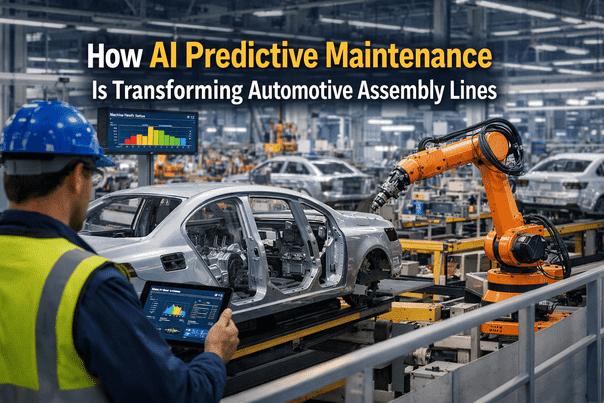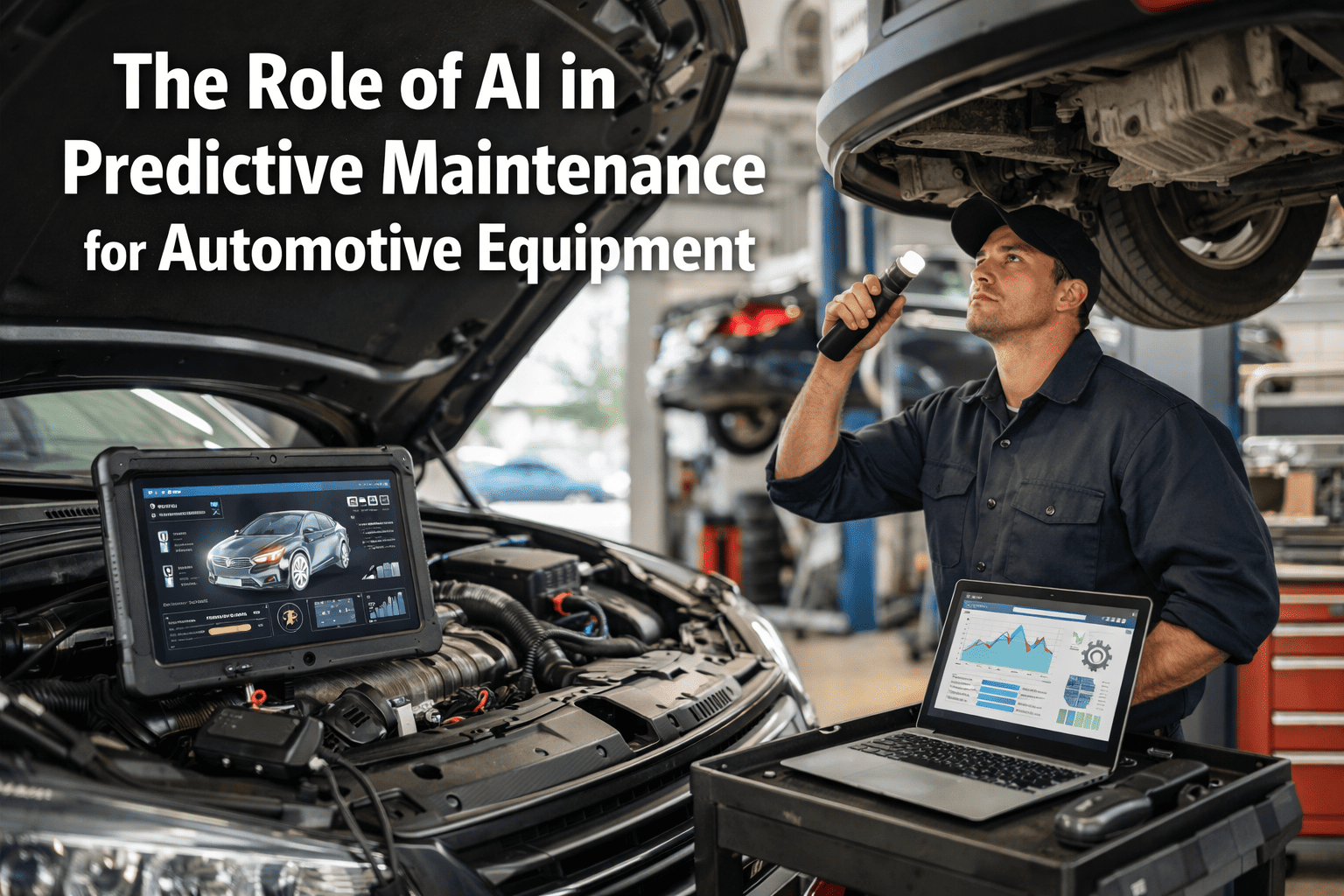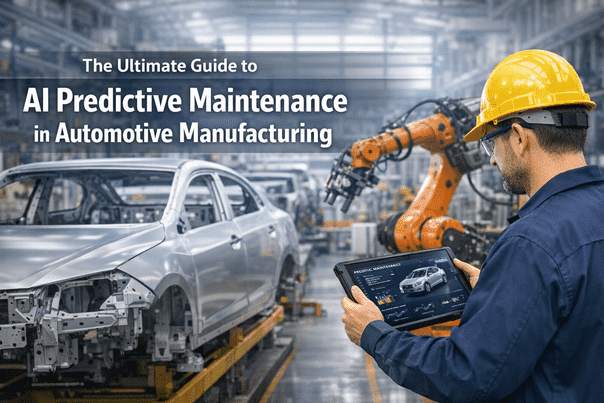
Automotive assembly lines lose an average of $22,000 per minute during unplanned equipment downtime, yet 70% of failures still occur without warning despite billions invested in traditional maintenance programs. iFactory's AI predictive maintenance platform analyzes vibration signatures, thermal patterns, and operational data from stamping presses, welding robots, paint booths, and conveyor systems to forecast component failures 14 to 45 days before breakdown. The result: automotive plants reduce unplanned downtime by 40%, extend equipment lifespan by 28%, and cut maintenance costs by 35% through precision interventions that prevent catastrophic failures while eliminating unnecessary preventive work. Book a demo to see AI predictive maintenance transform your automotive plant.
AI predictive maintenance in automotive manufacturing uses machine learning algorithms to analyze real-time sensor data from assembly line equipment, identifying failure patterns 2 to 6 weeks before breakdowns occur. iFactory's platform monitors stamping operations, robotic welding cells, paint systems, and conveyor networks, delivering actionable alerts that enable maintenance teams to schedule repairs during planned downtime windows. Average results: 40% reduction in unplanned stops, 35% lower maintenance spend, and 28% longer equipment operational life across deployed automotive facilities in the US, UAE, Canada, and Europe.
How AI Predictive Maintenance Works in Automotive Plants
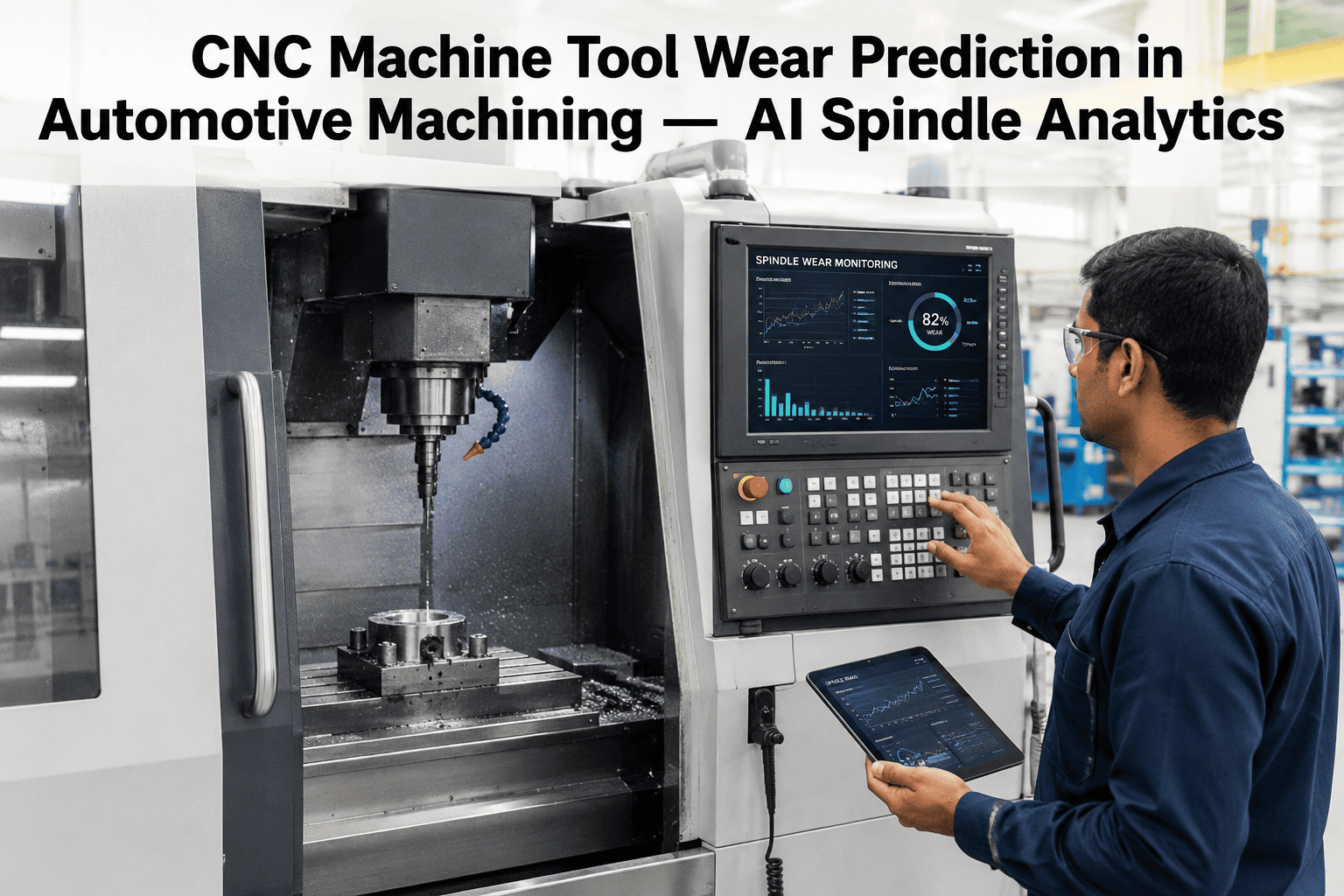
The automotive manufacturing environment presents unique predictive maintenance challenges. High-speed stamping presses cycle 15 to 20 strokes per minute under extreme mechanical loads. Robotic welding arms perform 200+ welds per vehicle with micron-level precision requirements. Paint booth filtration systems operate 24/7 in chemically aggressive environments. Conveyor systems transport vehicle bodies across multi-kilometer assembly lines without interruption. Traditional time-based maintenance cannot predict when a stamping press die will crack, when a robot servo motor bearing will degrade, or when a conveyor drive chain will elongate beyond specification. iFactory's AI platform ingests data from existing PLCs, vibration sensors, thermal cameras, and current monitors to build failure prediction models specific to automotive equipment stress profiles.
Critical Equipment Monitored in Automotive Manufacturing
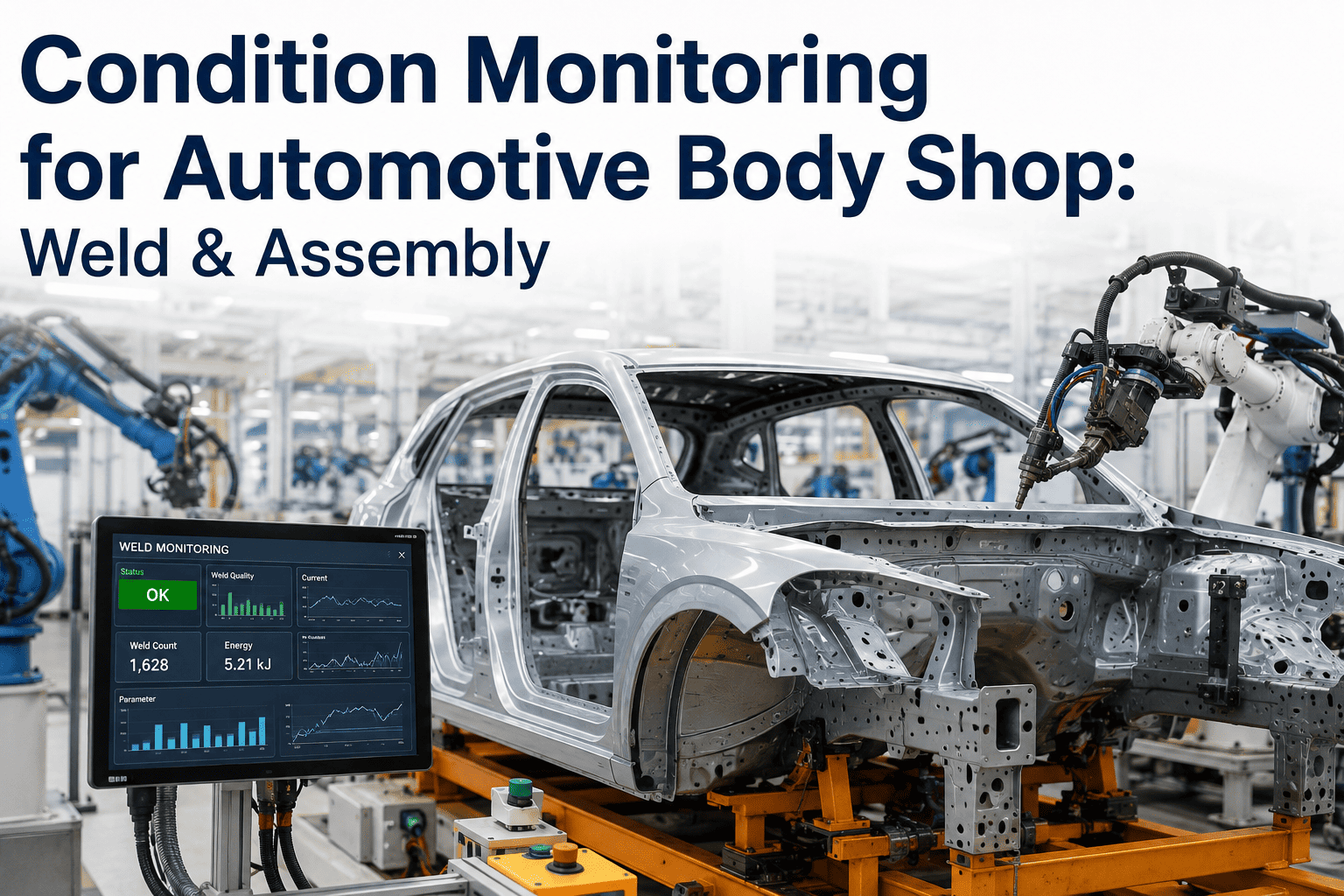
Each equipment category in automotive production has distinct failure modes that AI predictive maintenance must address. Stamping operations experience die wear, press ram misalignment, and hydraulic degradation. Welding robots face electrode tip erosion, servo drive failures, and cooling system blockages. Paint booths encounter filter clogging, spray nozzle wear, and exhaust fan imbalance. Conveyor systems suffer chain elongation, bearing seizure, and drive motor overheating. iFactory's AI models are trained on automotive-specific failure signatures for each equipment type.
Predicted Failures: Die cracking, ram bearing wear, hydraulic seal leakage, cushion pin breakage, slide gibs wear
Typical Warning Time: 18 to 35 days before failure
Predicted Failures: Servo motor bearing degradation, welding transformer failure, electrode tip erosion, coolant pump cavitation, cable harness fatigue
Typical Warning Time: 14 to 28 days before failure
Predicted Failures: Filter saturation, exhaust fan bearing failure, paint pump seal leakage, temperature control valve sticking, atomizer nozzle clogging
Typical Warning Time: 21 to 42 days before failure
Predicted Failures: Drive chain elongation, roller bearing seizure, motor winding insulation breakdown, gearbox tooth pitting, belt splice separation
Typical Warning Time: 25 to 45 days before failure
iFactory's AI platform monitors your stamping presses, welding robots, paint booths, and conveyors in real-time, predicting failures weeks before they occur. Schedule maintenance during planned shutdowns and eliminate emergency breakdowns.
Regional Compliance Standards for Automotive Manufacturing
Automotive plants operate under stringent regional safety, environmental, and data security regulations. iFactory ensures full compliance with jurisdiction-specific requirements while maintaining data sovereignty for multinational operations. Our platform is deployed across US, UAE, Canada, UK, and European automotive facilities with region-specific certification and audit trails.
| Region | Key Compliance Standards | Data Security Requirements | iFactory Certification Status |
|---|---|---|---|
| United States | OSHA 1910.147 (Lockout/Tagout), EPA Clean Air Act, NIST Cybersecurity Framework, ITAR compliance for defense contractors | SOC 2 Type II, data residency in US-based AWS regions, encryption at rest and in transit (AES-256) | Fully Certified |
| United Arab Emirates | UAE Fire & Life Safety Code, Dubai Municipality regulations, ADHICS health & safety standards, Emiratization compliance reporting | UAE Data Protection Law compliance, data residency in UAE Azure regions, Arabic language interface support | Fully Certified |
| Canada | CSA Z460 (Control of Hazardous Energy), WHMIS 2015, Ontario regulation 851, provincial OH&S acts | PIPEDA compliance, data residency in Canadian cloud zones, bilingual French/English interfaces | Fully Certified |
| United Kingdom | UK GDPR, HSE PUWER 1998, Machinery Directive 2006/42/EC, BS EN ISO 12100 machine safety standards | UK GDPR Article 32 security measures, data residency in UK regions, ICO registration maintained | Fully Certified |
| European Union | EU GDPR, Machinery Directive 2006/42/EC, EN ISO 13849 safety controls, ATEX for explosive atmospheres, CE marking requirements | GDPR Article 25 privacy by design, EU-only data processing, SCCs for any non-EU transfers, NIS2 Directive compliance | Fully Certified |
iFactory vs. Competitors: Automotive Predictive Maintenance Comparison
Traditional CMMS platforms like SAP PM and IBM Maximo offer scheduled maintenance tracking but lack real-time AI failure prediction. Manufacturing execution systems like QAD Redzone provide production monitoring without equipment health analytics. iFactory combines predictive AI, work order management, and spare parts optimization in a unified automotive-focused platform. See a side-by-side comparison demo.
| Capability | iFactory | QAD Redzone | IBM Maximo | SAP PM | Fiix CMMS | UpKeep |
|---|---|---|---|---|---|---|
| AI Predictive Capabilities | ||||||
| Real-time equipment failure prediction | 14 to 45 day advance warning | Production monitoring only | Add-on module required | Limited anomaly detection | Not available | Not available |
| Vibration & thermal imaging AI analysis | Automotive-trained models | Not available | Health Insights add-on | Not available | Not available | Not available |
| Automotive-specific failure pattern library | Stamping, welding, paint, assembly | Generic templates | Industry templates available | Customization required | Generic only | Generic only |
| Integration & Automation | ||||||
| PLC & SCADA data integration | Native OPC UA/Modbus support | MES integration focus | Enterprise integration | SAP ecosystem integration | API integration only | API integration only |
| Automated work order generation from AI alerts | Alert to WO in 30 seconds | Manual creation required | Rule-based automation | Workflow configuration | Basic triggers only | Basic triggers only |
| Spare parts RUL-based procurement | Predictive inventory optimization | Not available | Materials management module | MM integration available | Basic inventory tracking | Basic inventory tracking |
| Deployment & Support | ||||||
| Implementation timeline | 6 to 9 weeks full deployment | 8 to 12 weeks | 6 to 18 months | 9 to 24 months | 4 to 8 weeks | 3 to 6 weeks |
| Mobile technician interface | iOS & Android native apps | Mobile-first design | Mobile access available | Fiori apps required | Mobile app included | Mobile app included |
| Multilingual support (US, UAE, EU markets) | English, Arabic, Spanish, German, French | English, Spanish | 40+ languages | 40+ languages | English, Spanish, French | English, Spanish |
Comparison based on publicly available product specifications and customer deployments as of Q1 2025. Feature availability may vary by license tier and deployment configuration.
Proven Results from Automotive Plants Using iFactory
iFactory is deployed in automotive manufacturing facilities across the US, UAE, Canada, and Europe, monitoring over 12,000 critical equipment assets across stamping, body shop, paint, and final assembly operations. Performance data reflects 12 months of continuous operation after full platform deployment.
Our predictive maintenance platform is trusted by automotive plants across the US, UAE, Canada, UK, and Europe to eliminate unplanned downtime and optimize maintenance operations through AI-powered failure forecasting.
Real-World Success Stories
iFactory's Value Proposition for Automotive Plants
Frequently Asked Questions
Related Resources
iFactory's AI predictive maintenance platform is trusted by automotive manufacturers across the US, UAE, Canada, UK, and Europe to eliminate unplanned downtime, reduce maintenance costs, and extend equipment life through precision interventions guided by machine learning failure forecasts.