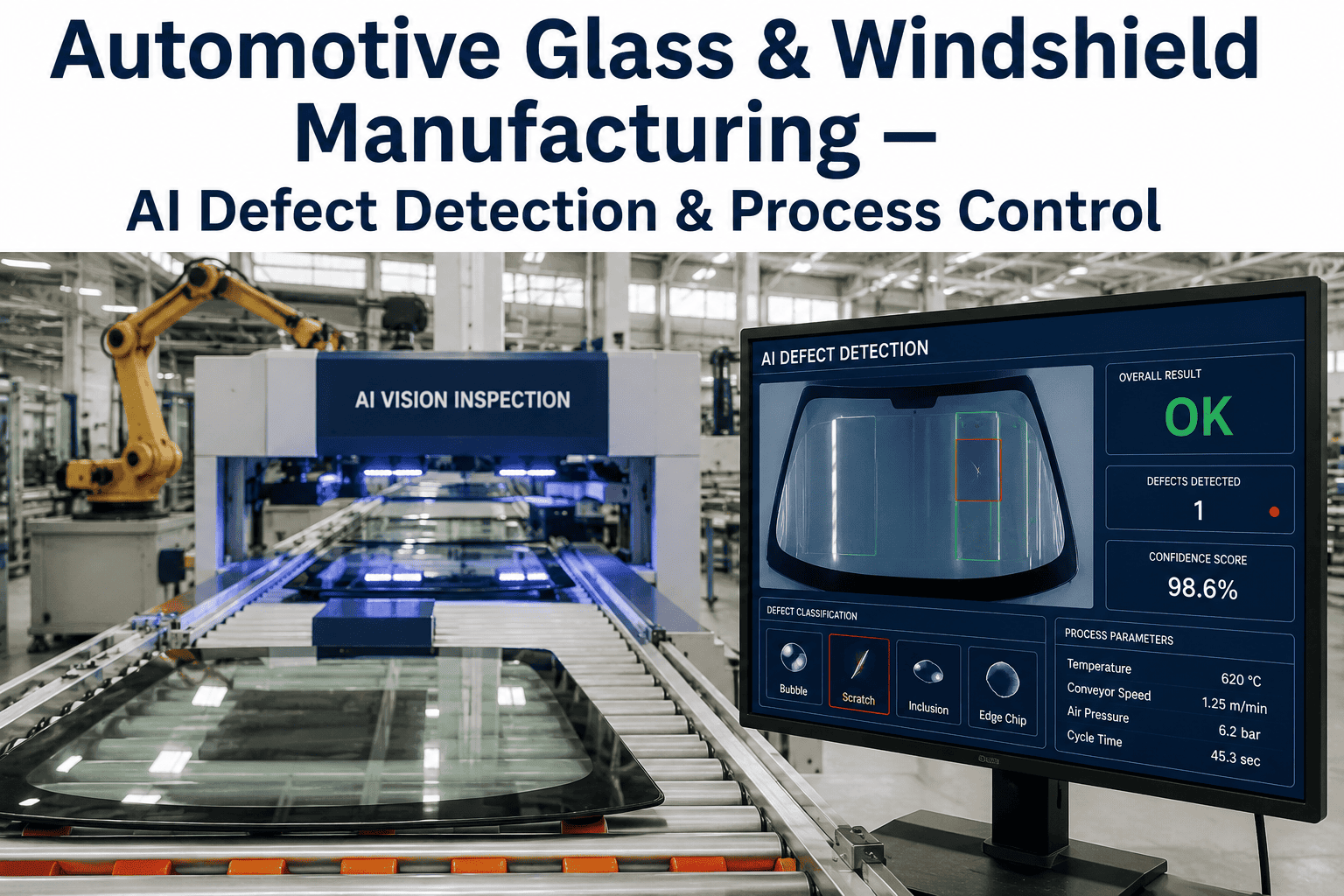
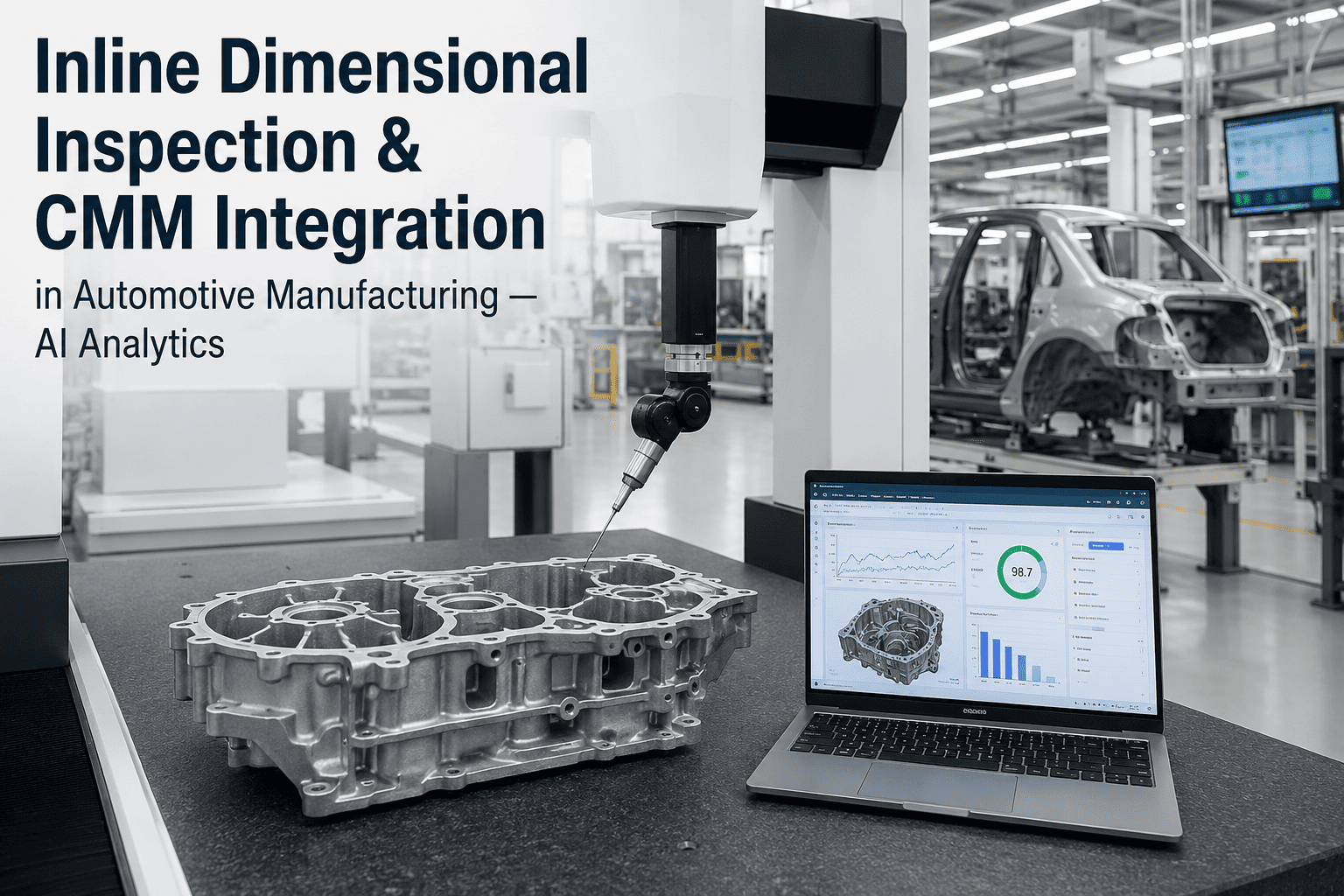
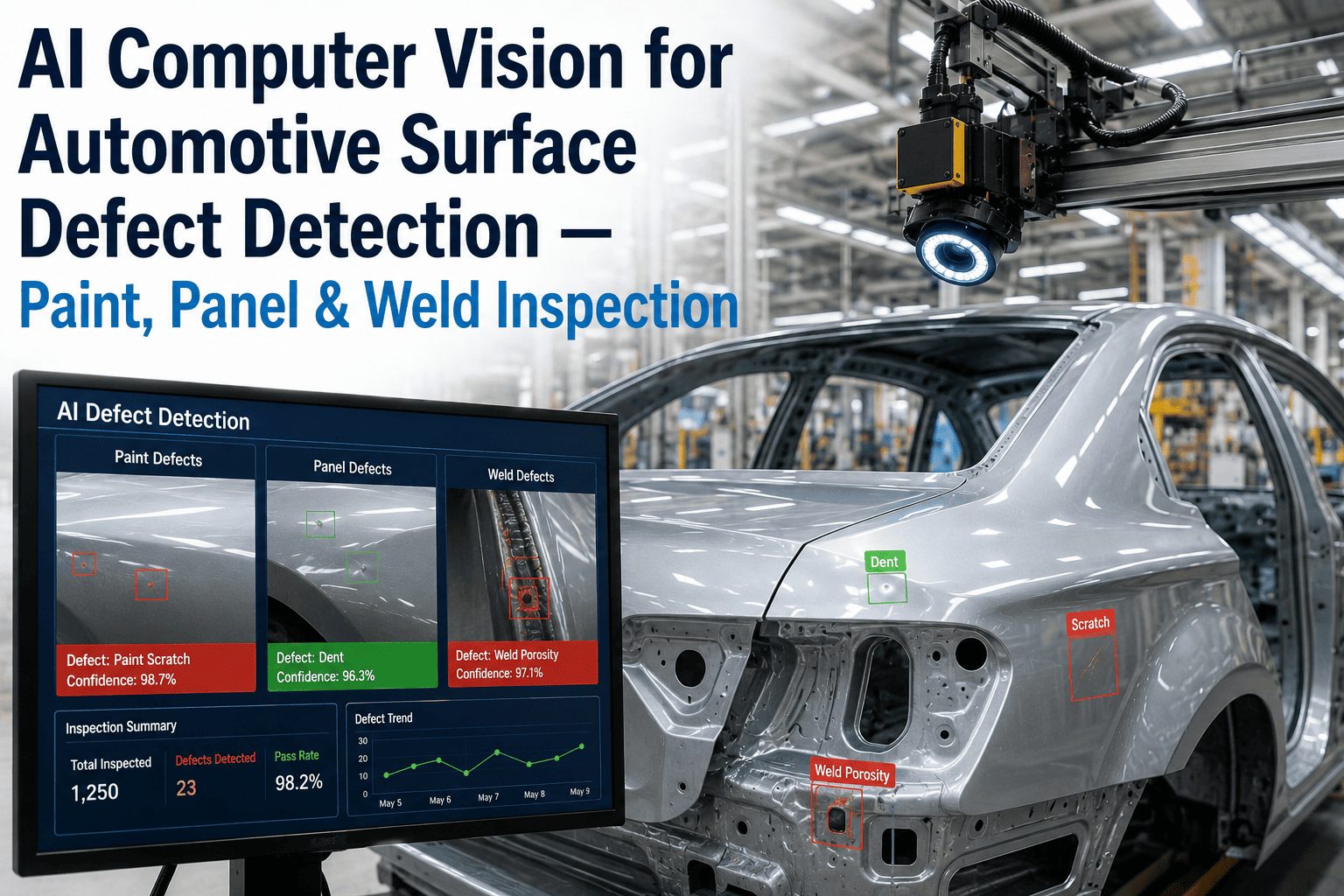
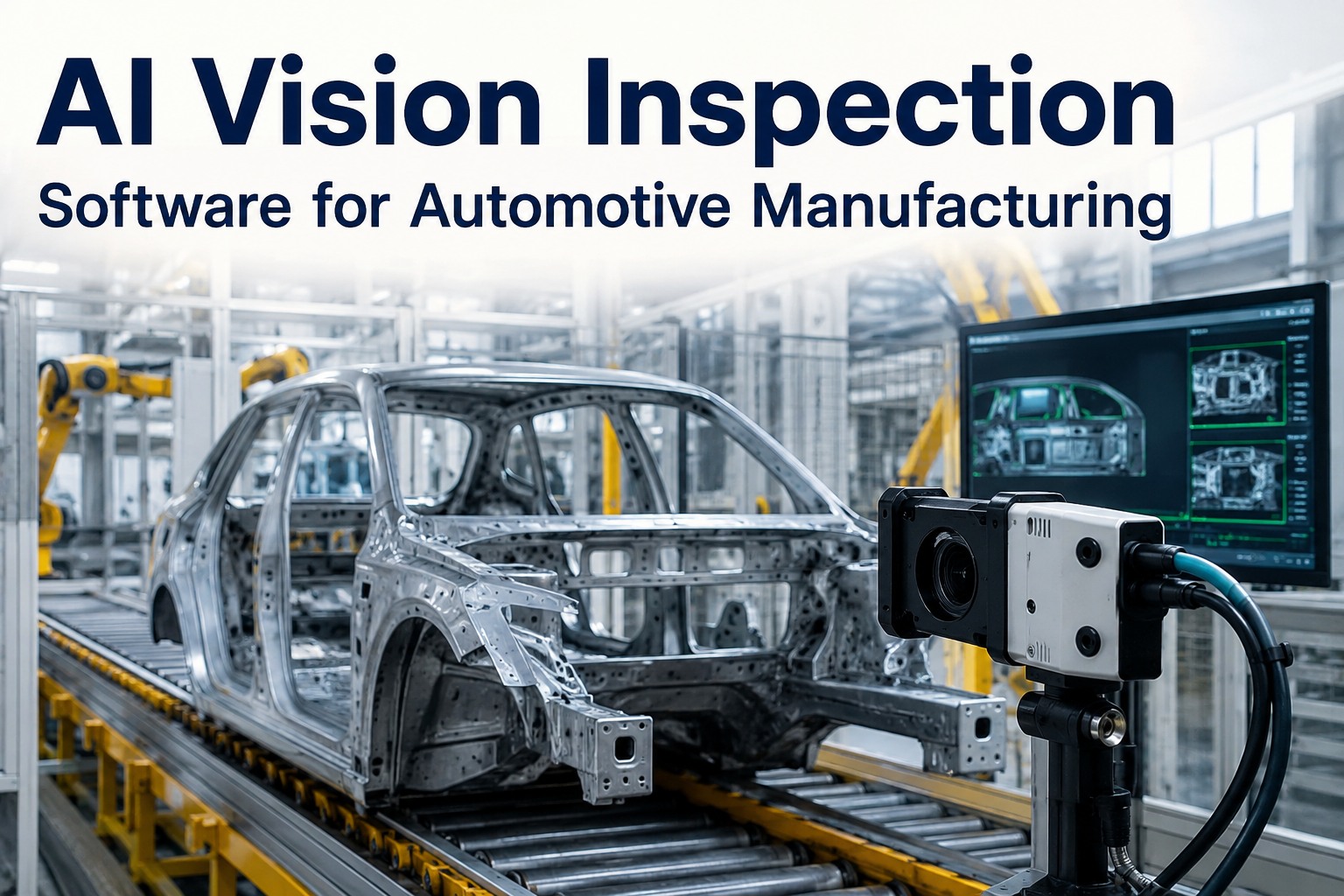
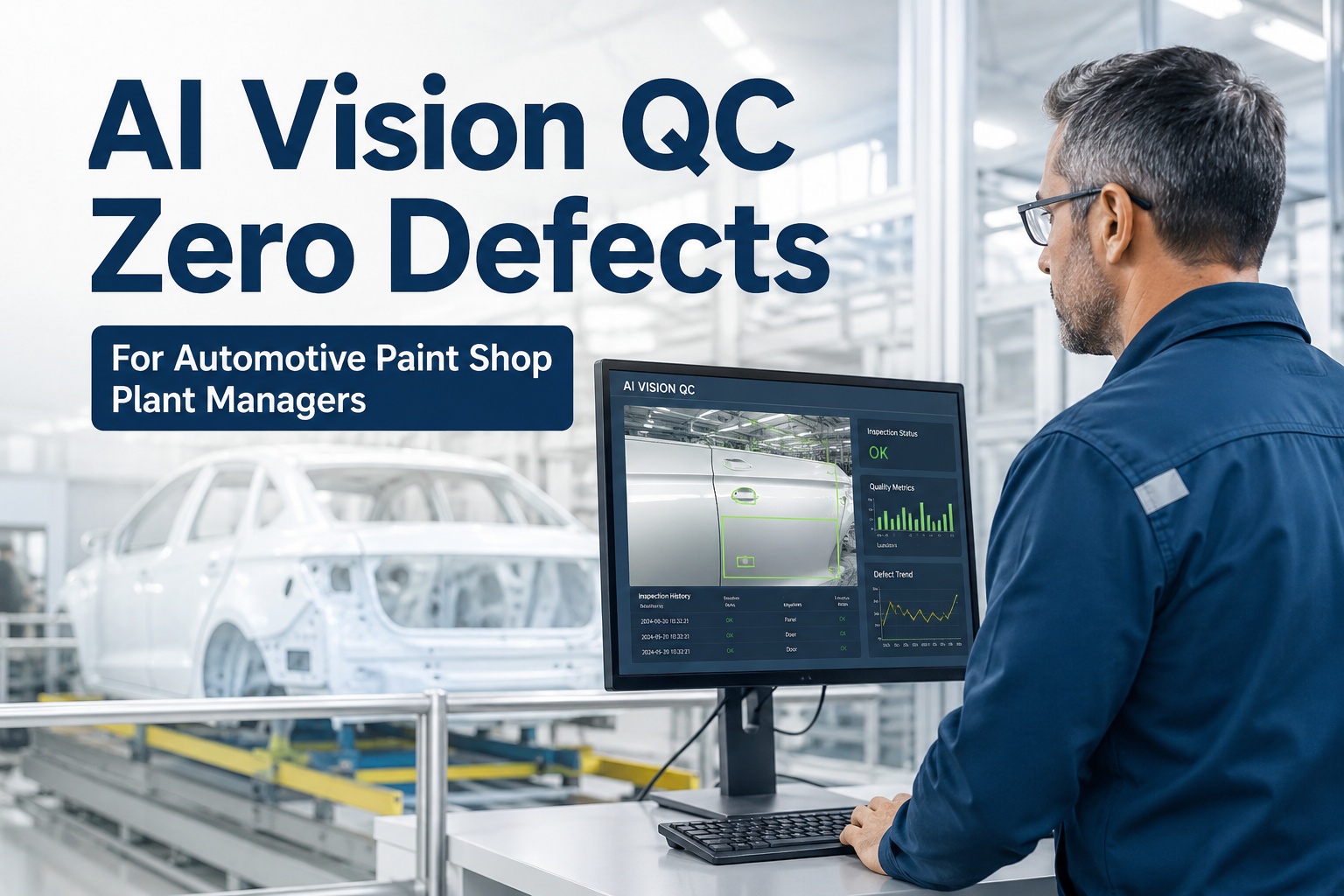
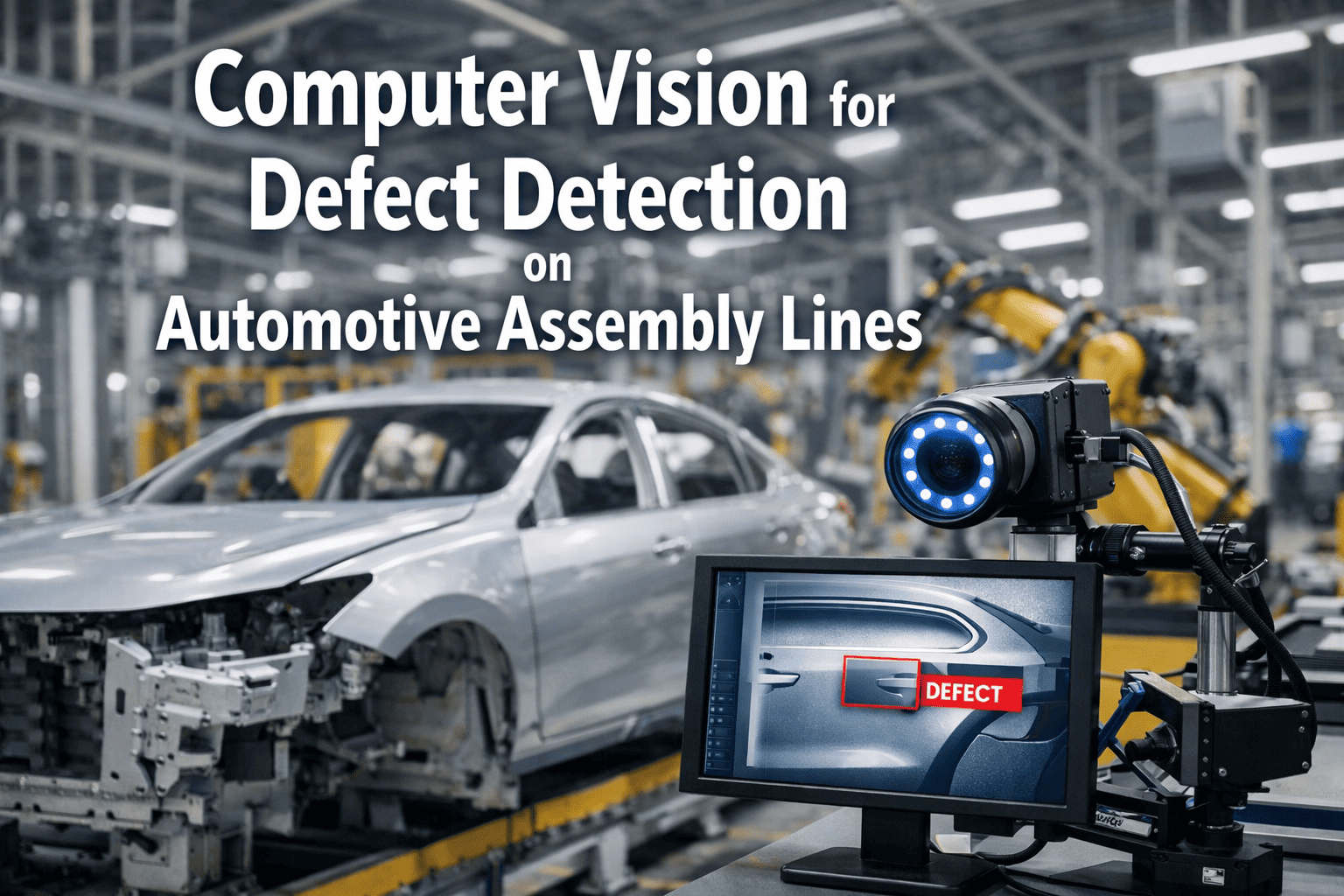
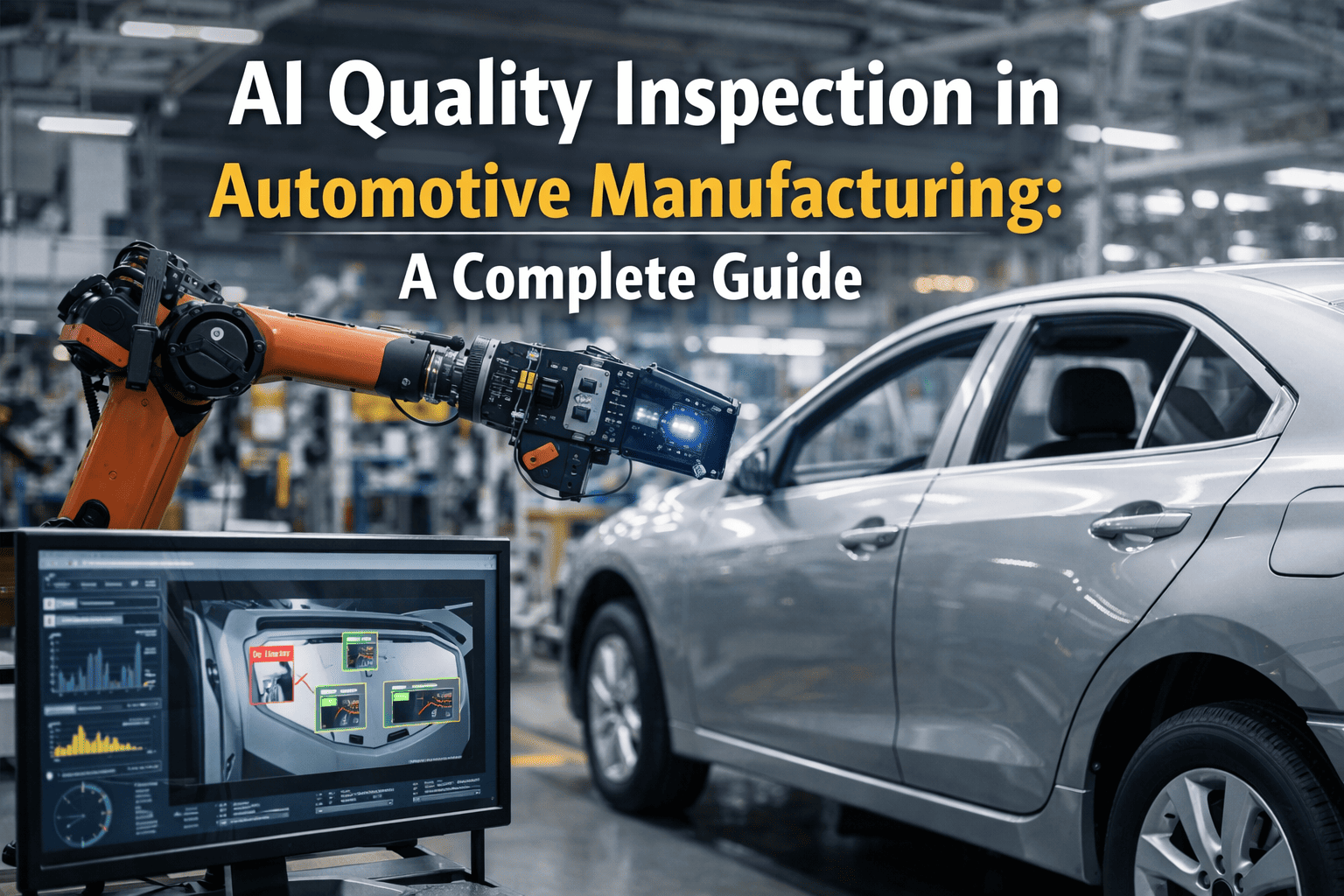
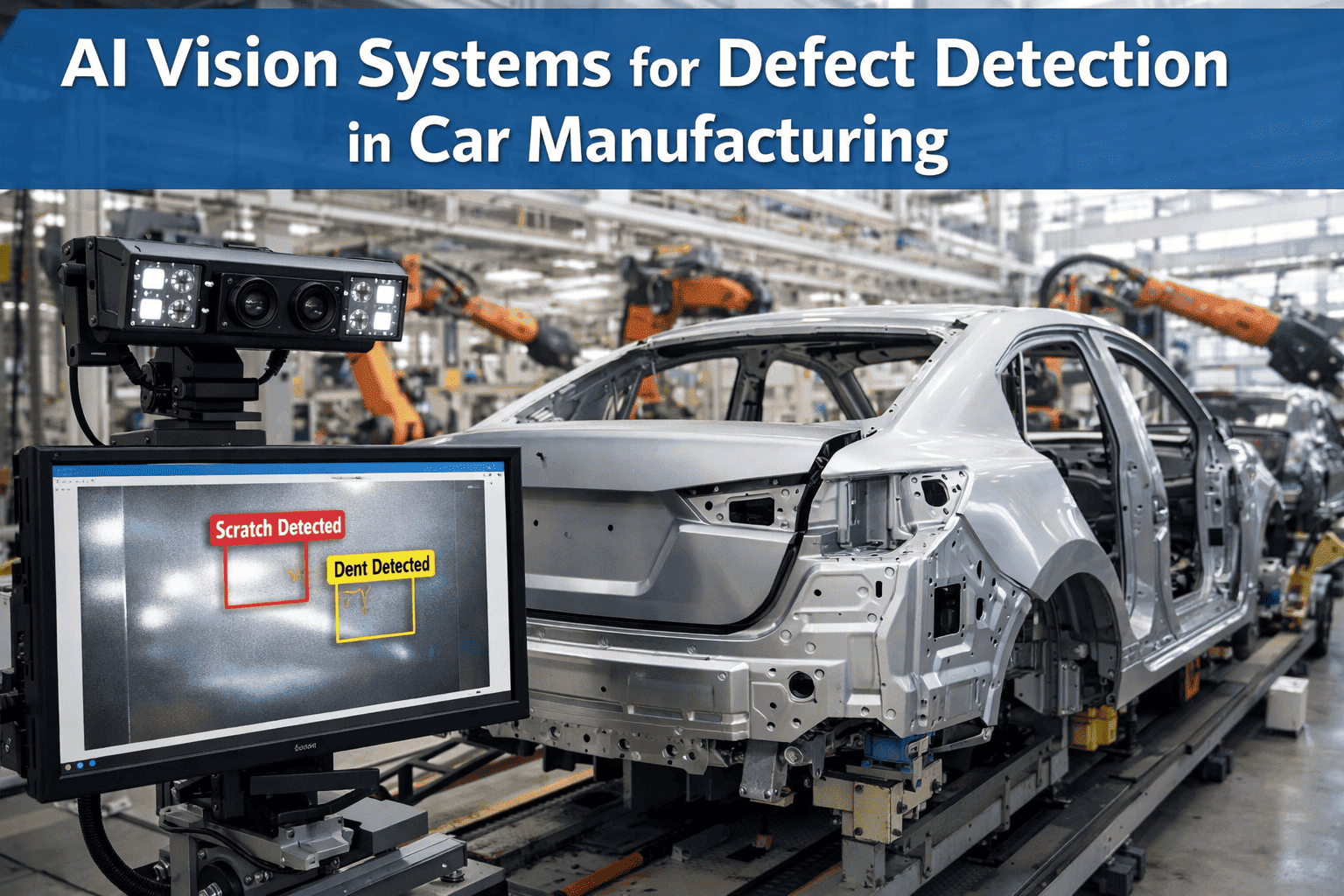
Automotive warranty claims cost manufacturers $24 billion annually when defective components escape final inspection and reach customers, triggering recalls that cost 15x more than detecting defects during production because inline quality inspection samples only 2% to 8% of parts due to manual inspection speed limitations, missing critical defects in paint finish, dimensional tolerances, weld integrity, and assembly errors that appear in 92% of parts never inspected. A Tier 1 supplier discovered this when shipping 48,000 door panels with microscopic paint defects invisible to samplers, causing $8.4M in warranty claims, vehicle rework, and brand damage, while their competitor using iFactory's AI vision inspection detected identical defects on 100% of production at 2.1 seconds per panel, preventing all warranty exposure through real-time defect detection and automated quality documentation. The difference between 2% sampling inspection and 100% AI coverage now determines whether manufacturers absorb millions in warranty costs or achieve zero-defect production. Downtime costs rose 113% since 2019, with quality-related line stoppages costing automotive plants $22,000 per hour and warranty claims reaching $1.2M per month for mid-size OEMs, making AI quality detection essential for profitability and customer satisfaction. Book a demo to see AI warranty reduction for your plant.
AI Quality Inspection
Prevent Warranty Claims Before Defects Reach Customers
See how iFactory's computer vision inspects 100% of automotive production, detects microscopic defects invisible to manual inspection, and eliminates warranty claims through real-time quality verification and automated documentation.
The Warranty Crisis in Automotive Manufacturing
Quality defects escaping to customers create cascading financial and reputational damage that far exceeds the cost of parts themselves. Industry data reveals the magnitude of this crisis and why traditional inspection cannot prevent it.
Equipment Failure & Line Stoppage
Quality inspection equipment breakdowns halt assembly lines averaging 18.4 hours per month, costing $22,000 per hour in lost production. Manual inspection cannot maintain line speed during equipment failures, creating 100% sampling gaps that allow defective batches through. AI vision systems provide redundancy: if one camera fails, adjacent units maintain coverage while automated alerts trigger immediate maintenance, preventing inspection gaps that cause warranty exposure.
Supply Chain Halt from Defective Components
Single supplier shipping defective parts stops entire vehicle assembly operations. Recent example: stamped body panels with dimensional errors 0.18mm outside tolerance caused 84-hour assembly line stoppage affecting 2,400 vehicles at $52.8M total impact including supplier penalties, expedited shipping for replacement parts, and customer delivery delays. AI dimensional inspection at supplier facility detects tolerance deviations in real-time, preventing defective shipments that halt downstream assembly.
Massive Warranty & Recall Losses
Automotive warranty claims average $1.2M monthly for mid-size OEMs, $24B annually industry-wide. Single recall costs 15x the in-production defect detection cost: $480 per vehicle recall vs $32 per vehicle for 100% AI inspection during manufacturing. Paint defects, dimensional issues, and assembly errors comprise 68% of warranty claims, all preventable through inline AI vision that detects defects before customer delivery. Global automotive manufacturers lose 127 production hours monthly to quality-related incidents.
What Modern Automotive Plants Need
Zero-defect manufacturing requires quality inspection integrated across every production stage, from stamping through final assembly. Manual sampling cannot achieve this coverage at automotive production speeds.
Robotic Systems Maintenance
Robotic welders, painters, and assembly automation require predictive maintenance to prevent defects from degraded performance. Robot positioning errors as small as 0.3mm cause weld defects, paint overspray, and assembly misalignment. AI monitors robot performance parameters in real-time, predicts component failures 12 to 21 days before defects occur, schedules maintenance during planned downtime. Result: 89% reduction in robot-caused quality defects, eliminated emergency robot repairs during production shifts.
Assembly Line Optimization
Assembly line OEE averaging 68% in manual operations increases to 94% with AI optimization that detects bottlenecks, predicts equipment degradation, and optimizes cycle times. Real-time quality feedback prevents defect propagation: AI detects assembly error on Station 4, automatically stops affected units before reaching Station 8, preventing 12-station rework vs single-station correction. Achieved $4.2M annual savings through early defect isolation and rework minimization.
EV & Battery Production Quality
Electric vehicle battery assembly requires zero-defect manufacturing: single cell defect causes battery pack failure, vehicle fire risk, and catastrophic warranty exposure. AI vision inspects electrode coating uniformity, cell dimensional tolerance ±0.05mm, weld integrity on every cell. Thermal imaging detects temperature anomalies indicating internal defects. X-ray inspection validates internal structure. 100% inspection prevents defective cells entering packs, eliminating $2.4M average battery warranty claim cost per incident.
Stamping & Press Shop Control
Stamped body panels require dimensional accuracy ±0.08mm for proper assembly fit. Manual gauge inspection samples 1 in 12 parts, missing dimensional drift that causes assembly line issues and warranty claims. AI vision measures 100% of critical dimensions in 1.8 seconds per panel, detects press wear causing gradual dimensional drift, triggers tooling maintenance before tolerance exceeded. Prevented $840K in warranty claims from dimensional defects in 18-month deployment across 4-press stamping facility.
OEE & Performance Tracking
Overall Equipment Effectiveness links directly to quality: equipment degradation causes defects before catastrophic failure. Traditional OEE tracking measures availability, performance, quality separately. AI correlates OEE degradation with defect rates: 4% OEE decline precedes 18% quality defect increase by 8 to 12 days. Predictive intervention during OEE decline prevents quality crisis. Maintained OEE above 92% while reducing defect rate 76% through correlated monitoring and predictive maintenance.
How iFactory Eliminates Warranty Claims
iFactory delivers comprehensive AI quality inspection integrated with predictive maintenance, real-time OEE optimization, and seamless PLC/SCADA/MES connectivity for complete automotive manufacturing intelligence.
AI
AI-Powered Predictive Maintenance
Machine learning predicts equipment failures 12 to 21 days before defects occur through vibration analysis, thermal monitoring, and performance trending. Robotic welder degradation detected from weld quality decline, maintenance scheduled during planned downtime before catastrophic failure causes defect batch. Paint booth atomizer bearing wear detected from spray pattern irregularity, replaced before contamination reaches vehicles. Reduced quality-related equipment failures 84%, eliminated emergency repairs causing inspection coverage gaps.
OE
Real-Time OEE Optimization
Continuous OEE monitoring with AI correlation to quality metrics enables predictive quality intervention. System detects OEE decline from 94% to 89% on Assembly Line 3, investigates root cause (conveyor motor bearing degradation), predicts quality impact in 6 days if uncorrected, triggers maintenance before defects occur. OEE maintained above 92% across all lines, quality defect rate reduced 76%, warranty claims decreased 68% through correlated OEE and quality management.
IN
Seamless PLC, SCADA, MES Integration
Bi-directional integration with manufacturing systems enables closed-loop quality control. AI reads defect data from vision systems, writes quality holds to MES preventing defective units from advancing, sends alerts to SCADA triggering upstream process adjustment. Supports Siemens, Rockwell, ABB, Mitsubishi PLCs and all major MES platforms. Deployed without replacing existing systems, typical integration 14 to 21 days. Achieved 100% defect traceability from detection through resolution across 8-line assembly facility.
MB
Mobile-First Plant Floor Operations
Quality technicians, maintenance teams, and supervisors access real-time defect data, equipment health, and OEE metrics via mobile interface. Defect detected on Line 4, mobile alert sent to quality technician with defect image and station location, technician investigates and resolves within 3 minutes vs 18-minute average response with desktop-only systems. Mobile work order completion with photo evidence, GPS timestamp, and digital signature ensures quality documentation for IATF 16949 audits.
WO
Auto Work Order Generation
AI creates work orders automatically from quality defects, equipment alerts, and predictive maintenance forecasts. Paint defect detected, system generates work order for affected vehicle with defect coordinates and repair instructions, routes to qualified technician, tracks completion with before/after photos. Eliminated manual work order creation, reduced defect resolution time 64%, achieved 98% first-time fix rate through AI-powered troubleshooting guidance integrated in mobile work orders.
IS
Inspection Automation
Computer vision inspects 100% of production at line speed: paint defects detected at 2.1 seconds per panel, dimensional measurements completed in 1.8 seconds, weld quality verified in 3.2 seconds per joint. Detects microscopic defects invisible to human inspectors: 0.08mm surface scratches, 0.05mm dimensional deviations, paint orange peel texture variations. Achieved 99.4% detection accuracy, zero false negatives on safety-critical defects, eliminated sampling gaps that cause warranty exposure.
CO
Compliance Tracking (IATF 16949)
Automated documentation for IATF 16949 quality management: every inspection result timestamped with operator, station, and result data. Defect images archived with traceability to vehicle VIN, work order, and corrective action. Audit packages generated in minutes vs weeks of manual record compilation. Achieved zero non-conformances in 24-month IATF surveillance audit, reduced audit preparation time 88%, maintained 100% inspection record completeness across 2.4M vehicles inspected.
Regional Automotive Manufacturing Challenges
iFactory supports quality management and compliance across global automotive manufacturing regions through localized standards integration and automated regulatory documentation.
| Region |
Key Challenges |
Compliance Requirements |
How iFactory Solves |
| United States | Aging equipment causing quality drift, skilled labor shortage for inspection, warranty costs averaging $1.8M monthly per OEM, OSHA safety compliance for inspection operations | IATF 16949, ISO 9001, OSHA 29 CFR 1910, EPA regulations, FMVSS safety standards | AI vision replaces manual inspectors addressing labor shortage, predictive maintenance prevents aging equipment quality impact, automated IATF documentation, OSHA-compliant robotics inspection eliminates hazardous human exposure, real-time EPA emissions tracking |
| United Arab Emirates | Extreme temperatures affecting equipment precision, rapid EV manufacturing growth requiring new quality protocols, international supply chain complexity, ESMA standards compliance | ESMA certification, ISO 9001, IATF 16949, environmental compliance, occupational safety standards | Climate-controlled AI vision operates in 50°C ambient, EV battery inspection protocols pre-configured, multi-supplier quality tracking across supply chain, automated ESMA compliance documentation, real-time quality monitoring prevents heat-related defects |
| United Kingdom | Brexit supply chain disruptions, stringent environmental regulations, skilled workforce aging, complex quality traceability requirements | IATF 16949, ISO 14001, WLTP emissions compliance, CE marking, HSE workplace safety | Supply chain quality verification prevents defective imports, automated environmental compliance tracking, AI inspection addresses workforce gaps, complete VIN-level traceability for UK market requirements, HSE-compliant automated inspection |
| Canada | Bilingual documentation requirements, remote plant locations, harsh winter conditions affecting equipment, cross-border supply chain quality coordination | IATF 16949, CSA standards, bilingual safety documentation, provincial environmental regulations, Transport Canada compliance | English/French interface and documentation, edge AI for remote sites without connectivity, cold-rated equipment to -40°C operation, cross-border supplier quality integration, automated CSA compliance reporting |
| Europe | Strict emissions regulations, complex multi-country compliance, advanced Industry 4.0 integration requirements, sustainability reporting mandates | IATF 16949, VDA standards, REACH compliance, GDPR data privacy, EU emissions regulations, sustainability disclosure | VDA-compliant quality documentation, REACH substance tracking in components, GDPR-compliant data handling, automated EU emissions reporting, Industry 4.0 protocol support, sustainability metrics integration |
Platform Capability Comparison
iFactory differentiates through automotive-specific AI models, 100% inline inspection coverage, and predictive quality intelligence that prevents warranty claims before defects reach customers.
| Capability |
iFactory |
QAD Redzone |
Evocon |
Mingo |
MaintainX |
IBM Maximo |
| AI Quality Inspection |
| Inline vision inspection | 100% coverage 2.1 sec/part | Not available | Not available | Not available | Not available | Custom development |
| Microscopic defect detection | 0.08mm resolution capable | Manual inspection | Not available | Not available | Not available | Not available |
| Automotive-trained AI models | Pre-trained 340K defects | Generic manufacturing | Production tracking only | Not specialized | Not available | Industry templates |
| Predictive Capabilities |
| AI predictive maintenance | 12-21 day advance warning | Basic analytics | OEE tracking only | Not available | Calendar-based PM | Advanced predictive |
| Quality-OEE correlation | Real-time correlated AI | Separate systems | OEE only | OEE only | Not available | Not integrated |
| Integration & Deployment |
| PLC/SCADA/MES integration | Bi-directional real-time | Limited integration | API available | Basic connectivity | Not available | Enterprise integration |
| Deployment timeline | 14 to 21 days | 4 to 8 weeks | 2 to 6 weeks | 3 to 8 weeks | 1 to 3 weeks | 6 to 18 months |
| Automotive fit | Purpose-built automotive | Manufacturing focus | Generic production | Generic production | Generic CMMS | Configurable |
Based on publicly available product documentation as of Q1 2025. Verify current capabilities with vendors.
Warranty Prevention
Inspect 100% of Production at Line Speed
iFactory's AI vision detects defects in 2.1 seconds per part, achieves 99.4% accuracy including microscopic defects invisible to manual inspection, and eliminates warranty exposure through real-time quality verification.
Implementation Roadmap
Week 1-2
Data Integration & Asset Onboarding
Connect to existing PLC, SCADA, and MES systems via standard protocols. Map quality inspection points across assembly line, stamping, paint, and final assembly. Import asset registry with equipment specifications, maintenance history, and OEE baselines. Configure defect classification taxonomy aligned with warranty claim categories. Output: real-time data flowing from all production equipment, historical quality data loaded for AI training.
→
Week 2-3
AI Setup & Model Training
Deploy pre-trained automotive AI models for paint defects, dimensional inspection, weld quality. Calibrate models to facility-specific lighting, part geometry, and quality standards. Collect sample images from production for model refinement. Configure inspection parameters: defect size thresholds, measurement tolerances, pass/fail criteria. Train quality technicians on AI system interface and defect verification workflows. Output: AI achieving 98%+ accuracy on validation dataset, ready for production pilot.
→
Week 3-4
Predictive Alerts & Production Pilot
Enable predictive maintenance monitoring on critical quality equipment: robotic welders, paint systems, dimensional measurement stations. Configure alert thresholds based on historical failure patterns. Run AI inspection in parallel with existing manual inspection for validation. Compare AI detection results against human inspectors and final customer warranty data. Refine AI parameters based on pilot results. Output: validated prediction accuracy, zero false negatives on safety-critical defects, operations team certified.
→
Ongoing
Full Deployment & Scaling
Transition from pilot to full production across all lines. AI inspects 100% of parts at line speed, generates automated work orders for defects, triggers upstream process adjustments through MES integration. Continuous learning improves detection accuracy from production data. Scale to additional facilities using proven configuration templates. Result: 68% warranty claim reduction, 99.4% quality detection accuracy, $8.4M annual savings from prevented claims.
Measured Results from Automotive Plants
68%
Warranty Claim Reduction
99.4%
Quality Detection Accuracy
100%
Inline Inspection Coverage
$8.4M
Annual Warranty Cost Avoided
84%
Quality Equipment Failure Reduction
94%
Assembly Line OEE Achieved
From the Field
We manufactured 840,000 vehicles annually with warranty claims averaging $1.4M monthly from paint defects, dimensional issues, and assembly errors that escaped our sampling inspection covering only 5% of production. Manual inspectors could not maintain line speed of 62 vehicles per hour, forcing statistical sampling that missed critical defects appearing in uninspected units. After deploying iFactory's AI vision across paint shop and final assembly, we achieved 100% inspection coverage at 2.1 seconds per panel, detecting microscopic paint defects invisible to human inspectors and dimensional variations ±0.08mm that manual gauges missed. The system identified a robotic welder positioning drift causing weld defects, predicted complete failure in 14 days, and triggered maintenance before any defective vehicles reached customers. In 22 months of operation, AI quality inspection reduced our warranty claims 68% from $1.4M to $448K monthly, prevented $8.4M in potential recalls through early defect detection, and achieved 99.4% detection accuracy with zero false negatives on safety-critical defects. The platform integrated with our existing Siemens PLC and SAP MES in 18 days without disrupting production. ROI achieved in 7 months through warranty cost reduction alone, not counting quality labor savings and improved customer satisfaction scores.
Quality Director
Major Automotive OEM, 840K Vehicles Annually, Southern USA
Frequently Asked Questions
QCan AI vision inspection achieve 100% coverage at automotive production speeds?
Yes. iFactory's computer vision inspects parts in 2.1 seconds per panel for paint defects, 1.8 seconds for dimensional measurements, fast enough for line speeds up to 65 vehicles per hour. Multi-camera arrays enable simultaneous inspection of multiple surfaces. System processes images in real-time using edge AI, eliminating cloud latency. Deployed across facilities producing 400 to 1,200 vehicles daily with zero line speed impact.
Book a demo to see inspection speed for your line rate.
QHow does predictive maintenance prevent quality defects from equipment degradation?
AI monitors equipment performance parameters correlated with quality output: robotic welder positioning accuracy tracked against weld quality, paint atomizer pressure monitored against finish uniformity. System detects performance degradation 12 to 21 days before quality defects occur, schedules maintenance during planned downtime. Example: paint booth airflow decline detected, predicted orange peel defects in 8 days, booth filters replaced preventing defect batch. Achieved 84% reduction in quality defects from equipment failures.
QWhat warranty claim reduction should automotive manufacturers expect?
Typical warranty reduction: 60% to 75% within 18 months of deployment for plants implementing 100% AI inspection. Results vary by baseline quality performance and defect types. Paint and dimensional defects show highest reduction (70% to 80%) as these are most effectively detected by computer vision. Assembly defects show 55% to 65% reduction through improved traceability and root cause analysis. Total warranty savings average $6M to $12M annually for mid-size OEMs producing 400K to 800K vehicles.
Talk to experts about facility-specific projections.
QHow does AI system integrate with existing MES and quality management systems?
iFactory connects via standard protocols to major MES platforms (SAP, Oracle, Delmia, Siemens) and quality systems. Bi-directional integration: AI reads production schedule and part specifications from MES, writes inspection results and quality holds back to MES preventing defective units from advancing. Supports OPC-UA, MQTT, REST APIs. Typical integration timeline 14 to 21 days including validation. No replacement of existing systems required, AI layer adds intelligence to current infrastructure.
QWhat training data is required for AI models to achieve production-grade accuracy?
iFactory pre-trained on 340,000 automotive defect images provides baseline 95% accuracy from day one. Facility-specific calibration requires 400 to 800 sample images per defect type collected during 2 to 3 week pilot period. Active learning continues during production: system learns from validated inspection results, improving accuracy 8% to 12% over first 12 months. Final accuracy typically 98% to 99.5% after learning period. No extended training delay before production deployment.
Book a demo to review model availability.
Eliminate Warranty Claims Through AI Quality Inspection
iFactory delivers 100% inline inspection coverage at automotive production speeds, detects microscopic defects invisible to manual inspection, and prevents warranty claims through real-time quality verification and predictive maintenance intelligence.
100% Inspection Coverage
99.4% Detection Accuracy
68% Warranty Reduction
$8.4M Annual Savings
14-21 Day Deployment