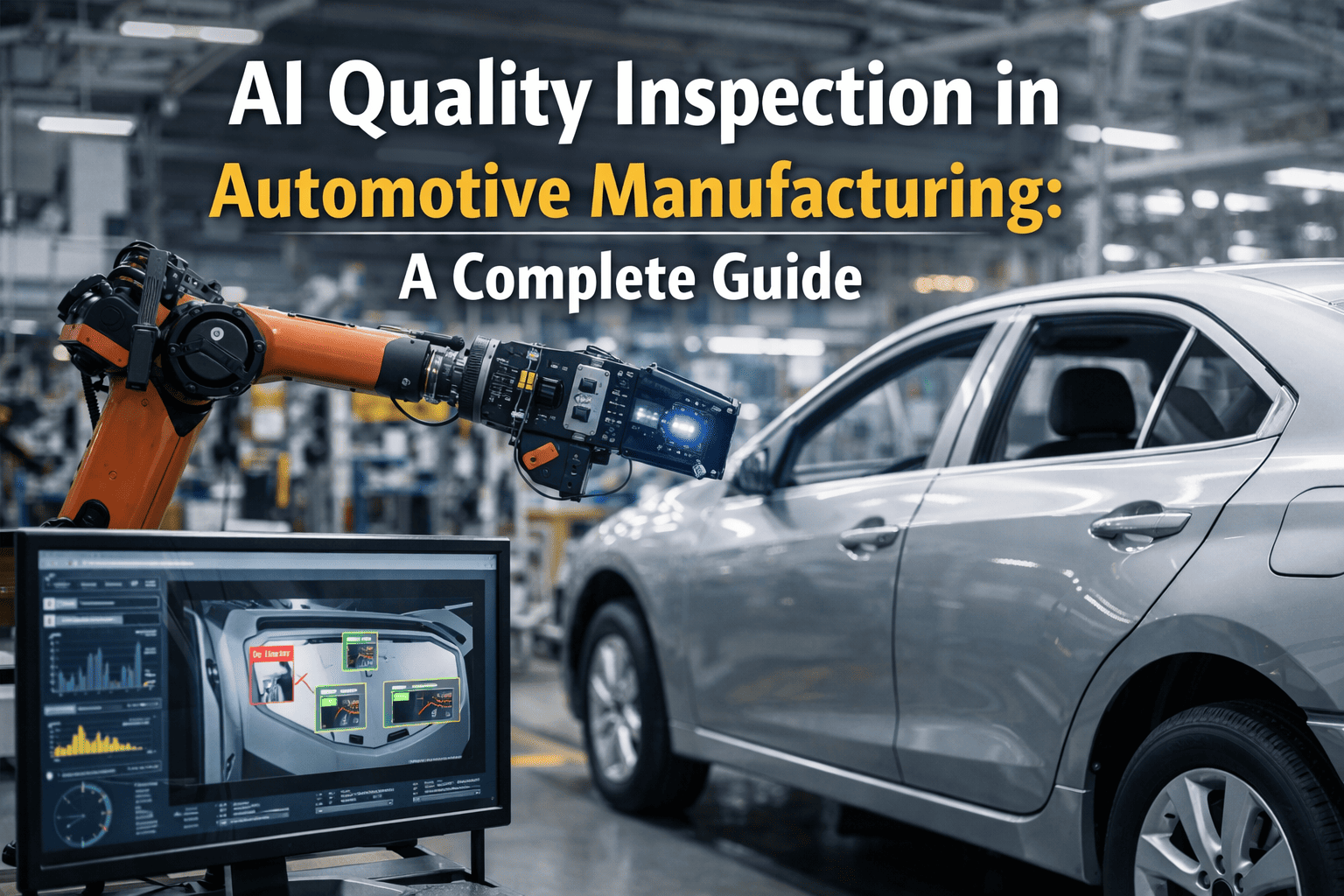
Sealant and adhesive application is one of the most failure-prone processes in automotive assembly, yet it is almost entirely invisible to conventional quality systems. A bead of structural adhesive applied 2mm off-path in a body-in-white joint can compromise crash performance. A windshield sealant gap of 0.3mm causes water ingress that generates warranty claims months after delivery. A missing hem flange adhesive on a door panel leads to corrosion failures that cost 40 to 60 times more to remedy in the field than to catch on the line. iFactory AI deploys computer vision and machine learning directly into sealant and adhesive dispensing stations, verifying every bead, every gap, every volume, and every position on every single part at full production line speed.
Why Sealant and Adhesive Quality Is the Hidden Driver of Automotive Warranty Costs
Modern vehicles use between 15 and 30 distinct sealant and adhesive materials across 200 to 400 individual application points. Structural adhesives replace welds in aluminium-intensive body structures. Acoustic sealants control NVH performance. Window encapsulants and windshield bonding materials carry regulatory safety certification. Hem flange adhesives protect against corrosion in door and hood assemblies. Each application has its own bead geometry specification, cure window, substrate preparation requirement, and quality acceptance criterion.
Structural adhesive replaces or supplements spot welds in aluminium and mixed-material body structures. Bead position, width, height, and continuity must be verified before the mating panel is pressed. A missed structural bead discovered at final audit requires full body replacement.
Door, hood, and trunk closures use hem flange adhesive to bond panels and block moisture. Coverage gaps as small as 5mm create long-term corrosion initiation points. Robot-applied hem adhesive runs at speeds that make manual inspection at 100% coverage physically impossible.
Windshield bonding adhesive serves a structural role in body rigidity and meets ECE R43 and FMVSS 212 occupant protection standards. Bead continuity, height, and primer adhesion must be verified before glass installation. A defective bond in the field triggers a safety recall.
Underbody acoustic sealants, body seam sealers, and cavity wax directly affect wind and road noise performance, which rank among the top five customer quality complaints. Coverage gaps are undetectable visually after subsequent paint and trim operations cover the application zone.
Battery pack enclosure sealing is safety-critical in EV production. Thermal interface material, module-to-pack sealant, and IP67-rated perimeter adhesive all require verified application geometry before pack closure. A sealing failure in an assembled battery requires complete pack disassembly.
PVC underbody coating protects against stone chip damage, corrosion, and acoustic transmission. Coverage verification, wet film thickness, and overspray containment on brake and suspension components require AI-level detail that manual auditing cannot achieve at production volume.
The Real Cost of Sealant and Adhesive Defect Escape
Automotive manufacturing downtime costs rose 113% since 2019 as line complexity, multi-model flexibility, and labor costs increased simultaneously.
Adhesive and sealant application defects account for an estimated 12 to 18% of all body and interior warranty claims across major OEMs globally.
Robot dispensing system failures, material supply interruptions, and quality-triggered line stops from adhesive defects drive the majority of unscheduled stoppages.
Every warranty-triggered sealant repair costs 18 times more than catching and correcting the application defect at the dispensing station during production.
What Automotive Assembly Plants Need From Sealant Inspection
Every bead on every part verified at production takt time, not statistical sampling. Defect detection at the dispensing station before the mating operation locks the defect into the assembly permanently.
Width, height, position, and volume measurements per bead segment, not binary pass/fail. Quantitative data feeds SPC systems and enables process drift detection weeks before defects reach acceptance limits.
Bead measurement data must feed back into robot controller diagnostics and predictive maintenance models to catch tool-centre-point drift, nozzle wear, and pressure regulator degradation before quality impact occurs.
Flexible assembly lines run 4 to 8 vehicle models sharing sealant stations. Inspection systems must automatically switch acceptance criteria, bead path templates, and tolerance zones per model without manual changeover.
Battery enclosure sealant inspection requires micron-level bead geometry verification and continuous perimeter coverage confirmation at assembly throughput rates, linked to per-VIN traceability for safety certification.
Every bead measurement must be stored per part, per VIN, per shift, and linked to robot ID, material batch, and process conditions for IATF 16949 compliance and OEM customer-specific requirement audit readiness.
How iFactory AI Solves Sealant and Adhesive Inspection
AI Vision Bead Inspection: Every Bead, Every Part, Every Cycle
iFactory deploys structured light, laser triangulation, and 2D computer vision systems at sealant and adhesive dispensing stations. AI models trained on your specific bead geometry specifications inspect every application in real time, classifying bead width, height, position deviation, gap presence, and volume variation against per-model acceptance criteria at full production takt time.
- 3D bead profile measurement: width, height, and volume per segment
- Bead path position verification against robot program template with deviation quantification
- Gap and skip detection down to 2mm sensitivity on continuous bead applications
- Automatic model changeover: inspection criteria switch per vehicle model without operator input
- Immediate reject gate trigger and work order generation for out-of-tolerance applications
Predictive Maintenance: Dispenser and Robot Health From Bead Data
iFactory connects bead measurement trend data directly to predictive maintenance models for robot dispensing systems. When bead width begins narrowing across successive cycles, AI correlates this with nozzle wear rate, material pressure trends, and cycle count to predict nozzle replacement before the bead reaches rejection limits. Maintenance is scheduled between shifts, not triggered by a line stop.
- Nozzle wear prediction from bead width and height trend analysis across production cycles
- Robot TCP drift detection from bead position deviation pattern analysis
- Material pressure regulator degradation prediction from bead volume trending
- Automated preventive maintenance work orders generated before quality threshold breach
- Maintenance scheduling integrated with production plan to eliminate shift disruption
Real-Time OEE Quality Optimization
Every iFactory sealant inspection result feeds directly into the live OEE Quality metric for the station, line, and plant. Production supervisors see quality rate trending in real time alongside Availability and Performance data. When Quality drops below target, automated alerts trigger supervisor notification and corrective action workflows before the shift ends with accumulated defective output.
- Real-time OEE Quality metric updated on every inspection event across all sealant stations
- Live Pareto analysis of defect types, stations, robot IDs, and shifts
- SPC charts updated continuously from bead measurement data for IATF 16949 control plan compliance
- Shift-by-shift quality trending and automated shift summary reports for production management
PLC, SCADA & MES Integration: No Sealant Data Silos
iFactory connects to your existing robot controllers, PLC dispensing control systems, SCADA plant monitoring, and MES part traveler without replacing any operational system. Bead results are written to the MES part record in real time, robot controllers receive bead deviation signals for adaptive correction, and SCADA alarms activate on out-of-tolerance detection.
- Direct integration with Fanuc, KUKA, ABB, Yaskawa, and Kawasaki robot controllers for feedback correction
- PLC integration for sealant pump pressure control, material heater temperature, and valve sequencing data
- MES part traveler update with bead inspection results per VIN in real time
- SCADA historian linkage for process-to-quality correlation and root cause analysis
Automated Work Order Generation: From Bead Alert to Corrective Action
When iFactory detects a recurring bead defect pattern or inspection anomaly, it automatically generates a prioritized corrective action work order containing the bead measurement data, defect images, affected VINs, robot ID, production volume impacted, and recommended maintenance action. Quality and maintenance teams receive structured work packages, not raw alarms requiring manual investigation.
- Automated work orders generated from bead threshold breaches, nozzle wear predictions, and dispenser anomalies
- Priority scoring based on defect severity, safety classification of adhesive type, and production volume at risk
- Bead measurement data, defect images, and affected VIN list attached automatically
- Mobile technician app enables field execution with inspection photo documentation and supervisor sign-off
EV Battery Sealant Inspection: Safety-Critical Precision
iFactory deploys specialized inspection models for EV battery assembly sealant applications where IP67 perimeter sealing, thermal interface material coverage, and module bonding adhesive geometry carry safety and regulatory compliance requirements. Every battery pack receives a complete sealant inspection record linked to its VIN and battery serial number.
- IP67 perimeter sealant continuity verification with gap detection sensitivity below 1mm
- Thermal interface material (TIM) coverage mapping across cell-to-cooler plate contact surfaces
- Module-to-pack adhesive bead position and volume verification before enclosure closure
- Per-VIN sealant inspection records for EV battery safety certification and regulatory audit
IATF 16949 Compliance and VIN-Level Traceability
iFactory maintains a complete, tamper-proof inspection record for every sealant and adhesive application, linked to VIN, robot ID, material batch number, application temperature, dispensing pressure, and shift data. This provides full traceability for IATF 16949 compliance, OEM customer audits, and regulatory submission for safety-critical adhesive applications.
- Per-VIN bead measurement records with 3D profile data, images, and acceptance disposition
- IATF 16949 SPC, MSA, and control plan compliance reports generated automatically from inspection data
- Material batch traceability linked to bead quality data for potential field containment decisions
- OEM customer-specific requirement audit packages built automatically without manual data compilation
AI Sealant Inspection vs Traditional Quality Methods
| Factor | iFactory AI Inspection | Manual Visual Inspection | Periodic Bead Sampling | End-of-Line Water Test |
|---|---|---|---|---|
| Part Coverage | 100% every cycle | 5-10% of parts | 1-3% sample rate | 0.3-1% sample rate |
| Defect Detection Speed | At dispensing station, real-time | Post-operation, manual | Lab batch, hours later | End of line, too late for rework |
| Bead Measurement Type | 3D profile: width, height, volume, position | Pass/fail visual only | Cross-section cut, destructive | Binary pass/fail only |
| Multi-Model Flexibility | Automatic model switching, no changeover | Manual criteria switch required | Manual template swap | Single fixed test cycle |
| Predictive Maintenance Link | Bead trends predict nozzle and robot wear | No connection to maintenance | No predictive capability | No connection to maintenance |
| MES / Robot Integration | Real-time bidirectional, robot feedback | Manual data entry | Manual lab report upload | Manual pass/fail entry |
| VIN Traceability | Full, per-bead segment, per VIN | No part-level record | Batch record only | VIN pass/fail only |
| IATF 16949 SPC | Live, continuous, automatic | Manual end-of-shift entry | Manual lab data entry | Not applicable |
| Operator Dependency | Exception review only | Full-time per station | Dedicated lab technician | Test operator required |
| Defect Escape Rate | Near-zero with 100% coverage | High (fatigue, speed, light) | Statistically certain escape | High (low sample rate) |
Competitor Comparison: AI Manufacturing Platforms for Automotive Quality
| Feature | iFactory AI | QAD Redzone | Evocon | Mingo Smart Factory | L2L CW | MaintainX | Limble CMMS | IBM Maximo | SAP EAM | Oracle EAM |
|---|---|---|---|---|---|---|---|---|---|---|
| AI Inline Sealant Inspection | Advanced, 3D Bead AI | No | No | No | No | No | No | No | No | No |
| AI Capability | Full ML + Computer Vision | Basic Analytics | OEE Only | Basic Analytics | Partial | No | No | Partial AI | Partial AI | Partial AI |
| Predictive Maintenance | Advanced, Inspection-Linked | Limited | No | Basic | Basic | Basic | Basic | Partial | Partial | Partial |
| Robot / PLC / MES Integration | Native Real-Time, Bidirectional | Partial | OPC-UA Only | Partial | Limited | No | No | Partial | Partial | Partial |
| Work Order Automation | AI-Generated, Defect-Triggered | Manual | No | Basic | Partial | Partial | Partial | Manual | Manual | Manual |
| Ease of Use | High, Mobile-First | High | High | High | High | High | High | Low | Low | Low |
| Automotive Fit | Purpose-Built, IATF Ready | General Mfg | General Mfg | General Mfg | General Mfg | General MRO | General MRO | General EAM | General EAM | General EAM |
| OEE Real-Time Tracking | Full, Inspection-Linked Live | Full | Full | Full | Partial | No | No | Partial | Partial | Partial |
| EV Battery Inspection | Dedicated Sealant Module | No | No | No | No | No | No | No | No | No |
| VIN Traceability | Full, Per-Bead Segment | Partial | Limited | Limited | Partial | Basic | Basic | Partial | Partial | Partial |
Region-Wise Automotive Sealant Inspection Challenges and iFactory Fit
| Region | Key Assembly Challenges | Compliance Requirements | How iFactory Solves |
|---|---|---|---|
| United States ★ | High OEM warranty cost pressure, EV production ramp requiring new sealing processes, OSHA chemical exposure compliance at sealant stations, aging robot dispensing equipment on legacy lines | IATF 16949, FMVSS 212 windshield bonding, OSHA 1910.119, OEM CSR (Ford Q1, GM BIQS, Stellantis SQMS), EPA VOC for solvent sealants | 100% bead verification eliminates OEM warranty chargebacks, FMVSS 212 windshield traceability per VIN, EPA VOC compliance documentation, predictive maintenance on aging dispenser robots |
| UAE ★ | High-ambient-temperature effects on sealant viscosity and pot life, growing EV assembly operations, OEM export documentation requirements for European and Asian markets | ESMA quality standards, ISO 9001 and IATF 16949 for export vehicles, ADNOC supply quality mandates, Dubai Industrial Strategy 2030 | Temperature-compensated AI models for high-heat viscosity variation, IATF 16949 audit documentation automated for export compliance, Arabic-language interface, rapid mobile-first onboarding |
| United Kingdom | JLR aluminium body structures requiring precise structural adhesive verification, post-Brexit supply disruption, strict HSE chemical handling requirements | IATF 16949, HSE COSHH, REACH material compliance, UK DVSA traceability for EV sealing systems | Structural adhesive bead verification for aluminium joints, COSHH-aligned documentation, REACH batch traceability, EV sealing certification records |
| Canada | Cold-temperature sealant viscosity challenges at Northern plants, multi-model flexible line complexity for Stellantis and Toyota Canada | Transport Canada safety standards, Ontario OHSA, Environment Canada VOC regulations, CSA electrical inspection standards | Temperature-corrected bead measurement for cold-weather material behavior, automatic multi-model switching, VOC compliance documentation from sealant application data |
| Europe | EU7 regulation increasing body sealing complexity, CSRD ESG reporting burden, EV transition requiring new sealing qualification | IATF 16949, EU REACH and RoHS, CSRD sustainability reporting, UN ECE R43 windshield bonding, Seveso III | CSRD-automated sustainability reporting, REACH batch traceability per VIN, ECE R43 inspection evidence, EV sealing EU type approval documentation |
Implementation Roadmap: iFactory AI Sealant Inspection Deployment
iFactory engineers audit each sealant station, map robot, PLC, and MES connectivity, define bead geometry specs per model, and identify camera mounting positions. No production changes required.
3D vision hardware installed at each station. AI models trained on customer bead specifications and validated against production parts across all vehicle models before go-live.
Bead results connected to robot feedback loops, PLC reject gates, MES part travelers, and SCADA historian. Automated work order triggers configured with team threshold preferences.
Full go-live at line speed across all models. Operator and quality engineer training completed. Sensitivity tuning finalized from first-week production data.
Deployment extended to additional plants. Models retrained quarterly on accumulated data. New vehicle model qualification added without production disruption.
Measurable Results: What Automotive Plants Achieve with iFactory Sealant Inspection
100% inline AI coverage versus sample-based inspection catches bead defects at the dispensing station, not at the customer.
Bead-data-linked predictive maintenance prevents robot nozzle failures and pressure system breakdowns before they stop the line.
Real-time inspection data closes the OEE Quality gap from end-of-shift estimates to live per-cycle tracking across all sealant stations.
AI-generated work orders with bead measurement data, robot ID, and material batch correlation cut investigation from days to hours.
AI handles 100% of routine bead inspection. Quality engineers shift to process improvement roles from manual inspection duties.
Every bead measurement result linked to VIN, robot ID, material batch, and process conditions. Zero manual compilation for IATF audits.