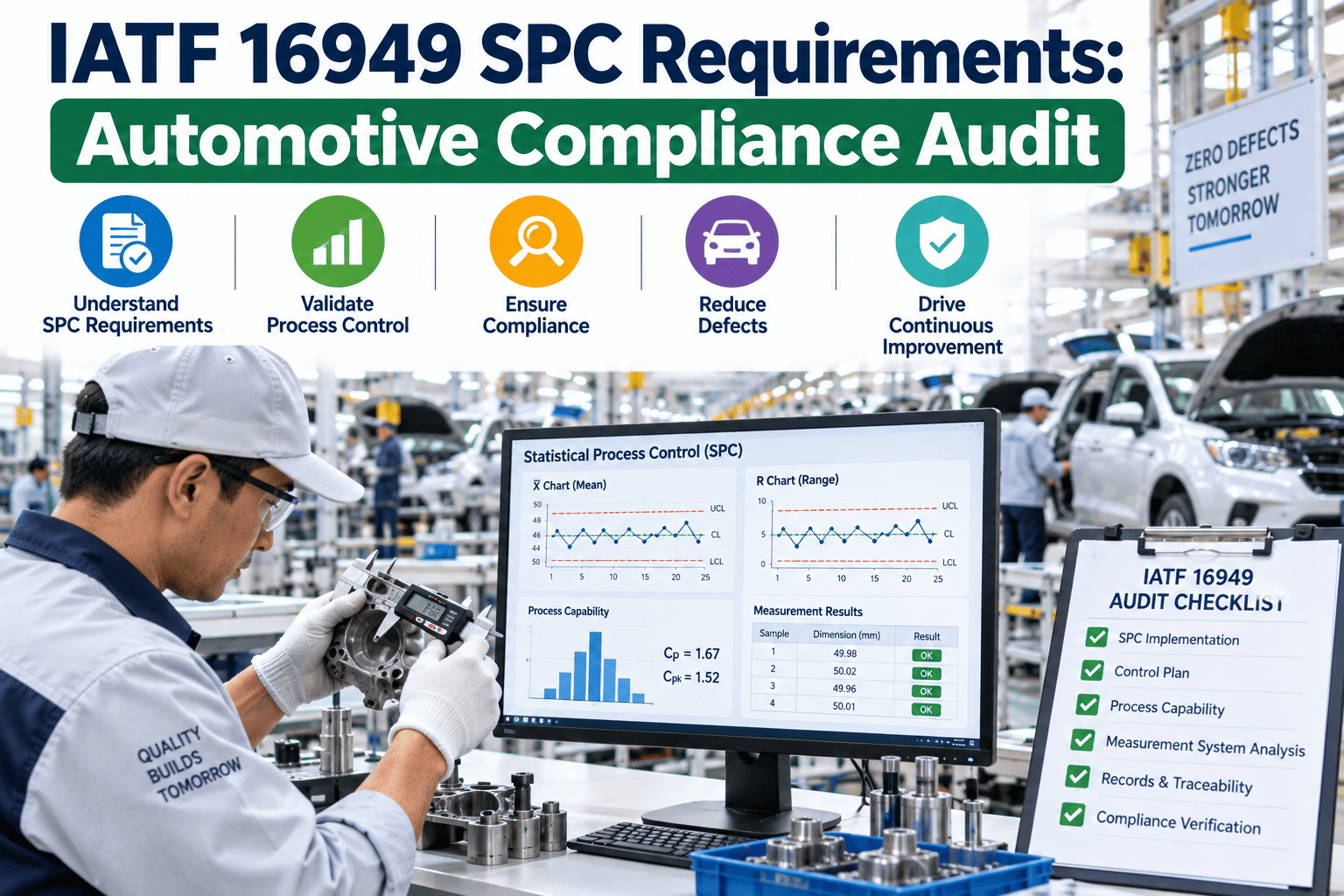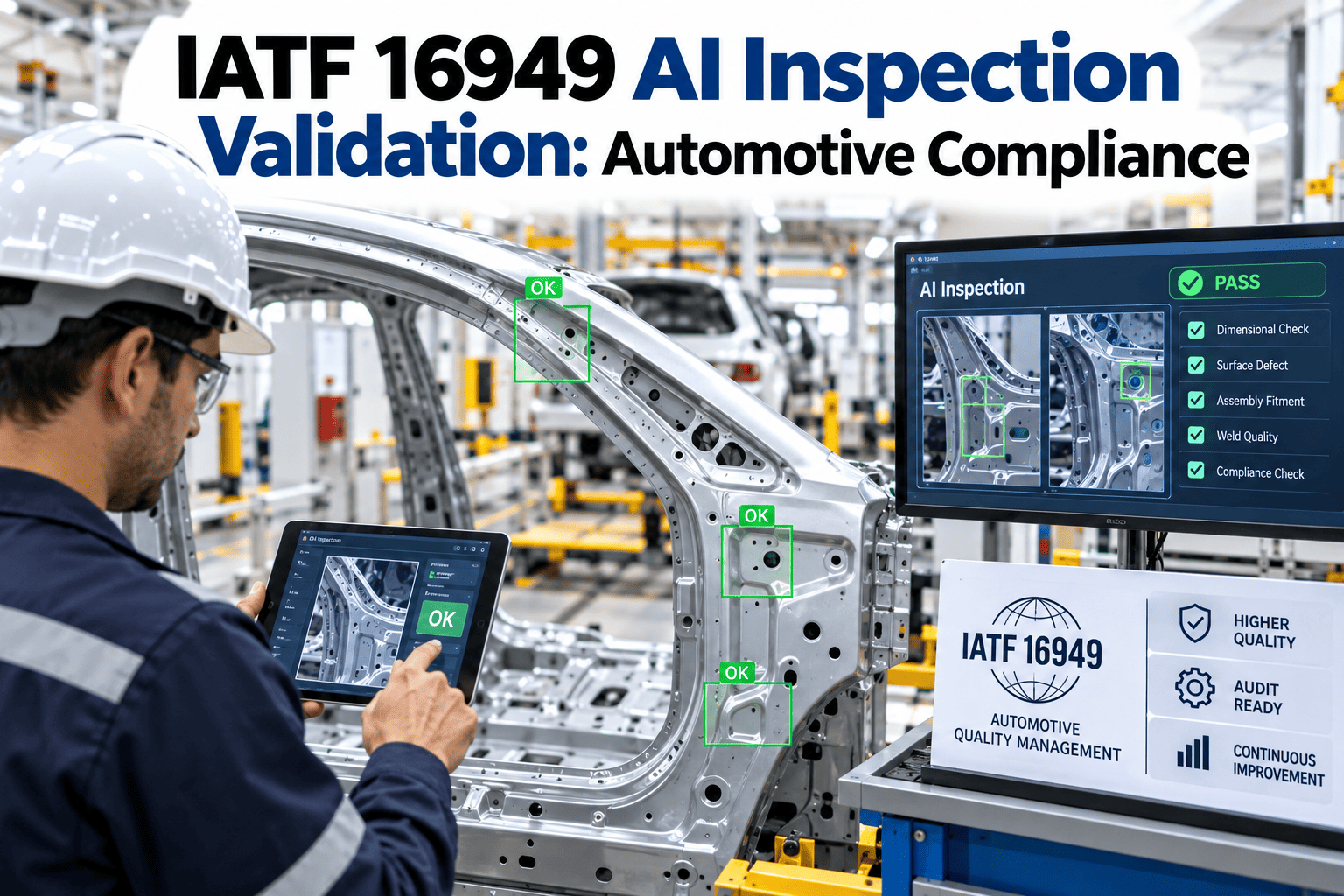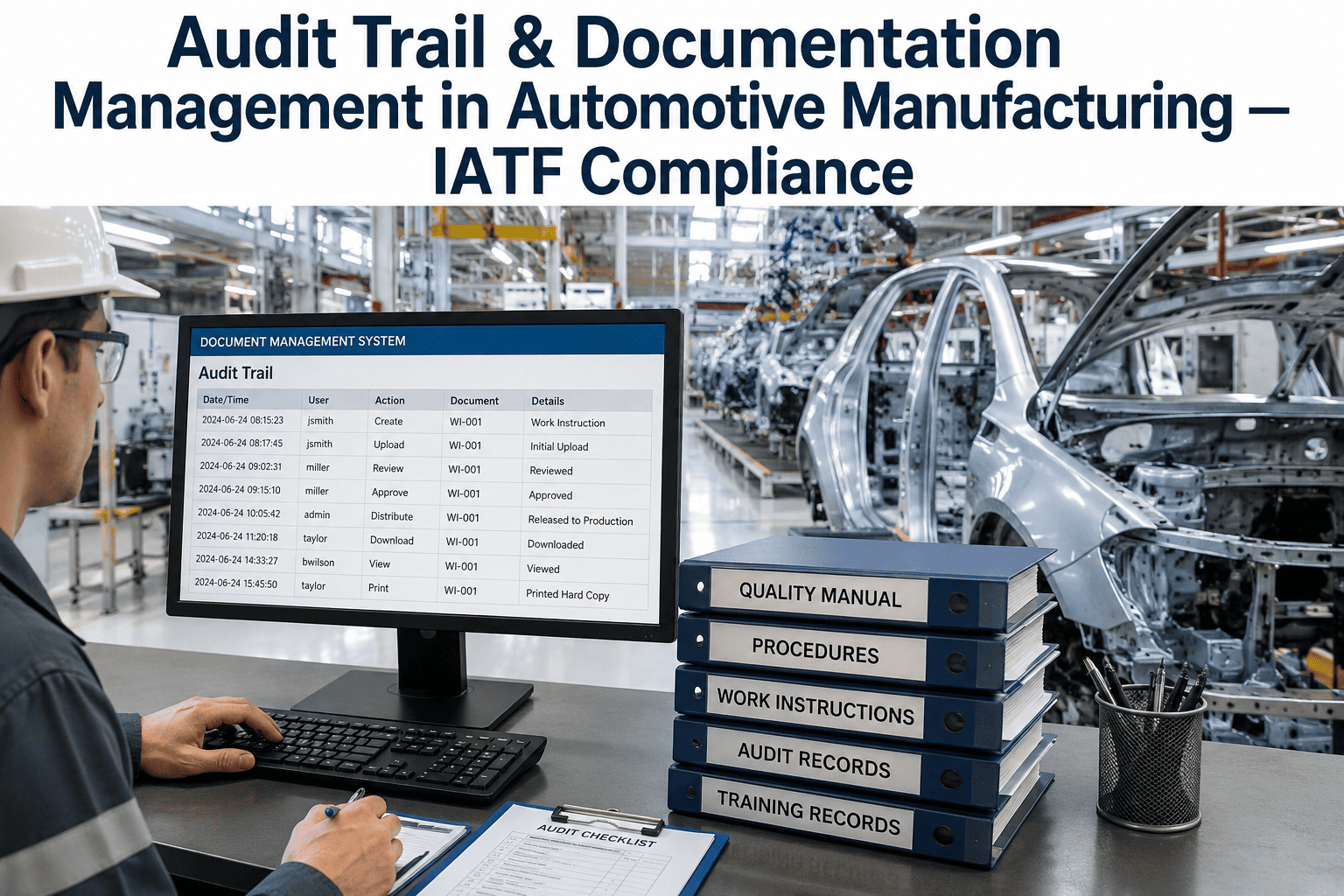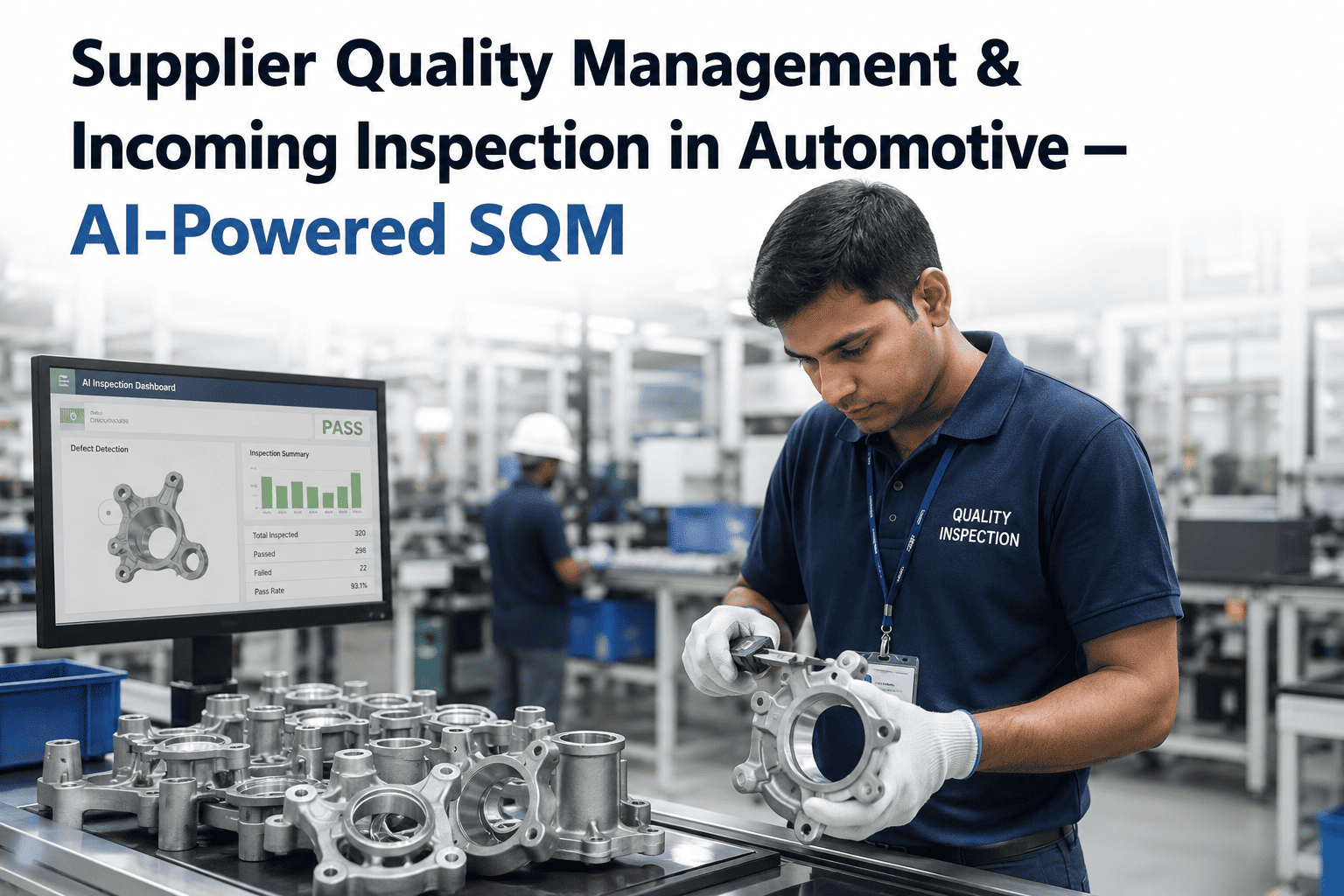
IATF 16949 certification is often treated as a documentation exercise, a stack of procedures written to satisfy an auditor once a year. Plants that get real value from it treat it differently, building a quality management system that actually changes how defects get caught, how corrective actions get closed, and how supplier risk gets managed day to day. The gap between those two approaches shows up clearly during certification audits, where a system built only for paper rarely survives close questioning, and it shows up even earlier in how many plants quietly stall out partway through implementation. Compliance officers preparing for their next audit cycle can book a demo to see how monitoring supports the process.
COMPLIANCE OFFICER GUIDE · IATF 16949 · 2026
Build a QMS That Survives the Audit, Not Just the Paperwork
A structured gap analysis, documentation framework, and continuous compliance monitoring turn IATF 16949 from an annual scramble into an ongoing operating discipline.
Where Plants Actually Stall Out
Every plant that begins an IATF 16949 project starts with documented procedures in some form. Fewer make it through a clean cycle of internal audits. Fewer still can show corrective actions that were verified as genuinely effective rather than simply closed on paper. The funnel narrows further at the Stage 1 readiness audit, and narrows once more before full certification is granted.
Documented Procedures in Place
100%
Internal Audits Passing Consistently
~82%
Corrective Actions Verified Effective
~64%
Stage 1 Readiness Audit Clear
~46%
Certified on First Audit Cycle
~28%
These figures are directional rather than a formal industry census, but they reflect a consistent pattern compliance officers report: the widest drop-off happens between having documentation and proving that corrective actions genuinely close. That is precisely the gap continuous monitoring is built to close.
Customer-Specific Requirements
Each OEM layers its own requirements on top of the base standard, and missing one is a common audit finding.
Risk-Based Thinking
IATF 16949 expects risk identification woven into process design, not addressed only after a failure occurs.
Product Safety
A dedicated focus area covering how safety-critical characteristics are identified, controlled, and traced.
Corrective Action Discipline
Auditors consistently probe whether corrective actions actually close, or simply get logged and forgotten.
Why Gap Analysis Comes Before Documentation
Many plants start an IATF 16949 project by writing procedures, which feels productive but often produces documentation that describes an idealized process rather than the one actually running on the floor. A structured gap analysis flips that order, first mapping current state against every clause of the standard, then writing documentation that reflects what genuinely needs to change.
This matters most in the areas auditors probe hardest, control plans, FMEA linkage, and corrective action closure. A gap analysis that honestly identifies where these are weak gives the plant time to fix the underlying process, not just polish the paperwork describing it.
| Focus Area | Common Audit Gap | How Monitoring Helps |
|---|---|---|
| Control Plans | Control plan not updated after process change | Live linkage between process changes and documentation |
| Corrective Actions | Actions logged but not verified as effective | Automated tracking of closure and effectiveness checks |
| Supplier Quality | Supplier risk not reassessed after incidents | Continuous supplier scorecards tied to real performance data |
| Calibration Records | Gauge calibration overdue without flag | Automated calibration due-date alerts across the plant |
CONTINUOUS COMPLIANCE MONITORING
Keep Audit Readiness Between Audits, Not Just Before Them
See how live tracking of corrective actions, calibration, and control plans supports your IATF 16949 system.
The 90 Days Before an Audit
T-90 DAYS
Full Gap Re-Check
Every clause and customer-specific requirement is reviewed against current process reality, not last year's documentation.
T-60 DAYS
Close Open Corrective Actions
Any action still open is either closed with verified effectiveness or escalated with a realistic closure plan.
T-30 DAYS
Mock Internal Audit
An internal audit run exactly as the external audit will run, surfacing anything a real auditor would catch.
AUDIT DAY
Certification Audit
Documentation and live process both hold up to direct questioning, because both were built together.
What Compliance Officers Are Saying
Our first certification audit found gaps we genuinely did not know existed, because our corrective action log looked complete on paper. It was only when we started tracking actual closure and effectiveness verification that we saw how many actions had quietly stalled.
Compliance Officer, Automotive Tier-1 Supplier
Frequently Asked Questions
How is IATF 16949 different from ISO 9001?
IATF 16949 builds directly on top of ISO 9001, adding automotive-specific requirements around product safety, risk-based thinking, and customer-specific requirements that individual OEMs layer onto the base standard. A plant already certified to ISO 9001 has a foundation to build from, but IATF 16949 requires substantially more rigor in areas like control plans, FMEA linkage, and corrective action verification that ISO 9001 alone does not mandate to the same depth.
What typically causes IATF 16949 audits to fail?
The most common findings involve documentation that describes a process differently from how it actually runs on the floor, particularly around control plans that were not updated after a process or tooling change. Corrective actions that were logged but never verified as genuinely effective are another frequent finding, since auditors often trace a sample of closed actions back to confirm the root cause was actually addressed rather than just documented as resolved.
How long does IATF 16949 implementation typically take?
For a plant starting from ISO 9001 certification, implementation to first certification audit typically takes between nine and eighteen months, depending on how mature existing quality processes are and how many customer-specific requirements apply. Teams can review a more specific estimate through support based on current certification status and product complexity.
Does continuous monitoring replace internal audits?
No, continuous monitoring complements internal audits rather than replacing them, by keeping data like corrective action status, calibration due dates, and control plan revisions current between formal audit cycles. Internal audits still provide the structured, periodic review of the system as a whole, but they become far more effective when the underlying data they are reviewing has been accurate and current the entire time, rather than reconstructed just before the audit date. Plant leaders can book a demo to see how the two work together.
IATF 16949 · CONTINUOUS COMPLIANCE
Move From Audit Scramble to Ongoing Readiness
See how live compliance tracking fits into your current IATF 16949 quality management system.