A battery thermal management system has one job: keep every cell in a pack inside a narrow, precise temperature window through years of charging cycles, fast-charge sessions, and hot summer commutes, and it has to do that job through a network of brazed or friction-stir-welded aluminum channels that must never leak a drop of coolant for the life of the vehicle. That's an unforgiving manufacturing target, since a cold plate that passes a leak test at ninety-nine percent confidence is still a cold plate that might fail the one time it matters most, inside a sealed battery pack years after it left the plant. iFactory's thermal management production platform was built to close that last percentage point with AI-driven process control instead of hoping the sample test caught everything.
A cooling plate only fails once, so build it right the first time
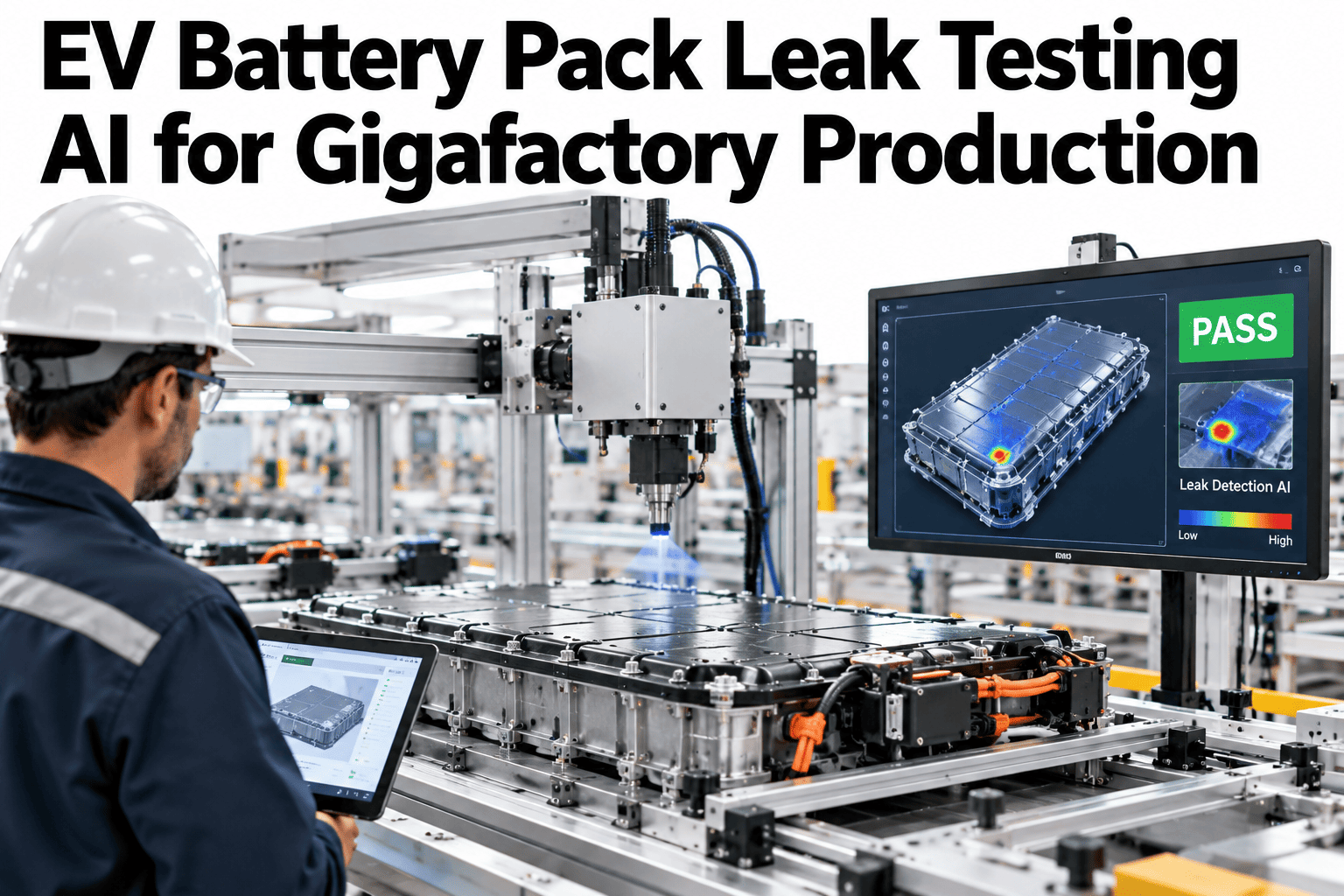
iFactory monitors brazing, leak testing, and coolant flow validation together, catching the process drift that leads to a leak long before a pack reaches final assembly.
Five steps stand between raw aluminum and a sealed cold plate
Every thermal management component travels through a sequence where a small deviation at any single step can surface as a leak or a thermal underperformance months later, often after the pack is already in a vehicle. Watching the whole sequence together, rather than pass/fail checkpoints in isolation, is what catches drift before it compounds.
Forming
Channels stamped or extruded to precise geometry
Brazing / Welding
Vacuum brazing or friction stir welding seals the joint
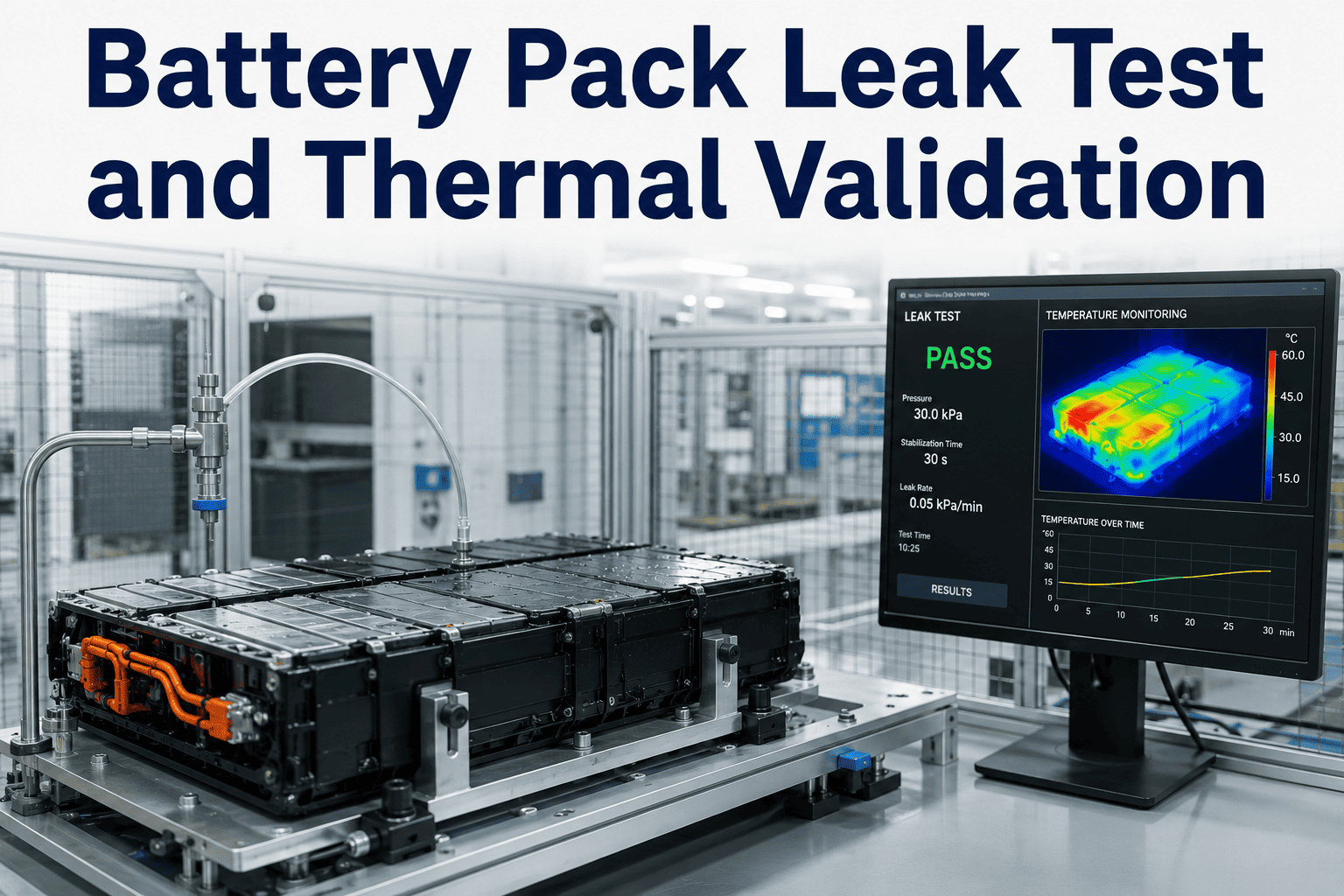
Leak Testing
Helium or pressure decay testing verifies seal integrity
Flow Validation
Coolant flow rate and pressure drop confirmed against spec
Burst / Cycle Test
Sample units verified to twice operating pressure
Most leaks trace back further upstream than the leak test itself
Furnace temperature drift
A vacuum brazing furnace running a few degrees off profile can produce joints that pass an initial leak test but fail under pressure cycling months later.
Weld parameter variation
Friction stir welding depends on tightly controlled tool rotation and travel speed; small drift produces micro-porosity invisible to a quick visual check.
Fixture wear on forming tools
Worn stamping dies gradually change channel geometry, altering flow characteristics before any dimension formally falls out of tolerance.
Sample-based leak testing gaps
Testing a sample rather than a full population means intermittent porosity from a bad furnace cycle can slip through undetected.
Coolant compatibility issues
Residue from cleaning or degreasing steps can react with coolant over time, an issue that a same-day leak test cannot reveal at all.
Disconnected process data
Furnace, weld, and test data often live in separate systems, making it slow to trace a downstream leak back to its actual upstream cause.
Higher power density is shrinking the margin for error
As EV platforms push toward faster charging and higher power density, cold plates are handling more concentrated heat loads through thinner, more complex channel geometries than earlier generations required. That trend increases the consequence of even a small manufacturing deviation, because a cold plate with marginally reduced flow capacity may perform adequately at moderate loads but underperform exactly when a driver fast-charges on a hot day, which is precisely when thermal management matters most and precisely the condition a standard production test doesn't always replicate.
There's also a cost dimension specific to this component. A cold plate failure discovered after pack assembly is dramatically more expensive to remedy than one caught at the cold plate stage, since it can mean disassembling a sealed, potentially charged battery pack rather than simply scrapping a standalone component. Catching drift at the process level, before a bad batch of plates ever reaches pack assembly, is where the real cost avoidance lives.
From furnace profile to validated flow
Monitor furnace and weld parameters continuously
Temperature profiles, tool rotation speed, and travel rate are tracked against the specific process window proven to produce sound joints.
Correlate leak test results back to process data
When a leak test finding occurs, the model traces it back to the furnace cycle or weld pass that likely produced it.
Flag at-risk batches, not just failed units
If a furnace cycle drifted outside tolerance, every unit from that cycle gets flagged for additional scrutiny, not just the ones that failed sample testing.
Validate flow performance against design intent
Flow rate and pressure drop data are checked against the thermal performance the design actually requires, not just a generic pass threshold.
Most plants only see a leak after it's already a scrapped or reworked unit. Book a demo and we'll trace your own process data back to where drift actually starts.
What thermal management lines see within two quarters
What a pilot looks like
Works with your current furnace and weld equipment
No process equipment replacement required; connects to existing brazing furnace and FSW controllers.
Covers CAB brazing, vacuum brazing, and FSW
Model adapts to whichever joining process your line runs, including mixed processes across cell formats.
Six to eight week pilot
Includes historical process and leak-test data correlation and a documented root-cause report.
On-premise deployment
Runs on an NVIDIA appliance inside your plant network, keeping process data on site.
Batch-level traceability
Every cold plate is traceable back to its specific furnace cycle and weld pass parameters.
24x7 managed service
iFactory's team monitors process trends so your quality engineers aren't chasing every leak test result manually.
Why thermal management is a strong AI pilot candidate
Thermal management production is an attractive first pilot because the cost of a defect is unusually visible and unusually large once it reaches later stages, which makes the return on catching it earlier easy to quantify. Most plants already run a full leak test on every unit, meaning the data needed to correlate leaks back to upstream process conditions largely already exists, it's simply sitting in disconnected systems rather than connected into one model.
It's also a pilot with a clear expansion path. Once a plant proves out process-to-defect correlation on cold plate production, the same connected-data approach extends naturally to other brazed or welded battery components, from busbars to enclosure seals, without needing to rebuild the underlying data architecture from scratch.
Thermal management process AI, explained plainly
Catch the leak before it ever reaches a pack
iFactory connects furnace, weld, and leak test data into one model that traces defects back to their actual cause. Book a demo to see it against your own line.