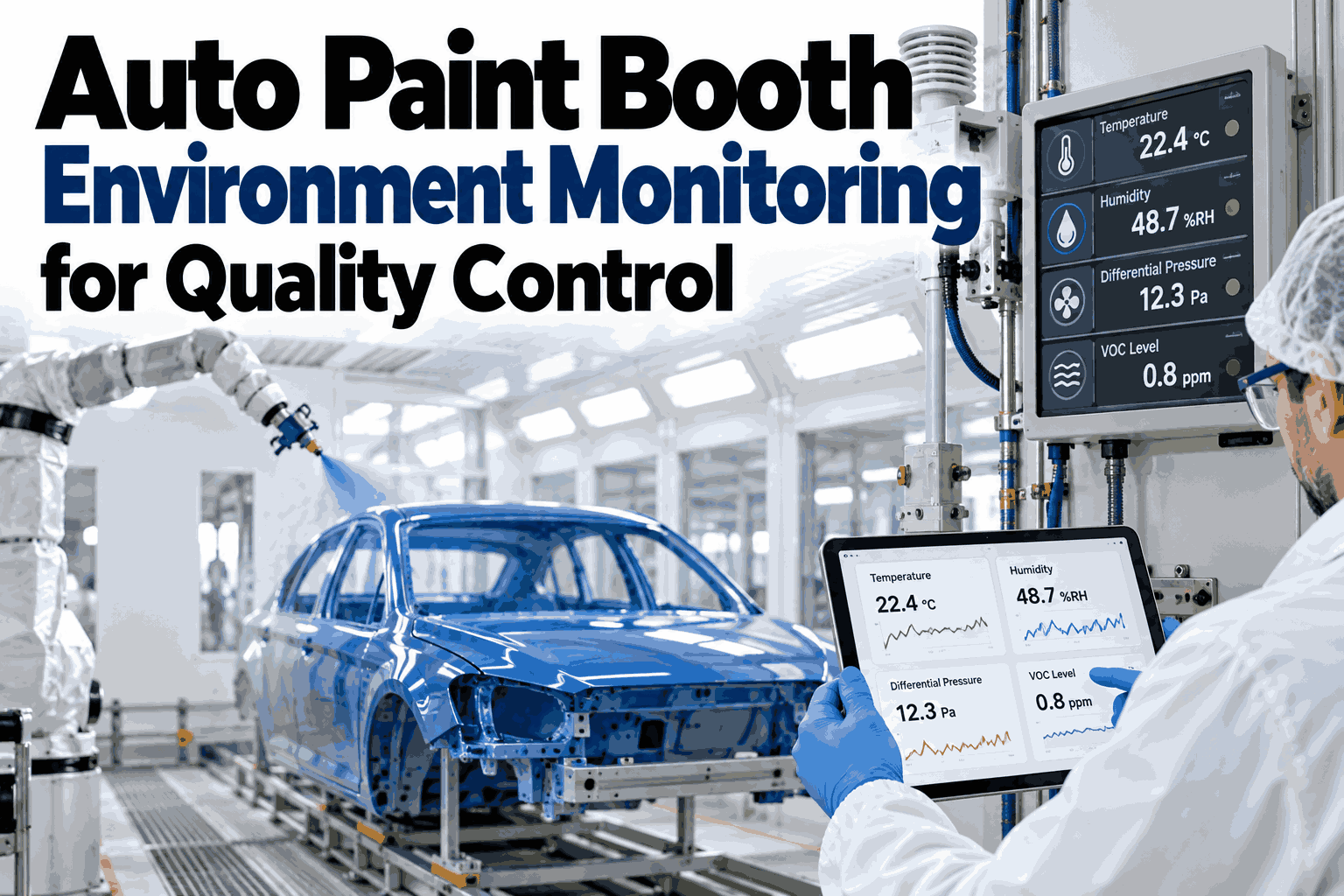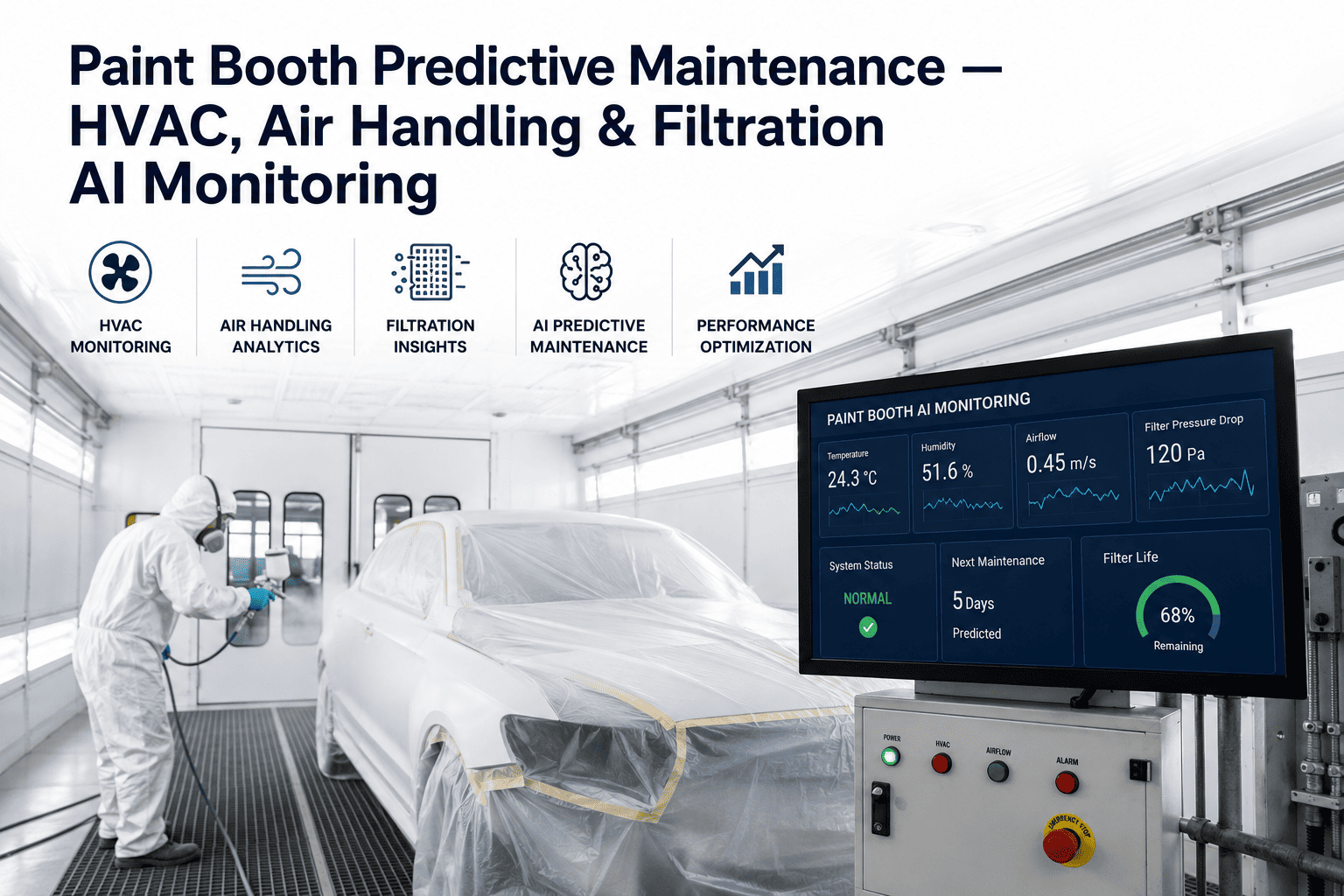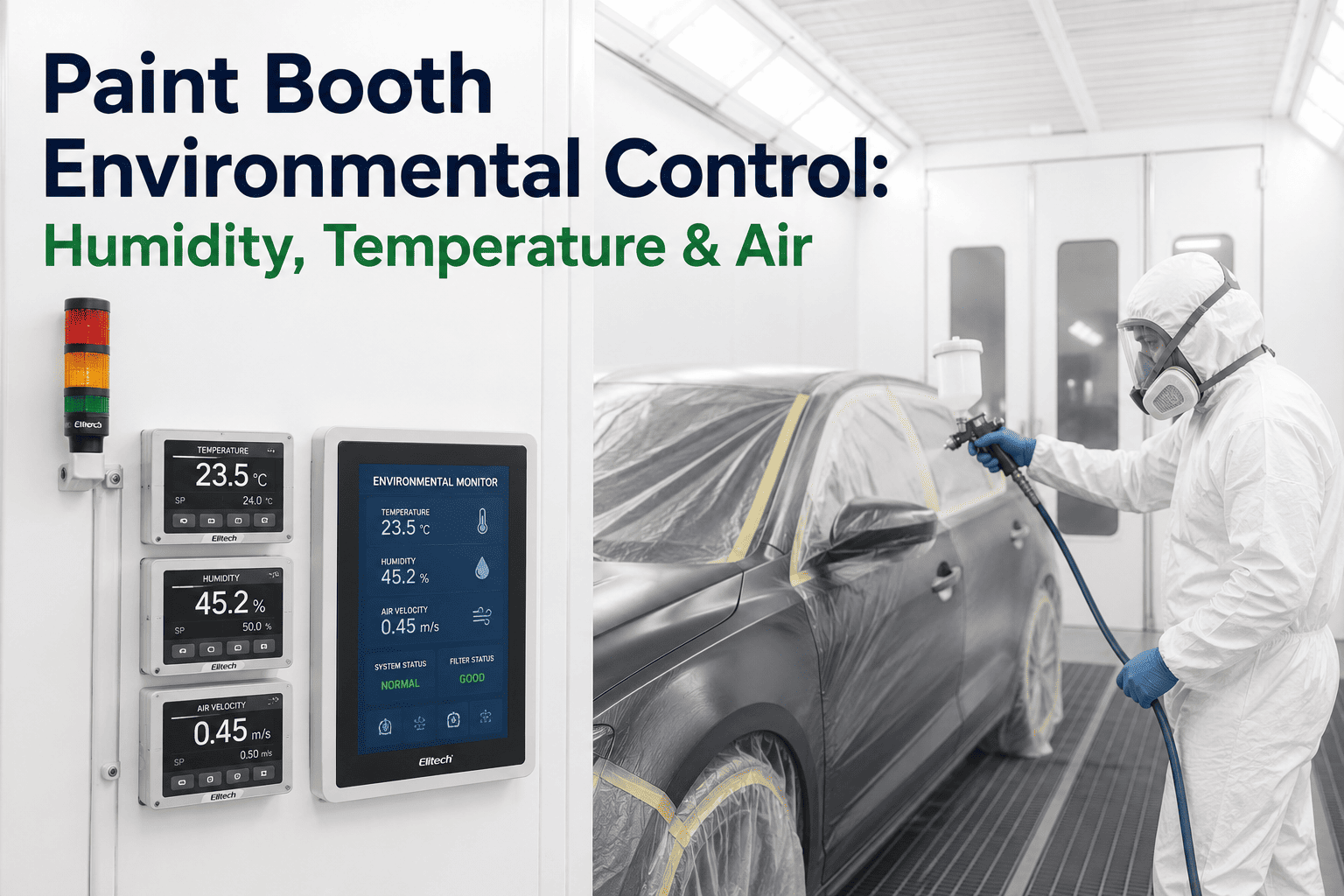
A paint booth doesn't fail when humidity drifts two points outside range — it fails one shift later, when a run of otherwise-identical panels comes out with orange peel that nobody can immediately explain because the temperature and humidity readings from that shift were logged, not watched. The booth's environmental envelope is narrow enough that a two-degree temperature swing or a few points of humidity drift is genuinely enough to turn a flawless finish into a rework job, and the gap between logging conditions and actually controlling them in real time is where most of that rework originates. iFactory closes that gap with automated adjustment tied directly to live readings, not a chart someone reviews after the fact.
The Envelope Is Narrow. The Difference Between Logging Conditions and Controlling Them Is Where the Rework Comes From.
Humidity, temperature, and air flow each drive a specific, well-documented defect pattern when they drift outside a tight operating window — and the fix isn't better monitoring alone, it's automated adjustment that acts on a reading before the drift becomes a finish problem.
Three Variables, One Narrow Operating Envelope
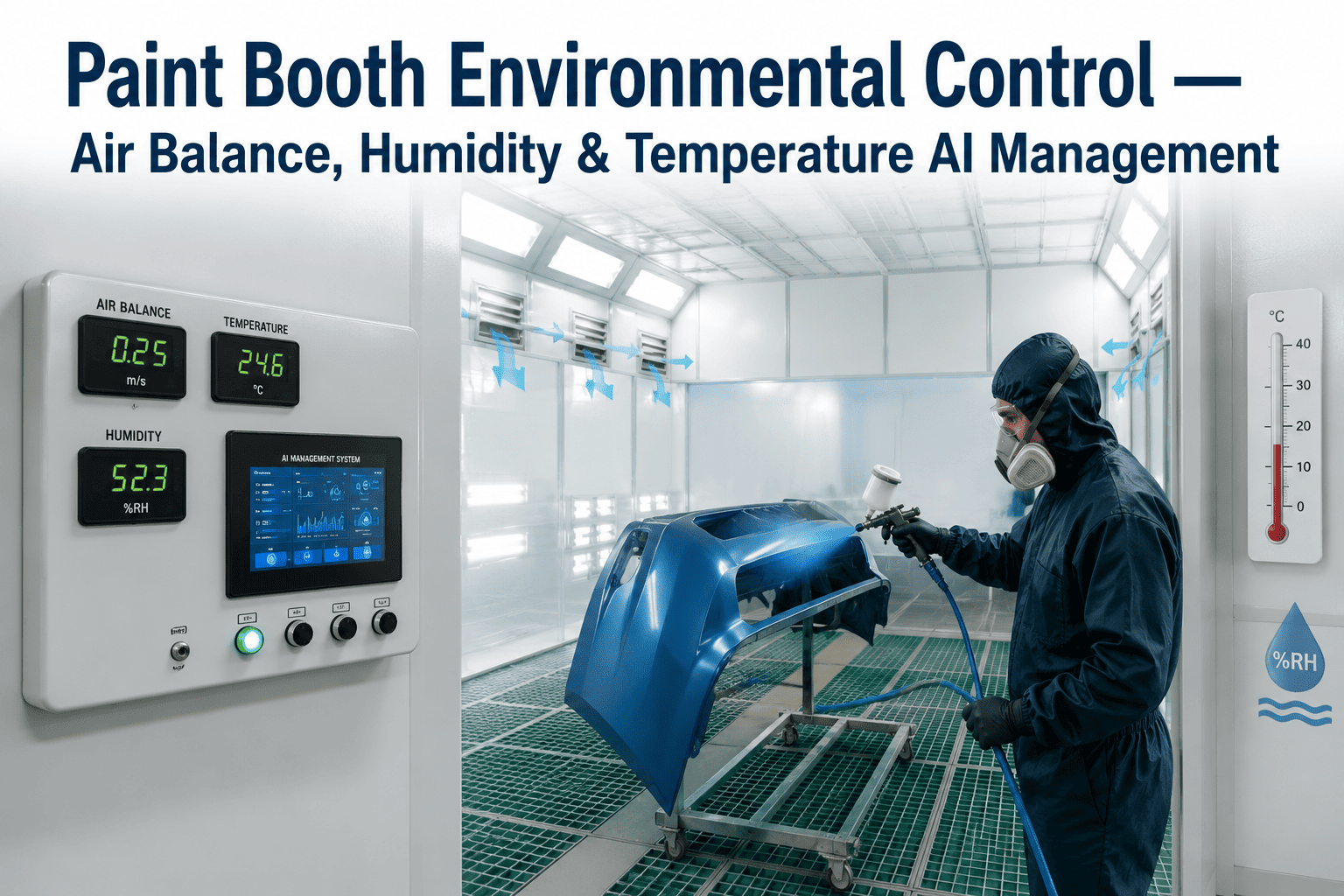
A modern automotive paint booth operates inside a genuinely tight window — commonly cited targets run roughly 70 to 80°F for temperature and 50 to 70% relative humidity, with booth pressure held positive enough to exclude contamination without pushing so much air that overspray settles back onto the part. All three variables interact, and drift in any one of them shows up as a defect pattern specific to that variable.
This tightness has become more pronounced as the industry has shifted toward waterborne paints for environmental compliance reasons, since waterborne formulations are considerably more sensitive to humidity than the solvent-based paints they replaced. A booth calibrated loosely enough to accommodate an older solvent-based process will often prove too permissive for a waterborne line, which is part of why environmental control has become a bigger operational priority even as the underlying booth hardware in many plants hasn't fundamentally changed.
Controls Flow and Cure
Excess humidity dilutes waterborne paint into tiny liquid pockets that evaporate during cure, producing craters and fisheyes, while humidity that's too low accelerates solvent evaporation and reduces flow and coverage.
Controls Leveling
Temperature swings prevent paint from leveling evenly across the panel surface, the direct mechanical cause behind orange peel and inconsistent texture.
Controls Contamination
Airflow that's too weak lets overspray and airborne particulate settle on wet paint, while airflow that's too strong can disturb the spray pattern itself, and both directions of drift trace back to the same fan and filter system.
Why Logging Conditions Isn't the Same as Controlling Them
Most paint shops already have humidity and temperature sensors somewhere in the booth, feeding a chart a supervisor glances at once a shift. That's monitoring, and it's genuinely useful for after-the-fact investigation — but it does nothing to stop a drift from happening in the moment, since a chart reviewed hours later can only explain what already went wrong, not prevent it.
The gap here isn't a hardware problem — most plants already own sensors capable of reporting readings in real time. The gap is in what happens to that reading after it's captured. A reading that streams into a historian for later review has value, but only the retrospective kind. The same reading, wired directly into a control loop that can trigger a dehumidifier or damper adjustment automatically, has an entirely different kind of value — the kind that actually keeps a drift from becoming a defect in the first place.
Sensors record readings continuously, but a person only looks at the data on a set schedule — once a shift, once a day
A slow drift building over hours is invisible until it's already produced a batch of defective panels
The chart is useful for explaining what happened, not for stopping it from happening
Readings feed directly into dehumidifiers, heaters, and dampers that adjust continuously against a target setpoint
A developing drift gets corrected within the control loop before it reaches a threshold that would actually affect finish quality
The same data that used to only explain a problem now actively prevents it
A Humidity Chart Reviewed Once a Shift Explains a Defect. It Never Prevents One.
iFactory ties live booth readings directly to automated dehumidification, heating, and airflow adjustment, closing the loop between sensing and control.
How a Closed Control Loop Actually Works
Automated environmental control isn't a single device — it's a continuous loop connecting sensing, decision, and mechanical response, running fast enough that a developing drift gets corrected within minutes rather than discovered hours later on a review chart.
What distinguishes this from the fixed-schedule cycling many older booth systems still run on is the direction of the control signal. A dehumidifier cycling on a timer runs whether or not it's actually needed at that moment, sometimes over-correcting and sometimes under-correcting depending on how closely the fixed schedule happens to match current conditions. A dehumidifier responding to a live reading only runs the amount actually required to hold the setpoint, which tends to produce both a more stable environment and lower energy consumption than a schedule-based approach achieves.
Continuous Sensing
Temperature, humidity, and pressure sensors positioned across the booth report readings continuously rather than at fixed intervals, giving the control system a live picture of actual conditions.
Setpoint Comparison
Each reading is compared against the target range in real time, flagging any variable trending toward the edge of its acceptable window before it actually crosses it.
Automated Mechanical Response
Dehumidifiers, heaters, dampers, and fan speed adjust automatically in response to the comparison, correcting the drift without requiring a person to notice and intervene manually.
Logged for Correlation
Every reading and every adjustment is logged and tied to the production window it affected, so if a defect does occur, the environmental record for that exact period is immediately available.
Why Air Flow Is the Variable Most Often Overlooked
Humidity and temperature get the most attention in most environmental control conversations, largely because they're the easiest to explain and the easiest to sense with a simple probe. Air flow is just as important and considerably easier to let drift unnoticed, since a gradual loss of fan output or filter capacity doesn't trigger an alarm the way a humidity spike does — it just quietly changes how well the booth excludes contamination.
The asymmetry in how these variables get treated is worth naming directly. A humidity sensor produces a clean numeric reading that's easy to alarm against — cross a threshold, get a notification. Airflow degradation is messier: it shows up as a gradual reduction in CFM output tied to filter loading over days or weeks, not a discrete event with an obvious trigger point. That gradual nature is exactly why airflow needs its own dedicated tracking rather than being assumed adequate simply because nothing has explicitly alarmed.
Filter Loading
Exhaust filters lose airflow capacity as they load with overspray, gradually reducing the booth's ability to exclude contamination long before a filter change is scheduled.
Fan Performance Drift
A fan running below its rated output produces the same contamination risk as a clogged filter, and the two causes can compound without either one triggering an obvious alarm on its own.
Booth Pressure Balance
Pressure that drifts too low lets contamination in; pressure that drifts too high can push overspray back onto the part, and both directions require active airflow management to correct rather than a fixed fan setting.
A Fan Losing Output Doesn't Sound an Alarm. It Just Lets More Contamination Through.
iFactory tracks fan performance and filter loading alongside humidity and temperature, so airflow drift gets corrected with the same urgency as any other environmental variable.
A Composite Scenario: The Humidity Drift That Correlated to a Specific Shift
A composite mid-size assembly plant running a waterborne basecoat process had been logging booth humidity and temperature continuously but reviewing the data only during a weekly quality meeting. Over several weeks, the plant's quality team noticed a recurring cluster of crater and fisheye defects concentrated on the second shift, without an obvious process cause showing up in the standard defect log.
Pulling the environmental log against the defect timestamps showed relative humidity on second shift consistently running near the upper edge of the target range, tied to a dehumidifier that was cycling less aggressively during that period — a pattern the weekly review cadence had been too slow to catch in real time. The plant implemented closed-loop control tying the dehumidifier directly to live humidity readings rather than a fixed cycling schedule, and the second-shift defect cluster dropped to match first-shift rates within the following weeks.
Assumptions That Undermine Booth Environmental Control
Logging temperature and humidity continuously is functionally the same as controlling them.
A logged reading only becomes useful once someone reviews it, and the review cadence — often once a shift or once a week — is almost always slower than how quickly a real drift can develop and start affecting finish quality.
Air flow is a fixed mechanical setting that doesn't need the same active management as humidity and temperature.
Filter loading and fan performance both degrade gradually and continuously, and treating airflow as a set-and-forget variable lets contamination risk climb without anyone noticing until defects appear.
Humidity and temperature can be tuned independently without considering how they interact.
Temperature and humidity interact directly in how a coating flows, levels, and cures, and a control approach tuning one without accounting for the other risks solving one defect pattern while introducing a different one.
A Checklist for Evaluating a Booth Environmental Control System
Adjustment happens automatically against live readings, not on a fixed schedule
A dehumidifier or heater cycling on a timer rather than responding to actual conditions will always lag behind real drift.
Air flow is tracked with the same rigor as temperature and humidity
Fan performance and filter loading need active monitoring since their degradation is gradual and doesn't trigger an obvious alarm on its own.
Environmental data is logged against production timestamps for defect correlation
When a defect pattern does emerge, being able to pull the exact environmental conditions for that production window turns an investigation into a lookup.
Setpoints account for the interaction between humidity, temperature, and coating type
A control system tuning one variable in isolation risks missing how the three interact for the specific waterborne or solvent-based coating in use.
Frequently Asked Questions
What temperature and humidity range should a modern automotive paint booth target?
Commonly cited targets run roughly 70 to 80°F for temperature and 50 to 70% relative humidity, though the exact range depends on the specific coating chemistry and manufacturer specification in use. Visit support to confirm the right target range for a specific coating system.
How quickly can a closed-loop system actually correct a developing humidity drift?
A properly tuned closed-loop system responds within minutes of a reading trending outside its target band, correcting the drift well before it would reach a level severe enough to affect finish quality, compared to a periodic review cycle that might not catch the same drift for hours or days.
Does automated environmental control require replacing existing HVAC and dehumidification equipment?
No — automated control typically integrates with existing dehumidifiers, heaters, dampers, and fan systems by connecting them to live sensor feedback, rather than requiring the underlying mechanical equipment to be replaced. Book a demo to see integration with a specific existing booth setup.
Can environmental drift on one specific shift really produce a distinct defect pattern from other shifts?
Yes — since HVAC and dehumidification equipment don't always cycle identically across different times of day or ambient conditions, a shift-specific drift pattern is a real and documented phenomenon that periodic review cycles frequently miss until defect data is directly correlated against environmental logs.
How does air flow monitoring actually catch a problem before it shows up as contamination defects?
Tracking fan output and filter differential pressure continuously reveals a gradual capacity loss well before it drops low enough to compromise contamination control, giving maintenance a window to service the filter or fan before it actually affects finish quality. Contact support to review airflow monitoring for a specific booth configuration.
Control the Envelope, Don't Just Watch It Drift
iFactory ties live humidity, temperature, and airflow readings directly to automated adjustment, so the booth stays inside its operating window instead of drifting out of it between reviews.